What to Unpack First in Manassas Park: A Checklist
What to Unpack First in Manassas Park: A Checklist
What if the first box you open isn’t the one for the room you planned to unpack? After a long moving day, it’s easy to feel buried in boxes and unsure where to start. If you’re asking what to unpack first after moving to Manassas Park, focus on what makes your home safe and usable tonight, not on clearing every room.
You don’t need to unpack everything to feel settled. A clear order helps you find medications, chargers, toiletries, and important documents without turning the house into an obstacle course. This checklist covers first-day essentials, ways to reduce trip hazards, and how to make a comfortable place to rest.
Start with an essentials box, then prepare the bathroom and bedroom before moving on to the kitchen and less urgent rooms. Use the steps below to plan the next few days, and confirm any building, lease, parking, or waste instructions with your property manager or the relevant local authority. Take it one priority at a time. Your first night doesn’t have to wait for every box to be unpacked.
Key Takeaways
- Use a simple priority check to decide what to unpack first after moving to Manassas Park, based on safety, health, sleep, and daily needs.
- Check your new home for hazards and confirm move-in or disposal requirements with your property manager or the relevant local authority.
- Sort boxes into first-day, first-week, and later priorities so nonessential items don’t crowd out what you need now.
- Work through one manageable unpacking session at a time, and stop before fatigue makes lifting or carrying unsafe.
- Plan practical settling-in tasks for the next several days, including updating your address and delivery details with the United States Postal Service as appropriate.
What to Unpack First in Manassas Park: Essentials
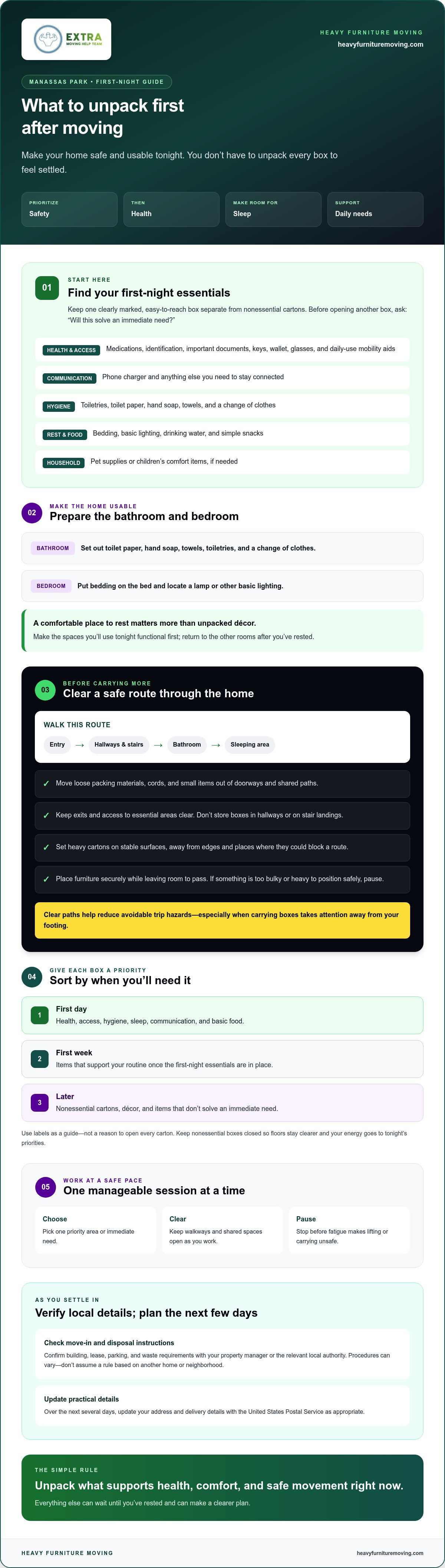
Moving day can leave you tired, thirsty, and surrounded by boxes. Don’t start by trying to unpack room by room. First, gather what supports safety, health, sleep, hygiene, communication, and a basic meal. This gives you a workable order and helps you use the home before tackling the rest.
First-night checklist:
- Medications, identification, important documents, keys, and wallet
- Phone chargers, glasses, and daily-use mobility aids
- Toiletries, toilet paper, hand soap, towels, and a change of clothes
- Bedding, basic lighting, drinking water, and simple snacks
- Pet supplies or children’s comfort items, if needed
Use box labels as a guide, not a reason to open every carton. Before cutting tape, ask: “Will something in this box solve an immediate need?” If not, leave it closed. That keeps floors clearer and saves your energy for tonight’s priorities.
Which essentials should you unpack on arrival?
Start with health and access. Put medications, identification, important documents, keys, and your wallet somewhere you can find them quickly. Keep glasses and mobility aids nearby. Next, locate your phone charger, drinking water, and a few simple snacks. If you’re moving with children or pets, unpack their immediate comfort items and basic supplies before opening general household boxes.
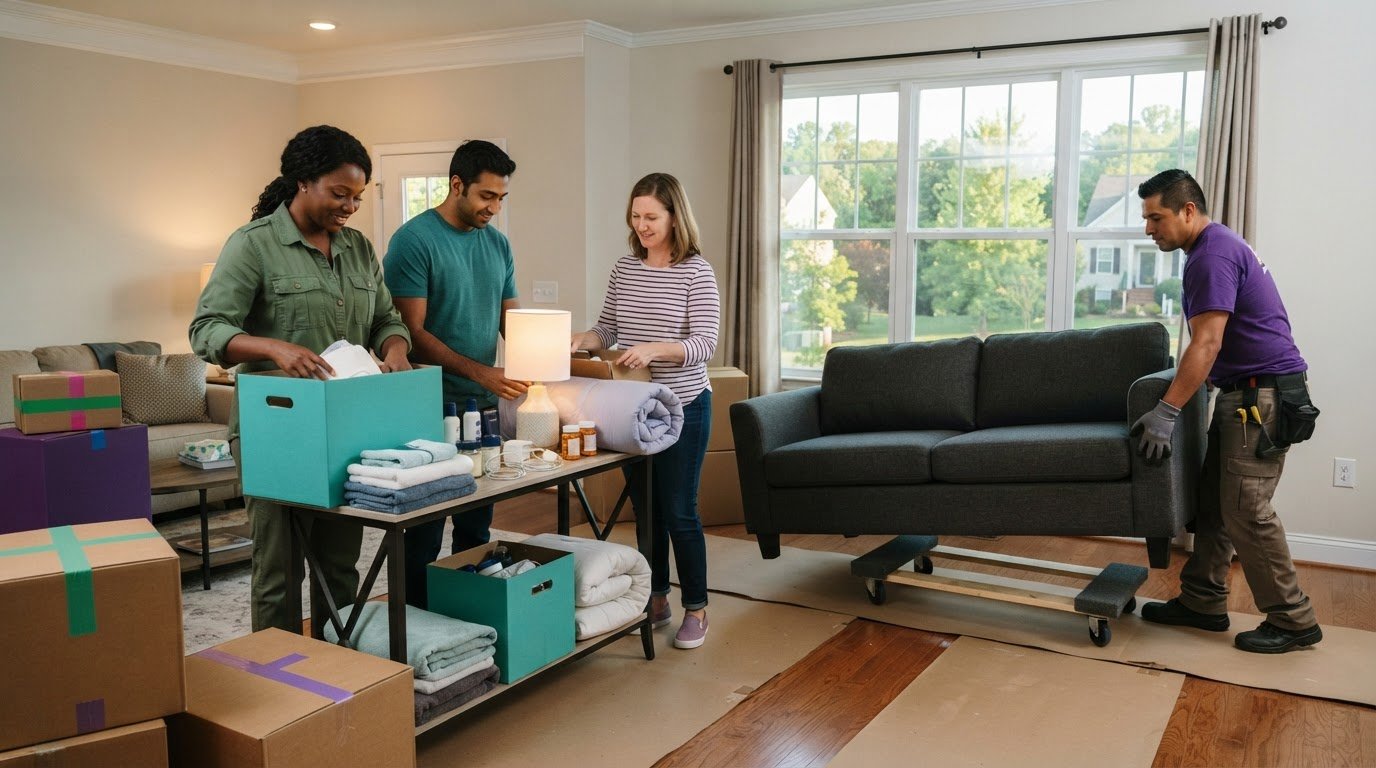
A first-night essentials box is a clearly marked, easy-to-reach carton with the medications, toiletries, chargers, documents, bedding, and simple food you’ll need before you’re ready to unpack fully. Keep it separate from nonessential cartons, and make sure it isn’t buried under other belongings during the move.
What should be ready before the first night?
Make the bedroom and bathroom usable before unpacking décor or sorting storage. Put bedding on the bed, set out towels and a change of clothes, and find toilet paper and hand soap. Locate a lamp or other basic lighting so you won’t have to search through boxes in the dark.
Check the route between the entry, bathroom, and sleeping area. Move cartons, loose packing materials, and cords out of the way. Keep frequently needed items within easy reach, especially if anyone in the household uses mobility aids. A clear route makes a tired first evening easier to manage.
If you’re unsure what to unpack first after moving to Manassas Park, return to the checklist: choose the box that supports health, comfort, or safe movement right now. Everything else can wait until you’ve rested and can make a clearer plan.
Manassas Park first-day checklist: make the new home safe and usable
Before unpacking room by room, walk through the home and clear a safe route. A quick check helps you spot problems before boxes and furniture make them harder to reach. If you’re deciding what to unpack first after moving to Manassas Park, prioritize clear access and safe movement.
- Walk from the entry through hallways and stairs to the rooms you’ll use first.
- Move loose packing materials, cords, and small items out of doorways and shared paths.
- Keep exits and access to essential areas clear.
- Set heavy cartons on stable surfaces, away from edges and places where they could fall or block a route.
- Place furniture securely, leaving enough room to pass without squeezing around sharp corners.
Clear paths matter because carrying boxes takes attention away from your footing. An open route helps you move belongings without adding avoidable trip hazards. Don’t use a hallway or stair landing as temporary box storage. Gather packing materials in a designated spot, and keep shared spaces clear while you work.
What should you check before opening more boxes?
Check each route, including the entry, hallways, stairs, and the way to the bathroom and sleeping area. Make sure cartons are stable and aren’t stacked where they could shift or block an exit. Then decide where large furniture can sit without narrowing walkways. If an item is too bulky or heavy to place safely, pause instead of trying to move it into position while tired.
For help planning how your household will respond to an emergency in an unfamiliar home, Ready.gov offers guidance to make the new home safe. Use that planning alongside your walk-through, and identify how household members can reach one another and leave the home if needed.
Which Manassas Park move-in details should you verify locally?
Building and local procedures can vary, so don’t assume a rule based on another home or neighborhood. Ask your landlord, building manager, or homeowners association about move-in procedures, access, and shared spaces. Before setting out cardboard or other packing materials, confirm where they should go with the property manager or relevant local authority.
Check utility contacts and service status directly with the appropriate provider. Don’t assume utilities are active or that service begins on a particular date. These checks don’t need to delay unpacking essentials, but they can prevent avoidable confusion as you settle in.
If a bulky piece of furniture is difficult to position without blocking a path, get help with heavy household items rather than attempting an unsafe lift on your own.
What can wait after moving to Manassas Park? Sort boxes by real-life priority
A room label tells you where a box belongs, but not whether you need what’s inside today. Use this rule: unpack now only if an item supports safety, health, sleep, or daily function. It keeps your first-day plan focused on real needs instead of the pressure to empty every carton.
| Priority | What to unpack |
|---|---|
| First day | Items needed for safe movement, medication, sleep, hygiene, and a simple meal. |
| First week | Everyday clothing, more kitchen basics, work or study supplies, and frequently used household items. |
| Later | Seasonal items, décor, books, hobby supplies, duplicate goods, and rarely used equipment. |
Which rooms deserve attention first?
Set up the bathroom and sleeping area first. A usable bathroom and a made bed support basic comfort and give you a place to recover from the move. Next, make the kitchen functional, not finished: unpack a few dishes, utensils, and the items needed to prepare simple food. Leave specialty appliances and extra cookware boxed until you know what you use regularly.
Set up a work or study station early only if you’ll need it the next day. For an interstate move, keep moving paperwork easy to find while sorting. The Federal Motor Carrier Safety Administration explains consumer responsibilities in Your Rights and Responsibilities When You Move.
Which boxes can stay closed for now?
Seasonal clothing, decorative objects, books, and rarely used kitchen equipment can wait. So can hobby supplies and duplicate household goods. They may matter later, but they won’t make the home safer or help you manage tomorrow morning. Leaving them packed is a practical choice, not a sign that you’re behind.
Room labels will still help you find cartons later. Add a simple priority note, such as “bedroom, first week” or “kitchen, later,” to boxes you’re leaving closed. Group delayed cartons where they won’t block walkways or access to frequently used belongings.
Revisit the list after you’ve spent some time in the home. Your routine will show which items deserve to move up. You don’t have to finish a room just because you opened a box in it. Follow need and access, and leave less urgent cartons until you have the energy and space to handle them.
How to unpack efficiently in your Manassas Park home without adding chaos
A useful unpacking session has a clear start and stop. Choose one small area, bring over only the cartons you need for it, and set a timer for a short work block. When it ends, pause, drink some water, and decide whether you have the energy to continue. Stopping before fatigue affects your balance or lifting is part of unpacking safely, not falling behind.
The safest order is simple: clear paths, unpack essentials, then set up each room. Make space to work before opening a box, and keep exits and walkways open. Take out items that support the room’s basic function first. Put frequently used belongings within easy reach, then leave the rest packed until there’s enough room to sort without creating another pile of clutter.
What is a simple order for unpacking each room?
Repeat the same sequence wherever you work:
- Clear: Make floor space and keep doorways, stairs, and shared paths open.
- Set up: Unpack what the room needs to function, such as bedding in a bedroom or a few everyday utensils in the kitchen.
- Place: Put regular-use items where they’re easy to reach, without blocking doors or walkways.
- Sort: Use a small area for four decisions: keep here, relocate to another room, donate, or discard.
Don’t break down empty cartons just to make progress. Flatten or gather them only when they won’t obstruct household routes or shared spaces. Before placing cardboard or unwanted items outside, check disposal and donation instructions with your property manager or the relevant local authority. Procedures can vary, so don’t assume where materials belong.
How can you avoid injury and damage while unpacking?
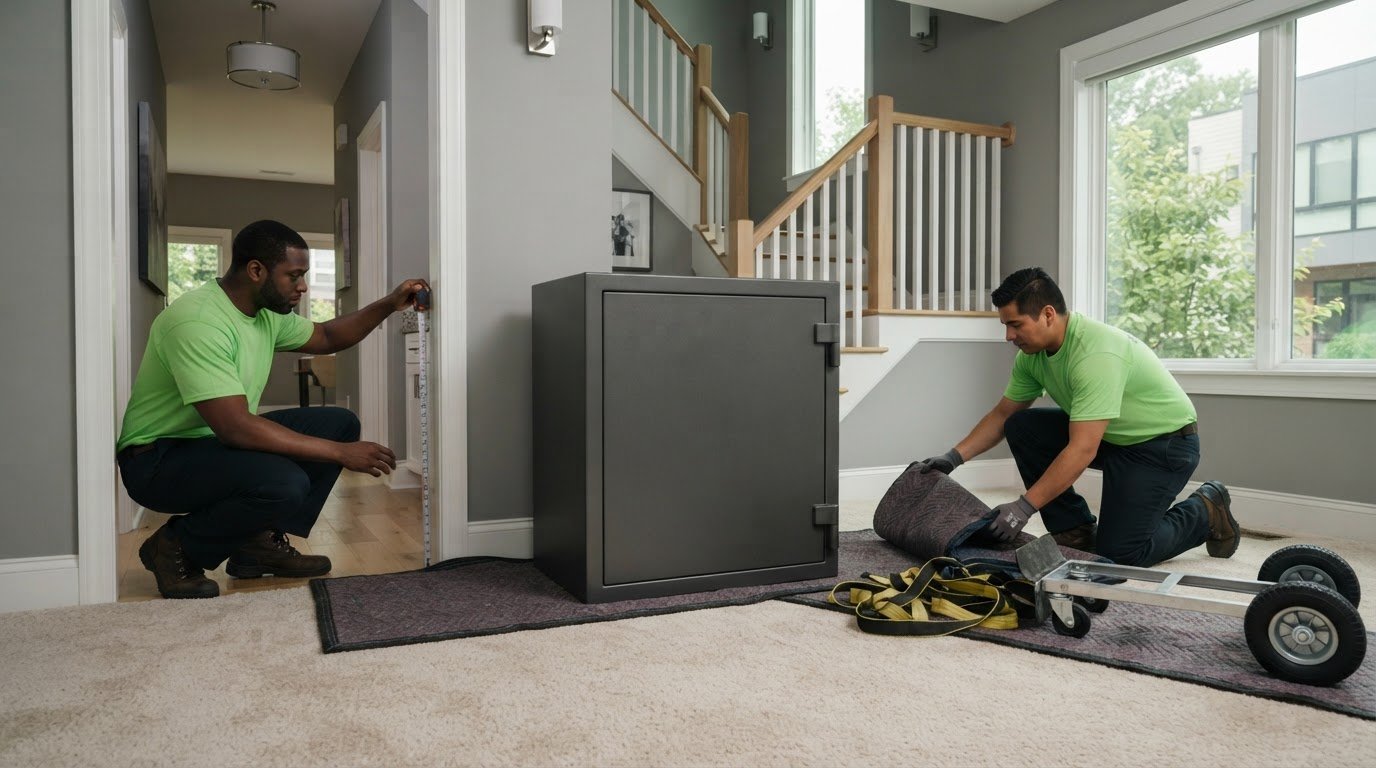
Don’t lift heavy or awkward items alone. Use suitable help and a safe handling approach, and never drag furniture across floors or leave cartons on stairs. If a piece feels unstable, blocks a route, or is difficult to control, stop and make a different plan. Set aside pianos, safes, exercise equipment, and bulky furniture for experienced handling rather than risking injury or damage to the home.
If heavy lifting is holding up your unpacking, consider getting help with bulky furniture moving. For everything else, keep the work area small and end each session with a clear path and sorted materials. That gives you a safe stopping point and makes the next session easier to begin.
Settle into Manassas Park: build a routine and ask for help when needed
You don’t have to finish unpacking this week. Aim to make daily routines easier, then handle the remaining cartons as time and energy allow. A short plan can keep follow-up tasks from getting lost without turning the move into a race.
What should you finish during the first week?
Unpack items that support your household’s actual schedule. That might mean everyday kitchen tools, work clothes, cleaning supplies, or school materials. If something isn’t needed for a routine you’re starting now, it can stay boxed while you make steady progress elsewhere.
Use a phone note or a sheet of paper to track follow-up tasks. For example, list an unanswered question about building access, a service status you need to confirm, or a delivery detail that still points to your former address. Contact the responsible property manager, utility provider, or other service directly. Keep each task specific, and mark it complete once you have a clear answer.
Update your address and delivery information through the United States Postal Service as appropriate, then review important accounts and contacts that send time-sensitive mail or packages. Look around the home again as boxes clear. Your remaining safety and setup needs depend on the property and household, so use what you observe rather than assuming one checklist fits everyone.
When can professional unpacking or heavy-item help make sense?
Extra help is optional. It may be useful if work, caregiving, or family routines leave little time to unpack, or if lifting bulky items is physically demanding. Pianos, safes, exercise equipment, and other difficult pieces need a careful plan. Don’t try to move them alone if you can’t control the load or protect the floor and surrounding space.
If you’re comparing local moving options, look for information that fits your needs and location, including guidance about reliable movers in Fairfax and Northern Virginia. For help with packing and unpacking, explore packing and unpacking help as one option for making the transition more manageable.
Keep the goal practical: make the home work better each day, not perfect all at once. Choose a small task for your next session, leave clear paths through the rooms, and stop when fatigue makes lifting or sorting harder. That steady rhythm helps you settle into your Manassas Park home without letting the remaining boxes run the schedule.
Make Your First Days in Manassas Park Easier
Keep your unpacking plan simple: start with what supports safety and daily needs, set up the spaces you’ll use to rest and get ready, then leave nonessential cartons for later. A clear path and a manageable pace matter more than empty boxes. If you’re still deciding what to unpack first after moving to Manassas Park, choose the next item that will make today easier.
You don’t have to handle every part of settling in alone. Heavy Furniture Moving offers residential packing and unpacking support, along with specialized handling for heavy items such as pianos, safes, and exercise equipment. The company is veteran-family owned and operated, with support for moves where physical demands or limited time make unpacking harder.
Heavy Furniture Moving serves Fairfax, Woodbridge, Manassas, Manassas Park, Aldie, Ashburn, Mclean, Vienna, Reston, Centreville, Chantilly, Clifton, Dumfries, South Riding, Fairfax Station, Haymarket, and Gainesville. Explore packing and unpacking help if an extra hand would make your move-in more manageable. Take it one step at a time. Your new home will come together, one useful task at a time.
Frequently Asked Questions
What should I unpack first after moving to Manassas Park?
The best answer to what to unpack first after moving to Manassas Park is the items you need for health, hygiene, sleep, and communication. Start with medications, toiletries, chargers, important documents, bedding, and towels. Add a few kitchen basics for simple meals. Then clear safe paths and make the bathroom and sleeping area usable. Keep decorative items and rarely used belongings boxed until daily needs are covered.
How do I make my new home safe on moving day?
Check entryways, halls, stairs, and routes to essential rooms before unpacking. Move boxes away from exits, and don’t stack cartons where they could shift or fall. Keep packing materials out of shared paths. Avoid lifting heavy or awkward items alone. If you rent or live in a managed building, ask the responsible manager about move-in procedures and shared spaces before placing belongings or materials there.
Should I unpack one room at a time or open essential boxes first?
Open essential boxes first, then make the bathroom and sleeping area functional. A room-by-room approach can help after you’ve handled immediate needs, but don’t unpack low-priority belongings just to finish a room. Choose the next carton based on safety, daily function, and tomorrow’s schedule. For example, bring out work supplies if you need them in the morning, while décor can wait until you have more time.
What should I leave packed after moving?
Leave seasonal clothing, decorations, books, duplicate dishes, and hobby supplies boxed if you don’t need them right away. Label each delayed carton with its room and contents, such as “hall closet, winter coats,” so it’s easy to find later. Revisit your priorities after a few days, once you’ve seen how your new home works for your household. Unopened boxes aren’t a sign that you’re behind.
How do I dispose of moving boxes in Manassas Park?
Check current box disposal instructions with the City of Manassas Park, your property manager, or the relevant service provider before putting materials outside. Don’t assume collection schedules, recycling rules, or building procedures. If permitted, flattening clean boxes can make them easier to manage. Until you confirm the right process, keep cardboard and other packing materials clear of entrances, sidewalks, stairs, and shared areas.
Can movers help unpack after a move to Manassas Park?
Yes, packing and unpacking support may be available through residential moving services. Ask what tasks are included and identify which rooms or belongings need attention first. For heavy items, share details about access, stairs, and the item itself before arranging help. Heavy Furniture Moving offers residential packing and unpacking support, along with specialized handling for heavy household items such as pianos, safes, and exercise equipment.
How long should it take to unpack after moving?
There’s no single unpacking timeline that fits every household. Start with essentials and safe access, then work around your job, family routines, and daily needs. The size of your home, the amount of belongings, and the help available can all affect your pace. Set a small goal for each session, such as organizing one shelf or unpacking daily-use kitchen items, instead of treating every unopened box as urgent.
Frequently Asked Questions
Start with health and access. Put medications, identification, important documents, keys, and your wallet somewhere you can find them quickly. Keep glasses and mobility aids nearby. Next, locate your phone charger, drinking water, and a few simple snacks. If you’re moving with children or pets, unpack their immediate comfort items and basic supplies before opening general household boxes. A first-night essentials box is a clearly marked, easy-to-reach carton with the medications, toiletries, chargers, documents, bedding, and simple food you’ll need before you’re ready to unpack fully. Keep it separate from nonessential cartons, and make sure it isn’t buried under other belongings during the move.
Make the bedroom and bathroom usable before unpacking décor or sorting storage. Put bedding on the bed, set out towels and a change of clothes, and find toilet paper and hand soap. Locate a lamp or other basic lighting so you won’t have to search through boxes in the dark. Check the route between the entry, bathroom, and sleeping area. Move cartons, loose packing materials, and cords out of the way. Keep frequently needed items within easy reach, especially if anyone in the household uses mobility aids. A clear route makes a tired first evening easier to manage. If you’re unsure what to unpack first after moving to Manassas Park, return to the checklist: choose the box that supports health, comfort, or safe movement right now. Everything else can wait until you’ve rested and can make a clearer plan. Before unpacking room by room, walk through the home and clear a safe route. A quick check helps you spot problems before boxes and furniture make them harder to reach. If you’re deciding what to unpack first after moving to Manassas Park, prioritize clear access and safe movement. Clear paths matter because carrying boxes takes attention away from your footing. An open route helps you move belongings without adding avoidable trip hazards. Don’t use a hallway or stair landing as temporary box storage. Gather packing materials in a designated spot, and keep shared spaces clear while you work.
Check each route, including the entry, hallways, stairs, and the way to the bathroom and sleeping area. Make sure cartons are stable and aren’t stacked where they could shift or block an exit. Then decide where large furniture can sit without narrowing walkways. If an item is too bulky or heavy to place safely, pause instead of trying to move it into position while tired. For help planning how your household will respond to an emergency in an unfamiliar home, Ready.gov offers guidance to make the new home safe. Use that planning alongside your walk-through, and identify how household members can reach one another and leave the home if needed.
Building and local procedures can vary, so don’t assume a rule based on another home or neighborhood. Ask your landlord, building manager, or homeowners association about move-in procedures, access, and shared spaces. Before setting out cardboard or other packing materials, confirm where they should go with the property manager or relevant local authority. Check utility contacts and service status directly with the appropriate provider. Don’t assume utilities are active or that service begins on a particular date. These checks don’t need to delay unpacking essentials, but they can prevent avoidable confusion as you settle in. If a bulky piece of furniture is difficult to position without blocking a path, get help with heavy household items rather than attempting an unsafe lift on your own. A room label tells you where a box belongs, but not whether you need what’s inside today. Use this rule: unpack now only if an item supports safety, health, sleep, or daily function. It keeps your first-day plan focused on real needs instead of the pressure to empty every carton.
Set up the bathroom and sleeping area first. A usable bathroom and a made bed support basic comfort and give you a place to recover from the move. Next, make the kitchen functional, not finished: unpack a few dishes, utensils, and the items needed to prepare simple food. Leave specialty appliances and extra cookware boxed until you know what you use regularly. Set up a work or study station early only if you’ll need it the next day. For an interstate move, keep moving paperwork easy to find while sorting. The Federal Motor Carrier Safety Administration explains consumer responsibilities in Your Rights and Responsibilities When You Move.
Seasonal clothing, decorative objects, books, and rarely used kitchen equipment can wait. So can hobby supplies and duplicate household goods. They may matter later, but they won’t make the home safer or help you manage tomorrow morning. Leaving them packed is a practical choice, not a sign that you’re behind. Room labels will still help you find cartons later. Add a simple priority note, such as “bedroom, first week” or “kitchen, later,” to boxes you’re leaving closed. Group delayed cartons where they won’t block walkways or access to frequently used belongings. Revisit the list after you’ve spent some time in the home. Your routine will show which items deserve to move up. You don’t have to finish a room just because you opened a box in it. Follow need and access, and leave less urgent cartons until you have the energy and space to handle them. A useful unpacking session has a clear start and stop. Choose one small area, bring over only the cartons you need for it, and set a timer for a short work block. When it ends, pause, drink some water, and decide whether you have the energy to continue. Stopping before fatigue affects your balance or lifting is part of unpacking safely, not falling behind. The safest order is simple: clear paths, unpack essentials, then set up each room. Make space to work before opening a box, and keep exits and walkways open. Take out items that support the room’s basic function first. Put frequently used belongings within easy reach, then leave the rest packed until there’s enough room to sort without creating another pile of clutter.
Repeat the same sequence wherever you work: Don’t break down empty cartons just to make progress. Flatten or gather them only when they won’t obstruct household routes or shared spaces. Before placing cardboard or unwanted items outside, check disposal and donation instructions with your property manager or the relevant local authority. Procedures can vary, so don’t assume where materials belong.
Don’t lift heavy or awkward items alone. Use suitable help and a safe handling approach, and never drag furniture across floors or leave cartons on stairs. If a piece feels unstable, blocks a route, or is difficult to control, stop and make a different plan. Set aside pianos, safes, exercise equipment, and bulky furniture for experienced handling rather than risking injury or damage to the home. If heavy lifting is holding up your unpacking, consider getting help with bulky furniture moving. For everything else, keep the work area small and end each session with a clear path and sorted materials. That gives you a safe stopping point and makes the next session easier to begin. You don’t have to finish unpacking this week. Aim to make daily routines easier, then handle the remaining cartons as time and energy allow. A short plan can keep follow-up tasks from getting lost without turning the move into a race.
Unpack items that support your household’s actual schedule. That might mean everyday kitchen tools, work clothes, cleaning supplies, or school materials. If something isn’t needed for a routine you’re starting now, it can stay boxed while you make steady progress elsewhere. Use a phone note or a sheet of paper to track follow-up tasks. For example, list an unanswered question about building access, a service status you need to confirm, or a delivery detail that still points to your former address. Contact the responsible property manager, utility provider, or other service directly. Keep each task specific, and mark it complete once you have a clear answer. Update your address and delivery information through the United States Postal Service as appropriate, then review important accounts and contacts that send time-sensitive mail or packages. Look around the home again as boxes clear. Your remaining safety and setup needs depend on the property and household, so use what you observe rather than assuming one checklist fits everyone.
Extra help is optional. It may be useful if work, caregiving, or family routines leave little time to unpack, or if lifting bulky items is physically demanding. Pianos, safes, exercise equipment, and other difficult pieces need a careful plan. Don’t try to move them alone if you can’t control the load or protect the floor and surrounding space. If you’re comparing local moving options, look for information that fits your needs and location, including guidance about reliable movers in Fairfax and Northern Virginia. For help with packing and unpacking, explore packing and unpacking help as one option for making the transition more manageable. Keep the goal practical: make the home work better each day, not perfect all at once. Choose a small task for your next session, leave clear paths through the rooms, and stop when fatigue makes lifting or sorting harder. That steady rhythm helps you settle into your Manassas Park home without letting the remaining boxes run the schedule. Keep your unpacking plan simple: start with what supports safety and daily needs, set up the spaces you’ll use to rest and get ready, then leave nonessential cartons for later. A clear path and a manageable pace matter more than empty boxes. If you’re still deciding what to unpack first after moving to Manassas Park, choose the next item that will make today easier. You don’t have to handle every part of settling in alone. Heavy Furniture Moving offers residential packing and unpacking support, along with specialized handling for heavy items such as pianos, safes, and exercise equipment. The company is veteran-family owned and operated, with support for moves where physical demands or limited time make unpacking harder. Heavy Furniture Moving serves Fairfax, Woodbridge, Manassas, Manassas Park, Aldie, Ashburn, Mclean, Vienna, Reston, Centreville, Chantilly, Clifton, Dumfries, South Riding, Fairfax Station, Haymarket, and Gainesville. Explore packing and unpacking help if an extra hand would make your move-in more manageable. Take it one step at a time. Your new home will come together, one useful task at a time.
The best answer to what to unpack first after moving to Manassas Park is the items you need for health, hygiene, sleep, and communication. Start with medications, toiletries, chargers, important documents, bedding, and towels. Add a few kitchen basics for simple meals. Then clear safe paths and make the bathroom and sleeping area usable. Keep decorative items and rarely used belongings boxed until daily needs are covered.
Check entryways, halls, stairs, and routes to essential rooms before unpacking. Move boxes away from exits, and don’t stack cartons where they could shift or fall. Keep packing materials out of shared paths. Avoid lifting heavy or awkward items alone. If you rent or live in a managed building, ask the responsible manager about move-in procedures and shared spaces before placing belongings or materials there.
Open essential boxes first, then make the bathroom and sleeping area functional. A room-by-room approach can help after you’ve handled immediate needs, but don’t unpack low-priority belongings just to finish a room. Choose the next carton based on safety, daily function, and tomorrow’s schedule. For example, bring out work supplies if you need them in the morning, while décor can wait until you have more time.
Leave seasonal clothing, decorations, books, duplicate dishes, and hobby supplies boxed if you don’t need them right away. Label each delayed carton with its room and contents, such as “hall closet, winter coats,” so it’s easy to find later. Revisit your priorities after a few days, once you’ve seen how your new home works for your household. Unopened boxes aren’t a sign that you’re behind.
Check current box disposal instructions with the City of Manassas Park, your property manager, or the relevant service provider before putting materials outside. Don’t assume collection schedules, recycling rules, or building procedures. If permitted, flattening clean boxes can make them easier to manage. Until you confirm the right process, keep cardboard and other packing materials clear of entrances, sidewalks, stairs, and shared areas.
Yes, packing and unpacking support may be available through residential moving services. Ask what tasks are included and identify which rooms or belongings need attention first. For heavy items, share details about access, stairs, and the item itself before arranging help. Heavy Furniture Moving offers residential packing and unpacking support, along with specialized handling for heavy household items such as pianos, safes, and exercise equipment.
There’s no single unpacking timeline that fits every household. Start with essentials and safe access, then work around your job, family routines, and daily needs. The size of your home, the amount of belongings, and the help available can all affect your pace. Set a small goal for each session, such as organizing one shelf or unpacking daily-use kitchen items, instead of treating every unopened box as urgent.