How to Keep an Upright Freezer Upright Down Fairfax Basement Stairs
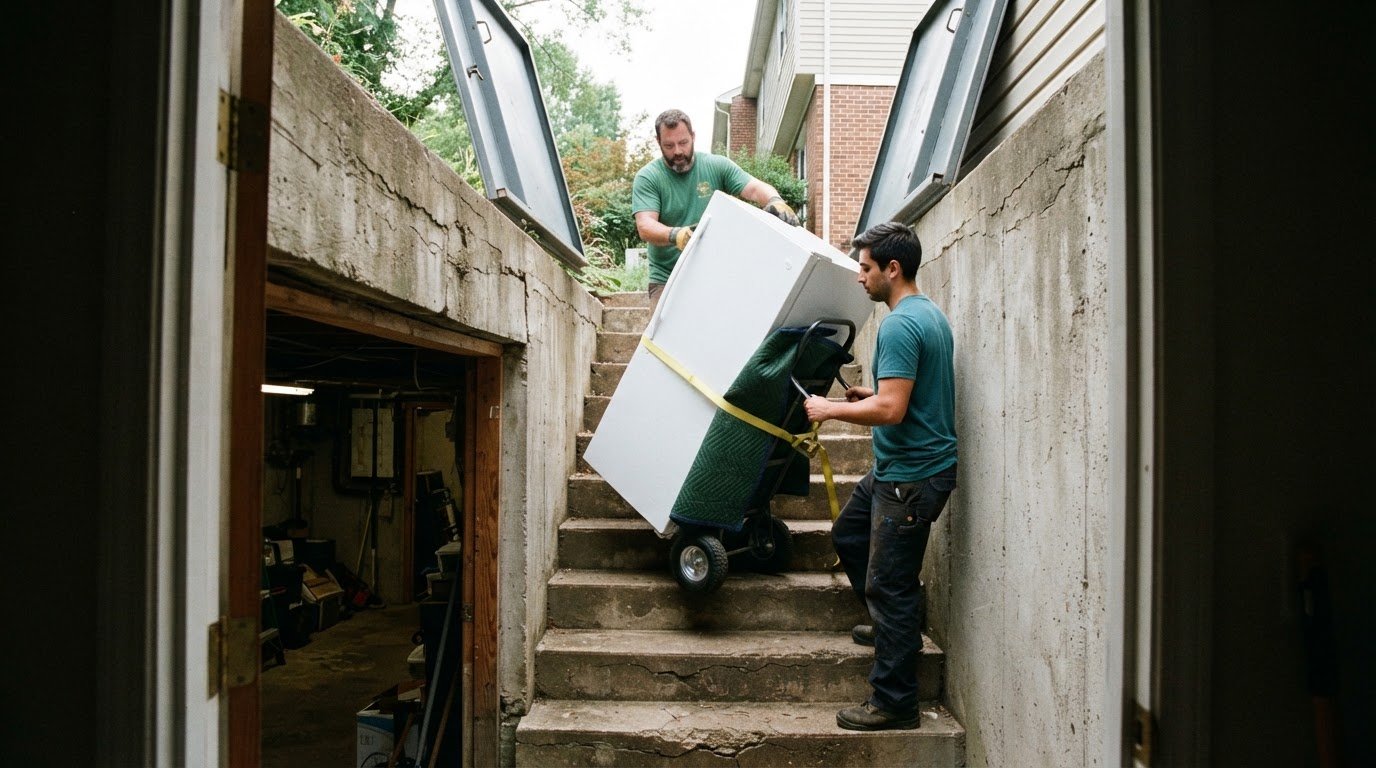
Keep an upright freezer upright on the way down basement bulkhead stairs whenever possible. If it must travel on its side or back, let it stand upright for 24 hours before plugging it in. This guide explains how to safely transport an upright freezer down basement bulkhead stairs in Fairfax without rushing the tight, awkward part of the move.
It’s reasonable to wonder whether laying the freezer down would make the stairs easier. Keeping it upright is generally the safer plan for the appliance, and careful preparation can make the move manageable. Learn how to empty and defrost the freezer, secure its doors and shelves, and use suitable equipment while coordinating the descent. You’ll also see what to do if the route makes upright transport impossible, so you can plan before lifting begins.
Key Takeaways
- Empty the freezer, unplug it ahead of the move, and remove loose shelves and drawers before defrosting and drying the interior.
- Secure the door and protect the cabinet with a moving blanket so the appliance stays closed and shielded during handling.
- Plan the stair movement with clear communication and controlled positioning; tilt a freezer slightly to the side when placing it on a hand truck, not forward.
- Use the freezer’s dimensions and the stair route to plan the move. A typical upright freezer weighs roughly 160 pounds, so don’t underestimate the load.
- If the route makes upright transport impossible, consult the owner’s manual for model-specific instructions before moving the freezer on its side.
Can You Lay a Freezer on its Side?
Measure the freezer’s height, width, and depth, then measure the narrowest stair opening, landing, and doorway with a tape measure. Compare the appliance’s dimensions in its upright position against each opening, allowing room to guide and control it.
Steep or wet bulkhead stairs can cause a helper to slip or lose control of the freezer. Clear the route and keep each step dry before moving the appliance.
- Keep the freezer upright if the stair route allows it. Keep the freezer upright when possible; if it must be laid down, consult the owner’s manual for model-specific guidance. Check the owner’s manual for model-specific instructions before changing its position.
- Understand the risk before laying it down. A freezer on its side can allow compressor lubricating oil to enter the sealed refrigerant system tubing. Starting it in that condition can accelerate compressor wear, so don’t rush to plugging it in after a sideways move.
- Disconnect the power cord from the wall receptacle before preparing the freezer. Remove all food, then take out removable shelves and drawers. These steps clear the interior and prevent loose items from shifting while the freezer is tilted or carried.
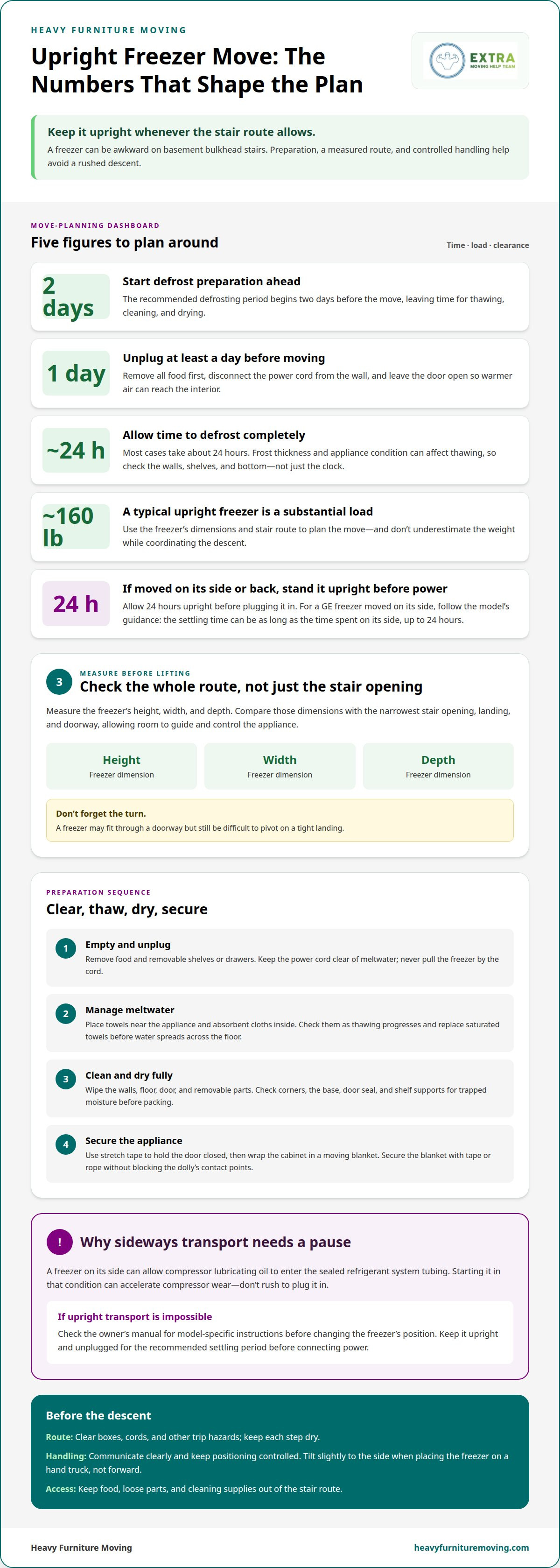
- Defrost and clean the empty freezer before moving it. Allow about 24 hours for a complete defrost in most cases, and plan ahead because ice and water can remain after the obvious frost melts. Wipe the interior clean and dry it completely before packing.
- Secure the door so it can’t swing open during the move. Use stretch tape to hold it closed, then wrap the cabinet in a moving blanket. Secure the blanket with tape or rope, keeping the covering snug without blocking the dolly’s contact points.
- Use the freezer’s dimensions to plan each turn, not just the stair opening. Check the landing and door openings for enough room to pivot the appliance while keeping it supported. A freezer that fits through a doorway may still be difficult to turn on a tight landing.
- If the freezer travels on its side or back, let it stand upright before plugging it in. Allow 24 hours after a move on its side or back. For a GE upright or chest freezer transported on its side, let it stand upright for as long as it was on its side, up to 24 hours, before plugging it in.
Before relocating an existing GE upright or chest freezer, disconnect its power cord from the wall receptacle, then remove the food, defrost the freezer, and clean it. Ensure it is 100% dry before packing it for transport; dryness is part of preparing the appliance for the move.
If a GE freezer has been transported on its side, leave it upright and unplugged before connecting it. Follow the manufacturer’s instructions for how long it should settle, since the required time can vary by model.
Emptying and defrosting the freezer
- Start preparing the appliance two days before the move. The recommended defrosting period begins 2 days prior to moving out, while an empty freezer should be unplugged at least one day before moving. This schedule leaves time for thawing, cleaning, and drying before transport.
- Remove every food item before unplugging the freezer. Sort the contents into food to keep and food to discard, then move the food you’re keeping into suitable temporary cold storage. Don’t leave food inside during the move; it can spill, thaw, or obstruct access to the interior.
- Unplug the freezer from its wall receptacle at least one day before moving. Keep the power cord clear of meltwater, and avoid pulling the appliance by the cord. Once the freezer is disconnected, leave its door open so warmer air can reach the interior.
- Allow roughly 24 hours for the freezer to defrost completely in most cases. Frost thickness and the appliance’s condition affect how quickly ice melts, so inspect the walls, shelves, and bottom rather than relying only on elapsed time. Don’t force stuck ice loose with sharp tools.
- Prepare for water before the ice melts. Place towels near the freezer and absorbent cloths inside to catch drips. Check them as thawing progresses, and replace saturated towels before water spreads across the floor. A wet surface near the appliance can make the preparation area slippery.
- Remove shelves, drawers, and other removable interior components after the freezer is empty. Set each piece aside where it won’t be stepped on or damaged. This clears the cabinet and prevents loose parts from shifting when the appliance is tilted for handling.
- Clean the interior once the ice has melted. Wipe away water and residue from the walls, floor, door, and removable parts. Use a clean cloth for remaining moisture, including corners where water can collect, so the cabinet is ready to dry fully.
- Wait until the freezer is completely dry before packing it for transport. Check the base, door seal, shelf supports, and drawers for trapped moisture. If a cloth picks up water from any surface, keep drying; wrapping a damp appliance can hold moisture against its finish.
- Keep the food, removable parts, and cleaning supplies out of the stair route. For example, place drawers beside the freezer only while cleaning, then move them clear before handling begins. A dry, uncluttered path helps prevent trips and leaves room to guide the appliance.
Keeping an upright freezer upright during transport
Licensing and insurance are separate from safe handling. The physical steps below don’t determine whether a Fairfax mover needs either for a particular appliance move.
- Keep the freezer vertical as you stage it and move it. An upright position avoids the need to lay the appliance on its side or back. Before moving, make sure the path from the room to the bulkhead stairs is clear of boxes, cords, and other trip hazards.
- Set the route before lifting. Check the stair treads, landing, and door openings for obstacles, and decide where the freezer will pause if the team needs to reset its grip. A clear plan helps prevent sudden turns or unsupported shifts on narrow stairs.
- Assign clear roles to each helper. One person should lead communication while the others focus on supporting and guiding the freezer. Agree on simple commands such as “stop,” “lower,” and “step,” then use them consistently from the top stair to the basement.
- Move in small, controlled stages. Keep the freezer balanced and upright, and pause when a helper needs to adjust footing or hand placement. Don’t rush to keep pace with someone ahead. On steep bulkhead stairs, a controlled stop is safer than an unexpected change in direction.
- Use proper lifting technique when lifting the appliance. Bend at the knees and lift with the legs rather than pulling with the back. Keep the freezer close to the body when possible, and avoid twisting while carrying or repositioning it near a landing.
- Protect the freezer’s corners and nearby walls during tight turns. A moving blanket can help shield the cabinet, while a spotter watches for contact with railings, doorframes, and stair edges. Stop before a turn if the freezer starts to lean or the route narrows unexpectedly.
- Keep the stair surface dry and clear throughout the move. Water from defrosting, loose towels, or debris can affect footing. If a step becomes wet, stop the movement and clear the hazard before continuing, rather than trying to carry the freezer across a slippery tread.
- Check the freezer’s position after each pause. Confirm that it remains upright and stable before helpers change grips or resume moving. If a hand truck is used, tilt the freezer slightly to the side when placing it on the truck, not forward, and keep the load controlled as it moves.
- Move only when every helper is ready. On each stair, communicate before shifting the freezer, then advance together at a controlled pace. Stop immediately if anyone loses footing, loses their grip, or can’t keep the appliance upright.
Moving a freezer on four-wheeled dollies
Use a four-wheeled dolly on level flooring and an appliance hand truck for the stair descent. Planning how to safely transport an upright freezer down basement bulkhead stairs in Fairfax starts with choosing equipment suited to each part of the route.
Determine How Many Movers Are Needed
Assess the freezer, stairway, landing, and equipment before deciding how many helpers can control the move safely. There’s no single safe number for every household. The team must be able to support and guide the load without losing balance or blocking anyone’s footing.
- Assign each helper a clear position and task before lifting. Make sure everyone can keep a stable stance and reach the freezer without crowding the stairs.
- Choose one person to call each movement, pause, and grip change. If the team can’t communicate or maintain control together, don’t begin the descent.
Strap the Freezer to the Dolly
Choose an appliance hand truck for stairs rather than relying on a four-wheeled dolly. A four-wheeled model is for level surfaces, not for rolling a freezer down stair treads.
- Keep the freezer supported while positioning the hand truck plate beneath it. Tilt it slightly to the side when loading, not forward, and avoid striking or pressing the compressor area against the equipment.
- Fasten the hand truck straps around the appliance so it can’t shift during movement. Keep straps clear of the cord and loose parts, then check that the freezer remains balanced and its door stays closed.
Lower the Dolly on the Stairs
Before deciding how to safely transport an upright freezer down basement bulkhead stairs in Fairfax, make sure the hand truck, helpers, and route are ready for a controlled descent. Keep the appliance supported, communicate before each movement, and stop if anyone loses a secure stance.
- Position helpers where they can guide and control the load without standing in one another’s way. Agree on a clear stop command, and use it before changing grip or direction.
- Lower the hand truck carefully from tread to tread. Pause at a landing to check its balance and straps before continuing; never let the freezer roll or drop freely down the stairs.
- Bring the hand truck fully onto level basement flooring before releasing the straps. If the next stretch is flat, transfer the freezer onto a four-wheeled dolly with support, then guide it across the floor without pulling on its door or cord.
How much does a typical upright freezer weigh and what are its dimensions?
- Plan for a substantial load: an upright freezer weighs roughly 160 pounds. That figure helps set expectations, but your specific appliance may weigh more or less. Check its model label or owner’s manual for its listed weight, then use that information to plan the handling team and equipment.
- Measure the actual freezer before planning its route. Record its height, width, and depth with a tape measure, including handles or other parts that project beyond the cabinet. Use the measurements for the freezer as it will travel, not just the cabinet dimensions in product paperwork.
- Measure each tight point along the route. Check the bulkhead opening, every stairwell doorway, and the narrowest part of the landing. Compare those measurements with the freezer’s width and depth, then consider the space needed to guide and turn it without scraping walls.
- Check the appliance’s height against the stair route. Measure overhead clearance at the entrance and above the stairs, especially where the ceiling slopes or the freezer must pass beneath a doorframe. Keep the freezer upright in your plan; rotating it may change its fit and increase handling difficulty.
- Map the turning space at each landing. A freezer may fit through a straight doorway but leave too little room to pivot at a corner. Measure the landing’s usable floor area and note railings, door swings, and wall projections that could block a controlled turn.
- Use the measurements to select the moving position and equipment. A four-wheeled dolly suits level flooring, while an appliance hand truck is used for stair handling. Check that the freezer can sit securely on the equipment without its door, handle, or cord being caught or pressed.
- Leave room for helpers to keep control. A route that barely fits the freezer can make it harder to grip, guide, or pause safely. If a doorway or landing is too tight for a controlled move, don’t force the appliance through; rethink the route before lifting.
- Write down the measurements and share them with everyone handling the move. For example, note the narrowest opening and the tightest landing turn. Clear figures help the team plan where to position the freezer, when to pause, and how to avoid last-minute adjustments on the stairs.
If a roughly 160-pound appliance and a tight stair route call for extra hands, get help moving a heavy freezer.
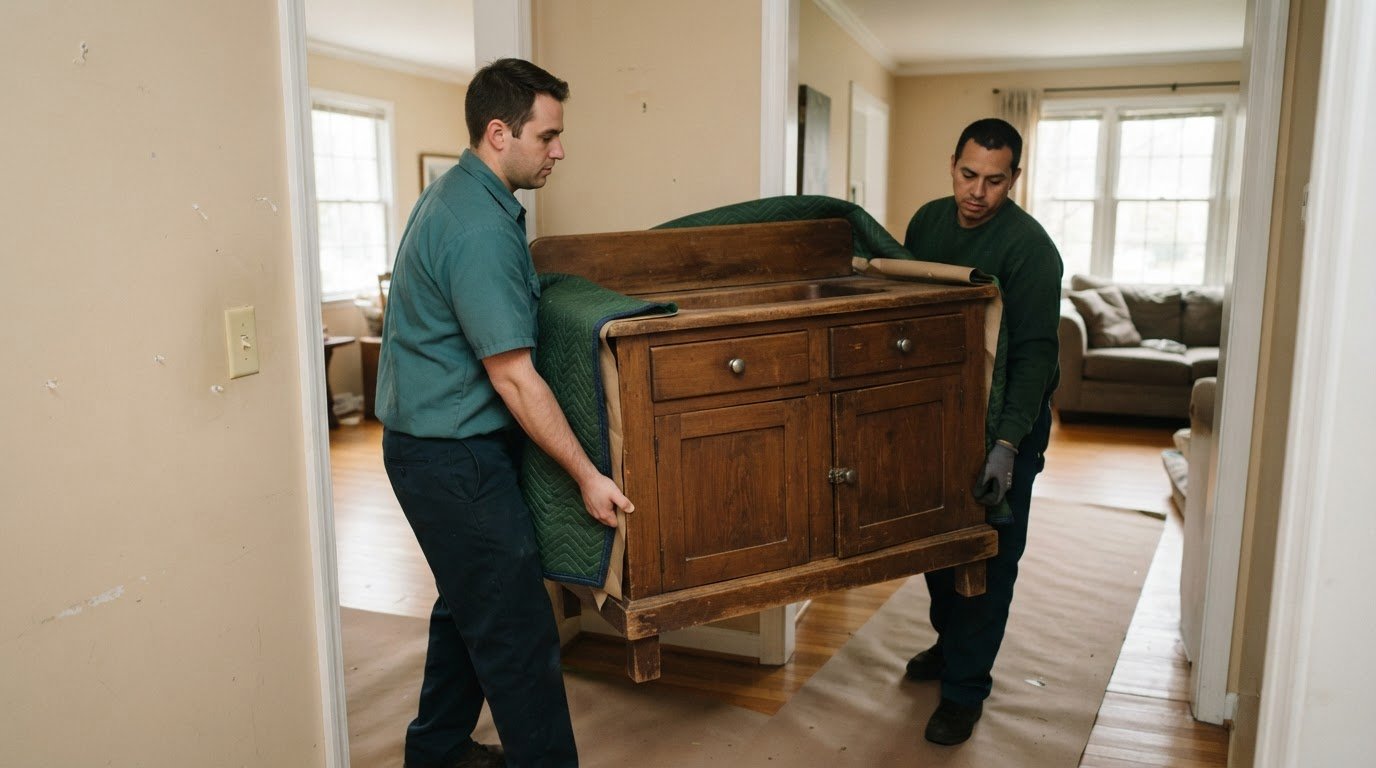
Heavy Furniture Moving
Heavy Furniture Moving can help with the heavy lifting when a freezer’s weight, tight landing, or bulkhead stairs make the move difficult to manage alone. The team handles heavy and bulky household items and can help plan for challenging access. Share the freezer’s approximate weight, dimensions, and stairway details so the route can be assessed before the move. If the appliance is hard to keep upright and under control with the people and equipment available, professional moving help can make the lift more manageable. Contact Heavy Furniture Moving to discuss your freezer move.
Plan the Move Before the First Lift
Before moving day, turn your route measurements into a clear plan: identify where helpers will stand, where the freezer may need to pause, and how it will reach the basement floor. A careful approach to how to safely transport an upright freezer down basement bulkhead stairs in Fairfax starts with making those decisions before the appliance is in motion. If the stairway feels too tight or the load is difficult to control, bring in help rather than forcing the descent.
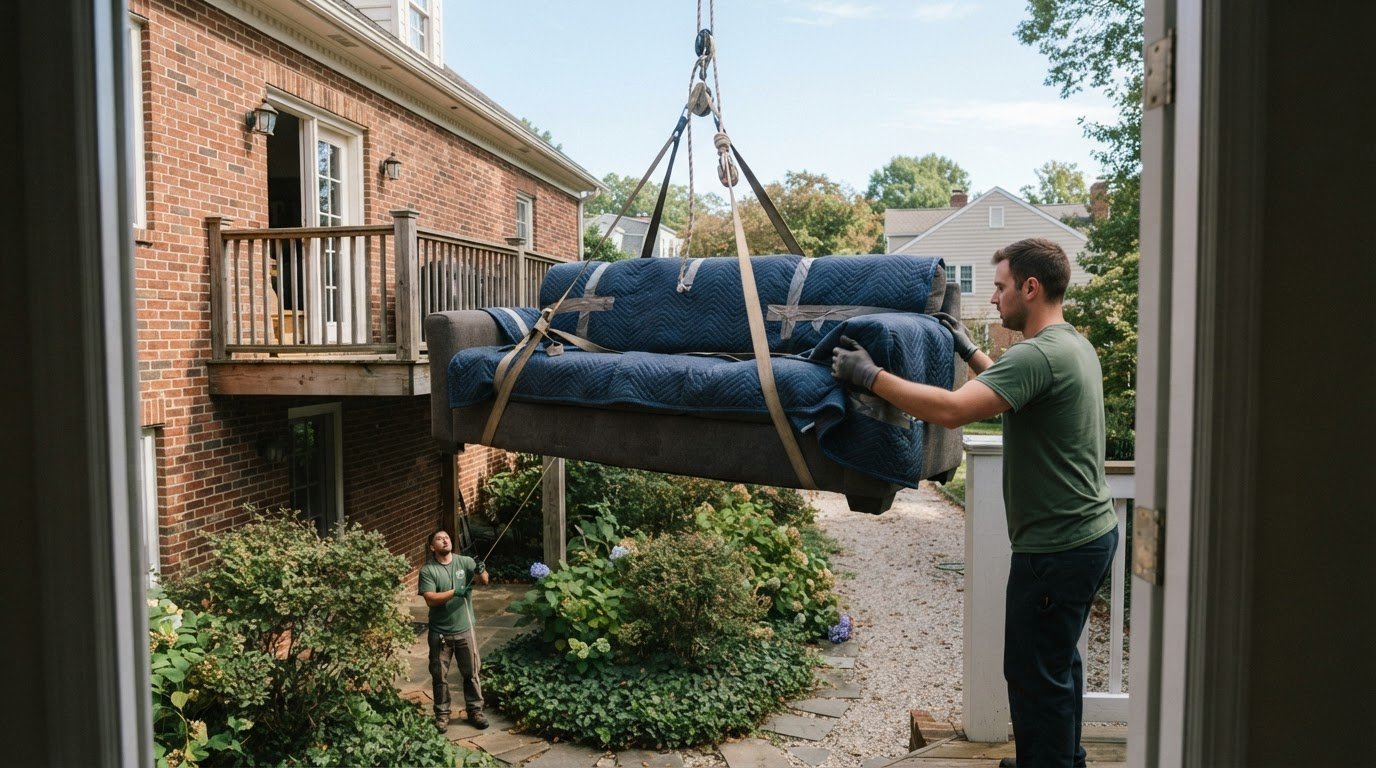
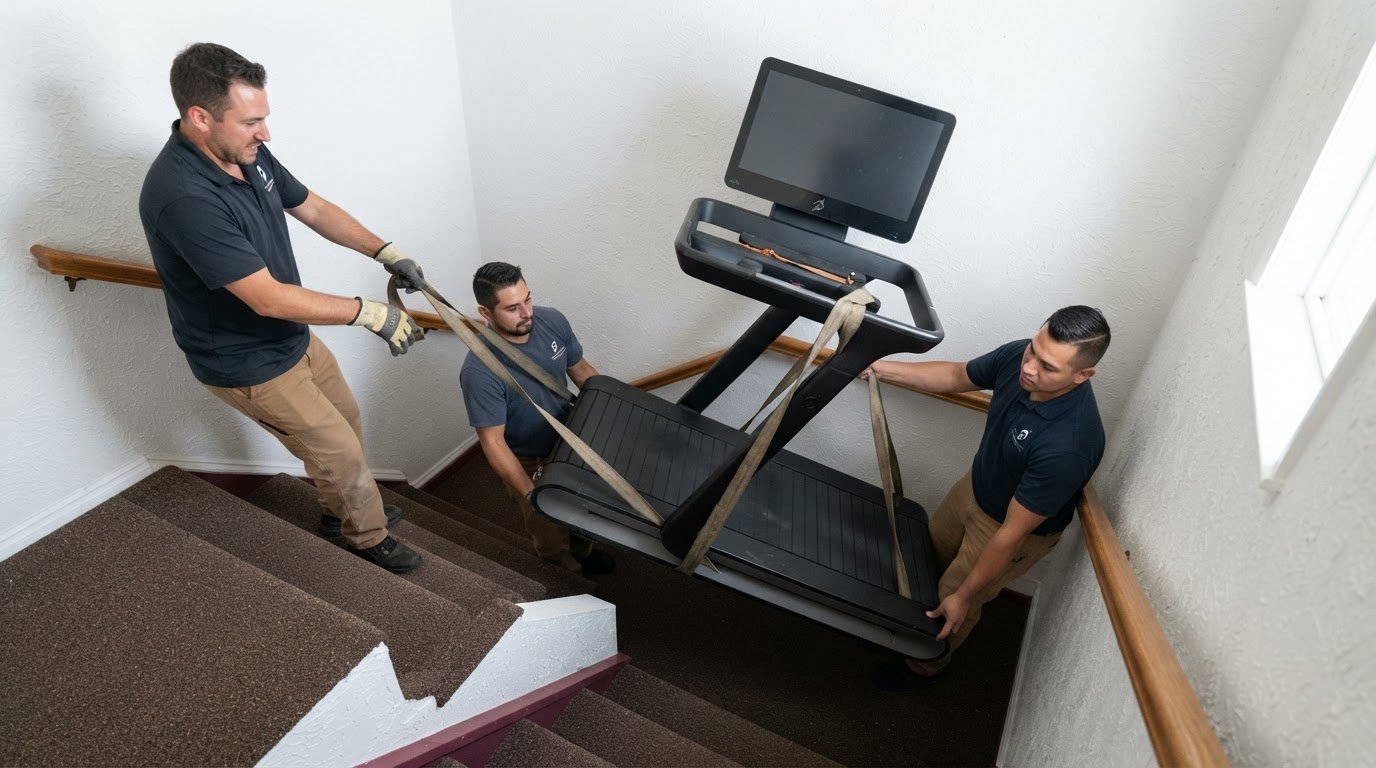
Heavy Furniture Moving can help with challenging household moves. Its services also include Movers Near Me, Exercise Equipment Moving, and Sofa Hoisting. For support with your freezer move, contact Heavy Furniture Moving. Make a plan that fits your route, and take the next step with confidence.
Frequently Asked Questions
Can an upright freezer be transported on its side, and how long should it stand upright before plugging in?
Yes, but upright transport is preferred. GE advises placing a freezer on its compressor side if it cannot remain upright, and recommends checking the owner’s manual for model-specific instructions. After a move on its side or back, wait 24 hours before plugging it in. GE says its freezer transported on its side should stand upright for as long as it was on its side, up to 24 hours.
What equipment is safest for moving a freezer down narrow bulkhead stairs?
Use an appliance hand truck with straps for the stair descent, not a four-wheeled dolly. A four-wheeled dolly is suited to level flooring, where it can roll without navigating stair edges. Before loading, check that the hand truck fits the freezer and stair route. Secure the appliance so it can’t shift, and plan how to transfer it onto a wheeled dolly once it reaches level basement flooring. Heavy Furniture Moving includes wrap, blankets, and straps on every job.
Should a freezer be emptied, defrosted, and secured before transport?
Yes. Remove food and loose interior parts, unplug the appliance, and let it defrost and dry completely before moving it. After wiping the cabinet, check the bottom and shelf supports for water. Secure the door so it stays closed during handling, and keep the cord clear of the path. This preparation prevents loose contents, meltwater, or an open door from complicating the move.
What are typical appliance-mover costs in Fairfax, Virginia, for basement stair delivery?
The cost of a Fairfax basement stair move depends on the freezer’s size and weight, stair access, landing turns, and handling required. Heavy Furniture Moving offers hourly labor with a two-hour minimum and flat rates for most single heavy items. Send a photo of the freezer and stairs, along with route details, to get a quote tailored to the move.
When should you hire professional movers instead of moving a freezer down bulkhead stairs yourself?
Hire professional movers if the stairway is steep or wet, the landing leaves little room to turn, or your helpers can’t keep the freezer controlled. A tight Fairfax bulkhead route can make a heavy appliance difficult to manage, even when it fits through the opening. Heavy Furniture Moving handles residential moves involving heavy and bulky items, including Movers Near Me services, when you need help with the lift.
Frequently Asked Questions
Yes, but upright transport is preferred. GE advises placing a freezer on its compressor side if it cannot remain upright, and recommends checking the owner’s manual for model-specific instructions. After a move on its side or back, wait 24 hours before plugging it in. GE says its freezer transported on its side should stand upright for as long as it was on its side, up to 24 hours.
Use an appliance hand truck with straps for the stair descent, not a four-wheeled dolly. A four-wheeled dolly is suited to level flooring, where it can roll without navigating stair edges. Before loading, check that the hand truck fits the freezer and stair route. Secure the appliance so it can’t shift, and plan how to transfer it onto a wheeled dolly once it reaches level basement flooring. Heavy Furniture Moving includes wrap, blankets, and straps on every job.
Yes. Remove food and loose interior parts, unplug the appliance, and let it defrost and dry completely before moving it. After wiping the cabinet, check the bottom and shelf supports for water. Secure the door so it stays closed during handling, and keep the cord clear of the path. This preparation prevents loose contents, meltwater, or an open door from complicating the move.
The cost of a Fairfax basement stair move depends on the freezer’s size and weight, stair access, landing turns, and handling required. Heavy Furniture Moving offers hourly labor with a two-hour minimum and flat rates for most single heavy items. Send a photo of the freezer and stairs, along with route details, to get a quote tailored to the move.
Hire professional movers if the stairway is steep or wet, the landing leaves little room to turn, or your helpers can’t keep the freezer controlled. A tight Fairfax bulkhead route can make a heavy appliance difficult to manage, even when it fits through the opening. Heavy Furniture Moving handles residential moves involving heavy and bulky items, including Movers Near Me services, when you need help with the lift.