Tipping Etiquette for Specialty Movers: 2026 Guide
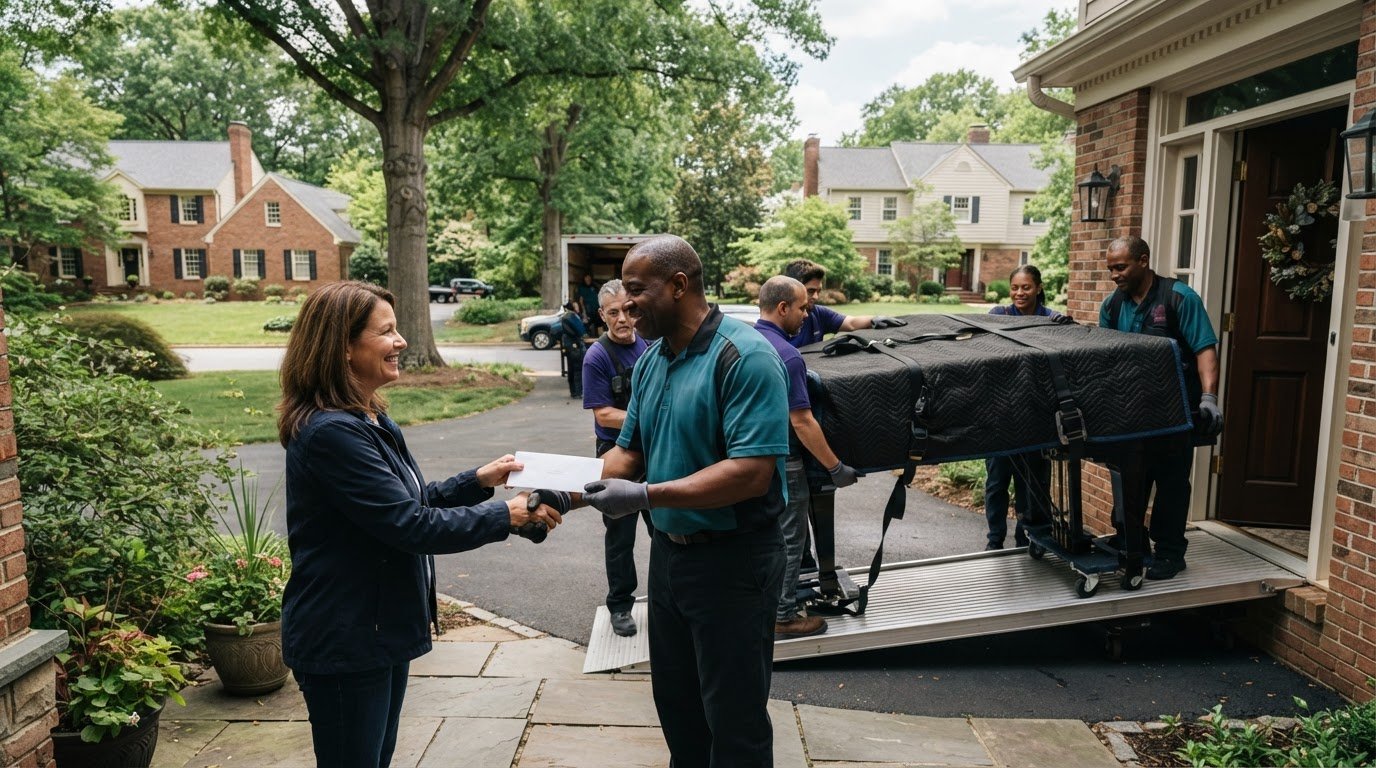
Should you tip a specialty moving crew for lifting a heavy item, or for the planning and coordination involved in moving it carefully? A piano, safe, or piece of exercise equipment can call for more than strength alone. Tipping etiquette for specialty movers starts with one simple point: a tip is voluntary, not an obligation.
If you’re unsure whether to tip or how much feels fair, you’re not alone. The right choice depends on the work, the care shown, and what fits your budget. You can recognize a demanding job without stretching your finances or feeling pressured to match someone else’s idea of the “right” amount.
This guide explains when to tip, how to weigh factors such as difficult access and careful handling, and practical ways to thank the crew. You’ll have a clear approach for deciding what feels appropriate, whether the move involves a challenging sofa hoist or another specialty item.
Key Takeaways
- Tipping is a personal choice, separate from the agreed charge for the moving work.
- Use service quality, effort, teamwork, and your budget to decide what feels fair.
- You can thank each mover individually or give the crew a shared tip.
- These tipping etiquette for specialty movers tips help you recognize careful handling without relying on a rigid formula.
- Planning and coordination matter when moving challenging items like pianos, safes, and exercise equipment.
Tipping Etiquette for Specialty Movers: Is a Tip Expected?
A tip is your choice, not a condition of receiving moving service. The agreed charge covers the work you arranged with the moving company. A tip is separate: it’s a personal way to recognize service that stood out to you. You can appreciate a careful job without spending more than your budget allows.
That distinction can ease the pressure. Tipping is a social custom of tipping, not a single rule for every customer. With specialty assignments, the decision may feel less clear because the work can involve more than carrying an item from one spot to another. Focus on what you observed rather than assuming the item itself sets a tipping standard.
Is tipping specialty movers required?
No. You’re not required to tip, and strong service doesn’t obligate you to spend beyond your means. Consider whether the crew handled the work carefully, communicated clearly, and treated your home respectfully. Then make a choice that feels comfortable. A sincere thank-you is also a genuine way to show appreciation when a tip doesn’t fit your budget.
Why specialty moving can raise extra etiquette questions
A piano, safe, and piece of exercise equipment each present different moving considerations. Depending on the assignment, the crew may need to plan a route, coordinate movements, and guide the item through tight spaces. Those details can shape how you judge the service, but they don’t mean every specialty move requires extra labor or a larger tip. Consider the work you actually saw.
Use a few practical questions to assess the service:
- Was the crew attentive to the item and its surroundings?
- Did team members coordinate smoothly and communicate clearly?
- Did the service meet the expectations set for the job?
- Would a tip fit your budget without creating strain?
Your answers can guide a fair decision without turning tipping into a test or calculation. The tipping etiquette for specialty movers is simple: recognize service, effort, and teamwork as you experienced them, then choose an amount, or no tip, that feels right for you.
What Makes Specialty Moving Different When You Decide to Tip?
The item’s name or size doesn’t set a tip amount. What matters is the work involved and how the crew handles it. A piano, safe, and piece of fitness equipment each bring different considerations, so base your impression on the actual assignment rather than assuming every specialty move calls for the same level of effort.
Lifting is only part of the picture. The crew may also need to plan how an item will move through the home, communicate clearly, and coordinate their actions. Notice those choices without trying to calculate the crew’s physical effort or guessing what the job “should” earn in tips.
How item type and access affect the work
A treadmill may be bulky and awkward to move, while a safe or piano presents its own handling considerations. Stairs, narrow hallways, tight turns, and limited entry space can also change how the crew approaches the assignment. These details may help explain why a move feels more involved, but they don’t automatically call for a larger tip. Pay attention to the care and coordination you observe.
How professionalism and care shape appreciation
Think about how the crew communicated and treated your belongings and home. Did team members stay coordinated? Did they give one another clear directions and work together through challenging areas? Was their approach respectful and attentive? These are concrete signs of service quality you can weigh alongside the effort involved.
Appreciation doesn’t have to depend on how dramatic the lift looked. A smooth job may reflect steady teamwork and thoughtful planning, while a difficult route may call for extra coordination. Neither circumstance alone dictates what you should give. For practical guidance on handing out a tip, Realtor.com’s tipping etiquette advice recommends giving it to each worker individually.
Specialty-move appreciation can reflect care, coordination, and service quality. Use what you observed to make a decision that feels fair to you. If moving a piano, safe, or fitness equipment is creating a challenge at home, specialty heavy-item moving help can make the work more manageable.
How to Choose a Fair Tip Without Relying on a Fixed Formula
A fixed percentage or per-hour calculation can miss what made your specialty move different. A crew moving one item through an open route may face a very different assignment from a crew working around stairs or tight access. Consider a few practical factors, then choose an amount that feels fair and fits your household budget. There’s no standard minimum you need to meet.
Which factors can guide your decision?
Think about the service as a whole, not just the item’s size. Did the crew communicate clearly and treat your home and belongings with care? Did stairs, narrow passages, or other access challenges call for extra coordination? Did the team work together in a way that helped the job run smoothly? Your answers can help you assess the effort and service you actually experienced.
- Service quality: Consider courtesy, communication, and attentiveness.
- Effort and access: Reflect on the work the route and assignment appeared to require.
- Teamwork: Notice whether the crew coordinated well.
- Your budget: Set a comfortable limit, or decide not to tip.
Use these points as a guide, not a scorecard. No single factor has to determine your decision. In tipping etiquette for specialty movers, a thoughtful amount is one you choose freely, without borrowing, cutting into essentials, or feeling pushed by a formula.
Should you tip each mover or the crew together?
Either approach can be considerate. A shared crew tip is simple and recognizes the team’s combined work. Giving a tip directly to each mover lets you thank individuals and recognize contributions you noticed. Choose the option that feels clearest and most comfortable. If you want to acknowledge someone’s specific care or communication, a direct handoff makes that personal thanks easy.
If a tip doesn’t fit your circumstances, you can give no tip. A sincere verbal thank-you still recognizes the crew’s work. Keep the decision grounded in service, effort, teamwork, and what you can comfortably afford. That’s a fairer guide than treating every specialty assignment as if it called for the same amount.
When and How to Thank Specialty Movers on Moving Day
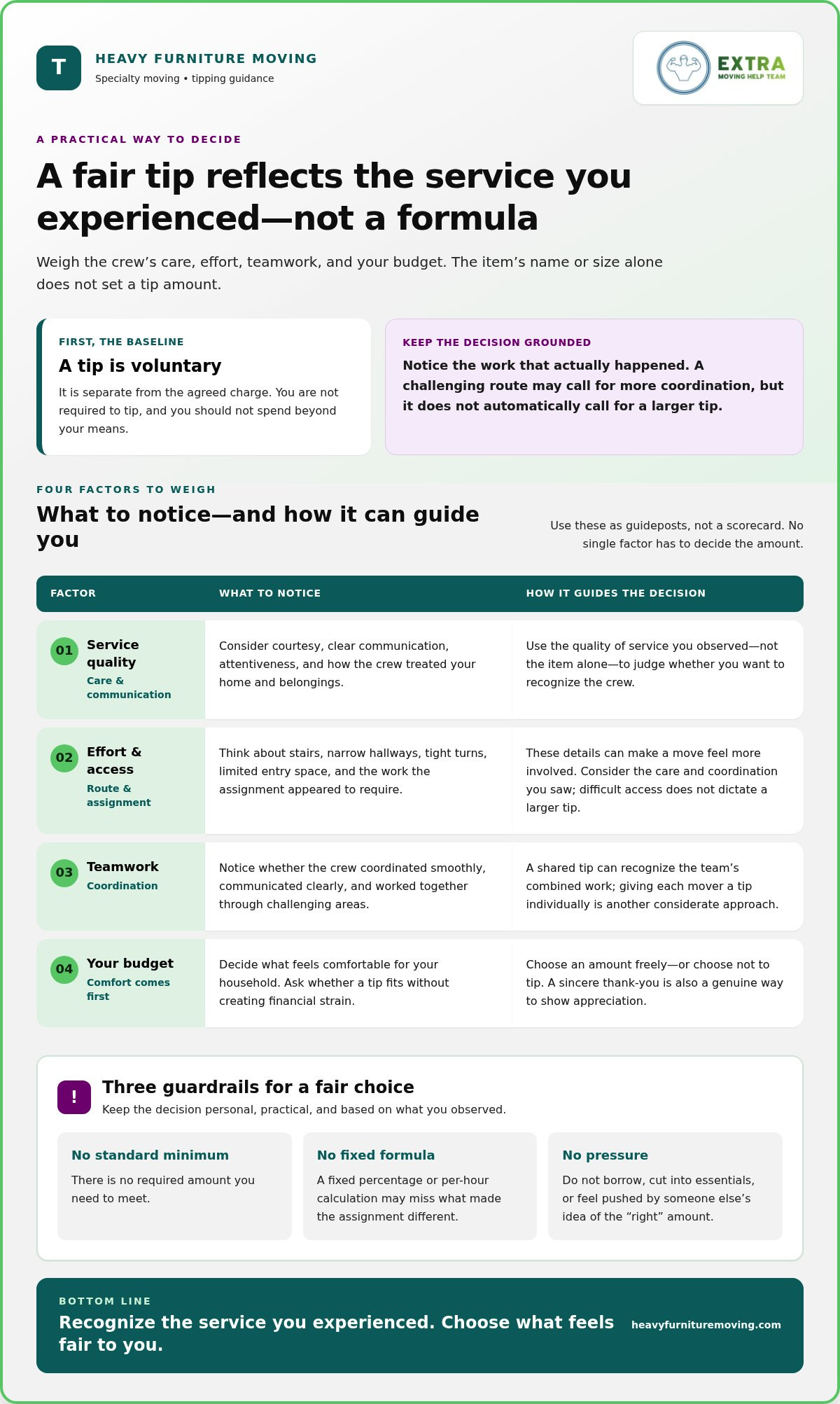
Keep the handoff simple: observe the service, decide what feels comfortable, then thank the crew directly. You don’t need to settle on a tip before the work begins. Waiting until the job is complete gives you a chance to consider the crew’s communication, care, and coordination before deciding whether you want to tip.
Cash can make a quick handoff convenient, but it isn’t the only way to show appreciation. If you choose to give a tip, hand it to each mover or offer it to the crew as a whole. A brief “Thank you for handling this so carefully” is enough. No speech is required.
What is a comfortable time to give a tip?
Many customers find the end of the job a natural moment, after the item is in place and the work is complete. That gives you time to assess the service without feeling rushed. You can also express thanks as the crew wraps up, whether or not you’re giving a tip. There’s no single timing choice you have to follow.
For a specialty move, mention a specific detail if you like: “I appreciated how clearly the team coordinated through that tight space.” Specific feedback makes your thanks personal and lets the crew know what stood out to you.
What if tipping is not within your budget?
Skip the tip if it would strain your budget. Respectful service shouldn’t depend on receiving extra money, and you don’t need to apologize for your choice. Offer a genuine thank-you instead. If you want to recognize the work further, share specific positive feedback through an appropriate review or message. Keep it honest and focused on what the crew did well.
These steps apply whether your move is in Fairfax or elsewhere in Northern Virginia. Your location doesn’t create a different tipping rule. Decide based on the service you experienced and what feels right for you. That’s the heart of tipping etiquette for specialty movers: appreciation should be thoughtful, not pressured.
If a difficult household move is coming up, get help with specialty moving for heavy or bulky items.
Show Appreciation and Get Specialty Moving Help in Northern Virginia
Thoughtful appreciation is about recognizing the care a crew brought to the job, not following a rigid tipping rule. A sincere thank-you, specific positive feedback, or a tip that fits your budget can all express gratitude. Choose what feels genuine. The point is to acknowledge the people who helped make a challenging move easier, not to meet an expectation that doesn’t work for you.
If a piano, safe, or piece of exercise equipment needs to be moved, professional help can take some of the strain out of a difficult household task. Specialty moving may involve planning and coordination beyond lifting. For background on moving a treadmill, look for the article Professional Treadmill Transport. It can help you think through the considerations involved in moving fitness equipment.
When a specialty moving crew can make the job easier
Heavy or bulky items can be hard to manage around corners, through hallways, or into a new room. Heavy Furniture Moving provides residential moving help for items such as pianos, safes, and exercise equipment. Some sofas also can’t fit through standard entryways or elevators. In those cases, sofa hoisting can provide a way to move the furniture into or out of the home.
The right help depends on the item and the home’s layout. If you’re weighing options for a local move, the article Reliable Movers in Fairfax and Northern Virginia offers another place to explore what residential moving support can involve.
How to take the next step with less stress
Start by identifying the item and the part of the move that feels difficult, such as a tight route or an awkward entryway. Then explore local residential moving help for challenging household items. A clear plan for the move can make the day feel more manageable, whether you need help with one bulky item or a broader household task.
If you’re planning a difficult move in Fairfax or Northern Virginia, explore local specialty moving help for your household item.
Make Your Specialty Move Feel More Manageable
The right tip is a personal choice. Let the crew’s care, coordination, and service guide you, then choose an amount that fits your budget, or simply offer a sincere thank-you. That’s the heart of tipping etiquette for specialty movers: appreciation should feel genuine, not pressured.
For a piano, safe, or exercise equipment move, professional help can ease the strain of handling a difficult household item. Sofa hoisting can also help when furniture won’t fit through a standard entryway or elevator. Heavy Furniture Moving is veteran-family owned and operated, with residential moving help for these demanding jobs.
Explore local moving help for heavy and specialty items, and take the next step with confidence. You don’t have to tackle a challenging move alone.
Frequently Asked Questions
Is tipping specialty movers expected?
No. A tip is optional, not a condition of receiving moving service. The agreed charge covers the work you arranged; a tip is an extra thank-you if you choose to give one. Tipping etiquette for specialty movers doesn’t require a particular amount or a tip at all. Whether your move is in Fairfax, Woodbridge, Manassas, or elsewhere in Northern Virginia, decide based on the service you experienced and what feels comfortable.
How much should you tip specialty movers?
There’s no required amount. One practical guideline for a specialty assignment is an additional $10 to $20 per mover to recognize extra care, but treat that as a reference, not a minimum or automatic add-on. Consider the crew’s service, the coordination the job involved, and your budget. If that guideline feels like too much, choose a smaller amount or don’t tip. Your decision should feel affordable and voluntary.
Should you tip each mover or give one tip to the crew?
Either approach can work. Giving a tip directly to each mover makes it easy to thank individuals for contributions you noticed. A shared crew tip is a simple way to recognize the team’s combined effort. If you choose a shared tip, hand it to the crew and say it’s for everyone. Pick the option that feels clear and considerate, and don’t feel you need to explain your choice.
Does moving a piano or safe mean you should tip more?
No. The item alone doesn’t determine the tip. A piano, safe, or piece of exercise equipment may call for different planning and coordination, depending on the route and home layout. Consider the work you observed, including careful handling, communication, and teamwork. A more involved assignment may influence what you choose to give, but it doesn’t automatically require a larger tip. Keep your decision tied to service and budget.
When should you give specialty movers a tip?
Many customers decide after the job is complete, when they’ve had a chance to assess the service. You can give a tip as the crew wraps up and thank them at the same time. Cash can make the handoff straightforward, but it isn’t the only way to show appreciation. There’s no single required moment. Choose a time that feels comfortable, and keep your thanks brief and sincere.
Can you thank movers without giving them a tip?
Yes. A direct, sincere thank-you is a thoughtful way to recognize the crew, especially if tipping doesn’t fit your budget. Mention something specific, such as clear communication or coordinated work through a tight space. You can also share honest positive feedback through an appropriate review or message. Appreciation doesn’t have to involve money, and respectful moving service shouldn’t depend on receiving a tip.
Should you tip if the moving bill already includes a service charge?
Check the bill or agreement to see whether it specifically identifies a gratuity or tip. A service charge may be separate, so don’t assume it’s a crew tip. If gratuity is clearly included, an extra tip is still your choice, not an obligation. Heavy Furniture Moving serves Fairfax, Woodbridge, Manassas, Manassas Park, Aldie, Ashburn, Mclean, Vienna, Reston, Centreville, Chantilly, Clifton, Dumfries, South Riding, Fairfax Station, Haymarket, and Gainesville.
Frequently Asked Questions
No. You’re not required to tip, and strong service doesn’t obligate you to spend beyond your means. Consider whether the crew handled the work carefully, communicated clearly, and treated your home respectfully. Then make a choice that feels comfortable. A sincere thank-you is also a genuine way to show appreciation when a tip doesn’t fit your budget.
Think about the service as a whole, not just the item’s size. Did the crew communicate clearly and treat your home and belongings with care? Did stairs, narrow passages, or other access challenges call for extra coordination? Did the team work together in a way that helped the job run smoothly? Your answers can help you assess the effort and service you actually experienced. Use these points as a guide, not a scorecard. No single factor has to determine your decision. In tipping etiquette for specialty movers, a thoughtful amount is one you choose freely, without borrowing, cutting into essentials, or feeling pushed by a formula.
Either approach can be considerate. A shared crew tip is simple and recognizes the team’s combined work. Giving a tip directly to each mover lets you thank individuals and recognize contributions you noticed. Choose the option that feels clearest and most comfortable. If you want to acknowledge someone’s specific care or communication, a direct handoff makes that personal thanks easy. If a tip doesn’t fit your circumstances, you can give no tip. A sincere verbal thank-you still recognizes the crew’s work. Keep the decision grounded in service, effort, teamwork, and what you can comfortably afford. That’s a fairer guide than treating every specialty assignment as if it called for the same amount. Keep the handoff simple: observe the service, decide what feels comfortable, then thank the crew directly. You don’t need to settle on a tip before the work begins. Waiting until the job is complete gives you a chance to consider the crew’s communication, care, and coordination before deciding whether you want to tip. Cash can make a quick handoff convenient, but it isn’t the only way to show appreciation. If you choose to give a tip, hand it to each mover or offer it to the crew as a whole. A brief “Thank you for handling this so carefully” is enough. No speech is required.
Many customers find the end of the job a natural moment, after the item is in place and the work is complete. That gives you time to assess the service without feeling rushed. You can also express thanks as the crew wraps up, whether or not you’re giving a tip. There’s no single timing choice you have to follow. For a specialty move, mention a specific detail if you like: “I appreciated how clearly the team coordinated through that tight space.” Specific feedback makes your thanks personal and lets the crew know what stood out to you.
Skip the tip if it would strain your budget. Respectful service shouldn’t depend on receiving extra money, and you don’t need to apologize for your choice. Offer a genuine thank-you instead. If you want to recognize the work further, share specific positive feedback through an appropriate review or message. Keep it honest and focused on what the crew did well. These steps apply whether your move is in Fairfax or elsewhere in Northern Virginia. Your location doesn’t create a different tipping rule. Decide based on the service you experienced and what feels right for you. That’s the heart of tipping etiquette for specialty movers: appreciation should be thoughtful, not pressured. If a difficult household move is coming up, get help with specialty moving for heavy or bulky items. Thoughtful appreciation is about recognizing the care a crew brought to the job, not following a rigid tipping rule. A sincere thank-you, specific positive feedback, or a tip that fits your budget can all express gratitude. Choose what feels genuine. The point is to acknowledge the people who helped make a challenging move easier, not to meet an expectation that doesn’t work for you. If a piano, safe, or piece of exercise equipment needs to be moved, professional help can take some of the strain out of a difficult household task. Specialty moving may involve planning and coordination beyond lifting. For background on moving a treadmill, look for the article Professional Treadmill Transport. It can help you think through the considerations involved in moving fitness equipment.
No. A tip is optional, not a condition of receiving moving service. The agreed charge covers the work you arranged; a tip is an extra thank-you if you choose to give one. Tipping etiquette for specialty movers doesn’t require a particular amount or a tip at all. Whether your move is in Fairfax, Woodbridge, Manassas, or elsewhere in Northern Virginia, decide based on the service you experienced and what feels comfortable.
There’s no required amount. One practical guideline for a specialty assignment is an additional $10 to $20 per mover to recognize extra care, but treat that as a reference, not a minimum or automatic add-on. Consider the crew’s service, the coordination the job involved, and your budget. If that guideline feels like too much, choose a smaller amount or don’t tip. Your decision should feel affordable and voluntary.
Either approach can work. Giving a tip directly to each mover makes it easy to thank individuals for contributions you noticed. A shared crew tip is a simple way to recognize the team’s combined effort. If you choose a shared tip, hand it to the crew and say it’s for everyone. Pick the option that feels clear and considerate, and don’t feel you need to explain your choice.
No. The item alone doesn’t determine the tip. A piano, safe, or piece of exercise equipment may call for different planning and coordination, depending on the route and home layout. Consider the work you observed, including careful handling, communication, and teamwork. A more involved assignment may influence what you choose to give, but it doesn’t automatically require a larger tip. Keep your decision tied to service and budget.
Many customers decide after the job is complete, when they’ve had a chance to assess the service. You can give a tip as the crew wraps up and thank them at the same time. Cash can make the handoff straightforward, but it isn’t the only way to show appreciation. There’s no single required moment. Choose a time that feels comfortable, and keep your thanks brief and sincere.
Yes. A direct, sincere thank-you is a thoughtful way to recognize the crew, especially if tipping doesn’t fit your budget. Mention something specific, such as clear communication or coordinated work through a tight space. You can also share honest positive feedback through an appropriate review or message. Appreciation doesn’t have to involve money, and respectful moving service shouldn’t depend on receiving a tip.
Check the bill or agreement to see whether it specifically identifies a gratuity or tip. A service charge may be separate, so don’t assume it’s a crew tip. If gratuity is clearly included, an extra tip is still your choice, not an obligation. Heavy Furniture Moving serves Fairfax, Woodbridge, Manassas, Manassas Park, Aldie, Ashburn, Mclean, Vienna, Reston, Centreville, Chantilly, Clifton, Dumfries, South Riding, Fairfax Station, Haymarket, and Gainesville.