How to Control a Heavy Fire Safe’s Descent Down Outdoor Basement Stairs
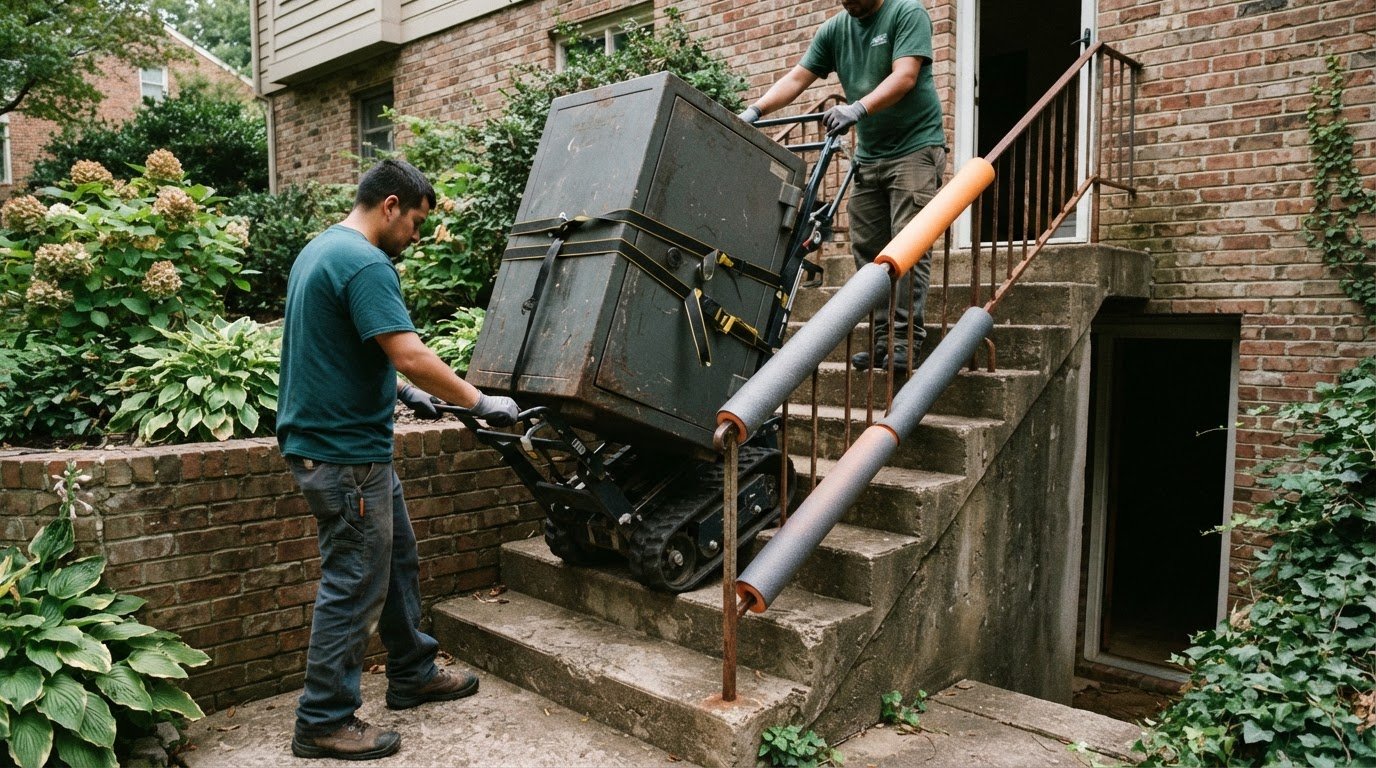
A heavy safe should never be treated like ordinary furniture on steep stairs. Homeowners usually should hire professionals for safes weighing more than 500 pounds. If you're deciding how to move a heavy fire safe down steep outdoor basement stairs in Reston, the safe’s weight, stair angle, and landing space all matter.
It’s natural to worry about a safe slipping, damaging the steps, or injuring someone during the descent. Professional movers assess the safe and the route before moving it, planning a controlled approach instead of relying on strength alone.
Learn what movers measure at the stairs and access points, how they protect concrete and nearby surfaces, and how they manage the safe’s descent. You’ll also see when the layout or load makes professional help the sensible choice, and which details help the movers plan the job.
Key Takeaways
- For a safe weighing more than 500 pounds, professional movers are usually the sensible choice, especially on steep outdoor stairs.
- Movers assess the safe, stairway, landings, and access route before choosing how to manage the descent.
- Careful control matters more than strength alone; a planned descent helps limit the risk of a sudden shift or fall.
- Floor runners, moving blankets, plywood, and corner protectors can help shield nearby surfaces during the move.
- A fall can damage stairs, floors, walls, or railings and cause serious injury, so route planning and protection are essential.
How professional movers assess whether a heavy safe move is feasible
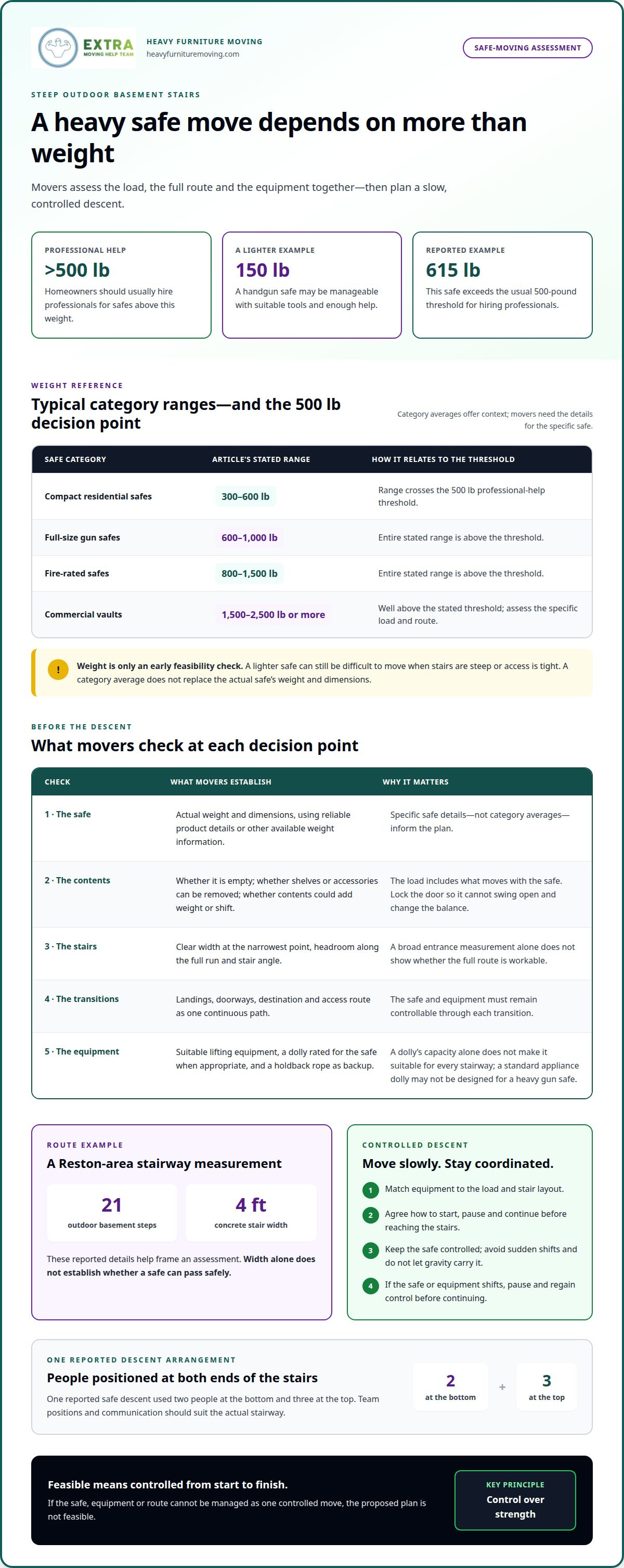
- Establish the safe’s actual moving weight. To plan how to move a heavy fire safe down steep outdoor basement stairs in Reston, movers first establish the safe’s weight and dimensions. They use reliable product details or other available weight information. Category averages offer context, but they don’t replace the specific safe’s details. Compact residential safes average 300 to 600 pounds. Full-size gun safes average 600 to 1,000 pounds. Fire-rated safes average 800 to 1,500 pounds.
- Use weight as an early feasibility test. Homeowners should usually hire professionals for safes weighing more than 500 pounds. A lighter safe can still be difficult to move if the stairway is steep or access is tight. A 150-pound handgun safe may be manageable with suitable tools and enough help. That example doesn’t make a heavier fire safe an appropriate do-it-yourself move. Movers consider the load alongside the stairs and handling demands.
- Account for everything that moves with the safe. Before planning the descent, movers determine whether the safe is empty and identify removable shelves or accessories. Firearms, ammunition, documents, and loose contents add weight or may shift inside the cabinet. Lock the door so it cannot swing open and change the safe’s balance. These details help movers assess the actual load instead of relying only on a product listing.
- Match the load to suitable moving equipment. Manufacturers generally recommend using proper lifting equipment when possible. A dolly’s rating must suit the safe, and its design must also work for the stair route. A standard appliance dolly may not be designed to safely support a heavy gun safe.
- Decide whether the entire route can be controlled. Movers assess the outdoor stairs, landing, doorway, and destination as one continuous path. For a plan covering how to move a heavy fire safe down steep outdoor basement stairs in Reston, they consider whether the load can stay stable through each transition. A 615-pound safe exceeds the usual 500-pound threshold for hiring professionals. If the safe, equipment, or route can’t be managed as one controlled move, the proposed plan isn’t feasible.
How professionals control a safe’s descent down stairs
Professional movers control a heavy safe by matching the equipment to the load and lowering it slowly, without relying on strength alone. They use suitable lifting equipment, a properly rated dolly when appropriate, and a holdback rope as a backup.
-
Equipment professionals use for a safe move
Have the moving team choose equipment suited to the safe’s weight and the stair layout. Proper lifting equipment helps support the load, while the dolly must have a rating appropriate for the safe. A holdback rope can provide backup control if a helper loses grip. A dolly’s capacity alone doesn’t make it suitable for every stairway.
-
Review professional descent methods
Ask the moving team to explain how it will control the safe from the top step to the bottom landing. The safe should move slowly, with the team maintaining control instead of trying to muscle it down. One reported safe descent used two people at the bottom and three at the top. The team’s positions and communication should suit the actual stairway.
- Keep the descent deliberate. Movers manage the safe as a single load and avoid sudden shifts between steps. A steep outdoor stairway may require steady adjustments as the load moves downward. If the safe or equipment shifts, the team should pause and regain control before continuing. That’s different from letting gravity carry the load and trying to stop it by hand.
- Plan for a lost grip. A holdback rope provides backup if a helper’s hands slip during the descent. It doesn’t replace the primary equipment or coordinated handling. Professional movers plan for that backup before the safe reaches the stairs, rather than improvising after control is lost. They also keep the descent slow enough to respond to changes in the safe’s position.
- Coordinate each transition. The team needs a shared plan for starting, pausing, and continuing down the steps. Clear communication helps movers respond together if the safe tilts or the dolly catches. For a Reston basement stairway, the outdoor surface and landing can affect how the team controls each transition. Professional heavy lifting help can take on this demanding move.
How professional movers measure stairs and access points
Fire-rated safes average 800 to 1,500 pounds; movers establish the individual safe’s weight and dimensions before planning access. They measure the route, then assess whether the outdoor stairs and landing can accommodate the safe and equipment.
- Record the safe’s actual dimensions. Movers measure its height, width, and depth, including protruding handles or other fixed parts. They also establish its weight using reliable product information or other available weight details. Category averages provide context, not a substitute for the specific safe: compact residential safes average 300 to 600 pounds, while commercial vaults average 1,500 to 2,500 pounds or more.
- Measure the stairway at its narrowest point. Record clear width between walls, rails, or other obstacles, rather than relying on a broad measurement at the entrance. A reported Reston-area example had 21 outdoor basement steps and concrete stairs 4 feet wide. Those details help frame a route assessment, but width alone doesn’t establish whether a safe can pass safely.
- Check headroom and stair angle. Measure ceiling clearance along the full run and note any low points. Stair steepness affects how the safe and moving equipment can travel across each step. A typical stair rise has been estimated at about 40º degrees, while steep basement stairs can reach 45 degrees. Movers use the actual slope and clearance to assess whether the load can remain controlled.
- Map every opening and turning point. Measure exterior and basement door openings, hallways, landings, and the turning radius at corners. Compare those clearances with the safe’s dimensions and its position on the moving equipment. A safe that fits the stair width may still fail to clear a doorway or turn. Mapping the full route helps identify pinch points before the descent begins.
- Assess the stairs’ visible condition and support. Movers inspect the outdoor steps and landing for visible damage, movement, or uneven surfaces. They consider the combined load of the safe and moving equipment, along with the path that load will take. Stair width or material alone cannot establish a structure’s capacity. If the route’s support is uncertain, the team must address that concern before moving the safe onto the stairs.
- Use measurements to make a route decision. Movers compare the safe, equipment, and each measured clearance as one complete path. A 4-foot-wide concrete stairway with 21 steps offers specific dimensions to assess, but it doesn’t prove every safe will fit or that the stairs can support it. The measurements guide whether the planned route allows controlled passage from the outdoor entrance to the basement.
How professionals protect floors, walls, and stairs during a safe move
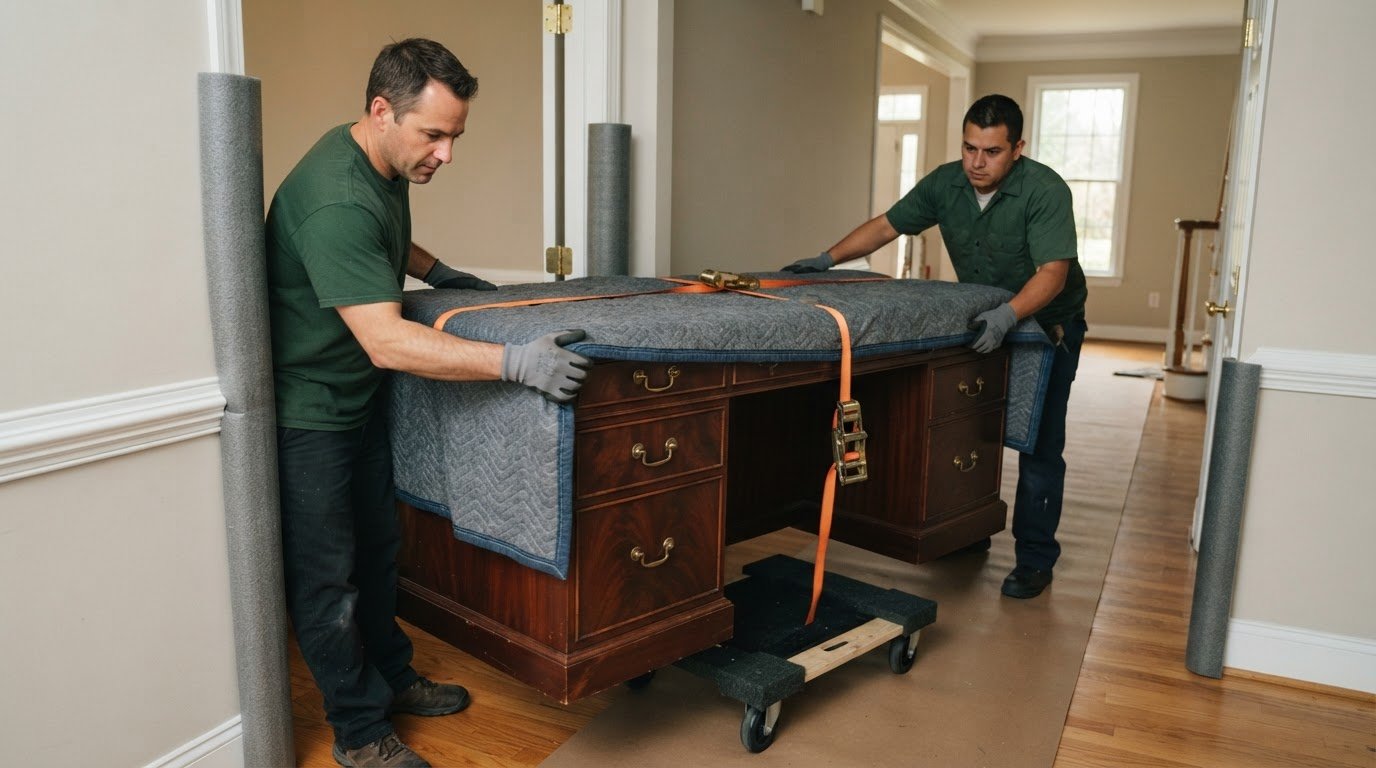
Professional movers plan surface protection along the safe’s entire route, from the outdoor entrance to its basement destination. Floor runners, moving blankets, plywood sheets, and corner protectors can shield vulnerable areas during handling.
- Identify surfaces along the whole route. Movers note where the safe may pass close to a wall, doorway, floor, or stair edge. They also consider the transition from outdoor concrete to the basement interior. Plan protection for the actual path of the safe and equipment, not just the room where the safe starts. This helps the team protect areas where contact or scraping could occur.
- Cover flat floors with runners. Floor runners can protect interior flooring on the approach to the stairs and around the destination. Movers position them along the travel path and keep them from bunching beneath moving equipment. For hardwood or tile, a clearly protected route helps reduce direct contact with the safe or dolly. The team can adjust coverage if the route changes.
- Use plywood where the route needs a firm protective layer. Plywood sheets may shield a vulnerable floor or protect a transition between surfaces. Movers assess where the safe and equipment will travel before placing each sheet. A wide plank and flat dolly were used in one reported move down five stairs with a stove. That example illustrates one setup, not a universal plan for moving a heavy safe.
- Guard walls and corners at tight points. Moving blankets can cushion exposed areas, while corner protectors shield vulnerable edges. Movers focus on door frames, wall corners, and narrow turns where the safe or equipment could make contact. They secure the protective materials and keep them clear of wheels and supports. A blanket on the wall doesn’t replace careful handling through a tight opening.
- Check protection as the move progresses. Movers monitor runners, blankets, plywood, and corner protectors as the safe advances. If a runner shifts or a sheet moves, they pause and reset it before continuing. Outdoor basement stairs create a transition between exterior and interior surfaces, so protection should account for both. Keep loose materials clear of the route so they don’t interfere with controlled movement.
Risks of a safe falling down stairs
For a Reston or Fairfax County move, permit and building-rule requirements depend on the property and the work involved. A safe’s weight alone doesn’t determine whether a permit applies, and moving advice isn’t a legal determination.
- Recognize the damage a fall can cause. A falling safe can break stair treads, crack tile, damage hardwood, bend railings, or damage drywall. A hard impact may also cause structural damage. On outdoor basement stairs, the safe could strike several steps before reaching the landing. The consequences can extend beyond where the safe comes to rest, so movers treat every transition as part of the risk.
- Keep people clear of the fall path. A heavy safe can cause serious injury if it tips or slides. Movers keep helpers and household members out of its path, including below the stairs and beside tight turns. They don’t rely on someone standing downhill to catch a moving safe. A clear route gives the team room to control the movement and respond if the load shifts.
- Stop if control changes. If the safe tilts, equipment shifts, or a stair surface moves, the team should pause instead of forcing the next step. Continuing under changed conditions can turn a manageable move into a fall. Movers need a clear way to stop and regain control before proceeding. On steep outdoor stairs, loose material or uneven surfaces can also affect footing and equipment movement.
- Check the landing before the safe arrives. The bottom landing needs to be clear enough for a controlled set-down and the next movement. Remove obstacles from the planned path and protect nearby surfaces. Once the safe reaches the bottom, movers set it down under control, keep its door locked, and secure it to suitable moving equipment before transporting it farther. The load should remain stable during the transition.
- Separate moving guidance from permit decisions. Moving a safe and doing building work are separate matters. Changes to a stairway, doorway, railing, or other part of a property may bring separate requirements. Don’t infer Reston or Fairfax County rules from the safe’s weight or the moving method. Keep the moving plan focused on safe handling, and treat property alterations as a separate issue.
- Choose controlled handling over recovery. A fall can damage the safe, surrounding finishes, stair structure, and people nearby. Preventing loss of control is more practical than planning to repair a broken tread or cracked tile afterward. For a demanding descent, arrange professional heavy lifting help to manage the safe and its route.
Heavy Furniture Moving
Heavy Furniture Moving provides heavy lifting services for demanding residential moves, including safe moving. When a fire safe’s weight, steep stairs, or tight access makes the descent difficult, professional help can take the strain off your household and keep the move organized. If the safe is part of a larger household move, the team also offers Movers Near Me and in home furniture movers near me. Share the safe’s weight, dimensions, stair layout, and destination so the team can plan for the full route. For a challenging safe move in Reston, contact Heavy Furniture Moving to discuss your move.
Plan the next move with confidence
If you’re deciding how to move a heavy fire safe down steep outdoor basement stairs in Reston, start with a clear conversation about the job. Share what you know about the safe, the route, and its destination. This gives the moving team a practical starting point for understanding the work and planning the move around your home.
Heavy Furniture Moving also offers Movers Near Me, Exercise Equipment Moving, and Sofa Hoisting. These services can help when the safe move is part of a broader household moving plan. Focus on the outcome you need, then arrange support suited to the task. You don’t have to organize a difficult heavy-item move alone.
Contact Heavy Furniture Moving to discuss your safe move and take the next step with confidence.
Frequently Asked Questions
When should you hire professionals to move a gun safe downstairs?
Hire professionals when the safe is heavy, the stairs are steep, or the route leaves little room to maneuver. A basement with a sharp turn, narrow doorway, or exposed outdoor steps creates handling challenges, even when the safe is smaller. Professional safe movers can plan the entire route and manage the move as one job, rather than relying on household members to react if the load shifts.
How much does it cost to hire safe movers in Reston, Virginia?
The price depends on the safe and the move, and you receive a quote before work begins. Heavy Furniture Moving uses hourly labor with a 2-hour minimum, while most single heavy items receive flat-rate pricing. The quote can account for the safe, stair access, and protection needs. Share the safe’s details and route information so the estimate reflects the specific Reston job.
Which safe-moving companies serve Reston and Fairfax County?
Heavy Furniture Moving serves Reston and Fairfax County, and its specialized heavy-item moving service includes safes. The team can help with a residential safe move when stairs or access make the job difficult to manage alone. Share the safe’s approximate weight, its location, and the destination so the movers can understand the route. The company also provides residential moving support for other household items.
What are the risks of moving a heavy safe down stairs without professionals?
A safe can shift or fall, putting nearby people at risk and damaging property. A fall may break stair treads, crack tile, damage hardwood or drywall, bend railings, or cause structural damage. The risk increases when helpers can’t control the load through a turn or onto a landing. Keep people clear of the route, and don’t attempt a move beyond your ability to control.
What should you do to prepare outdoor stairs and the path for professional safe removal?
Clear the hallway, doorway, outdoor steps, and basement landing of anything that could obstruct the move. Share the safe’s dimensions and weight, and identify the tightest doorway or turn. A photo of the safe and stairs can help movers understand the route before arriving. Keep the path accessible, including the area where the safe will be set down at the bottom.
Frequently Asked Questions
Hire professionals when the safe is heavy, the stairs are steep, or the route leaves little room to maneuver. A basement with a sharp turn, narrow doorway, or exposed outdoor steps creates handling challenges, even when the safe is smaller. Professional safe movers can plan the entire route and manage the move as one job, rather than relying on household members to react if the load shifts.
The price depends on the safe and the move, and you receive a quote before work begins. Heavy Furniture Moving uses hourly labor with a 2-hour minimum, while most single heavy items receive flat-rate pricing. The quote can account for the safe, stair access, and protection needs. Share the safe’s details and route information so the estimate reflects the specific Reston job.
Heavy Furniture Moving serves Reston and Fairfax County, and its specialized heavy-item moving service includes safes. The team can help with a residential safe move when stairs or access make the job difficult to manage alone. Share the safe’s approximate weight, its location, and the destination so the movers can understand the route. The company also provides residential moving support for other household items.
A safe can shift or fall, putting nearby people at risk and damaging property. A fall may break stair treads, crack tile, damage hardwood or drywall, bend railings, or cause structural damage. The risk increases when helpers can’t control the load through a turn or onto a landing. Keep people clear of the route, and don’t attempt a move beyond your ability to control.
Clear the hallway, doorway, outdoor steps, and basement landing of anything that could obstruct the move. Share the safe’s dimensions and weight, and identify the tightest doorway or turn. A photo of the safe and stairs can help movers understand the route before arriving. Keep the path accessible, including the area where the safe will be set down at the bottom.