How to Move an Antique Grandfather Clock in Gainesville
An antique grandfather clock should travel upright, with its pendulum removed and packed separately. If you’re wondering how to move an antique grandfather clock without damaging its pendulum in Gainesville, the safest approach is careful disassembly, padding the case, securing the clock for transport, and taking care during reinstallation.
It’s easy to focus on the cabinet, but the pendulum and other removable parts need just as much care. Professional movers protect these delicate pieces from swinging or shifting, wrap the clock case to help prevent scratches and dents, and keep the clock upright during the move.
This guide explains how to remove and pack the pendulum, protect the case, and reinstall and level the clock at its new home. It also explains why moving an antique clock alone can be difficult and how careful handling helps reduce the risk of damage.
Key Takeaways
- Learn why movers label each clock weight and keep its original position clear for reassembly.
- See how careful padding helps shield an antique wooden case from bumps and surface damage.
- Understand the checks that help a clock sit level and run smoothly after the move.
- Find out why a grandfather clock’s size, delicate parts, and handling demands can make professional help a safer choice.
- Know what information about the clock and its path through the home can help movers plan the job.
How Do Professional Movers Move a Grandfather Clock?
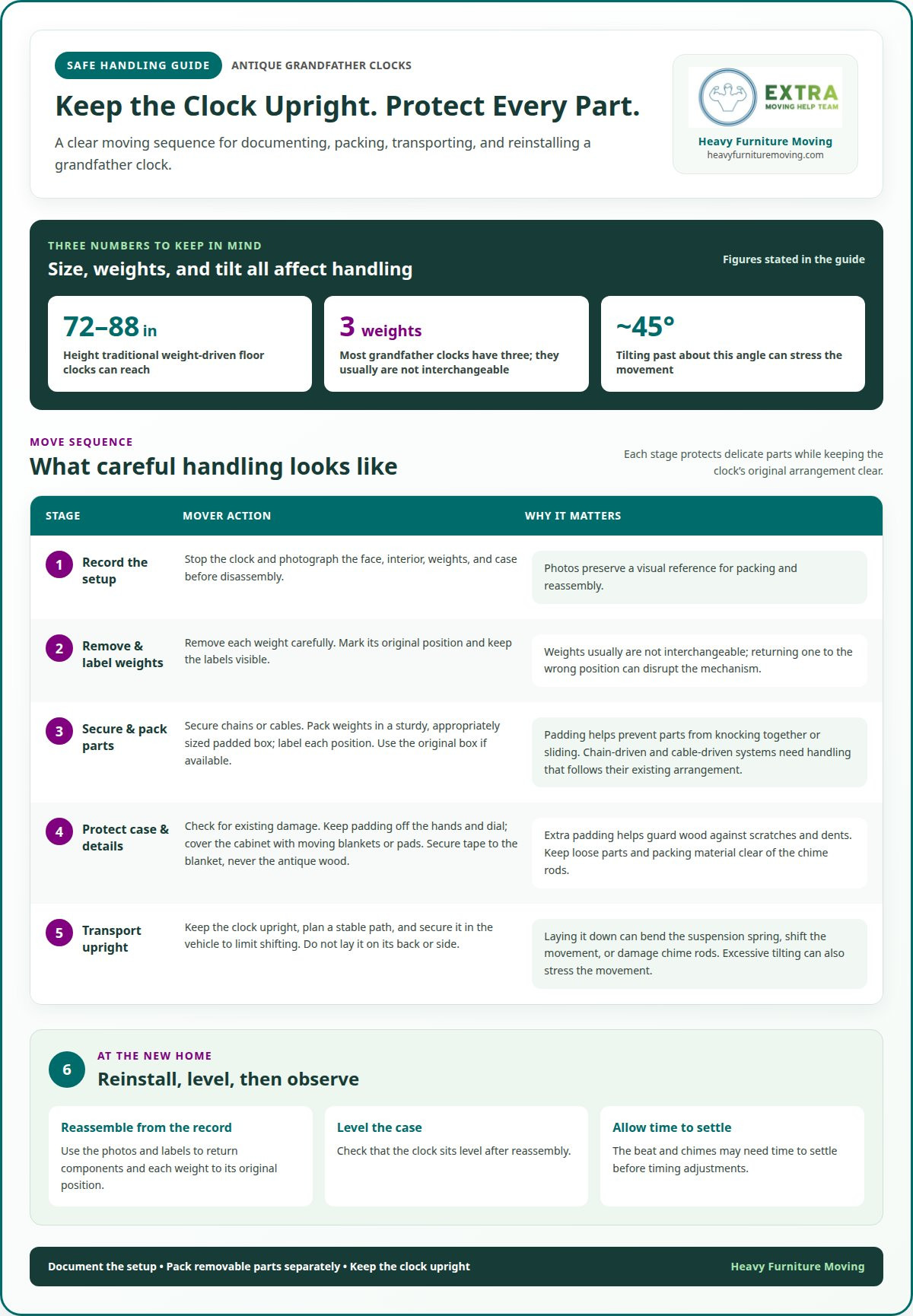
- Movers begin by stopping the clock and recording its arrangement before disassembly. They photograph the face, interior, weights, and case so the original setup remains clear. Traditional weight-driven floor clocks can stand 72 to 88 inches tall, so the crew also plans a stable, upright path through the home. Photos give movers a visual reference for packing and reassembly. For anyone planning how to move an antique grandfather clock without damaging its pendulum in Gainesville, this preparation helps protect the clock’s individual parts.
- Next, movers carefully remove each weight and label it before packing. Most grandfather clocks have three weights, which usually aren’t interchangeable. Each may control a different function, so putting one back in the wrong position can disrupt the mechanism. Movers mark each weight’s original position and keep the labels visible during transport. The crew keeps the labeled weights together for reinstallation.
- Movers also secure the chains or cables connected to the weights to prevent loose parts from tangling or shifting against the clock’s movement. On a chain-driven clock, the chains must be protected from slipping during handling. Cable-driven systems need particular care because the cables and pulleys must stay controlled. Movers follow the clock’s existing arrangement instead of treating every mechanism the same. Removing the weights also prevents them from swinging inside the case and striking delicate components.
- Each removed weight goes in a sturdy box sized to hold it securely. Movers pad the pieces to prevent them from knocking together or sliding during transit, then label the container with its contents and each weight’s clock position. Clear labels help the reinstallation crew return every weight to its original place. If the clock’s original packing box is available, movers use it. Otherwise, the box should be appropriately sized, padded, and marked “fragile” and “this side up.”
- Before the clock leaves the home, movers check that the case and loose components are ready for upright transport. Laying a grandfather clock on its back or side can bend its suspension spring, shift its movement, or damage chime rods. Tilting it past about 45 degrees can also stress the movement. For those considering how to move an antique grandfather clock without damaging its pendulum in Gainesville, professional movers secure the clock in the vehicle to limit shifting and keep its labeled parts organized for reinstallation.
How Professional Movers Wrap and Protect the Clock Case
Professional movers use moving blankets or pads, packing tape, and extra padding to protect a grandfather clock. They pack removable parts separately and check that the wrapped case remains upright and secure.
- Start by checking the case, doors, and visible glass for existing damage. Movers note scratches or loose sections before wrapping to avoid worsening them during handling. They identify removable parts, such as a detachable face or glass panel, and keep them separate from the cabinet. The original box can be useful, especially for delicate components shaped to fit it.
-
Protecting the Hands, Dial, and Cabinet During a Professional Move
Protect the clock hands and dial before wrapping the cabinet. Movers keep padding from pressing against the hands, which could bend them or disturb their position. They protect the dial and make sure the doors and trim won’t rub against the packing material. Extra padding or bubble wrap helps prevent scratches and dents on the wooden case.
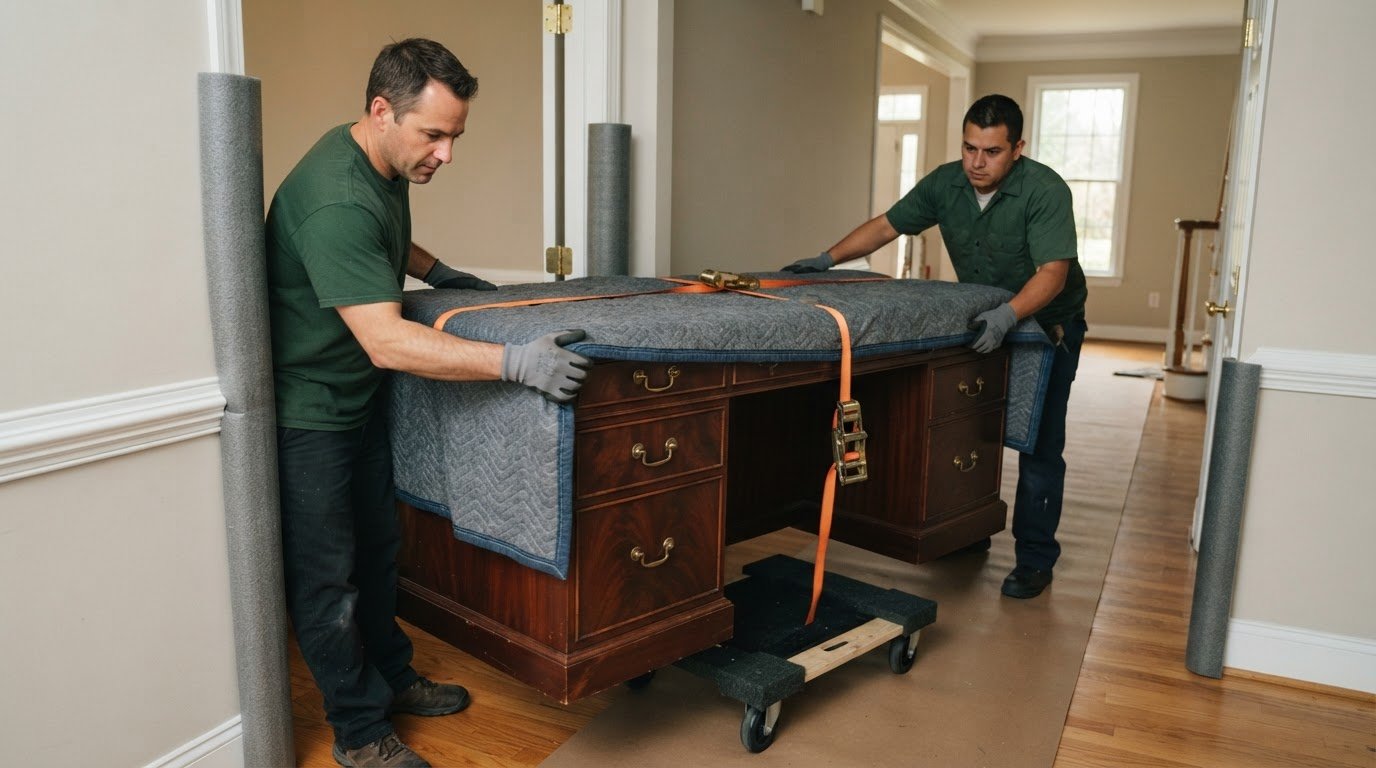
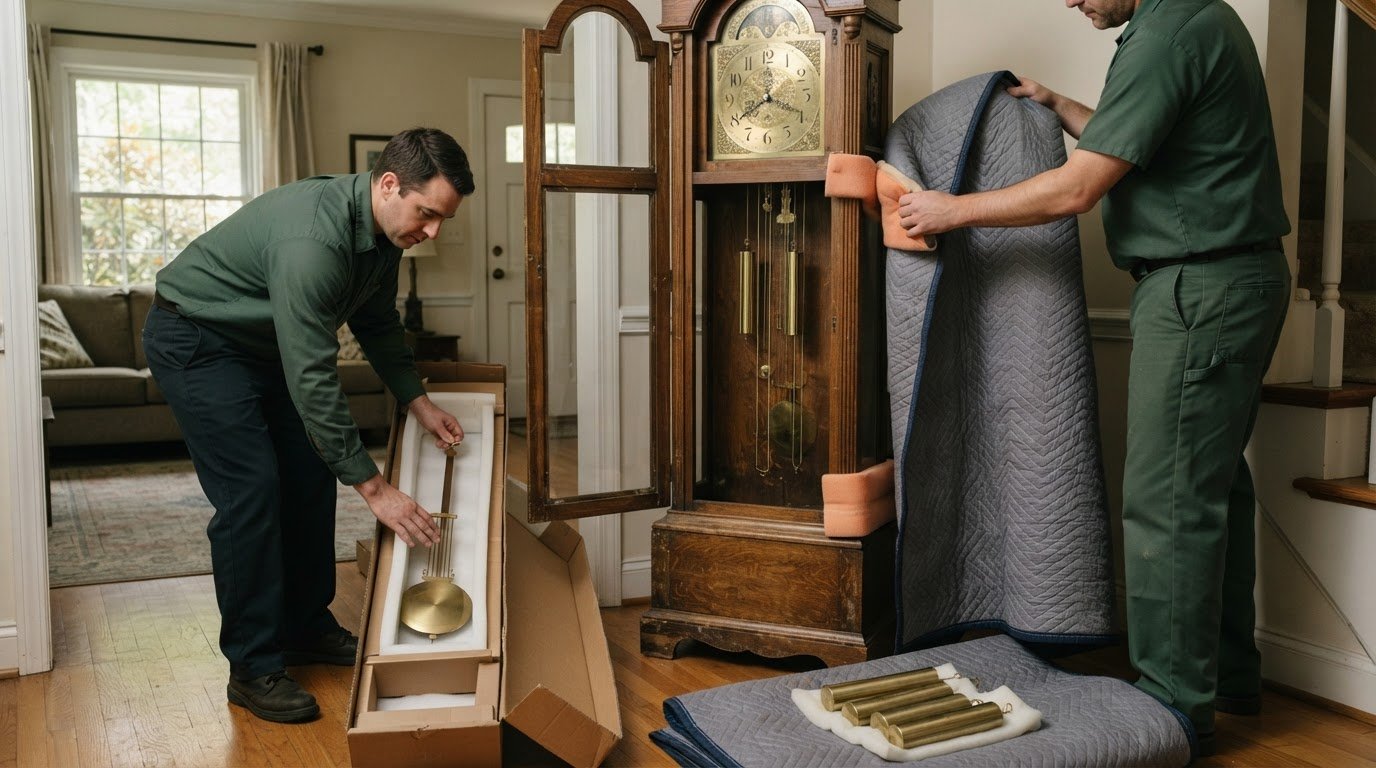
Moving blankets or pads cover the case, and packing tape secures the wrap. Movers place tape on the blanket, never directly on antique wood. They check corners, edges, and decorative trim, where a tight turn through a doorway could cause a bump. This padded outer layer helps shield the heirloom’s finish during handling.
-
Protecting the Chime Rods During a Professional Move
Keep the chime rods clear of loose internal parts. Movers check inside the clock before wrapping and prevent removable components from shifting against the rods. If a component is designed to be removed, they pack it separately rather than leaving it loose inside the case.
Movers avoid pushing blanket edges or packing material into the case, where they could press on delicate parts. Before closing the case for transport, they make sure nothing catches on the rods or other internal components. A final visual check confirms there is clear space around the rods.
-
Choosing Protective Packing Materials for a Professional Move
Choose materials that cushion the clock without pressing on its details. Movers wrap the cabinet in moving blankets or pads, then add padding or bubble wrap to vulnerable wooden surfaces. Packing tape holds the outer wrap in place, but stays off the clock’s finish to avoid adhesive marks.
For a removable glass panel or other detached component, movers use a sturdy box sized to hold it securely with padding. They label the box “fragile” and “this side up” so handlers can identify its contents and orientation. Movers use the original box when available. Otherwise, they choose a box that prevents the padded piece from sliding.
- Finish by checking the wrapped case and its separate boxes before loading. Movers make sure the blanket remains secured, labels are visible, and removable pieces are accounted for. They keep the clock upright during transport and secure it in the vehicle to prevent shifting. For help with the heavy lifting and careful handling, consider professional furniture moving help.
How Professionals Level and Reinstall the Clock
After delivery, movers reassemble the clock, return its weights, and level the case. The beat and chimes may need time to settle before timing adjustments.
Yes, the clock needs careful reinstallation and observation after a move, but timing usually shouldn’t be adjusted immediately. Let it run for 24 to 48 hours first, then assess whether it needs adjustment.
-
How Professionals Reassemble the Clock
Movers use their notes and photographs to guide reassembly. They return the weights to their original positions and reconnect the clock’s components in the correct arrangement. Since each weight has a specific place, labels made before transport help prevent mix-ups. The crew removes the protective blankets and checks that no packing material remains inside the case.
Next, movers reinstall the pendulum and confirm it hangs freely without touching the case or another component. They handle it carefully because it is a delicate part of the clock’s movement. The clock’s doors and removable pieces go back in their proper positions. Before starting the clock, movers check inside for loose items that could interfere with the pendulum or chime.
-
How Professionals Level the Clock
Ask movers to place the clock on a stable part of the floor and level its case. An uneven floor can disrupt the clock’s beat, even after careful reassembly. Movers adjust its position until the case sits evenly, then check that the pendulum swings without obstruction. A level position helps the movement keep a consistent tick.
The clock’s final position matters. A thick rug, floor transition, or sloped area can affect how steadily the case sits. Movers assess the surface and adjust the placement before starting the clock. They also confirm that the pendulum clears nearby walls, furniture, and the inside of the cabinet throughout its swing.
- Have the movers start the pendulum gently and listen for a steady tick. They check that it swings freely and that the chime sounds as expected. After a move, the beat and chimes may take a few hours to settle. A brief test can reveal contact or an uneven beat, but it doesn’t replace letting the clock run.
Let the clock run for 24 to 48 hours before making timing adjustments. During that period, observe whether its ticking remains consistent and whether the chimes continue normally. If the clock still runs unevenly after settling, a clock specialist can assess its movement. This step separates a temporary adjustment after transport from a problem that needs more focused attention.
How Professional Movers Remove and Pack the Pendulum
- Stop the clock before handling the pendulum. Movers approach the case carefully and open it without pulling on nearby parts. They note the pendulum’s position and how it hangs to guide reassembly. This matters because a pendulum that swings in transit can strike the case or movement. Antique floor clocks may have handmade mechanisms, so movers don’t assume every suspension system works the same way.
- Lift the pendulum from its hook and support it as it comes free. Movers keep it from swinging or bumping against the cabinet. Many grandfather-clock pendulums are close to three feet long, so the packing container needs enough length to hold the pendulum without bending or forcing it. The crew places it in a padded box, separate from furniture, tools, and other items that could press against it.
- Pack removable clock parts separately from the cabinet. The face, weights, and pendulum are examples of components that can be removed and packed on their own. Movers contain each piece so it can’t shift into the clock’s mechanism during transit. They pad delicate parts and keep the pendulum’s box separate from heavier items. This also makes the pendulum easier to identify during reassembly.
- Treat removable glass panels as separate fragile pieces. Movers remove a panel only if it is designed to come away from the case, then place it in a padded box. Padding cushions the glass and limits movement inside the container. The crew keeps the panel separate from heavy furniture and other boxed parts. A clear label helps handlers recognize the fragile contents and keep the box upright.
- Keep the pendulum and other packed parts organized for arrival. Movers use labels or photographs to match each piece with its clock instead of grouping loose components together. For example, the pendulum travels in its padded box while the case is packed separately. At the destination, the crew can restore the parts to their original arrangement and check that the pendulum is intact before rehanging it.
Moving a grandfather clock alone versus hiring movers
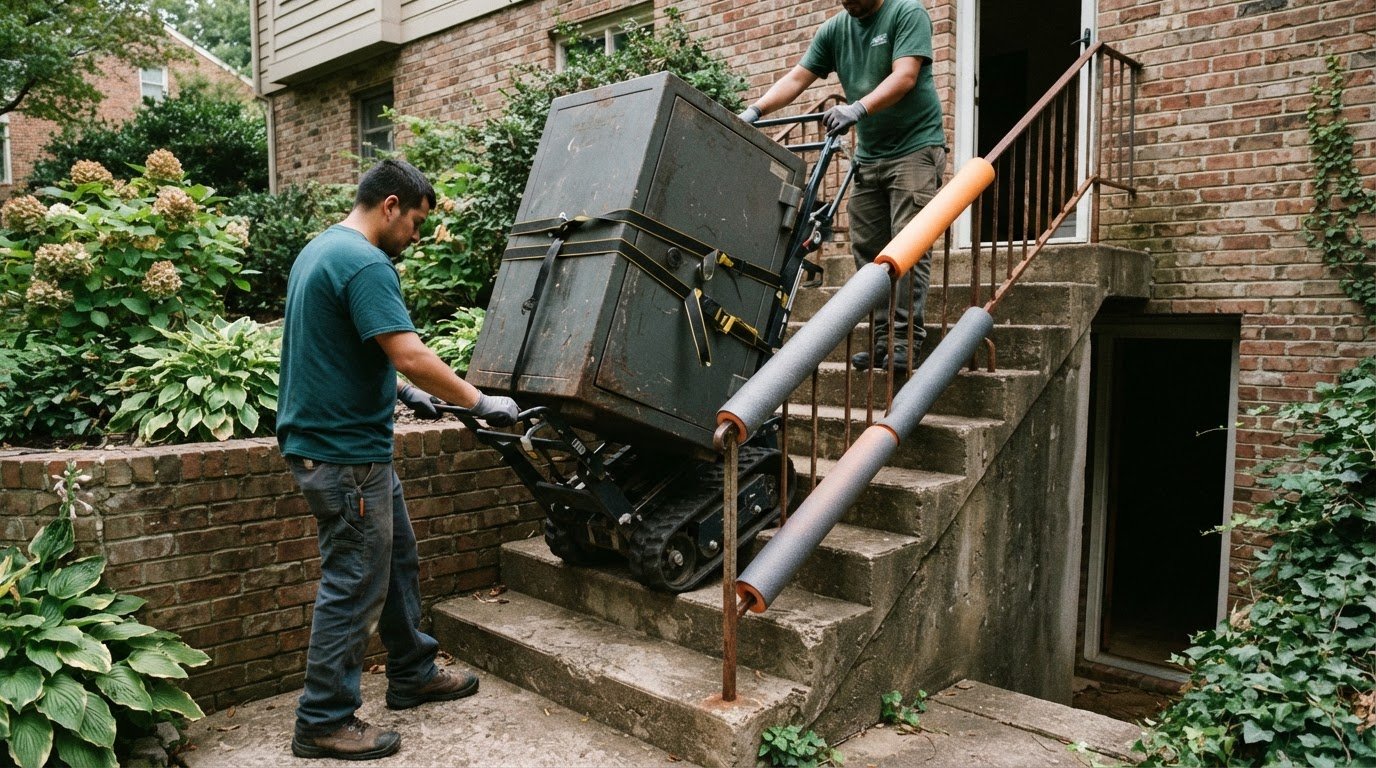
- Assess the clock’s size and the route before deciding how it will move. Grandfather clocks can weigh 100-300 pounds, and their tall cases can be difficult to control through doorways or hallways. A narrow turn, stairway, or uneven floor adds handling challenges. Professional movers can plan the route, identify tight spots, and coordinate each lift before the clock leaves its current position.
- Don’t try to lift or carry the clock alone. Moving it safely requires another person to help with the lift and guide it. Even with a helper, controlling a tall case while keeping it upright takes coordination. A sudden shift can strain the cabinet or its internal parts. Professional movers plan the lift, positioning people to guide the clock through each transition.
- Compare the work involved, not just the distance between homes. Before the move, the pendulum and weights need careful handling, and the cabinet needs padding. Movers wrap the wooden case in moving blankets and secure it for transit. They also organize removable parts so the clock can be reassembled in its original arrangement. A DIY move means managing every step yourself, from preparation through delivery.
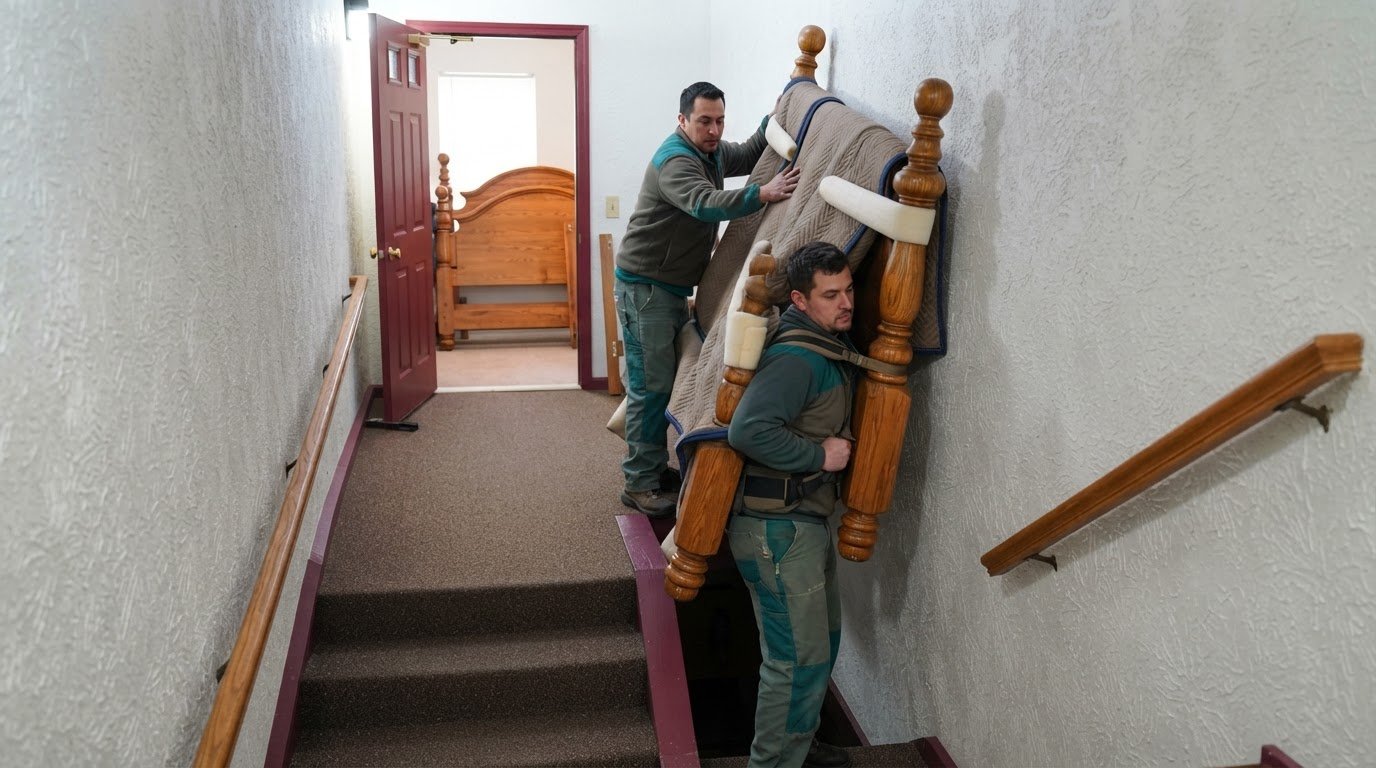
- Consider the most difficult part of the route. A clock that fits through a wide room may still be hard to steer through a narrow doorway or around a stair landing. Movers can pause, adjust their grip, and guide the case together rather than force it through. That coordinated control matters for a valuable heirloom, since a bump against a wall or railing could damage its finish or glass.
- Choose professional help when the clock is heavy, the route is awkward, or you’re concerned about its delicate parts. A simpler, open route may reduce some handling challenges, but it doesn’t remove the need for a controlled lift and protected transport. For help with the heavy lifting and moving plan, request professional moving help.
Heavy Furniture Moving
Heavy Furniture Moving helps coordinate challenging lifts and transport for large household items. Turn to professional help when the clock’s weight, narrow passages, stairs, or tight turns make handling difficult. A clear plan for the route and removable parts helps movers prepare for the job and protect your home during handling.
Heavy Furniture Moving offers Movers Near Me for people who need help with household moves. Share where the clock is, the route it needs to take, and any access challenges. These details help the moving team plan for your home and the clock’s needs.
Ready to plan the move? Contact Heavy Furniture Moving.
Plan the Clock’s Next Home
A smooth move starts with a clear plan for the clock’s new location. Decide where it will stand and how it fits the room, then share those details when arranging the move. This gives the moving team useful context before handling begins and helps align the clock’s arrival with your plans for the home.
If you’re planning how to move an antique grandfather clock without damaging its pendulum in Gainesville, start by discussing the move. Describe the clock, its current location, the route out, and any tight spaces or stairs. Clear details help the team prepare for the specific job instead of treating a treasured clock like ordinary furniture.
Heavy Furniture Moving can help you plan the heavy lifting involved. Discuss your grandfather clock move with Heavy Furniture Moving, and take the next step with a clear plan and support for the road ahead.
Frequently Asked Questions
How do professional movers prepare an antique grandfather clock before moving it?
Professional movers first identify the clock’s construction and inspect its condition and route out of the home. Antique floor clocks made before the mid-20th century may have handmade movements and unique suspension systems, so their design matters. The crew can note existing marks, tight turns, stairs, and floor transitions before planning each lift. In Gainesville homes, a route through a narrow foyer may call for a different approach than a clear ground-floor exit.
How do professional movers safely remove and pack a grandfather clock pendulum?
Movers stop the clock, support the pendulum, and lift it from its hook without letting it swing against the case. Many pendulums are close to three feet long, so their protective container needs enough room to hold them without bending or forcing them. A padded box keeps the pendulum separate from heavier items. For an antique clock with a distinctive suspension, movers follow its construction rather than assuming every pendulum attaches the same way.
How do professional movers secure clock weights, chains, cables, and chimes for transport?
Movers remove and label the weights, then secure their chains or cables to limit tangling and movement. They keep the labels with a record of the clock’s arrangement, since weights may serve different functions. Chain-driven and cable-driven clocks need different handling, so the crew identifies the mechanism before securing it. Chime rods and other internal parts also need space from loose components to help prevent contact during bumps or vehicle movement.
Can professional movers transport a grandfather clock on its side, and what is the safest position?
Transporting a grandfather clock upright is safest for its internal components. Laying it on its back or side can bend its suspension spring, shift its movement, or damage its chime rods. If laying it down is a last resort, remove the pendulum and weights first and cushion the case carefully. Movers assess the route and available vehicle space to avoid this position whenever possible.
How many movers are needed to move a grandfather clock, and what equipment is recommended?
A grandfather clock needs another person to help lift and move it safely. Professional movers choose handling equipment and protection based on the clock, its packed components, and the route. Moving blankets, padding, a suitable box, and secure placement in the vehicle help protect the load. This guidance applies to homes in Gainesville, Fairfax, Woodbridge, Manassas, Manassas Park, Aldie, Ashburn, McLean, Vienna, Reston, Centreville, Chantilly, Clifton, Dumfries, South Riding, Fairfax Station, and Haymarket.
What are the risks of moving a grandfather clock without a professional?
A solo move leaves no helper to share the lift or guide the case through a doorway, stairwell, or tight turn. Losing control can bump the cabinet or let loose parts strike the movement. Reassembly also means matching components to their original positions. These risks are especially important with an antique clock that has a handmade movement, since its internal arrangement may differ from another clock’s design.
How do professional movers reassemble, level, and restart a grandfather clock after a move?
Movers use the clock’s recorded arrangement to return its removable parts to their original positions. They place the case on an even surface, reinstall the pendulum so it hangs freely, then start it gently and listen for a consistent tick. The beat and chimes may take a few hours to settle. The clock should run for 24 to 48 hours before timing adjustments are made, allowing its performance to be assessed after reinstallation.
Frequently Asked Questions
Professional movers first identify the clock’s construction and inspect its condition and route out of the home. Antique floor clocks made before the mid-20th century may have handmade movements and unique suspension systems, so their design matters. The crew can note existing marks, tight turns, stairs, and floor transitions before planning each lift. In Gainesville homes, a route through a narrow foyer may call for a different approach than a clear ground-floor exit.
Movers stop the clock, support the pendulum, and lift it from its hook without letting it swing against the case. Many pendulums are close to three feet long, so their protective container needs enough room to hold them without bending or forcing them. A padded box keeps the pendulum separate from heavier items. For an antique clock with a distinctive suspension, movers follow its construction rather than assuming every pendulum attaches the same way.
Movers remove and label the weights, then secure their chains or cables to limit tangling and movement. They keep the labels with a record of the clock’s arrangement, since weights may serve different functions. Chain-driven and cable-driven clocks need different handling, so the crew identifies the mechanism before securing it. Chime rods and other internal parts also need space from loose components to help prevent contact during bumps or vehicle movement.
Transporting a grandfather clock upright is safest for its internal components. Laying it on its back or side can bend its suspension spring, shift its movement, or damage its chime rods. If laying it down is a last resort, remove the pendulum and weights first and cushion the case carefully. Movers assess the route and available vehicle space to avoid this position whenever possible.
A grandfather clock needs another person to help lift and move it safely. Professional movers choose handling equipment and protection based on the clock, its packed components, and the route. Moving blankets, padding, a suitable box, and secure placement in the vehicle help protect the load. This guidance applies to homes in Gainesville, Fairfax, Woodbridge, Manassas, Manassas Park, Aldie, Ashburn, McLean, Vienna, Reston, Centreville, Chantilly, Clifton, Dumfries, South Riding, Fairfax Station, and Haymarket.
A solo move leaves no helper to share the lift or guide the case through a doorway, stairwell, or tight turn. Losing control can bump the cabinet or let loose parts strike the movement. Reassembly also means matching components to their original positions. These risks are especially important with an antique clock that has a handmade movement, since its internal arrangement may differ from another clock’s design.
Movers use the clock’s recorded arrangement to return its removable parts to their original positions. They place the case on an even surface, reinstall the pendulum so it hangs freely, then start it gently and listen for a consistent tick. The beat and chimes may take a few hours to settle. The clock should run for 24 to 48 hours before timing adjustments are made, allowing its performance to be assessed after reinstallation.