Heavy Furniture Delivery in Haymarket, From Curb to Bedroom
The bedroom is only the destination; the route from the curb is what can make delivery complicated. Heavy furniture delivery from the curb to a second-floor bedroom in Haymarket depends on truck access, the stairway or service elevator, and whether oversized pieces can make each turn. Share the furniture’s dimensions and building access details so the delivery plan accounts for the tight spots before the carry begins.
A narrow stairwell, limited elevator space, or bulky bed frame can complicate heavy furniture delivery from curb to second-floor bedroom in Haymarket. This guide explains how to plan the route, what details help movers prepare, and when special handling such as sofa hoisting may be appropriate. You’ll learn what to share so the move from curb to bedroom is better planned.
Key Takeaways
- Truck access and the route from the curb shape how a bulky delivery can reach the home.
- Stair turns, landings, and service elevator space affect how furniture is carried upstairs.
- Sharing furniture dimensions and building access details helps the delivery team plan for obstacles.
- Oversized bedroom pieces may need a different route or special handling, such as sofa hoisting.
- Professional moving help can make the delivery easier when heavy furniture must reach an upstairs room.
Moving in walk-ups and buildings with service elevators
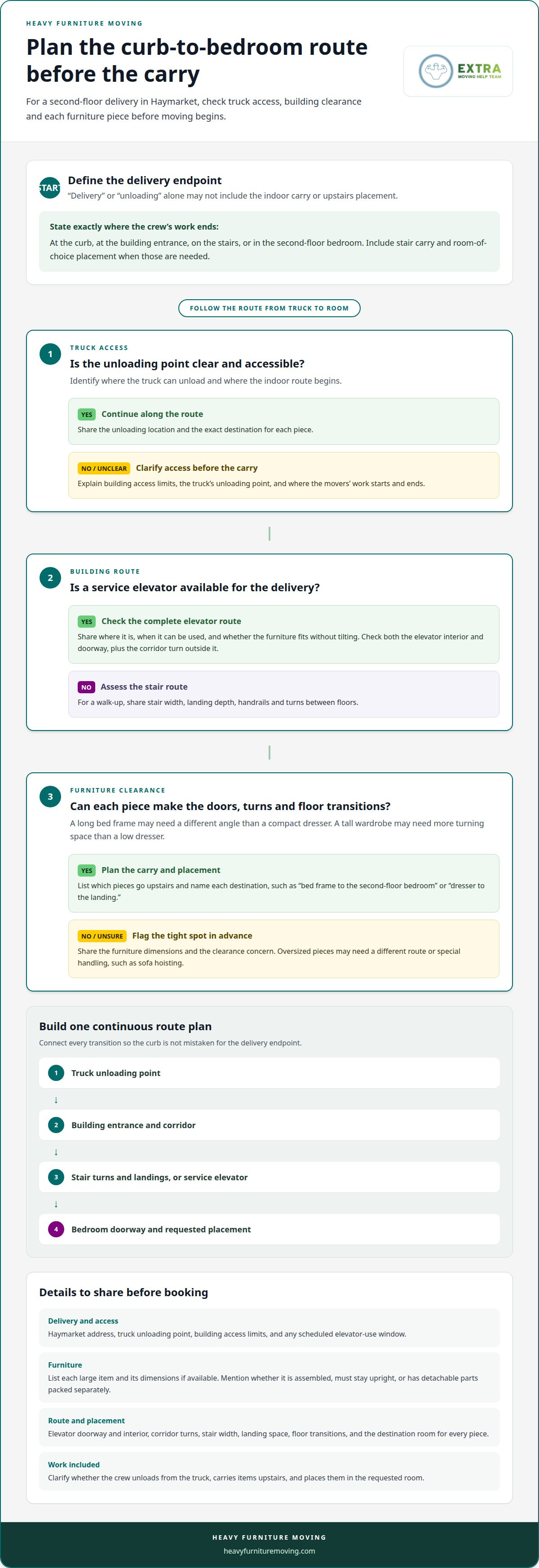
Plan the carry along the building’s actual route, from curbside unloading to the bedroom doorway. A walk-up, apartment landing, and service elevator each present different clearance points.
Movers plan curb-to-room delivery by tracing the route from the truck to the destination and matching each piece of furniture to it. They account for elevator access, stair turns, landings, and the bedroom entrance before carrying begins.
If furniture is damaged during a Virginia stair carry, the mover’s coverage terms and delivery records guide the claims process. Photograph the item and affected area, document the damage, and promptly submit the details through the mover’s process.
Second-Floor and Between-Floor Carries
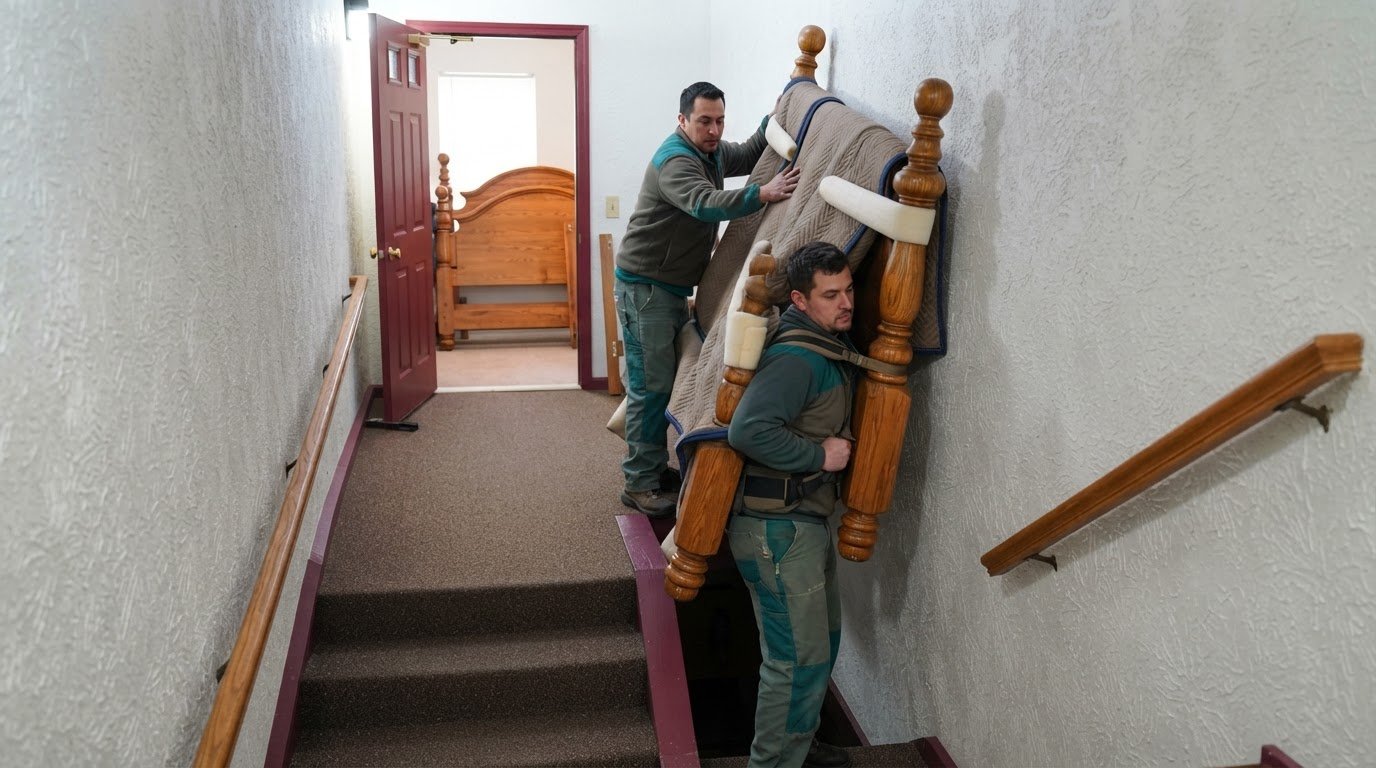
A second-floor delivery involves the full route from the building entrance to the bedroom, not just carrying an item up one level. Movers assess stair width, landing depth, handrails, and turns between floors. A long bed frame may need a different angle than a compact dresser. For a multi-level apartment, share the destination room and each floor transition before booking.
Loading and Unloading Labor
Loading labor means securing furniture in the truck; unloading labor means carrying it from the truck to the agreed room. Curbside delivery may require both, or just the indoor carry if another crew handles transport. Explain where the movers’ work starts and ends, and include heavy pieces, stairs, elevator access, and items that need separate handling.
Booking Curb-to-Bedroom Help
When booking, provide the Haymarket delivery address, the second-floor destination, and a list of large items. Share furniture dimensions, elevator access details, stair turns, and the truck’s unloading point. A clear description helps the team plan the labor and indoor route. Mention building access limits or scheduled elevator windows so the plan suits the property.
For a service elevator, explain where it is, when it can be used, and whether furniture can fit without tilting. Both the elevator interior and its doorway matter. A dresser might fit inside but still be difficult to turn through the corridor outside. In a walk-up, the team focuses on stair width, landing space, and furniture shape. These details help determine whether the usual route will work or special handling is needed.
Give the delivery team a clear destination for every item, such as “bed frame to the second-floor bedroom” or “dresser to the landing.” This avoids confusion during unloading. Identify pieces that must stay upright or have detachable parts packed separately. A good route plan connects truck access, building entry, floor changes, and final placement, rather than treating the curb as the endpoint.
Truck and muscle for deliveries and moves
A complete delivery plan connects truck unloading with the indoor carry and final placement. In Haymarket, specify whether furniture stops at the curb or goes to the room you choose.
Curb-to-bedroom delivery includes carrying furniture from the unloading point to the bedroom. Stair carry and room-of-choice placement take items upstairs and put them where you direct.
Truck and Crew for Furniture Moves
The truck carries the listed furniture, while the crew handles the labor included in the booking. For a bed frame, dresser, and mattress, the plan should account for each piece during loading, transport, unloading, and room placement. Truck delivery alone does not necessarily include an in-home move, so define the endpoint clearly.
In-home furniture moves can also relocate a heavy item between rooms without transporting it from another address. Describe the starting room, destination, and obstacles, such as a narrow hallway or staircase. This gives the moving team a practical picture of the work. Say whether the item is assembled, since its shape affects how it can be carried through the home.
Curb-to-Bedroom Placement in Haymarket
For a Haymarket delivery, provide the address, unloading location, and exact bedroom destination. A curbside handoff and an upstairs carry are different tasks. Clear instructions define whether the crew’s work ends at the entrance, on the stairs, or in the room.
List each heavy piece and provide its dimensions if available. A tall wardrobe, for example, may need more turning space than a low dresser. The crew can use those details to plan the route from truck to room and spot tight doorways before moving the item. Specify whether furniture needs to go in one room or several.
Stair Carry and Room-of-Choice Service
Room-of-choice delivery means furniture goes to the requested room instead of stopping at the curb or entryway. Stair carry covers moving pieces between floors. Include both in the service scope when the destination is a second-floor bedroom. “Delivery” or “unloading” alone may not describe the full indoor route.
For a smooth handoff, identify which pieces need to go upstairs and where each belongs. A mattress may go directly into the bedroom, while its bed frame may need to be carried separately. Mention the floor, stair route, and hallway turns. This helps the crew plan the carrying order and place items where you direct.
Room-by-room instructions also help with furniture moves inside a home. Name each item and its destination before work begins. This keeps the team focused on the agreed route and final placement.
Carrying heavy furniture on staircases
Carrying furniture upstairs depends on its weight and shape, as well as the turning space. Movers assess these details before choosing a route.
There is no single weight limit for every stair carry. The item, crew, stair layout, and landing space all affect what can be carried safely.
Stair or heavy-item charges depend on the job’s details, including the item and route. The price depends on the case and is given after a quote request, based on factors such as weight, stairs, access, and requested placement.
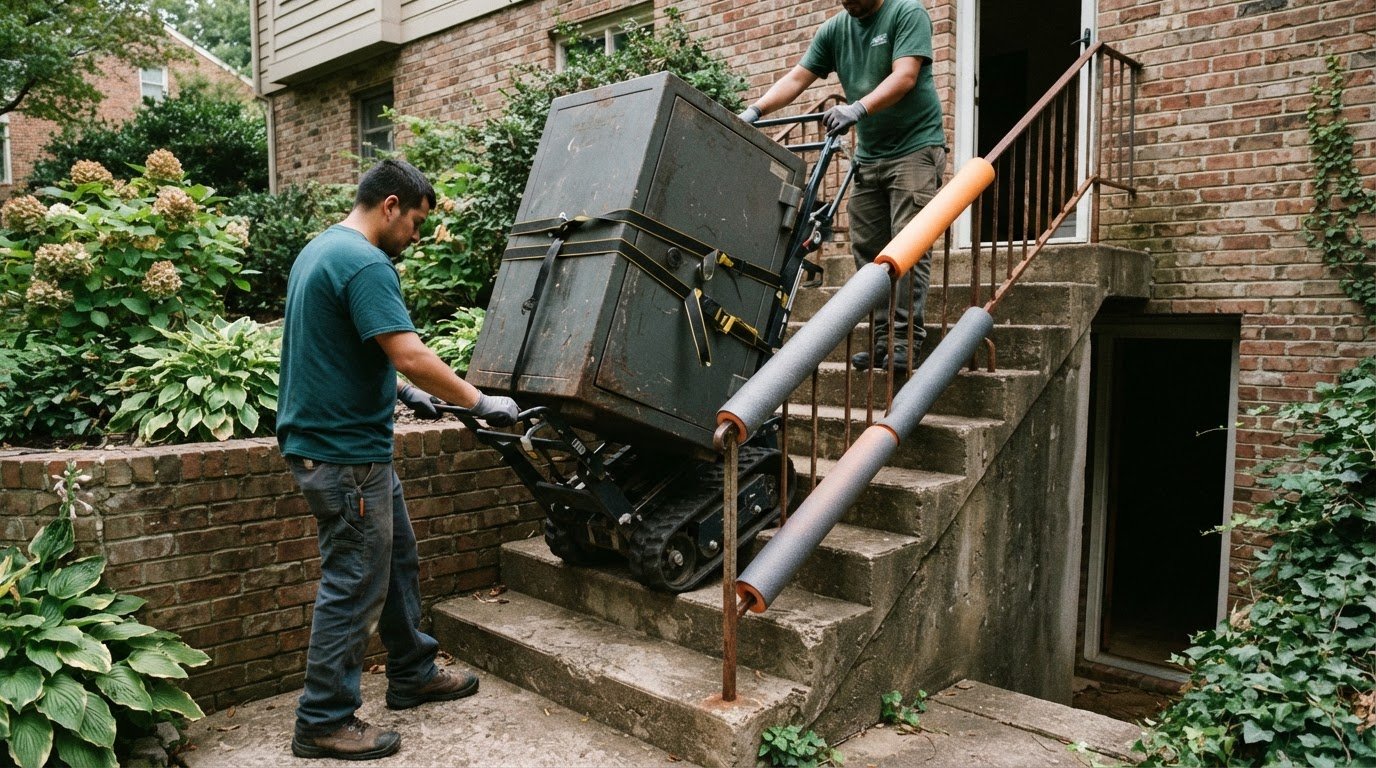
To protect stairs, walls, and floors, movers plan the route, protect vulnerable surfaces, and keep the item controlled through turns. They avoid dragging furniture across floors or scraping it against walls.
Heavy Item and Stair Charges
When arranging a carry, share the furniture type, approximate dimensions, and destination floor. A solid dresser and a long bed frame present different challenges, even on the same staircase. The frame may need careful positioning around a landing, while the dresser’s weight can affect how the crew manages the carry. Describe tight turns or narrow steps.
Request a quote for the complete route, not just curbside unloading. Include the stairs and room placement so the work upstairs is part of the plan.
Protecting Stairs, Walls, and Floors
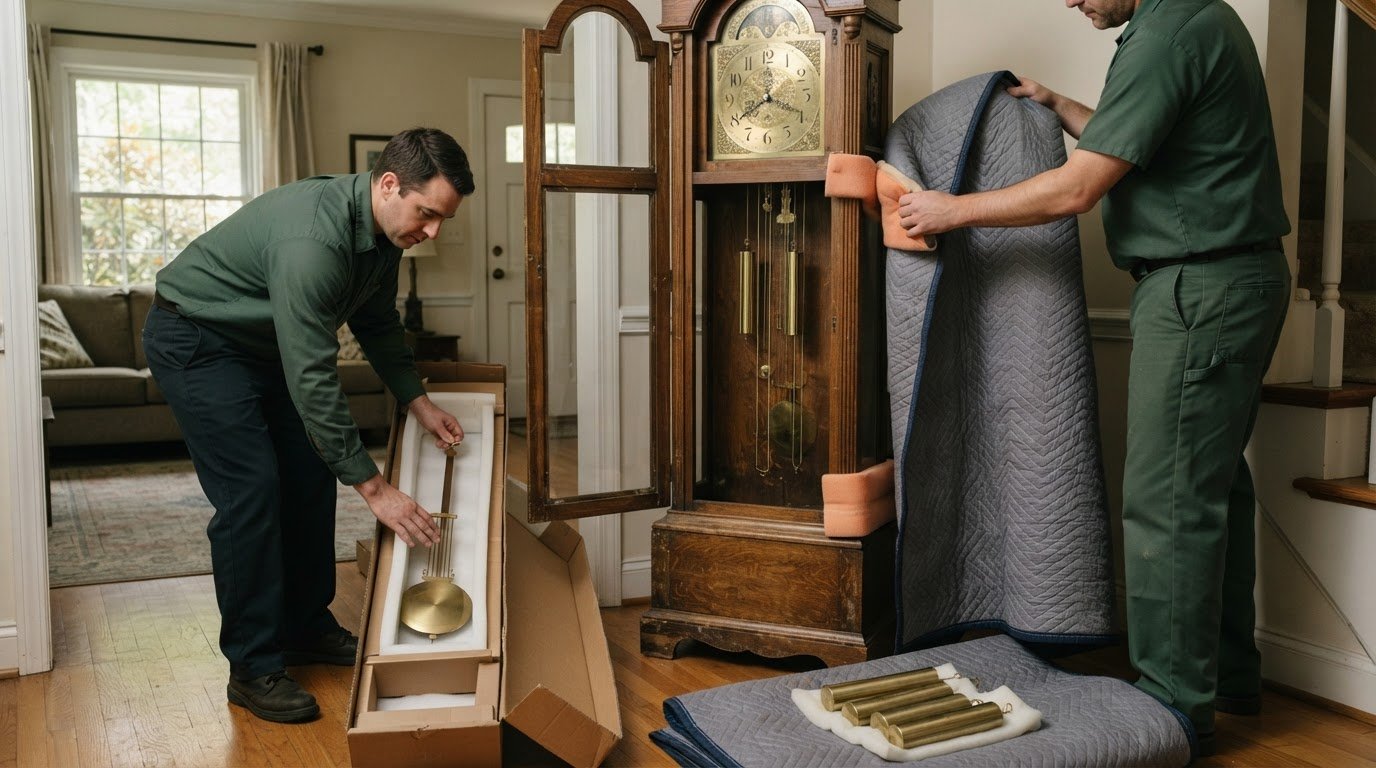
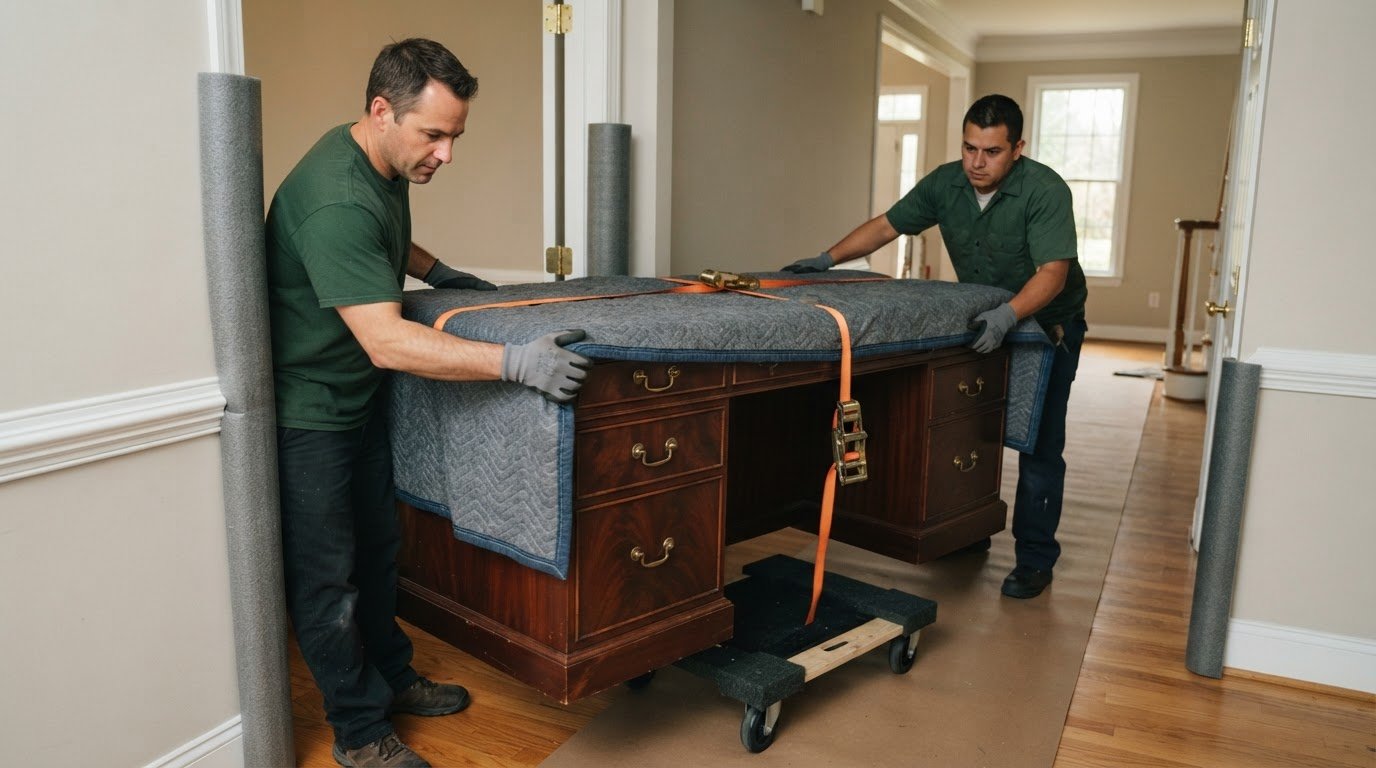
Before moving an item, the crew can clear the path and protect vulnerable surfaces. Blankets and floor protection help safeguard furniture and the route. At a stair turn, movers control the item’s position and keep its corners clear of the wall. Door frames, banisters, and flooring all need attention during a heavy carry.
Point out delicate finishes, loose rugs, and tight corners before the carry begins. The team can then plan how to navigate each obstacle without dragging the furniture.
A controlled stair carry requires coordination. Movers communicate through each turn, pause at landings when needed, and keep the furniture balanced as they change direction. A bulky headboard may need a different orientation than a compact nightstand. The item’s shape matters as much as its weight.
Before carrying begins, tell the movers exactly where each item belongs in the bedroom. A bed frame may need to pass through the doorway before a dresser. Confirming the order can keep the stairs clear and reduce unnecessary repositioning. The crew can also spot a route concern before lifting, rather than discovering it halfway upstairs.
When arranging help in Haymarket, describe the stairs and furniture clearly. Include the item type, destination room, and any difficult turn. This information helps shape the carry plan and quote, from the first lift to final placement.
New York delivery tasks illustrate different stair-carry requirements. Another New York furniture delivery task for a couch requested two people to carry it up 4 flights of stairs.
Driveway and truck access planning
Truck access affects the handoff between pickup, transport, and indoor delivery. In Haymarket, a useful plan accounts for the truck’s approach and the furniture’s route from the unloading point.
A clear path helps the delivery team carry items from the truck. Whether you need to help depends on the service you book and where the crew’s work ends.
Start with the truck’s approach to the property. A narrow driveway, parked cars, or a low branch can affect where it can stop. Describe the entrance, available parking, and any gate or access restriction when arranging delivery. If the truck must unload at the curb, include the distance to the home’s entrance in the plan.
Next, consider how the stopping point affects the carry. A dining table may need more room to move than a compact side table. A clear route from the truck to the entrance helps the crew carry each piece without navigating around stored items, bins, or vehicles. Identify the unloading area so the truck and crew can follow the same plan.
Transport planning starts at pickup, too. List the furniture going into the truck and identify pieces that need separate placement at the destination. For example, a bed frame and mattress may need different handling and unloading order. Clear item notes help the crew connect the pickup load with the final room assignments.
Use these details to describe access accurately:
- State whether the truck can reach the driveway or must remain curbside.
- Identify gates, parked vehicles, steep approaches, or blocked unloading areas.
- Describe the walking route from the stopping point to the home entrance.
- Name the large pieces, such as a dining table or bedroom furniture.
- Explain which items go upstairs and which stay on the main floor.
For a shared driveway, explain where another vehicle may need to pass. For a narrow approach, describe the tightest turn instead of simply calling access easy or difficult. These details help the team plan truck positioning and the unloading order. If pickup and delivery are at separate addresses, describe access at both; an easy pickup does not mean the destination will be just as straightforward.
Keep the planned unloading area clear of household items and vehicles before the truck arrives. The delivery crew can then move straight from transport to unloading. If the truck cannot stop near the entrance, identify the alternative stopping point and the route from there. A specific description gives the team a workable plan for the driveway, curb, and home entrance.
Oversized bedroom furniture and special handling
A large item may fit through the front door but get stuck at a stair turn. For heavy furniture delivery from curb to a second-floor bedroom in Haymarket, the entire route matters as much as the furniture’s listed dimensions.
Measure the item’s height, width, and depth, then compare them with doorways, hallways, and stair landings. A tall wardrobe and a long headboard behave differently at a tight corner. Check protruding handles or legs, too, since they affect clearance. The key question is whether the piece can turn through each narrow point, not just pass through in a straight line.
Movers use these details to plan how the furniture should be handled. They can assess whether removable parts can be detached, another entrance offers a clearer route, or a different solution is needed. For example, a bed frame with detachable sections may be carried differently from a fully assembled wardrobe. Share the item’s condition and assembly status before booking.
Consider the bedroom layout, too. A king-size mattress may fit through the doorway but leave little room to turn beside a bed frame. Measure the intended placement area and account for nearby furniture. Tell the crew where each large piece belongs, such as against a particular wall or beside a window. This helps avoid carrying an oversized item into a room without enough space to position it.
Special handling matches the approach to the item and the home. A broad sofa, heavy dresser, or tall headboard may need a different route or carrying position. If the usual stair path is difficult, movers can assess whether another entrance or sofa hoisting is suitable for the item and property. The right approach depends on the furniture’s shape and the available route.
- Provide dimensions for each oversized piece.
- Identify narrow doorways, landings, or sharp turns.
- Note detachable components and the item’s assembly state.
- Describe the bedroom placement and nearby obstacles.
Clear details let the moving team plan before the item arrives and distinguish a straightforward carry from one that needs special handling. If an item cannot pass through the planned route, the team needs to know before attempting the carry. When arranging heavy furniture delivery from the curb to a second-floor bedroom in Haymarket, share photos of difficult corners alongside measurements. They can clarify the route and help the team assess it.
For in-home furniture moving help, provide the item details and destination room when arranging service.
Heavy Furniture Moving
Heavy Furniture Moving helps with delivery from the curb to an upstairs room. Turn to the team when bulky bedroom furniture, stairs, or room placement make the job more involved than unloading at the entrance. Share the item, destination, and access details so the move can be planned around the route.
For furniture that needs to move within the home, in-home furniture movers can handle the carry between rooms or floors. Sofa Hoisting may suit a sofa that cannot follow the usual path inside. The right approach depends on the furniture and the property’s access. Contact Heavy Furniture Moving to discuss your Haymarket delivery and the help you need.
Set Up Your Delivery Plan
Make your next step a clear description of the job. For heavy furniture delivery from the curb to a second-floor bedroom in Haymarket, note the furniture, its destination, and any access challenge that could change the carry. That gives the conversation a practical starting point, whether one bulky piece needs moving or several items need a coordinated plan.
Heavy Furniture Moving offers local moving help, exercise equipment moving, and sofa hoisting. Each service suits different needs, so describe the item and route you have in mind. A detailed request helps match the service to the task.
Ready to discuss your delivery? Contact Heavy Furniture Moving and share what needs to reach your bedroom. A clear plan is a solid first step toward getting furniture where it belongs.
Frequently Asked Questions
What measurements and access details should I give movers before delivery?
Give movers the furniture’s height, width, and depth, along with the narrowest doorway measurement. Include whether the item is assembled and whether drawers need emptying. A photo of the furniture and staircase can reveal awkward shapes or turns that measurements alone may miss. Mention elevator reservations, gate access, and where the delivery truck can park. These details help the crew plan the carry and placement.
Frequently Asked Questions
Give movers the furniture’s height, width, and depth, along with the narrowest doorway measurement. Include whether the item is assembled and whether drawers need emptying. A photo of the furniture and staircase can reveal awkward shapes or turns that measurements alone may miss. Mention elevator reservations, gate access, and where the delivery truck can park. These details help the crew plan the carry and placement.