South Riding International Move Packing List: What to Pack in 2026

What if the most important part of your international move is deciding what never goes in the shipment? A South Riding international move packing list should separate the belongings you’ll ship from the essentials that stay with you and the items best left behind. That simple split can prevent a frantic search for passports, medication, or daily necessities after the boxes are sealed.
When every room needs sorting and destination rules vary by country, a clear sequence helps. Use this item-by-item checklist to organize your household, reduce last-minute surprises, and make thoughtful choices about what to pack.
Sort belongings into three groups: household goods for shipment, travel essentials for your carry-on or checked luggage, and items to leave behind. Keep key documents and medication with you, create a detailed shipping inventory, and review destination rules for restricted or prohibited goods. For fragile or bulky belongings, plan how they’ll be prepared before the shipment is handed off.
Key Takeaways
- Use the South Riding international move packing list to sort belongings into four piles: carry with you, ship, sell or donate, and discard.
- Keep travel documents, essential medication, and arrival-day basics accessible instead of packing them with household goods.
- Build a clear inventory, pack by room, and label boxes without putting sensitive personal details on the outside.
- Set aside uncertain items and review your destination country’s import rules separately from your carrier’s packing instructions.
- Heavy Furniture Moving provides local packing and unpacking support and heavy-item handling, with wrap, blankets, and straps included on every job.
Start Your South Riding International Move Packing List With Four Clear Piles
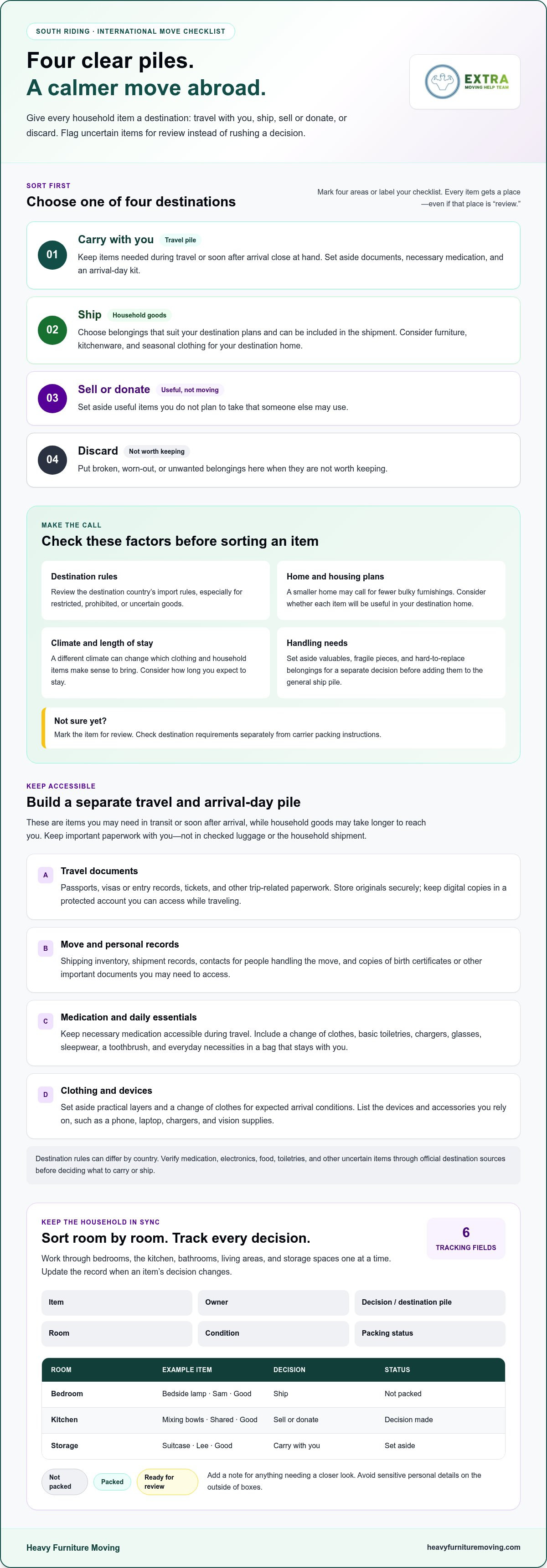
Start with four decisions: carry with you, ship, sell or donate, and discard. The South Riding international move packing list is easier to manage when every household item has a destination instead of sitting in an undecided box. Mark four areas or add four labels to your checklist. If an item is uncertain, flag it for review rather than making a rushed decision.
- Carry with you: Items you’ll need during travel or soon after arrival.
- Ship: Belongings that suit your destination plans and can be included in the shipment.
- Sell or donate: Useful items you don’t plan to take but that someone else may use.
- Discard: Broken, worn-out, or unwanted belongings that aren’t worth keeping.
Your choices depend on the destination country’s import rules, your housing plans, and what the shipment can include. A smaller home may call for fewer bulky furnishings. A different climate can change which clothing and household items make sense to bring. Consider how long you expect to stay and whether each item will be useful there. For a general overview of the packing list concept, use it as a starting point, then tailor your own list to an international household move.
Decide What Travels With You and What Goes in the Shipment
Separate the items you’ll need during travel or in your first days from belongings packed for later delivery. Keep daily-use essentials in the travel pile, and consider whether furniture, kitchenware, and seasonal clothing suit your destination home. Set aside valuables, fragile pieces, and hard-to-replace belongings for a separate decision. Consider their importance and handling needs before adding them to the general “ship” pile.
Make a South Riding Room-by-Room Sorting List
Work through bedrooms, the kitchen, bathrooms, living areas, and storage spaces one at a time. Use a checklist with columns for item, owner, decision or destination pile, room, condition, and packing status. Reviewing each space before moving on makes it easier to spot belongings that might otherwise be missed.
- Bedroom: Bedside lamp | Owner: Sam | Ship | Main bedroom | Good | Not packed
- Kitchen: Mixing bowls | Owner: Shared | Sell or donate | Kitchen | Good | Decision made
- Storage: Suitcase | Owner: Lee | Carry with you | Hall closet | Good | Set aside
Use simple status labels such as “not packed,” “packed,” or “ready for review.” Add a note when an item needs a closer look, and update the row as soon as its decision changes. This gives everyone in the household a shared record of what’s staying, going, or awaiting a decision.
What to Pack for an International Move: Documents, Medicine, Clothing, and Essentials
Set aside travel essentials before household packing gets underway. These are the items you may need in transit or soon after arrival, while the rest of your belongings may take longer to reach you. Use this checklist as a planning prompt, not a substitute for destination-specific entry, import, or carrier requirements. Check official guidance for your destination before deciding what to carry or ship.
Keep Travel Documents and First-Night Essentials Accessible
Keep important paperwork with you, not in checked luggage or the household shipment. Store originals securely and keep digital copies in a protected account you can access while traveling. Save key contacts somewhere you can reach if your phone battery runs low.
- Travel documents: Passports, visas or entry records, tickets, and other paperwork relevant to your trip.
- Move paperwork: Shipping inventory, shipment records, and contact details for people handling your move.
- Personal records: Copies of birth certificates and other important documents you may need to access.
- Arrival-day kit: A change of clothes, basic toiletries, chargers, glasses, and everyday necessities.
Pack the arrival-day kit in a bag that stays with you. Include what you’ll need for the first night, such as sleepwear, a toothbrush, and a phone charger. Keep this bag separate from items packed for later delivery so you don’t have to search through boxes for an everyday essential.
Pack Medication, Clothing, Electronics, and Personal Items Thoughtfully
Use your South Riding international move packing list to record what you need close at hand and what can be packed for later. Review each category against your travel plans and destination guidance. Rules can differ by country, so verify uncertain items through official destination sources before packing them.
- Medication: List the medicines you use and keep necessary medication accessible during travel. Check official destination rules for carrying or importing each medicine, including any required paperwork or limits.
- Clothing: Choose outfits for the season and expected arrival conditions. Set aside practical layers and a change of clothes, then decide which remaining pieces suit the destination climate and your planned stay.
- Electronics: List the devices and accessories you rely on, such as a phone, laptop, chargers, and glasses or vision supplies. Check destination guidance for any electronics or accessories that may be restricted or regulated.
- Food and toiletries: Keep the arrival kit practical. Before carrying or shipping food, liquids, or other uncertain products, check official import rules and relevant carrier packing instructions.
Keep destination import rules separate from carrier packing instructions. Whether goods may enter a country and how a carrier accepts them for transport are different questions, and both may matter. Use this checklist to get organized, then follow the current official guidance that applies to your destination and shipment.
Once travel essentials are set aside, turn to the household goods you plan to ship. Local packing and unpacking support from Heavy Furniture Moving can help prepare bulky household items, with wrap, blankets, and straps included on every job.
How to Pack Household Goods for Overseas Shipping Without Losing Track
Once you’ve decided what belongs in the shipment, create a clear path from your household inventory to each packed box. This workflow keeps the South Riding international move packing list useful as packing progresses and helps your records match what’s actually packed.
- Finish the inventory. Record each item you plan to ship and note its room, owner, condition, and any special handling needs. Resolve undecided items before packing so they don’t end up in the wrong box.
- Group similar belongings. Keep like items together where practical, such as kitchen utensils with kitchen utensils or bedding with bedding. Set fragile, valuable, and sentimental pieces aside for a separate packing decision.
- Pack by room. Work through one room at a time and add items to the inventory as they go into boxes. If a box contains items from more than one room, record each room so you can locate its contents later.
- Label and record each box. Give every box a unique number, room name, and broad contents description. Update the inventory with the box number and note priority or fragile handling needs.
A useful household shipment inventory connects what you’re shipping with where it was packed and which box holds it.
Label Boxes and Build a Shipment Inventory
Use one labeling format throughout. For example, “Kitchen, Box 04, cookware” is easier to match to a record than a different label style on every carton. Keep exterior descriptions broad, and don’t write sensitive personal information on the box. Store a paper or digital copy of the detailed inventory separately from the shipment so you can refer to it while the boxes are in transit.
- Exterior label: Box number, room, and general contents.
- Inventory record: Box number, specific belongings inside, owner, and condition.
- Handling note: Priority or fragile status, recorded in the inventory and marked as appropriate for the carrier’s instructions.
Prepare Fragile, Bulky, and Sentimental Belongings
Keep delicate items out of general room packing until you’ve decided how each should be handled. Set them aside, record their condition, and make a packing plan before boxing. Measure bulky furniture and note its dimensions before coordinating handling or shipment. Those details help you plan without assuming a particular packing method or shipment arrangement.
For items that need extra attention, add a note to the inventory rather than relying on memory. Record what the item is, where it is, and what decision remains. This is especially useful for a sentimental piece you may choose to carry with you instead of placing in the household shipment.
Keep the inventory current as boxes are sealed. If an item changes boxes, update the record right away. A quick edit can save a long search later.
Check Destination Rules Before Adding Restricted or Uncertain Items to Your List
Before a questionable item goes into a box, check the rules for the country you’re moving to. The South Riding international move packing list is a working plan, not permission to ship everything in the house. Set aside items whose status is unclear and record what you need to find out. That can prevent an avoidable scramble after boxes are sealed.
Whether an item can be imported depends on the destination country’s rules. Don’t assume an item allowed in one country will be accepted in another, or that a familiar household product is automatically fine to ship. Check each uncertain item against official destination-country guidance before deciding whether to carry it, include it in the shipment, or leave it behind.
Verify Destination-Country Import Requirements for Uncertain Belongings
Start with the destination country’s customs authority. For item-specific questions that aren’t clearly answered in its official guidance, consult a qualified customs broker. Check before sealing boxes with medicines, food, plants, or other belongings you’re unsure about. Describe each item precisely, including what it is and how it will be used, so the guidance addresses the actual item on your list.
Check the carrier’s packing instructions separately. Destination import rules address whether goods may enter the country; carrier instructions address what can be accepted for transport and how it must be prepared. One check doesn’t replace the other. If either source leaves a question unanswered, keep the item out of the shipment until you’ve resolved it.
Keep an Open-Questions List for Your Shipment Plan
Don’t rely on memory or a quick verbal answer. Add each unresolved item to a verification log and keep its description with your household inventory. Include enough detail to identify the item, but keep personal or sensitive information off exterior box labels. Revisit every open question before the shipment is finalized or collected, and update the item’s decision once you have a clear answer.
- Item: Name it clearly, adding useful details such as ingredients, material, or intended use when relevant.
- Authority or professional consulted: Record the official source or qualified customs broker you checked with.
- Answer: Note the guidance and any conditions or documents mentioned.
- Date checked: Record when you received or reviewed the information.
For example, if a pantry product or household plant raises a question, record its exact description, the destination source you reviewed, the answer, and the date. Mark it “unresolved” until you’ve checked both destination guidance and relevant carrier instructions. This makes clear to everyone helping with packing that the item shouldn’t be boxed by assumption.
Once your shipment decisions are clear, Heavy Furniture Moving can help with local packing and preparation of heavy household items. Arrange packing support for heavy belongings, with wrap, blankets, and straps included on every job.
Get South Riding Packing Support for Heavy Items and Shipment Preparation
After sorting your household and recording what’s going, use your room list to identify where hands-on packing help would make the biggest difference. Heavy furniture and exercise equipment can take more care to prepare than everyday items. A clear list helps you focus support on specific tasks instead of trying to tackle every room at once.
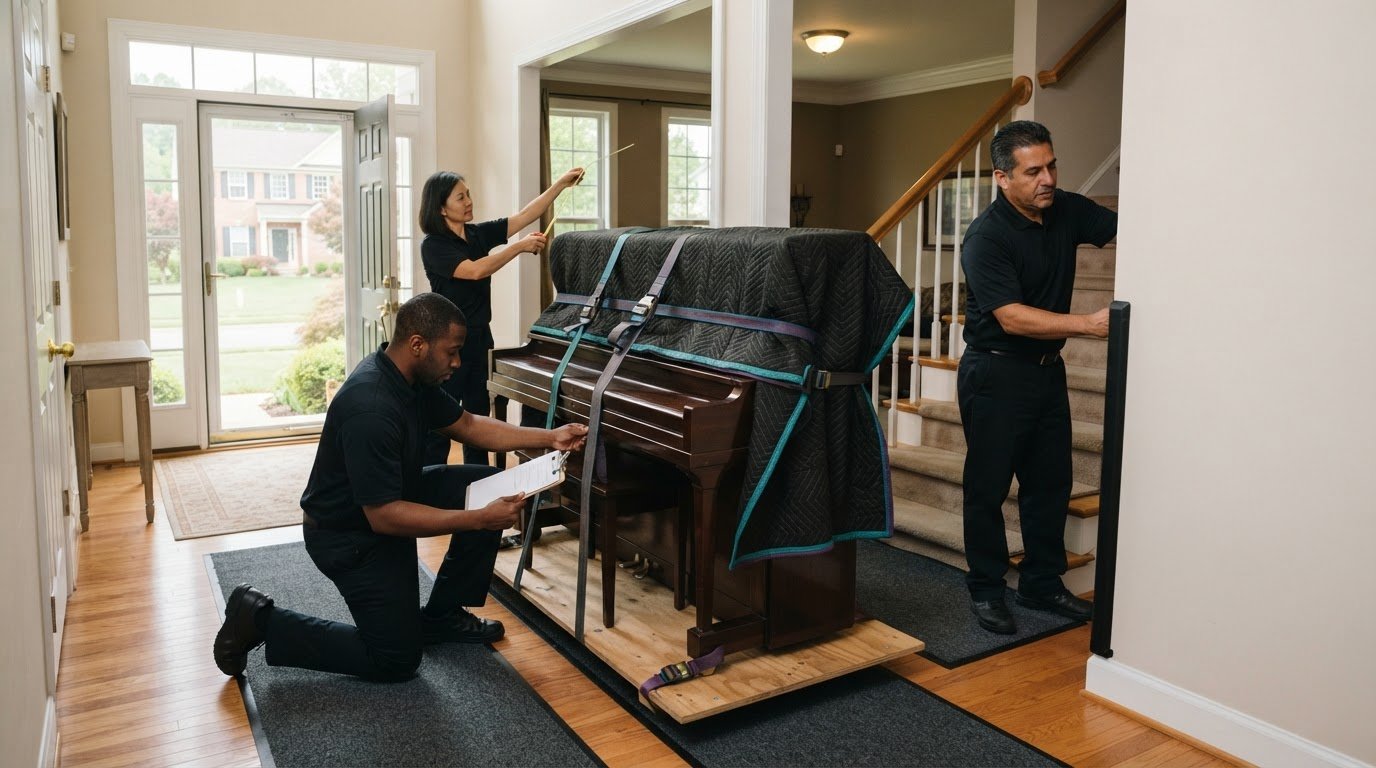
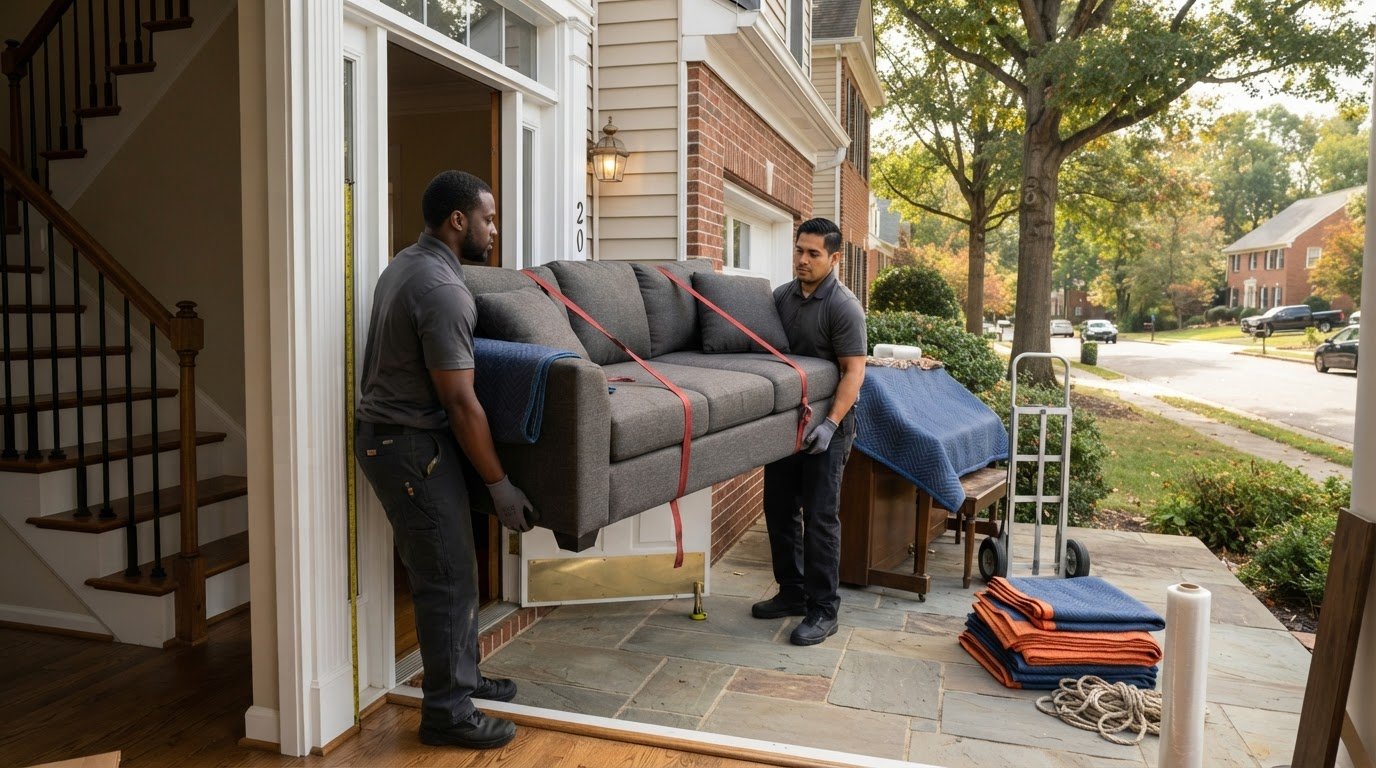
Heavy Furniture Moving provides local packing and unpacking support and heavy-item handling for households in South Riding. The team can help prepare belongings before they’re handed off for international shipment, including pianos, safes, exercise equipment, and bulky furniture. For items that cannot fit through a standard entryway or elevator, the team also provides sofa hoisting. Every job includes wrap, blankets, and straps. Heavy Furniture Moving serves South Riding and nearby Northern Virginia communities, including Fairfax, Woodbridge, Manassas, Manassas Park, Aldie, Ashburn, McLean, Vienna, Reston, Centreville, Chantilly, Clifton, Dumfries, South Riding, Fairfax Station, Haymarket, and Gainesville. For broader local support, see local moving support in Fairfax and Northern Virginia.
Coordinate Packing Help Around Your Household Inventory
Use the room-by-room inventory to mark which items need careful handling, which are bulky, and which packing tasks you’d like help with. Include an item’s location and measurements where relevant, then note access details that could affect handling. This gives your packing session a practical starting point and keeps the work aligned with your shipment plan.
- Identify priority items: Highlight bulky furniture and exercise equipment that need hands-on preparation.
- Keep shipment choices visible: Separate items marked for shipment from travel essentials and anything still awaiting a destination-rule decision.
- Update as you go: Mark completed packing tasks in your inventory so the list reflects the household’s current status.
Turn the Checklist Into Your Next Packing Session
Keep the next step manageable. Choose one room, review its inventory, and complete one packing category. Gather the items you’ve marked for shipment before packing them, and leave uncertain belongings aside until you’ve resolved their status. Keep travel essentials out of the work area so they don’t get mixed into household boxes.
For heavy pieces, decide what needs help before the packing session begins. Note dimensions and handling considerations in your list. Heavy Furniture Moving provides local packing, unpacking, and heavy-item preparation, with wrap, blankets, and straps included on every job.
Start now: pick one room and update its list. Keep travel essentials and unresolved items separate, then mark each completed task. See how Heavy Furniture Moving can help with packing support as you prepare your South Riding international move packing list.
Take the Next Step Toward a More Manageable Move
Your next move doesn’t need to start with packing everything at once. Turn your South Riding international move packing list into a short working plan: choose the next room, mark decisions that still need attention, and set aside what you’ll need before your shipment arrives. A steady, room-by-room approach gives you a clear task to return to whenever packing feels overwhelming.
For large or awkward household items, local help can make preparation easier to manage. Heavy Furniture Moving serves South Riding and Northern Virginia with packing and unpacking support and heavy-item handling. Wrap, blankets, and straps are included on every job. Keep your inventory close so you can identify the items that need hands-on attention.
Plan packing and moving support with Heavy Furniture Moving, then tackle the next item on your list. You’re building a more organized move, one clear decision at a time.
Frequently Asked Questions
What should I pack first when moving internationally?
Pack items you won’t need before departure first, such as off-season decorations, extra linens, or books you’ve finished reading. Before boxing them, make sure they’re intended for shipment and don’t need destination-rule review. Use your South Riding international move packing list to mark each box as it’s filled, and leave everyday kitchenware, work supplies, and frequently used clothing accessible until closer to moving day.
What should I keep with me during an international move?
Keep travel documents, essential medication, important contact details, and anything you’d struggle to replace in your personal luggage. A small document pouch can make paperwork easier to find during check-ins or arrival questions. Carry a backup copy of key records separately from the originals, and keep your phone, charger, glasses, and a change of clothes close by in case checked bags or household goods aren’t immediately accessible.
Can I ship medication and food when moving to another country?
Whether medication or food can be shipped depends on the destination’s import rules and the carrier’s packing requirements. Before packing either, look up the specific item with the destination’s official customs or health authority, then review the carrier’s instructions. Keep medication details, such as the product name and ingredients, available when checking. Don’t assume an item is allowed because it’s commonly sold or used in the United States.
How do I make an inventory for an international move?
Create a record that connects each item to its box and room. Use clear descriptions and note quantities where useful, such as “three ceramic serving bowls, kitchen, box 12.” Take photos of valuable or distinctive belongings and store them with your inventory, not on exterior labels. After packing, compare the record with the sealed boxes and save a copy somewhere you can access without opening the shipment.
Should I ship furniture or buy it after moving abroad?
Compare each piece with your destination home before deciding. Consider its condition, dimensions, usefulness, and whether it will fit through the new home’s entrances and into the planned room. A well-used item that suits the space may be worth keeping in your shipment plan; worn furniture or pieces that don’t fit your layout may be better left behind. Include sentimental value in the decision, too.
How should I pack fragile items for an overseas move?
Pack fragile belongings individually so they don’t knock against one another. Wrap each piece with suitable protective material, cushion the bottom and sides of the box, and fill gaps so items don’t shift. Keep heavier objects out of cartons with delicate pieces. Photograph valuable items before packing, and follow the carrier’s handling and packing instructions for your shipment. Set aside especially delicate belongings for a separate packing plan.
What should I do with belongings I cannot take overseas?
Sort unwanted belongings into items to sell, donate, give to someone you know, or discard. Set a clear deadline for each decision so unclaimed items don’t get mixed back into the shipment pile. Before passing on electronics, remove personal accounts and stored data. Dispose of items that can’t be reused responsibly, following local guidance for anything that needs special handling instead of placing it with ordinary household trash.
Frequently Asked Questions
Pack items you won’t need before departure first, such as off-season decorations, extra linens, or books you’ve finished reading. Before boxing them, make sure they’re intended for shipment and don’t need destination-rule review. Use your South Riding international move packing list to mark each box as it’s filled, and leave everyday kitchenware, work supplies, and frequently used clothing accessible until closer to moving day.
Keep travel documents, essential medication, important contact details, and anything you’d struggle to replace in your personal luggage. A small document pouch can make paperwork easier to find during check-ins or arrival questions. Carry a backup copy of key records separately from the originals, and keep your phone, charger, glasses, and a change of clothes close by in case checked bags or household goods aren’t immediately accessible.
Whether medication or food can be shipped depends on the destination’s import rules and the carrier’s packing requirements. Before packing either, look up the specific item with the destination’s official customs or health authority, then review the carrier’s instructions. Keep medication details, such as the product name and ingredients, available when checking. Don’t assume an item is allowed because it’s commonly sold or used in the United States.
Create a record that connects each item to its box and room. Use clear descriptions and note quantities where useful, such as “three ceramic serving bowls, kitchen, box 12.” Take photos of valuable or distinctive belongings and store them with your inventory, not on exterior labels. After packing, compare the record with the sealed boxes and save a copy somewhere you can access without opening the shipment.
Compare each piece with your destination home before deciding. Consider its condition, dimensions, usefulness, and whether it will fit through the new home’s entrances and into the planned room. A well-used item that suits the space may be worth keeping in your shipment plan; worn furniture or pieces that don’t fit your layout may be better left behind. Include sentimental value in the decision, too.
Pack fragile belongings individually so they don’t knock against one another. Wrap each piece with suitable protective material, cushion the bottom and sides of the box, and fill gaps so items don’t shift. Keep heavier objects out of cartons with delicate pieces. Photograph valuable items before packing, and follow the carrier’s handling and packing instructions for your shipment. Set aside especially delicate belongings for a separate packing plan.
Sort unwanted belongings into items to sell, donate, give to someone you know, or discard. Set a clear deadline for each decision so unclaimed items don’t get mixed back into the shipment pile. Before passing on electronics, remove personal accounts and stored data. Dispose of items that can’t be reused responsibly, following local guidance for anything that needs special handling instead of placing it with ordinary household trash.