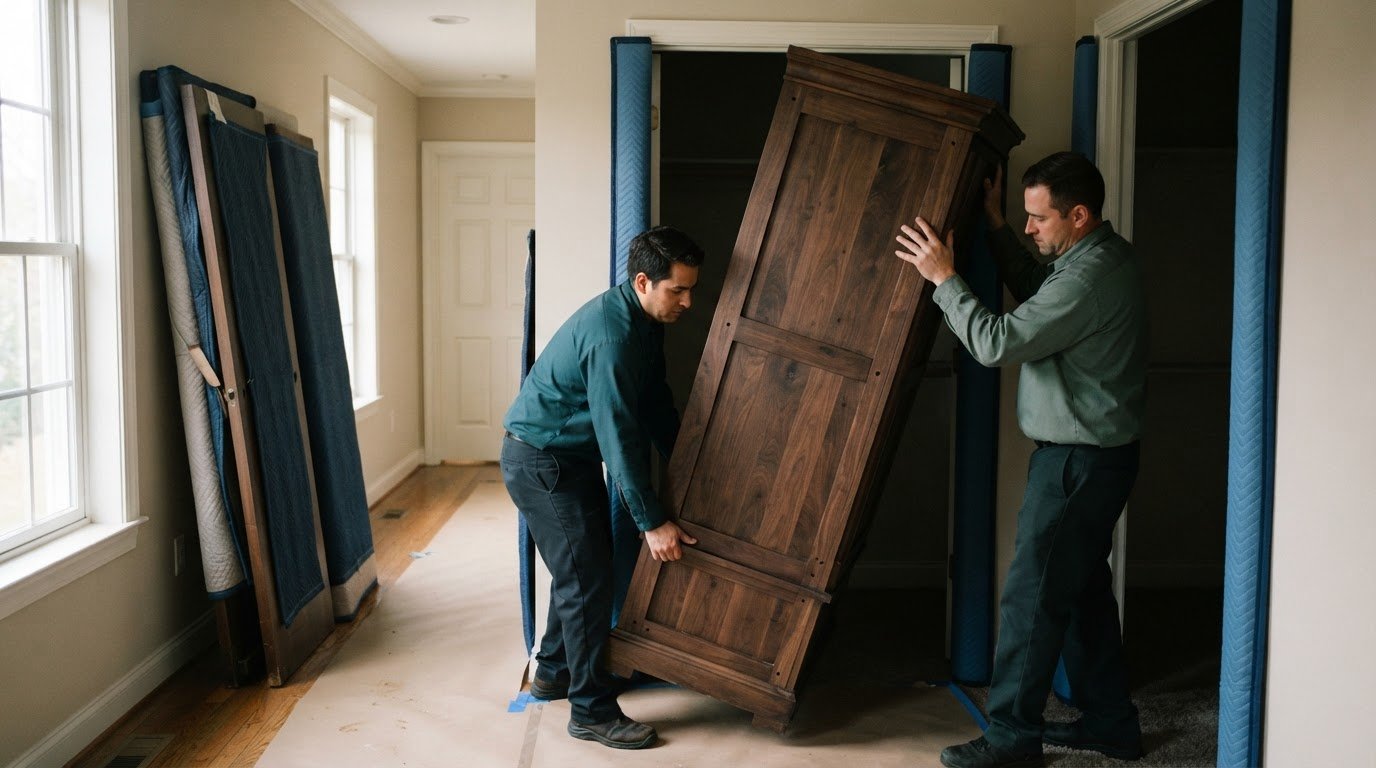
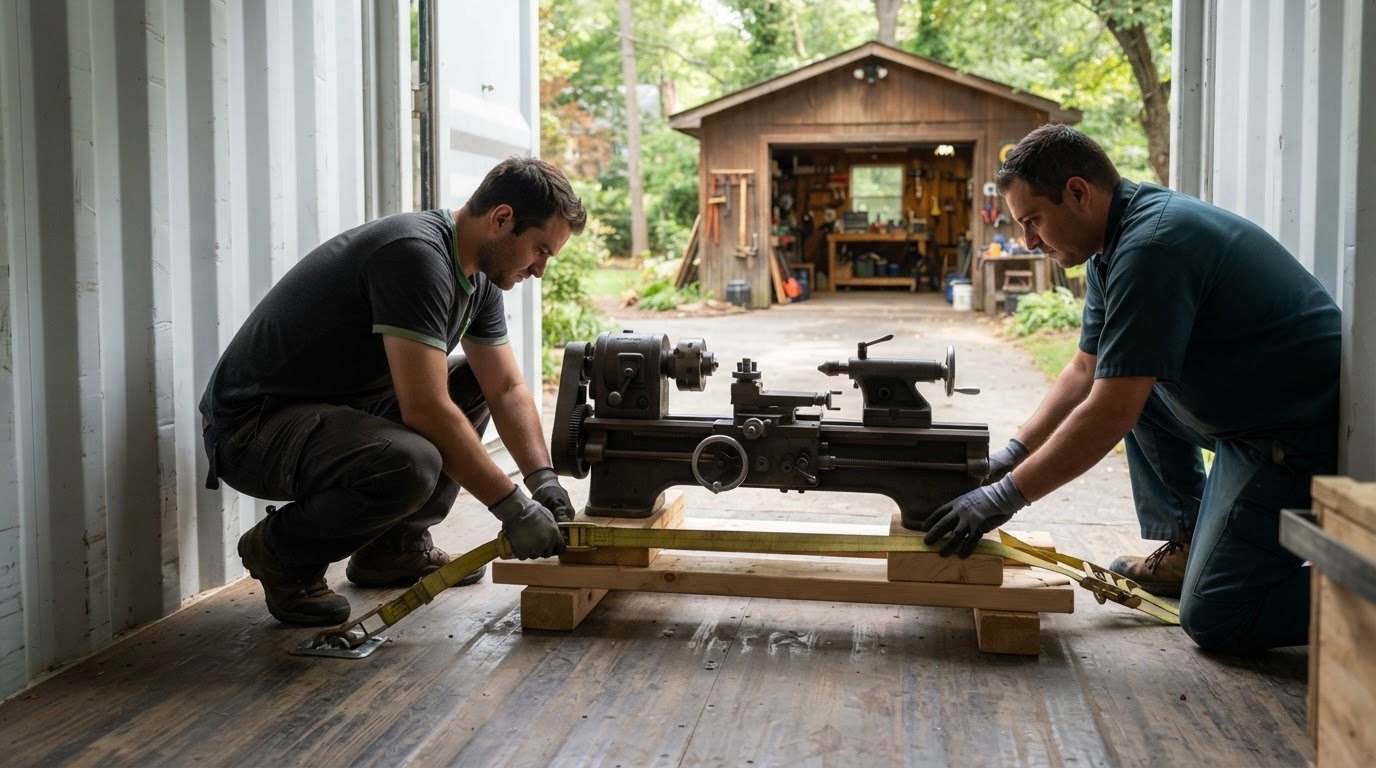
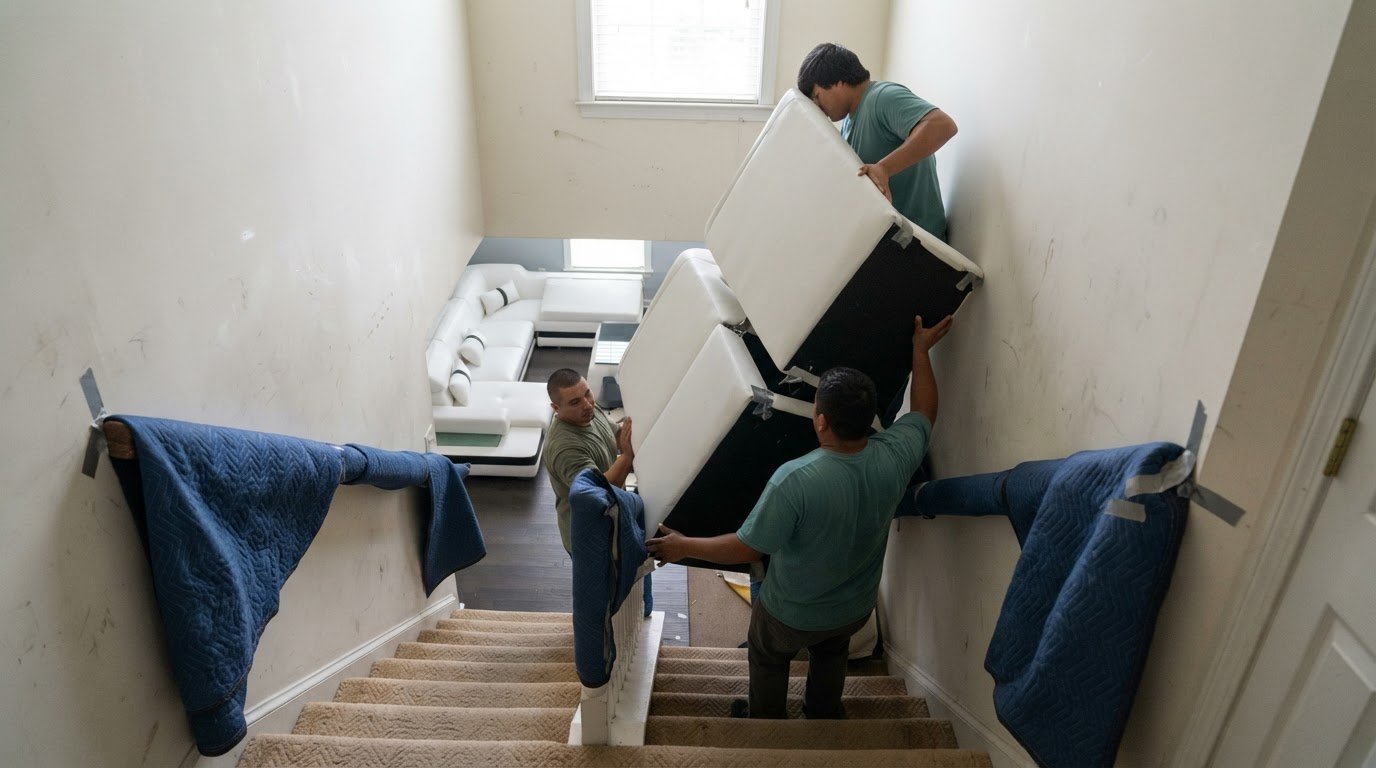
How to Hire Professional Movers for a Heavy Porcelain Tub Down Stairs
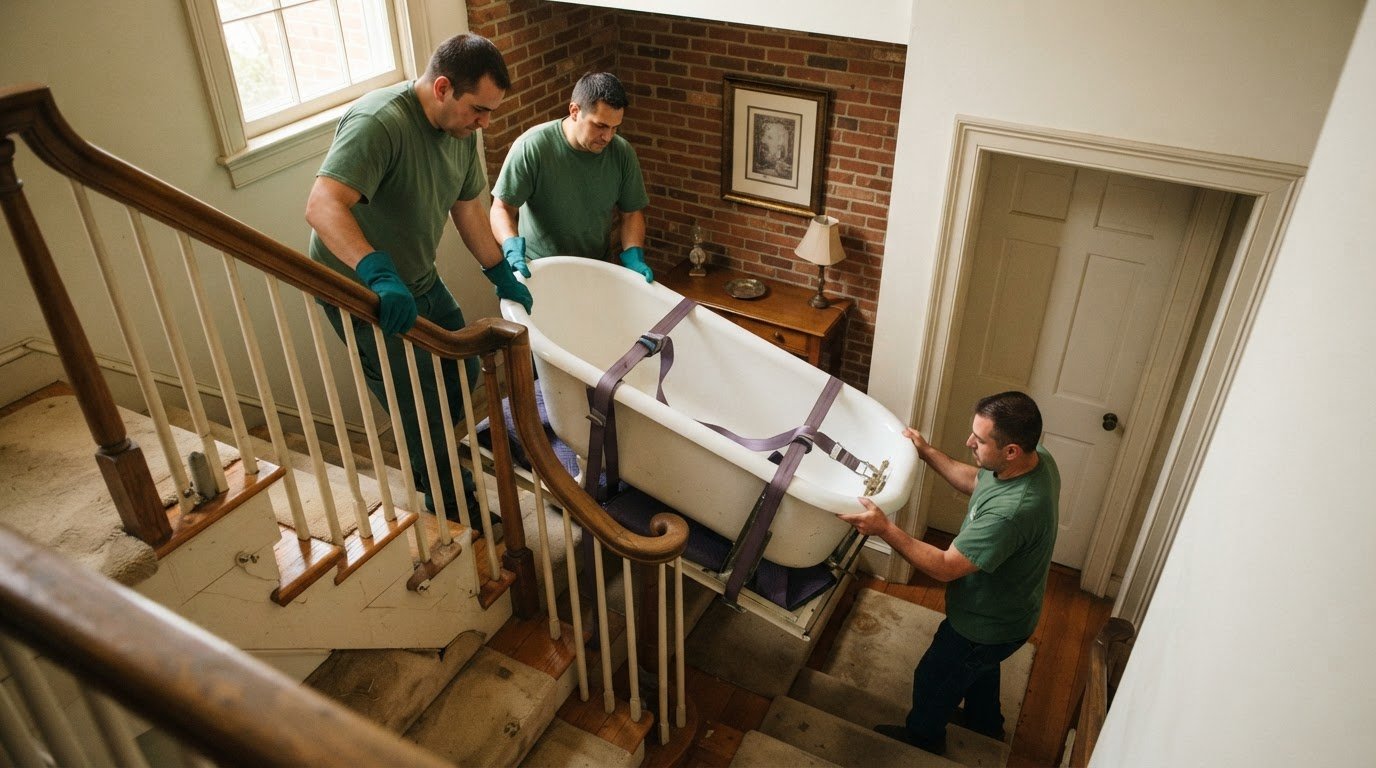
Stairs affect how movers handle a heavy porcelain clawfoot tub and can change the work involved. When looking for professional movers for a heavy porcelain clawfoot tub down stairs in Fairfax, consider the access route, the tub’s weight, and the crew and equipment needed. Share measurements and photos so the movers can assess the route before planning the move.
It makes sense to want a clear quote before moving a fragile, bulky fixture through your home. Stair access, doorway and landing measurements, crew needs, and the tub’s construction all help determine the work. Share those details early so movers can plan the route and handling. Unlike a standard furniture move, a clawfoot tub may have a delicate porcelain finish, projecting feet, and a shape that makes tight turns difficult.
Key Takeaways
- Stairs can affect a moving quote because the route, turns, and handling demands shape the work involved.
- Accurate measurements and clear photos help movers spot access challenges before moving day.
- Share the tub’s material and any known weight so the crew can plan for its real handling needs.
- Understand how crew size and hourly rates factor into the estimate, then compare the plan with the access details.
- For a heavy, awkward move, Heavy Furniture Moving offers moving help for bulky items that need careful handling.
Does moving cost more if you have stairs?
Stairs can add handling time and affect a moving quote. Share the tub and route details during booking so the crew can plan the labor and equipment. The cost depends on the case and is given after a quote request, based on access, crew needs, and requested work.
A clawfoot tub must be disconnected from its water and drain lines before moving. A plumber handles disconnection or reconnection when plumbing work is needed.
Porcelain can chip or crack if the tub strikes a stair edge or wall. Losing control can also injure movers. The U.S. Bureau of Labor Statistics identifies sprains, strains, and overexertion as risks when moving heavy objects.
Before moving day, the crew can protect the tub with moving blankets and secure it with straps, then clear and assess the route. Share the tub’s material, dimensions, and access details so movers can plan for its finish and any tight spots.
-
Assess Stair-Related Time and Fees
Describe each stair flight, landing, and turn when requesting a quote. Carrying a tub down stairs involves different handling from moving it across a clear, level floor. Heavy Furniture Moving provides upfront quotes, with the work planned around access, equipment, and the requested tasks. When comparing professional movers for a heavy porcelain clawfoot tub down stairs in Fairfax, give each the same route details.
-
Plan Professional Tub Handling With Dollies and Straps
Ask how the crew will support and secure the tub before moving it. A suitable dolly can help control its path, while straps help stabilize it during handling. On stairs, movers coordinate each movement and use protective materials to reduce contact with walls and steps.
-
Prepare the Tub and Stairway for Professional Movers
Share the tub material, shape, and known weight, along with photos of stairs and landings. Point out narrow turns, low ceilings, or nearby fixtures. These details help professional movers for a heavy porcelain clawfoot tub moving down stairs in Fairfax plan a route that accounts for the actual item and space. On moving day, keep the path clear and identify the tub’s water and drain connections.
- Choose labor-only help when you need a crew to handle lifting and movement and will provide your own vehicle. Heavy Furniture Moving offers labor for loading and unloading customer-supplied trucks or pods, as well as furniture moving help. The estimate should make clear whether the work includes carrying, loading, transport, or placement, so you know what the crew will handle.
- Tell movers whether the item is a clawfoot bathtub or a hot tub when arranging help. Stairs, dimensions, and access shape the handling plan for either load. During booking, provide the move date, both locations, and parking or loading details. If access changes before the crew arrives, share the update so the team can adjust its plan and arrive prepared for the route.
Getting a quote that accounts for access details
Give the mover a complete picture of both addresses before requesting a quote. In Fairfax, a postal address alone doesn’t show whether a property sits in the City of Fairfax or Fairfax County.
- Share the pickup and delivery locations, then identify the property type at each stop. A detached home, townhouse, or apartment can present different access conditions. Include the floor where the tub sits and the floor where it needs to go. Mention shared entrances or managed parking areas early.
- Describe the route from the tub to the customer-supplied moving vehicle. Include stair flights, landings, tight turns, doorways, and narrow hallways. Photos can show the route clearly, especially where a staircase changes direction. Add the tub’s dimensions and the measurements of tight openings if available. Accurate details help the crew assess fit and handling needs.
- Explain where the moving vehicle can load at each address. In Fairfax and Reston, parking and loading permissions for townhouse moves depend on who controls the property or street. State whether access is through a private driveway, shared lot, or public street. If a property manager or association controls a loading area, identify that contact and share any instructions you already have.
- List what you need the quote to cover, such as moving labor, protective handling, loading, or placement. Ask how stairs, a narrow landing, or a longer carry affect the work. Compare quotes only after confirming that they describe the same route and requested tasks. A quote based on an open, level path will not represent a tub move involving stairs.
- Confirm the booking details in writing, including the date, arrival window, addresses, and access notes. Send updates if parking instructions change or a route becomes blocked. For example, a reserved loading space that is unavailable on moving day can change the approach. Clear communication gives the crew a useful plan before arrival. For help with a bulky household move, explore moving help for heavy items.
How professional movers assess difficult turns and door openings
A tub can fit through a doorway yet still snag at a turn. Give the crew clear measurements and photos so they can assess the full route before moving day.
- Measure the tub at its widest points, including projecting feet or fixtures. Record its length, width, and height, then describe how it can be positioned during the move. The rim may clear a doorway while the feet or curved body need more room. Accurate dimensions help the crew compare the tub with each opening.
- Measure the clear width and height of every doorway along the route, including the entrance, interior doors, and openings between rooms. Note fixed features such as trim and handles, as well as nearby furniture that reduces usable space. A photo beside each measurement gives the crew helpful context and can reveal a tight spot before the quote is prepared.
- Show each stair turn and landing from more than one angle. A straight stair run differs from one that turns at a small landing or opens into a narrow hall. Photos and measurements of the tub, stair turns, and door openings can help identify access problems before moving day. Include the top and bottom of the stairs, where turning space may vary.
- Ask the movers to assess the route as one continuous path, not as separate doorways. The crew needs to consider whether the tub can move from the room to the hall, through each turn, and onto the stairs without obstruction. A wide entrance does not solve a narrow landing farther along. The plan should account for every transition and the space needed to guide the tub.
- Send photos and measurements with your quote request, then describe anything that could alter the route. Mention a door that cannot stay open, a tight corner beside a banister, or furniture near the stair entrance. These details help the crew plan its approach and account for access. Update the team if the route changes before the scheduled move.
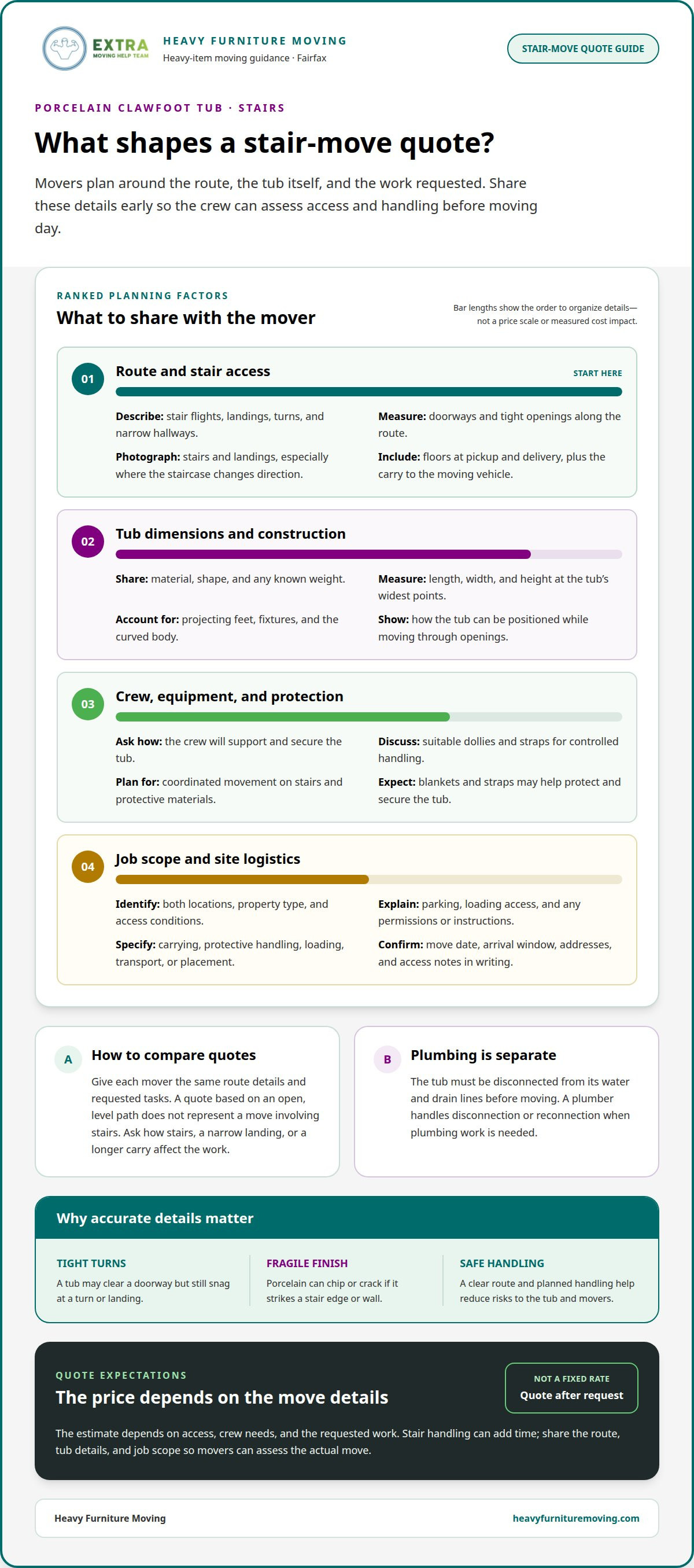
Mover crew packages and hourly rates
Before booking, compare the crew size, included tasks, and billing method. For a porcelain tub, the written estimate should explain how stair handling and loading fit the quoted work.
For damage protection, read the written estimate and moving agreement. They should explain what coverage applies to the tub and how a damage claim is handled.
- Ask whether the estimate uses hourly labor or a flat rate. Hourly labor is billed by time, while a flat rate covers the specified work. For a tub going downstairs, the scope should identify the requested carrying, loading, and placement tasks. Compare equivalent services, not just the headline rate.
- The crew size depends on the item and access. Most jobs are covered by two movers, while larger items may require three or four. Ask how the estimate accounts for the crew and the planned labor, especially where stairs and tight turns affect handling.
- List every task you expect the crew to handle. Separate preparation, carrying, loading, transport, and placement so the estimate shows what is included. Mention disassembly only if the move requires it, such as removing an obstruction that prevents passage. Don’t assume a quoted moving package includes plumbing work or fixture removal.
- Clarify how labor time is counted. The estimate should state which locations and tasks are included and how stair handling factors into the planned work. Carrying a tub from an upstairs bathroom to a vehicle involves more than loading alone. Note any access change that could affect the plan.
- Read the written terms for porcelain damage protection before booking. The agreement should describe applicable coverage, limits, and the claims process. Don’t treat ordinary liability wording as a promise to replace a damaged tub at full value. Keep the estimate and agreement together, so the quoted terms are clear before moving day.
- Request a detailed estimate using the same job description for every package you compare. Include the tub’s material, the stair route, pickup and delivery locations, crew size, and requested tasks. The price depends on the case and is given after a quote request, based on crew size, hours, stair access, equipment, and work scope. Confirm the booking details and keep a copy of the agreed scope.
Treat the rate as a comparison point, not a complete estimate. Ask how the quote accounts for crew labor and the expected work. Use the same description of the tub, stairs, access, and requested tasks when comparing quotes, so you can assess the proposed work consistently.
Before booking, check that the estimate reflects the actual route and the tasks you need, rather than relying on the rate alone. Ask the mover to clarify any assumptions about carrying, loading, transport, and placement, and keep the response with the written terms. If the scope changes, request an updated estimate before the crew begins. This helps you understand what the quoted labor covers and compare the agreement with your expectations.
Assessing specialty and unusually heavy items
Identify the tub’s material before settling on a moving plan. A porcelain finish alone does not show what lies beneath it, and an incorrect weight assumption can affect the crew’s handling plan.
- Describe the tub’s construction using purchase records, manufacturer information, or details you already know. Material affects how the crew plans to handle the tub. Don’t identify its construction by appearance alone if you are unsure.
- Share any known weight and explain where that figure came from. A 400-pound enameled-steel tub mistaken for a 70-pound fiberglass tub illustrates the danger of misidentification. The mismatch can affect equipment, staffing, and route planning. Give movers the best available description, then let them assess the item rather than relying on a visual guess.
- Point out the tub’s feet, rim, curves, and attached parts during the assessment. These features affect where movers can support and secure the load. A clawfoot tub’s shape also differs from a compact, flat-sided fixture. Ask the crew to account for the finish and vulnerable edges in its handling plan.
- Connect the tub’s weight to the whole route, not just the first lift. A cast-iron clawfoot tub moved to a second-floor bathroom weighed 400 pounds. That example shows why stairs, turns, and the destination matter alongside material. The crew needs to consider how the item will be controlled at each transition, including the final placement area.
- Tell the movers about unusual access or structural concerns before booking. Mention narrow stairs, a landing turn, uneven flooring, or limited space near the destination. These details can affect the crew and equipment needed. A heavy item needs a coordinated route, not a plan based on weight alone. Ask for an estimate that reflects the material and access information you provided.
- Read any written guarantee carefully and note what it actually covers. A guarantee’s wording matters; don’t assume it protects the tub’s finish, every stair surface, or all handling circumstances. Keep the estimate and agreement together so the scope is clear. For an unusually heavy household item, request help with heavy lifting as part of your moving plan.
Heavy Furniture Moving
Heavy Furniture Moving can help plan the handling of bulky household items when stairs, tight access, or unusual weight make a move more demanding. Share the tub’s material, known weight, and route details so the moving plan reflects the actual load and access needs. Its heavy lifting moving service connects with jobs that require careful handling, while local moving help can support broader household moves. A porcelain clawfoot tub needs a plan that considers both its weight and vulnerable finish, not simply the number of steps. If you’re arranging a challenging move in Fairfax, contact Heavy Furniture Moving to discuss your moving needs.
Make the Next Move With a Clear Plan
Choosing professional movers for a heavy porcelain clawfoot tub down stairs in Fairfax takes more than finding available hands. Look for a plan that accounts for the tub’s fragile finish and the stair route. Share your measurements and photos with Heavy Furniture Moving, then review the upfront quote to understand the planned labor and tasks. The company serves Fairfax, Woodbridge, Manassas, Manassas Park, Aldie, Ashburn, McLean, Vienna, Reston, Centreville, Chantilly, Clifton, Dumfries, South Riding, Fairfax Station, Haymarket, and Gainesville. Request a quote to plan your move.
Heavy Furniture Moving helps with demanding household moves and heavy lifting. If your tub’s weight or stair access makes the job difficult to coordinate, take the next step and discuss the move directly. Contact Heavy Furniture Moving for help. A practical plan can make a tough move feel more manageable, and you can move forward with confidence.
Frequently Asked Questions
How much does it cost to move a clawfoot tub down stairs in Fairfax, VA?
The quote depends on the tub, access, and requested moving work. A narrow landing or difficult turn can change the handling plan compared with an open staircase. Share the pickup and delivery locations, tub details, and access information when requesting an upfront quote. The estimate should reflect the actual job scope, rather than treating every tub move as the same task.
How much does a cast-iron clawfoot tub weigh?
The tub’s weight depends on its size and construction, so the material alone cannot give an exact figure. If you have manufacturer information or purchase records, include them with your move details. This helps the crew distinguish a cast-iron tub from lighter materials and plan for the load accordingly.
What equipment do professional movers need to move a clawfoot tub downstairs safely?
Movers may use a suitable dolly, securing straps, and protective padding to control the tub and shield its porcelain finish. A powered stair-climbing dolly is recommended for heavy tubs on stairs. The right setup depends on the tub’s weight, shape, and stair layout. Movers also need a clear route and coordinated handling, since equipment must fit the space and support controlled movement.
What measurements should clients provide before professional movers move a clawfoot tub?
Provide the tub’s length, width, and height, including projecting feet or other parts that affect its shape. Measure clear doorway openings along the route, as well as stair width and landing space. Include photos showing turns, handrails, and nearby obstacles. A tub may clear a doorway straight on but need more room to maneuver at a tight landing.
reviews of Fairfax VA specialty movers for heavy antiques and plumbing fixtures
Fairfax-area mover listings average 4.8 stars across local jobs and include more than 290 verified customer reviews nearby.
Frequently Asked Questions
The quote depends on the tub, access, and requested moving work. A narrow landing or difficult turn can change the handling plan compared with an open staircase. Share the pickup and delivery locations, tub details, and access information when requesting an upfront quote. The estimate should reflect the actual job scope, rather than treating every tub move as the same task.
The tub’s weight depends on its size and construction, so the material alone cannot give an exact figure. If you have manufacturer information or purchase records, include them with your move details. This helps the crew distinguish a cast-iron tub from lighter materials and plan for the load accordingly.
Movers may use a suitable dolly, securing straps, and protective padding to control the tub and shield its porcelain finish. A powered stair-climbing dolly is recommended for heavy tubs on stairs. The right setup depends on the tub’s weight, shape, and stair layout. Movers also need a clear route and coordinated handling, since equipment must fit the space and support controlled movement.
Provide the tub’s length, width, and height, including projecting feet or other parts that affect its shape. Measure clear doorway openings along the route, as well as stair width and landing space. Include photos showing turns, handrails, and nearby obstacles. A tub may clear a doorway straight on but need more room to maneuver at a tight landing.