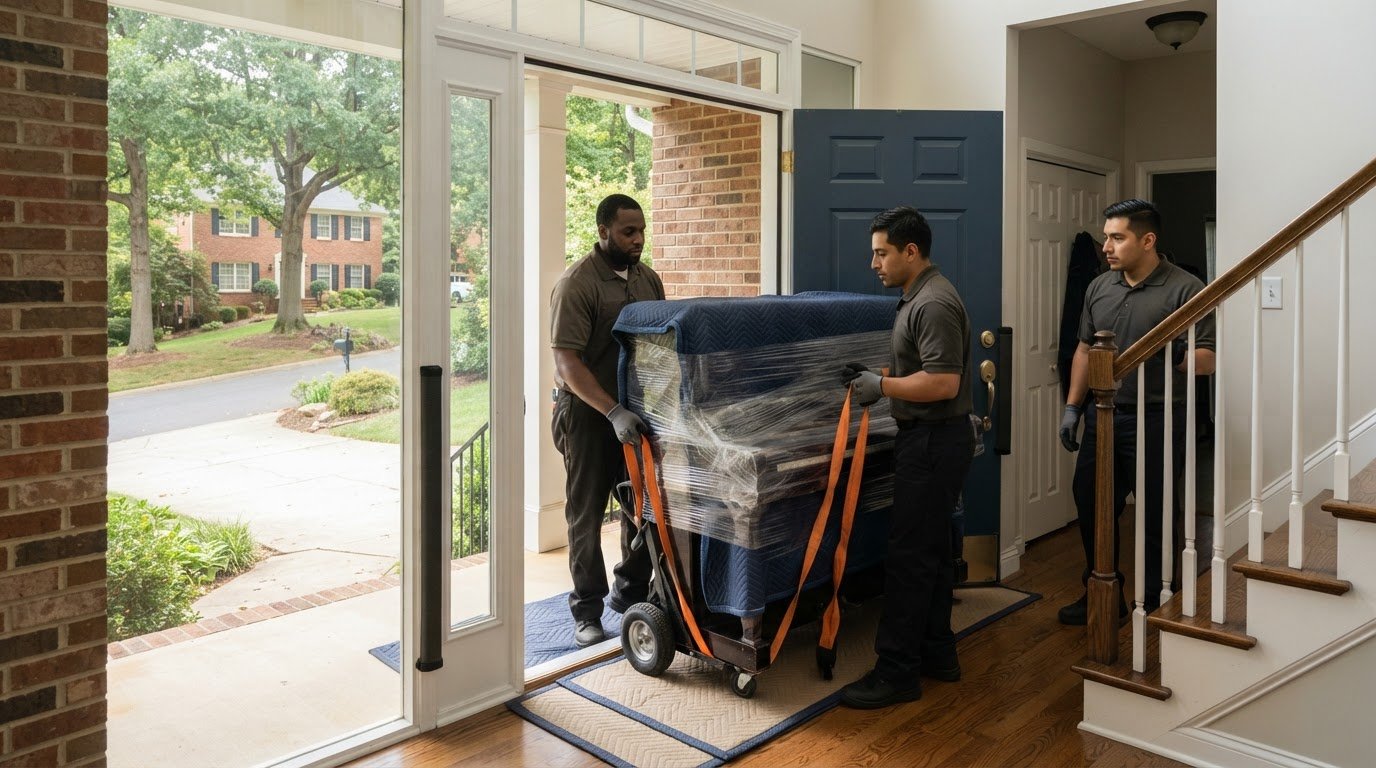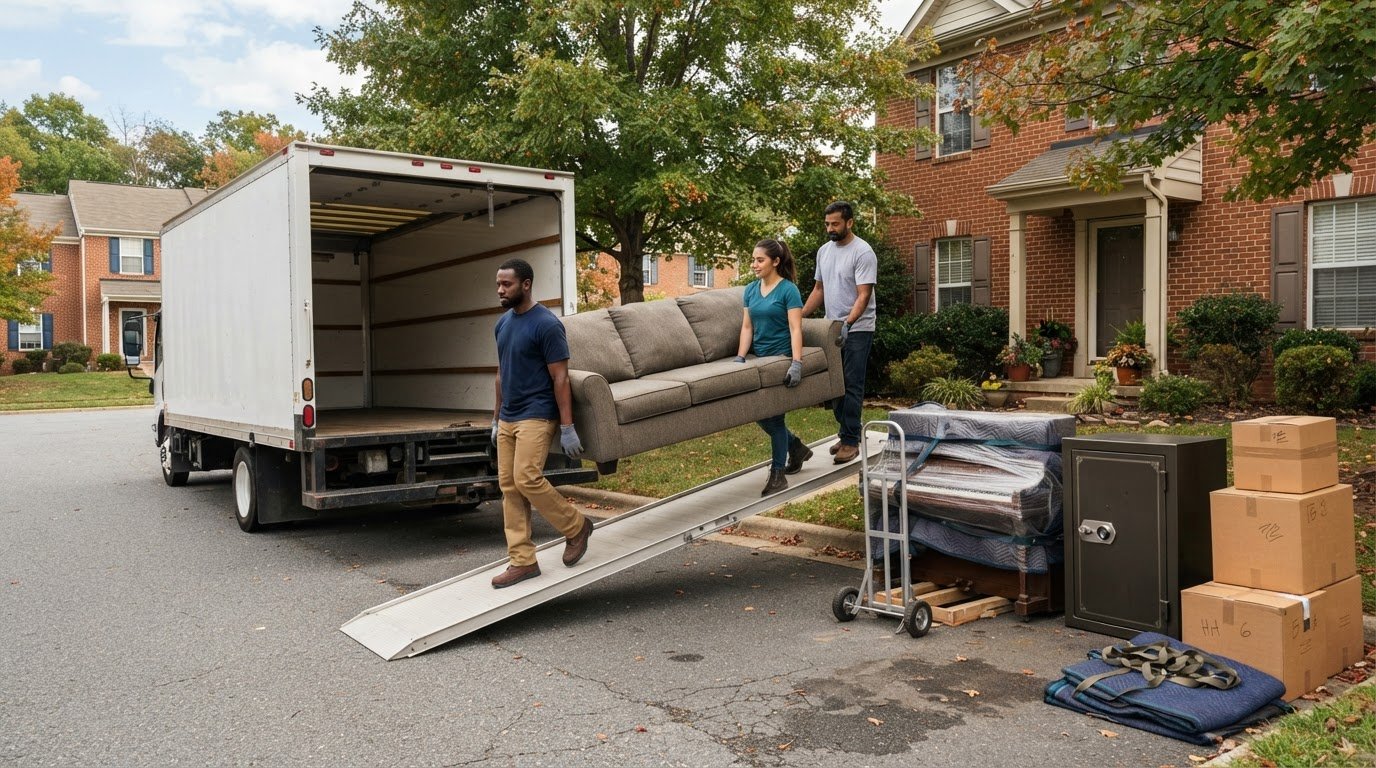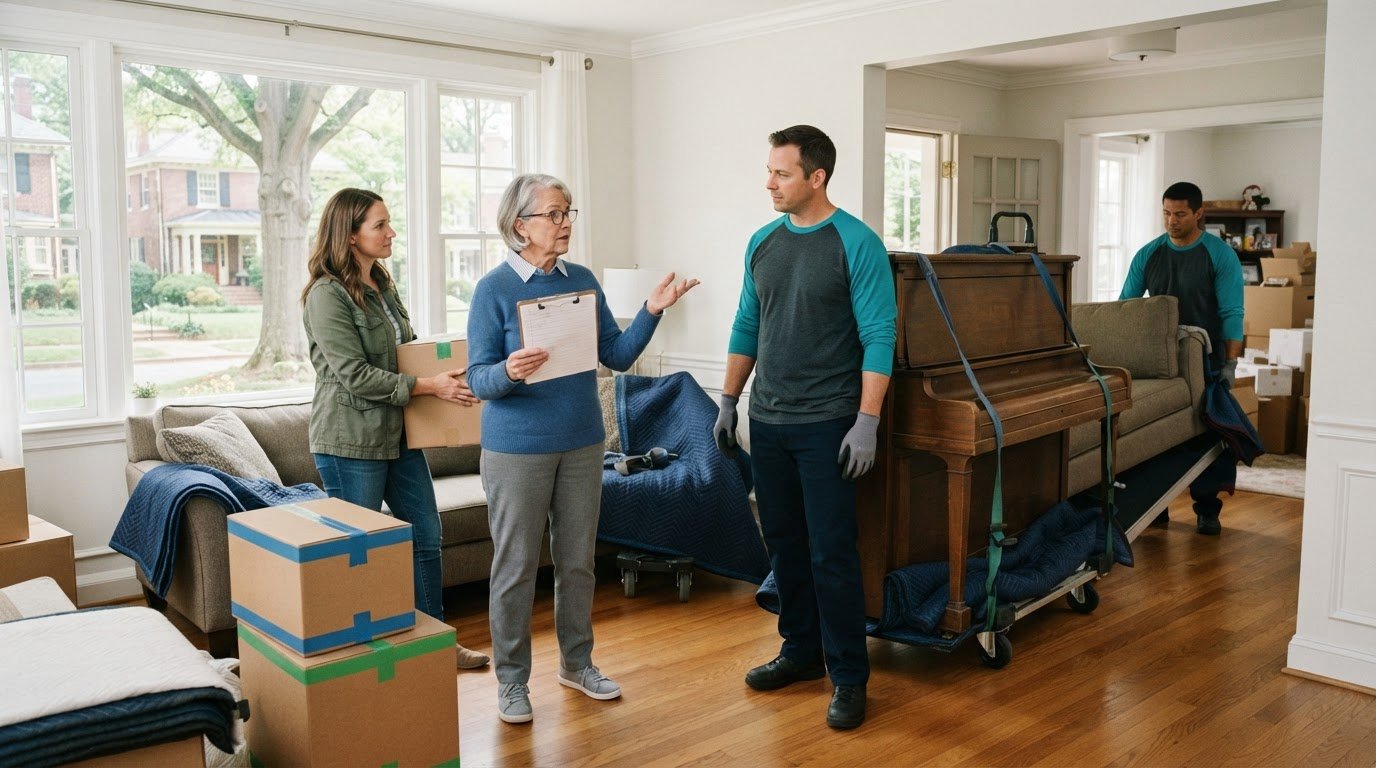
South Riding Balcony Furniture Lifting Service: Safe, Skilled Help
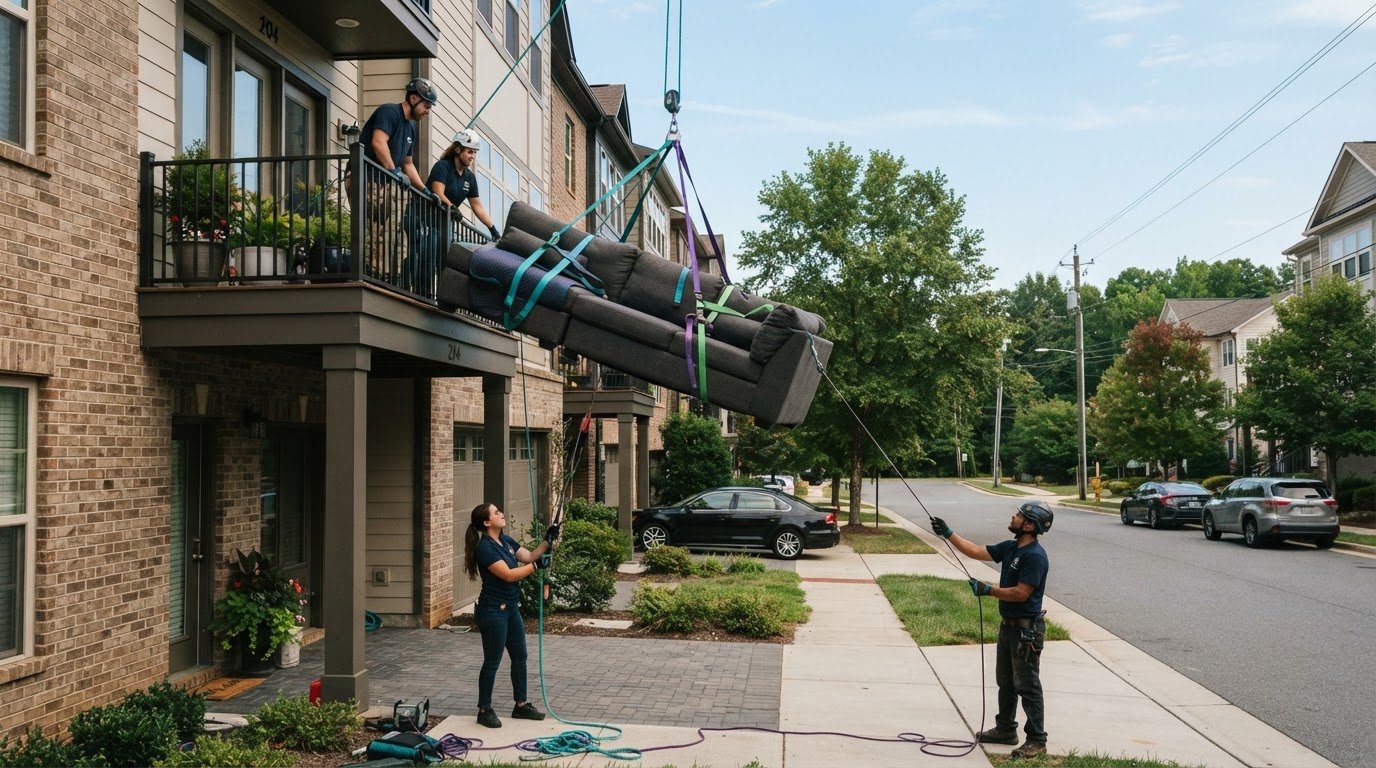
What if your sofa’s best route isn’t through the front door? When stairs, elevators, or narrow hallways block the way, a South Riding balcony furniture lifting service can provide another option. Professional sofa hoisting helps move bulky furniture when the usual access route won’t work, with the item and property assessed before the lift is planned.
It’s reasonable to worry about damage to your furniture, your home, or the building. An improvised lift can put people and property at risk, so start by identifying the access problem and arranging experienced help for the heavy work.
This guide explains when balcony lifting may make sense, what information helps plan the job, and how to prepare your home and coordinate with building management or your HOA. Before arranging help, gather the item’s dimensions, photos of the access points, and details about building entry. For South Riding households facing a blocked doorway or elevator, good preparation makes a difficult move more manageable.
Key Takeaways
- A South Riding balcony furniture lifting service can be a practical option when a sofa or sectional won’t fit through a doorway, stairwell, or elevator.
- Help the crew plan by sharing the furniture’s dimensions, shape, and clear photos of the access points.
- Compare the indoor route with a balcony lift by considering obstacles and available space at each point.
- Coordinate building access and share property-specific rules before the lifting appointment.
- Heavy Furniture Moving offers sofa hoisting for bulky furniture that can’t fit through standard entryways or elevators.
When a South Riding Balcony Furniture Lift Is the Right Solution
A sectional is ready for its new spot, but it won’t clear the doorway. You try another angle, then find the stairwell turn is too tight and the elevator is too small. In situations like this, a South Riding balcony furniture lifting service may provide another way to move bulky furniture into or out of a home.
Balcony furniture lifting is an alternative to carrying an item along the usual indoor route. A balcony can provide another access point when halls, stairs, or elevators block the path, but it isn’t automatically the right solution. The building layout, item size and shape, balcony opening, and space around the building all matter. A professional assessment helps determine whether the route is suitable.
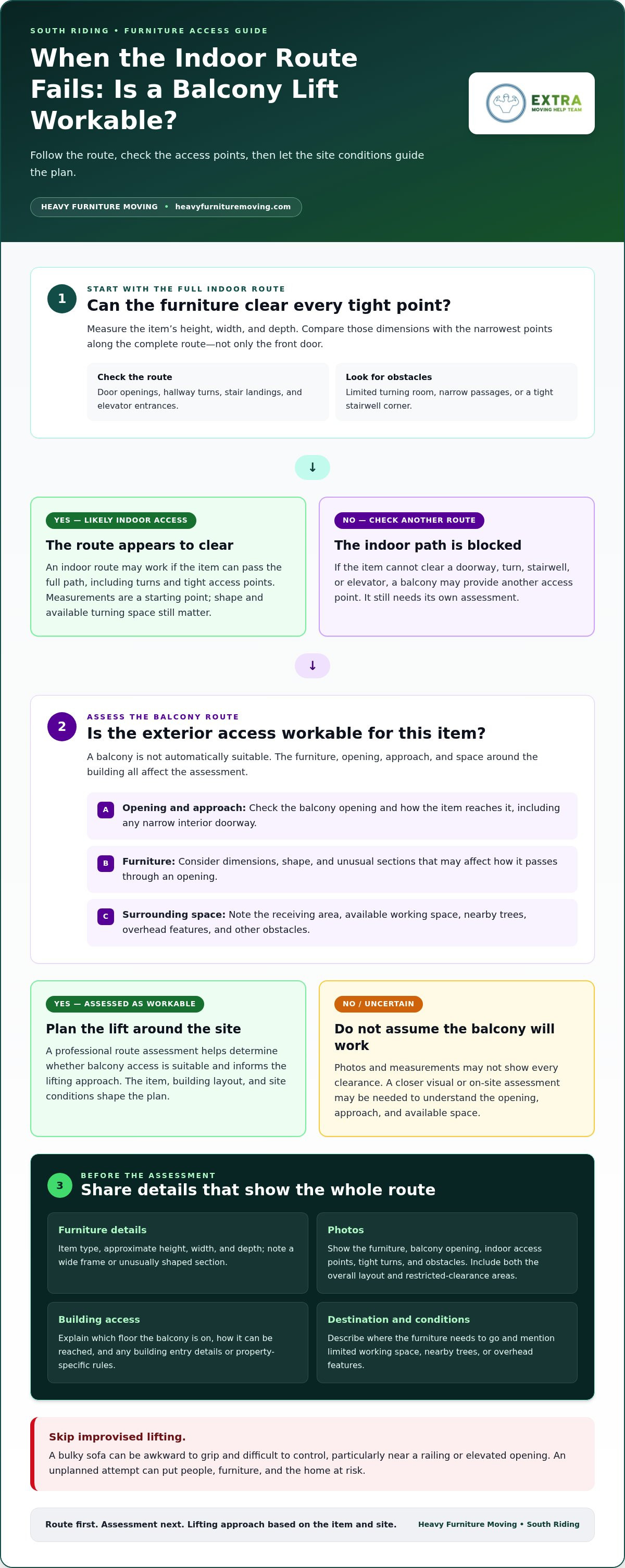
Don’t improvise with friends or neighbors. A bulky sofa can be awkward to grip and difficult to control, particularly near a railing or elevated opening. An unplanned attempt can put people, furniture, and the home at risk. Professional sofa hoisting brings experienced handling to the challenge, with planning based on the item and its route rather than guesswork.
Which access problems can balcony lifting address?
Narrow hallways, tight turns, small elevators, and door openings can block furniture that otherwise fits in the room. A sofa may pass through the front entrance but fail at the turn into a stairwell. A balcony may provide an alternate access point when the interior route can’t accommodate the item. The exterior route also needs assessment, including the balcony opening and the space around the building.
How do you know if an item needs a lift?
Compare the furniture’s dimensions with the tightest points along the entire indoor route, not just the front door. Measure its height, width, and depth, then consider the turning space in hallways, stair landings, and elevator entrances. These details help identify likely trouble spots and give the moving team useful information for planning.
Measurements are a starting point, not a final decision. A sofa can sometimes be repositioned, but whether that works depends on its shape and the space around it. A visual or on-site assessment can account for awkward corners, limited turning room, and the approach to the balcony, details a tape measure alone may not capture.
Before deciding, map the route from the outside access point to the furniture’s destination. Note where the path narrows, where a turn is required, and whether the balcony is reachable without blocking the planned movement. Share those details when arranging help. Heavy Furniture Moving serves South Riding and specializes in bulky household items, including sofa hoisting when standard entryways or elevators won’t work.
How a South Riding Balcony Furniture Lift Is Planned
A furniture lift starts with information, not equipment. Describe the item, share access details and photos, and have the route assessed before the approach is planned. This sequence helps identify obstacles in advance and avoids treating every balcony or sofa as the same job.
The route assessment comes before the lifting approach because the item, building, and surrounding space determine what can be done safely. A sectional’s shape may affect how it passes through an opening, while a narrow balcony or obstructed approach may change the plan. The assessment considers the complete path, including where the item begins and where it needs to go.
What details help assess the furniture and route?
When arranging help, note the item type and approximate height, width, and depth. Add clear photos of the furniture, balcony opening, indoor access points, and tight turns or obstacles. Include nearby trees, overhead features, and limited working space around the building. Show both the overall layout and any areas where clearance may be restricted.
Share relevant details even if you’re unsure how they affect the job. Mention, for example, if the sofa has a wide frame or an unusually shaped section, or if the balcony is reached through a narrow interior doorway. This information helps the team understand the job before assessing the route.
What determines whether balcony access is workable?
The assessment considers the balcony opening, the approach to it, the furniture’s dimensions and shape, and the space available to receive the item. Building layout and surrounding conditions can affect the plan, so a route that looks clear from inside may have an obstacle outside. Not every balcony provides a workable access point.
Photos and measurements are valuable, but they don’t answer every question. A closer visual or on-site assessment may be needed to understand clearances and how the item relates to the opening. Be ready to explain which floor the balcony is on, how it can be reached, and where the furniture will go. Describe what you can observe without trying to judge the safety of the lift yourself.
Equipment and site conditions also matter. OSHA’s crane and derrick regulations address equipment used in construction, and their scope depends on the work involved. A professional crew can account for the job’s conditions when planning the approach, rather than relying on an improvised lift.
For a South Riding home with a blocked indoor route, share the details early so experienced movers can assess the options. Heavy Furniture Moving provides sofa hoisting for bulky items that can’t fit through standard entryways or elevators. Learn about sofa-hoisting help as you plan the move.
Balcony Lift or Indoor Route? Compare the Options in South Riding
A balcony lift isn’t automatically the right choice just because an indoor path looks tight. The best route depends on the furniture and actual access conditions from the entrance to its destination. Compare the full indoor path with the balcony option before settling on a plan.
| Route | Best suited to | Likely obstacles | Coordination |
|---|---|---|---|
| Doorway | Furniture that clears each opening and connecting space | Narrow doors, hallways, or thresholds | Check the full path, including turns beyond the entrance |
| Stairs or elevator | Items that fit through shared access points and can be moved along the route | Tight landings, sharp turns, or limited elevator space | Consider building access and the route through shared areas |
| Planned balcony lift | Bulky furniture that standard entryways, stairs, or elevators can’t accommodate | Balcony opening, exterior approach, or limited landing space | Assess the building and surrounding space in advance |
Use the table as a starting point, not a final verdict. A clear doorway doesn’t mean the sofa will make the turn beyond it. An accessible balcony doesn’t guarantee a workable route either. Plan a South Riding balcony furniture lifting service around the item and property, rather than choosing a route for convenience alone.
When can an indoor route still make sense?
Use the indoor path when the item can pass through every doorway, turn, stair landing, and shared access point. Check the narrowest section, not just the entrance. If the item can be disassembled appropriately for its design and the job, that may affect the route assessment. Don’t assume taking it apart will solve every clearance problem or make an awkward move safe.
When might balcony furniture lifting be worth considering?
Consider a balcony route when an oversized sofa or other bulky household furniture can’t fit through the standard entryway, stairs, or elevator. The building layout, balcony opening, and space around the home all need to be assessed. Coordinate property access and any building-specific arrangements before the move.
A balcony lift is a route solution, not a shortcut around planning. Professional sofa hoisting can provide another option when the indoor route won’t work, but the actual access conditions determine whether that option is suitable. Compare both paths with the furniture in mind, and rely on a professional assessment rather than trying to force an item through a tight space.
Prepare Your South Riding Home and Building for Furniture Lifting
A well-prepared appointment starts with clear information. Describe what’s being moved, show the access areas, and flag anything that could affect arrival or setup. This gives the team a clearer picture of the job and helps prevent avoidable surprises. Use this checklist to gather the details.
- Furniture: Note the item type and approximate height, width, and depth. Mention detachable parts, fragile features, or anything unusual about its shape.
- Photos: Take recent, well-lit pictures of the furniture, balcony, nearby windows or doors, exterior approach, and indoor destination. Include obstacles or tight spaces.
- Access points: Describe how the crew will reach the building and unit. Share parking details and any entry, elevator, or other access arrangements that could affect arrival.
- Constraints: Pass along schedule limits or access restrictions early. Include property-specific instructions and any areas that must remain clear.
What should you share before the appointment?
Useful details go beyond measurements. Mention if a sofa has removable legs or a delicate section. Photos should show how the balcony connects to the home and what the crew may encounter on the approach. Explain where the item will go indoors, too, so the destination is part of the plan rather than an afterthought.
Be specific about access. Note whether visitors need a code, where they can enter, and whether an elevator or loading area has particular rules. If access depends on a building contact, share that information and any schedule constraints as early as possible.
How can you make the building area ready?
Coordinate building access with the property manager or the person responsible for the home. Share applicable building or community rules, and follow the property’s process for any required arrangements. Don’t assume a setup is permitted just because the lift is temporary. Early coordination gives everyone time to account for access requirements before the appointment.
Before the crew arrives, clear the staging and landing areas of small belongings, décor, and anything else that could obstruct the path. Keep residents and pets away from planned work areas, and move personal items that could be bumped or misplaced. Don’t try to clear the way by carrying heavy furniture yourself. Leave that handling to the moving team.
A South Riding balcony furniture lifting service works best when the team has an accurate picture of both the item and property. If a detail changes, such as parking access or the furniture’s destination, share the update promptly. Prepare the route, communicate building requirements, and leave the heavy lifting to experienced movers.
Ready to arrange help with a bulky sofa or other heavy household item? Plan your South Riding sofa-hoisting service with Heavy Furniture Moving.
Book Balcony Furniture Lifting Service in South Riding
If a sofa or another bulky item can’t make it through the usual route, start by identifying the obstacle, describing the furniture, and arranging professional sofa-hoisting help. A South Riding balcony furniture lifting service is planned around the item and access conditions, so clear details make for a more useful first conversation.
Heavy Furniture Moving serves South Riding and specializes in heavy, bulky residential items, including sofa hoisting for furniture that won’t fit through standard entryways or elevators. You don’t need to work out the lifting approach yourself. Explain what’s blocking the indoor route and share what you know about the home so the discussion can focus on the access challenge.
What information helps get the request moving?
Describe the furniture and the point where the normal route fails. Explain whether the issue is a narrow doorway, a stairwell turn, or limited elevator space. Share approximate dimensions if you have them, along with photos of the item and relevant access points. South Riding location details help identify the property, while notes about entry arrangements and known restrictions add useful context.
- Item: Type of furniture, approximate dimensions, and any unusual shape or detachable parts.
- Obstacle: The doorway, turn, stairs, elevator, or other access point that prevents the standard route.
- Photos: Clear views of the furniture, balcony, approach, and indoor destination.
- Building details: Entry instructions, access arrangements, and any property rules or scheduling constraints you already know.
Share constraints early, even if you’re unsure how they affect the job. A limited access window or a specific entry procedure can shape coordination. Clear, accurate information is more useful than guessing how a lift should be handled.
What should you expect from a service-focused conversation?
The conversation should center on your furniture and the route at your home. Discuss what the crew needs to know about the item, where the indoor path becomes difficult, and what the balcony and surrounding access are like. Heavy Furniture Moving brings experience with bulky household items and sofa hoisting, using a practical, careful approach to constrained spaces. The plan is specific to the job.
If you’re comparing local moving support, explore reliable movers near me in Fairfax and Northern VA for more information about the company’s moving help.
You don’t have to risk forcing a heavy sofa through a tight route or attempting an improvised lift. South Riding residents with a difficult furniture access path can reach out to Heavy Furniture Moving for sofa-hoisting help. Share the obstacle and item details to take the next step toward a carefully planned move.
Make the Next Move a Planned One
A difficult furniture route can feel like a dead end, but it doesn’t have to become a risky do-it-yourself project. Start by identifying what’s blocked, what needs moving, and what the property allows. Those details give the crew a practical starting point for discussing the route.
Gather the item details and access photos, then arrange help suited to the job. A South Riding balcony furniture lifting service can turn an uncertain route into a planned conversation about the furniture and home. You don’t need to decide on a lifting approach alone.
Heavy Furniture Moving offers sofa hoisting for furniture that can’t fit through standard entryways or elevators and serves South Riding. Share the access problem and request professional help for your furniture move. Request professional balcony furniture lifting help in South Riding and take the next step with a clearer plan.
Frequently Asked Questions
Can furniture be lifted onto a balcony in South Riding?
Yes, a balcony lift may be possible when the item and building access allow a suitable plan. A South Riding balcony furniture lifting service considers the furniture, balcony opening, and surrounding conditions before the approach is planned. Heavy Furniture Moving serves South Riding and other Northern Virginia communities, including Fairfax, Woodbridge, Manassas, Manassas Park, Aldie, Ashburn, McLean, Vienna, Reston, Centreville, Chantilly, Clifton, Dumfries, Fairfax Station, Haymarket, and Gainesville.
What furniture can a balcony lifting service move?
Bulky residential furniture, such as sofas and sectionals, may be a candidate if it won’t fit through standard access points. Suitability depends on the item’s shape and dimensions, plus the balcony and surrounding space. Share the furniture type and any unusual features during planning. A balcony lift isn’t a solution for every item; the specific piece and access conditions guide the assessment.
Is balcony furniture lifting safer than carrying furniture through stairs?
Neither route is automatically safer in every home. Forcing a bulky sofa around a tight stair turn can create control and damage risks, while a balcony lift also requires a carefully assessed plan. The right choice depends on the furniture, indoor route, and exterior access. Don’t compare routes by convenience alone or attempt an improvised lift. Have experienced movers assess the specific conditions before deciding.
Do I need permission from my South Riding building to lift furniture over a balcony?
Possibly, so check the rules for your property before scheduling the work. South Riding community guidance calls for prior written Covenants Committee approval for exterior modifications; whether a temporary furniture-lifting setup falls under that process depends on the work and property. Contact your HOA, building manager, or responsible property contact to learn the applicable steps. Share any rules or access requirements with the moving team as part of planning.
How should I measure furniture for a balcony lift?
Measure the item at its widest, tallest, and deepest points, including protruding arms, feet, or other features that affect clearance. Record measurements in a consistent unit and note whether removable parts change the overall size. Also measure relevant openings and tight turns if you can do so safely. These figures help describe the job, but they can’t replace an assessment of the full route and balcony access.
Should I take apart a sofa before a balcony furniture lift?
Don’t take a sofa apart unless the moving team or the manufacturer’s instructions indicate that it’s appropriate. Some parts may be removable, while other components are built into the frame or upholstery. Unplanned disassembly can make the piece harder to handle or reassemble. Describe detachable features in advance and keep any removed hardware together if disassembly is part of the agreed plan.
What should I do before the furniture lifting appointment?
Make sure the destination room is ready to receive the furniture, and keep the agreed work areas clear of small belongings. Keep pets and residents away from the active route, and have a point of contact available for access questions. Don’t reposition heavy items or test a lift yourself. If building access, parking, or the furniture changes, share the update before the appointment so the plan reflects the current situation.
Frequently Asked Questions
Narrow hallways, tight turns, small elevators, and door openings can block furniture that otherwise fits in the room. A sofa may pass through the front entrance but fail at the turn into a stairwell. A balcony may provide an alternate access point when the interior route can’t accommodate the item. The exterior route also needs assessment, including the balcony opening and the space around the building.
Compare the furniture’s dimensions with the tightest points along the entire indoor route, not just the front door. Measure its height, width, and depth, then consider the turning space in hallways, stair landings, and elevator entrances. These details help identify likely trouble spots and give the moving team useful information for planning. Measurements are a starting point, not a final decision. A sofa can sometimes be repositioned, but whether that works depends on its shape and the space around it. A visual or on-site assessment can account for awkward corners, limited turning room, and the approach to the balcony, details a tape measure alone may not capture. Before deciding, map the route from the outside access point to the furniture’s destination. Note where the path narrows, where a turn is required, and whether the balcony is reachable without blocking the planned movement. Share those details when arranging help. Heavy Furniture Moving serves South Riding and specializes in bulky household items, including sofa hoisting when standard entryways or elevators won’t work. A furniture lift starts with information, not equipment. Describe the item, share access details and photos, and have the route assessed before the approach is planned. This sequence helps identify obstacles in advance and avoids treating every balcony or sofa as the same job. The route assessment comes before the lifting approach because the item, building, and surrounding space determine what can be done safely. A sectional’s shape may affect how it passes through an opening, while a narrow balcony or obstructed approach may change the plan. The assessment considers the complete path, including where the item begins and where it needs to go.
When arranging help, note the item type and approximate height, width, and depth. Add clear photos of the furniture, balcony opening, indoor access points, and tight turns or obstacles. Include nearby trees, overhead features, and limited working space around the building. Show both the overall layout and any areas where clearance may be restricted. Share relevant details even if you’re unsure how they affect the job. Mention, for example, if the sofa has a wide frame or an unusually shaped section, or if the balcony is reached through a narrow interior doorway. This information helps the team understand the job before assessing the route.
The assessment considers the balcony opening, the approach to it, the furniture’s dimensions and shape, and the space available to receive the item. Building layout and surrounding conditions can affect the plan, so a route that looks clear from inside may have an obstacle outside. Not every balcony provides a workable access point. Photos and measurements are valuable, but they don’t answer every question. A closer visual or on-site assessment may be needed to understand clearances and how the item relates to the opening. Be ready to explain which floor the balcony is on, how it can be reached, and where the furniture will go. Describe what you can observe without trying to judge the safety of the lift yourself. Equipment and site conditions also matter. OSHA’s crane and derrick regulations address equipment used in construction, and their scope depends on the work involved. A professional crew can account for the job’s conditions when planning the approach, rather than relying on an improvised lift. For a South Riding home with a blocked indoor route, share the details early so experienced movers can assess the options. Heavy Furniture Moving provides sofa hoisting for bulky items that can’t fit through standard entryways or elevators. Learn about sofa-hoisting help as you plan the move. A balcony lift isn’t automatically the right choice just because an indoor path looks tight. The best route depends on the furniture and actual access conditions from the entrance to its destination. Compare the full indoor path with the balcony option before settling on a plan. Use the table as a starting point, not a final verdict. A clear doorway doesn’t mean the sofa will make the turn beyond it. An accessible balcony doesn’t guarantee a workable route either. Plan a South Riding balcony furniture lifting service around the item and property, rather than choosing a route for convenience alone.
Use the indoor path when the item can pass through every doorway, turn, stair landing, and shared access point. Check the narrowest section, not just the entrance. If the item can be disassembled appropriately for its design and the job, that may affect the route assessment. Don’t assume taking it apart will solve every clearance problem or make an awkward move safe.
Consider a balcony route when an oversized sofa or other bulky household furniture can’t fit through the standard entryway, stairs, or elevator. The building layout, balcony opening, and space around the home all need to be assessed. Coordinate property access and any building-specific arrangements before the move. A balcony lift is a route solution, not a shortcut around planning. Professional sofa hoisting can provide another option when the indoor route won’t work, but the actual access conditions determine whether that option is suitable. Compare both paths with the furniture in mind, and rely on a professional assessment rather than trying to force an item through a tight space. A well-prepared appointment starts with clear information. Describe what’s being moved, show the access areas, and flag anything that could affect arrival or setup. This gives the team a clearer picture of the job and helps prevent avoidable surprises. Use this checklist to gather the details.
Useful details go beyond measurements. Mention if a sofa has removable legs or a delicate section. Photos should show how the balcony connects to the home and what the crew may encounter on the approach. Explain where the item will go indoors, too, so the destination is part of the plan rather than an afterthought. Be specific about access. Note whether visitors need a code, where they can enter, and whether an elevator or loading area has particular rules. If access depends on a building contact, share that information and any schedule constraints as early as possible.
Coordinate building access with the property manager or the person responsible for the home. Share applicable building or community rules, and follow the property’s process for any required arrangements. Don’t assume a setup is permitted just because the lift is temporary. Early coordination gives everyone time to account for access requirements before the appointment. Before the crew arrives, clear the staging and landing areas of small belongings, décor, and anything else that could obstruct the path. Keep residents and pets away from planned work areas, and move personal items that could be bumped or misplaced. Don’t try to clear the way by carrying heavy furniture yourself. Leave that handling to the moving team. A South Riding balcony furniture lifting service works best when the team has an accurate picture of both the item and property. If a detail changes, such as parking access or the furniture’s destination, share the update promptly. Prepare the route, communicate building requirements, and leave the heavy lifting to experienced movers. Ready to arrange help with a bulky sofa or other heavy household item? Plan your South Riding sofa-hoisting service with Heavy Furniture Moving. If a sofa or another bulky item can’t make it through the usual route, start by identifying the obstacle, describing the furniture, and arranging professional sofa-hoisting help. A South Riding balcony furniture lifting service is planned around the item and access conditions, so clear details make for a more useful first conversation. Heavy Furniture Moving serves South Riding and specializes in heavy, bulky residential items, including sofa hoisting for furniture that won’t fit through standard entryways or elevators. You don’t need to work out the lifting approach yourself. Explain what’s blocking the indoor route and share what you know about the home so the discussion can focus on the access challenge.
Describe the furniture and the point where the normal route fails. Explain whether the issue is a narrow doorway, a stairwell turn, or limited elevator space. Share approximate dimensions if you have them, along with photos of the item and relevant access points. South Riding location details help identify the property, while notes about entry arrangements and known restrictions add useful context. Share constraints early, even if you’re unsure how they affect the job. A limited access window or a specific entry procedure can shape coordination. Clear, accurate information is more useful than guessing how a lift should be handled.
The conversation should center on your furniture and the route at your home. Discuss what the crew needs to know about the item, where the indoor path becomes difficult, and what the balcony and surrounding access are like. Heavy Furniture Moving brings experience with bulky household items and sofa hoisting, using a practical, careful approach to constrained spaces. The plan is specific to the job. If you’re comparing local moving support, explore reliable movers near me in Fairfax and Northern VA for more information about the company’s moving help. You don’t have to risk forcing a heavy sofa through a tight route or attempting an improvised lift. South Riding residents with a difficult furniture access path can reach out to Heavy Furniture Moving for sofa-hoisting help. Share the obstacle and item details to take the next step toward a carefully planned move. A difficult furniture route can feel like a dead end, but it doesn’t have to become a risky do-it-yourself project. Start by identifying what’s blocked, what needs moving, and what the property allows. Those details give the crew a practical starting point for discussing the route. Gather the item details and access photos, then arrange help suited to the job. A South Riding balcony furniture lifting service can turn an uncertain route into a planned conversation about the furniture and home. You don’t need to decide on a lifting approach alone. Heavy Furniture Moving offers sofa hoisting for furniture that can’t fit through standard entryways or elevators and serves South Riding. Share the access problem and request professional help for your furniture move. Request professional balcony furniture lifting help in South Riding and take the next step with a clearer plan.
Yes, a balcony lift may be possible when the item and building access allow a suitable plan. A South Riding balcony furniture lifting service considers the furniture, balcony opening, and surrounding conditions before the approach is planned. Heavy Furniture Moving serves South Riding and other Northern Virginia communities, including Fairfax, Woodbridge, Manassas, Manassas Park, Aldie, Ashburn, McLean, Vienna, Reston, Centreville, Chantilly, Clifton, Dumfries, Fairfax Station, Haymarket, and Gainesville.
Bulky residential furniture, such as sofas and sectionals, may be a candidate if it won’t fit through standard access points. Suitability depends on the item’s shape and dimensions, plus the balcony and surrounding space. Share the furniture type and any unusual features during planning. A balcony lift isn’t a solution for every item; the specific piece and access conditions guide the assessment.
Neither route is automatically safer in every home. Forcing a bulky sofa around a tight stair turn can create control and damage risks, while a balcony lift also requires a carefully assessed plan. The right choice depends on the furniture, indoor route, and exterior access. Don’t compare routes by convenience alone or attempt an improvised lift. Have experienced movers assess the specific conditions before deciding.
Possibly, so check the rules for your property before scheduling the work. South Riding community guidance calls for prior written Covenants Committee approval for exterior modifications; whether a temporary furniture-lifting setup falls under that process depends on the work and property. Contact your HOA, building manager, or responsible property contact to learn the applicable steps. Share any rules or access requirements with the moving team as part of planning.
Measure the item at its widest, tallest, and deepest points, including protruding arms, feet, or other features that affect clearance. Record measurements in a consistent unit and note whether removable parts change the overall size. Also measure relevant openings and tight turns if you can do so safely. These figures help describe the job, but they can’t replace an assessment of the full route and balcony access.
Don’t take a sofa apart unless the moving team or the manufacturer’s instructions indicate that it’s appropriate. Some parts may be removable, while other components are built into the frame or upholstery. Unplanned disassembly can make the piece harder to handle or reassemble. Describe detachable features in advance and keep any removed hardware together if disassembly is part of the agreed plan.
Make sure the destination room is ready to receive the furniture, and keep the agreed work areas clear of small belongings. Keep pets and residents away from the active route, and have a point of contact available for access questions. Don’t reposition heavy items or test a lift yourself. If building access, parking, or the furniture changes, share the update before the appointment so the plan reflects the current situation.