Second Floor Balcony Furniture Hoisting in Vienna, VA
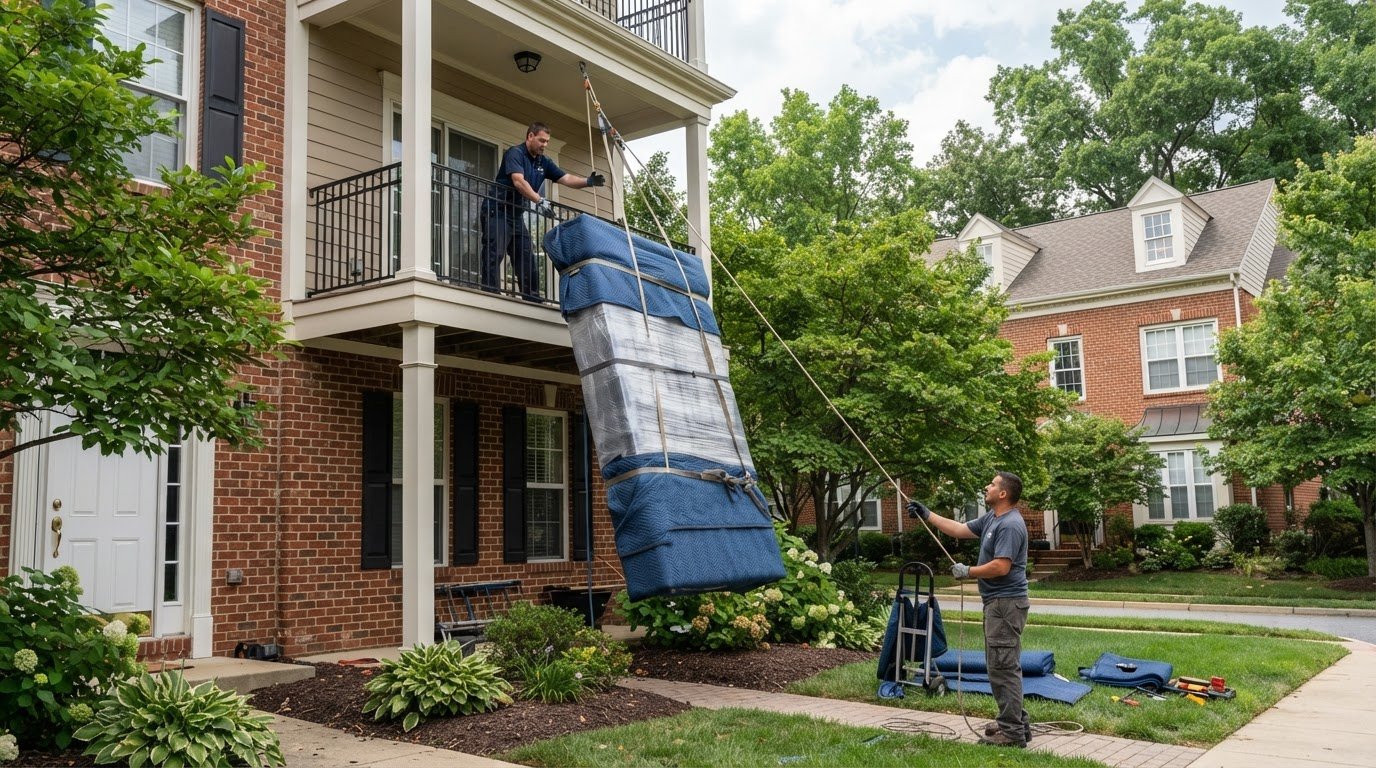
A bed can reach a second-floor balcony when its dimensions, the balcony opening, and the outside access allow a controlled lift. A second-floor balcony furniture hoist service in Vienna can move bulky pieces from outside, avoiding a tight stairwell.
It’s reasonable to wonder whether the bed will fit, how the lift works, and what affects the cost. The answer depends on the item and building layout, so planning starts with the bed’s dimensions and the route from the ground to the balcony.
This guide explains what makes a bed suitable for balcony hoisting, how the lift works, and which access and handling details affect the job in Vienna, Virginia. You’ll also learn when professional furniture hoisting can simplify an awkward move.
Key Takeaways
- A bed may reach a second-floor balcony if its dimensions and the building’s access route allow a controlled lift.
- Compare the item’s size with the balcony or window opening to understand which lifting route may work.
- Furniture protection is part of planning: consider how the item will be wrapped and handled during the lift.
- The cost depends on factors such as access, item size, lifting route, and handling needs.
- A site assessment can clarify measurements, equipment needs, and the steps involved in hoisting furniture to an upper floor.
How much does furniture hoisting cost?
The cost depends on the item and the work involved. Key factors include furniture size, the lifting route, access around the building, and handling requirements. A bed with a clear balcony approach requires different work from a bulky sofa beside narrow landscaping. Share the item details and access conditions so the quote reflects the job.
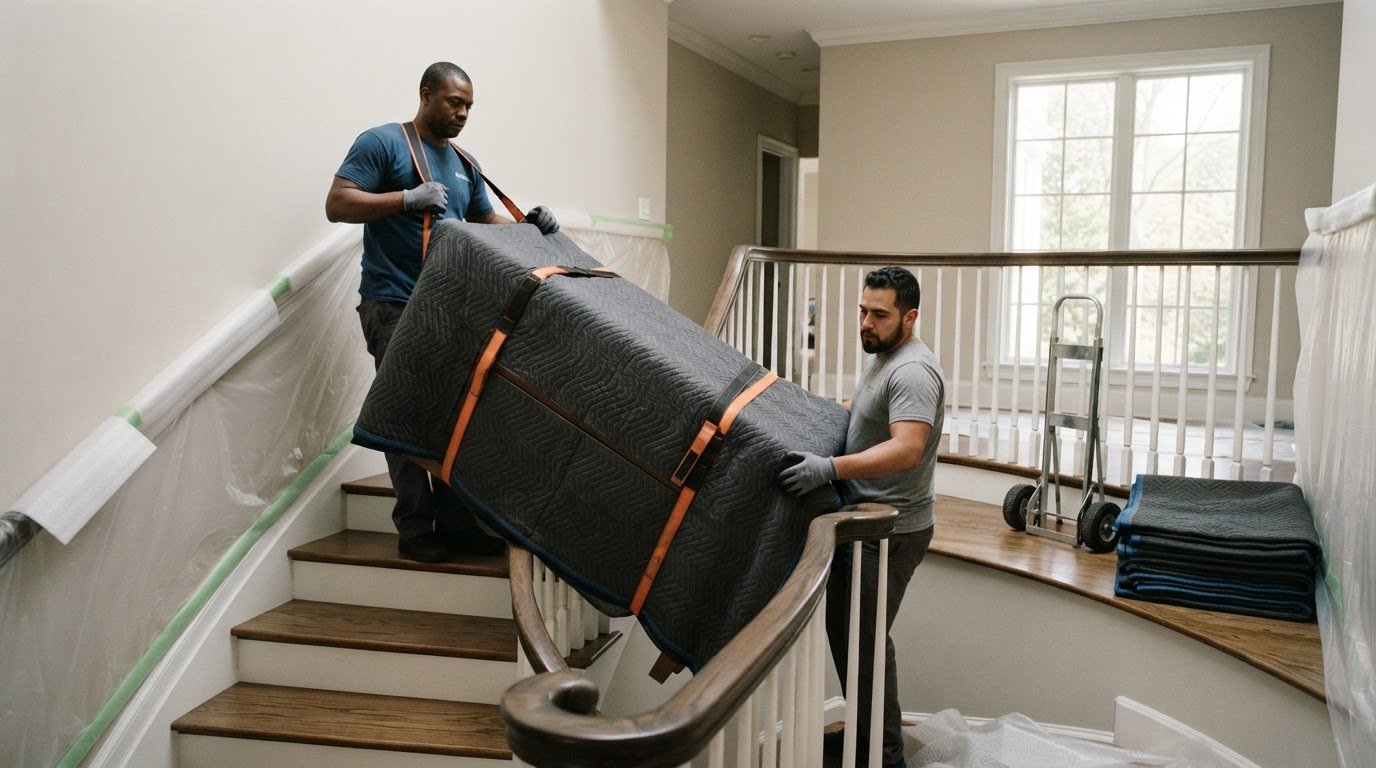
Furniture protection starts before the lift. Clear loose items from drawers, remove detachable parts when practical, and wrap surfaces that could rub against straps or the building. A bed frame, for example, may need separate protection for its corners and finish. Keep hardware together in a labeled bag, then secure that bag to the furniture or carry it separately.
During the lift, the crew should keep the item stable and prevent it from swinging into siding, windows, balcony rails, or nearby objects. Padding at likely contact points helps protect the furniture and property. Identify vulnerable areas such as glass panels, painted trim, and balcony flooring before moving anything. A controlled path matters more than speed.
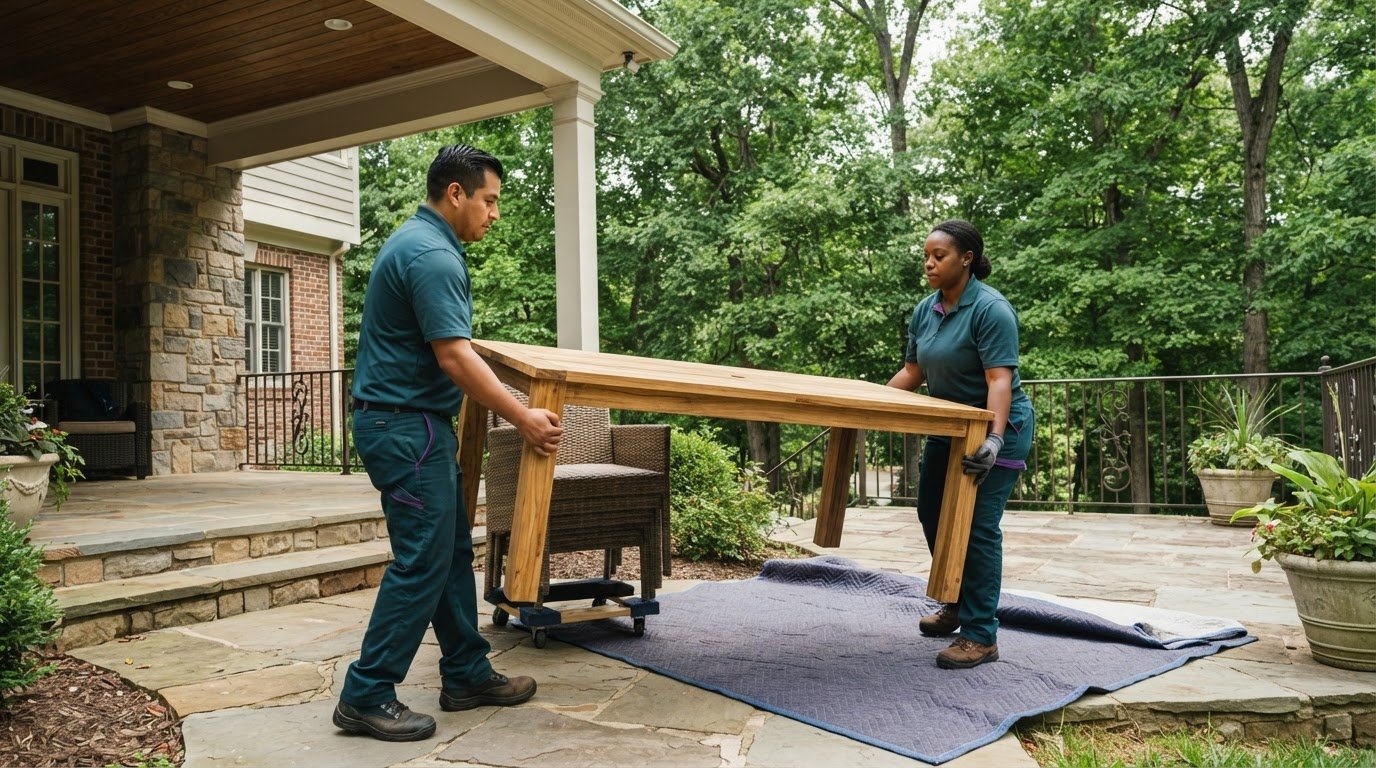
Protect the ground and destination as well. Move patio chairs, planters, and vehicles away from the lifting area. Clear the balcony landing space and protect the flooring where the furniture will be set down. For a second-floor bedroom, plan how the item will move from the balcony to its final position without scraping walls or door frames.
What safety and insurance protections should a Vienna hoist service provide? Ask for clear written details about liability coverage, what it covers, and how damage claims are handled. Request the crew’s lift plan, including how the furniture will be secured and how people will stay clear of the suspended load. These details clarify responsibilities and safeguards.
Which Vienna furniture hoist companies have good reviews and availability? Look for recent feedback that specifically mentions careful wrapping, controlled lifting, and communication, rather than relying on a star score alone. Availability depends on the requested date, crew schedule, and time needed to assess the access route. These details help you compare service fit without assuming every company handles balcony lifts the same way.
Before requesting a quote, note the item type, its dimensions, and the balcony or window access. Include photos of the exterior route and landing area if available. For example, a photo can show a tight corner, overhead obstruction, or crowded patio that affects preparation. Clear information helps the estimate account for protection, handling, and property access.
Also consider whether the planned lift involves a crane or use of public space. In Santa Monica, a crane or public-space use for furniture hoisting may require Public Property or Roadway Closure permits and related fees. If that applies to the access plan, clarify how fees are reflected in the quote and who is responsible for confirming permit requirements before scheduling. This ties the expected cost to the actual lifting arrangement.
Hoisting through windows and over balconies
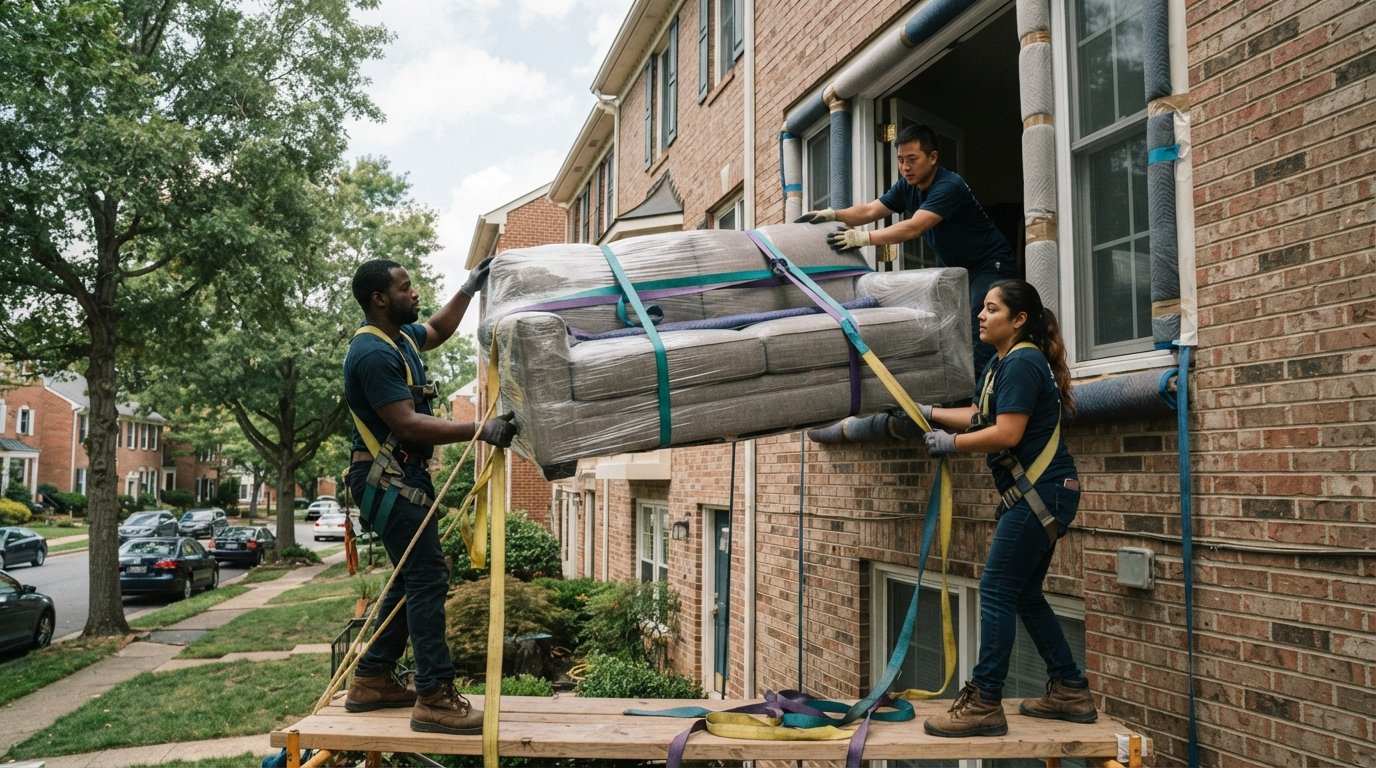
A balcony or window can provide a direct route when a sofa, bed frame, or cabinet won’t pass through interior stairs. The opening must fit the item and allow the angle needed to guide it inside. A wide balcony door may suit a mattress, while a deep sofa may need another approach. Compare the furniture’s widest points with the usable opening.
For a window entry, clear the room around the window and identify what can open or move. Curtains, blinds, screens, and nearby furniture can obstruct the handoff. The crew needs a clear landing area inside, not just an open window. A narrow bedroom, for example, may require moving a dresser before bringing in a bed frame.
A balcony route also depends on the space outside. Check for roof edges, tree branches, railings, awnings, and overhead lines along the path. Move planters and chairs away from the balcony landing spot. The route should let the item approach without scraping the railing or catching on the building exterior.
Before the lift, decide whether the item should enter upright, tilted, or in separate pieces. A bed frame may be easier to guide after removing its legs. A sectional sofa may need its sections separated. Keep screws and fittings together, and label each piece to make assembly straightforward.
What alternatives are there to a furniture hoist for moving items to a second-floor balcony? A crew can carry pieces through the building if the stairs, turns, and doorways provide enough clearance. Disassembly or using another suitable window or balcony opening can also change the route.
- Stair route: Measure tight turns and doorways, then compare them with the item’s widest dimensions.
- Disassembly: Remove detachable legs, shelves, or frame sections, and keep the hardware together.
- Alternate opening: Consider another accessible window or balcony entrance with a clear approach and landing area.
Choose the route that avoids forcing furniture through a tight corner. For a large sofa, sofa hoisting can be a practical way to bring it up from outside. Share the item type and access details when arranging the lift. Clear photos of the window, balcony, and approach help show obstacles such as a tree limb or narrow patio. With the route planned around the actual opening, the crew can prepare the handoff and keep the indoor landing space ready.
Rigging equipment and lifting process
The lifting setup depends on the furniture, building, and route to the opening. A compact material lift may suit a clear exterior approach and manageable load. Rope rigging may work better for a different site layout, while a crane may be considered when the access or item calls for it. Equipment should match the planned lift, not just the furniture’s appearance.
What furniture hoist services operate in Vienna, Virginia? Possible methods include a material lift, rope rigging, or a crane, depending on the item and site access.
A material lift raises an item on a supported platform. The crew considers the item’s shape, weight, and balance, along with the height and landing point, before choosing one. A rigid cabinet, for example, sits differently from a mattress. The platform must be positioned for a controlled handoff at the window or balcony.
Rope rigging suspends and guides furniture rather than carrying it on a platform. The crew plans how straps attach, where the load travels, and how it will be steadied near the opening. A sofa may need support at multiple points to limit tilting. Secure loose cushions and detachable parts separately before lifting.
A crane can provide another lifting method when the site allows it. The setup requires room for the equipment and a clear path from the lifting point to the destination. A balcony beside trees or overhead obstructions presents a different route from an open exterior wall. Site conditions guide equipment choice and load positioning.
A clear process helps the crew coordinate the lift:
- Identify the item, its dimensions, and its balance points.
- Choose a lifting method suited to the exterior approach and opening.
- Secure the furniture, then clear people and obstacles from the travel path.
- Raise the load steadily and guide it toward the prepared landing area.
- Set the item down, release the rigging, and move it into the room.
With any method, plan the handoff carefully. The balcony or window must have enough room for the load and crew to guide it without forcing the item through. A bed frame may need to turn as it crosses the threshold; a wide sofa may need another orientation. Plan that movement before the lift begins.
Share useful details when arranging a hoist: item type, measurements, photos of the exterior route, and the intended opening. A photo showing a balcony rail, tree branch, or narrow landing can reveal a planning issue early. These details help shape the equipment, rigging arrangement, and final handoff.
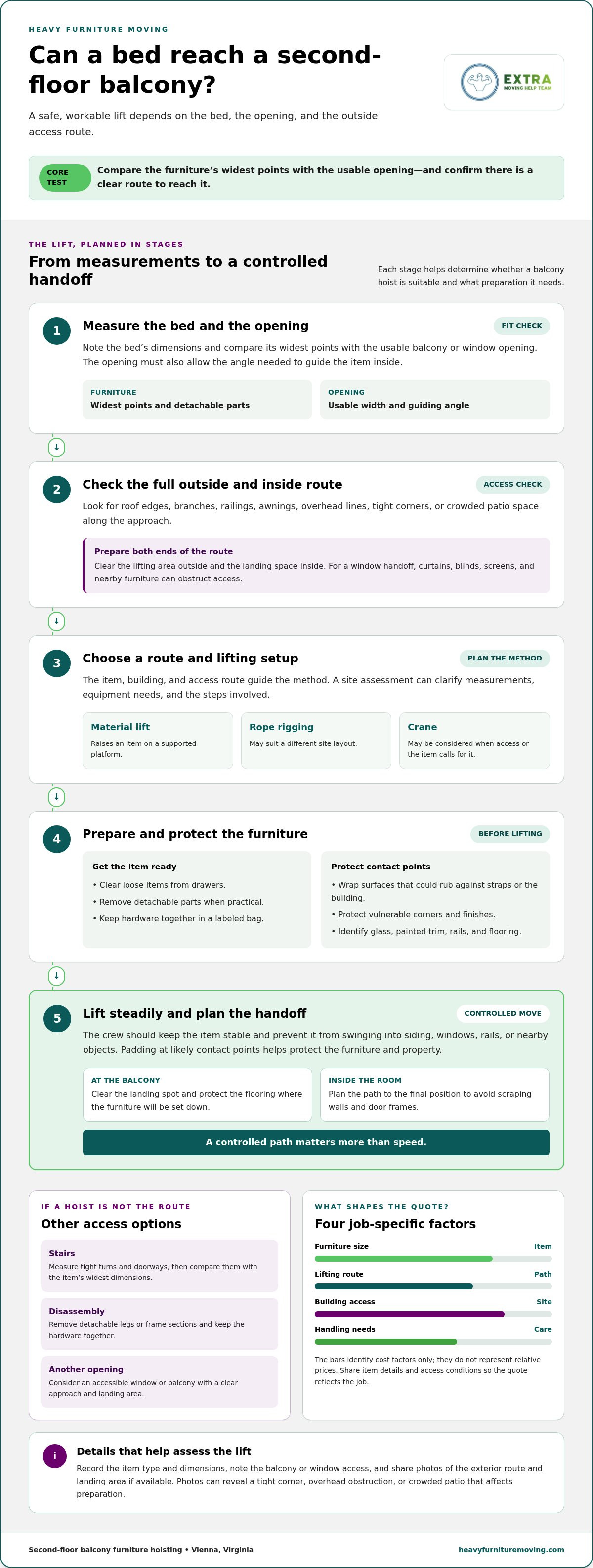
Can you get a bed up to a second-floor balcony?
Yes, a bed can reach a second-floor balcony when the opening, lifting route, and equipment suit its dimensions. A site assessment turns that possibility into a practical plan.
Site Assessment and Access Planning
Measure the bed frame or mattress, then compare its widest points with the balcony opening. Measure the clear approach from the ground too, including space beside walls, railings, and landscaping. A balcony door may fit a mattress but not a bulky frame. Note obstacles such as a tree branch or roof edge, and photograph the route from several angles.
Size and Weight Limits
Hoist capacity varies by equipment, setup, and lifting method, so there is no single size or weight limit for every job. The crew needs the item’s dimensions and weight to compare them with the equipment’s rated capacity. A large, light mattress and a compact, heavy bed base create different lifting demands. The item must also fit through the opening and be secured for the lift.
Furniture hoists can lift items to a second-floor balcony in Vienna when the equipment can reach the landing and the route is clear. The opening, height, load, and space for the setup all shape the plan. A bed frame that comes apart may be easier to position than one assembled in a tight room.
Book once you know your moving date. The time needed to assess the balcony, choose equipment, and coordinate the lift affects scheduling. A complex route, such as a narrow side yard or obstructed balcony, takes more planning than a clear approach. Sharing measurements and photos early helps establish the work involved.
Some items may not suit a particular hoist. Examples include loads beyond the equipment’s rated capacity, pieces that cannot be secured properly, or furniture too wide for the available opening. A fragile item may also need a different handling plan. Describe unusual shapes, loose parts, and delicate finishes before settling on the lifting method.
Use this measurement checklist to prepare clear details:
- Measure the bed’s length, width, and height, including protruding parts.
- Measure the balcony opening at its narrowest clear point.
- Record the route’s height and note branches, awnings, or railings.
- Identify detachable components, such as bed legs or a headboard.
For example, a headboard that blocks a turn may be removable, while a balcony rail can limit the entry angle. Share the item measurements and access details together. This helps the site plan account for fit, load balance, and landing space before the lift begins.
Hoisting furniture to upper floors
Upper-floor hoisting solves a specific problem: bulky furniture may not fit through stairs, hallways, or interior doors. The lift is only one part of the move. The crew also needs a workable path from the landing point to the final room, such as a clear route from the balcony to a bedroom for a bed frame.
Plan beyond the second-floor edge. A sofa lifted to a balcony still needs space to pass through the opening, turn inside, and reach its destination. Measure these transitions and identify tight corners, narrow doorways, and low ceilings. A clear exterior route cannot overcome an indoor bottleneck.
Upper-floor moves also require coordination between the lifting area and destination. Clear the balcony, then clear the room where the item will land. Keep people, pets, and loose belongings out of the planned path. If a bed frame has separate rails and a headboard, organize the pieces so they can be moved in a practical sequence.
Make the route easier to manage with a simple preparation plan:
- Choose the exact room and landing spot before the furniture arrives.
- Clear hallway furniture between the balcony and that room.
- Keep detachable pieces and their hardware together.
- Tell the crew about access changes, such as a blocked walkway or closed gate.
For a multi-item move, agree on the order before lifting begins. A large sofa may take up the balcony landing area, leaving less room for a mattress or bed frame. Moving the largest piece first can work well when it needs the clearest path. The best sequence depends on the furniture and space at each landing point.
Upper floors can also involve shared building spaces. Keep the entrance, hallway, and balcony approach clear for the work. If the building has a service entrance or designated loading area, include it in the route plan. In Vienna, Virginia, an accurate description of the access path helps the crew prepare for the property’s actual layout.
A useful handoff plan specifies where each item goes and what happens after it reaches the balcony. For example, note whether a sectional sofa goes directly into the living room or must pass through a hallway first. This keeps the landing area from becoming a storage point and helps maintain a clear route.
For bulky furniture that needs an outside route, plan your furniture hoist around the destination room and interior path. Provide the item list, room locations, and access details together. That gives the move a clear sequence from the exterior lift to the final placement upstairs.
Heavy Furniture Moving: Movers Near Me
Heavy Furniture Moving handles bulky furniture that’s difficult to move through a home or bring upstairs. If a sofa needs an outside route to reach a balcony, its Sofa Hoisting service can help. The team also handles residential moving and exercise equipment moving, useful when a move involves more than one heavy item.
Turn to Heavy Furniture Moving when narrow stairs, tight turns, or a second-floor entry make a move difficult to manage alone. Share the furniture type and access details so the job can be planned around the route.
Contact Heavy Furniture Moving to discuss your furniture move.
Make the next move with a clear plan
Use your measurements and access notes to shape a practical moving plan. A second-floor balcony furniture hoist service in Vienna can help get bulky furniture upstairs when the interior route is difficult. Share the item type, dimensions, and intended landing area so the discussion starts with the details that shape the job.
Heavy Furniture Moving offers Movers Near Me, Exercise Equipment Moving, and Sofa Hoisting. If a large sofa needs an outside route or heavy equipment is part of the move, these services can suit the task. Describe what needs moving and where it needs to go to get started.
Bring your access details together, then contact Heavy Furniture Moving to discuss your furniture move. A solid plan starts with the facts about your home and your items. You can take the next step with confidence.
Frequently Asked Questions
How much does a furniture hoist service in Vienna cost?
There isn’t one fixed price: the quote depends on the item, lifting route, access, and handling needs. Heavy Furniture Moving charges hourly labor with a two-hour minimum, or a flat rate for most single heavy items. The rate is provided upfront by phone. Share the item details and describe the route, including tight turns or limited exterior access, so the estimate reflects the work involved.
What is included in Vienna furniture lift service pricing?
On every Heavy Furniture Moving job, wrap, moving blankets, and straps are included. The service also includes measuring item dimensions and access points, plus floor and corner protection. Disassembly and reassembly are included when needed for items such as bed frames or sofa legs. Packaging is taken away at no extra charge on most jobs. Ask the quote to outline the planned work for your item.
What access and setup requirements apply to a furniture lift at a Vienna property?
Plan a clear approach from the equipment setup area to the balcony or window, then keep the landing space and indoor route open. For a second-floor balcony furniture hoist service in Vienna, useful details include item dimensions, doorway and stair measurements, exterior photos, and the destination room. Note access limits such as a locked gate, narrow driveway, or restricted loading area when describing the property.
Do Vienna permits or parking reservations apply to furniture hoist equipment?
Permit and parking needs depend on where equipment and vehicles will be positioned. A private driveway differs from a setup that uses curb or street space. Describe the planned location, note posted parking restrictions, and coordinate building access with property management. Don’t assume a reservation is always required or never required; the specific setup and location determine what arrangements may apply.
Which Vienna furniture hoist companies have good reviews and availability?
Look for recent customer feedback that describes careful wrapping, controlled lifting, and clear communication. Availability depends on the requested date, crew schedule, and time needed to assess the access route.
Frequently Asked Questions
There isn’t one fixed price: the quote depends on the item, lifting route, access, and handling needs. Heavy Furniture Moving charges hourly labor with a two-hour minimum, or a flat rate for most single heavy items. The rate is provided upfront by phone. Share the item details and describe the route, including tight turns or limited exterior access, so the estimate reflects the work involved.
On every Heavy Furniture Moving job, wrap, moving blankets, and straps are included. The service also includes measuring item dimensions and access points, plus floor and corner protection. Disassembly and reassembly are included when needed for items such as bed frames or sofa legs. Packaging is taken away at no extra charge on most jobs. Ask the quote to outline the planned work for your item.
Plan a clear approach from the equipment setup area to the balcony or window, then keep the landing space and indoor route open. For a second-floor balcony furniture hoist service in Vienna, useful details include item dimensions, doorway and stair measurements, exterior photos, and the destination room. Note access limits such as a locked gate, narrow driveway, or restricted loading area when describing the property.
Permit and parking needs depend on where equipment and vehicles will be positioned. A private driveway differs from a setup that uses curb or street space. Describe the planned location, note posted parking restrictions, and coordinate building access with property management. Don’t assume a reservation is always required or never required; the specific setup and location determine what arrangements may apply.
Look for recent customer feedback that describes careful wrapping, controlled lifting, and clear communication. Availability depends on the requested date, crew schedule, and time needed to assess the access route.