Expert Sofa Hoisting & Heavy Lifting in Manassas
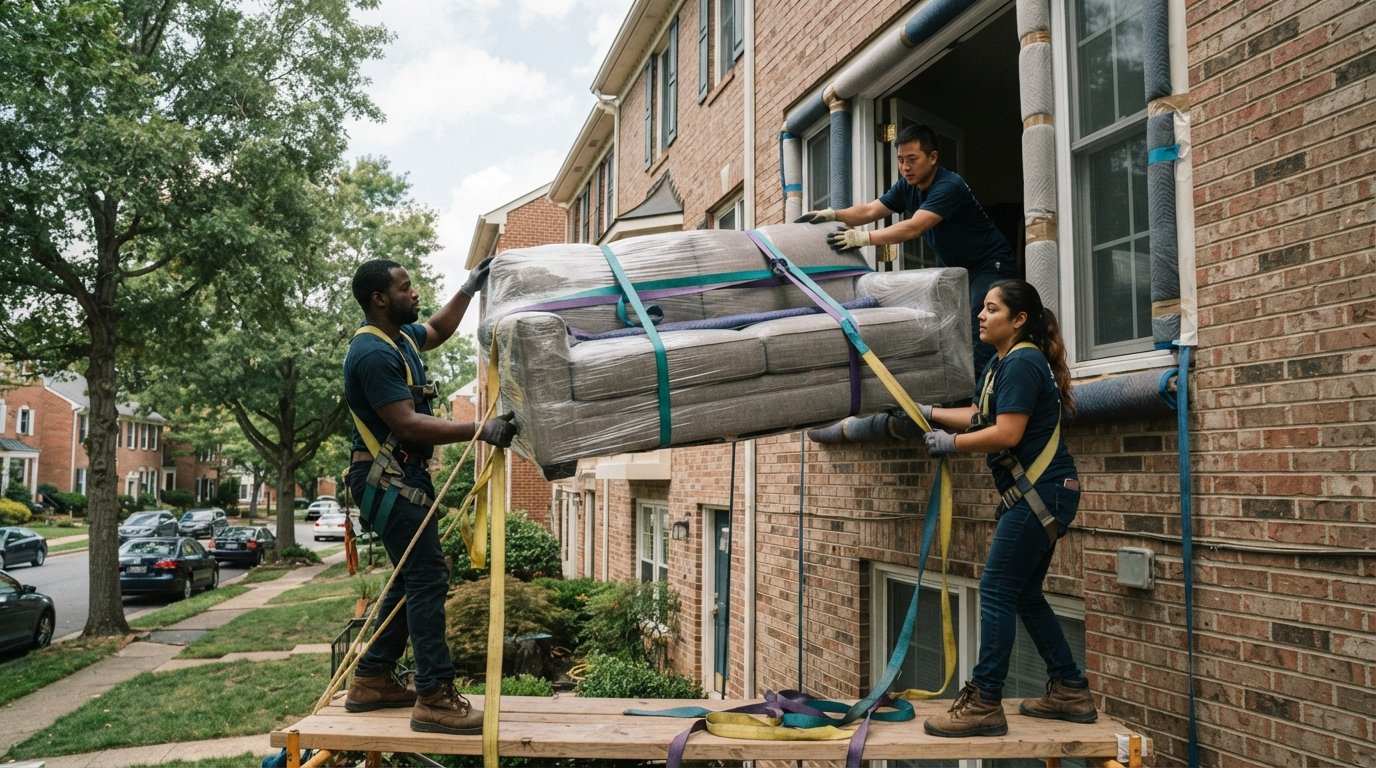
A sofa that won’t clear the stairs or doorway may need to go in through a window or over a balcony instead. Sofa hoisting and heavy lifting in Manassas can make that move possible, and professional hoisting preparation includes a pre-hoisting risk assessment.
Tight hallways, narrow turns, and bulky furniture can make an indoor carry risky for the item and the building. Hoisting provides another route and helps limit contact with walls, floors, and door frames while the sofa is moved.
Learn when hoisting makes sense, how to prepare the sofa and access route, and what to expect from heavy lifting and in-home furniture moving. The plan depends on the item’s size, the building’s access, and its destination. Whether you’re moving a sofa upstairs or relocating a heavy item within your home, begin by identifying the obstacles and the clearest route.
Key Takeaways
- Consider an external lift when stairs, narrow turns, or doorways make carrying a sofa impractical; the plan starts with assessing access and risks.
- Prepare the furniture and the route before lifting to help limit contact with walls, floors, and door frames.
- Choose the lifting path based on the item, the building’s access points, and where the furniture needs to go.
- Plan heavy lifting and in-home removal around the item’s size, weight, and the space it must pass through.
- For difficult sofa access or bulky items, Heavy Furniture Moving offers sofa hoisting and in-home furniture moving help.
When hoisting is needed because of access or safety constraints
Hoisting can help when a sofa cannot pass safely through a home’s stairs, halls, or doors. For sofa hoisting and heavy lifting in Manassas, Virginia, start by comparing the sofa’s dimensions with the indoor route and potential exterior access points.
Assessing Windows and Access Points
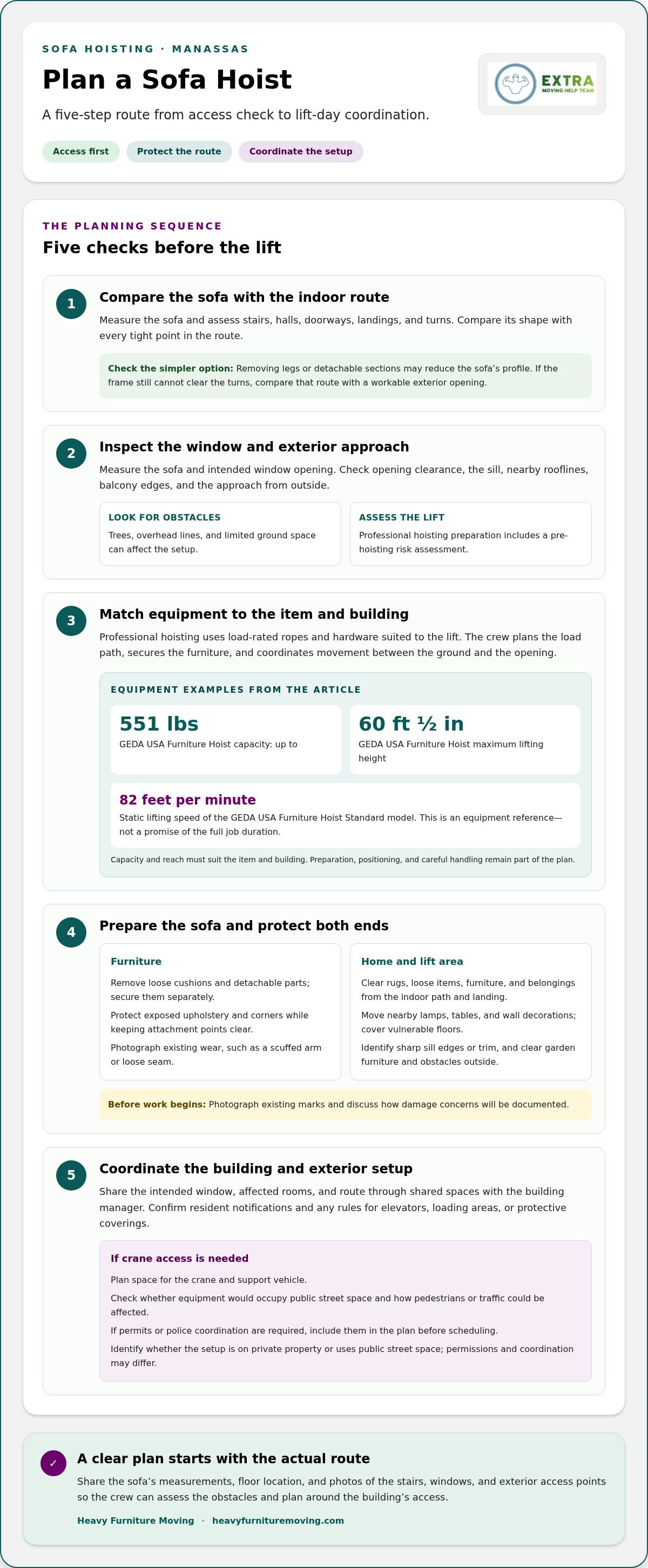
Measure the sofa and the intended window opening, then compare both with the approach from outside. Check the window’s opening clearance, sill, nearby rooflines, balcony edges, and space for lift equipment. A second- or third-floor window may offer a clearer path than a tight stairwell, but trees, overhead lines, and limited ground space can affect the setup. Professional hoisting preparation includes a pre-hoisting risk assessment.
Hoisting Versus Stair Disassembly
For narrow stairs, compare the sofa’s shape with every landing, turn, and doorway. Removing legs or detachable sections may reduce its profile; hoisting may be more practical if the frame still cannot clear the turns. The choice depends on the sofa’s construction, the building layout, and whether an exterior opening provides a workable route.
Hoisting Equipment and Crew
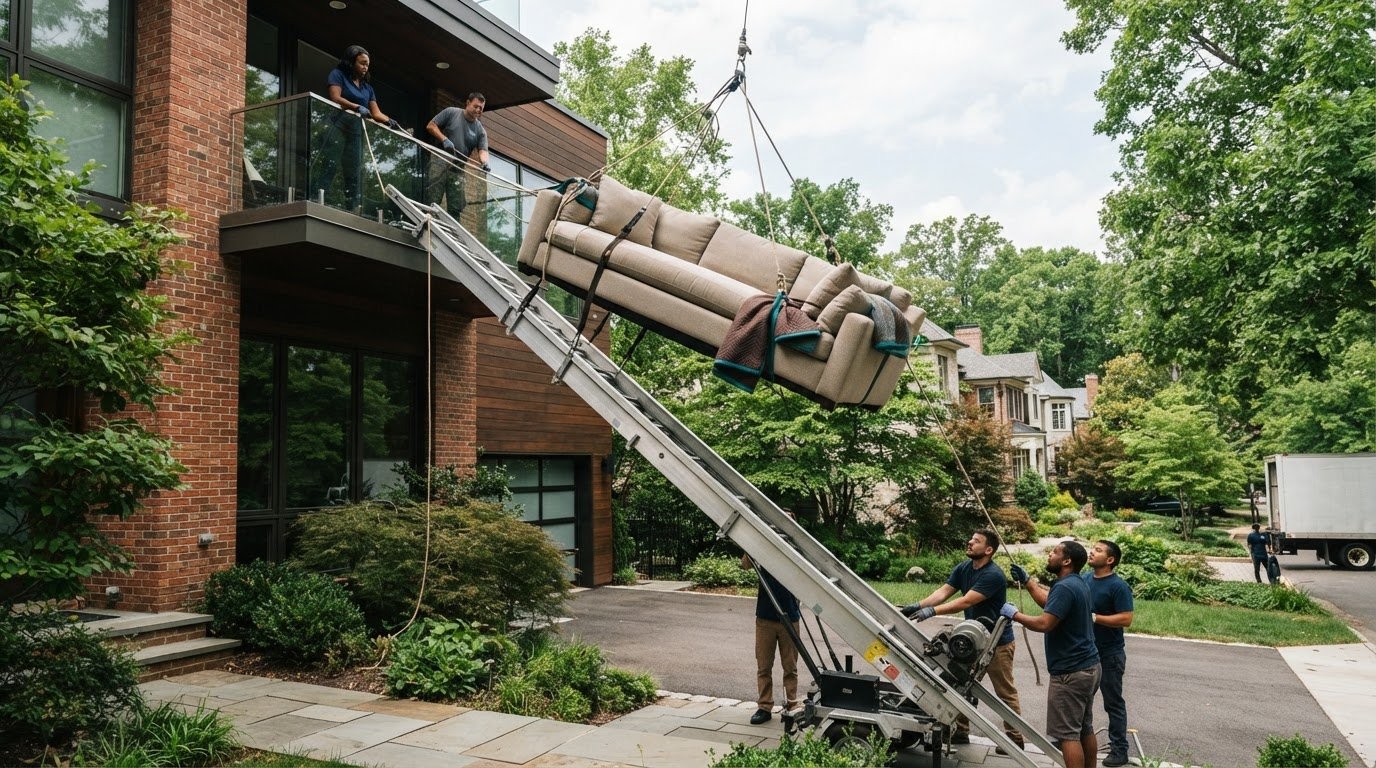
Professional hoisting uses load-rated ropes and hardware suited to the lift. The crew plans the load path, secures the furniture, and coordinates movement between the ground and the opening. As one equipment example, the GEDA USA Furniture Hoist can carry up to 551 lbs and has a maximum lifting height of 60 feet 1/2 inch. Capacity and reach must suit the item and building.
People asking about sofa hoisting and heavy lifting services in Manassas, VA, need a plan matched to the furniture and access route. Equipment type, the opening’s position, and the ground setup determine the vertical access solution.
Preparing the Home for Hoisting
Before the lift, clear furniture, rugs, and loose items from the indoor path to the receiving window. Move stored belongings away from the landing area, open the access point, and protect nearby items that need to stay in place. In Manassas, also keep the exterior setup area clear so the crew can position equipment and guide the sofa.
If the setup requires crane access, plan for the space needed by the crane and support vehicle. Check whether equipment would occupy public street space and how pedestrians or traffic could be affected. If permits or police coordination are required, include those steps in the plan before scheduling; the setup location determines what coordination is needed.
A hoisting plan depends on the building, opening, and route to the destination. Share the sofa’s measurements, its floor location, and photos of the stairs, windows, and exterior access points so the crew can assess the actual obstacles.
Protecting furniture and building surfaces during hoisting
Professional hoisting relies on suitable ropes and hardware, as well as advance planning to identify hazards. Safe handling still depends on the sofa, lift path, and setup. Photograph existing marks before work begins, and discuss how any damage concerns will be documented.
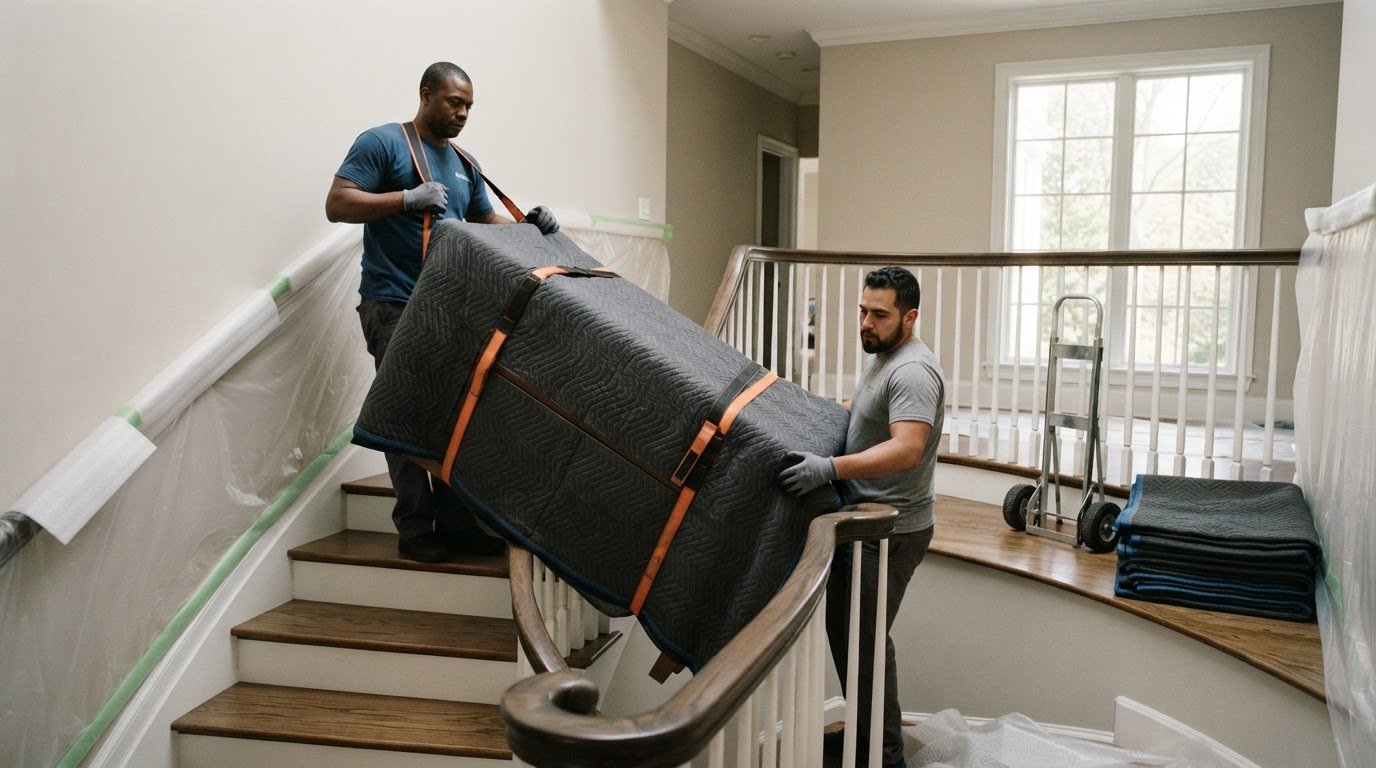
Prepare the sofa by removing loose cushions and detachable parts, then secure them separately so they don’t shift during the lift. Protect exposed upholstery and corners with suitable materials, keeping attachment points clear. Photograph existing wear, such as a scuffed arm or loose seam, before the crew begins.
Protect the building at both ends of the route. Clear the room around the receiving window and move nearby lamps, tables, and wall decorations. Inside, cover vulnerable floors and identify sharp sill edges or trim that could touch the sofa. Outside, clear garden furniture and other obstacles from the lift area.
In an apartment building, coordinate with the manager before choosing a lift day. Share the intended window, affected rooms, and route through shared spaces. Ask about resident notifications and any rules for elevators, loading areas, or protective coverings. Record the instructions so the crew can follow a clear plan.
Permits and access permissions are separate planning considerations. Equipment on private property may require different coordination from a setup that uses public street space. Identify the location and discuss any required permissions with the property manager or relevant local authority. A clear driveway does not necessarily mean street access is available.
For a practical, damage-conscious plan, prepare a simple route checklist:
- Mark the sofa’s path from the room to the window.
- Move breakable furniture and stored belongings from that path.
- Point out delicate flooring, painted trim, and existing damage.
- Confirm building access instructions and the exterior setup area.
These steps help the crew focus on the lift rather than avoidable obstructions. If a window route is needed, professional sofa hoisting can address the lift plan and handling needs for the furniture and building.
Equipment details can help the crew discuss timing alongside the route and protection plan. The GEDA USA Furniture Hoist Standard model has a static lifting speed of 82 feet per minute. Treat that figure as a reference for the equipment, not a promise of the full job duration; preparation, positioning, and careful handling remain part of the plan.
Before the lift, confirm that protected surfaces will stay clear and everyone knows the sofa’s route. Agreeing on these details helps the team work carefully around vulnerable edges and shared access.
Furniture protection during external lifting
Hoisting creates different contact points from carrying furniture through stairs. The sofa may pass near a window frame, exterior wall, balcony edge, or landing. Match the padding and restraint plan to the sofa’s shape, upholstery, and vulnerable parts. For example, cover the arms and corners of a fabric sofa before moving it through the opening.
Prepare the sofa before attaching it for transport. Remove loose cushions and detachable legs when the design allows, then keep those pieces together so they don’t get separated. Cover the upholstery with moving blankets or other suitable padding, securing the material so it stays in place without covering the points used to hold the load. Photograph existing tears, worn seams, or scratches first. That record helps distinguish pre-existing wear from damage noticed after delivery.
Consider pressure and movement as well as surface scratches. A strap across a delicate wooden edge can leave a mark, and loose fabric can catch on a window surround. Keep the sofa balanced and the lift path clear of branches, sharp trim, and nearby objects. At the receiving opening, leave enough room to guide the sofa inside without twisting it against the frame.
- Protect exposed corners and arms before the lift begins.
- Secure removable parts separately from the main sofa.
- Keep the path clear at the departure and receiving openings.
- Point out fragile trim, exterior fixtures, or existing furniture damage.
Protect the building at both ends of the route. Move nearby tables, lamps, and wall art away from the indoor landing area. Outside, clear patio chairs, planters, and stored items from the equipment area. Use floor coverings where the sofa will be handled, and point out vulnerable window trim before positioning the load. These steps help keep the transfer path clear.
Walk through the route with the crew before lifting and identify where the sofa may need to pause. A narrow window opening may require careful alignment, while a balcony entrance may have a raised threshold. Agree on clear signals for guiding the load. If the sofa shifts, pause and reset rather than forcing it against a frame or wall.
Keep protective coverings on until the sofa reaches its destination. Check the upholstery, legs, and exposed frame, then inspect the window area and route. Note any new marks promptly while the crew and sofa are still together. A careful handoff makes it easier to review the furniture and surrounding surfaces.
Hoisting furniture through windows, onto roofs, or over balconies
A window, roof edge, or balcony can provide a direct route when indoor turns block furniture moving. The opening and destination shape the plan: a sofa going through a bedroom window requires a different approach from a dresser being placed on a rooftop terrace. Match the item’s shape to the opening and the space available beyond the exterior wall.
For a window lift, measure the usable opening, not just the glass. Account for the frame, sill, and hardware that reduce clearance, then compare the opening with the item’s widest points. A sofa may need to rotate as it approaches the window, so allow room to turn it without hitting walls or ceiling fixtures. Clear the receiving room before work begins.
Balconies add a landing surface, railing, and threshold to the route. Check whether the sofa can enter through the balcony door after reaching the platform. Move planters and outdoor furniture away, and identify railing sections or other features that could obstruct the load. Keep the indoor path clear from the balcony to the sofa’s final position.
A roof destination requires a clear plan for the final placement. Identify where the furniture will rest, how the crew will guide it across the roof edge, and whether the surface offers a workable landing area. Protect vulnerable materials along the route, including exposed upholstery and roof surfaces. Keep tools, loose items, and other stored belongings away from the receiving spot.
The lifting method depends on the item and the height. For a couch or mattress hoisted through a 2nd or 3rd-floor window, standard rope-and-pulley hoisting costs less than crane-assisted piano hoisting to a higher floor. That comparison reflects different lifting needs, not a universal choice. A piano’s weight and destination can call for equipment suited to a higher lift, while a sofa’s access route may allow a simpler setup.
Before the lift, agree on one signal for pausing and one for continuing. Keep the path below the load clear, and don’t stand under furniture as it moves. The crew should guide each transition slowly, especially where the item passes a sill, balcony rail, or roof edge. A controlled move gives the team time to correct alignment before contact damages the furniture or building.
Once the sofa reaches the opening, guide it into the room before removing its protective materials. Check the frame, corners, and upholstery, then clear the lift path before moving it to its final position.
Heavy lifting and in-home removal
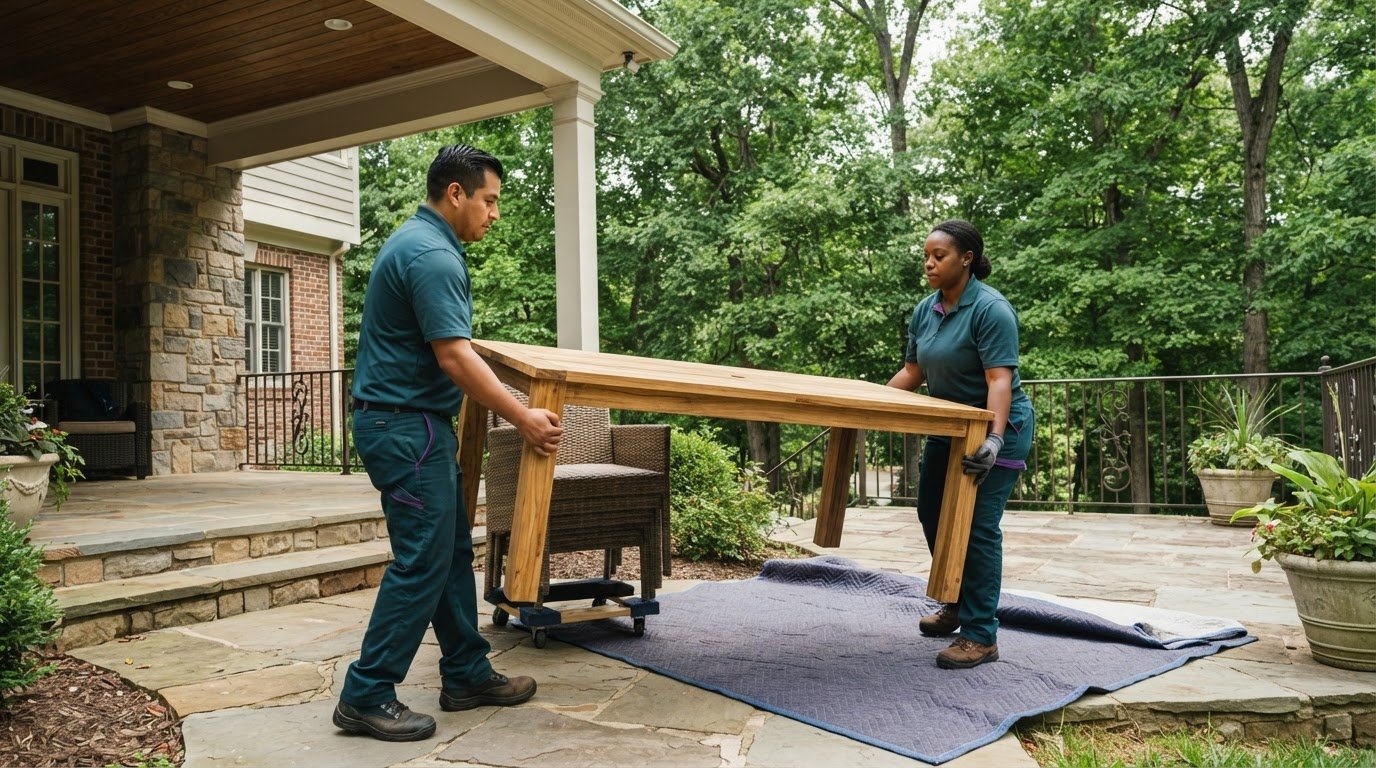
Heavy lifting involves more than carrying an item between rooms. Before moving it, the crew needs to understand its weight, shape, grip points, and route. A treadmill requires a different plan from a sectional sofa because each item moves differently. Measure tight doorways and identify turns, thresholds, and floor changes along the full route.
Start with the destination. Decide whether the item is going to another room, out of the home, or into a vehicle. That choice affects the route and where the crew should position itself. In-home removal means taking an item out of its current space; it does not automatically mean disposal. Keep the destination clear to avoid carrying the item twice.
Rigging and lifting methods should suit the item’s balance and construction. A dresser with loose drawers needs different handling from a solid exercise machine. Remove loose contents, secure moving parts, and point out handles, detachable pieces, or fragile surfaces. Don’t use decorative trim or unstable components as lifting points. The crew can then choose a controlled grip and coordinate movement through the home.
Couch, mattress, and dresser hoisting typically takes 20-45 min. The actual work involves more than the lift itself: the route must be prepared, the load secured, and the item guided at its destination. For a heavy item moving across a room, clearing rugs and small tables can prevent snags and give the crew room to turn. An exterior removal also needs a clear path from the room to the exit.
- Describe the item and its condition before moving day.
- Clear the full route, including corners and the destination area.
- Remove loose contents from drawers, shelves, and equipment compartments.
- Identify floor transitions, narrow doors, and obstacles along the distance.
If an item cannot pass through the home’s route, compare an indoor carry with an exterior lift. The key is to find a route that does not force the item through a doorway or risk damage to the surrounding space. For an in-home move, tell the crew the starting room and destination. For removal, specify the exit route and where the item is going.
Heavy lifting support can simplify a difficult room-to-room move or removal. Arrange heavy lifting moving help for bulky furniture or exercise equipment that needs careful handling inside the home.
Heavy Furniture Moving: Movers Near Me
Heavy Furniture Moving is a practical next step when a sofa, exercise machine, or other bulky furniture won’t fit through the usual route. Its Sofa Hoisting service helps move a sofa through an exterior opening, while Exercise Equipment Moving and in-home furniture movers help with heavy items inside the home. Choose help based on the item and the challenge: a blocked window route calls for hoisting, while a room-to-room move may need careful indoor handling.
Before arranging a move in Manassas, note the item’s location, destination, and obstacles along the route. Share details such as tight turns, stairs, or a narrow doorway so the crew can plan around your home’s layout.
For help with a heavy item or difficult sofa move, contact Heavy Furniture Moving or visit heavyfurnituremoving.com.
Plan Your Move Around the Item
Before setting a moving date, make a simple plan: identify what needs moving, where it is going, and what could block the route. Note the item’s current room, its destination, and any access challenges. These details give the moving team a practical starting point and help keep decisions focused on your home’s layout.
For sofa hoisting and heavy lifting in Manassas, match the item and access details to the right service. Heavy Furniture Moving handles sofa hoisting, exercise equipment moving, and in-home furniture moves. Share the item type, its location, and the route you have in mind to plan the job.
Contact Heavy Furniture Moving to discuss your move. With a clear plan and the right hands on the job, you can move forward with confidence.
Frequently Asked Questions
Need hoisting for your move?
Consider hoisting when a sofa cannot pass through the home’s usual route without forcing it around a stair landing or doorway. If the frame clears the door but cannot turn at the landing, compare the exterior opening with the sofa’s widest and tallest points. Hoisting offers another route, while disassembly may work for a sofa with removable sections.
How do I measure a sofa and windows or balcony before a hoist?
Measure the sofa’s width, height, and depth at its widest points, including fixed arms or attached feet. Measure the clear opening with the window fully open, not just the glass, and include the sill and balcony-door clearance. Compare the sofa with the narrowest opening and turning space. Share photos of the sofa, opening, and approach to show potential obstacles.
Do you need a permit to hoist furniture in Manassas, VA?
Whether a permit is needed depends on where the lift equipment will be placed and which property it uses. If the setup would occupy public street space, coordinate with the relevant local authority before scheduling. For private property, contact the owner or building manager about access rules. Sharing the equipment position and route helps clarify what coordination is needed.
Are emergency or same-day heavy lifting services available near Manassas, VA?
Same-day and next-day heavy-item jobs are available when slots are open. For same-day, same-afternoon service, call before 2 PM. Have a photo of the item and pictures of the stairs ready, along with its pickup and destination details. That gives the team useful context about whether the request involves sofa hoisting, exercise equipment moving, or another heavy-item job.
Frequently Asked Questions
Consider hoisting when a sofa cannot pass through the home’s usual route without forcing it around a stair landing or doorway. If the frame clears the door but cannot turn at the landing, compare the exterior opening with the sofa’s widest and tallest points. Hoisting offers another route, while disassembly may work for a sofa with removable sections.
Measure the sofa’s width, height, and depth at its widest points, including fixed arms or attached feet. Measure the clear opening with the window fully open, not just the glass, and include the sill and balcony-door clearance. Compare the sofa with the narrowest opening and turning space. Share photos of the sofa, opening, and approach to show potential obstacles.
Whether a permit is needed depends on where the lift equipment will be placed and which property it uses. If the setup would occupy public street space, coordinate with the relevant local authority before scheduling. For private property, contact the owner or building manager about access rules. Sharing the equipment position and route helps clarify what coordination is needed.
Same-day and next-day heavy-item jobs are available when slots are open. For same-day, same-afternoon service, call before 2 PM. Have a photo of the item and pictures of the stairs ready, along with its pickup and destination details. That gives the team useful context about whether the request involves sofa hoisting, exercise equipment moving, or another heavy-item job.