Moving Teak Outdoor Furniture to a Covered Clifton Patio
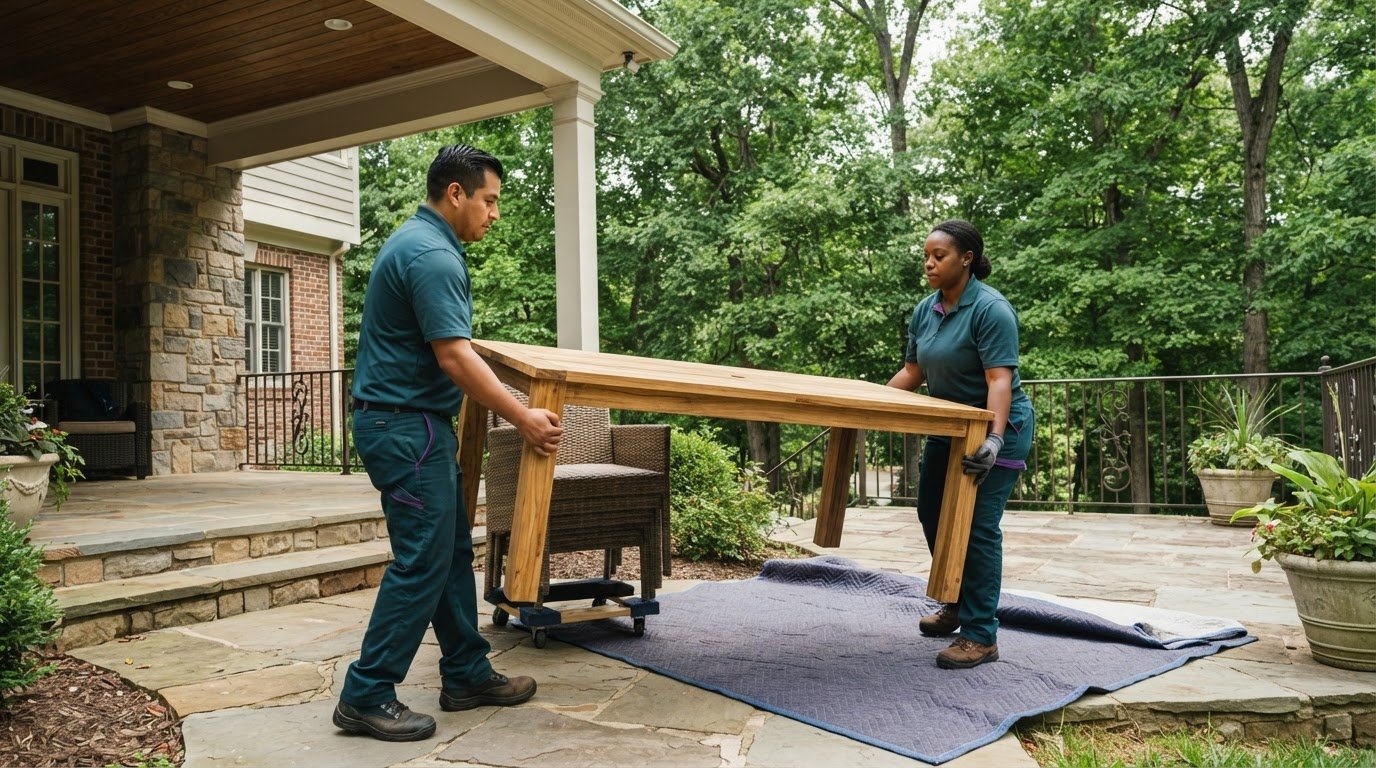
Moving heavy teak outdoor dining furniture to a covered patio in Clifton takes careful planning, controlled lifting, and secure transport. Start by checking the furniture’s dimensions and the route to the patio, then protect each piece, secure it for transport, and plan its placement. The main challenge is often not distance, but guiding bulky furniture through tight spaces without damaging its finish or nearby surfaces.
Teak furniture is sturdy, but a large dining table and chairs can be awkward to move together. Doorways, steps, and narrow paths can make it difficult to protect both the furniture and your home. This guide covers route planning, handling and loading each piece, and preparing the set for a covered patio in Clifton. It also explains what details affect the move and when experienced furniture movers can help with the heavy lifting.
Key Takeaways
- Measure the patio entrance and the full carrying route so you can spot tight turns, steps, or obstacles before moving day.
- Protect teak pieces and keep table parts organized to make handling and setup easier.
- Secure furniture carefully for transport, with support placed to limit shifting and rubbing during the trip.
- Furniture weight varies with its size, design, and construction, so assess each piece rather than relying on a generic estimate.
- For awkward or heavy items, moving help can take the strain out of lifting and navigating the route.
Furniture moving
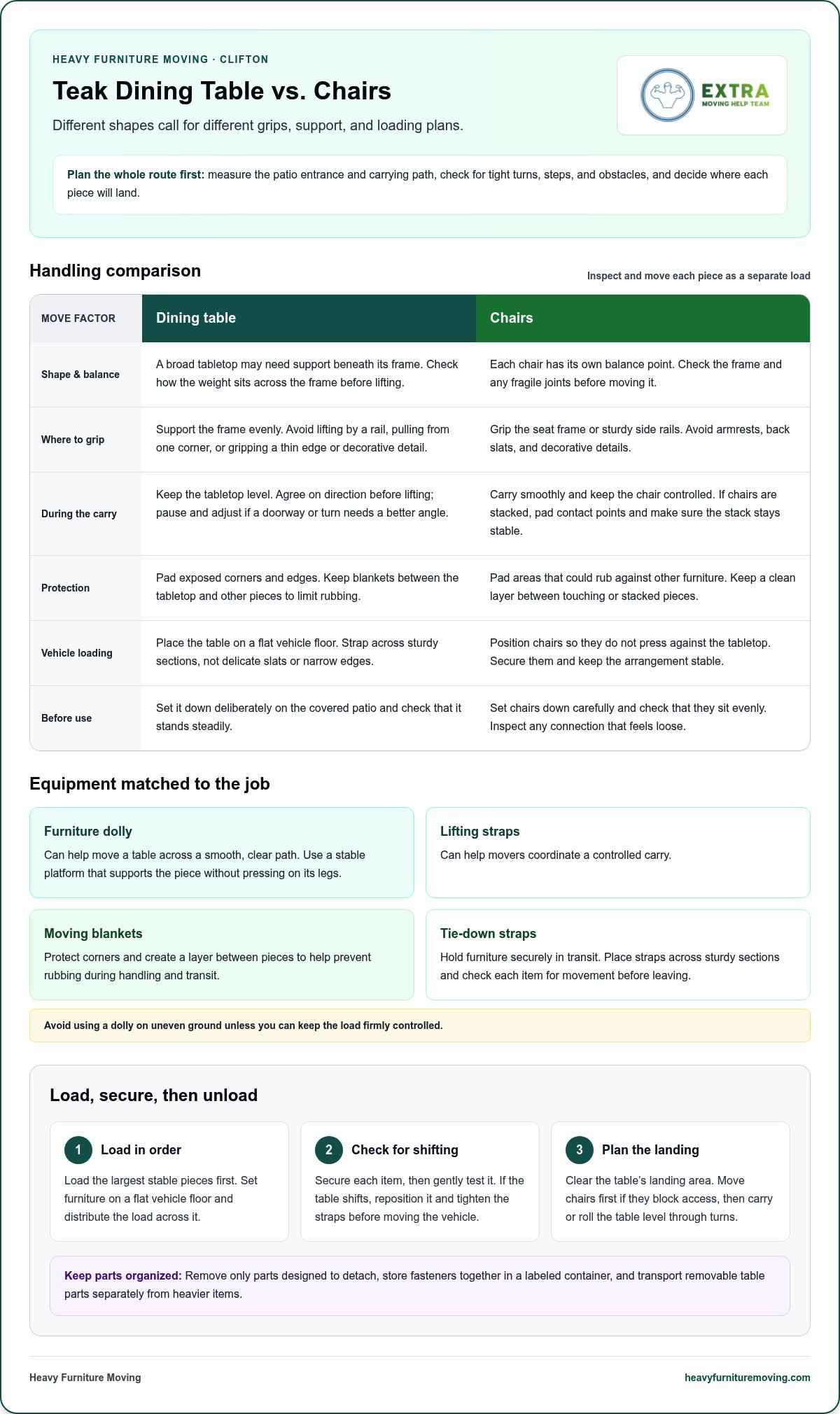
Treat each piece of a teak dining set as a separate load. A table, bench, and chairs have different shapes and balance points. Before lifting, identify removable parts, fragile joints, and secure grip points. A broad tabletop, for example, may need support beneath its frame, while a chair is easier to control by its frame than by an armrest. This inspection helps prevent awkward grips and sudden shifts.
Decide whether each piece should travel assembled or in sections. Remove only parts designed to detach, such as a removable tabletop or chair cushions. Keep fasteners together in a labeled container and note which piece they belong to. Don’t force a joint that feels fixed. A tight fitting may not be designed to separate, and extra leverage could damage the wood.
- Clear the route. Move planters, rugs, and dining accessories away from the furniture’s path. Open doors fully, and check that the patio entrance stays clear during the carry.
- Protect contact points. Wrap exposed edges and corners with suitable padding. Add a clean layer between stacked or touching pieces to reduce rubbing during handling.
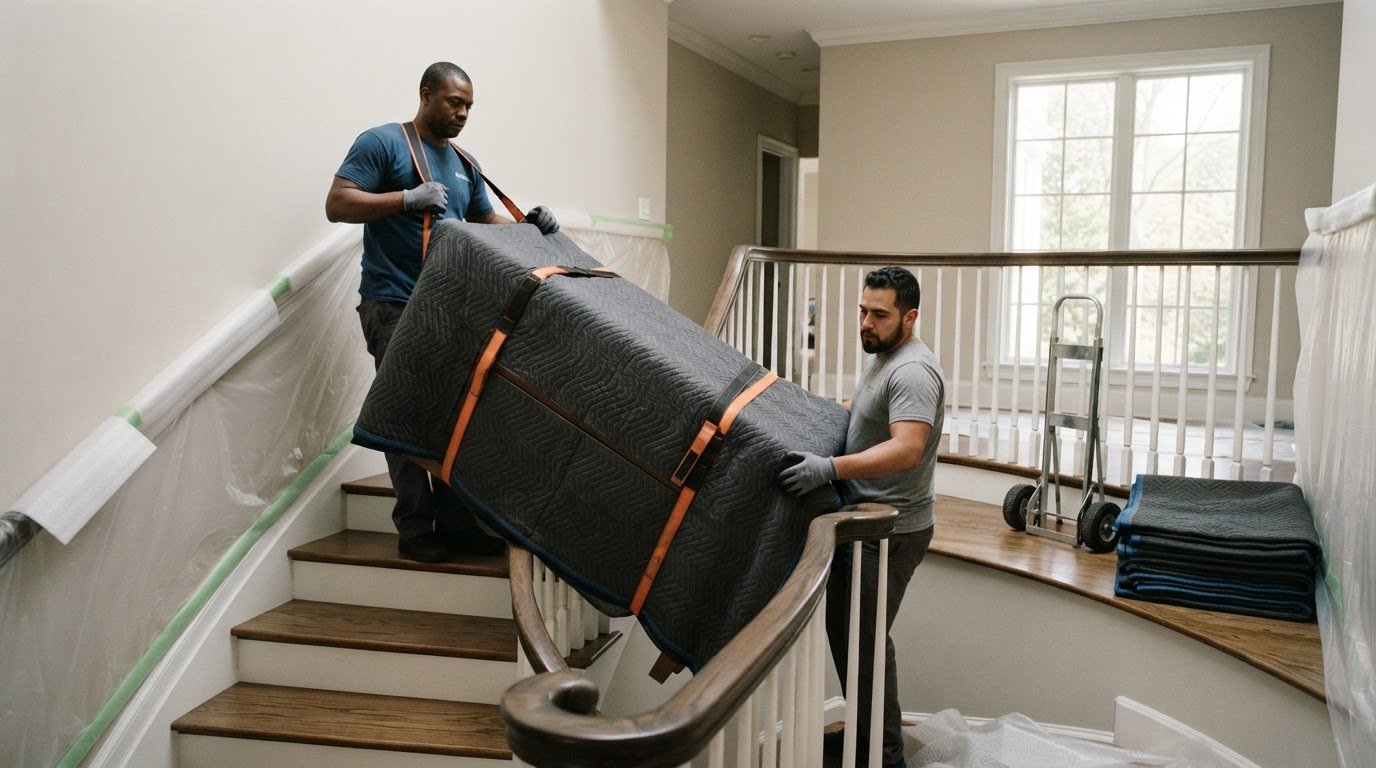
- Coordinate the lift. Agree on who guides and who supports the load before moving. Keep the piece level, move together, and pause if a doorway or turn needs a better angle.
- Place pieces deliberately. Set the table and chairs down on the covered patio, then remove protective materials. Reassemble only the parts taken off for the move.
Pay close attention to the table’s legs and joints. A table may feel stable upright but become vulnerable if lifted by a rail or pulled from one corner. Support the frame evenly instead. For chairs, grip sturdy parts of the frame and avoid putting pressure on slats or decorative details. These choices matter especially at thresholds, where a slight tilt can make a piece harder to control.
For a patio move in Clifton, consider the full route from the room where the furniture sits to its final position. Even a short carry may involve a narrow doorway, a turn beside a wall, or a change in floor surface. Decide where each piece will go before moving it. This keeps the route clear and avoids repeatedly shifting the set after it reaches the patio.
Once the set is assembled, check that the chairs sit evenly and the table stands steadily on the patio surface. If anything feels loose, inspect the relevant connection before using the furniture. Careful handling from the first lift to final placement helps keep the teak set ready for outdoor dining.
Loading and transporting furniture
For a heavy teak dining set, use a furniture dolly, padded moving blankets, and sturdy tie-down straps. Match the equipment to each piece’s shape, balance, and route, then secure every item before transport.
Heavy Table and Chair Equipment
A furniture dolly can help move a table across a smooth, clear path. Lifting straps can help movers coordinate a controlled carry. Choose a dolly with a stable platform that supports the piece without putting pressure on its legs. Keep blankets handy to protect corners, and use straps designed to hold furniture securely during transit.
Chairs need a different approach from a broad tabletop. Carry each chair by a strong part of its frame, and pad any areas that could rub against other furniture. If chairs are stacked, put padding between contact points and make sure the stack stays stable. Avoid using a dolly on uneven ground unless you can keep the load firmly controlled.
Safe Furniture Loading and Transit
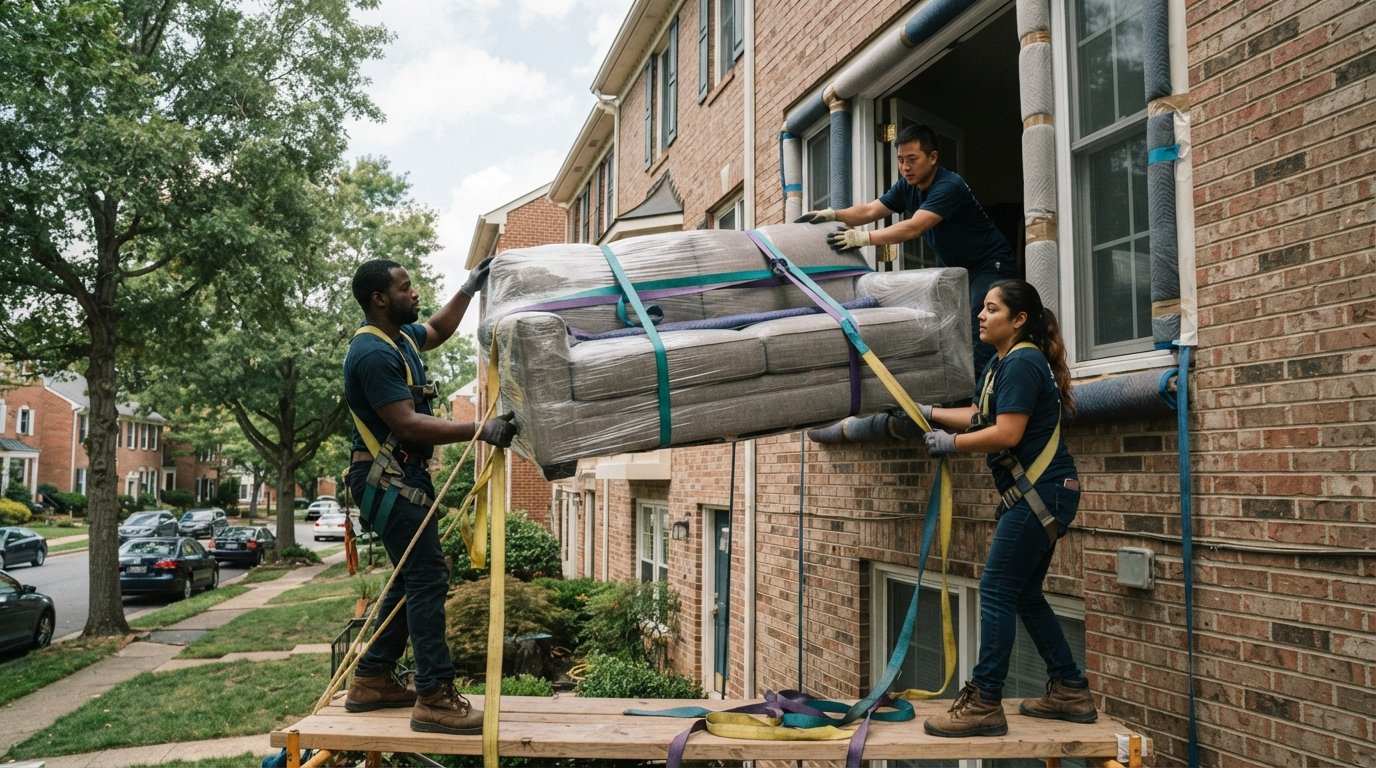
Load the largest stable pieces first, then position chairs so they won’t press against the tabletop. Set furniture on a flat vehicle floor and use tie-down straps to limit movement. Place straps across sturdy sections, not delicate slats or narrow edges. Blankets between pieces help prevent the teak surfaces from rubbing during the drive.
Before leaving, gently test each secured piece for movement. If the table shifts, reposition it and tighten the straps before moving the vehicle. Keep loose hardware in a closed container so it doesn’t scatter among the chairs. If the table has removable parts, transport them separately and protect them from heavier items.
- Protect the load: Cover corners and contact points with moving blankets.
- Balance the arrangement: Keep large pieces stable and distribute the load across the floor.
- Secure each item: Tighten straps around sturdy sections, then check for shifting.
- Keep parts together: Store detached hardware in a labeled container.
Plan the unloading order before reaching the covered patio. Clear the table’s landing area, and move chairs first if they block access. Then carry or roll the table along the prepared route, keeping it level through turns. A clear sequence avoids unnecessary repositioning and makes final placement easier.
If carrying, loading, and securing a bulky set is more than you want to handle, heavy furniture moving help can support the physical work. Share the table’s shape, any removable parts, and the vehicle access details when arranging help. Those specifics guide equipment choices and make loading plans more practical.
Moving heavy and bulky furniture
Lift teak furniture from its strongest frame points, keep each piece balanced, and move in coordinated steps. Clear the route, use a controlled grip, and avoid dragging furniture across floors or patio surfaces to reduce strain and protect the finish.
Before lifting the table, check how its weight is distributed across the frame. Grip solid support rails or legs, not a thin edge or decorative detail. Keep the tabletop level and agree on a direction before lifting. If the table shifts or blocks the route, stop and set it down safely before adjusting your grip.
For a chair, grip the seat frame or sturdy side rails rather than pulling on a back slat. Lift smoothly, keep the chair close to your body, and watch its feet at thresholds. A bulky bench may need coordinated support at both ends. Move at the pace of the person with the clearest view of the route.
- Prepare the route: Remove loose items, secure rugs, and open doors fully.
- Agree on commands: Choose simple cues such as “lift,” “move,” and “down.”
- Keep the piece controlled: Avoid sudden turns, twisting, or one-sided lifting.
- Pause when needed: Set the furniture down before changing hands or direction.
On a covered patio, arrange the table and chairs without blocking drains or water channels. Keep furniture feet on stable surfaces and avoid positioning legs over drain openings. If the patio slopes slightly, place the set so chairs remain steady while water can still flow across the floor.
Protect the patio surface during final placement. Put clean furniture pads beneath contact points while positioning a piece, then remove them if they could trap moisture under its feet. Don’t drag a table across stone, concrete, or decking. Lift each end enough to reposition it, and check that every leg is stable before letting go.
Leave enough space around the set for chairs to move without scraping walls, planters, or railings. Pull each chair out as if someone were about to sit, then adjust the table if the space feels cramped. Keep walkways clear and avoid narrowing access to patio doors.
After arranging the set, gently press each table corner and chair seat to check for rocking. If a leg sits unevenly, move the piece to a more stable spot instead of wedging loose material underneath. Check drainage, stable footing, and walking space so the patio is ready for everyday dining.
Moving preparation and booking advice
Measure the tabletop, chair width, patio doorway, gates, and narrow turns. Note steps, slopes, path surfaces, and vehicle access to help plan the route from pickup to placement.
Disassemble teak furniture only where parts are designed to detach. Photograph each connection, keep hardware in a labeled bag, and don’t force tight joints or remove fixed components.
Use clean moving blankets to help prevent scratches. If the furniture may be exposed to rain, add an outer weather cover and remove it after unloading so moisture isn’t trapped against the wood.
Record each piece’s dimensions before arranging the move. Measure the table at its widest points, including overhanging edges, and note whether its legs or top can be removed. For chairs, measure across whichever extends farther, the arms or the back. These details help identify doorways or turns that may require a different carrying angle.
Check the whole route, not just the patio entrance. Measure hallway widths, stair turns, gates, and the clear space beside railings or planters. Note changes from indoor flooring to outdoor paving and any uneven sections. A simple route sketch marking door swings and obstacles can make access details easier to explain.
- List each piece: Record the table, chairs, benches, and removable sections.
- Describe access: Note steps, narrow turns, gates, and the path to the patio.
- Plan placement: Identify where the table and chairs should sit after delivery.
- Prepare the route: Move planters, rugs, and loose items before furniture handling begins.
Before booking, share your measurements and access notes. Include photos of the table, chair frames, tight corners, and patio entrance. A photo of a narrow gate or stair turn can show details that written measurements may miss. Explain whether the furniture is assembled and which parts detach.
Prepare detachable pieces carefully. Use the right tool for each fastener, and stop if a joint resists or begins to shift. Keep screws, bolts, and fittings in a labeled container beside the related piece. A photo of the assembled table can help guide reassembly at the destination.
Cover clean surfaces with moving blankets and secure them so they stay in place. Keep metal hardware separate from the teak, and don’t place loose items on the tabletop. If rain reaches the route or vehicle, use a protective outer layer, then remove it after delivery. Check that the furniture is dry before removing the final padding at the covered patio.
Set a clear delivery plan before moving day: identify the patio entrance, the table’s preferred location, and where the chairs should go. Keep the route clear and have access details ready to share. This preparation helps reduce interruptions and keeps handling decisions straightforward.
How much do teak dining tables and chairs typically weigh?
There is no single dependable weight for every teak dining set. A compact table with slim legs differs from one with a broad, thick top, just as a solid-frame chair differs from a lighter design. Use the details for your specific table and chairs rather than assuming all teak furniture weighs the same.
Start with the manufacturer’s paperwork, model details, or purchase records. Look for the weight of each piece, not just the combined set weight. A total won’t show whether the table accounts for most of the load or how much each chair adds. If the paperwork lists both assembled and component weights, use the figure that matches the furniture’s current setup.
Construction affects the load. A thick tabletop, substantial legs, a wide frame, or built-in extensions can add material compared with a simpler design. A bench also handles differently from a chair, even if both belong to the same set. Don’t estimate a table’s handling needs from a chair’s weight or appearance.
Dimensions help explain how weight affects a move. A broad tabletop can be awkward to grip and steer, even when its weight is manageable for a planned team lift. Measure its length, width, and thickness, then note whether the top detaches. Record chair width and frame shape too, since these affect carrying space and grip.
- Check each item: Find separate details for the tabletop, base, chairs, and bench.
- Note the design: Record extensions, thick sections, and removable components.
- Describe the route: Pair furniture dimensions with doorways, turns, and patio access.
- Keep pieces distinct: Don’t use one item’s weight to represent the entire set.
If the product records don’t give a useful weight for each piece, describe the furniture accurately instead. Share photos, measurements, visible construction details, and whether parts detach. A large rectangular top with a fixed base presents a different handling challenge from a smaller top that separates cleanly. These details help plan grips, equipment, and access without guessing the weight.
Weight is only one factor in deciding how to lift a piece. Shape, balance, grip points, and the route all affect how a table or chair can be handled. A heavy, compact base may be easier to control than a wide piece that blocks a doorway. Use the manufacturer’s weight information alongside dimensions and access notes when planning.
For help with a bulky teak set, arrange heavy furniture moving help and share the item details and route measurements. That gives the moving team practical information for planning the lift and patio delivery.
Heavy Furniture Moving: Movers Near Me
Heavy Furniture Moving can help with the difficult lifting and handling involved in moving a teak dining set. Its Movers Near Me service is useful when a broad tabletop, bulky chairs, or a tight patio route makes the move difficult to manage alone. Share the furniture’s dimensions, removable parts, and access details to plan around the actual pieces and route.
For furniture that needs careful handling inside the home before transport, Heavy Furniture Moving’s in-home furniture moving service can help. It’s useful when the set must pass through rooms or doorways before reaching the patio.
Contact Heavy Furniture Moving to discuss your teak furniture move, or visit heavyfurnituremoving.com.
Make Your Patio Move the Next Step
Plan where the teak dining set will go, not just where it will be delivered. When moving heavy teak outdoor dining furniture to a covered patio in Clifton, consider how you’ll use the space every day. Leave room for chairs to move and for people to pass comfortably around the table.
Heavy Furniture Moving offers Movers Near Me for furniture moves involving bulky pieces or challenging access. If moving heavy teak outdoor dining furniture to a covered patio in Clifton involves more lifting than you can manage alone, share details about the set and patio access when you reach out.
Contact Heavy Furniture Moving to discuss your move. A clear plan can help you get ready to enjoy your patio.
Frequently Asked Questions
What moving companies serve Clifton and handle heavy teak outdoor furniture?
Heavy Furniture Moving serves Clifton and offers Movers Near Me for bulky household furniture. Share details about the table and chairs, along with any access challenges, so the move can be planned around the actual items. Wrap, blankets, and straps are included on every job. Contact Heavy Furniture Moving to discuss moving your teak dining set between your home and covered patio.
Frequently Asked Questions
Heavy Furniture Moving serves Clifton and offers Movers Near Me for bulky household furniture. Share details about the table and chairs, along with any access challenges, so the move can be planned around the actual items. Wrap, blankets, and straps are included on every job. Contact Heavy Furniture Moving to discuss moving your teak dining set between your home and covered patio.