Responsible Appliance Disposal in Fairfax, VA: A Practical 2026 Guide
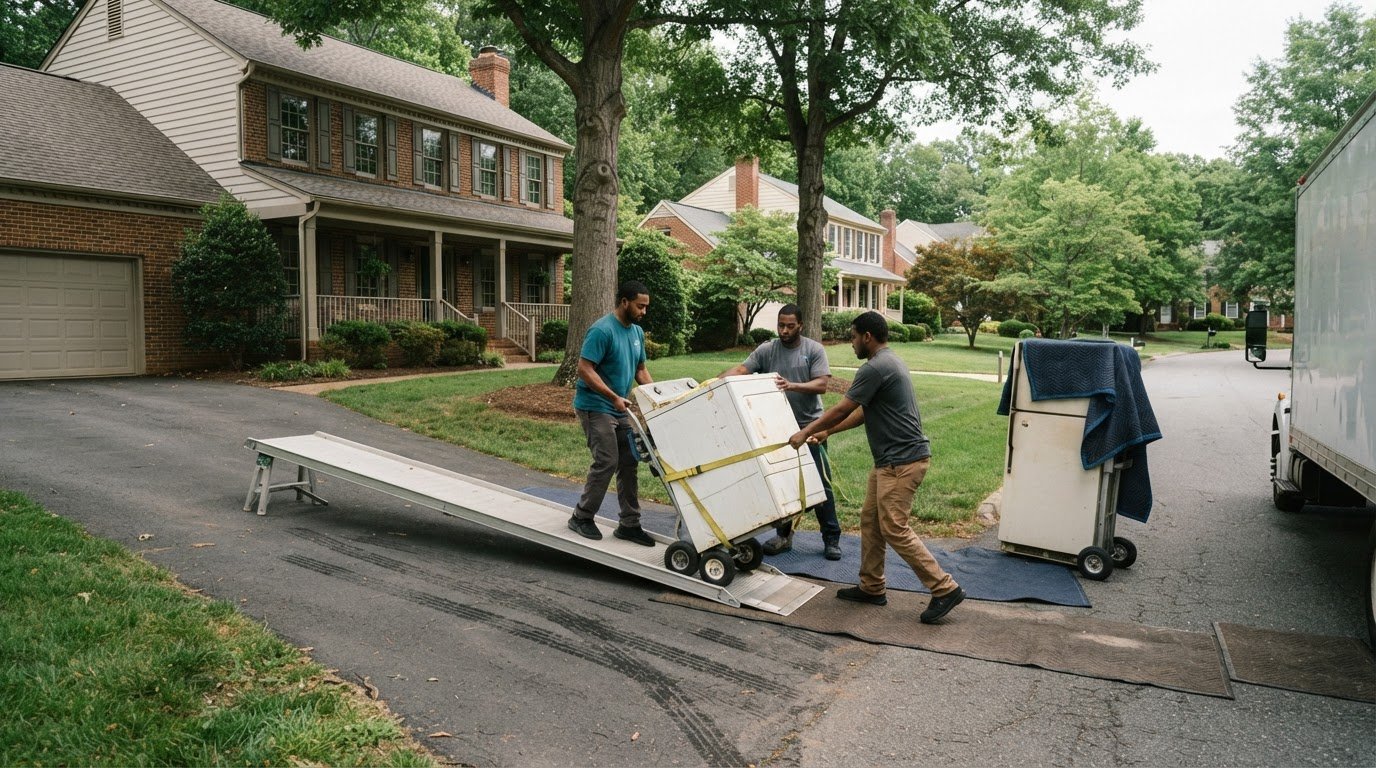
Could the most responsible choice for an old appliance be to keep it out of the disposal stream altogether? If it still works, reuse or donation may be worth exploring. If it is worn out, recycling or an approved collection route may make more sense. Responsible appliance disposal Fairfax VA starts with the appliance’s condition, then follows the safest practical path.
A refrigerator, washer, or other bulky item can be difficult to move, and local drop-off, pickup, and preparation rules can vary by jurisdiction. A little planning can help you avoid a risky lift or a missed collection.
This guide explains how to assess an appliance, compare reuse and disposal options, and prepare both the item and your home’s access path. You’ll also learn what to consider when choosing between Fairfax County and City of Fairfax routes, and when heavy-item moving help can make clearing the space easier.
Key Takeaways
- For responsible appliance disposal Fairfax VA, start by assessing whether the appliance works and could be repaired, reused, or donated.
- Before moving an appliance, note its dimensions and exit route, and check the manufacturer’s instructions for preparation and disconnection.
- Compare donation, repair, retailer take-back, local recycling guidance, and junk removal to find a route that fits the appliance’s condition.
- Review current local guidance before arranging drop-off or collection, since requirements can differ between Fairfax County and the City of Fairfax.
- Plan the access path before removal. Heavy-item help can ease the physical work of clearing a bulky appliance from your home.
Responsible Appliance Disposal in Fairfax, VA: Start With the Appliance Condition
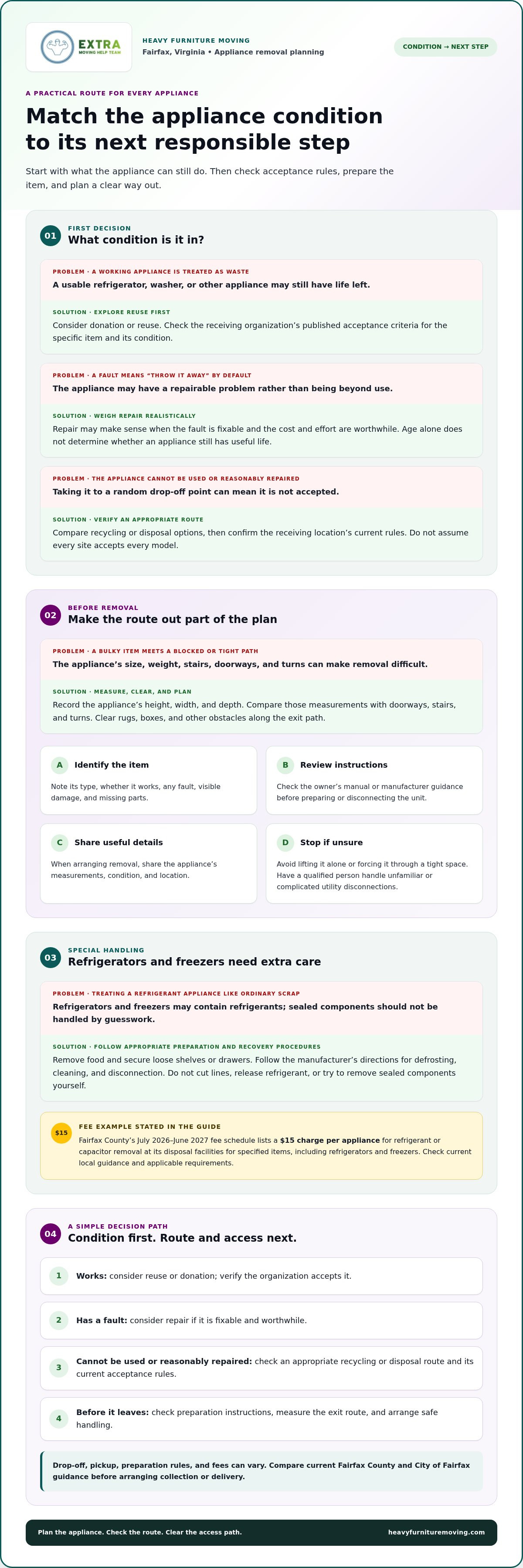
Responsible appliance disposal prioritizes safe reuse or recycling when practical. Begin by checking what the appliance can still do. Does it work normally, have a repairable fault, or no longer function? Its age and working parts can help guide your decision, but age alone does not determine whether it still has useful life.
An appliance’s condition points you toward its next step: reuse what works, repair what is worth fixing, and find an appropriate recycling or disposal route for what can’t be used. This first assessment makes responsible appliance disposal Fairfax VA more practical, especially when pickup eligibility, preparation rules, and fees vary by route. Fairfax County’s July 2026 to June 2027 fee schedule, for example, lists a $15 charge per appliance for refrigerant or capacitor removal at its disposal facilities for specified items, including refrigerators and freezers.
Refrigerators and freezers may contain refrigerants, so don’t treat them like ordinary scrap or attempt to handle sealed components yourself. For broader context on the environmental concerns and management of discarded electronics, see Electronic waste and its impact. The right destination depends on the item and the receiving location’s current rules.
Should you donate, repair, recycle, or dispose of an appliance?
If an appliance works, consider donation after reviewing the receiving organization’s published acceptance criteria for that item and its condition. If it has a fault, repair may make sense when the problem is fixable and the cost and effort are worthwhile. An appliance that can’t be used or reasonably repaired needs an appropriate recycling or disposal route. Don’t assume every donation center or recycling site accepts every model.
Which household appliances need a planned removal route?
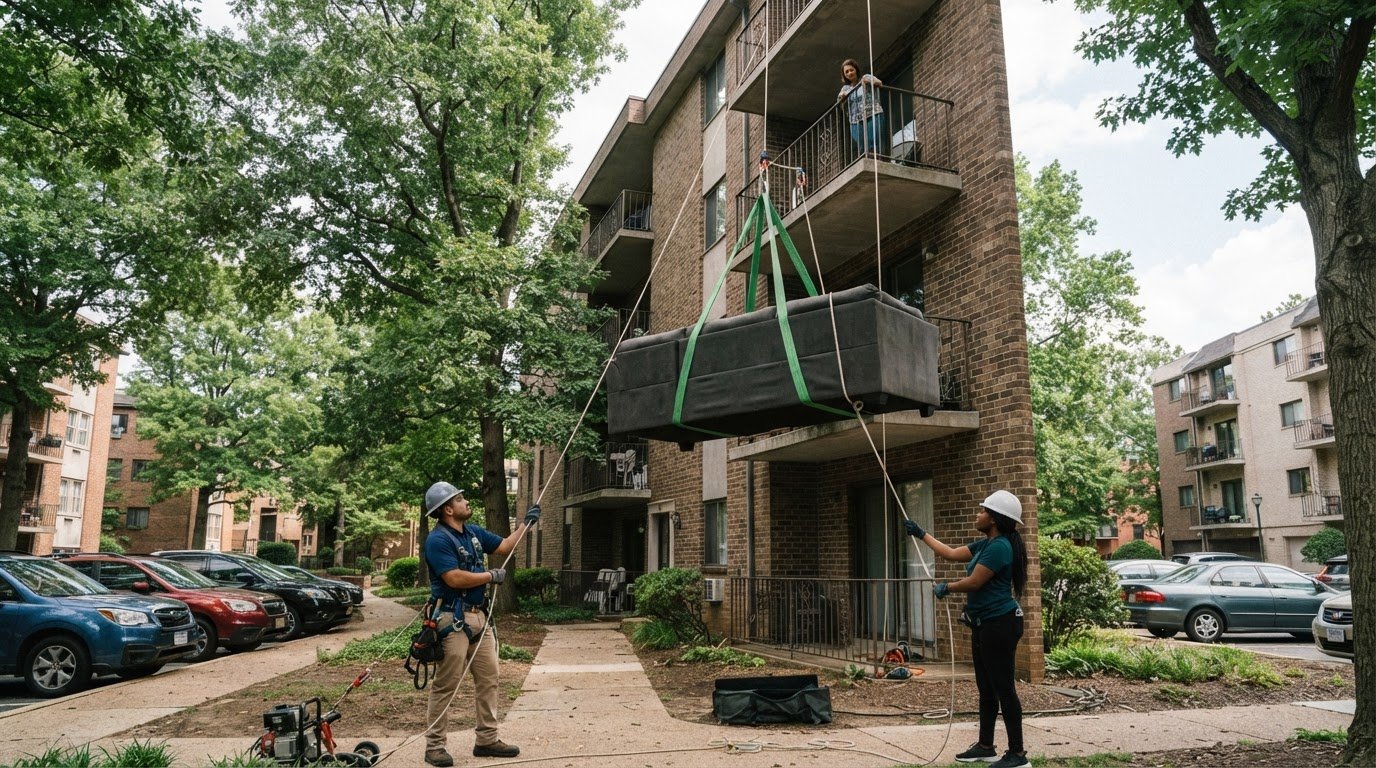
Plan ahead for refrigerators, freezers, washers, dryers, dishwashers, ovens, and water heaters. Their size, weight, condition, and location in the home can affect how they leave the property, while the receiving site or collection service determines what it accepts. A bulky appliance on an upper floor or behind a narrow doorway may also call for heavy-item moving help to reduce the strain of handling it.
Before choosing a route, describe the appliance accurately. Note whether it works, identify visible damage or missing parts, and consider whether repair is realistic. Then compare reuse, repair, recycling, and disposal options against the item’s condition and each route’s published requirements. This assessment can help you avoid taking an appliance somewhere it won’t be accepted, or discarding one that could still be useful.
Prepare a Refrigerator, Washer, or Dryer for Responsible Removal
Safe removal starts before anyone tries to move the appliance. For responsible appliance disposal Fairfax VA, gather the key details, review the manufacturer’s instructions, and prepare the exit path. Don’t disconnect an appliance or handle refrigerant based on guesswork.
- Identify the appliance: Note its type and whether it works, has a fault, or is unusable.
- Measure it: Record its height, width, and depth. Compare those measurements with doorways, stairs, and turns along the exit route.
- Plan the path: Clear rugs, boxes, and other obstacles. Keep the walkway open from the appliance to the exit.
- Review the instructions: Look up the owner’s manual or manufacturer guidance before preparing or disconnecting the unit.
Large appliances are awkward and heavy. Avoid lifting one alone, and don’t force it through a tight space. If moving it safely looks difficult, heavy-item moving help can ease the physical work of clearing a bulky household item.
What should you do before a refrigerator or freezer leaves?
Remove food and secure loose shelves or drawers so they don’t shift during movement. Follow the manufacturer’s directions for defrosting, cleaning, and disconnection; instructions can differ by model. Refrigerators and freezers may contain refrigerant, which needs an appropriate recovery process. Don’t cut lines, release refrigerant, or try to remove sealed components yourself. Follow current local guidance and use qualified procedures for refrigerant handling.
How do you prepare washers, dryers, and dishwashers?
Empty the appliance and consult its manual before disconnecting it. Secure cords, hoses, and movable parts so they don’t drag or snag, but don’t pull, cut, or bend connections to make the unit easier to move. If a utility connection is unfamiliar or complicated, have a qualified person handle the disconnection. Stop if you’re unsure.
Before removal day, check the entire access route again. Make sure doors open wide enough, stairs and landings are clear, and there is room to guide the appliance without twisting around obstacles. Share the item’s measurements, condition, and location when arranging its removal. Those details help with planning and reduce last-minute surprises. The receiving location or collection route may also have preparation requirements.
Compare Fairfax Appliance Reuse, Recycling, and Disposal Options
The best route depends on the appliance’s condition and what the receiving organization or service accepts. Use this comparison to narrow your options, then review the route’s current terms before arranging a handoff. For responsible appliance disposal Fairfax VA, consider separately where the appliance can go and how it will get there.
| Route | Best fit | Likely preparation | Details to verify |
|---|---|---|---|
| Donation | Working appliances in usable condition | Clean the item and share an honest description of its condition | Whether the organization accepts that appliance, its age or condition, and whether collection is offered |
| Repair | An appliance with a fault that may be fixable | Describe the problem and identify the model, if possible | Whether repair is practical and what to do with the item if it can’t be repaired |
| Retailer take-back | Appliances covered by a retailer’s current take-back program | Follow the retailer’s preparation instructions | Eligible items, delivery or collection terms, and any charges |
| Local recycling guidance | Unusable appliances accepted through an approved local route | Prepare the appliance as directed for drop-off or collection | Accepted items, fees, appointments, and any special handling requirements |
| Junk-removal assistance | Bulky items that need help getting out of the home | Share the item’s condition, size, and location | Removal terms and how the item will be handled after collection |
When is reuse or donation a practical choice?
Donation is worth exploring when an appliance works and a receiving organization’s published criteria include that specific item. Describe its condition accurately, including faults or missing parts. Don’t assume an organization accepts every appliance or offers pickup. If the appliance has a repairable problem, compare repair with donation or recycling based on its usefulness and the effort involved.
When should you look for recycling or disposal guidance?
For local instructions, consult current Fairfax County recycling and trash guidance. County residents can take appliances to the I-95 Landfill Complex or I-66 Transfer Station; most metal appliances can go in the scrap metal piles. Review accepted items, drop-off requirements, fees, and appointment details before going. Collection rules differ by jurisdiction and service. County collection customers can schedule eligible special pickups, while private haulers set their own bulk-pickup terms.
A free request is not a confirmed free collection; eligibility, pickup availability, and charges depend on the route. Review the terms for your specific option before moving the appliance or setting it outside.
Plan Responsible Appliance Disposal in Fairfax County Step by Step
A little planning can prevent a rejected drop-off or a difficult move on collection day. Use this sequence to choose a route, review current rules, and prepare both the appliance and its path out of your home. For responsible appliance disposal Fairfax VA, rely on current official local guidance before acting.
- Identify the appliance and its condition. Record its type, whether it works, and any damaged or missing parts. Note whether repair, donation, recycling, or disposal seems most suitable.
- Confirm your jurisdiction and collection provider. Fairfax County and the City of Fairfax have different procedures. If you use a private hauler, review its bulk-pickup rules too, since private companies set their own terms.
- Review official instructions. Consult current Fairfax County and relevant Virginia guidance for accepted appliances, drop-off requirements, preparation steps, fees, and appointment or scheduling details. Requirements can depend on the appliance and route.
- Arrange the handoff. Review the collection date, placement instructions, and other terms before setting an appliance outside. Don’t assume a request means pickup is scheduled.
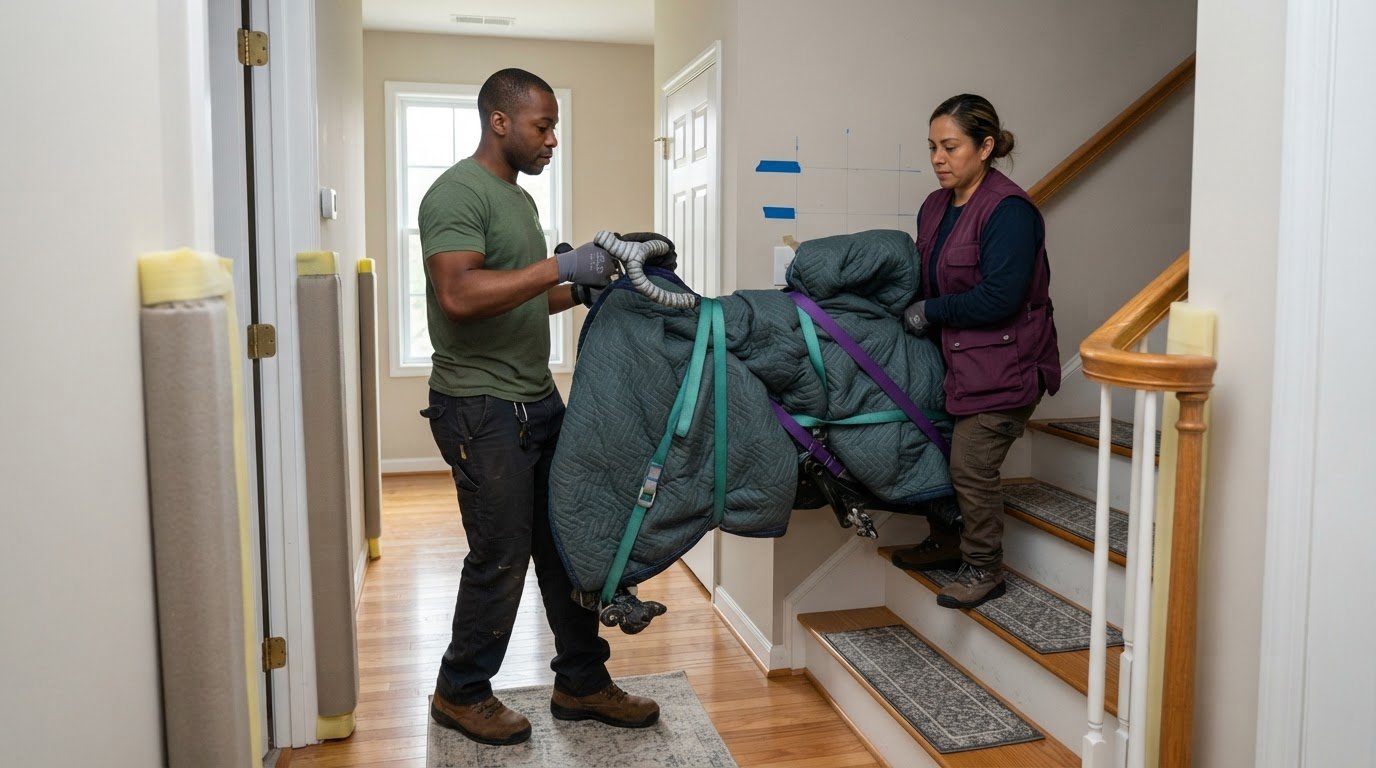
- Plan the exit path. Measure the appliance and check doorways, hallways, stairs, and narrow turns. Note parking limits or other access obstacles, then clear the route and protect nearby floors and walls.
What should Fairfax residents verify with county guidance?
Check that the specific appliance is accepted through the route you plan to use. Review current drop-off and collection instructions, preparation requirements, and scheduling details from official sources before loading the item or placing it curbside. Fairfax County residents who receive county collection can schedule eligible special collections in advance; private haulers set their own bulk-pickup rules. Don’t rely on outdated fees, dates, or facility instructions.
How can you plan safe removal from your home?
Walk the full route before moving begins. Measure tight turns, clear obstacles, and make room to guide the appliance without straining or scraping walls. If stairs, narrow access, or the appliance’s weight make the move unsafe, use professional heavy-item help rather than attempting a solo lift.
With the route and access plan settled, removal is easier to coordinate. For help clearing a bulky appliance from your Fairfax home, arrange heavy-item moving help.
Get Help Clearing a Bulky Appliance in Fairfax
A responsible removal plan has four parts: assess the appliance’s condition, choose a suitable reuse or disposal route, review that route’s requirements, and plan safe access out of the home. The final step can be the hardest. A refrigerator or washer may be difficult to maneuver through a narrow hallway, down stairs, or around tight turns, especially without enough lifting help.
When is professional help useful for appliance removal?
Consider professional heavy-item assistance if the appliance is awkward to grip, the path includes stairs, or moving it could strain you or damage floors and walls. You don’t need to tackle a difficult lift alone. Heavy Furniture Moving provides residential moving and junk-removal support for clearing bulky household items in Fairfax and nearby Northern Virginia communities. This help addresses the physical move; the appliance’s final destination depends on the route you choose and what the receiving location accepts.
What information helps plan a bulky-item removal?
Prepare a few useful details before arranging help. They make access challenges easier to understand and plan around:
- Appliance type and condition: Identify the item and note whether it works, has a fault, or is unusable.
- Dimensions: Measure its height, width, and depth to help assess doorways and tight turns.
- Home access: Note stairs, narrow hallways, uneven steps, or limited space near the exit.
- Photos: Share clear pictures of the appliance and any tight access points when arranging assistance.
Keep the chosen disposal or donation route separate from the physical removal plan. Review acceptance and handling requirements in the receiving organization’s or local service’s published guidance. Don’t assume removal automatically includes recycling, donation, or a particular disposal outcome. With those details settled, you can focus on a safe path out and avoid last-minute surprises.
If the appliance is difficult to move, explore Heavy Furniture Moving assistance for practical help clearing bulky items from your Fairfax-area home.
Make Your Appliance Removal Plan and Clear the Space
Responsible appliance disposal Fairfax VA starts with a simple decision: assess the appliance’s condition, then choose a suitable reuse, repair, recycling, or disposal route. Review current local instructions before arranging collection or drop-off, since accepted items and preparation rules can vary. Before removal day, measure the appliance, clear the exit path, and plan for stairs or tight turns.
The disposal route and the physical move are separate parts of the job. If a bulky appliance is hard to move safely, Heavy Furniture Moving provides residential moving and junk-removal support in Fairfax and nearby Northern Virginia communities. The veteran-family owned and operated team can help with the physical work of clearing a home, while the receiving organization’s policies determine whether an appliance can be reused or recycled.
Explore moving and junk-removal help for bulky household items and take the next step toward a safer, clearer space. With the right route and a practical access plan, appliance removal can feel far more manageable.
Frequently Asked Questions
Is appliance pickup free in Fairfax, VA?
Don’t assume appliance pickup is free. Some services let you submit a request without charge, but collection terms can depend on the provider, appliance, access, and removal route. Review whether pickup carries a charge before agreeing. For responsible appliance disposal Fairfax VA, consult current official Fairfax County guidance too, since county drop-off and collection procedures may differ from private service terms.
Can I recycle a refrigerator in Fairfax County?
Yes, Fairfax County lists appliance disposal at the I-95 Landfill Complex and I-66 Transfer Station, but review current acceptance and preparation instructions before going. Refrigerators need appropriate refrigerant handling, so don’t dismantle them or release refrigerant yourself. The county’s July 2026 to June 2027 fee schedule lists a $15 charge per appliance for refrigerant or capacitor removal for specified items, including refrigerators. Consult current guidance for the route you plan to use.
How do I dispose of a broken washing machine in Fairfax, VA?
Start by noting the washer’s condition and whether repair or parts recovery seems practical. Then review current Fairfax County guidance for accepted appliances and available drop-off or collection routes. Follow the manufacturer’s instructions for emptying and disconnection, and plan the path out of your home. A washer can be difficult to maneuver through stairs or tight turns, so arrange lifting help if moving it yourself feels unsafe.
What happens if my old appliance still works?
A working appliance may be suitable for reuse or donation if a receiving organization’s published criteria include it. Describe its age, operation, and visible issues honestly, and review acceptance requirements before taking it anywhere or arranging collection. Donation policies vary, and not every organization accepts every appliance. If reuse isn’t practical, compare repair, recycling, and disposal options using current local guidance before choosing a route.
Do I need to remove appliance doors before disposal?
Don’t remove doors automatically; preparation requirements depend on the appliance and removal route. Review the manufacturer’s instructions and current collection or drop-off guidance before altering the item. City of Fairfax curbside guidance says doors should be removed for safety when placing large appliances out for collection. That instruction is specific to the City’s curbside collection, so don’t assume it applies to every Fairfax County route.
Can I put an appliance out with regular trash in Fairfax County?
Don’t assume a large appliance can go out with regular household trash. Appliances may have separate collection, drop-off, or recycling requirements. Fairfax County collection customers can schedule eligible special collections in advance; private haulers set their own bulk-pickup rules. Review current official guidance and your collection service’s instructions for the exact appliance, including scheduling, preparation, and when or where to set it out.
How can I move a heavy appliance out of my home safely?
Measure the appliance and check doorways, hallways, stairs, and tight turns along the exit path. Clear obstacles and protect nearby surfaces. Don’t lift a heavy appliance alone or attempt a move beyond your ability. Heavy Furniture Moving provides residential moving and junk-removal support in Fairfax and nearby Northern Virginia communities, including Woodbridge, Manassas, Manassas Park, Aldie, Ashburn, McLean, Vienna, Reston, Centreville, Chantilly, Clifton, Dumfries, South Riding, Fairfax Station, Haymarket, and Gainesville.
Frequently Asked Questions
If an appliance works, consider donation after reviewing the receiving organization’s published acceptance criteria for that item and its condition. If it has a fault, repair may make sense when the problem is fixable and the cost and effort are worthwhile. An appliance that can’t be used or reasonably repaired needs an appropriate recycling or disposal route. Don’t assume every donation center or recycling site accepts every model.
Plan ahead for refrigerators, freezers, washers, dryers, dishwashers, ovens, and water heaters. Their size, weight, condition, and location in the home can affect how they leave the property, while the receiving site or collection service determines what it accepts. A bulky appliance on an upper floor or behind a narrow doorway may also call for heavy-item moving help to reduce the strain of handling it. Before choosing a route, describe the appliance accurately. Note whether it works, identify visible damage or missing parts, and consider whether repair is realistic. Then compare reuse, repair, recycling, and disposal options against the item’s condition and each route’s published requirements. This assessment can help you avoid taking an appliance somewhere it won’t be accepted, or discarding one that could still be useful. Safe removal starts before anyone tries to move the appliance. For responsible appliance disposal Fairfax VA, gather the key details, review the manufacturer’s instructions, and prepare the exit path. Don’t disconnect an appliance or handle refrigerant based on guesswork. Large appliances are awkward and heavy. Avoid lifting one alone, and don’t force it through a tight space. If moving it safely looks difficult, heavy-item moving help can ease the physical work of clearing a bulky household item.
Remove food and secure loose shelves or drawers so they don’t shift during movement. Follow the manufacturer’s directions for defrosting, cleaning, and disconnection; instructions can differ by model. Refrigerators and freezers may contain refrigerant, which needs an appropriate recovery process. Don’t cut lines, release refrigerant, or try to remove sealed components yourself. Follow current local guidance and use qualified procedures for refrigerant handling.
Empty the appliance and consult its manual before disconnecting it. Secure cords, hoses, and movable parts so they don’t drag or snag, but don’t pull, cut, or bend connections to make the unit easier to move. If a utility connection is unfamiliar or complicated, have a qualified person handle the disconnection. Stop if you’re unsure. Before removal day, check the entire access route again. Make sure doors open wide enough, stairs and landings are clear, and there is room to guide the appliance without twisting around obstacles. Share the item’s measurements, condition, and location when arranging its removal. Those details help with planning and reduce last-minute surprises. The receiving location or collection route may also have preparation requirements. The best route depends on the appliance’s condition and what the receiving organization or service accepts. Use this comparison to narrow your options, then review the route’s current terms before arranging a handoff. For responsible appliance disposal Fairfax VA, consider separately where the appliance can go and how it will get there.
Donation is worth exploring when an appliance works and a receiving organization’s published criteria include that specific item. Describe its condition accurately, including faults or missing parts. Don’t assume an organization accepts every appliance or offers pickup. If the appliance has a repairable problem, compare repair with donation or recycling based on its usefulness and the effort involved.
For local instructions, consult current Fairfax County recycling and trash guidance. County residents can take appliances to the I-95 Landfill Complex or I-66 Transfer Station; most metal appliances can go in the scrap metal piles. Review accepted items, drop-off requirements, fees, and appointment details before going. Collection rules differ by jurisdiction and service. County collection customers can schedule eligible special pickups, while private haulers set their own bulk-pickup terms. A free request is not a confirmed free collection; eligibility, pickup availability, and charges depend on the route. Review the terms for your specific option before moving the appliance or setting it outside. A little planning can prevent a rejected drop-off or a difficult move on collection day. Use this sequence to choose a route, review current rules, and prepare both the appliance and its path out of your home. For responsible appliance disposal Fairfax VA, rely on current official local guidance before acting.
Check that the specific appliance is accepted through the route you plan to use. Review current drop-off and collection instructions, preparation requirements, and scheduling details from official sources before loading the item or placing it curbside. Fairfax County residents who receive county collection can schedule eligible special collections in advance; private haulers set their own bulk-pickup rules. Don’t rely on outdated fees, dates, or facility instructions.
Walk the full route before moving begins. Measure tight turns, clear obstacles, and make room to guide the appliance without straining or scraping walls. If stairs, narrow access, or the appliance’s weight make the move unsafe, use professional heavy-item help rather than attempting a solo lift. With the route and access plan settled, removal is easier to coordinate. For help clearing a bulky appliance from your Fairfax home, arrange heavy-item moving help. A responsible removal plan has four parts: assess the appliance’s condition, choose a suitable reuse or disposal route, review that route’s requirements, and plan safe access out of the home. The final step can be the hardest. A refrigerator or washer may be difficult to maneuver through a narrow hallway, down stairs, or around tight turns, especially without enough lifting help.
Consider professional heavy-item assistance if the appliance is awkward to grip, the path includes stairs, or moving it could strain you or damage floors and walls. You don’t need to tackle a difficult lift alone. Heavy Furniture Moving provides residential moving and junk-removal support for clearing bulky household items in Fairfax and nearby Northern Virginia communities. This help addresses the physical move; the appliance’s final destination depends on the route you choose and what the receiving location accepts.
Prepare a few useful details before arranging help. They make access challenges easier to understand and plan around: Keep the chosen disposal or donation route separate from the physical removal plan. Review acceptance and handling requirements in the receiving organization’s or local service’s published guidance. Don’t assume removal automatically includes recycling, donation, or a particular disposal outcome. With those details settled, you can focus on a safe path out and avoid last-minute surprises. If the appliance is difficult to move, explore Heavy Furniture Moving assistance for practical help clearing bulky items from your Fairfax-area home. Responsible appliance disposal Fairfax VA starts with a simple decision: assess the appliance’s condition, then choose a suitable reuse, repair, recycling, or disposal route. Review current local instructions before arranging collection or drop-off, since accepted items and preparation rules can vary. Before removal day, measure the appliance, clear the exit path, and plan for stairs or tight turns. The disposal route and the physical move are separate parts of the job. If a bulky appliance is hard to move safely, Heavy Furniture Moving provides residential moving and junk-removal support in Fairfax and nearby Northern Virginia communities. The veteran-family owned and operated team can help with the physical work of clearing a home, while the receiving organization’s policies determine whether an appliance can be reused or recycled. Explore moving and junk-removal help for bulky household items and take the next step toward a safer, clearer space. With the right route and a practical access plan, appliance removal can feel far more manageable.
Don’t assume appliance pickup is free. Some services let you submit a request without charge, but collection terms can depend on the provider, appliance, access, and removal route. Review whether pickup carries a charge before agreeing. For responsible appliance disposal Fairfax VA, consult current official Fairfax County guidance too, since county drop-off and collection procedures may differ from private service terms.
Yes, Fairfax County lists appliance disposal at the I-95 Landfill Complex and I-66 Transfer Station, but review current acceptance and preparation instructions before going. Refrigerators need appropriate refrigerant handling, so don’t dismantle them or release refrigerant yourself. The county’s July 2026 to June 2027 fee schedule lists a $15 charge per appliance for refrigerant or capacitor removal for specified items, including refrigerators. Consult current guidance for the route you plan to use.
Start by noting the washer’s condition and whether repair or parts recovery seems practical. Then review current Fairfax County guidance for accepted appliances and available drop-off or collection routes. Follow the manufacturer’s instructions for emptying and disconnection, and plan the path out of your home. A washer can be difficult to maneuver through stairs or tight turns, so arrange lifting help if moving it yourself feels unsafe.
A working appliance may be suitable for reuse or donation if a receiving organization’s published criteria include it. Describe its age, operation, and visible issues honestly, and review acceptance requirements before taking it anywhere or arranging collection. Donation policies vary, and not every organization accepts every appliance. If reuse isn’t practical, compare repair, recycling, and disposal options using current local guidance before choosing a route.
Don’t remove doors automatically; preparation requirements depend on the appliance and removal route. Review the manufacturer’s instructions and current collection or drop-off guidance before altering the item. City of Fairfax curbside guidance says doors should be removed for safety when placing large appliances out for collection. That instruction is specific to the City’s curbside collection, so don’t assume it applies to every Fairfax County route.
Don’t assume a large appliance can go out with regular household trash. Appliances may have separate collection, drop-off, or recycling requirements. Fairfax County collection customers can schedule eligible special collections in advance; private haulers set their own bulk-pickup rules. Review current official guidance and your collection service’s instructions for the exact appliance, including scheduling, preparation, and when or where to set it out.
Measure the appliance and check doorways, hallways, stairs, and tight turns along the exit path. Clear obstacles and protect nearby surfaces. Don’t lift a heavy appliance alone or attempt a move beyond your ability. Heavy Furniture Moving provides residential moving and junk-removal support in Fairfax and nearby Northern Virginia communities, including Woodbridge, Manassas, Manassas Park, Aldie, Ashburn, McLean, Vienna, Reston, Centreville, Chantilly, Clifton, Dumfries, South Riding, Fairfax Station, Haymarket, and Gainesville.