Residential Safe Relocation from Garage to Second-Floor Bedroom in South Riding
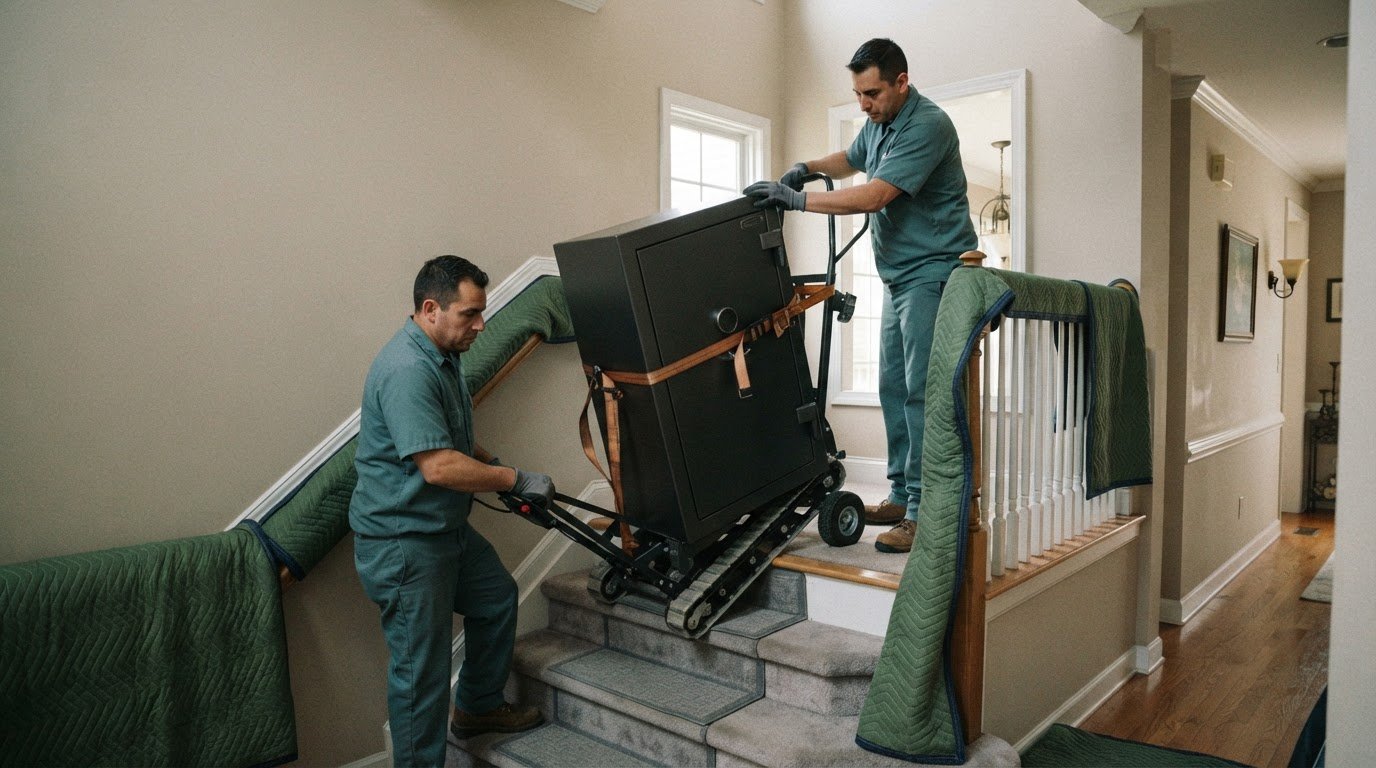
The staircase, not the driveway, often sets the challenge for a safe move upstairs. For residential safe relocation from a garage to a second-floor bedroom in South Riding, the move is planned around the safe’s size and weight, the route through the home, and the turns and landing space on the stairs. A careful plan also accounts for protecting floors, walls, corners, and rails.
It’s understandable to want a clear estimate and a move that doesn’t leave marks behind. The key is to assess the safe and access before scheduling, then match the handling plan to the home’s layout rather than treating the job like an ordinary furniture move.
This article explains what information helps shape a quote, how to prepare the route, and what protection is used along the way. You’ll also learn what movers consider when moving a heavy safe to a second-floor bedroom, so you can plan the next step with greater clarity.
Key Takeaways
- Map the safe’s route from the garage to the bedroom, paying close attention to stair turns, landing space, and tight corners.
- Plan protective coverage for floors, walls, rails, and corners before the safe starts moving.
- Share the safe’s dimensions and the home’s access details to help shape a clear, job-specific estimate.
- Account for parking, building access, and any HOA moving rules when choosing a moving date.
- Understand how the safe’s size, route, and handling needs shape the crew’s plan and schedule.
Protecting walls, corners, rails, and floors
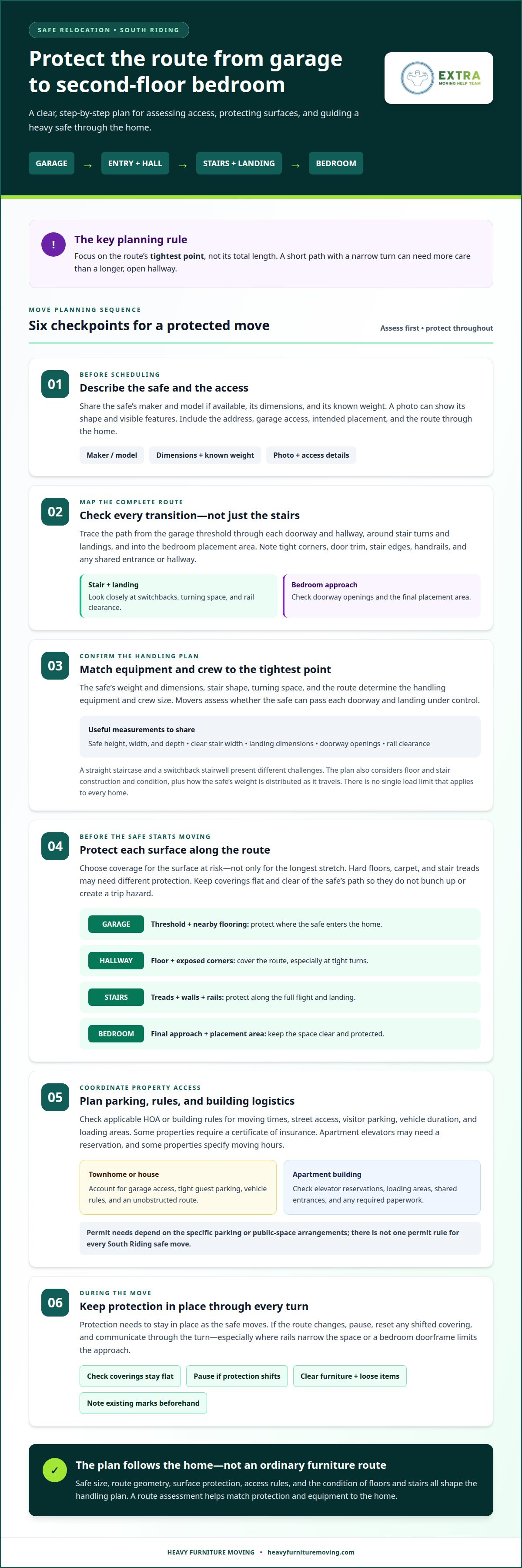
A safe can mark several surfaces on its route from a garage to a second-floor bedroom. Protection planning starts at the garage threshold, continues through each doorway and stair turn, and ends at the bedroom placement area. For residential safe relocation from a garage to a second-floor bedroom in South Riding, the route’s tightest point matters more than its total length. A short path with a narrow turn can require more care than a longer, open hallway.
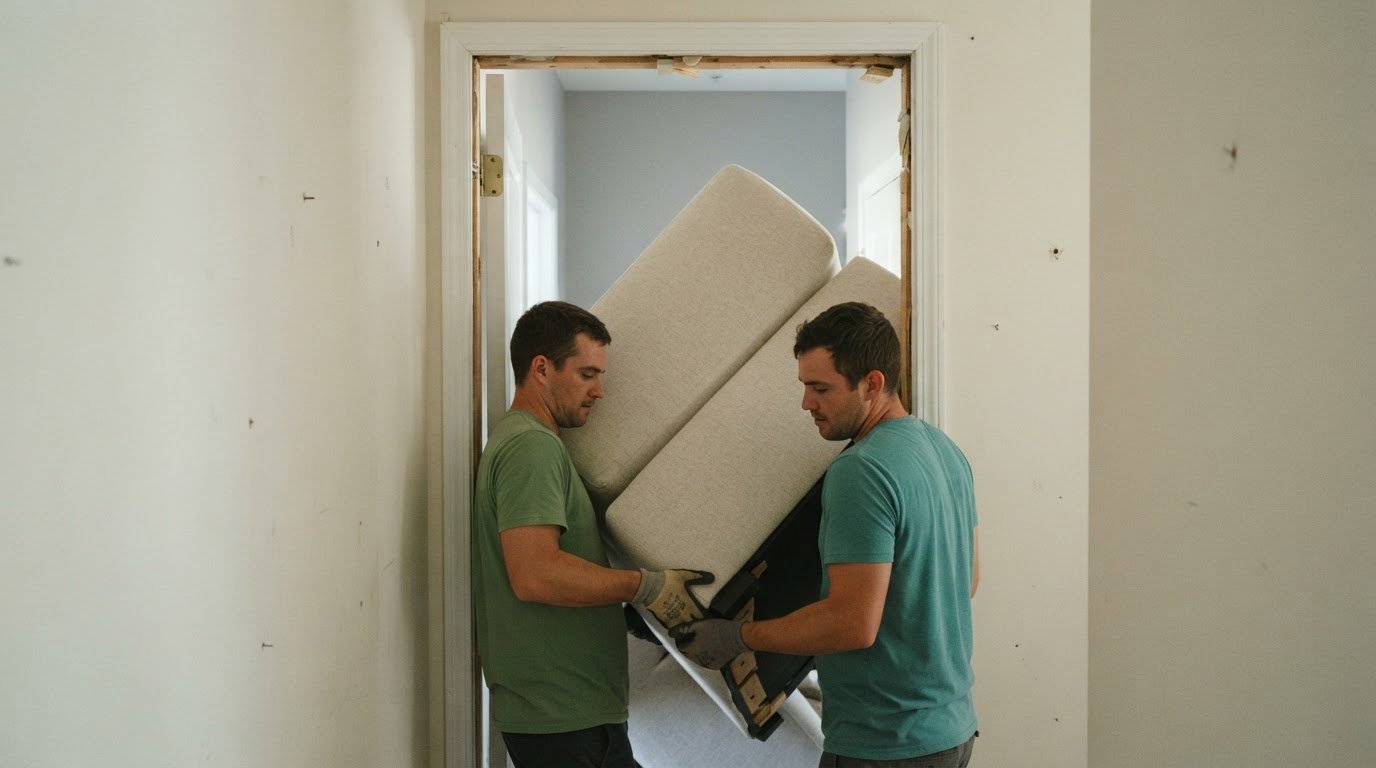
Before moving, the crew identifies vulnerable surfaces along the full route, including floor transitions, wall corners, stair edges, handrails, and door trim. A townhouse staircase may have a switchback landing that brings the safe close to both the rail and the opposite wall. The crew plans how to guide the safe through the turn without scraping or striking nearby surfaces. In an apartment, shared hallways and entrances also need care because other residents use them.
Floor coverings should suit each surface, not just the longest stretch of flooring. Hard floors, carpet, and stair treads may need different protection. Coverage should lie flat and stay clear of the safe’s path so it doesn’t bunch up or create a trip hazard. This can matter to renters, while homeowners may be focused on preventing scuffs, dents, and scratches.
- Garage and entry: Protect the threshold and nearby flooring where the safe enters the home.
- Hallway: Cover the route and guard exposed corners near tight turns.
- Stairs: Protect tread edges, walls, and rails along the full flight.
- Bedroom: Keep the final approach clear and protect the placement area.
Protection needs to stay in place as the safe moves. A shifted runner or padding that slips from a corner can leave a surface exposed at the point of contact. The crew should pause when the route changes, reset protection, and communicate through each turn. This matters especially when stair rails narrow the space or a bedroom doorframe limits the final approach.
Homes in Loudoun County differ in flooring, stair design, and room access, so one protection setup won’t fit every move. A clear route assessment helps match coverage to the surfaces at risk. Keep the destination area free of furniture and loose items, and note any existing marks before work begins. These steps help distinguish prior wear from new contact and keep attention on protecting the home throughout the move.
Elevator and building access logistics
Access planning covers the full route from the garage entrance to the second-floor bedroom. In South Riding, garage-front access, switchback stairs, and tight guest parking can all shape the move plan.
Building Access Logistics
HOA rules can affect moving times, street access, and visitor parking; building rules may also set vehicle-parking or duration limits. Some properties require a certificate of insurance before a move, so apartment residents should account for the paperwork in advance. For a home safe move, confirm which access rules apply to the property and keep the loading area clear.
There isn’t one permit rule for every South Riding safe move. HOA and building requirements can affect access, while permit needs depend on the specific parking or public-space arrangements. Share the address, garage access, and planned route so the crew can account for the property’s restrictions.
Equipment and Crew Requirements
The safe’s weight and dimensions, along with stair shape and turning space, determine the handling equipment and crew size. Movers assess whether the safe can pass each doorway and landing under control, then choose equipment suited to the route. A straight staircase and a switchback stairwell present different challenges, so the plan should account for the tightest turn, not just the number of steps.
Can a safe go upstairs using the home’s staircase? Often, the staircase is the route, but the crew needs the safe’s height, width, and depth, as well as the clear stair width, landing dimensions, doorway openings, and rail clearance. These measurements show where a different approach may be needed.
Floor, Stair, and Structural Load Limits
Before moving, professional movers consider the safe’s weight and the construction and condition of the floors, stairs, and landings. They also consider how the weight will be distributed as the safe travels. A narrow stair tread or a landing with limited space can affect where the load rests and how the crew controls each transition.
There isn’t one load limit that applies to every home. Relevant factors include the safe’s weight, the route, the floor and stair structure, and the condition of the surfaces. A qualified professional can assess those factors before choosing a handling plan; an unsupported capacity figure should not replace that assessment.
Parking logistics matter, too. South Riding townhome sections may have tight guest parking and vehicle-duration rules. The access plan should account for where the vehicle can stop, how the safe travels from the garage, and whether the route will stay unobstructed during loading.
For an apartment building, elevators may need a reservation, while some properties specify loading areas or moving hours. A townhouse without an elevator still needs a clear stair route and landing access. Share those details early, and explore professional safe-moving help as part of planning the move.
Free estimates
A useful quote starts with the safe and the route, not just the distance between rooms. Planning a residential safe relocation from a garage to a second-floor bedroom in South Riding means describing the safe, access points, and intended placement. Clear details help the quote reflect the work involved instead of treating the move like ordinary furniture delivery.
Share the safe’s maker and model, if available, along with its dimensions and known weight. A photo can show its shape and visible features. Describe the route from the garage entrance through the home, including doorways, stairs, landings, and the bedroom opening. For example, a safe may pass through a hallway but need a different plan at a tight stair turn.
The quote depends on the safe and its route. Relevant factors include the safe’s size and weight, route complexity, access, handling needs, and final placement. For residential safe relocation from a garage to a second-floor bedroom in South Riding, share those details when requesting an upfront quote. Mention nearby furniture or packing only if it affects access or is part of the work you need.
- Safe details: Provide dimensions, model information, photos, and known weight.
- Route details: Describe doorways, stairs, landings, and bedroom access.
- Access details: Note garage entry, parking restrictions, and building requirements.
- Placement details: Identify where the safe should be positioned.
A whole-home quote needs more information than a single-safe move. Homeowners preparing one should inventory each room, closet, basement, garage, storage area, and outdoor space. For a safe-only quote, focus on the safe and its route. Include storage, packing, or other furniture tasks only when they affect access or the requested work.
The Federal Motor Carrier Safety Administration provides consumer guidance on researching movers, understanding estimates and paperwork, and learning your rights before moving day. Review the written estimate for the work described, route assumptions, and handling conditions. If the safe’s details or destination change, the plan and quote may need updating.
Before accepting a quote, make sure it describes the garage pickup, upstairs route, and intended placement. The written scope should explain what work is covered and which circumstances could change the plan. This gives you a practical basis for coordinating the move with other household arrangements, such as clearing nearby furniture or planning separate packing work.
These figures describe home moves, so they aren’t a quote for relocating a safe. Use the safe’s details and route to request a quote for that job.
Safe handling of belongings
A safe move needs a handling plan based on the unit, its contents, and its route. In Virginia, those details help movers plan the work without guesswork.
For insurance and damage protection, ask for the move’s written scope and a certificate of insurance if the property requires one. Most residential buildings require movers to carry at least $1,000,000 in general liability coverage for a certificate of insurance. The Federal Motor Carrier Safety Administration offers consumer guidance on mover research, estimates, paperwork, and rights.
Which movers serve South Riding and Loudoun County? Choose movers prepared to handle heavy items and assess the safe, stairs, and destination before moving day. A clear written quote should describe the work and route it covers.
Identify the safe’s type, model, and weight using its label, available product records, or information supplied about the unit. Those details help determine the handling plan; appearance alone doesn’t establish the safe’s weight.
Should the safe be emptied or its door removed? The plan should establish whether contents need to be removed and whether door removal suits that specific model. Neither step should be assumed without considering the safe’s design and handling instructions.
Insurance, Licensing, and Damage Protection
Before the move, identify any building requirements for a certificate of insurance and access paperwork. The written scope should describe the garage pickup, stair route, bedroom delivery, and agreed surface protections. The Federal Motor Carrier Safety Administration’s consumer guidance can help you understand mover paperwork and estimates.
Licensing and insurance are separate questions, so review applicable credentials and coverage documents independently. For a South Riding apartment or townhouse, note any building-specific paperwork and keep the approved move details with the quote.
Safe Type, Model, and Weight
Record the safe’s type, maker, model, dimensions, and stated weight when available. A compact document safe and a large gun safe have different shapes and handling needs, so accurate identification matters before planning the route.
Share model information and photos before scheduling, including visible hinges, handles, and door construction. The handling plan should also state whether contents will remain inside and whether removing any component is appropriate for that model.
Keep loose belongings away from the route, including boxes, furniture, and stored items in the garage. A clear path lets the crew focus on controlling the safe through doorways and stair turns. For a South Riding home, describe the garage exit, interior entry, each landing, and the final approach to the bedroom.
Scheduling a move
Choose a date after the safe’s route and access needs are included in the plan. In South Riding, a family home may have garage-front access, HOA rules, visitor-parking limits, and designated moving times. Each detail can affect the crew’s arrival and how long the route needs to remain clear.
Start with the property calendar. Townhouse residents should account for HOA rules, street restrictions, visitor parking, and approved moving hours. For a home near busy offices or shared visitor spaces, note when parking is restricted. The county setting doesn’t override property-specific rules, so schedule the move around the home and its access conditions.
Morning appointments scheduled for 8 to 9 a.m. are advised because they tend to run on time. That window can also help avoid conflicts with household routines or changing access conditions later in the day. Share any fixed family commitments, school drop-offs, or other scheduled work so the arrival plan accounts for them.
Build in time for the stairs. A flight can add 30 to 60 minutes to an apartment move in South Riding. That figure describes apartment moves, not a guaranteed duration for relocating one safe. A switchback staircase, narrow landing, or difficult turn can affect the time needed, so the route and safe details should inform the schedule.
Handle paperwork early. Movers should be asked for a certificate of insurance 3 to 7 business days before the move. Certificate processing typically takes 24 to 48 hours. If an apartment building or property manager requires paperwork before truck arrival, those timelines help prevent a last-minute access problem.
- Before selecting a date: Review HOA rules, moving hours, street access, and visitor parking.
- When requesting the schedule: Share the safe’s details and the garage-to-bedroom route.
- Before moving day: Arrange required paperwork and keep the loading area accessible.
- For the arrival window: Coordinate household routines and property access.
Keep the date flexible until the access plan is clear. If a property manager changes the approved hours or parking becomes unavailable, the crew may need a different arrival time. Share changes promptly, including a blocked driveway or a family event that affects room access. Clear updates help keep the schedule aligned with actual conditions.
For a safe move that needs a coordinated crew and timing plan, arrange professional moving help around the home’s access and schedule.
Consider the calendar alongside the budget. An apartment move on a weekend may cost +10 to 15% more in South Riding, so households weighing weekend access against a weekday appointment can ask for both options before settling on a date. This figure applies to an apartment move; it does not establish the cost of moving a safe. Keep the chosen slot provisional while checking whether the property can accommodate the crew and whether the safe’s route will be ready. If a weekend is necessary, confirm the quoted scope and arrival window directly with the mover, then update the property contact and household members once the plan is settled.
Heavy Furniture Moving
Heavy Furniture Moving can help when a safe’s weight, stair route, or tight landing makes the move difficult to manage alone. The team provides heavy-lifting and local moving help for planned moves from garages to upstairs bedrooms, with attention to access, handling, and home surfaces.
Share the safe’s make and model, dimensions, available weight information, and the route details. Include any stair turns, narrow doorways, or parking constraints so the move can be planned around the home rather than treated like a routine furniture shift.
For help planning your safe move, contact Heavy Furniture Moving.
Make the Next Move Clear
Turn your safe’s details and home layout into a practical plan. A residential safe relocation from a garage to a second-floor bedroom in South Riding starts with the information that shapes handling, access, and placement. Share what you know, including the safe’s model and route upstairs, so the conversation can focus on your home’s needs.
Heavy Furniture Moving also offers Movers Near Me, Exercise Equipment Moving, and Sofa Hoisting. These services reflect the team’s work with bulky items and challenging moves, while your safe relocation plan stays focused on the safe and its route.
Ready to discuss the move? Contact Heavy Furniture Moving and take the next step toward a clear plan for your home.
Frequently Asked Questions
How much does it cost to move a heavy safe to a second-floor bedroom in South Riding, VA?
The cost depends on the safe and the work required for its specific route. Heavy Furniture Moving uses flat-rate pricing for most single heavy items or hourly labor with a 2-hour minimum. The quote is provided upfront before work begins, with stair handling and protective wrap priced into the job. Share the safe’s details and home layout to get a quote based on the actual move.
Will the move require a crane, hoist, or exterior access in South Riding?
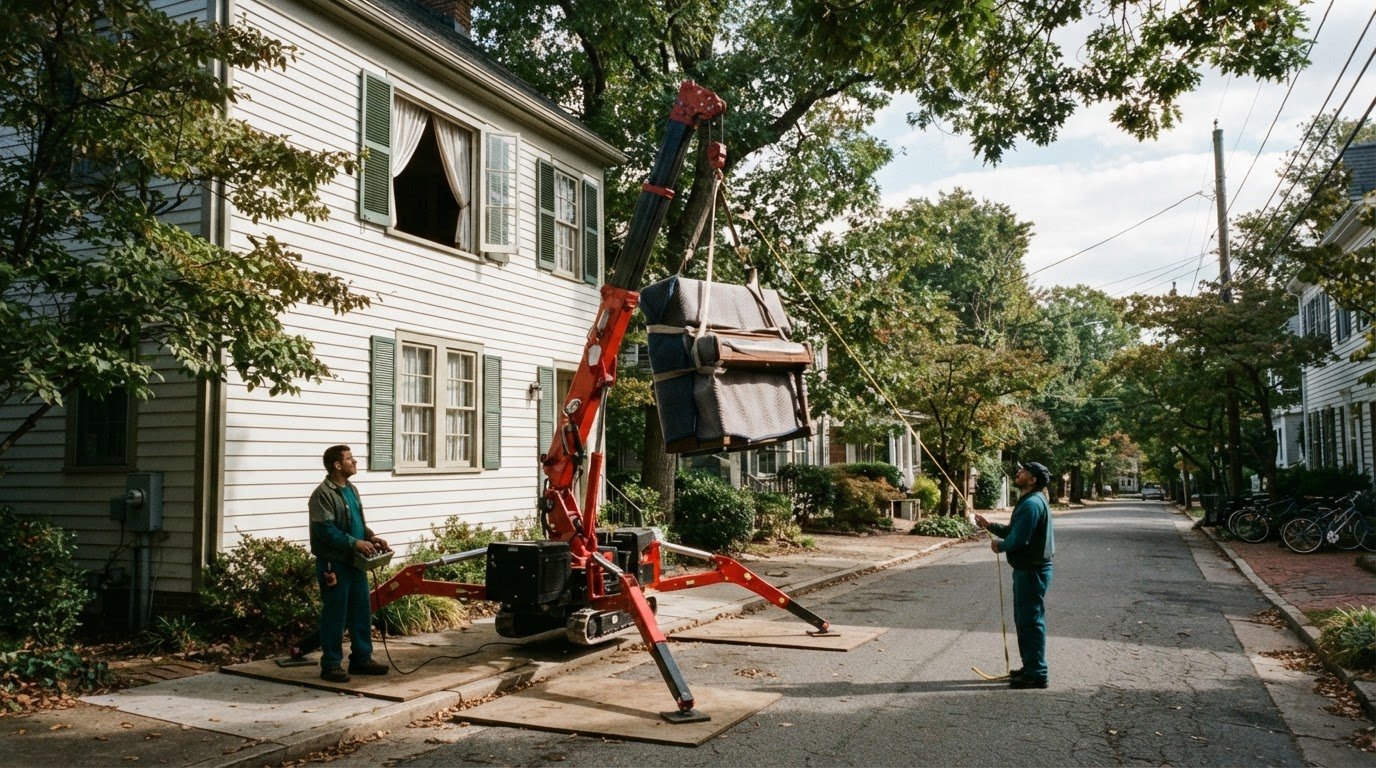
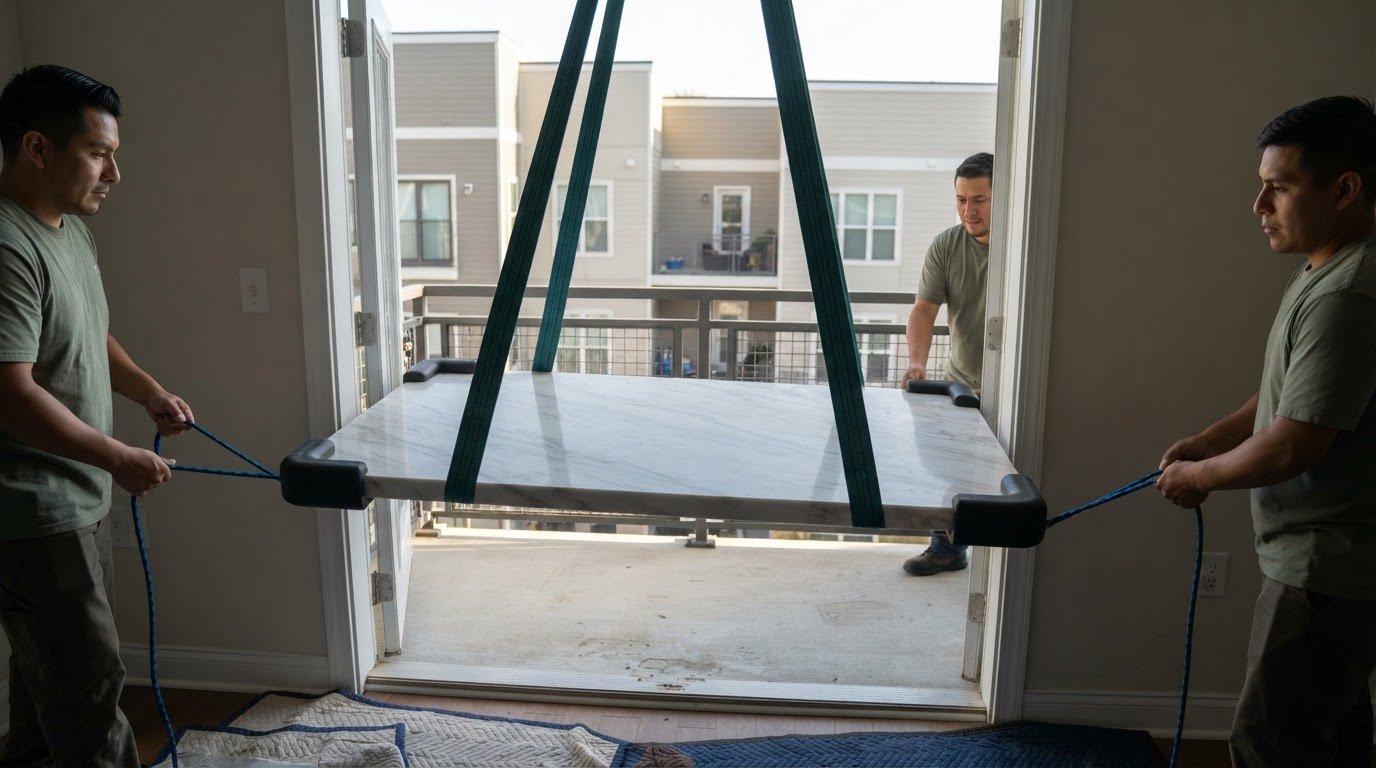
Not necessarily. If the safe fits through the home’s doors and staircase, the crew can plan an interior route; tight landings or openings may change that assessment. A crane, hoist, or exterior route depends on the safe’s dimensions, the building layout, and available access. Share photos of the safe, stairs, and exterior approach so the move can be planned around your home’s specific obstacles.
How do professional movers prepare the garage-to-bedroom route to prevent injury and property damage?
Professional movers clear the planned path, identify tight spots, and protect vulnerable surfaces before handling the safe. Heavy Furniture Moving uses blankets, shrink film, ratchet straps, masonite floor protection, and door-jamb covers. The team also considers whether the safe should be emptied; drawers and safes may need to be emptied, while other items can remain loaded. Keep people and pets away from the active route during the move.
Frequently Asked Questions
The cost depends on the safe and the work required for its specific route. Heavy Furniture Moving uses flat-rate pricing for most single heavy items or hourly labor with a 2-hour minimum. The quote is provided upfront before work begins, with stair handling and protective wrap priced into the job. Share the safe’s details and home layout to get a quote based on the actual move.
Not necessarily. If the safe fits through the home’s doors and staircase, the crew can plan an interior route; tight landings or openings may change that assessment. A crane, hoist, or exterior route depends on the safe’s dimensions, the building layout, and available access. Share photos of the safe, stairs, and exterior approach so the move can be planned around your home’s specific obstacles.
Professional movers clear the planned path, identify tight spots, and protect vulnerable surfaces before handling the safe. Heavy Furniture Moving uses blankets, shrink film, ratchet straps, masonite floor protection, and door-jamb covers. The team also considers whether the safe should be emptied; drawers and safes may need to be emptied, while other items can remain loaded. Keep people and pets away from the active route during the move.