Residential Safe Moving Specialists for McLean Basements
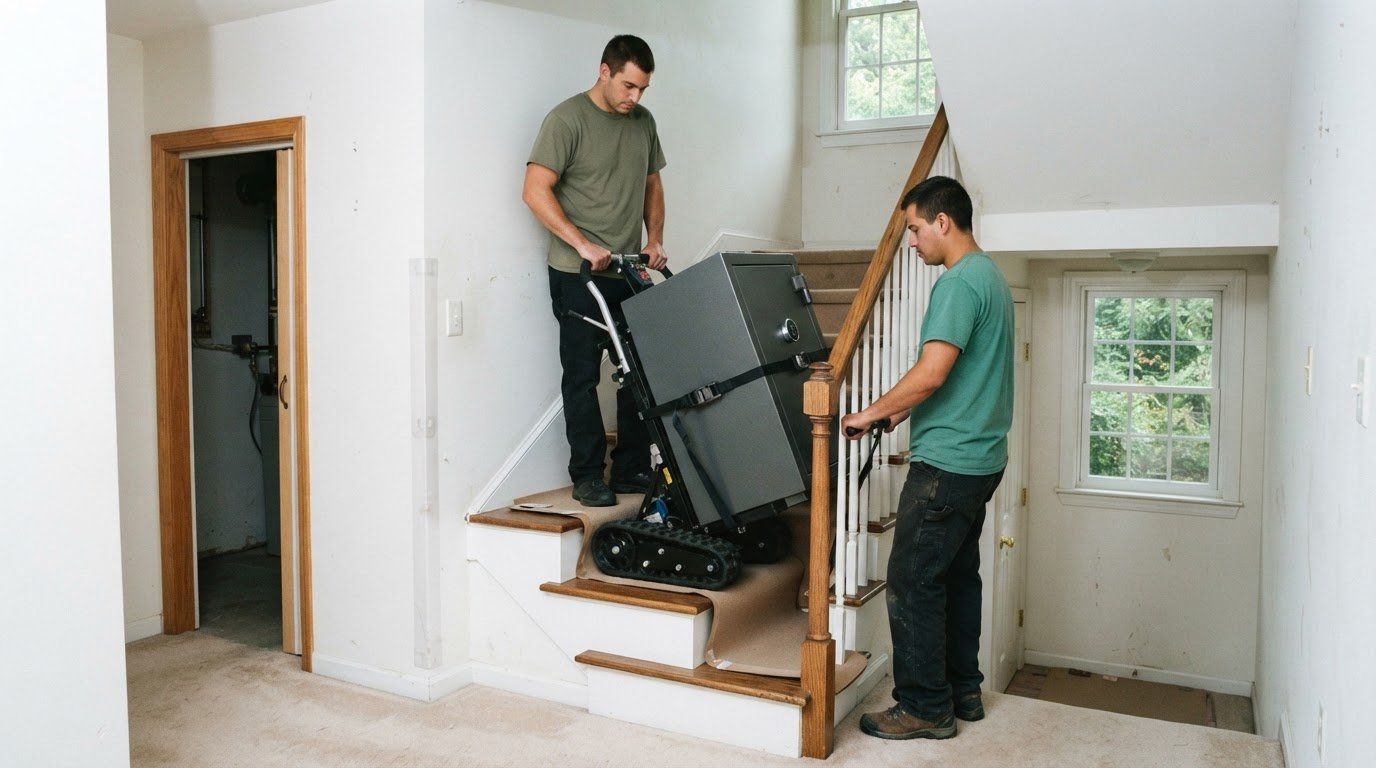
A safe basement move depends on planning the route, not just considering the safe’s weight. For residential basements in McLean, specialists assess the stairs, turns, doorways, exit, and truck access before deciding how to handle and transport a safe or heavy vault.
Tight basement access can make homeowners concerned about damage to floors or walls. This guide explains how residential safe-moving specialists serving McLean plan the route, protect the path, and secure a safe for transport. You’ll also learn which access and parking details matter and how local service covers McLean and nearby Northern Virginia communities. Clear planning makes each stage of a demanding move easier to understand.
Key Takeaways
- Plan truck access early: according to Fairfax County, residential-street parking is generally restricted for commercial vehicles longer than 21 feet, except while actively loading or unloading at the address.
- See how basement stairs, turns, doorways, and the route to the truck shape a safe-moving plan.
- Learn what careful loading and transport involve for a safe or heavy vault.
- Get a clearer picture of service coverage across McLean and Northern Virginia.
- Understand which move details affect an in-home assessment and written quote.
Moving logistics for access, parking, and traffic
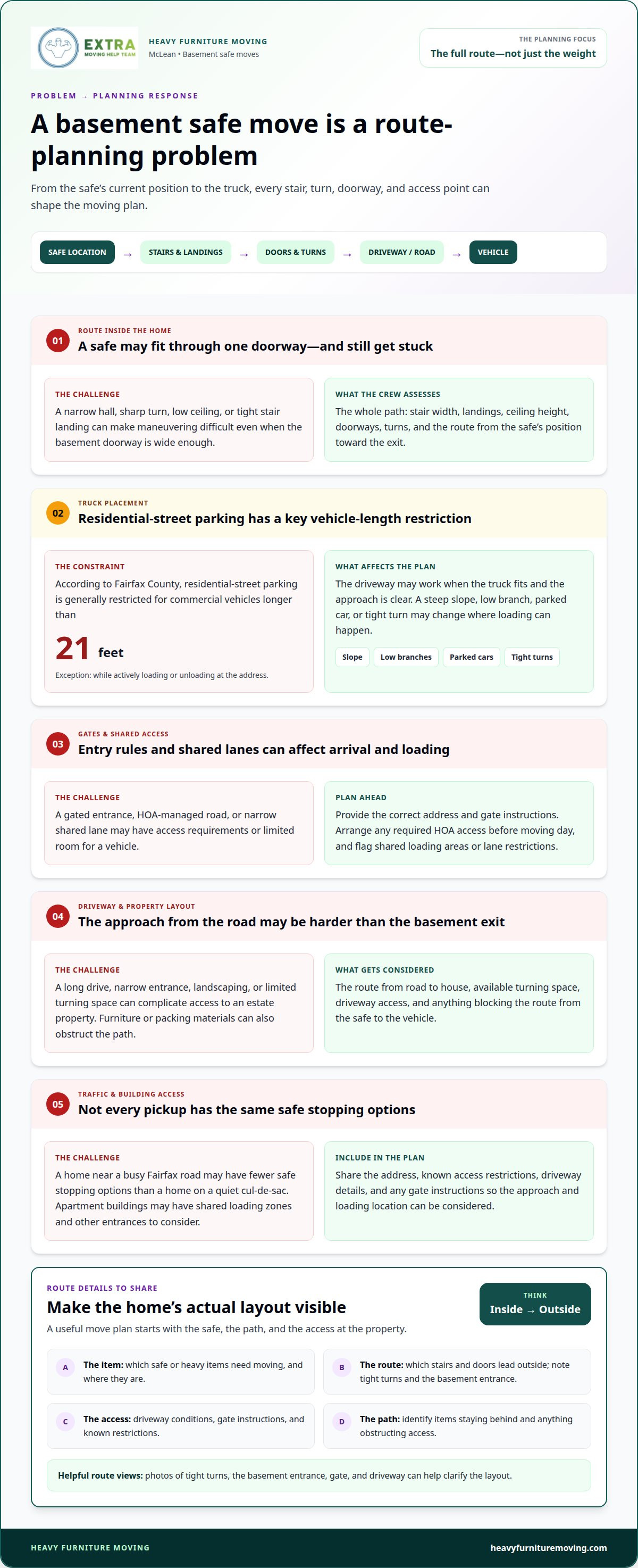
A safe move from a McLean basement starts with the entire route from its current position to the vehicle. The crew considers stair width, landings, low ceilings, doorways, turns, and the driveway approach. A safe may fit through the basement doorway but still be difficult to maneuver around a sharp landing or through a narrow hall. Share these details early so the plan accounts for the full route.
Truck placement matters on residential streets. According to Fairfax County, residential-street parking is generally restricted for commercial vehicles longer than 21 feet, except while actively loading or unloading at the address. The crew can use the home’s driveway when the truck fits and the approach is clear. A steep slope, low branch, parked car, or tight turn may affect where loading can happen.
Gates and neighborhood rules can affect arrival plans. In McLean communities with gated entry, provide the entry instructions and correct address to help the crew reach the property smoothly. If an HOA manages shared roads or loading areas, arrange any required access before moving day. For example, a vehicle blocking a narrow shared lane could affect neighbors and safe loading.
Estate properties can bring different driveway challenges. A long private drive may provide space to position the vehicle, while a narrow entrance or landscaping can restrict access. The crew considers the route from the road to the house, available turning space, and whether furniture or packing materials obstruct the path. On a larger Fairfax-area property, the driveway may be more challenging than the basement exit.
Traffic and neighborhood layout can affect the approach, too. A home near a busy Fairfax road may have fewer safe stopping options than a house on a quiet cul-de-sac. Apartment buildings bring other considerations, such as entrances and shared loading zones. Give the crew the address, gate instructions, driveway details, and known access restrictions.
For basement cleanouts, permits and disposal depend on the work and materials involved. Removing household furniture is different from a project involving construction or other work, so the scope and item types shape the plan. Moving access arrangements alone do not determine the appropriate disposal method for every material.
To prepare, tell the crew which safe or heavy items need moving, where they are, and which stairs and doors lead outside. Photos of tight turns, the basement entrance, gate, and driveway can help clarify the route. Identify anything staying behind and note furniture or packing materials that obstruct access. These details help the crew plan around the home’s actual layout.
Service areas in McLean and Northern Virginia
Residential moves can connect a McLean home with another Northern Virginia address or a farther destination. Planning starts with the pickup and destination addresses, the belongings involved, and the type of moving help needed.
Service-area coverage does not establish a mover’s licensing or insurance status. A location listing identifies where residential moving requests can be served, not the credentials for a particular move.
Residential Moving Services
Residential moving support can cover a household move or focused help with selected belongings. The right option depends on whether you need help with furniture, exercise equipment, loading, or moving items inside the home. Describe the basement items and destination clearly so the work is well defined. For example, a move from Fairfax to McLean involves both addresses in the plan.
McLean and Nearby Service Areas
McLean is a starting point for moves across Northern Virginia. Nearby service-area communities include Fairfax, Vienna, Reston, and Ashburn. Naming the pickup and destination communities helps distinguish the two addresses, especially when street names are similar. Provide the complete addresses and general distance so the planned route reflects the actual trip.
Moving options depend on how much help your household needs. A move between McLean homes may focus on bulky belongings, while changing storage locations may center on loading or unloading. An apartment move may involve selected furniture rather than the whole household. Describe the requested help and destination to make the scope clear.
For Northern Virginia moves, both locations shape the plan. A basement pickup in McLean and delivery in Fairfax involve two addresses with different access layouts. A move within McLean covers a shorter distance, but the item list and access at both homes still matter. Sharing route details helps organize loading and delivery.
Keep service-area details specific. Fairfax, Vienna, Reston, and Ashburn are useful references when describing a Northern Virginia trip. Pair the community names with complete addresses, then state whether belongings are going to another residence or a storage location. This clarifies the destination and which address is the pickup point.
Before arranging residential moving help, group the details by pickup, destination, and requested work. Note whether the move includes basement belongings, exercise equipment, or furniture elsewhere in the home. This helps define what the crew will handle at each address. For residential moving help, start with those location and item details.
When describing a McLean pickup, mention property conditions that may affect access and the requested work. Wall or ceiling cracks may indicate foundation settlement, while uneven floors may point to a subfloor or slab shift. Share these observations alongside the destination and the type of moving help needed.
Property types vary: Chesterbrook homes in McLean, Virginia, include properties on half-acre lots, and many central McLean, Virginia, homes are colonials built in the 1950s and 60s. Keep repair details distinct from the moving scope and identify the pickup address clearly.
Safe loading and transportation
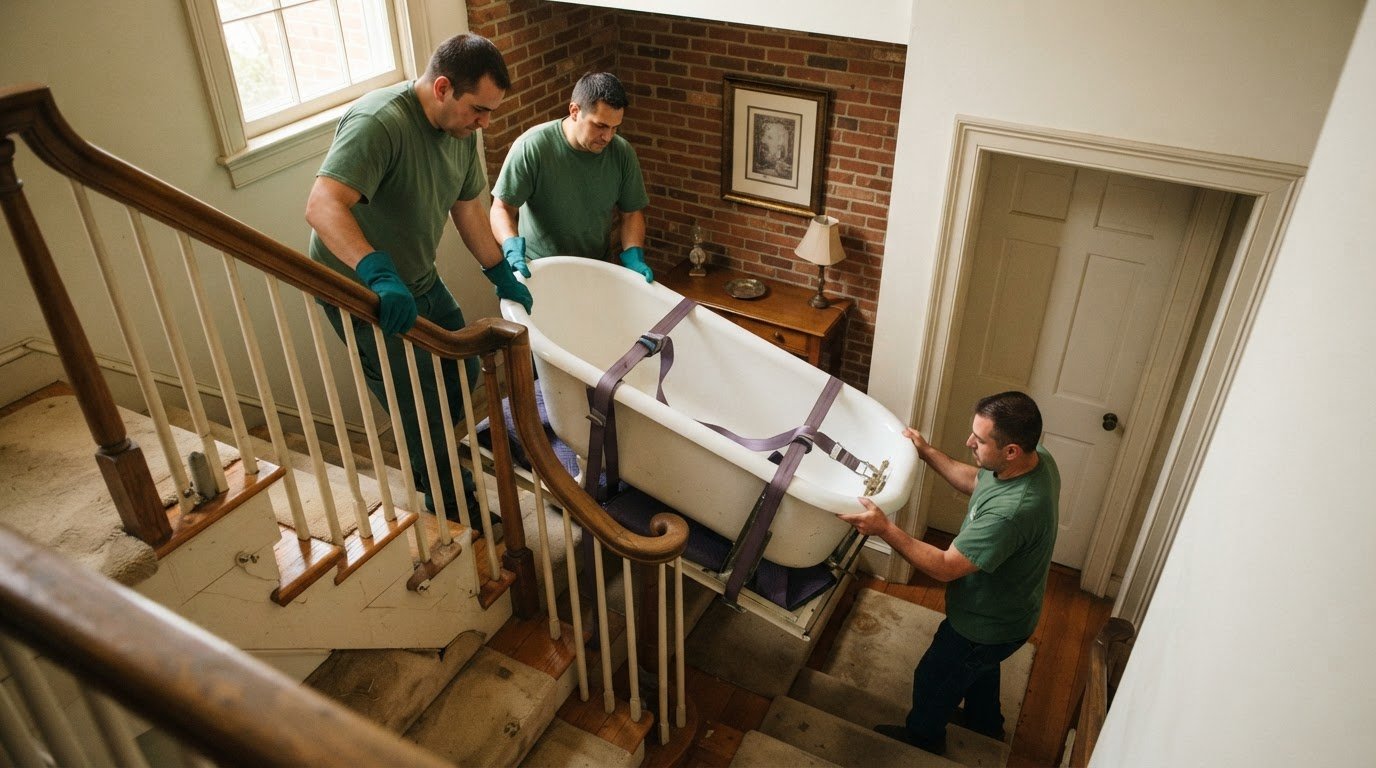
Basement stairs introduce risks during a safe move: the load can shift, strike a wall, damage stair edges, or become difficult to control on a turn. Specialists assess the safe’s position, stairway, landings, and exit route before planning how to handle it. A narrow landing or low ceiling may affect how the safe can be guided. This assessment helps protect the home and control the load.
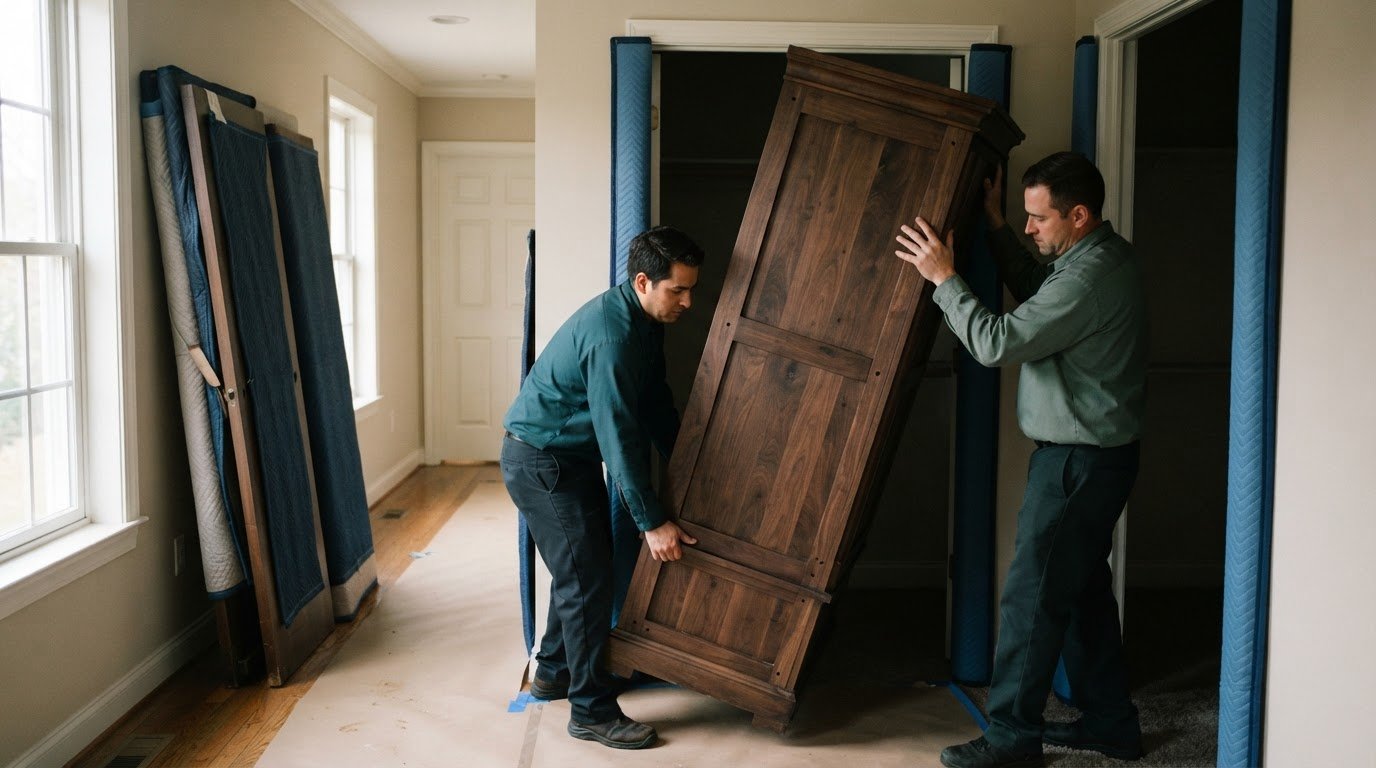
Protection starts with the route. The crew identifies potential contact points, including doorframes, floors, railings, and corners, then plans how to keep the safe clear of them. A tight turn at the bottom of basement stairs, for example, may require a different sequence than a straight hallway. The crew also considers nearby belongings to keep furniture and stored boxes from blocking the path or creating trip hazards.
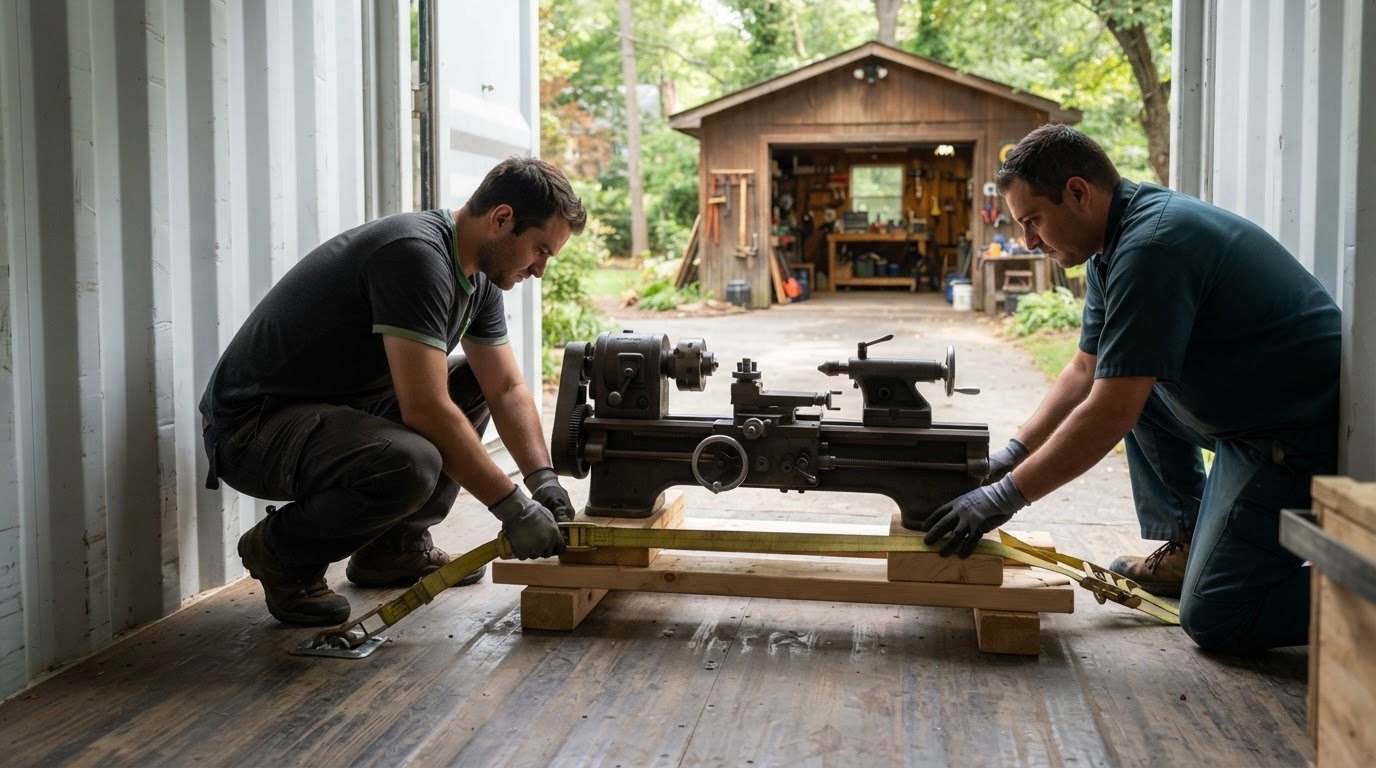
At the vehicle, the safe needs a stable position for transport. Specialists plan where it will sit within the available cargo space and secure it to limit shifting during turns and braking. Loading needs to be coordinated: the route from the basement, the handoff outside, and placement in the vehicle must work together. Equipment and handling depend on the safe and route, not a one-size-fits-all method.
Help the crew understand the job by describing the safe’s location, stair layout, and any tight doorway or landing. Mention whether the move involves an estate, home office, or basement with other heavy belongings. These details clarify what needs moving and where loading can take place. Insurance status and safe handling are separate considerations, so insurance paperwork is not a substitute for route planning.
Transport planning connects pickup conditions with the destination. A safe leaving a McLean basement needs a clear delivery path, just as the pickup needs a clear exit. The crew can account for access at both ends when you provide the destination address and any known entry restrictions. That coordination helps prevent arriving with a load that cannot be positioned as intended.
Imagine a safe beside stored furniture at the foot of basement stairs. The crew first plans how to reach it, then considers the turn, stair edges, doorway, and route to the vehicle. After loading, the safe must stay secure during transport and be guided into its intended position. Each transition matters: a clear plan protects the safe, the home, and the people handling the load.
House transport is a separate scale of work, but it illustrates why equipment choices depend on the load and route. A house moving company may use trucks, cranes, or other equipment to transport a house and its basement. In a reported move of a 3,400-square-foot house, the operation used two trucks and five movers. For a safe, the crew should still select equipment around its specific access path, loading needs, and destination conditions, rather than assume a larger transport setup applies.
Safe and heavy-vault moving
A safe or heavy vault needs a plan suited to its size, shape, and location. Before moving it, specialists assess the item and basement to choose an appropriate handling method and route. A compact safe beside an open doorway presents different challenges from a large vault deep inside a basement. The full path from its current position to the exit guides the work.
Useful details include the safe’s approximate dimensions, where it sits, and whether the crew can approach it from more than one side. They also consider steps, thresholds, ceiling clearance, and tight turns. A sharp turn near a basement landing, for example, can affect how movers position and guide the load. Careful assessment helps avoid choosing a route that cannot accommodate the safe.
The moving plan accounts for each transition: reaching the safe, bringing it through the basement, moving it along the exit path, and positioning it for transport. Each stage has its own constraints. A clear hallway may lead to a narrow doorway, while an open stairwell may have a difficult turn at the top. The crew considers these details together rather than treating the basement exit as the only challenge.
A safe’s construction and shape can affect handling. A tall, narrow vault may need a different approach from a broad, low safe. The crew assesses how to control the item along the chosen route and where extra care is needed. The aim is a deliberate sequence, not a rushed attempt to force the safe through an opening.
A mover’s license does not explain how a vault will pass a basement turn. A useful moving plan describes the route, handling approach, and transitions the crew expects to manage. Homeowners can help make the plan specific by sharing a clear description of the safe and basement layout. Photos can reveal features that a brief written description may miss.
The destination matters, too. A safe leaving a McLean basement may need to enter another home, where doorways and interior access bring new challenges. The crew can plan from pickup through placement when it has details about both locations. This full-route approach connects basement handling with the intended final position.
For a heavy vault, specific details are more useful than a general “heavy item” label. Describe its location, route restrictions, and destination. The crew can then assess the basement and choose a method suited to the move. Careful planning turns a difficult safe move into a sequence of manageable steps.
McLean basement movers: In-home estimates & written quotes
A basement safe move needs a quote based on the actual job, not a generic household-move description. The price depends on the case and is given after a quote request. An in-home estimate can reveal access details that an address or item description alone won’t show, such as a tight turn, a low ceiling, or a safe positioned behind stored belongings.
For a McLean quote, describe the safe, its basement location, and the destination. A safe near the bottom of a straight stairway presents a different route from one behind furniture, around a landing, and through a narrow doorway. Photos and access details help the team understand the job before setting the plan.
A clear quote describes the planned work and distinguishes the safe move from any other household moving help. Moving one basement vault differs from moving it alongside exercise equipment or furniture. A well-defined scope helps you understand what the quote covers and which items are included.
Several practical details shape the estimate:
- Item: describe the safe or vault and where it sits in the basement.
- Route: note stairs, landings, doorways, and tight turns between the item and exit.
- Addresses: provide the McLean pickup and destination so both locations enter the plan.
- Scope: identify whether the request covers the safe alone or other heavy belongings too.
A clear scope should match the work. If the destination changes or you add items beyond the safe, the original job description may no longer reflect what needs moving. Keep the pickup address, destination, and item list together to define the request. A basement photo can also show access features that are hard to describe in a short message.
Ask for a quote that plainly states the items and locations involved. This makes it easier to understand what the service covers before choosing a date. A written record also gives you a clear reference for pickup and delivery, especially when an estate move includes several bulky belongings.
To start a quote request, share the McLean address, safe location, destination, and any other items included. Add a photo of the basement route if it helps show a landing or doorway. Request a moving quote with those details so the scope can reflect the specific job.
Heavy Furniture Moving
Heavy Furniture Moving helps McLean households plan residential moves involving safes and other bulky belongings. Turn to the team when basement access, stairs, or tight turns make moving a heavy item difficult. The moving plan can account for the item’s location and route to its destination.
For related household needs, options include Movers Near Me, Exercise Equipment Moving, Sofa Hoisting, and in-home furniture moving. These services can help when a move involves more than the safe, such as exercise equipment or furniture that needs careful handling inside the home.
Share the pickup location, destination, and items involved to start a focused conversation about your move. Contact Heavy Furniture Moving to discuss your McLean basement move.
Set Your Basement Move in Motion
Choose residential safe-moving specialists for a McLean basement move that considers the whole household transition. Think about how the destination space will be used after the safe arrives and include that in the plan. A clear end point keeps the move focused on more than getting the safe out of the basement.
If other large items are part of the move, consider how their placement and timing fit with the safe. Coordinating the work can help organize the transition while keeping your household’s priorities in view. To get started, share the move details and talk with the team about the work.
Contact Heavy Furniture Moving to discuss your McLean basement move. You’re ready to move forward with a plan shaped around your home and what comes next.
Frequently Asked Questions
What safe moving specialists serve residential basements in McLean, Virginia?
Heavy Furniture Moving handles residential safe moves in McLean and nearby Northern Virginia communities, including Fairfax, Woodbridge, Manassas, Manassas Park, Aldie, Ashburn, Mclean, Vienna, Reston, Centreville, Chantilly, Clifton, Dumfries, South Riding, Fairfax Station, Haymarket, and Gainesville. Share the pickup and destination locations and a general description of the safe to start planning the move.
What moving services are available for basement safes, pianos, and other heavy items in McLean?
Heavy Furniture Moving provides specialized residential handling for safes, pianos, and exercise equipment. The team also moves household furniture and offers sofa hoisting when a sofa cannot fit through a standard entryway. For example, a McLean household moving a safe alongside an upright piano or exercise equipment can describe each item and its destination together. This gives the team a clearer picture of the requested work.
Frequently Asked Questions
Heavy Furniture Moving handles residential safe moves in McLean and nearby Northern Virginia communities, including Fairfax, Woodbridge, Manassas, Manassas Park, Aldie, Ashburn, Mclean, Vienna, Reston, Centreville, Chantilly, Clifton, Dumfries, South Riding, Fairfax Station, Haymarket, and Gainesville. Share the pickup and destination locations and a general description of the safe to start planning the move.
Heavy Furniture Moving provides specialized residential handling for safes, pianos, and exercise equipment. The team also moves household furniture and offers sofa hoisting when a sofa cannot fit through a standard entryway. For example, a McLean household moving a safe alongside an upright piano or exercise equipment can describe each item and its destination together. This gives the team a clearer picture of the requested work.