Residential Safe Movers for Stairway Moves in Dumfries, VA
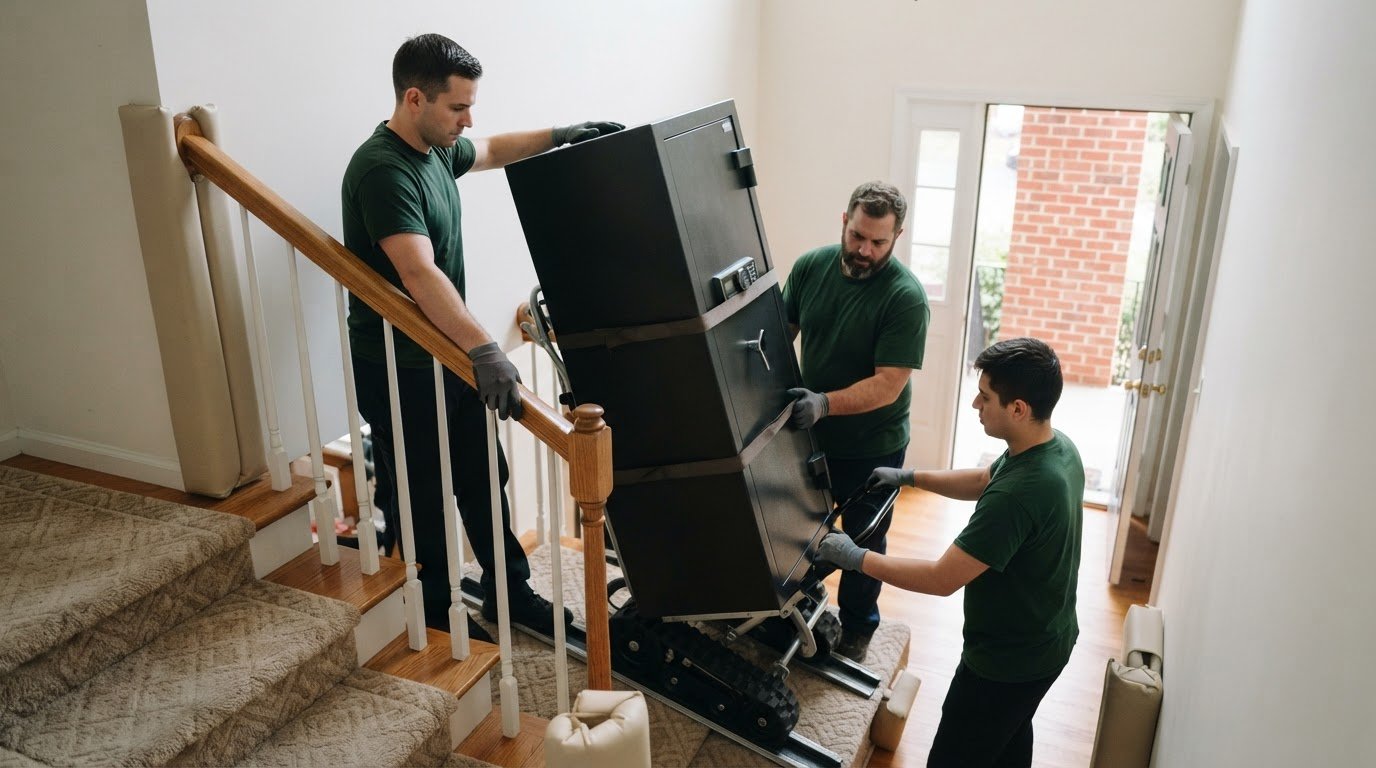
A safe can be moved up or down stairs when its weight and the route allow for controlled handling. Stair moves require at least three trained movers on the safe. Residential safe movers for high-security document safes in Dumfries also need to plan for tight turns, landings, and protection for floors and walls.
It’s reasonable to worry about damage to your home or a difficult move going wrong. The right preparation makes the process more controlled, from assessing stairways to planning safe placement. This guide explains what movers consider before a stairway move, how they protect the route, and what to look for when reviewing credentials, insurance, customer reviews, and estimates.
You’ll learn how a safe’s weight, access, and stair layout shape the moving plan. With those details clear, you can describe your Dumfries move and understand what to expect from a professional moving crew.
Key Takeaways
- Learn how safe weight, stair turns, and landing space shape the moving plan.
- See why document, fire, gun, and jewelry safes call for different handling considerations.
- Understand what insurance documents can and can’t tell you about coverage for a safe move.
- Find out how experience, reviews, and a detailed estimate help clarify the scope of a stairway relocation.
- Recognize the risks to people and home surfaces when a heavy safe is moved without the right preparation.
Protection of floors, walls, and doorways
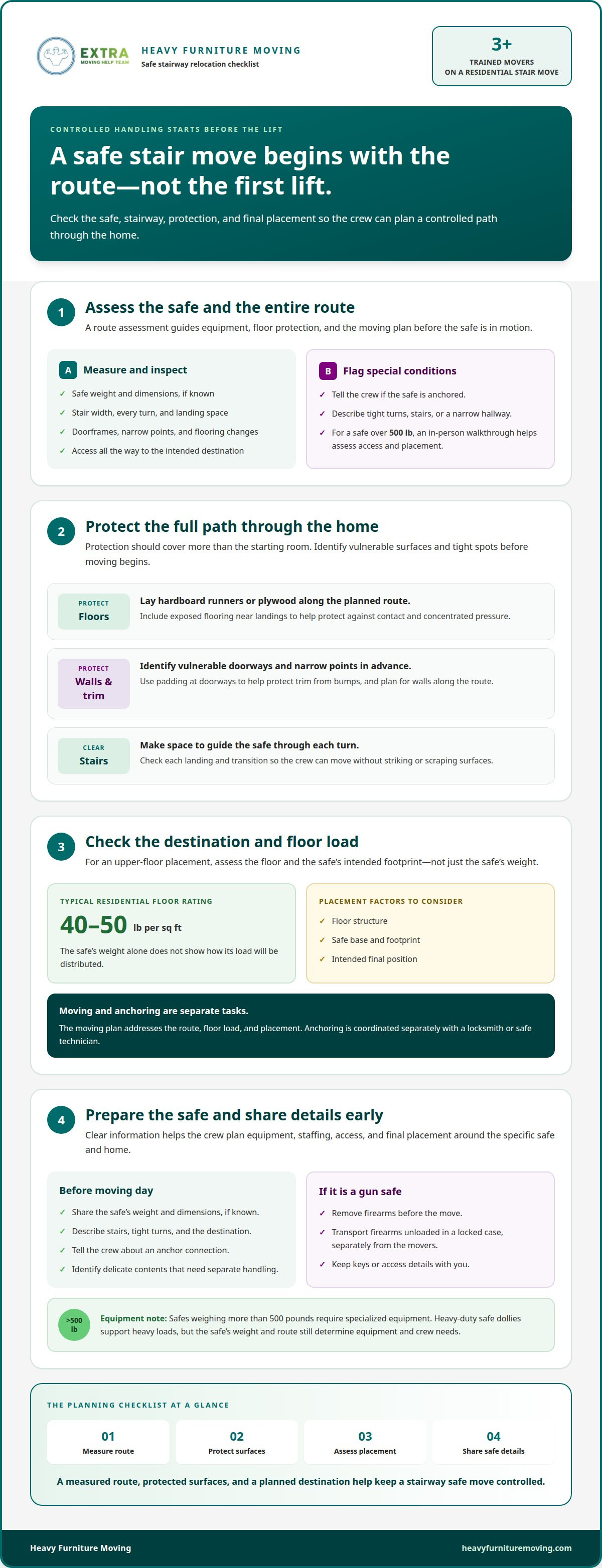
Safe moves begin with a route assessment, not the first lift. Movers measure the safe, check stair width and turns, and identify doorframes, landings, and changes in flooring. These details shape the equipment, floor protection, and moving plan.
For Dumfries and Prince William County, distinguish the move from anchoring: moving involves assessing the safe’s route and floor load, while anchoring is a separate task coordinated with a locksmith or safe technician. The local information here does not establish a county-specific rule for moving or anchoring a home safe. A professional plan should address both the route and the safe’s final placement.
Before installation on an upper floor, the mover should evaluate the floor and the safe’s intended footprint. Typical residential floor ratings are 40 to 50 pounds per square foot, so the safe’s weight alone doesn’t show how its load will be distributed. The floor structure, safe base, and placement all matter. For safes weighing more than 500 pounds, an in-person walkthrough helps assess access and placement conditions.
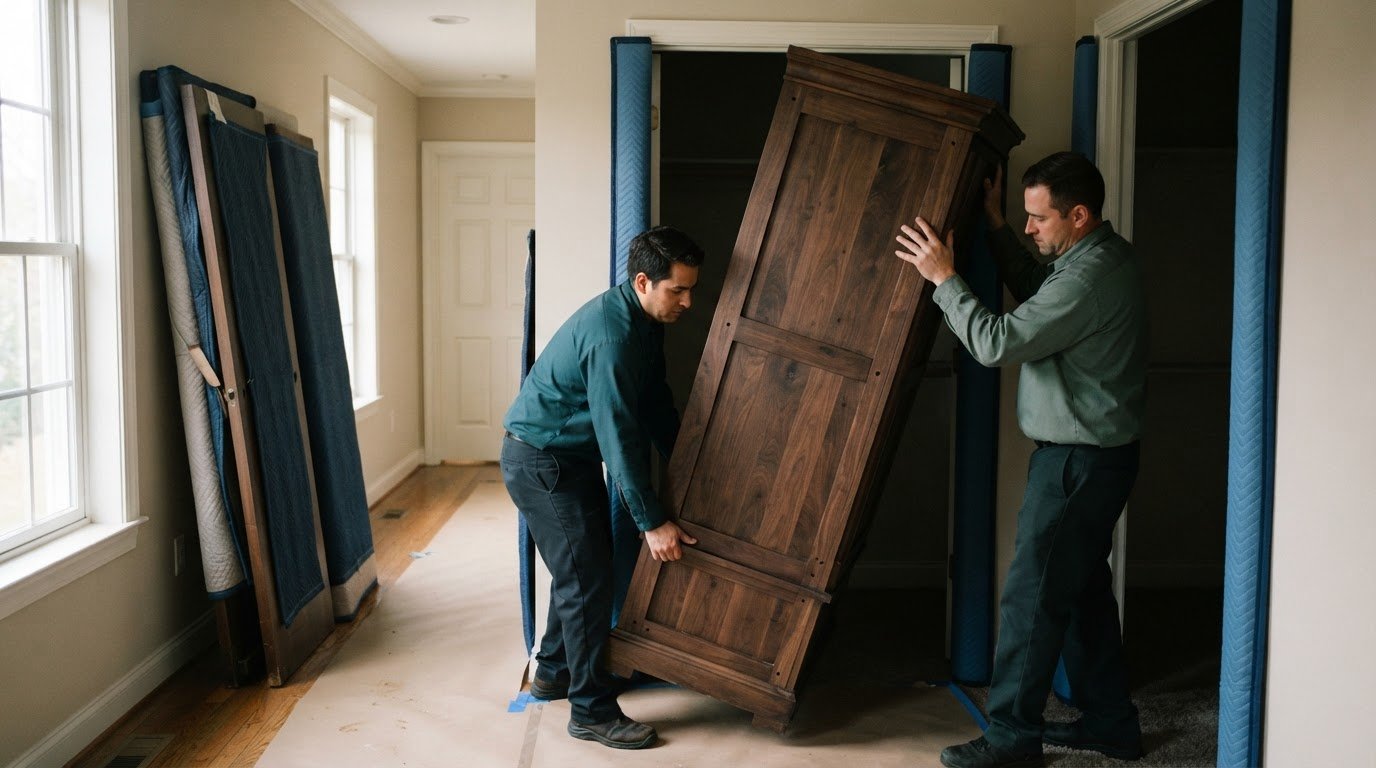
Protection should cover the full route, not just the room where the safe starts. Floor runners can help protect flooring from contact and concentrated pressure during a move. Padding at doorways helps protect trim from bumps. On stairs, the crew needs a clear path, secure protection, and enough room to guide the safe through each turn without scraping walls.
- Floors: Place hardboard runners or plywood along the planned path, including exposed flooring near landings.
- Walls and doorways: Identify narrow points and vulnerable trim before moving begins; protect those areas along the route.
- Stairs: Assess each turn, landing, and transition so the safe can move without striking surfaces.
- Final placement: Include the destination in the floor-load evaluation, especially for an upper-floor installation.
A route assessment helps avoid a common planning mistake: protecting the entry but overlooking the turn between a hallway and staircase. Measuring the route helps the crew plan where floor protection is needed and where to take extra care. If a doorway is tight, the safe’s dimensions and available clearance guide the approach.
Keep the safe’s weight and destination details in the moving plan. A heavy lifting moving service should account for floor load, surfaces, and access before the safe is in motion. Clear planning protects hardwood floors, walls, and doorways while helping the crew choose a controlled route through the home.
Residential document, fire, gun, and jewelry safe relocation
A safe’s construction, weight, contents, and access all shape the moving plan. Choosing residential safe movers for high-security document safes in Dumfries means matching the crew and equipment to the safe and the route.
Document and Fireproof Safe Relocation
Fire-resistant document safes can be dense and difficult to handle. Movers use the safe’s weight and dimensions to plan equipment and access through hallways and doorways.
For a document safe, preparation also accounts for its contents and destination. Keep important papers secure and identify where the safe should be placed. Safes weighing more than 500 pounds require specialized equipment. Residential safe movers for high-security document safes in Dumfries should plan around the specific safe, its access route, and its final position.
Vault and High-Security Safe Relocation
Vault components and high-security safes can weigh thousands of pounds, so relocation requires detailed preparation and specialized equipment. Movers assess dimensions, entry points, turns, and destination conditions before planning transport and accurate placement.
Jewelry safes vary widely, so movers plan for the specific safe rather than assuming its weight from its purpose.
Preparing a Safe for Relocation
Before moving day, share the safe’s weight and dimensions if known. Describe the stairs, tight turns, and destination so the crew can plan equipment, staffing, and placement. If the safe is anchored, mention the connection so it can be factored into the move plan.
For a gun safe, remove firearms before the move. Transport firearms unloaded in a locked case, separately from the movers. Keep keys or access details with you, and identify delicate contents that need separate handling. This lets the crew focus on moving the safe without handling its contents.
Heavy-duty safe dollies support heavy loads, but the route and safe weight still determine equipment and crew needs. Share access details early, especially if stairs or a narrow hallway affect the path. Clear information helps residential safe movers plan the relocation around the safe and the home.
Commercial licensing, insurance, and certificates of insurance
A commercial safe move calls for careful planning. Before arranging the move, define the safe type, its weight, the pickup and delivery points, and whether the route includes stairs or a basement. Those details help establish the equipment and crew the job requires.
Commercial depository safes are often bolted to floors and built with reinforced steel. Their relocation can require specialized tools and trained technicians. Commercial safe moves also use crews of four or more. A professional safe plan should account for anchoring, access, safe dimensions, and final placement. A cash safe in a basement, for example, presents a different route from one on an open ground floor.
Separate licensing credentials from insurance documents. For a Dumfries job, ask which licensing applies to the work and request the mover’s relevant credential details. Then review insurance documents for the named insured, coverage period, and the work covered. These records address different concerns: a credential does not describe the safe’s route, and insurance paperwork does not show how the crew will protect the building.
A certificate of insurance, or COI, summarizes insurance information for a building or property manager. If the destination requires one, provide its underwriting documents early. COIs are typically issued within 24-48 hours after those documents reach the mover. Share the building’s requirements and the move date together, so the paperwork can be prepared for the correct location and job.
Read the coverage terms closely. Basic mover liability is listed at $0.60 per pound, which would provide $600 of coverage for a 1,000-pound safe. That example shows why weight-based liability may differ from the safe’s value. Review the stated limits and exclusions, and identify whether the coverage applies during loading, transport, and placement. Keep the COI and policy details with the move records.
- Scope: Record the safe type, weight, address, stairs, and basement access.
- Credentials: Request details relevant to the commercial safe-moving work.
- Insurance: Review the policy terms, limits, exclusions, and covered stages.
- COI: Send building underwriting documents early and confirm the certificate reflects the destination.
For a vault or cash safe, match the paperwork to the physical plan. A COI supports building documentation, while the move plan covers equipment, crew, access, and placement. Reviewing both helps property managers and safe owners understand what the commercial safe move addresses before the crew arrives.
Choosing a mover and checking credentials, insurance, reviews, and estimates
For a Dumfries safe move, focus on experience with heavy items and the specific access challenges, not just general household transport. Safe moving requires planning for the item’s weight, lifting, and route. Describe the safe and home layout so Heavy Furniture Moving can discuss the work involved.
Checking Credentials, Insurance, and Reviews
Look for several years of safe-moving experience and ask about jobs involving a similar safe, stairway, or distance. A mover’s credentials and insurance documents serve different purposes, so review each separately. Check that the insurance paperwork identifies the provider and relevant coverage, then ask how its terms apply during lifting, transport, and placement.
Read reviews for details tied to safe moves, not only broad praise. A useful review might describe a crew handling a heavy safe through a narrow hallway or protecting a home during delivery. Look for clear accounts of communication, arrival, and the completed move. Repeated comments about similar work provide more relevant context than an unrelated furniture move.
Compare the written scope with the actual job. It should identify the safe, pickup and delivery locations, stairs, and services included. If a building requires a certificate of insurance, provide its requirements and underwriting documents early. A certificate is typically issued within 24-48 hours after the building’s underwriting documents reach the mover.
Requesting a Safe-Moving Estimate
When requesting a safe-moving quote in Dumfries, provide the safe’s type, known weight, dimensions, and current location. Describe stairs, tight turns, doorway clearance, and the destination room. Include the distance between addresses and any access limits that could affect arrival, lifting, or transport. Photos can help show unusual turns or confined spaces.
These details help the mover assess the job. A basement pickup differs from a ground-floor move because the route and handling plan change. Mention whether the safe is anchored and where you want it placed at delivery. The quote should reflect the safe and actual route, not an assumption based only on the number of rooms.
Review what the estimate includes before comparing it with another proposal. Look for the planned service, pickup and delivery points, access details, and insurance information. If a quote describes only general moving services, ask for a revised scope that names the safe and its route. Clear details help prevent misunderstandings about lifting, transport, or placement.
- Experience: Prioritize several years of safe-moving work and relevant job examples.
- Coverage: Read insurance terms and any building certificate requirements.
- Reviews: Focus on specific descriptions of safe handling and communication.
- Estimate: Supply safe dimensions, weight, access, distance, and destination details.
A useful quote connects the safe’s characteristics to the planned work. Review the written scope to see whether the provider understands the route, lifting requirements, and delivery location before you schedule.
Risks of moving a heavy safe on stairs or hardwood floors
A heavy safe can shift suddenly if its weight isn’t controlled through each turn. On stairs, losing balance can put movers at risk and damage treads, railings, or walls. On hardwood, concentrated pressure or a sliding load can scratch, dent, or mark the finish. That’s why route planning and trained handling matter.
A 600- to 1,000-pound mid-range gun safe calls for a minimum three-person crew, a heavy-duty safe dolly, and floor protection. The crew must coordinate movement so the safe stays controlled as it crosses a threshold or changes direction. Each person needs a clear role, and the route must stay free of obstacles. Rushing a stair transition raises the chance of an uncontrolled shift.
Protect hardwood before moving the safe. A dolly wheel or safe edge can concentrate pressure on a small area, especially during a turn. Protective runners help shield the route, but they need to lie flat and stay in place. At a doorway, the crew should account for trim and clearance before moving the safe through. A narrow hallway can leave little room to adjust the angle.
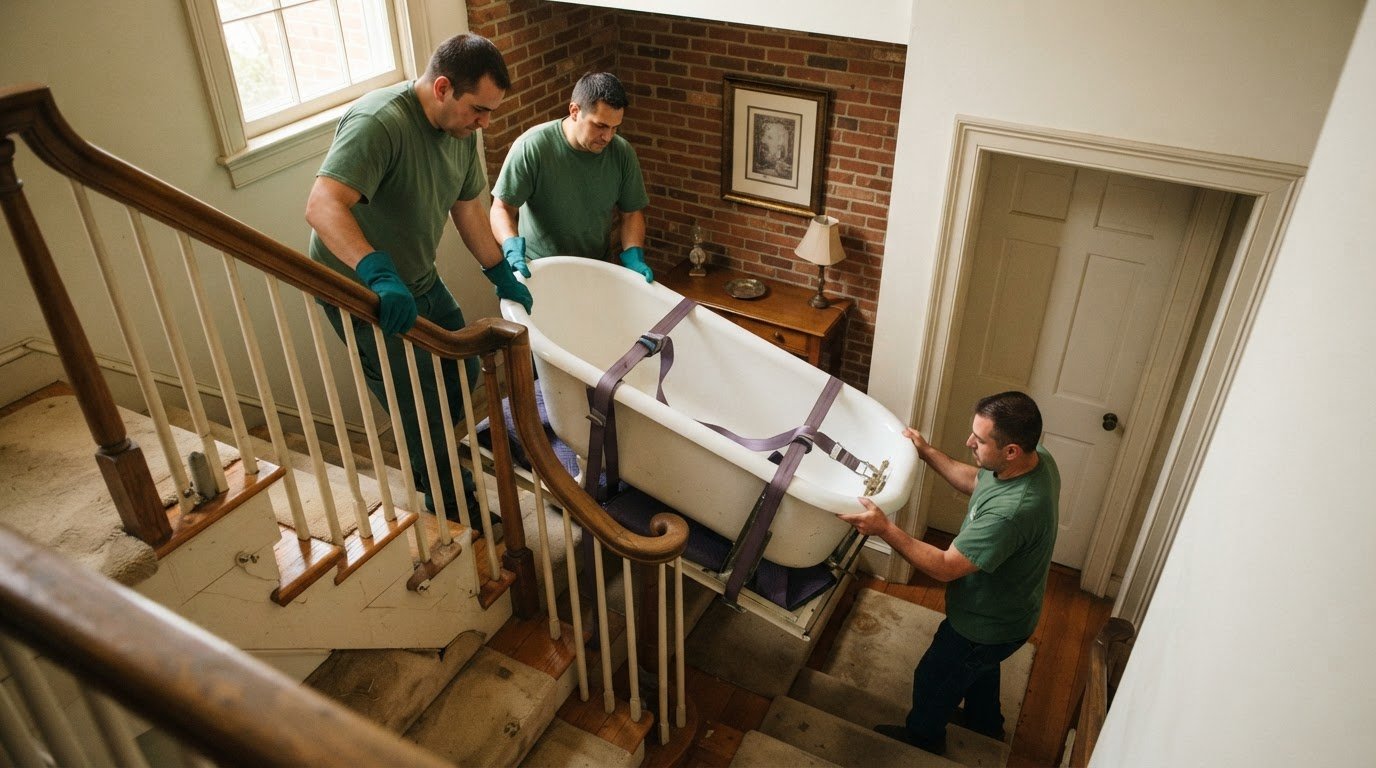
Stairs add specific hazards. The crew must control the safe’s balance on each step while keeping the path clear. A landing or tight turn can change the safe’s angle and place extra strain on the people guiding it. Forcing a safe through a route that is too narrow risks injury and damage. Professional movers assess dimensions, turns, and equipment needs before starting.
- Uncontrolled movement: A shifting safe can injure movers or strike walls, railings, and doorframes.
- Floor damage: Concentrated pressure and dragging can mark hardwood or damage floor finishes.
- Stair hazards: Steps, landings, and turns demand coordinated handling and a clear route.
- Improvised equipment: The wrong dolly or inadequate crew can make a heavy load harder to control.
Moving a safe without proper training, experience, or professional equipment can put people at high risk of injury. A professional plan matches the crew and equipment to the safe and route, then protects surfaces before lifting begins. If stairs or hardwood are part of your move, arrange professional heavy lifting help for the difficult handling.
Share the safe’s weight, dimensions, stair layout, and floor type when arranging the move. Those details help the crew plan for a tight turn, a vulnerable hardwood passage, or a landing with limited maneuvering room. A clear plan reduces avoidable risks before the safe leaves its current position.
Heavy Furniture Moving
Heavy Furniture Moving helps Dumfries residents plan demanding moves involving bulky, heavy items and difficult access. If your safe move also includes other household pieces, coordinated moving help can simplify the route and placement plan. The team also handles exercise equipment, sofa hoisting, and in-home furniture moving, so you can discuss related lifting needs together.
Share the safe’s location, destination, access details, and any other heavy items involved. This gives the crew useful context, especially when stairs or tight turns affect the route. To discuss a residential safe move alongside other bulky items, contact Heavy Furniture Moving.
Make Your Next Move With a Clear Plan
Choosing residential safe movers for high-security document safes in Dumfries starts with matching the move plan to your home and the safe’s destination. Identify where the safe needs to go and what other heavy items are involved, then describe the job clearly to help the crew plan.
Heavy Furniture Moving helps with demanding residential moves and related lifting needs. Its services include Movers Near Me, Exercise Equipment Moving, and Sofa Hoisting, which can help when a move involves more than the safe alone. Share the scope of your move and the access details to discuss the next step.
Ready to discuss your move? Contact Heavy Furniture Moving and take the next step toward a well-planned relocation.
Frequently Asked Questions
Can you move a safe up or down stairs?
Yes, trained movers can relocate a safe on stairs when its weight and route allow for controlled handling. Stair moves require at least three trained movers on the safe. A narrow turn, short landing, or steep stairway affects the plan, so share those details beforehand. The crew can then assess how the safe’s dimensions fit the stair route.
How do I pick the right mover?
Choose a mover with experience handling safes and a clear plan for the item, route, and delivery point. Heavy Furniture Moving serves Dumfries, Fairfax, Woodbridge, Manassas, Manassas Park, Aldie, Ashburn, McLean, Vienna, Reston, Centreville, Chantilly, Clifton, South Riding, Fairfax Station, Haymarket, and Gainesville. Compare the stated scope of service, relevant reviews, and written estimate so you know what the move includes.
How much does it cost to move a high-security document safe in Dumfries, VA?
The cost depends on the safe’s weight and dimensions, the distance between locations, access conditions, stairs, and the lifting plan. For this type of move, the price depends on the specific case and is given after a quote request. Include the pickup and delivery locations, safe details, and any tight access points when requesting an estimate. That information helps define the work covered.
Do safe movers in Dumfries offer residential installation, anchoring, and relocation?
Moving a safe is different from anchoring it in its final position. A moving crew can transport and place a residential safe, while anchoring may involve a locksmith or safe technician. If the move includes a new location, identify the intended placement and any existing anchor connection early. This helps distinguish transport and placement from installation work that secures the safe.
How do professional movers prepare a high-security document safe for residential moving, and what should clients do beforehand?
Movers plan around the safe’s dimensions, weight, route, and final placement, then choose suitable handling equipment. Before the crew arrives, share the safe’s details and describe tight doors, stairs, or unusual access. Empty the safe’s drawers if they contain loose items. Remove firearms and transport them unloaded in a locked case, separately from the movers.
Frequently Asked Questions
Yes, trained movers can relocate a safe on stairs when its weight and route allow for controlled handling. Stair moves require at least three trained movers on the safe. A narrow turn, short landing, or steep stairway affects the plan, so share those details beforehand. The crew can then assess how the safe’s dimensions fit the stair route.
Choose a mover with experience handling safes and a clear plan for the item, route, and delivery point. Heavy Furniture Moving serves Dumfries, Fairfax, Woodbridge, Manassas, Manassas Park, Aldie, Ashburn, McLean, Vienna, Reston, Centreville, Chantilly, Clifton, South Riding, Fairfax Station, Haymarket, and Gainesville. Compare the stated scope of service, relevant reviews, and written estimate so you know what the move includes.
The cost depends on the safe’s weight and dimensions, the distance between locations, access conditions, stairs, and the lifting plan. For this type of move, the price depends on the specific case and is given after a quote request. Include the pickup and delivery locations, safe details, and any tight access points when requesting an estimate. That information helps define the work covered.
Moving a safe is different from anchoring it in its final position. A moving crew can transport and place a residential safe, while anchoring may involve a locksmith or safe technician. If the move includes a new location, identify the intended placement and any existing anchor connection early. This helps distinguish transport and placement from installation work that secures the safe.
Movers plan around the safe’s dimensions, weight, route, and final placement, then choose suitable handling equipment. Before the crew arrives, share the safe’s details and describe tight doors, stairs, or unusual access. Empty the safe’s drawers if they contain loose items. Remove firearms and transport them unloaded in a locked case, separately from the movers.