Residential Safe Movers for Jewelry Safe Relocation in Gainesville
A jewelry safe is a precision load, not ordinary closet furniture. Residential safe movers for jewelry safe and closet relocation in Gainesville assess the safe and its route, then plan how to protect and position it in your home.
Moving a safe to another room, shifting it within a closet, or relocating it as part of an estate can involve tight turns, stairs, and delicate finishes. It’s reasonable to expect the safe, its lock, and the surrounding floors and walls to be handled carefully throughout the move.
This guide explains how professional safe transport works, what to consider for closet relocation and in-home repositioning, and how to coordinate an estate transfer. You’ll also learn what details help movers plan the route and handle the job, so you can decide on a clear next step.
Key Takeaways
- Safe weight and the route through the home shape the equipment, padding, and handling plan.
- Stairs, narrow turns, and long carries can make a closet move more complex than a straightforward room-to-room relocation.
- For estate transfers, clear coordination around access, timing, and the safe’s destination helps keep the move organized.
- Understand how coverage applies to the safe and its contents, especially when jewelry or other valuables are involved.
- Heavy Furniture Moving can help when a heavy safe needs careful handling as part of a residential move or in-home repositioning.
Equipment and padding for safe transport
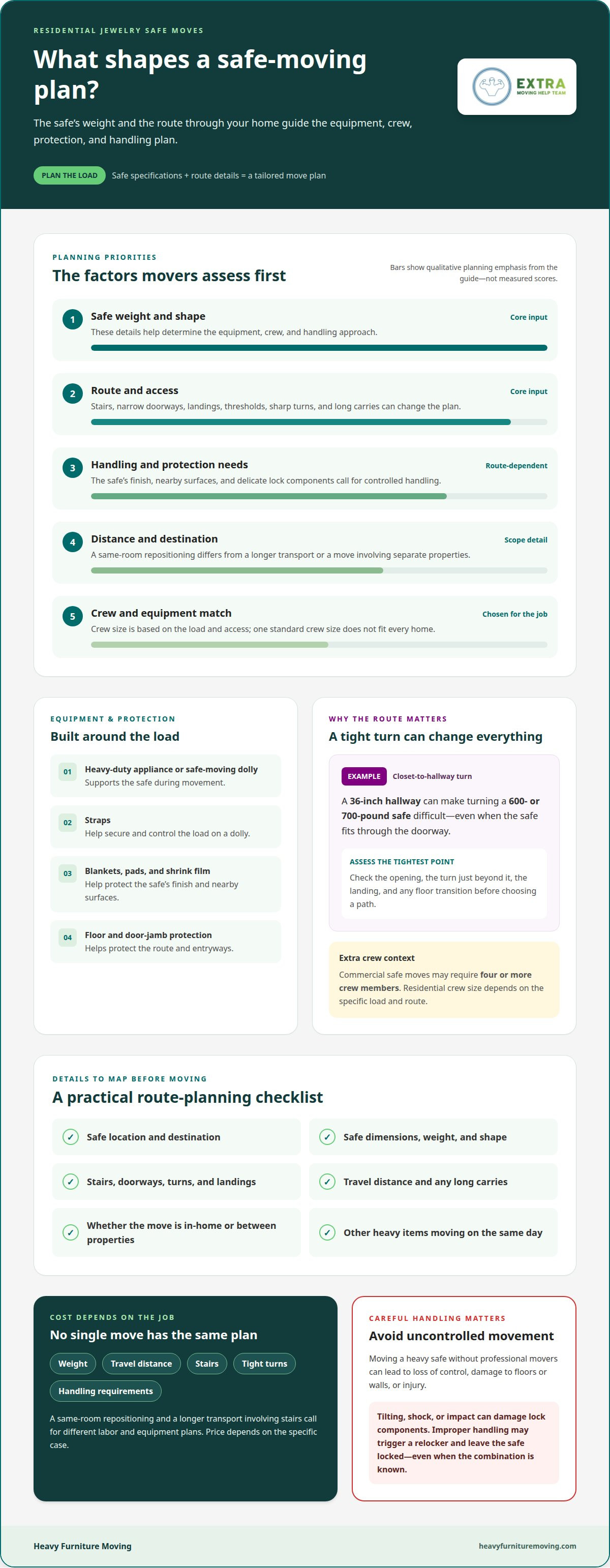
A jewelry safe’s weight and the route through your home shape the transport plan. A professional move starts by identifying the safe, measuring access points, and noting stairs, turns, and the distance to its destination.
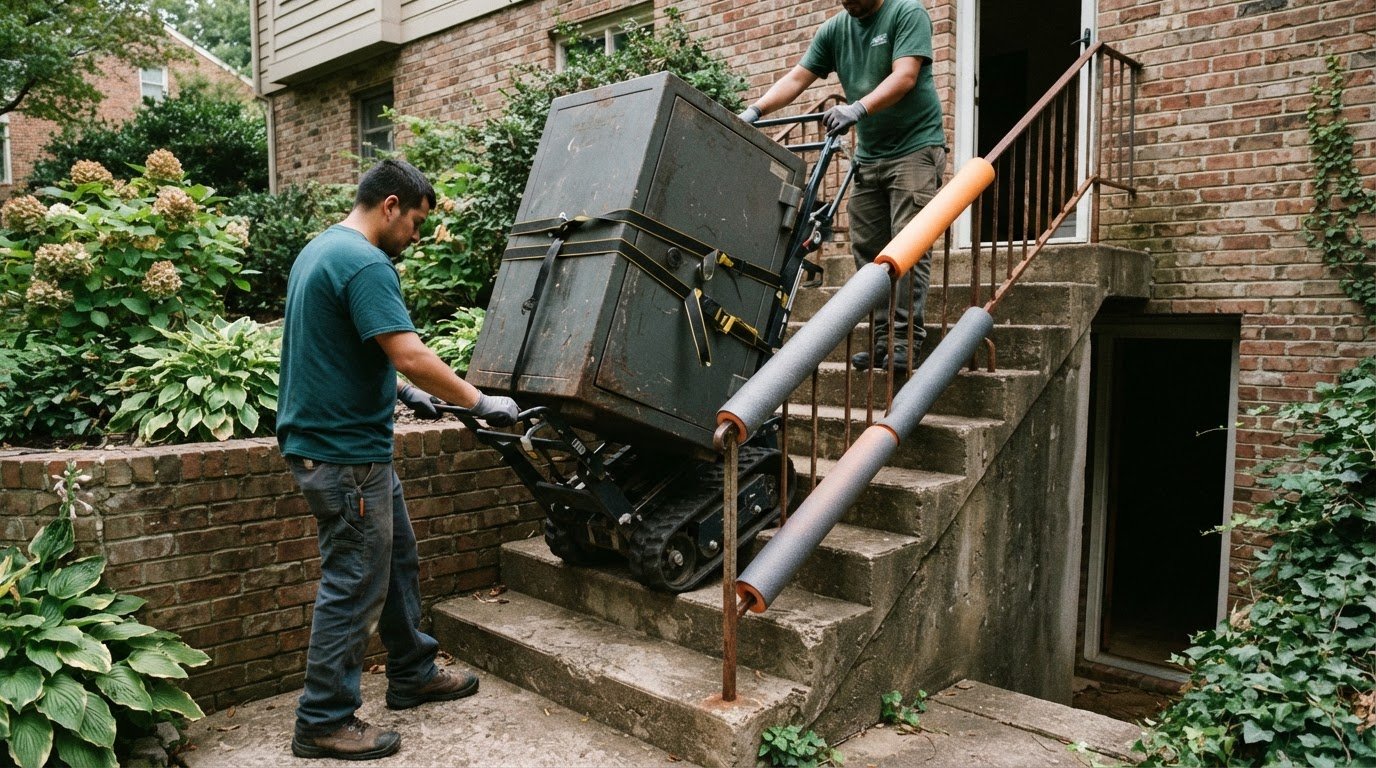
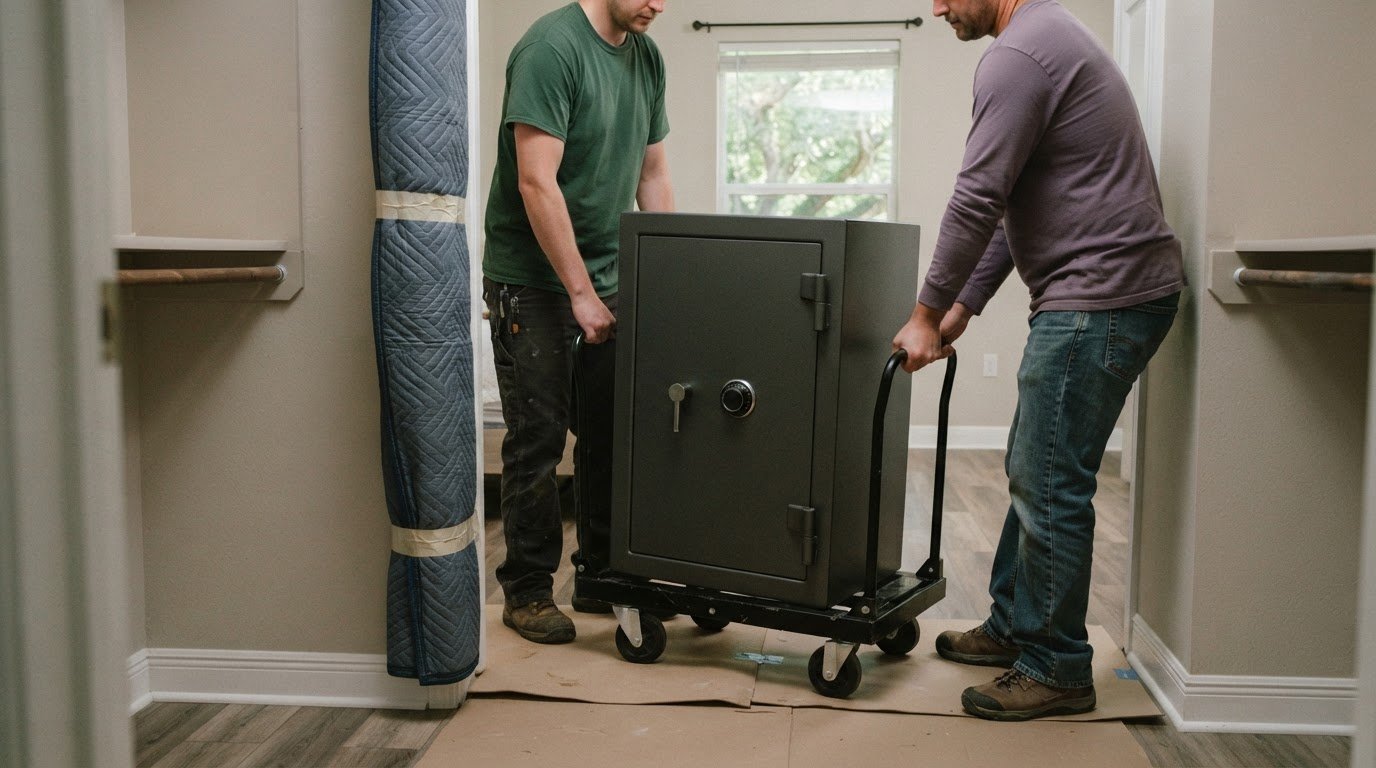
Specialized equipment helps control a heavy safe through narrow spaces. A heavy-duty appliance dolly or safe-moving dolly supports the load, while straps help secure it during movement. Moving blankets or pads protect the safe’s finish and nearby surfaces. The equipment choice depends on the safe’s weight and shape, plus whether the route includes a hallway, threshold, or stairway.
Professional movers match the crew and equipment to the load and route. Residential safe crew size depends on those job details, so a single standard number doesn’t fit every home. Commercial safe moves may require four or more crew members. For a residential move, the team plans around the safe’s weight, turning space, and access, then positions equipment before starting the transport.
Protection needs to cover more than the safe’s exterior. Movers can use blankets, shrink film, and floor protection along the route, with door-jamb covers to help protect entryways. Straps help control the load on a dolly. For example, moving a jewelry safe through a tight doorway requires planning for both the safe’s width and the turn just beyond the door.
The cost of moving a heavy jewelry safe depends on its weight, travel distance, stairs, tight turns, and handling requirements. The price depends on the specific case and is provided after a quote request. A same-room repositioning and a longer transport involving stairs call for different labor and equipment plans.
Moving a heavy safe without professional movers can lead to loss of control, damage to floors or walls, or injury. Tilting, shock, or impact can also damage the safe’s lock body, bolt work, or electronic components. Improper handling may trigger a relocker device and leave the safe locked, even when the combination is known.
Equipment needs depend on the safe and the job. The route matters just as much: stairs, narrow doorways, and sharp turns can limit dolly movement and call for additional protection. A professional team assesses access before moving the safe, then uses padding and controlled handling throughout transport.
Professional safe relocation in Northeast Florida
A safe move is easier to plan when the route and destination are clear. The crew needs to know where the safe is, how it will leave the home, and where it needs to go. Moving a safe between rooms in Gainesville differs from taking it to another Northern Virginia address. Access points and the number of stops shape the handling plan.
Before the move, describe the home’s layout and access challenges. A safe in a basement, upstairs room, or tight closet may need a different route than one near a ground-floor entrance. Include stairs, narrow doorways, landings, and long carries in the job details. Even a turn from a bedroom into a short hallway can affect how the safe exits the room.
This move is a local Virginia relocation, not an interstate move, so federal interstate licensing rules do not describe the trip. Heavy Furniture Moving provides residential moving support in Gainesville and other Northern Virginia communities. Share both addresses when arranging the move so the route and scope are clear.
Service-area planning should match the actual addresses. Heavy Furniture Moving serves Gainesville, Fairfax, Woodbridge, Manassas, Manassas Park, Aldie, Ashburn, McLean, Vienna, Reston, Centreville, Chantilly, Clifton, Dumfries, South Riding, and Fairfax Station. A move between Gainesville and Fairfax, for example, stays within the local service area.
When arranging the job, share the pickup address, destination, and safe location. Say whether the move stays within one home or involves separate properties. Note stairs, restricted access, and any other heavy household items moving on the same day. These details help the crew plan the route and handling before arrival.
A safe relocation can also be one part of a larger residential move. If other heavy belongings need attention, explore local moving help for the broader job. Keep the safe’s destination clear, especially when the move includes multiple stops. That gives the crew a straightforward plan for each address and keeps the safe’s placement coordinated with the rest of the household move.
For a local Virginia job, keep the licensing category tied to the actual trip: movers handling in-state Virginia moves should follow state guidelines, while interstate movers should be licensed by the Federal Motor Carrier Safety Administration. Confirm whether the pickup and delivery addresses keep the move within Virginia or take it across state lines, and provide both addresses when arranging service. This distinction helps keep the planning discussion focused on the move being booked.
Personal moves within Gainesville or surrounding Northern Virginia communities do not require a special permit. Share the safe’s location, the route out of the home, and its intended placement alongside the addresses so the crew can plan its handling as part of the household move. If the move includes more than one stop, identify the safe’s destination clearly and make sure the plan reflects each address. Keeping licensing and permit questions separate from access and placement details gives the crew a clear picture of the job before arrival.
Repositioning safes and estate transfers
Yes. A safe can move through a narrow closet doorway, hallway, or stairway when its dimensions and the route allow safe passage. Movers assess the tightest turn, door opening, landing, and floor transition before choosing the path. A 36-inch hallway, for example, can make turning a 600- or 700-pound safe difficult, even when the safe fits through the doorway.
For an in-home repositioning, the destination matters as much as the starting point. Moving a jewelry safe from a closet to another room may involve a short carry but a sharp turn at the bedroom door. The crew plans around that turn and the safe’s final placement. A careful route plan helps limit contact with doorframes, walls, flooring, and nearby furniture.
Estate transfers require coordination between the home, the people managing the move, and the safe’s destination. The crew needs clear access at pickup and a defined placement at delivery. A safe moving from a family home to a relative’s residence, for example, involves planning for access at both addresses. Stairs or a narrow entry at either location can shape the handling plan.
Timing also matters during an estate transition. A move may need to align with a home clearance, closing date, or access arranged by a family representative. Set the pickup and delivery details early to avoid confusion about which safe is moving and where it belongs. If the safe stays in the same home, confirm the intended room or closet before repositioning begins.
Cost depends on the safe’s weight, distance, stairs, tight spaces, long carries, and any bolted installation involved. The price depends on the specific case and is provided after a quote request. A straightforward same-floor repositioning differs from moving a heavy safe through several obstacles or transferring it between addresses.
Gun safes and jewelry safes may serve different needs, but both require controlled movement. A jolt or impact can damage a lock or internal parts, so the crew avoids sudden shifts during handling. For an estate move, keep the safe’s destination and access arrangements clear. That coordination supports a careful handoff and helps prevent avoidable delays.
Before the move, gather a few key details: pickup location, destination, stairs, narrow passages, and planned placement. Say whether the job is an in-home move or an estate transfer. This helps the movers plan the route and move the safe in an orderly way, from the first doorway to its final position.
Bonded and insured relocation
When planning a professional safe move, don’t assume that a general label such as “bonded” or “insured” explains what protection applies. Review the written terms and what property they address. Treat the safe and the jewelry stored inside as separate items when discussing coverage.
Before a professional safe move, record the safe’s visible condition. Note scratches, dents, the lock face, and any existing floor marks near its current position. A dated photo of a closet doorway, for example, can help document existing marks before the move. Keep the record with the move paperwork, not inside the safe.
Coverage deserves closer attention when a safe holds high-value belongings. Upgraded valuation coverage or third-party protection may be worth considering for jewelry and other valuables. The important point is scope: determine whether the arrangement addresses the safe, its contents, or both. A homeowner should understand those distinctions before setting the moving date.
Floors and walls also matter. A heavy safe may pass through a bedroom, hallway, and closet entrance, with each surface exposed to contact. Note the route and any existing marks before work begins. For instance, a hardwood floor near a tight closet turn should be included in the handling plan, separately from questions about coverage for the safe.
Written records help keep the move details clear. Keep the agreed scope, coverage information, and condition notes together. If the safe moves from one address to another, record the pickup and delivery locations. For an in-home repositioning, record its starting room and intended placement. These simple details tie the paperwork to the actual job.
Specialized handling and coverage serve different purposes. Careful planning addresses the route, access, and placement; written terms explain what protection applies. One does not replace the other. A closet move through a narrow passage still needs a route plan, even when the paperwork describes coverage for the relocation.
For higher-value belongings, consider upgraded valuation coverage or third-party protection as part of the planning conversation. Keep expectations grounded in the written terms, rather than assuming a general “insured” label describes every item. A clear record of the safe, its contents, and the home’s floors gives the relocation a more precise starting point.
Residential jewelry safe relocation
If you need residential safe movers for jewelry safe closet relocation in Gainesville, provide the safe’s location, destination, approximate weight, and access details. Stairs, narrow openings, and closet installation help define the work. These details give movers a clearer picture of the job before preparing a quote.
Closet Safe Relocation Companies
Gainesville movers handling closet safes need to plan for the closet opening and the route beyond it. A safe may fit through the closet door but still need room to turn into a hallway. Include its approximate dimensions and describe tight access points when requesting a quote. This helps define whether the job involves moving it out of a closet, across the home, or to another address.
For residential safe movers for jewelry safe closet relocation in Gainesville, the destination matters as much as the starting point. Moving a safe from a bedroom closet to another room involves different access points than taking it to a new home. Ask for the quoted scope to specify pickup, destination, and handling tasks so it matches the move you need.
In-Home Relocation and Reinstallation
Yes. Heavy Furniture Moving handles in-home relocation, including moving a home safe to another room or closet. The destination and route shape the placement plan. Describe whether you need repositioning or reinstallation, especially if the safe is bolted down or needs securing in its new position.
State whether the work is repositioning only or includes reinstallation, so the scope is clear.
Jewelry and the safe are separate parts of the move. Decide how the contents will be handled before the crew arrives, and identify the safe’s destination. This keeps the moving plan focused on transporting and placing the safe without confusing its contents with other household belongings.
Keep the quote details together: pickup point, destination, stairs, closet access, and requested reinstallation. For an estate transfer, include the delivery address and access arrangements. These specifics help Heavy Furniture Moving describe the job accurately and plan the route.
For help planning a heavy household move around your safe’s placement, request moving help.
Weight can help determine whether a move calls for specialist handling. Professional safe movers are recommended once a safe weighs more than roughly 500 pounds. Share the safe’s weight as an estimate when requesting a quote, and ask that the proposed work reflect the route and destination you described.
Cost depends on the type of move and its access requirements. Heavy Furniture Moving provides an upfront quote before work begins. Compare the quoted scope with the placement you need, and clarify whether it includes moving and positioning the safe.
Heavy Furniture Moving
Heavy Furniture Moving helps with demanding residential moves, including heavy safe relocation and other bulky household items. Turn to the team when a closet move involves challenging access or when a safe needs to move alongside other belongings. Clear details about the safe’s location and destination help define the work.
For a broader household move, Heavy Furniture Moving also handles exercise equipment, sofa hoisting, and in-home furniture moving. Include the safe’s placement in the plan to coordinate it with the rest of the move.
Contact Heavy Furniture Moving to discuss your safe relocation.
Plan Your Safe’s Next Move
Make the next step a clear plan for where the safe needs to go and how it fits into the wider household move. For residential safe movers handling jewelry-safe closet relocation in Gainesville, start with a defined destination and a clear description of the job. That gives the move a practical focus from the outset.
Heavy Furniture Moving provides residential moving support for heavy household items. Its services include Movers Near Me, Exercise Equipment Moving, and Sofa Hoisting, making it a practical option when safe relocation is part of a broader move. Share the key details and describe what needs to be moved.
Ready to discuss your relocation? Contact Heavy Furniture Moving and take the next step toward a well-planned move.
Frequently Asked Questions
Safe movers in Gainesville, Virginia for residential jewelry safes
Heavy Furniture Moving serves Gainesville, Virginia, with residential moving support for heavy household items, including safes. For a closet relocation, share the safe’s current room and intended destination, along with any stairs or tight access points. The crew can use those details to understand how the safe fits into the move. This local service information applies to Gainesville, Virginia.
Do safe movers in Gainesville provide insurance and damage protection?
Coverage depends on the written terms for the move, so don’t assume jewelry or the safe’s contents are covered automatically. Treat the safe and anything stored inside as separate items when reviewing protection details. For high-value belongings, read the terms closely and consider whether separate protection is appropriate. Keep the agreement and a record of the safe’s visible condition together.
Preparing a jewelry safe for a professional move: what movers handle and what clients should provide
Movers handle the heavy-item move and safe transport; you provide details that help plan the job. Send a photo of the safe and its access route, including stairs or tight spaces. Clear the path and empty drawers if needed. Decide how the jewelry will be handled separately. For example, note whether removable drawers will be empty before moving day.
How to compare safe movers and verify licensing, reviews, and experience
Compare the written job scope, experience with heavy household items, and reviews describing similar moves. Look for clear details about pickup, delivery, and handling. Before booking, check what licensing requirements apply to the move and route. For a Gainesville, Virginia move, make sure the service details apply to that location rather than another city with the same name.
Frequently Asked Questions
Coverage depends on the written terms for the move, so don’t assume jewelry or the safe’s contents are covered automatically. Treat the safe and anything stored inside as separate items when reviewing protection details. For high-value belongings, read the terms closely and consider whether separate protection is appropriate. Keep the agreement and a record of the safe’s visible condition together. Preparing a jewelry safe for a professional move: what movers handle and what clients should provide Movers handle the heavy-item move and safe transport; you provide details that help plan the job. Send a photo of the safe and its access route, including stairs or tight spaces. Clear the path and empty drawers if needed. Decide how the jewelry will be handled separately. For example, note whether removable drawers will be empty before moving day. How to compare safe movers and verify licensing, reviews, and experience Compare the written job scope, experience with heavy household items, and reviews describing similar moves. Look for clear details about pickup, delivery, and handling. Before booking, check what licensing requirements apply to the move and route. For a Gainesville, Virginia move, make sure the service details apply to that location rather than another city with the same name.