Protecting Memories When Moving Antiques: A Careful Step-by-Step Guide
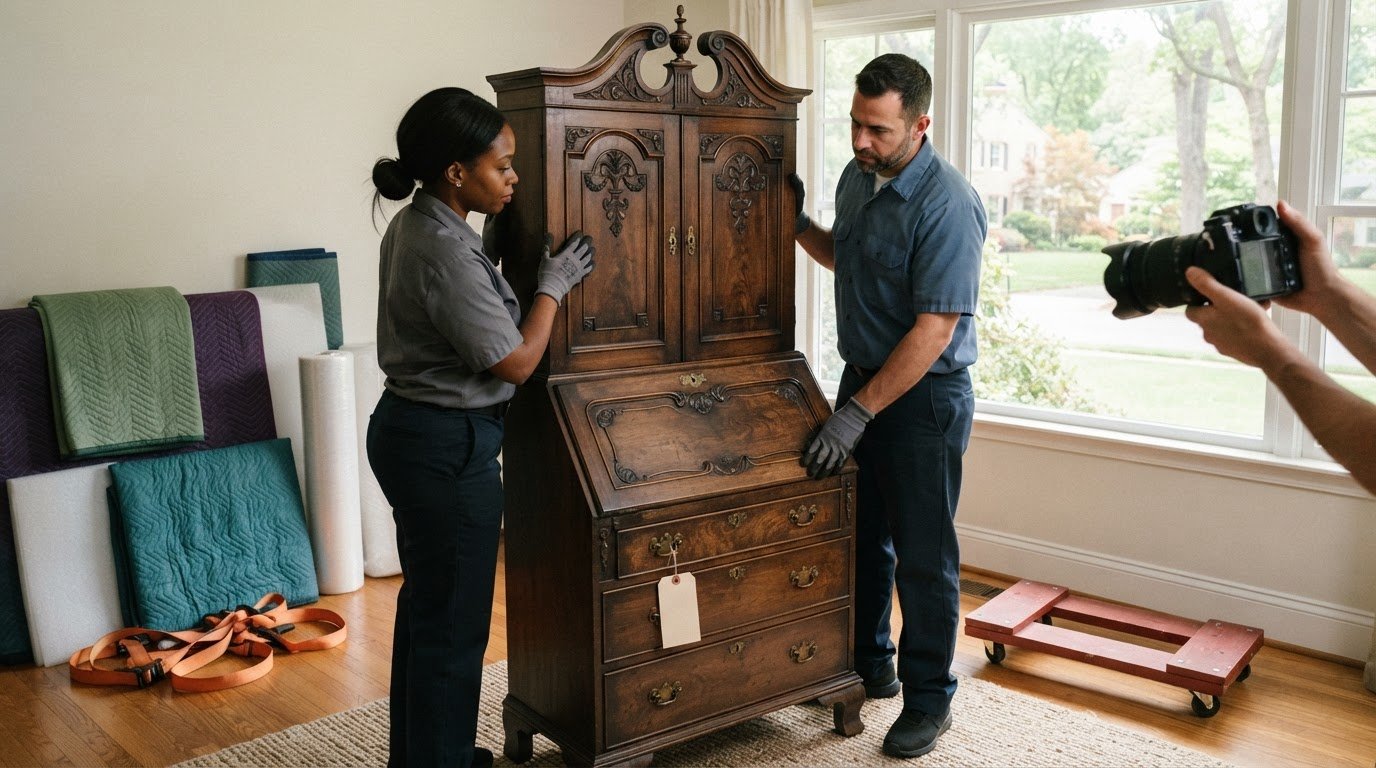
What matters most when moving an antique isn’t just getting it safely to your new home. It’s carrying its story with it. A scratch on a cherished finish can hurt, and a family note or detail about its history can be difficult to replace. Protecting memories when moving antiques starts before moving day: record each piece’s condition and history, then plan how it should be handled.
You don’t have to manage every part of the move alone. This guide explains how to document antiques, prepare delicate pieces for transport, and decide what you can pack yourself and what calls for experienced handling. You’ll also learn when a heavy, fragile, or awkward item needs extra moving support. With a clear plan, you can reduce guesswork, protect the details that matter, and keep each piece’s story close as it travels to your next home.
Key Takeaways
- Protecting memories when moving antiques means preserving both a piece’s physical condition and the details that tell its story.
- Photograph each item and note existing wear, loose parts, and handling needs before packing begins.
- Choose padding that cushions and steadies the antique without pressing on delicate finishes, ornament, or weak joints.
- Plan the route and lifting approach ahead of time. Never drag an antique, lift it by fragile details, or stack heavy items on top.
- Use experienced moving help for antiques that are especially heavy, fragile, or awkward to carry.
Protecting Memories When Moving Antiques Starts With Their Story
An antique can mean more than a delicate object to carry from one home to another. It may have belonged to a grandparent, stood in a family home for decades, or marked an important moment in your life. It’s understandable to worry about a scratch or break, or that the story behind the piece could get lost in the rush of moving.
Protecting memories when moving antiques means caring for three things: the object’s condition, its history, and its safe movement. Record the details before packing, while you can still inspect the piece and ask family members what they remember. For wooden furniture, the reference on Conservation and restoration of wooden furniture also discusses handling and moving, adding useful context to your planning.
Antique preservation protects what a piece is, what it means, and how it gets safely to its next home.
What makes an antique meaningful beyond its age?
Age, craftsmanship, and monetary value are different things. A piece may be old without a known maker, finely made without a documented history, or valuable to your family regardless of what it might sell for. Don’t guess at its age, authenticity, or market value. If those details matter, rely on qualified evidence rather than appearance alone.
Start with the personal meaning. Note who owned the item, where it lived, and which family stories or milestones you associate with it. A few accurate details can preserve its significance even when its full history is unknown.
How to record an antique’s history before a move
Make a record for each piece before it’s wrapped or disassembled. Write down known makers, dates, repairs, inherited details, and stories shared by relatives. Separate confirmed facts from family recollections and unanswered questions, so anyone reading the record later can tell what’s known and what’s remembered.
Photograph the whole item, then capture labels, markings, distinctive details, and existing wear. Keep the images and notes together in a clearly identified digital record, using a simple item name or family description. This gives you a useful reference during the move and helps keep each piece’s story close after it arrives.
Assess Each Antique Before You Pack or Move It
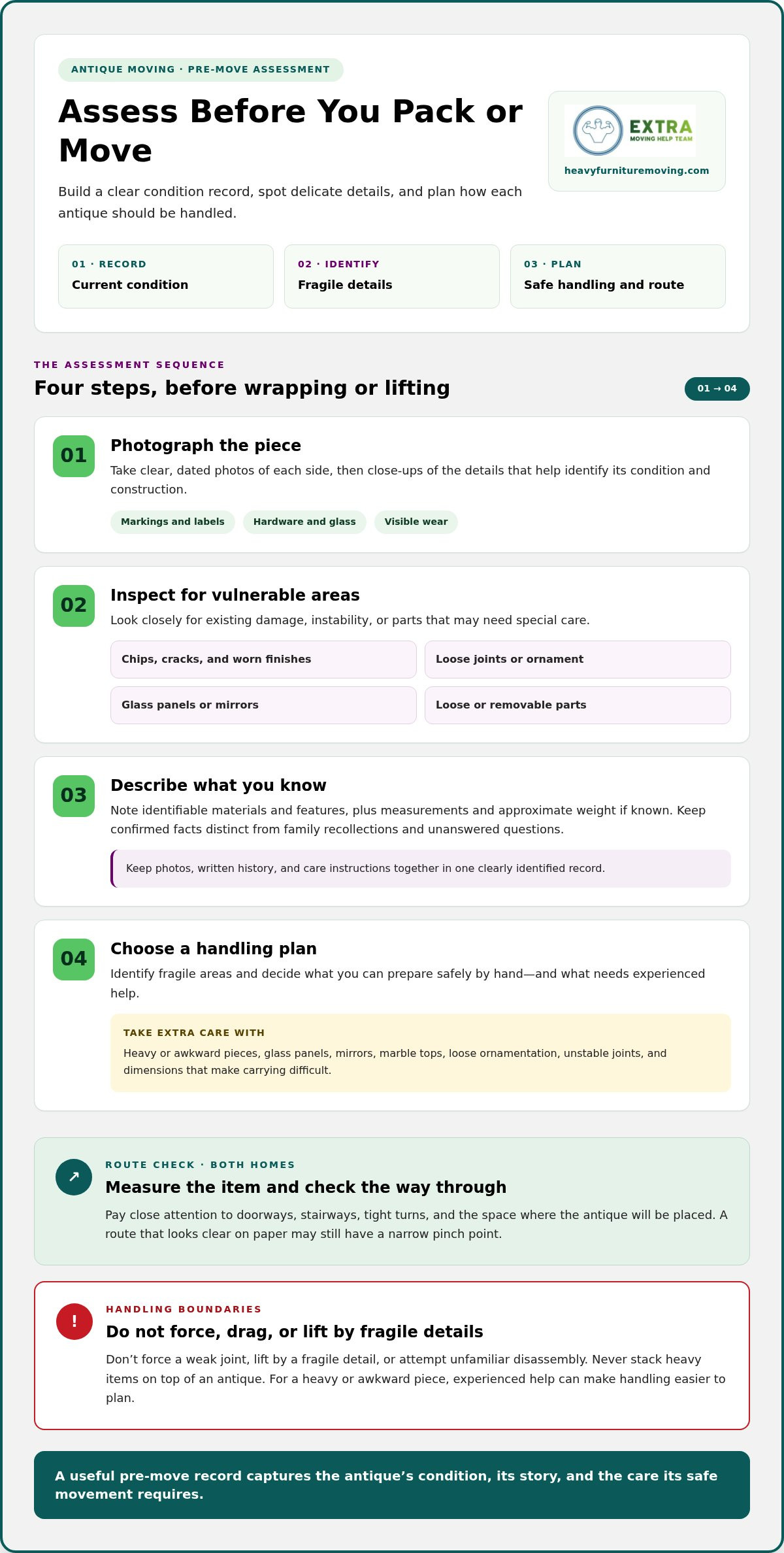
Before wrapping or lifting anything, take time to assess each piece. A clear record helps you describe its current condition, identify parts that need careful handling, and plan a suitable route. It doesn’t prevent damage or establish an antique’s monetary value, but it gives you a useful point of comparison before the move.
Clear, dated photos create a visual record of an antique’s pre-move condition, making it easier to compare its state after arrival.
- Photograph it. Take pictures of each side, then close-ups of markings, hardware, glass, and visible wear.
- Inspect it. Look for chips, loose joints, worn finishes, cracks, and detachable parts.
- Describe it. Note the materials and features you can identify, along with measurements and approximate weight if known.
- Plan its handling. Identify fragile areas and decide what you can prepare safely by hand and what needs experienced help.
Which details should you inspect and photograph?
Use good light and take pictures from more than one angle. Photograph labels, maker’s marks, handles, legs, ornament, and existing scratches or worn spots. Note whether drawers, doors, or other parts are loose or removable. Keep the photographs with the item’s written history and any care instructions in one clearly labeled record. The National Park Service Conserve O Grams offers reference guides on furniture, wooden objects, and packing museum objects.
How to plan for fragile, heavy, or complex pieces
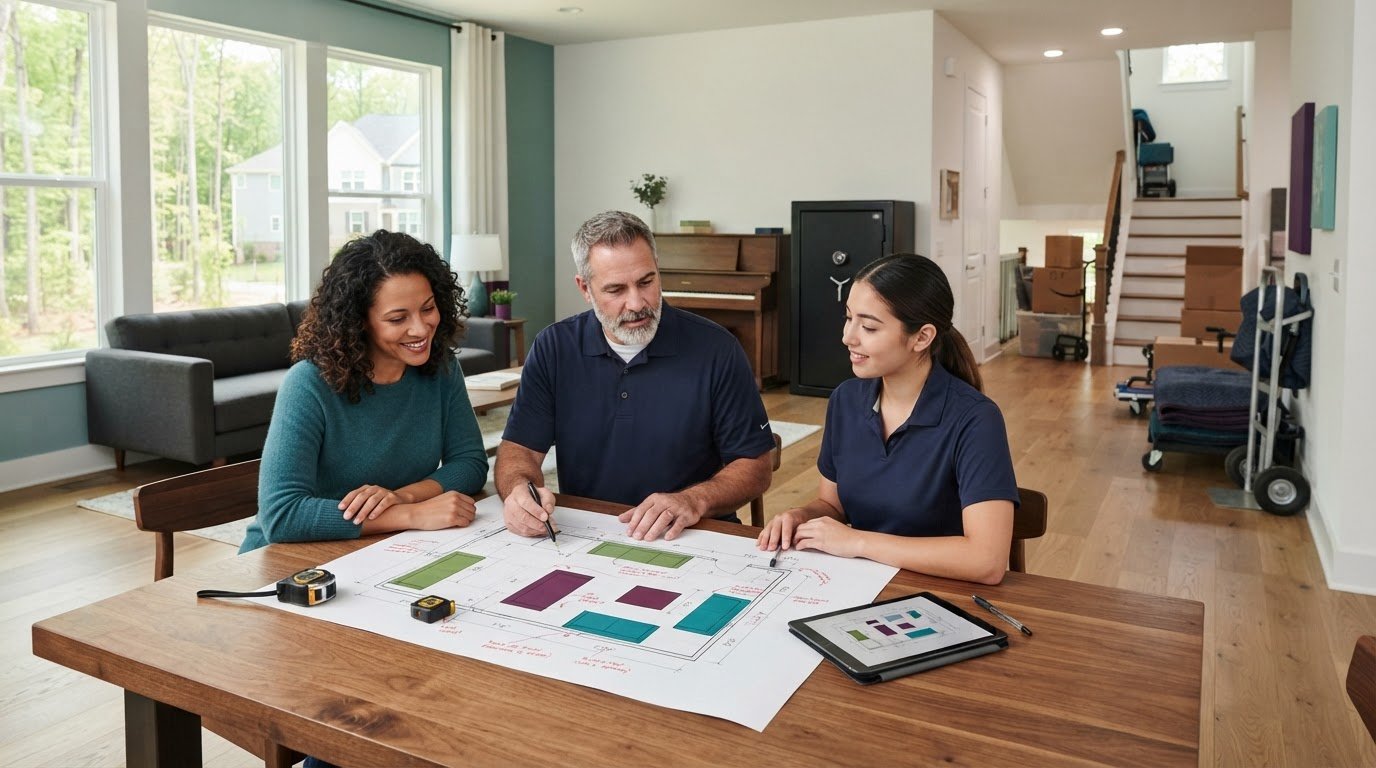
Flag details that affect handling, such as glass panels, mirrors, marble tops, loose ornamentation, unstable joints, or dimensions that make a piece difficult to carry. Measure the item and check the route at both homes. Pay close attention to doorways, stairways, tight turns, and the space where the antique will be placed. A route that looks clear on paper may still have a narrow pinch point.
You can take photos, write notes, measure, and clear the path as part of your preparation. Don’t force a weak joint, lift by a fragile detail, or attempt unfamiliar disassembly. For a heavy or awkward piece, experienced help moving heavy antiques can reduce physical strain and make handling easier to plan.
Choose Antique Protection That Fits the Material and Fragility
There’s no single wrapping method that suits every antique. Choose protection based on the material, finish, construction, and current condition. A sturdy wooden table and a cabinet with a delicate finish or loose ornamentation need different handling. The goal is to cushion and stabilize the piece, not squeeze it into place or put pressure on weak joints.
Before applying anything to a surface, consider how it might react with the finish. Avoid cleaners, polish, tape, or adhesive unless you know they’re suitable. A product that seems harmless on a modern surface could leave residue or change a delicate finish. If you’re unsure, don’t test it on the antique just before moving day.
How to protect wood, glass, mirrors, and ornamentation
Use clean protective layers suited to the surface, and avoid placing unfamiliar materials directly against a delicate finish. Position padding so it stays secure without pressing into carved details, handles, weak joints, or protruding ornament. Protect glass and mirrors from impact, and make sure they don’t bear the weight of other items. Keep the antique separate from heavy pieces during loading and transport.
If hardware or another component comes off, keep it with its original piece. Wrap detachable parts separately, label them clearly, and match them to photographs showing where they belong. This makes it easier to keep track of original hardware and reassemble the item without guesswork.
How to limit environmental exposure during a move
Keep exposure to the elements brief. Avoid leaving antiques outdoors unnecessarily or in direct sunlight, and protect them from rain and damp conditions. Make sure a piece is dry before wrapping it. Wrapping a damp surface in a way that traps moisture can create a new problem instead of protecting it.
If there’s an unavoidable delay before an item reaches its destination, plan where it will wait and consider how its surroundings may change. Handling and the item’s existing condition still matter, so keep the plan straightforward: protect the surface, cushion without pressure, and avoid unnecessary exposure.
Choosing suitable materials is a practical part of protecting memories when moving antiques. For a heavy or awkward piece, experienced moving help can also ease the strain while you keep track of its parts and story.
Move and Transport Antiques Without Rushing the Details
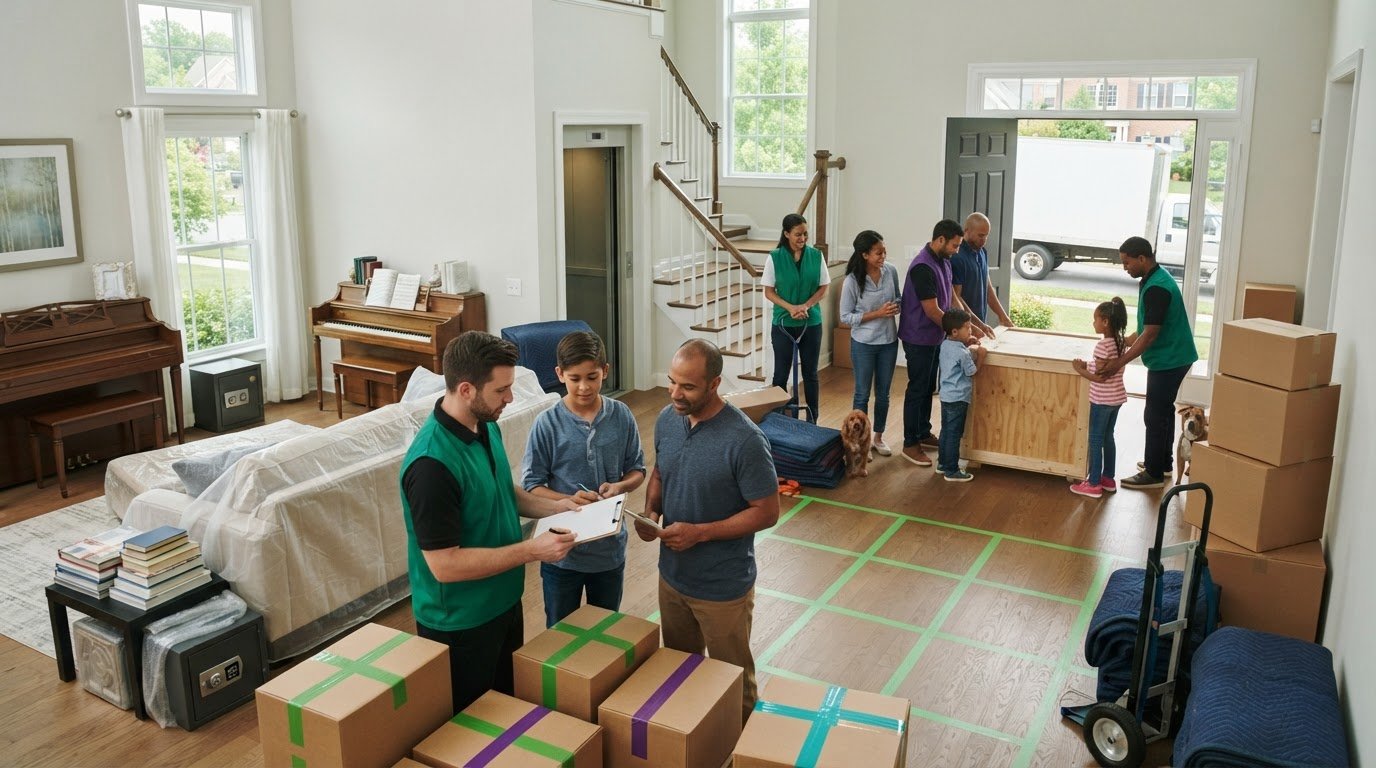
A careful move starts with clear instructions, not a last-minute scramble. Share each antique’s condition notes and photographs with the moving team, and point out fragile areas, loose parts, and handling concerns. Include placement instructions so the item can go directly to its planned spot instead of being shifted around after arrival.
Safe antique handling means clear communication, careful lifting, secure transport, and a deliberate check at placement.
What to do on moving day
Use this sequence to keep the handoff organized:
- Review the record. Match each antique to its condition notes and pre-move photos. Point out delicate features before anyone handles it.
- Clear the route. Remove obstacles from doorways, stairs, and turns. Confirm where the piece will go at the destination before lifting begins.
- Lift with care. Support the item by stable parts of its structure. Never drag an antique or lift it by a handle, ornament, weak joint, or other fragile detail.
- Secure it for transport. Keep the piece stable and separate from heavy items that could shift or press against it. Don’t stack boxes or furniture on top.
- Check the placement. Set the item in its intended location, then compare its condition with the record before moving or reassembling parts.
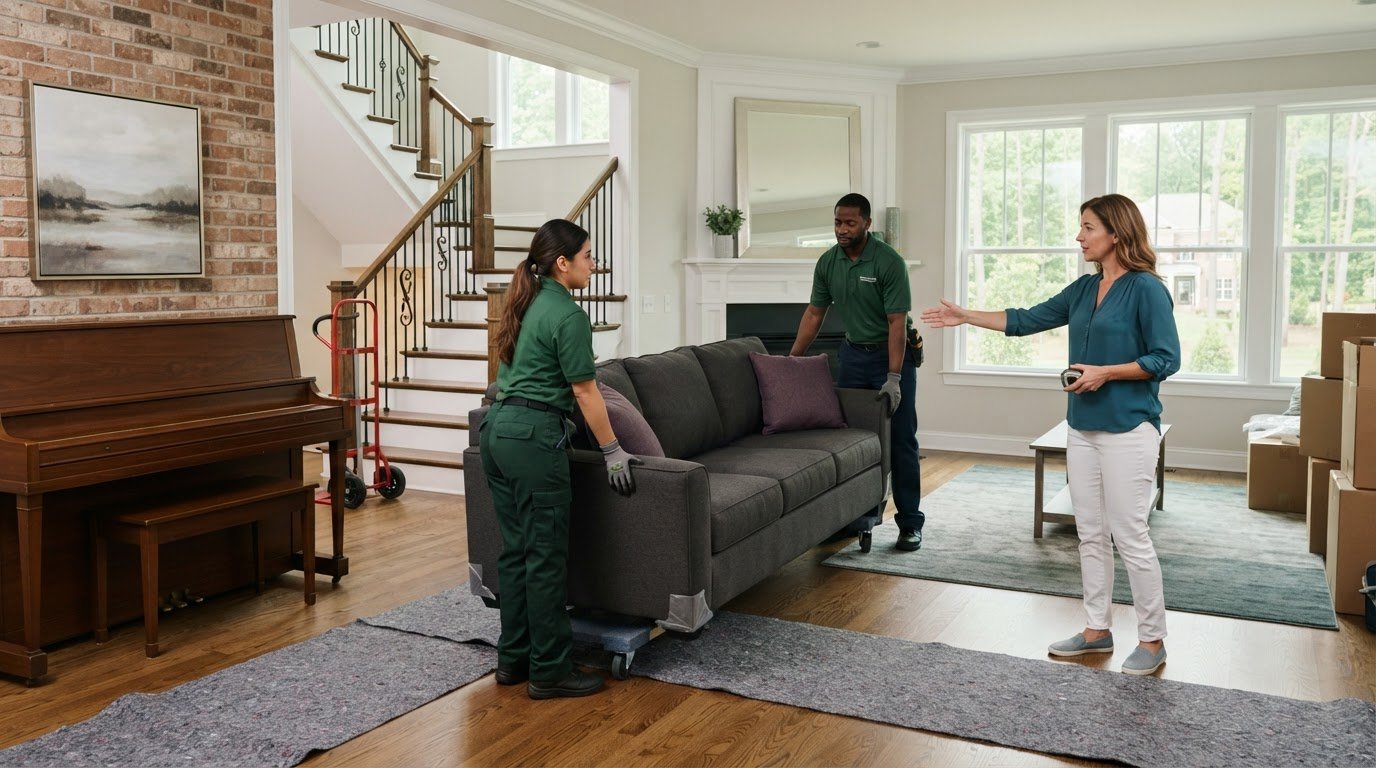
Heavy, bulky, or awkward antiques can be difficult to maneuver safely, especially through narrow spaces. Don’t risk an injury or a rushed lift. Experienced moving help can take on the physical strain while you communicate the details that matter.
How to check antiques after transport
Before unpacking components or repositioning the piece, compare it with your pre-move photos. Check the same sides and details, including glass, corners, joints, and existing wear. If you notice a new mark or change, photograph it promptly and add a dated note beside the original condition record. Keep the full record together.
If the antique arrives after being exposed to different conditions, let it adjust gradually in its new setting. Avoid placing it near a sudden source of heat, such as a heater or direct warm airflow. A careful arrival check gives you time to notice changes and settle the piece without unnecessary handling.
Protecting memories when moving antiques takes steady coordination from pickup through placement. For help with a heavy or awkward piece, arrange experienced antique moving help.
Keep the Story Safe and Get Experienced Help When Needed
The move isn’t finished once the antique reaches its new home. Keep its story and care details close as you unpack, check its condition, and decide where it belongs. A simple arrival routine helps you settle the piece without rushing to reassemble or reposition it.
What to do after the antique arrives
- Unpack with care. Remove protective materials slowly, watching for loose parts or delicate details.
- Compare its condition. Use your pre-move photos as a reference. Record any changes and keep those notes with the original history and condition record.
- Reattach parts thoughtfully. Match hardware or detached pieces to their photographs and labels. If their correct placement isn’t clear, don’t force them into place.
- Choose a steady spot. Place the antique where it won’t be bumped, exposed to dampness, or left in direct sunlight.
Store the record where you can find it later. It can help you remember the piece’s history, care needs, and condition as you make your new space feel like home.
When professional moving help can make the move easier
A heavy cabinet, bulky table, or fragile piece with an awkward shape can be tough to carry through narrow doorways or around tight turns. Experienced help can ease the physical strain and support careful lifting and transport. Don’t risk an injury by trying to manage a demanding lift alone.
Heavy Furniture Moving provides residential moving support and specialized handling for heavy household items. In Fairfax, Woodbridge, Manassas, and nearby Northern Virginia communities, local moving support can help with weighty or bulky pieces.
Protecting memories when moving antiques means caring for the object and the story attached to it, from the first condition record to its place in your home. Keep the notes, photos, and family details together, and let experienced hands take on the hardest lifts.
Carry Your Antiques and Their Stories Forward
Careful preparation helps an antique arrive with its history still close. Record what you know, photograph its condition, and match protection to its materials and fragile details. On moving day, clear the route, share handling instructions, and take time to check the piece after it’s placed. Those steady steps make protecting memories when moving antiques feel more manageable.
Some pieces are simply too heavy, bulky, or awkward to move safely without experienced help. Heavy Furniture Moving provides residential moving support and specialized handling for heavy household items across Fairfax and nearby Northern Virginia communities. As a veteran-family owned and operated business, the team brings a local, dependable approach to demanding moves.
Make your next move easier with experienced help for heavy items. With a clear plan and the right support, you can settle your antiques into their next home with greater confidence and keep the memories they carry close.
Frequently Asked Questions
How do you protect antiques when moving?
Protect antiques by recording each item’s story and existing condition, then choosing preparation that suits its material and fragility. Share clear handling instructions, plan a route through doorways and stairs, and lift carefully without pulling on delicate details. Keep the piece secure and separate from heavy items during transport. After delivery, compare its condition with your photographs. Protecting memories when moving antiques means caring for both the object and its history.
Should I wrap antique wood furniture in plastic?
Plastic isn’t automatically suitable for direct contact with every wood finish. Moisture can become trapped if a surface is damp or exposed to humid conditions, so make sure the furniture is clean and dry before protecting it. Choose a suitable protective layer based on the finish and the item’s condition. Avoid treating plastic as a universal solution, especially for delicate or worn surfaces, and limit exposure to damp conditions during the move.
How do I document an antique's condition before a move?
Photograph all sides of the antique in clear light, including markings, hardware, existing wear, and fragile details such as glass or loose ornament. Pair the images with written notes about its known history, prior repairs, and detachable parts. Keep this record accessible during the move, then compare the photos with the item after delivery. Documentation helps record the condition, but it doesn’t establish the antique’s monetary value.
Can movers pack and move antiques?
Yes, moving support can help with packing and transporting household items, with the approach guided by each antique’s size, fragility, and handling needs. Heavy or awkward pieces may need experienced lifting and careful route planning through doorways, stairs, and turns. Heavy Furniture Moving provides residential moving support in Fairfax, Woodbridge, Manassas, Manassas Park, Aldie, Ashburn, McLean, Vienna, Reston, Centreville, Chantilly, Clifton, Dumfries, South Riding, Fairfax Station, Haymarket, and Gainesville. Share photos, condition notes, and placement instructions ahead of moving day.
How should I move antique furniture with glass or mirrors?
Protect glass and mirrors from pressure, impact, and shifting during transport. Identify these parts before packing, and make sure they won’t bear the furniture’s weight or have heavy items stacked against them. If a component can be removed safely, wrap it separately and keep it clearly associated with its piece. For fragile, heavy, or awkward furniture, experienced moving help can reduce strain. Photograph existing marks before the move for comparison later.
What should I do if an antique is damaged during a move?
Stop handling the affected area and document what you see. Take clear photos, then write down the details while they’re fresh. Keep the new images and notes with the antique’s pre-move photographs and history record. Avoid cleaning, repairing, or refinishing the damaged spot until you understand what happened. An unsuitable product or repair could change the finish or obscure details that matter to the piece’s condition and history.
How do I protect family memories while moving antiques?
Before packing, write down the names, dates, stories, and known history connected to each piece. Photograph labels, markings, and meaningful details, then save the notes and pictures together in a clearly identified record separate from the packed item. Add a brief note about why the antique matters to your family. This simple record helps keep the personal meaning attached to the object throughout the move and after it reaches its new home.
Frequently Asked Questions
Age, craftsmanship, and monetary value are different things. A piece may be old without a known maker, finely made without a documented history, or valuable to your family regardless of what it might sell for. Don’t guess at its age, authenticity, or market value. If those details matter, rely on qualified evidence rather than appearance alone. Start with the personal meaning. Note who owned the item, where it lived, and which family stories or milestones you associate with it. A few accurate details can preserve its significance even when its full history is unknown.
Use good light and take pictures from more than one angle. Photograph labels, maker’s marks, handles, legs, ornament, and existing scratches or worn spots. Note whether drawers, doors, or other parts are loose or removable. Keep the photographs with the item’s written history and any care instructions in one clearly labeled record. The National Park Service Conserve O Grams offers reference guides on furniture, wooden objects, and packing museum objects.
Protect antiques by recording each item’s story and existing condition, then choosing preparation that suits its material and fragility. Share clear handling instructions, plan a route through doorways and stairs, and lift carefully without pulling on delicate details. Keep the piece secure and separate from heavy items during transport. After delivery, compare its condition with your photographs. Protecting memories when moving antiques means caring for both the object and its history.
Plastic isn’t automatically suitable for direct contact with every wood finish. Moisture can become trapped if a surface is damp or exposed to humid conditions, so make sure the furniture is clean and dry before protecting it. Choose a suitable protective layer based on the finish and the item’s condition. Avoid treating plastic as a universal solution, especially for delicate or worn surfaces, and limit exposure to damp conditions during the move.
Photograph all sides of the antique in clear light, including markings, hardware, existing wear, and fragile details such as glass or loose ornament. Pair the images with written notes about its known history, prior repairs, and detachable parts. Keep this record accessible during the move, then compare the photos with the item after delivery. Documentation helps record the condition, but it doesn’t establish the antique’s monetary value.
Yes, moving support can help with packing and transporting household items, with the approach guided by each antique’s size, fragility, and handling needs. Heavy or awkward pieces may need experienced lifting and careful route planning through doorways, stairs, and turns. Heavy Furniture Moving provides residential moving support in Fairfax, Woodbridge, Manassas, Manassas Park, Aldie, Ashburn, McLean, Vienna, Reston, Centreville, Chantilly, Clifton, Dumfries, South Riding, Fairfax Station, Haymarket, and Gainesville. Share photos, condition notes, and placement instructions ahead of moving day.
Protect glass and mirrors from pressure, impact, and shifting during transport. Identify these parts before packing, and make sure they won’t bear the furniture’s weight or have heavy items stacked against them. If a component can be removed safely, wrap it separately and keep it clearly associated with its piece. For fragile, heavy, or awkward furniture, experienced moving help can reduce strain. Photograph existing marks before the move for comparison later.
Stop handling the affected area and document what you see. Take clear photos, then write down the details while they’re fresh. Keep the new images and notes with the antique’s pre-move photographs and history record. Avoid cleaning, repairing, or refinishing the damaged spot until you understand what happened. An unsuitable product or repair could change the finish or obscure details that matter to the piece’s condition and history.
Before packing, write down the names, dates, stories, and known history connected to each piece. Photograph labels, markings, and meaningful details, then save the notes and pictures together in a clearly identified record separate from the packed item. Add a brief note about why the antique matters to your family. This simple record helps keep the personal meaning attached to the object throughout the move and after it reaches its new home.