Professional Radiator Movers for Attic Stairs in Ashburn
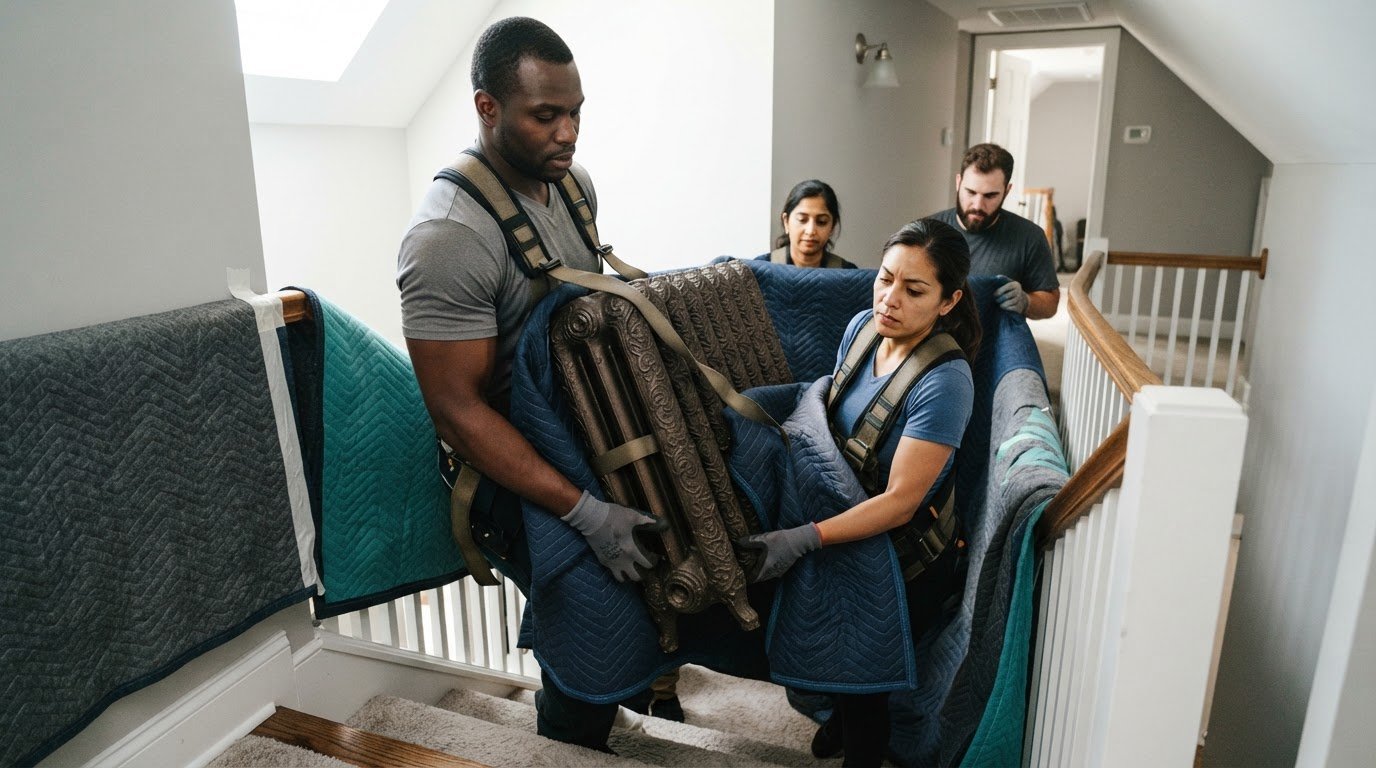
A cast-iron radiator can be moved up attic stairs when the route is clear and the lifting plan accounts for the radiator and staircase. Finding professional movers to carry a cast-iron radiator up attic stairs in Ashburn means considering more than strength: stair turns, landing space, and the radiator’s dimensions all affect the job. Careful planning helps protect both the radiator and your home.
It’s reasonable to want a clear idea of the work before moving day, especially when a heavy item must pass through a tight space. This guide explains what movers consider when estimating the job, how rates and minimums affect a quote, and what to understand about insurance and specialty handling. You’ll also learn which details about the radiator and attic stairs to share when arranging the move, so you can compare the requirements and plan your next step.
Key Takeaways
- Prepare clear details about the radiator, stairway, landings, and access points to help shape a useful move estimate.
- Understand what licensing and insurance information can tell you about a mover’s coverage and responsibility during the job.
- See how the radiator’s size, route, handling needs, and time involved can affect local rates and minimums.
- Plan ahead for tight turns and delicate surfaces so the radiator and home are better protected during the move.
- Learn when heavy-item handling, in-home moving help, or sofa hoisting services may fit a challenging household move.
Free move estimates
Compare quotes by matching the work included, not just the final figure. For an Ashburn radiator move, describe the stairs, landings, radiator, and destination consistently.
Comparing Local Mover Quotes and Reviews
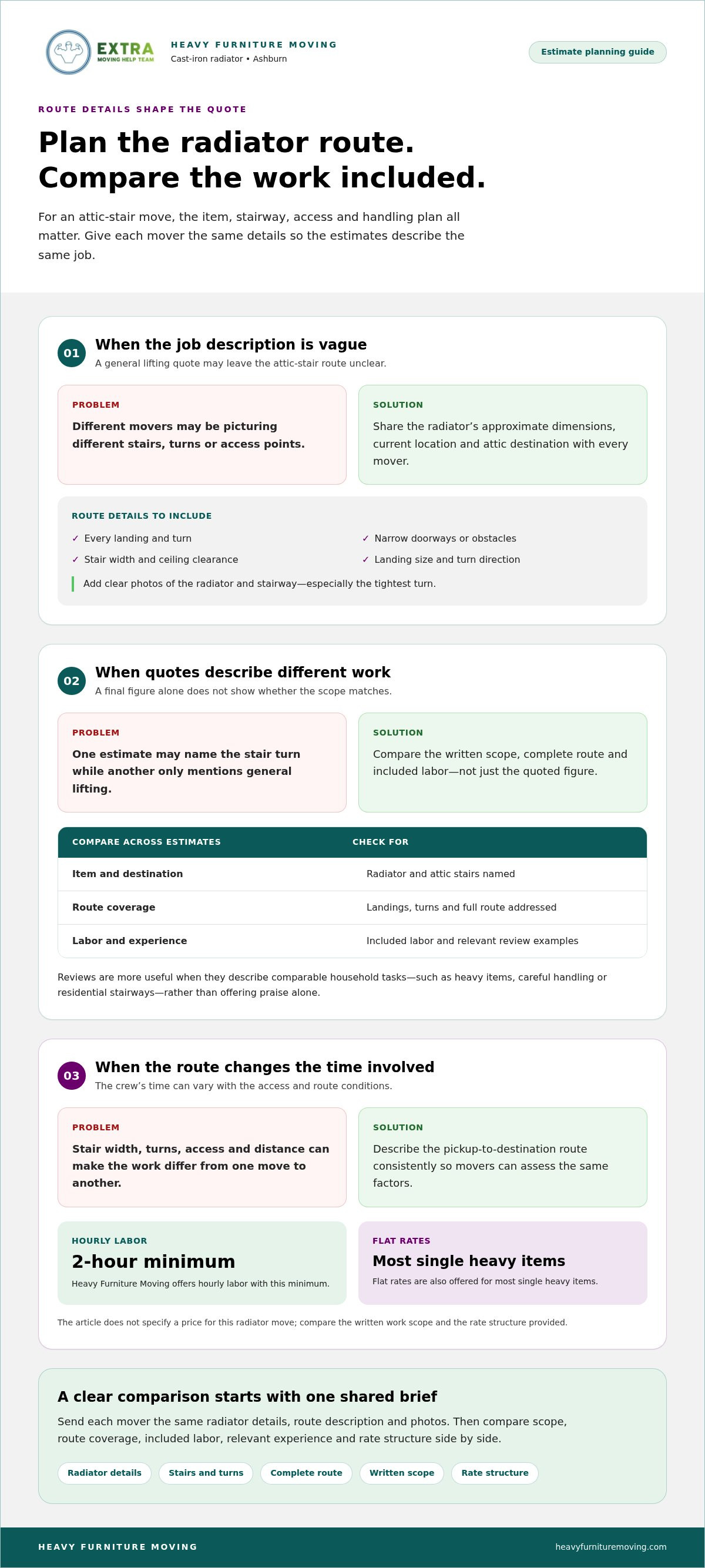
How can you compare local movers’ quotes, reviews, and specialty-item experience? Give each mover the same job details, then compare the written scope, customer feedback, and examples of similar moves. A quote that addresses attic stairs directly is easier to assess than one that mentions only general lifting.
List the radiator’s approximate dimensions, its current location, and its attic destination. Describe every landing, turn, narrow doorway, or obstacle along the route. Include clear photos of the stairway and radiator, especially the tightest turn. These details give movers a consistent picture of the job.
Read reviews for specific descriptions, not praise alone. Look for comments about heavy items, careful handling, communication, and residential stairways. Compare recent feedback across several reviews, and note whether customers explain what was moved. One review mentioning a bulky item offers more relevant context than a general compliment.
- Compare whether each quote names the radiator and attic stairs.
- Check whether the stated work covers the complete route.
- Use reviews that describe comparable household moving tasks.
Keep the comparison in one simple table: scope, route details, included labor, and relevant review examples. Mark differences clearly. If one quote mentions the stair turn and another omits it, they do not describe the same job. Matching the scope makes the comparison more useful.
Checking Specialty-Item Experience
Ask how the mover handles heavy, awkward household items in confined spaces. A cast-iron radiator is different from a sofa: its shape, weight distribution, and exposed surfaces affect how a crew plans each turn. Look for an explanation specific to your radiator and stairs.
Share the radiator’s measurements and photos before comparing experience. Include the stair width, ceiling clearance, landing size, and direction of each turn. A straight staircase presents a different challenge from stairs with a tight landing turn. These details help you judge whether an example is relevant.
Look for specific, practical descriptions in reviews or quote discussions. A useful example names the item, the obstacle, and how the route was managed. Broad claims about moving heavy objects reveal less than a description of a bulky item carried through narrow stairs.
- Compare examples involving heavy or awkward household items.
- Match the example’s route challenges to your attic stairs.
- Check that the estimate describes the radiator and destination.
Write down what each mover says about the radiator’s route, then compare those notes with the photos and measurements you shared. Clear, job-specific explanations make it easier to distinguish relevant specialty-item experience from general moving experience, without relying on a headline claim alone.
Licensed and insured movers
Licensing and insurance are separate checks. A license relates to a mover’s authority to operate under applicable rules. Insurance describes coverage for particular risks or losses. For a cast-iron radiator on attic stairs, understand both before comparing moving plans. Don’t treat a company name, uniform, or verbal assurance as proof of either.
Start with the mover’s legal business name and the location where the service will take place. Review any license information the mover provides, including the issuing authority and the business name on the record. The names should match the company handling the move. If a document lists a different entity, note that distinction before reviewing the agreement.
Read the insurance documents and moving contract together. Look for the coverage type, who or what it applies to, and any stated limits or exclusions. A general statement that a mover is insured doesn’t explain whether a specific loss is covered. Pay attention to the difference between damage to your home, damage to the radiator, and injuries during handling.
Use the radiator’s route as a practical example. The crew may need to guide it past a stair rail, through a landing, and into the attic. Those are different surfaces and stages of handling. Review the written terms for property damage, item damage, and claims. Keep a copy of the documents with your estimate and move details.
- Match the business name across the estimate, agreement, and documents.
- Identify what the insurance paperwork covers and what it excludes.
- Save written terms describing damage, claims, and responsibility.
- Record the radiator’s condition before the move with clear photographs.
Photographs help create a clear record of the radiator’s condition before it moves. Capture visible chips, rust, fittings, and other existing marks. Photograph the stair rail and nearby walls if they’re part of the route. These images don’t determine coverage, but they make it easier to describe the item’s starting condition.
Keep the paperwork practical. Put the estimate, agreement, coverage documents, and photos in one folder. Note the date and the radiator’s destination. If the written terms use unfamiliar language, identify the exact clause and understand it before signing. A clear record helps you know what protections apply to this move, rather than relying on a broad label.
For a move involving a bulky household item, local moving help can be a useful next step after reviewing the paperwork and route details.
Local moving rates and minimum duration
A radiator move quote depends on the work involved, not just the item. In Ashburn, the crew’s time can vary with stair width, turns, access, and the distance between pickup and destination. Heavy Furniture Moving offers hourly labor with a two-hour minimum, as well as flat rates for most single heavy items. The estimate should account for the job’s labor and handling needs.
A minimum duration is the shortest billable work period set for a job. It differs from the time a crew expects the carry itself to take. Heavy Furniture Moving has a two-hour minimum for hourly labor. Ask how time is counted and whether travel or preparation is included in the estimate. Don’t assume a short carry means a shorter minimum.
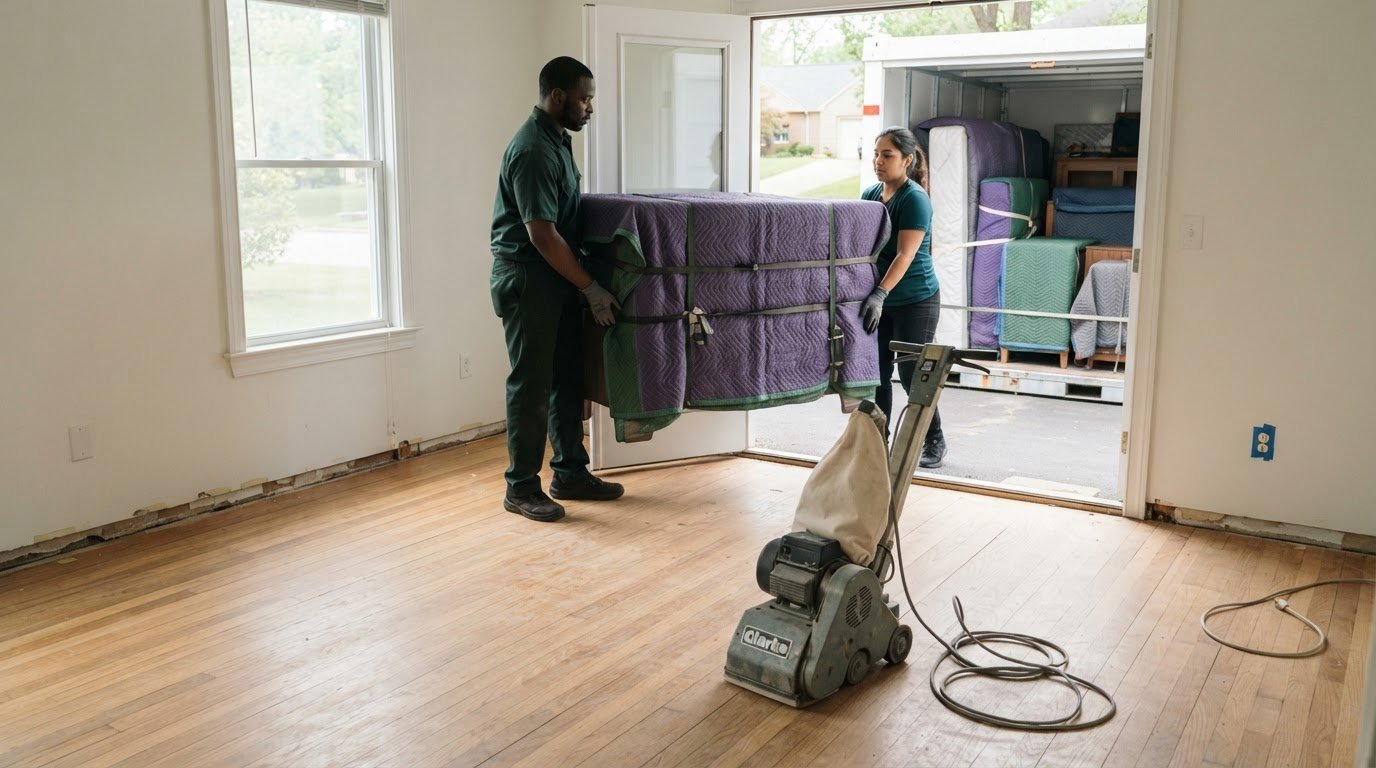
For an indoor carry in Loudoun County, distinguish existing stair access from shared-area rules or building changes. Property managers or associations can set access windows and route limits. Carrying an item through existing stairs differs from work that alters the building.
Compare quotes using one consistent job description. Include the radiator’s dimensions, its starting location, the attic destination, and the route’s tightest point. Explain whether the crew must pass a landing turn or narrow doorway. A quote based on a ground-floor move cannot be fairly compared with one that includes attic stairs.
- Ask what the minimum duration covers.
- Check whether travel time is included in the estimate.
- Compare the same route and item details across quotes.
- Identify any extra work described separately.
Preparation can affect the work. Clear loose items from the hallway and stair landing before the crew arrives. Keep pets and household traffic away from the route. If stored items surround the radiator, include that detail in the job description. A clear path helps the crew focus on the planned carry instead of unexpected setup.
Timing can also matter. Availability may vary by date, so share your preferred schedule when requesting an estimate. Compare the written terms for that date, rather than treating a quote for one schedule as interchangeable with another.
Before accepting an estimate, read its scope from pickup through placement. Confirm that it describes the attic destination, minimum billing period, and any separate travel or preparation charges. If the written estimate leaves a task out, its total may not represent the full move. Keep the estimate so you can compare its terms with the completed work.
WellKnown Moving Company identifies June, July, and August as the most expensive months to move. Keep that seasonal context in mind when comparing estimates, and make sure each reflects the same requested date and scope. If your schedule is flexible, request terms for the dates you’re considering instead of assuming a quote for one period applies to another. The calendar alone doesn’t explain a mover’s minimum billing period or what the work includes, so review those terms for your selected date.
Moving heavy or delicate household items
A cast-iron radiator needs a planned route, careful handling, and proper preparation before it moves. Its size and condition affect how it can pass through an attic stairway.
Choosing Ashburn Radiator Movers
Look for Ashburn residential movers who handle heavy, awkward household items and indoor stair carries. Professional movers to carry a cast-iron radiator up attic stairs in Ashburn should consider the radiator’s shape and the home’s route, not just general furniture handling.
Compare the proposed approach with your actual layout. Share the radiator’s measurements and photos of the stairs, landing, and attic entrance. The crew can then consider the tightest turn and final placement. Ask for relevant examples involving heavy items moved through confined residential spaces.
There’s no reliable single weight for a typical cast-iron radiator. Its weight varies with its construction, dimensions, and number of sections. Count the sections, measure the unit, and look for a manufacturer label or product record that lists its weight.
Equipment and Crew for Narrow Attic Stairs
No fixed crew size or equipment list suits every attic stairway. The radiator’s dimensions, grip points, stair width, and landing turn all affect the handling plan. Professional movers to carry a cast-iron radiator up attic stairs in Ashburn should assess those details before deciding on the equipment and crew size.
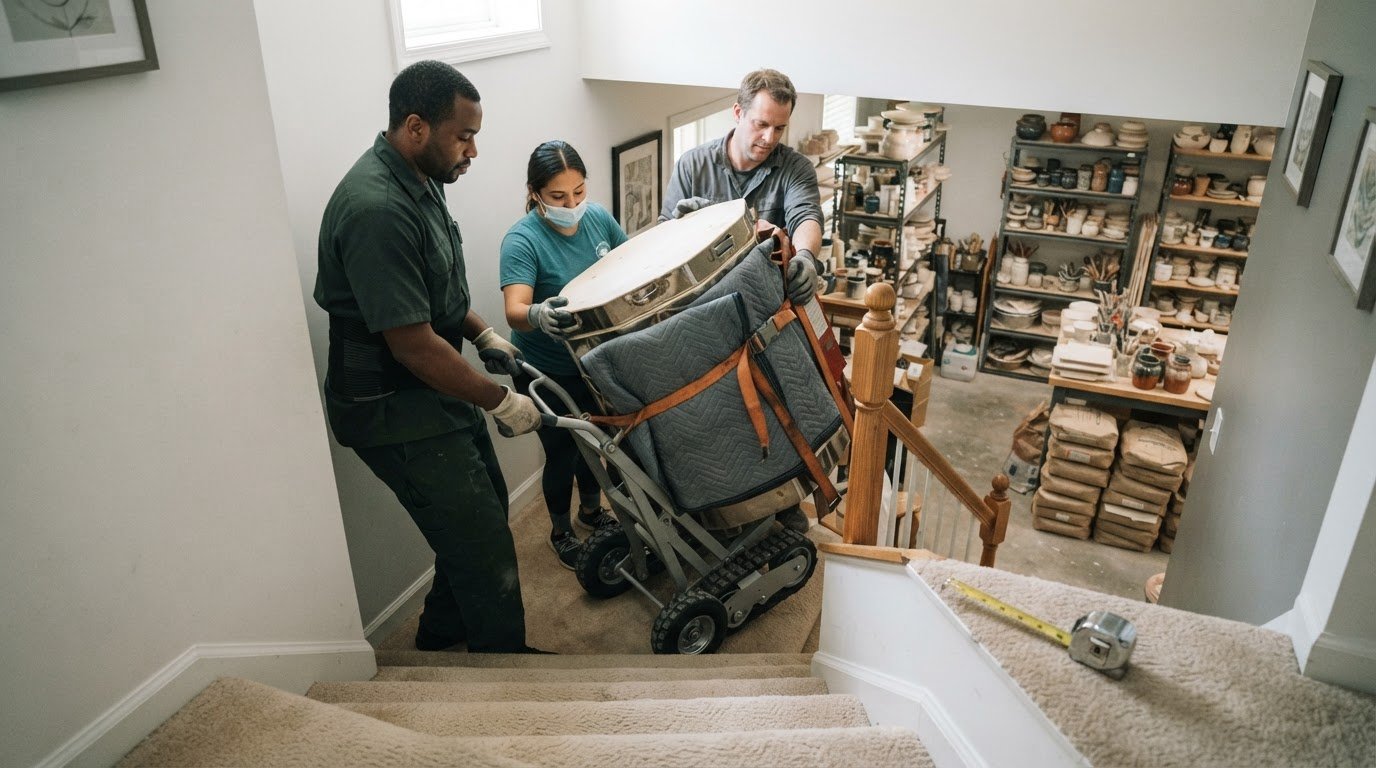
Protective coverings, secure lifting straps, and floor or wall protection may suit the route. Narrow stairs can limit bulky equipment, so the crew must consider clearance and control at each turn. Clear boxes, rugs, and other loose items from the stairway before the carry.
Have a heating professional shut off, drain, and disconnect the radiator from the heating system before moving. Movers should carry the isolated radiator, not disconnect live pipes.
Risks to Stairs, Floors, Walls, and Radiator
A slipping radiator can strike stair edges, scrape a wall, or damage flooring. Its sections and corners may also chip or crack if it’s dropped, twisted, or knocked against a doorframe. The landing turn deserves particular care because limited space can make the item harder to control.
Clear the route and protect exposed surfaces before lifting. Photograph existing marks on the radiator, stair rail, and nearby walls. These records show the starting condition and help identify which surfaces need attention during the move.
Walk the complete route from the current room to the intended attic location. Note any low ceiling, narrow doorway, sharp turn, or obstruction. Share those details before the move so the handling plan accounts for the actual path and placement.
Specialty moving services
A specialty move matches the crew’s work to the item and task. For an Ashburn radiator, distinguish preparation, carrying, and placement. That makes the requested service clearer and keeps unrelated work outside the moving scope.
Start by defining the handoff. A heating professional prepares and disconnects the radiator; movers transport it once it’s ready. Name the pickup room and final placement area. For example, specify whether the job ends inside the attic or at its entrance. Clear boundaries help everyone understand their part.
Next, decide whether the radiator is the only item or part of a larger move. A single-item carry has a different scope from moving household furniture at the same time. List every requested task, such as carrying the radiator upstairs, shifting furniture from its path, or placing other items in the attic. Keep each task explicit.
Some moving jobs focus on labor rather than transporting a full household. In that arrangement, the customer may coordinate the radiator’s preparation and other logistics separately. Write down who handles each step, where the item will be ready, and who directs placement. A simple task list can prevent gaps between separate parts of the move.
Specialty handling also means accounting for the radiator’s condition and shape. A sectioned radiator may have protruding fittings or fragile edges. Note those features before the crew arrives. Identify any loose parts, protective covering, or surfaces that need extra care. These details make the job description specific.
- State whether the request covers one radiator or multiple items.
- Describe the starting room and final placement point.
- List any furniture that must be moved from the route.
- Identify preparation tasks handled outside the moving work.
For a combined household job, sequence the work so the route stays clear. Clear the radiator’s path before carrying other belongings through the same area. If furniture must move first, identify those pieces in the task list. That order gives the crew a practical starting point and helps avoid repeated handling.
Before the scheduled move, compare the written scope with the actual request. Check that it names the radiator, attic placement, and any additional labor. If the destination changes from the attic entrance to a specific room, update the description. A precise scope aligns the work with the physical task instead of relying on a broad label such as specialty moving.
Have a heating professional prepare and disconnect the radiator, then arrange for movers to transport it once it’s ready.
Heavy Furniture Moving: Movers Near Me
Heavy Furniture Moving is a practical option for a demanding household lift. If your radiator needs careful planning for an attic stair route, the company’s heavy lifting moving service and Movers Near Me offering are relevant to explore. Share the pickup room, attic destination, and route details so the moving task is clear.
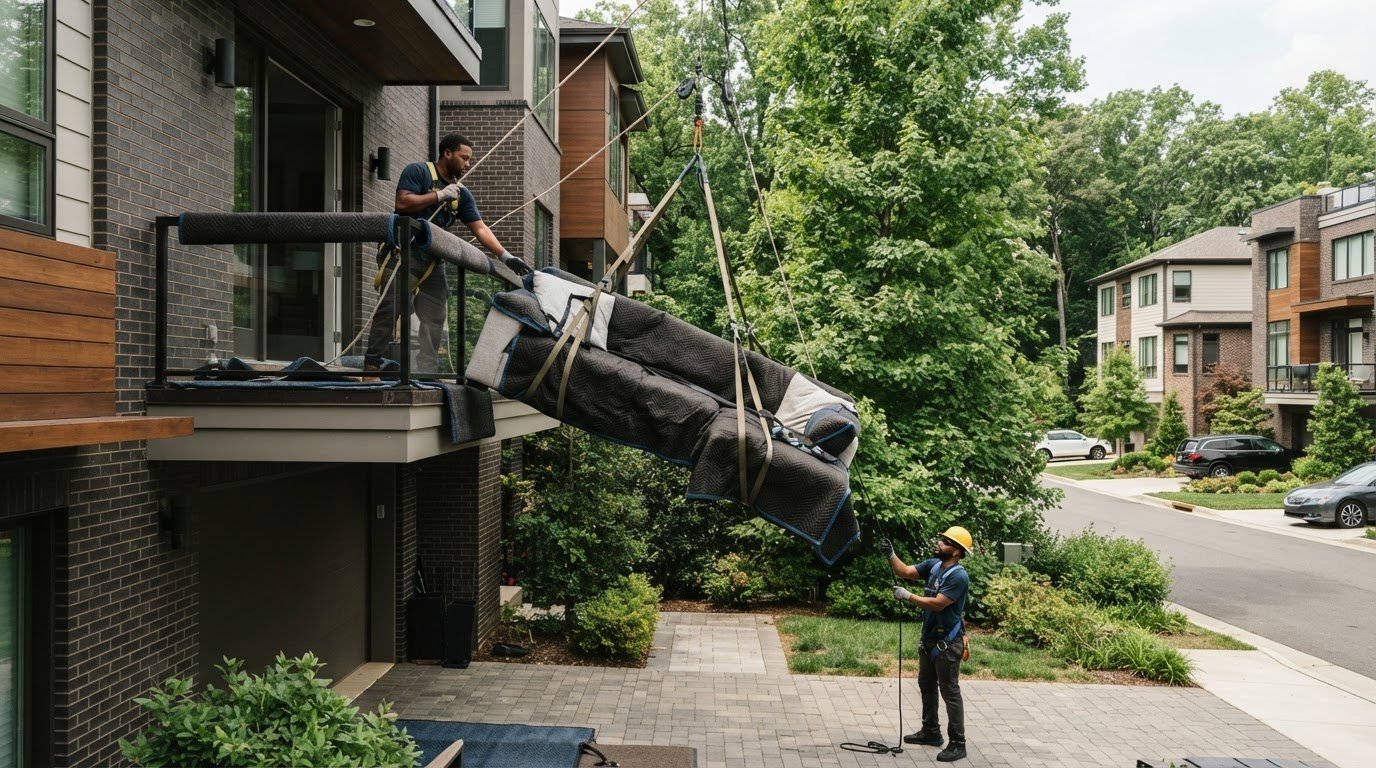
For other bulky household moves, Heavy Furniture Moving also handles exercise equipment, sofa hoisting, and in-home furniture moves. Choose the service that matches the item and access challenge, and keep radiator disconnection separate from the carrying work.
Contact Heavy Furniture Moving to discuss your move.
Make the Next Move With Confidence
A difficult attic carry is easier to plan when the next step is clear. Before arranging the move, decide where the radiator should sit and clear the space around its final position. That preparation keeps the focus on placement, not last-minute room changes.
When you’re ready to arrange the carry, share the destination and any access details that could affect the move. Heavy Furniture Moving measures the route before lifting and includes wrap, blankets, and straps on every job. For professional movers to carry a cast-iron radiator up attic stairs in Ashburn, explain the job plainly, including the radiator, stair route, and intended placement.
Heavy Furniture Moving also handles larger household moving needs, including exercise equipment and sofa hoisting. Keep the radiator’s heating-system disconnection separate from the carrying task, and have that preparation completed before the move.
Get in touch with Heavy Furniture Moving to discuss your move. Take the next step with a clear plan and a steady approach.
Frequently Asked Questions
Do Ashburn movers provide piano or specialty-item moving for cast iron radiators?
Yes. Heavy Furniture Moving serves Ashburn and specializes in moving heavy, awkward household items, including pianos, safes, and exercise equipment. A cast-iron radiator is a different item, so describe its dimensions, condition, and stair route when discussing the job. This frames the request around the radiator itself rather than assuming piano handling uses the same method. Keep heating-system disconnection separate from the moving work.
What do movers charge to carry a cast iron radiator up attic stairs in Ashburn?
The amount depends on the item, route, and work requested. Heavy Furniture Moving uses hourly labor with a 2-hour minimum, and flat rates for most single heavy items. Stairs and landings are priced before the crew arrives, with the quote given upfront. Share the radiator and stair details so the estimate reflects an attic carry, not an easier ground-floor move.
What insurance and liability coverage should movers have for heavy-item moves?
Review the mover’s written coverage terms for both the radiator and your home. Check the applicable limits, exclusions, and steps for reporting damage. Also ask your home insurer how your policy treats a hired mover handling an item inside the house. For example, clarify which policy applies if a radiator chips a stair tread, and keep the agreement and condition photos together.
Frequently Asked Questions
Yes. Heavy Furniture Moving serves Ashburn and specializes in moving heavy, awkward household items, including pianos, safes, and exercise equipment. A cast-iron radiator is a different item, so describe its dimensions, condition, and stair route when discussing the job. This frames the request around the radiator itself rather than assuming piano handling uses the same method. Keep heating-system disconnection separate from the moving work.
The amount depends on the item, route, and work requested. Heavy Furniture Moving uses hourly labor with a 2-hour minimum, and flat rates for most single heavy items. Stairs and landings are priced before the crew arrives, with the quote given upfront. Share the radiator and stair details so the estimate reflects an attic carry, not an easier ground-floor move.
Review the mover’s written coverage terms for both the radiator and your home. Check the applicable limits, exclusions, and steps for reporting damage. Also ask your home insurer how your policy treats a hired mover handling an item inside the house. For example, clarify which policy applies if a radiator chips a stair tread, and keep the agreement and condition photos together.