Moving a Heavy Pottery Kiln into a Basement Workshop in Centreville, VA
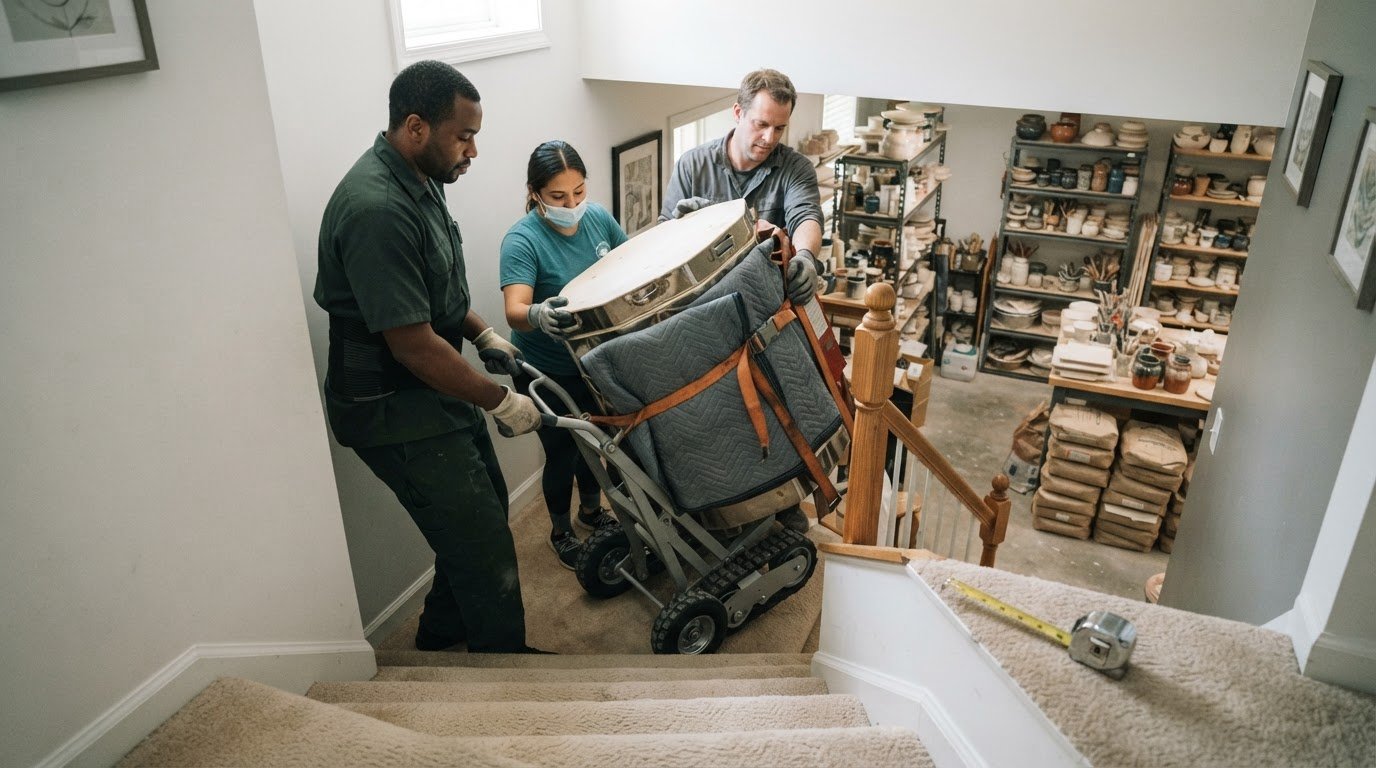
The basement route can determine whether a kiln move is workable before anyone starts lifting. Planning for moving heavy pottery kiln into basement workshop Centreville means measuring the kiln, doorways, stairs, and tight turns first, not guessing on moving day. A heavy, awkward kiln can also be fragile, so each part of the route needs a clear plan.
If you’re figuring out how to get a pottery kiln into a Centreville basement workshop, start with the access details. Measure the kiln and route, prepare the destination, and gather the information needed to arrange focused help for a single challenging item.
Heavy Furniture Moving handles heavy-item moves and measures the item and access points before lifting. Wrap, blankets, and straps are included on every job. A few measurements and clear photos can help make the plan more practical and moving day less uncertain.
Key Takeaways
- For moving heavy pottery kiln into basement workshop Centreville, plan around every stair, landing, turn, and final placement before moving day.
- Record the kiln’s widest and tallest points, note protruding parts, and use its manual to identify any components that can be removed.
- A short distance doesn’t always mean an easy move. Compare route complexity, equipment, coordination, and handling risks before choosing DIY or professional help.
- Follow the kiln manual for shutdown, cooling, securing, and component handling, then clear the route and prepare the workshop’s intended placement.
- Heavy Furniture Moving provides focused heavy-item moving, with wrap, blankets, and straps included on every job.
Why Moving a Pottery Kiln into a Centreville Basement Starts with the Route
A pottery kiln can be heavy, awkward to grip, and delicate to handle. Moving it below grade is not simply a matter of carrying it down the stairs. Doorways, turns, landings, changes in floor level, and the final approach all affect the plan. A route that looks open from the top of the stairs may narrow at a turn or leave too little space to position the kiln.
The kiln’s design and condition matter, too. Its shape, protruding parts, and handling instructions affect how it should be prepared and moved. Background on ceramic kilns describes their range of designs and heat-resistant structures, but the manual for your specific model is the guide for handling and preparation.
What makes a pottery kiln move different from moving ordinary furniture?
A kiln may have substantial weight in a compact footprint and an exterior that is difficult to grip. Controls, cords, or other protruding parts may need protection. Don’t assume how the kiln is built, whether it can be tilted, or whether parts can be removed. Check the manufacturer’s documentation for shutdown, cooling, securing, and component-handling instructions before planning the lift.
Which Centreville basement access details deserve attention?
Walk the complete route from the pickup point to the kiln’s final position. Check stair width and headroom, each doorway, landing dimensions, turns, and changes in floor level. Measure the last approach into the workshop as well, because the kiln may need room to be positioned. Measure transitions, not just the widest openings. A tight corner or low ceiling can affect the plan even when the stairs seem clear.
Keep these four planning concerns distinct to catch missing details before moving day:
- Kiln condition: Note visible damage, loose parts, and anything the manual says to secure or handle separately.
- Building access: Record measurements at narrow points, overhead clearances, turns, and landings.
- Floor protection: Identify surfaces along the route that need protection from contact or scuffing, including stairs and corners.
- Workshop readiness: Clear the destination and leave room to position the kiln without blocking the route.
These details help assess whether the move is workable and what preparation it requires. Recheck uncertain measurements instead of relying on a visual estimate. When arranging moving help, share clear route photos and kiln details so the plan reflects the actual access conditions.
Measure the entire route before planning the lift. For moving heavy pottery kiln into basement workshop Centreville, first confirm that the kiln and the complete path can work together.
How to Measure the Kiln and Basement Route Before Moving Day
Good measurements make a difficult move easier to assess. Record the kiln’s actual dimensions and the tightest points along the full route. A doorway’s width alone won’t show whether the kiln can turn through it or be positioned on a landing. Measure carefully, take clear photos, and share the details before moving day.
What should you measure on the kiln and along the stairs?
Use the kiln manual to identify handling guidance and any parts it says can be removed. Don’t guess about tilting or disassembly. Measure the kiln in its planned moving configuration, including protrusions that affect its outline. Compare those dimensions with the route measurements, accounting for turning space and headroom. Measurements help assess access, but they don’t guarantee the kiln will fit.
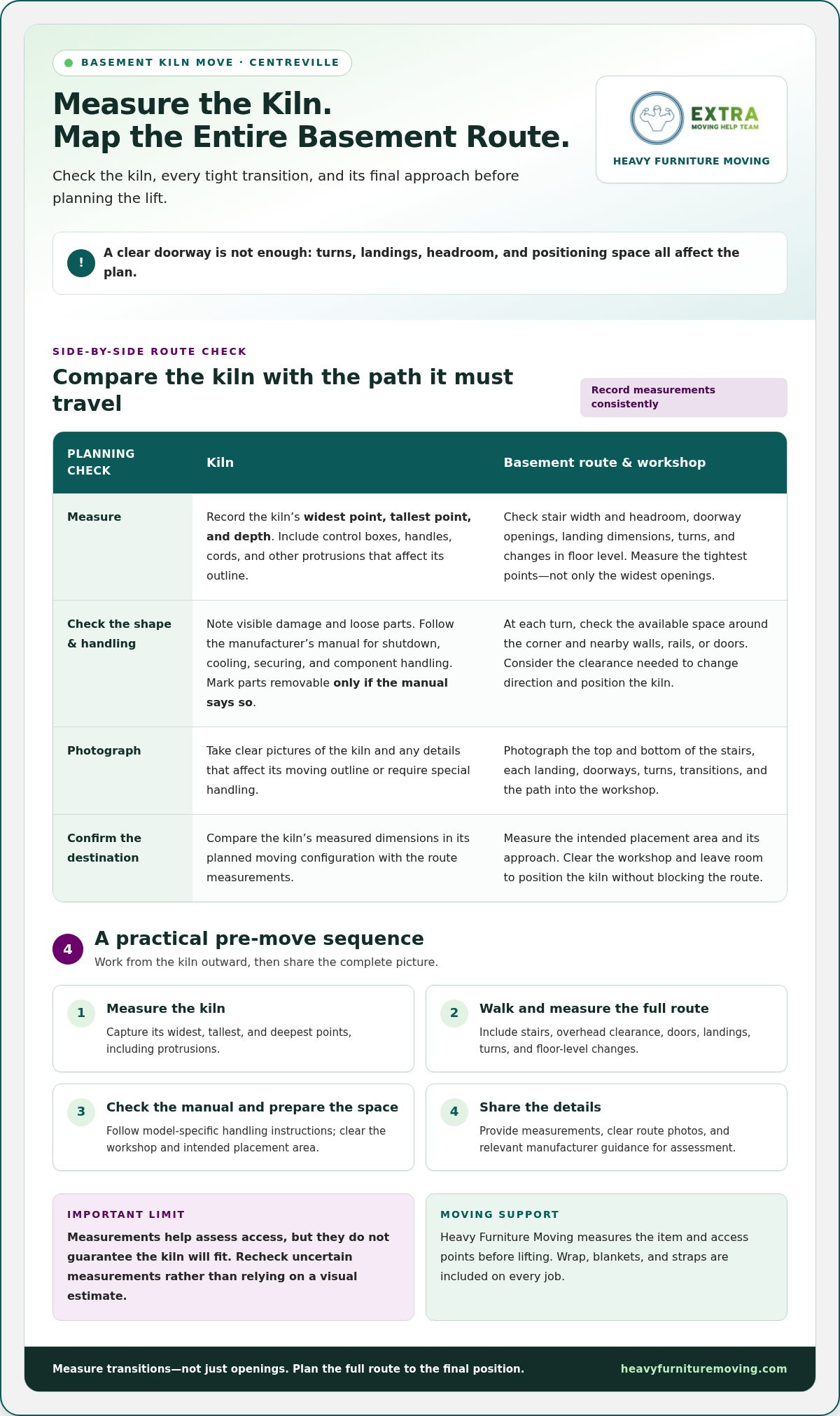
- Record the kiln’s size. Measure its widest and tallest points, plus its depth. Note control boxes, handles, cords, or other protrusions that affect clearance. Mark parts as removable only if the manufacturer’s instructions say they can be removed.
- Photograph the route. Take clear pictures from the top and bottom of the stairs, at each landing, through doorways, and along the path to the workshop. Include turns and transitions, not just straight sections.
- Measure every transition. Check stair width, overhead clearance, doorway openings, landing dimensions, and changes in floor level. At turns, note the available space around the corner and any nearby wall, rail, or door that limits movement.
- Check the destination and share details. Measure the intended placement area and the approach into it. Share the dimensions, photos, and relevant manufacturer guidance so the access can be assessed as a whole.
Measure turns and landings, not doorways alone. A kiln may clear an opening but still lack room to change direction beyond it. Keep measurements consistent and note where each one was taken. This gives the team a clearer picture of the route for moving heavy pottery kiln into basement workshop Centreville.
What information helps a mover assess the job?
Share photos from multiple angles, especially at tight transitions, along with the kiln’s measured dimensions and handling instructions. Heavy Furniture Moving measures the item and access points before lifting, so your measurements and photos provide useful context for the assessment. For a single challenging item, arrange heavy-item moving help in Centreville.
Physical handling matters, too. OSHA’s ergonomics resources offer safe manual lifting principles for reducing strain when handling loads. Use measurements to support a careful plan, not to justify forcing a kiln through a space that hasn’t been assessed.
DIY or Professional Help for a Basement Pottery Kiln Move?
A short distance can still involve a demanding move. The kiln may only need to travel between levels of the same home, but tight turns, landings, and limited room to adjust its position can make the route challenging. Let the kiln’s handling instructions and a full access assessment guide your choice, not distance alone.
| Factor | DIY move | Professional heavy-item help |
|---|---|---|
| Access complexity | May be manageable when the route is straightforward and everyone understands its limits. | Pre-move measurements help assess stairs, turns, and transitions before lifting. |
| Equipment | You’re responsible for determining what is appropriate for the kiln and route. | Coordinated handling and included protection materials support a planned move. |
| Coordination | Helpers need clear roles and a shared understanding of the route. | A moving crew coordinates the handling around the assessed access. |
| Risk | Uncertainty about weight, grip, or turning space can complicate the move. | Measurement and planning help identify access concerns before lifting, without guaranteeing a fit. |
When might a DIY plan become difficult to manage?
Several tight turns, multiple landings, uncertain kiln weight, or little room to pause and reposition can make a DIY plan difficult to coordinate. Helpers also need a shared route plan and clear communication. If someone can’t see the next transition or the kiln’s handling requirements are unclear, stop and reassess instead of improvising on the stairs.
Use the table as a comparison, not a verdict. Match the kiln’s handling requirements to the route and the people available to help. A route that looks simple from the doorway can become difficult at a turn with little room to adjust. Never assume the kiln can be tilted or handled in a particular way without checking its documentation.
What does professional heavy-item help change?
Heavy Furniture Moving provides focused labor for challenging residential items. The crew measures the item and access before lifting, and wrap, blankets, and straps are included on every job. The booking minimum is 2 hours. The kiln and route still need to be assessed before the move proceeds.
Keep moving separate from workshop installation. If preparing the space involves electrical work, review the Fairfax County permit requirements for applicable project guidance. For moving heavy pottery kiln into basement workshop Centreville, share the item and route details in your heavy-item moving request before lifting.
How to Prepare the Pottery Kiln and Basement Workshop
Good preparation keeps the move focused on the kiln and its route, not last-minute obstacles. Before the crew arrives, address four areas: kiln readiness, electrical safety, access clearance, and the planned workshop position. Follow the manufacturer’s instructions for the kiln, and leave electrical work to a qualified electrician when disconnection or reconnection is needed.
How should you prepare the kiln itself?
Use the kiln manual for shutdown, cooling, securing, and handling instructions. Cooling requirements differ, so don’t rely on a universal wait time. If the manual identifies removable parts, follow its directions for securing or removing them. Keep shelves, accessories, and loose components together and protected as instructed. Don’t improvise a disassembly method or assume how the kiln can be tilted.
How should you clear and prepare the basement workshop?
Clear the route from the entry point through the basement to the destination. Move stored items out of the way, open doors, and leave space for the planned approach. Clear the intended placement area as well, so the kiln doesn’t have to be shifted around workshop clutter after it reaches the basement.
Electrical preparation is separate from moving preparation. If the kiln needs to be disconnected or reconnected, arrange for a qualified electrician to handle that work. Keep cords and electrical connections out of the moving path, and don’t ask movers to manage wiring. Complete electrical work before putting the kiln into service in its new position.
Use this readiness check before moving day:
- Kiln: Follow the manufacturer’s instructions for shutdown, cooling, securing, and component handling.
- Electrical: Arrange qualified help for disconnection or reconnection if needed.
- Access: Clear stairs, landings, doorways, and the path to the workshop.
- Destination: Clear the planned spot and confirm it suits your workshop layout.
- People and pets: Keep them away from the moving path while the kiln is being handled.
Think about how the kiln’s intended position fits the way you use the workshop. Keep the approach clear and leave furniture, supplies, and equipment out of the path until the move is complete. This is about preparing access and a destination, not making assumptions about electrical installation or kiln operation.
A clear space and manufacturer-led preparation give the move a more orderly start. For help with the heavy lifting, plan a heavy-item move with Heavy Furniture Moving. Preparing the route in advance makes moving heavy pottery kiln into basement workshop Centreville easier to coordinate.
Arrange Heavy Pottery Kiln Moving Help in Centreville
Clear item and access details help turn a difficult basement move into a practical plan. Heavy Furniture Moving serves Centreville and measures the kiln and route before lifting. Share the kiln’s dimensions and handling requirements, along with photos of the stairs and other tight transitions. This gives the assessment useful context before the crew arrives.
What should you expect from Heavy Furniture Moving?
The crew is uniformed and background-checked. Before lifting, they measure the item and access points, including relevant stairs and landings. Stairs and landings are priced before the crew arrives, so you know those job details in advance. If measurement shows the kiln genuinely won’t fit, you aren’t charged for a wasted trip.
Protection is included on every job, not treated as a separate line item. Shrink-film, moving blankets, straps, and floor and corner protection are included. Share details about protruding parts and the manufacturer’s handling instructions so the assessment accounts for both the kiln and route. Send a photo of the kiln and stairs to get a real number in minutes.
Same-day slots are available when open. To plan moving heavy pottery kiln into basement workshop Centreville, call or text Heavy Furniture Moving at 703-747-9224 and share the route details. Include the destination so the assessment considers where the kiln needs to go, not just the stairs.
What is the simplest next step for a Centreville move?
Gather clear photos before reaching out. Show the kiln, the stairway from more than one angle, landings or tight turns, doorways, and the basement destination. Add known dimensions and relevant manufacturer guidance. These details connect the kiln’s requirements with the actual route and help avoid overlooking an access concern.
- Share the item: Send a photo of the kiln and its measured dimensions.
- Show the route: Include stairs, landings, doorways, turns, and the basement approach.
- Note the handling details: Include relevant instructions from the kiln manual.
- Plan the booking: The booking minimum is 2 hours.
For a single heavy item, focused moving help can be a practical alternative to arranging a full household move. Get started by sharing the details with reliable movers in Fairfax and Northern VA. A measured, photo-informed plan gives everyone a clearer starting point for moving day.
Take the Next Step Toward Your Basement Workshop
A kiln move can be the start of a more usable creative space. Build a practical plan by sharing the real access conditions, then use the assessment to decide how to proceed. For moving heavy pottery kiln into basement workshop Centreville, clear views of the kiln and route help turn uncertainty into a concrete next step.
Heavy Furniture Moving is veteran-family owned and has served customers since 2010, with 500+ verified five-star reviews and a 4.9 Google rating. The team handles heavy, awkward residential items.
Send kiln and stair photos to plan your Centreville move, or call or text 703-747-9224. Include the kiln, stairs, and basement approach so Heavy Furniture Moving can help plan your move.
Frequently Asked Questions
How long should a pottery kiln cool before it is moved?
Follow the kiln manufacturer’s shutdown and cooling instructions. There’s no universal cooling time to assume. The kiln should be fully cooled as specified before it’s handled. If the manual isn’t available, identify the kiln model and get guidance from the manufacturer before preparing it. Arrange electrical disconnection safely, too. A display that appears off doesn’t replace the manufacturer’s instructions for confirming the kiln is ready to move.
Can kiln shelves and furniture stay inside the kiln during a move?
Don’t assume kiln shelves or other loose furniture can stay inside. Check the manufacturer’s handling instructions, then secure or remove shelves, posts, and accessories only as directed. Keep removed pieces together and protected, and make a simple inventory so small parts don’t get separated. Tell the moving team about components that change the kiln’s dimensions or affect how it can be handled.
Does a pottery kiln need to be disconnected by an electrician before moving?
If the kiln is hardwired or you’re unsure about its connection, have a qualified electrician handle disconnection and reconnection. Don’t pull, cut, or alter wiring while preparing the kiln for transport. Follow the manual and requirements that apply to the specific installation. Arrange electrical work before moving day, and keep the connection details available so the handling plan accounts for the kiln’s setup.
Can a gas pottery kiln be moved into a basement workshop?
A gas kiln’s fuel connection, ventilation, and installation requirements need careful attention before planning a move. Consult the kiln manufacturer and qualified professionals responsible for the gas and installation work. Don’t disconnect gas lines or treat the relocation as only a lifting task. Plan the physical move around the route and handling requirements, separately from work needed to install or reconnect the kiln at its destination.
What photos should I send for a pottery kiln moving estimate?
Send clear photos of the full kiln, its connection points, the stairs, each landing and turn, doorways, and the intended workshop area. Include known dimensions and the model if available. For moving heavy pottery kiln into basement workshop Centreville, these details show both the item and its access route. Heavy Furniture Moving uses photos of the item and stairs to provide a real number in minutes.
What happens if the kiln will not fit through the basement route?
If measurement shows the kiln genuinely won’t fit, Heavy Furniture Moving doesn’t charge for a wasted trip. Don’t force a tight passage or assume an uncertain turn is workable. Share accurate dimensions and route photos so access can be assessed before lifting. Heavy Furniture Moving serves Centreville, Fairfax, Woodbridge, Manassas, Manassas Park, Aldie, Ashburn, McLean, Vienna, Reston, Centreville, Chantilly, Clifton, Dumfries, South Riding, Fairfax Station, Haymarket, and Gainesville.
Frequently Asked Questions
A kiln may have substantial weight in a compact footprint and an exterior that is difficult to grip. Controls, cords, or other protruding parts may need protection. Don’t assume how the kiln is built, whether it can be tilted, or whether parts can be removed. Check the manufacturer’s documentation for shutdown, cooling, securing, and component-handling instructions before planning the lift.
Walk the complete route from the pickup point to the kiln’s final position. Check stair width and headroom, each doorway, landing dimensions, turns, and changes in floor level. Measure the last approach into the workshop as well, because the kiln may need room to be positioned. Measure transitions, not just the widest openings. A tight corner or low ceiling can affect the plan even when the stairs seem clear. Keep these four planning concerns distinct to catch missing details before moving day: These details help assess whether the move is workable and what preparation it requires. Recheck uncertain measurements instead of relying on a visual estimate. When arranging moving help, share clear route photos and kiln details so the plan reflects the actual access conditions. Measure the entire route before planning the lift. For moving heavy pottery kiln into basement workshop Centreville, first confirm that the kiln and the complete path can work together. Good measurements make a difficult move easier to assess. Record the kiln’s actual dimensions and the tightest points along the full route. A doorway’s width alone won’t show whether the kiln can turn through it or be positioned on a landing. Measure carefully, take clear photos, and share the details before moving day.
Use the kiln manual to identify handling guidance and any parts it says can be removed. Don’t guess about tilting or disassembly. Measure the kiln in its planned moving configuration, including protrusions that affect its outline. Compare those dimensions with the route measurements, accounting for turning space and headroom. Measurements help assess access, but they don’t guarantee the kiln will fit. Measure turns and landings, not doorways alone. A kiln may clear an opening but still lack room to change direction beyond it. Keep measurements consistent and note where each one was taken. This gives the team a clearer picture of the route for moving heavy pottery kiln into basement workshop Centreville.
Share photos from multiple angles, especially at tight transitions, along with the kiln’s measured dimensions and handling instructions. Heavy Furniture Moving measures the item and access points before lifting, so your measurements and photos provide useful context for the assessment. For a single challenging item, arrange heavy-item moving help in Centreville. Physical handling matters, too. OSHA’s ergonomics resources offer safe manual lifting principles for reducing strain when handling loads. Use measurements to support a careful plan, not to justify forcing a kiln through a space that hasn’t been assessed. A short distance can still involve a demanding move. The kiln may only need to travel between levels of the same home, but tight turns, landings, and limited room to adjust its position can make the route challenging. Let the kiln’s handling instructions and a full access assessment guide your choice, not distance alone.
Several tight turns, multiple landings, uncertain kiln weight, or little room to pause and reposition can make a DIY plan difficult to coordinate. Helpers also need a shared route plan and clear communication. If someone can’t see the next transition or the kiln’s handling requirements are unclear, stop and reassess instead of improvising on the stairs. Use the table as a comparison, not a verdict. Match the kiln’s handling requirements to the route and the people available to help. A route that looks simple from the doorway can become difficult at a turn with little room to adjust. Never assume the kiln can be tilted or handled in a particular way without checking its documentation.
Heavy Furniture Moving provides focused labor for challenging residential items. The crew measures the item and access before lifting, and wrap, blankets, and straps are included on every job. The booking minimum is 2 hours. The kiln and route still need to be assessed before the move proceeds. Keep moving separate from workshop installation. If preparing the space involves electrical work, review the Fairfax County permit requirements for applicable project guidance. For moving heavy pottery kiln into basement workshop Centreville, share the item and route details in your heavy-item moving request before lifting. Good preparation keeps the move focused on the kiln and its route, not last-minute obstacles. Before the crew arrives, address four areas: kiln readiness, electrical safety, access clearance, and the planned workshop position. Follow the manufacturer’s instructions for the kiln, and leave electrical work to a qualified electrician when disconnection or reconnection is needed.
Use the kiln manual for shutdown, cooling, securing, and handling instructions. Cooling requirements differ, so don’t rely on a universal wait time. If the manual identifies removable parts, follow its directions for securing or removing them. Keep shelves, accessories, and loose components together and protected as instructed. Don’t improvise a disassembly method or assume how the kiln can be tilted.
Clear the route from the entry point through the basement to the destination. Move stored items out of the way, open doors, and leave space for the planned approach. Clear the intended placement area as well, so the kiln doesn’t have to be shifted around workshop clutter after it reaches the basement. Electrical preparation is separate from moving preparation. If the kiln needs to be disconnected or reconnected, arrange for a qualified electrician to handle that work. Keep cords and electrical connections out of the moving path, and don’t ask movers to manage wiring. Complete electrical work before putting the kiln into service in its new position. Use this readiness check before moving day: Think about how the kiln’s intended position fits the way you use the workshop. Keep the approach clear and leave furniture, supplies, and equipment out of the path until the move is complete. This is about preparing access and a destination, not making assumptions about electrical installation or kiln operation. A clear space and manufacturer-led preparation give the move a more orderly start. For help with the heavy lifting, plan a heavy-item move with Heavy Furniture Moving. Preparing the route in advance makes moving heavy pottery kiln into basement workshop Centreville easier to coordinate. Clear item and access details help turn a difficult basement move into a practical plan. Heavy Furniture Moving serves Centreville and measures the kiln and route before lifting. Share the kiln’s dimensions and handling requirements, along with photos of the stairs and other tight transitions. This gives the assessment useful context before the crew arrives.
The crew is uniformed and background-checked. Before lifting, they measure the item and access points, including relevant stairs and landings. Stairs and landings are priced before the crew arrives, so you know those job details in advance. If measurement shows the kiln genuinely won’t fit, you aren’t charged for a wasted trip. Protection is included on every job, not treated as a separate line item. Shrink-film, moving blankets, straps, and floor and corner protection are included. Share details about protruding parts and the manufacturer’s handling instructions so the assessment accounts for both the kiln and route. Send a photo of the kiln and stairs to get a real number in minutes. Same-day slots are available when open. To plan moving heavy pottery kiln into basement workshop Centreville, call or text Heavy Furniture Moving at 703-747-9224 and share the route details. Include the destination so the assessment considers where the kiln needs to go, not just the stairs.
Gather clear photos before reaching out. Show the kiln, the stairway from more than one angle, landings or tight turns, doorways, and the basement destination. Add known dimensions and relevant manufacturer guidance. These details connect the kiln’s requirements with the actual route and help avoid overlooking an access concern. For a single heavy item, focused moving help can be a practical alternative to arranging a full household move. Get started by sharing the details with reliable movers in Fairfax and Northern VA. A measured, photo-informed plan gives everyone a clearer starting point for moving day. A kiln move can be the start of a more usable creative space. Build a practical plan by sharing the real access conditions, then use the assessment to decide how to proceed. For moving heavy pottery kiln into basement workshop Centreville, clear views of the kiln and route help turn uncertainty into a concrete next step. Heavy Furniture Moving is veteran-family owned and has served customers since 2010, with 500+ verified five-star reviews and a 4.9 Google rating. The team handles heavy, awkward residential items. Send kiln and stair photos to plan your Centreville move, or call or text 703-747-9224. Include the kiln, stairs, and basement approach so Heavy Furniture Moving can help plan your move.
Follow the kiln manufacturer’s shutdown and cooling instructions. There’s no universal cooling time to assume. The kiln should be fully cooled as specified before it’s handled. If the manual isn’t available, identify the kiln model and get guidance from the manufacturer before preparing it. Arrange electrical disconnection safely, too. A display that appears off doesn’t replace the manufacturer’s instructions for confirming the kiln is ready to move.
Don’t assume kiln shelves or other loose furniture can stay inside. Check the manufacturer’s handling instructions, then secure or remove shelves, posts, and accessories only as directed. Keep removed pieces together and protected, and make a simple inventory so small parts don’t get separated. Tell the moving team about components that change the kiln’s dimensions or affect how it can be handled.
If the kiln is hardwired or you’re unsure about its connection, have a qualified electrician handle disconnection and reconnection. Don’t pull, cut, or alter wiring while preparing the kiln for transport. Follow the manual and requirements that apply to the specific installation. Arrange electrical work before moving day, and keep the connection details available so the handling plan accounts for the kiln’s setup.
A gas kiln’s fuel connection, ventilation, and installation requirements need careful attention before planning a move. Consult the kiln manufacturer and qualified professionals responsible for the gas and installation work. Don’t disconnect gas lines or treat the relocation as only a lifting task. Plan the physical move around the route and handling requirements, separately from work needed to install or reconnect the kiln at its destination.
Send clear photos of the full kiln, its connection points, the stairs, each landing and turn, doorways, and the intended workshop area. Include known dimensions and the model if available. For moving heavy pottery kiln into basement workshop Centreville, these details show both the item and its access route. Heavy Furniture Moving uses photos of the item and stairs to provide a real number in minutes.
If measurement shows the kiln genuinely won’t fit, Heavy Furniture Moving doesn’t charge for a wasted trip. Don’t force a tight passage or assume an uncertain turn is workable. Share accurate dimensions and route photos so access can be assessed before lifting. Heavy Furniture Moving serves Centreville, Fairfax, Woodbridge, Manassas, Manassas Park, Aldie, Ashburn, McLean, Vienna, Reston, Centreville, Chantilly, Clifton, Dumfries, South Riding, Fairfax Station, Haymarket, and Gainesville.