2 Flooring Prep Tips for Moving Bedroom Furniture Into a Pod
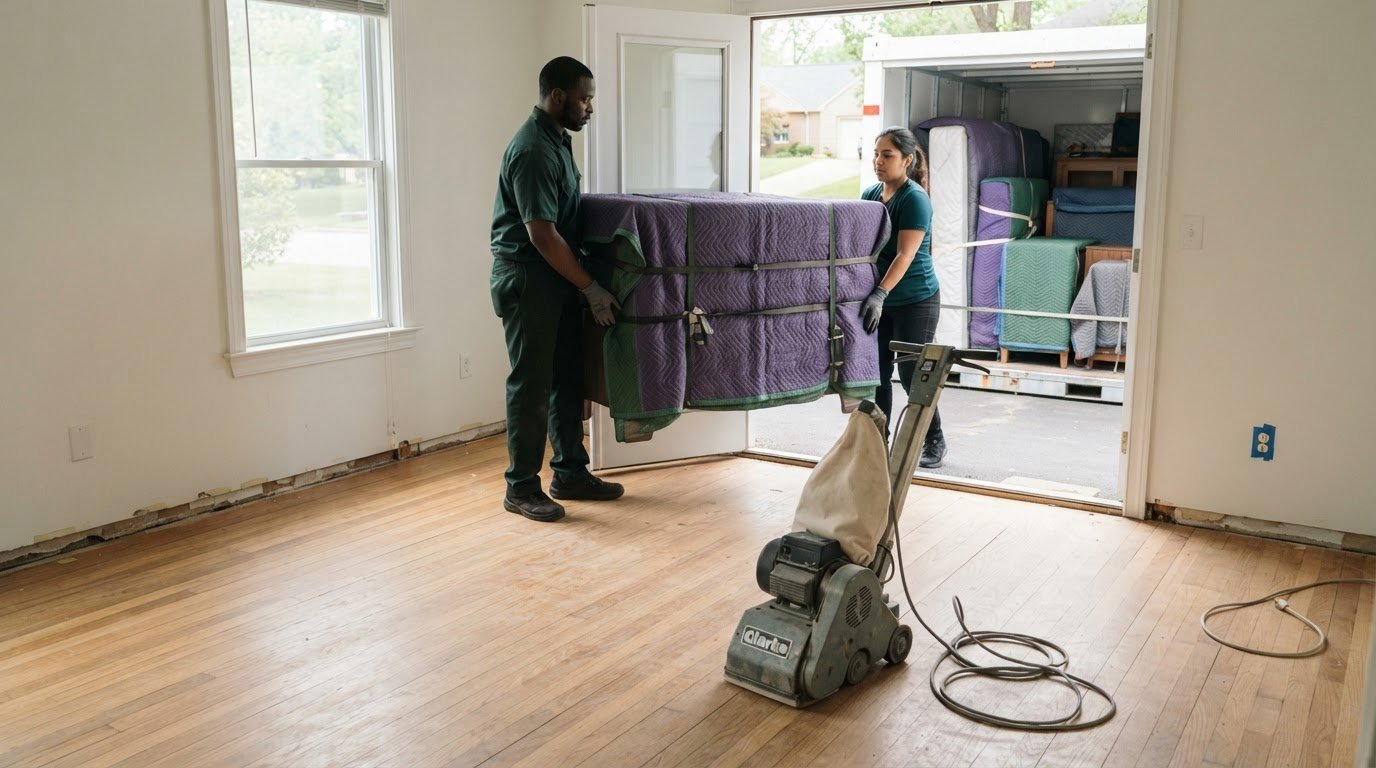
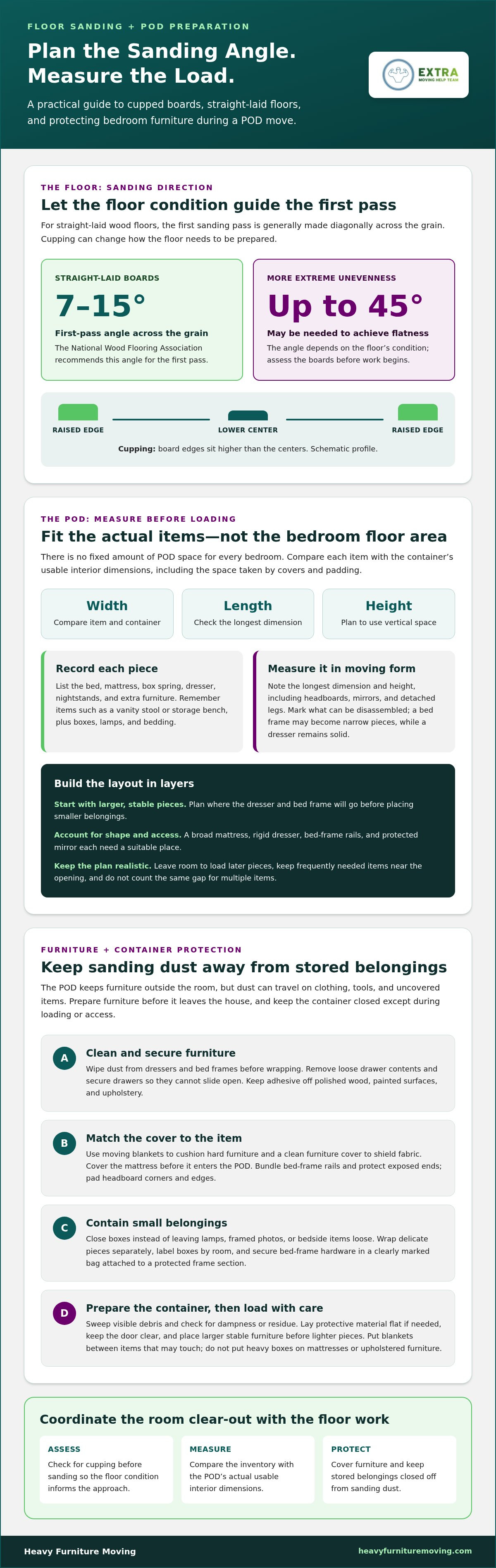
A smooth sanding job starts with the right plan, not just an empty room. For straight-laid wood floors, the first sanding pass is generally made diagonally across the grain at 7 to 15 degrees; more extreme unevenness may call for an angle of up to 45 degrees to achieve flatness. Arranging labor to move heavy bedroom furniture into a POD for floor sanding in South Riding also means planning where every bulky piece will go.
It’s easy to focus on getting the bed, dressers, and other heavy items out of the way. But cupped boards, where the edges sit higher than the centers, can affect the sanding approach. Assess the floor before work begins so its condition informs the plan.
Here, you’ll learn how cupping affects sanding, which direction to sand straight-laid floors, and how to prepare bedroom furniture for a POD move. Use these steps to coordinate clearing the room with the floor work and make the transition easier.
Key Takeaways
- Measure bulky bedroom pieces and plan their arrangement before loading so you can judge the space your furniture will need.
- Use a clear loading plan to keep heavy items organized and make room for smaller belongings.
- Protect furniture from sanding dust by covering it before it goes into the container.
- Assess cupped flooring before sanding, since its shape can affect how the floor should be prepared.
- Plan the sanding direction for straight-laid boards before clearing the room, so furniture moving and floor work can fit together.
4. How much space is needed in a POD for bedroom furniture
There isn’t one fixed amount of POD space for every bedroom. A queen bed, two dressers, and a chest take up a different footprint from a bed, nightstands, and an upholstered bench. List each piece you plan to move. The container’s usable interior dimensions and each item’s size determine whether everything fits. Compare width, length, and height before loading instead of estimating from the bedroom’s floor area.
Measure each item in its moving form. A bed frame may become several narrow pieces after disassembly, while a dresser remains a large, solid shape. Record the longest dimension and height of each item, including headboards, mirrors, and detached legs. A tall dresser, for example, may fit upright but not lie flat beside a mattress. These measurements help you plan a layout that uses the container’s height as well as its floor.
Make a simple inventory before moving day. List the bed, mattress, box spring, dresser, nightstands, and any extra furniture. Include easy-to-overlook items such as a vanity stool or storage bench, and mark which pieces can be taken apart. This list becomes your loading plan and shows whether the bedroom contents include boxes, lamps, and bedding that also need space.
Group pieces by shape and handling needs. A mattress is broad and flexible compared with a rigid dresser. A bed frame can often be separated into rails and a headboard, while a mirror needs its own protected position. Account for these differences: a narrow gap that seems useful for a lamp might not fit a boxed mirror. Sketching the POD floor as a rectangle can help reveal conflicts.
Plan in layers, not just by floor area. Map out larger, stable pieces first, then decide where smaller items can go without blocking access. A dresser and disassembled bed frame may fit differently from a dresser beside an assembled bed. Keep frequently needed items near the opening if you’ll retrieve them before sanding ends, and don’t count the same gap for more than one piece.
Check the container’s interior measurements against your inventory. Use the actual dimensions of your POD, since container size and usable space can vary. Compare each large item’s width, depth, and height with the available space, then account for covers and padding, which add bulk. A wrapped mattress, for example, can take up more room than an uncovered one.
Loading order affects how much usable space remains. Plan which items must go in first, then consider the shape and access needs of each following piece. Bed-frame rails may fit along a side, while a dresser takes up a broader section. Leave room to place later pieces, and avoid a tightly packed layout that makes loading the final items impractical.
Floor sanding also shapes what stays inside the POD. If the bedroom has cupped boards, the raised edges and lower centers affect the floor’s surface. The sanding approach should account for that condition. For straight-laid wood floors, the National Wood Flooring Association recommends a first pass at an angle of seven to 15 degrees. More extreme cases may need angles up to 45 degrees to achieve flatness.
Before moving furniture, confirm your inventory, compare each piece with the POD’s interior dimensions, and revise the sketch if a large item won’t fit as planned. Disassemble the bed frame if its assembled shape wastes space. For labor to move heavy bedroom furniture into a POD for floor sanding in South Riding, a measured inventory gives the crew a clearer picture of the load and available space.
5. Best way to protect a storage container and furniture during floor sanding
Keep sanding dust away from bedroom furniture by separating the work area from stored items. The POD keeps furniture outside the room, but dust can travel on clothing, tools, and uncovered belongings. Prepare each piece before it leaves the house: wrap clean furniture, close boxes, and keep the container door shut except during loading or access. This sequence helps limit dust transfer and protect furniture finishes during the flooring work.
Start with a clean, dry surface. Wipe dust from dressers and bed frames before wrapping them, so trapped grit won’t rub against the finish during transport. Remove loose drawer contents and secure the drawers so they can’t slide open. Cover a wooden headboard’s corners and edges with moving blankets before adding a snug outer wrap. Keep adhesive off polished wood, painted surfaces, and upholstery.
Choose protection suited to each item. Moving blankets cushion hard furniture, while a clean furniture cover helps shield fabric from airborne dust. Put a fitted protective cover on the mattress before it enters the POD, and keep the cover intact as you move it through the house. If the bed frame comes apart, bundle the rails together and protect exposed ends that could scrape another piece.
Pack smaller belongings in closed boxes instead of leaving them loose on a dresser. Lamps, framed photos, and bedside items can collect dust or shift against furniture. Wrap delicate pieces separately, label each box by room, and place it where it won’t press against an upholstered chair or mattress. Put bed-frame hardware in a closed, clearly marked bag and secure it to a protected frame section, not directly to the finish.
Prepare the container before loading. Sweep out visible debris and check the floor and walls for dampness or residue. Lay down clean protective material if the container surface could scuff furniture or collect grime. Keep coverings flat so they don’t bunch beneath heavy pieces. Leave the door clear and avoid stacking items where they could fall when the container opens. A clear loading path makes protected furniture easier to handle.
Load in a controlled order. Place larger, stable furniture first, then fit lighter pieces into planned spaces. Put blankets between items that could touch during movement. Don’t place heavy boxes on mattresses or upholstered furniture, as the weight can leave dents or distort soft surfaces. Secure mirrors and framed items in a protected position, separated from hard edges. Check each piece before closing the doors.
During sanding, limit trips between the work area and the POD. Workers entering the bedroom can carry dust on shoes or clothing, so keep the route clear and don’t set wrapped furniture on the sanding floor. If an item must return indoors, remove its outer covering outside the room. Don’t shake a dusty cover near clean furniture. Replace it with a fresh cover before carrying the piece through the work area.
Before moving furniture back, make sure the floor work is complete and the room is ready for furnishings. Keep the POD closed until the pieces are needed, then inspect each cover for dust or tears. Remove coverings away from the bedroom and wipe hard surfaces before returning items. For help coordinating bulky pieces through the home and into a POD, get help moving bedroom furniture.
Heavy Furniture Moving: Movers Near Me
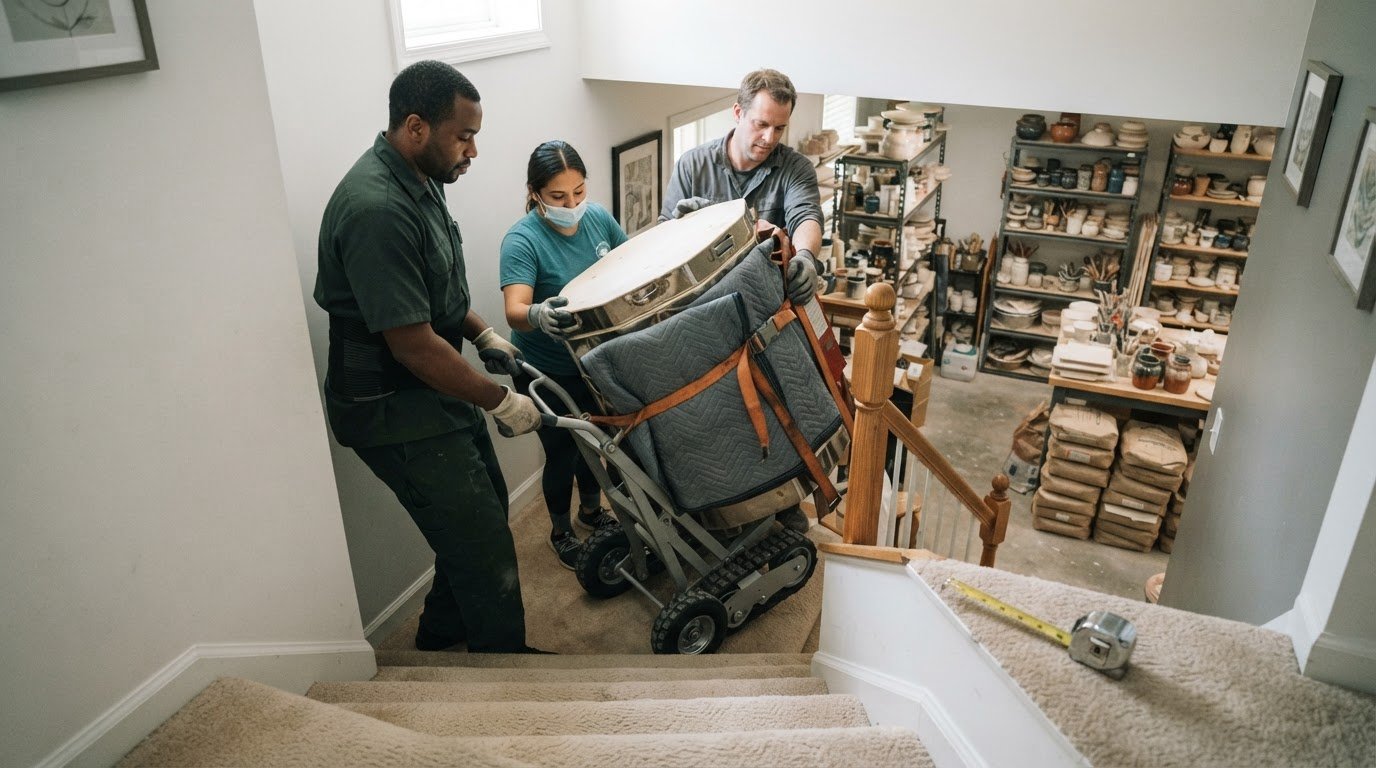
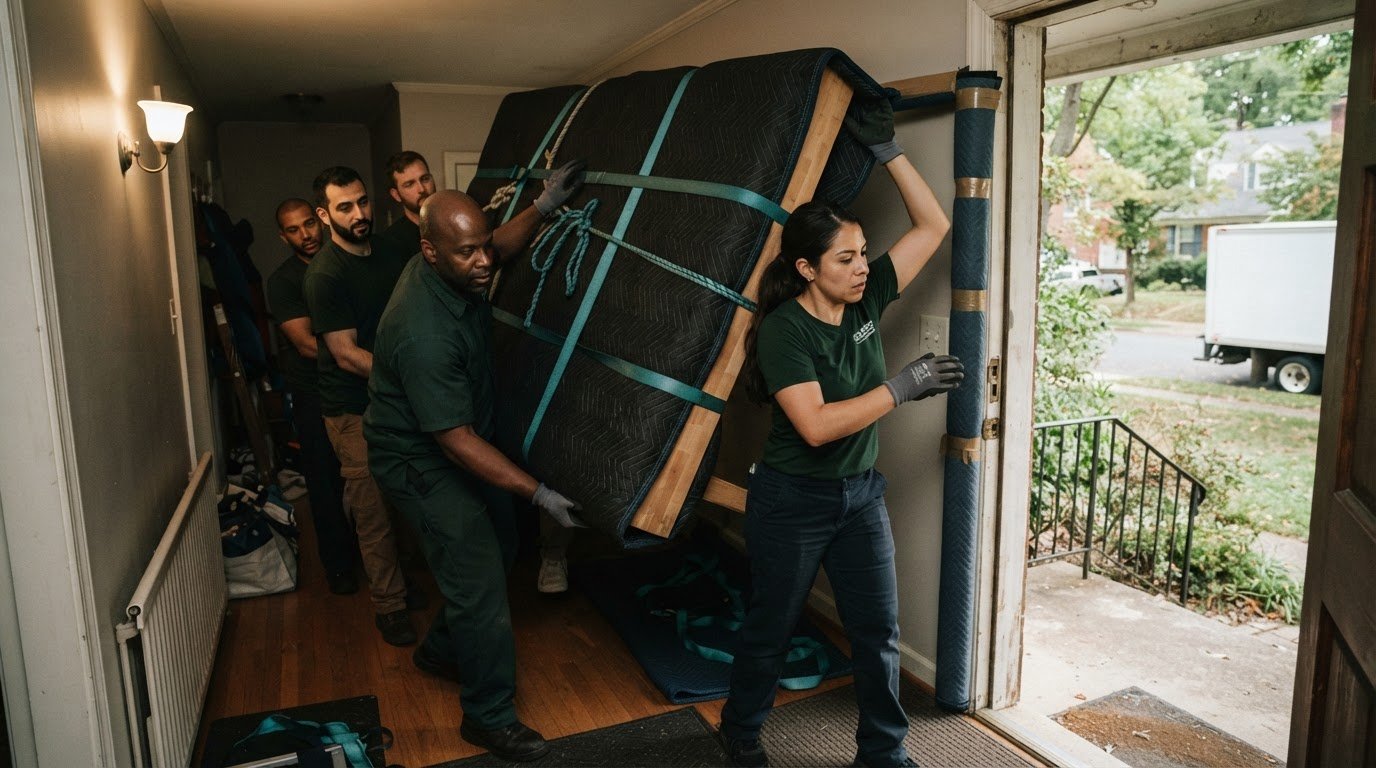
Heavy Furniture Moving can help clear a bedroom when sanding requires bulky pieces to be moved out of the work area. Its Movers Near Me service handles heavy furniture such as beds and dressers, including loading items into a POD. This can help when tight doorways, awkward turns, or heavy pieces make moving furniture yourself difficult. If furniture needs repositioning inside the home, in home furniture movers near me can help prepare the space for floor work.
List the items to be moved and where they need to go so the job can be planned around your sanding preparation. Contact Heavy Furniture Moving to discuss help with your bedroom furniture move.
Make the Move Easier to Manage
Before moving day, decide which pieces need to leave the bedroom and which items must stay accessible. This creates a clear handoff plan and helps prevent last-minute reshuffling around the POD. If you need labor to move heavy bedroom furniture into a POD for floor sanding in South Riding, list the largest pieces and the route they’ll take through your home.
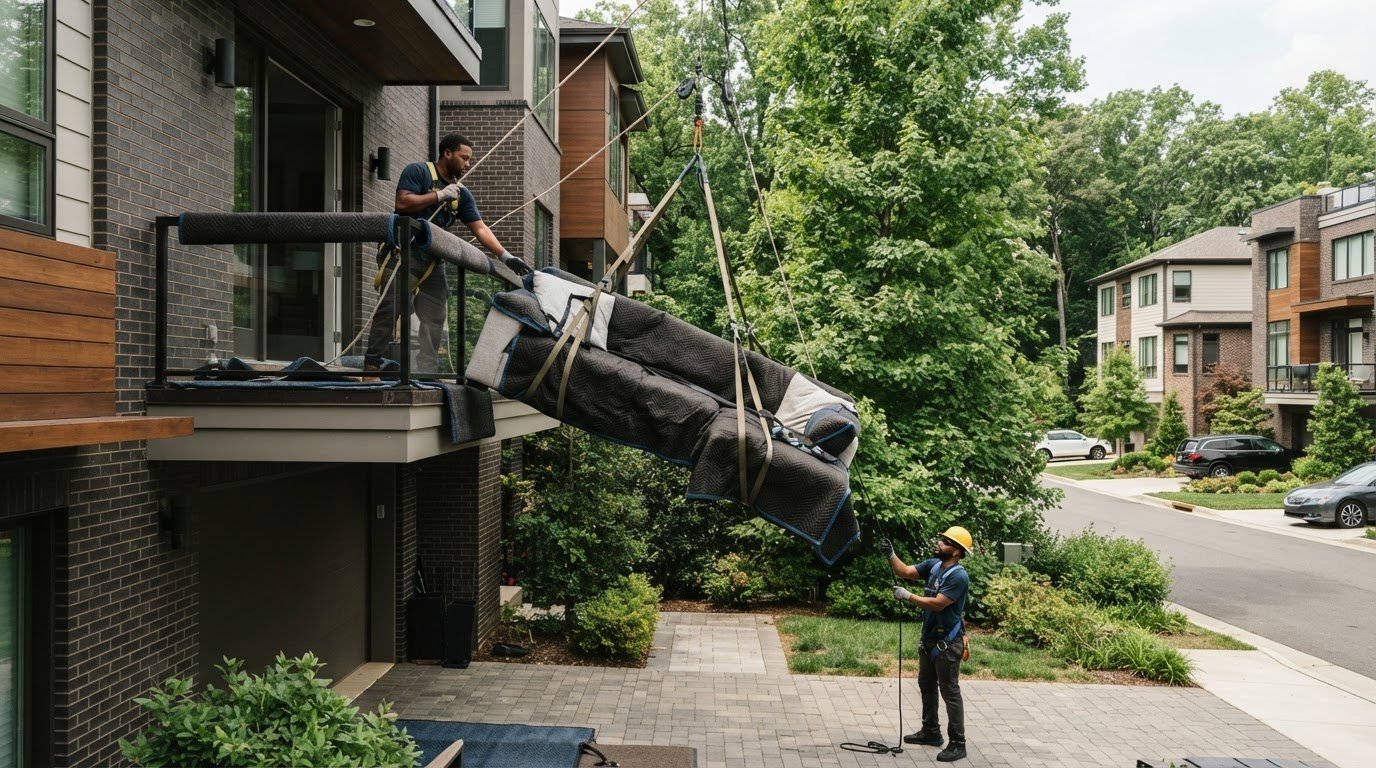
Heavy Furniture Moving offers Movers Near Me for furniture moves, Exercise Equipment Moving, and Sofa Hoisting for other bulky items. These services can help when the job involves more than carrying small belongings or lightweight boxes. Share the key details of your move to plan the next step.
Contact Heavy Furniture Moving for help, and get your bedroom move moving forward with confidence.
Frequently Asked Questions
Furniture movers in South Riding, VA to move heavy bedroom furniture into a POD?
For labor to move heavy bedroom furniture into a POD for floor sanding in South Riding, Heavy Furniture Moving provides labor-only POD loading. The crew can handle a bed frame, dresser, and nightstands, with wrap, blankets, and straps included on every job. Share photos of the furniture, stairs, and access route when requesting a quote. Service areas include Fairfax, Woodbridge, Manassas, Manassas Park, Aldie, Ashburn, Mclean, Vienna, Reston, Centreville, Chantilly, Clifton, Dumfries, Fairfax Station, Haymarket, and Gainesville.
What does it cost to move a bedroom set into a storage container for floor sanding?
The cost depends on the labor time needed, the number and size of the pieces, and conditions such as stairs, tight turns, or the distance to the container. Heavy Furniture Moving charges hourly labor with a 2-hour minimum, and labor-only service is available when you provide the POD or container. For a useful quote, send photos of the bedroom set and access points so the crew can assess the job before arrival.
How should I prepare a bedroom and furniture for hardwood floor sanding?
Clear the room so the sanding crew can reach the entire floor. Remove bedding, lamps, rugs, wall decor, and items stored in drawers; empty dressers before moving them. Disconnect electronics and label any hardware removed from bed frames. Keep pets and children away from the work area, and ask your flooring contractor when the room can be used again. Before loading furniture into the POD, pack small loose parts in labeled bags.
Frequently Asked Questions
For labor to move heavy bedroom furniture into a POD for floor sanding in South Riding, Heavy Furniture Moving provides labor-only POD loading. The crew can handle a bed frame, dresser, and nightstands, with wrap, blankets, and straps included on every job. Share photos of the furniture, stairs, and access route when requesting a quote. Service areas include Fairfax, Woodbridge, Manassas, Manassas Park, Aldie, Ashburn, Mclean, Vienna, Reston, Centreville, Chantilly, Clifton, Dumfries, Fairfax Station, Haymarket, and Gainesville.
The cost depends on the labor time needed, the number and size of the pieces, and conditions such as stairs, tight turns, or the distance to the container. Heavy Furniture Moving charges hourly labor with a 2-hour minimum, and labor-only service is available when you provide the POD or container. For a useful quote, send photos of the bedroom set and access points so the crew can assess the job before arrival.
Clear the room so the sanding crew can reach the entire floor. Remove bedding, lamps, rugs, wall decor, and items stored in drawers; empty dressers before moving them. Disconnect electronics and label any hardware removed from bed frames. Keep pets and children away from the work area, and ask your flooring contractor when the room can be used again. Before loading furniture into the POD, pack small loose parts in labeled bags.