Peace of Mind When Moving Valuable Antiques in Dumfries, VA
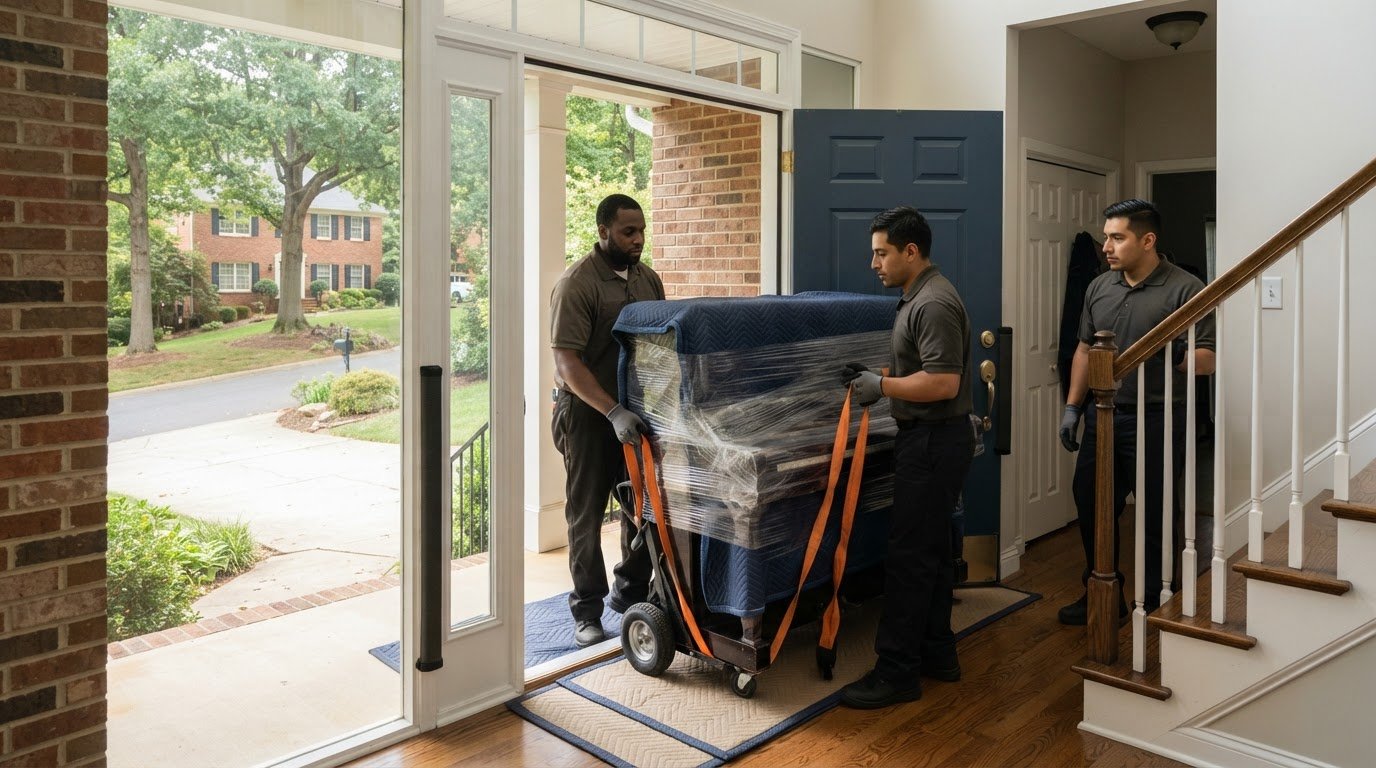
What if the safest antique move begins before anyone lifts a cabinet? For peace of mind when moving valuable antiques Dumfries, plan the piece, its route, and its handling together. A fragile finish, loose leg, or glass panel can be vulnerable, while a narrow turn or stairway can add pressure on moving day.
It’s natural to worry about scratches or hidden damage, especially when an antique has personal or financial value. A clear preparation routine helps replace guesswork with practical steps. Photograph the piece, note existing wear, identify loose parts, and share its approximate size, weight, and handling concerns with your moving team.
This guide covers how to prepare antiques, map access challenges, and organize condition records. You’ll also learn what information to share when arranging local residential and heavy-item moving support in Dumfries, so you can approach moving day with a clear plan.
Key Takeaways
- Build peace of mind when moving valuable antiques Dumfries by planning each piece, its route, and its handling before moving day.
- Photograph each antique, list its components, clear its drawers and cabinets, and point out loose parts or delicate finishes.
- Check stairs, tight turns, and entryways at both homes to spot access challenges early.
- Keep condition records and handling notes accessible during loading and final placement.
- Local residential and heavy-item moving support can help with substantial lifting and route coordination.
Why Moving Valuable Antiques in Dumfries Deserves a Clear Plan
An inherited cabinet, a collectible dining table, or a delicate family heirloom can carry more than one kind of value. Its worth may be financial, sentimental, historical, or all three. That makes the thought of scratches, loosened parts, or a difficult turn understandably stressful. Planning helps you identify what needs attention and what the moving team needs to know.
Antiques can be substantial and awkward to carry while still having fragile details that need care. A heavy piece is not automatically sturdy, and a lightweight item is not automatically easy to handle. Unfamiliar construction, tight turns, or unclear instructions can complicate a move. Understanding what constitutes an antique can also help you describe a piece and its significance as you plan.
Peace of mind comes from preparation, clear communication, and a realistic route plan. Consider the full path from the piece’s current location to its final room. Checking the item and route together helps you identify questions before moving day puts pressure on decisions.
Which antique details need attention before moving?
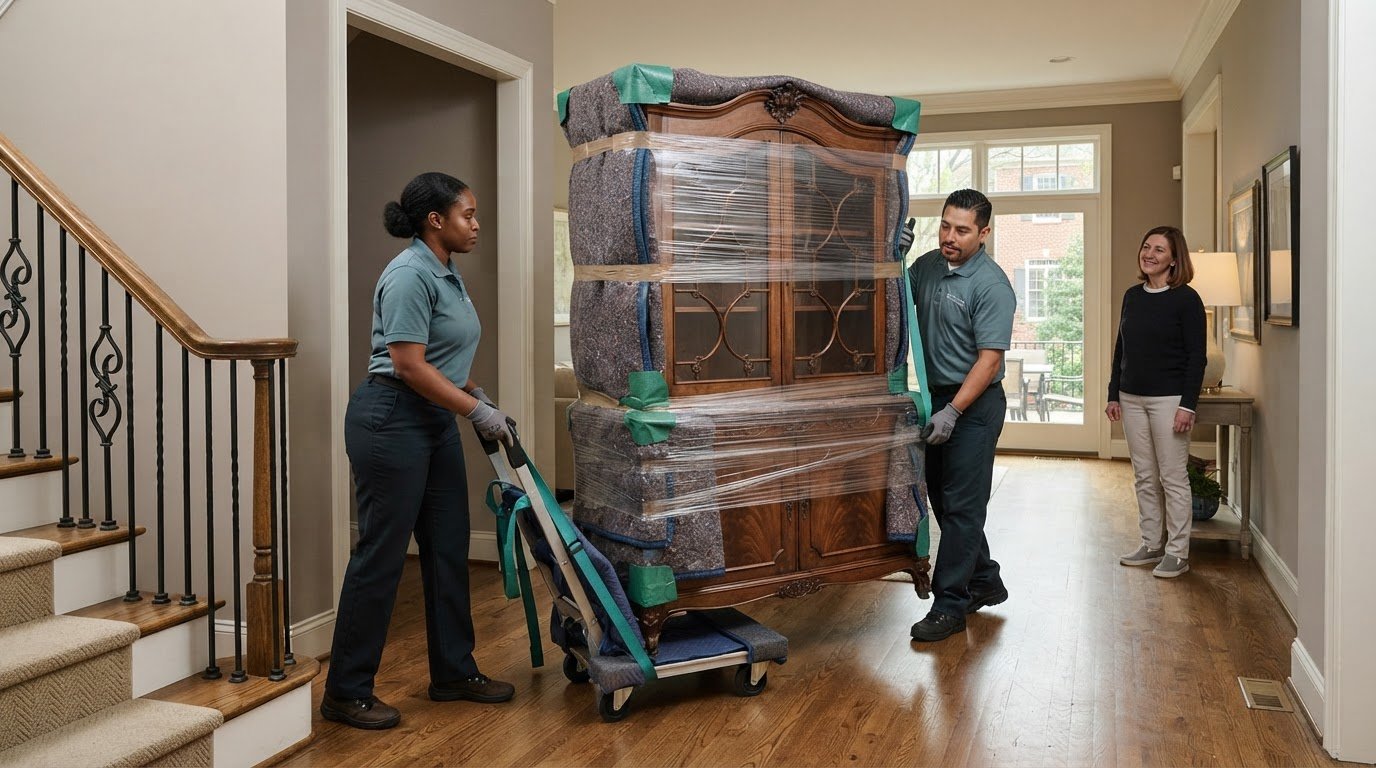
Look for delicate finishes, glass or mirrors, veneers, carved ornament, and components that shift or detach. Note existing chips, scratches, worn edges, or loose fittings, and take photos for your records. Don’t attempt repairs or disassembly just to make the piece easier to carry. Weight and fragility are separate concerns: a heavy cabinet may need substantial lifting support, while its glass panels or finish need protection from bumps and rubbing.
How Dumfries home access can affect the move
Check the route at both addresses, not just the front door. Note stairs, narrow hallways, door widths, landings, and turns where a large piece may need extra room to pass. Trace the route from its current spot to the exit, then from the entrance to its destination. Also consider where a moving vehicle can park and how people will reach the home. Use the actual layout at each property rather than assumptions about Dumfries.
Share what you find with your moving team in plain language. “Glass doors,” “loose trim,” or “tight turn at the stair landing” is more useful than simply saying an item is fragile. For substantial pieces, local residential and heavy-item moving support can help with lifting, while a clear route plan keeps everyone working from the same information. The goal is to make important details visible before the first lift.
How to Prepare Antiques for a Dumfries Move
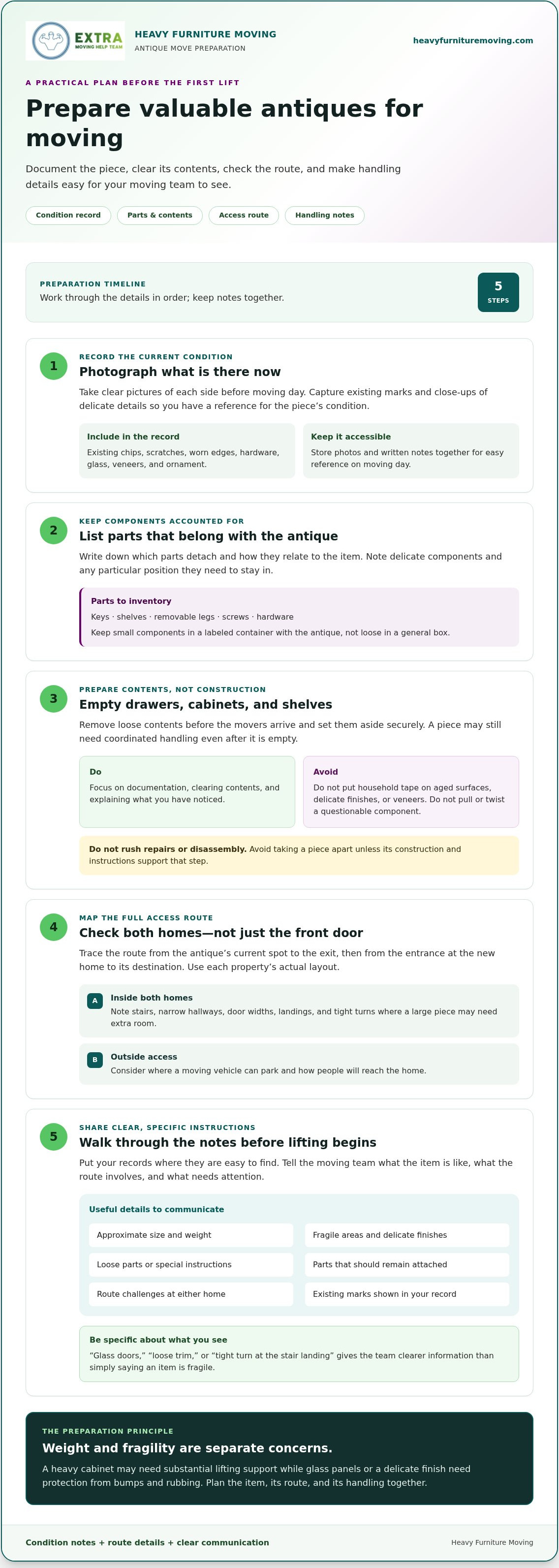
A steady preparation routine helps you protect the piece and gives the moving team useful information before lifting begins. It also supports peace of mind when moving valuable antiques Dumfries homeowners want to preserve. Work through these steps and keep your notes together so details don’t get lost among other moving-day tasks.
- Photograph the condition. Take clear pictures before moving day, including existing marks and delicate details.
- Inventory components. Record parts that belong with the item, such as keys, shelves, removable legs, or hardware.
- Clear contents. Empty drawers, cabinets, and shelves, then set their contents aside securely.
- Share handling notes. Tell the moving team about fragile areas, loose components, special instructions, and anything that should remain attached.
A condition record gives you a reference for existing marks. It’s more reliable than trying to remember every detail after a busy moving day.
Document condition and detachable parts
Photograph each side of the piece, then take close-ups of existing wear, hardware, glass, veneers, and ornament. Write down which parts detach and how they relate to the item. Keep keys, screws, shelves, and other small components in a labeled container with the antique, rather than loose in a general box. Add a short note if a part is delicate or has a particular position.
Prepare the piece without creating new risks
Remove loose contents and set them aside before movers arrive. Don’t put household tape directly on aged surfaces, delicate finishes, or veneers, since adhesive can leave marks or lift material. Avoid taking apart a piece unless its construction and instructions support that step. Complex disassembly and awkward lifting call for a suitable plan, not a rushed attempt to make the item easier to carry.
Keep your preparation focused on documentation, clearing contents, and communicating what you know. Moving and lifting are separate tasks. A heavy item may need coordinated handling even after it’s empty, while a smaller piece may still need care around fragile trim or glass. Don’t test a questionable component by pulling or twisting it. Describe what you’ve noticed so the handling plan can account for it.
Before the crew arrives, put your notes where they’re easy to find and walk through key instructions together. If the antique is substantial, local heavy-item moving support can help with the lifting as you coordinate the move. Clear records and practical preparation give everyone a useful starting point.
What to Compare When Arranging Antique Moving Help in Dumfries
A smooth booking process doesn’t explain how a particular antique will be handled. For peace of mind when moving valuable antiques Dumfries homeowners should look for a plan that connects the item’s condition with the route and work involved. Focus on whether the details of your move have been discussed, not just on broad claims about careful service.
Use these points to assess whether the plan addresses your item and both home layouts:
| Planning point | What a useful plan addresses |
|---|---|
| Item assessment | Dimensions, approximate weight, condition, and delicate features such as glass or ornament. |
| Route planning | Pickup and delivery access, stairs, narrow turns, and the intended placement location. |
| Protection approach | How the item’s vulnerable areas and detachable parts will be considered during preparation and handling. |
| Communication | Who needs to know each detail and how instructions will stay clear before moving day. |
What should a useful handling conversation cover?
Describe the piece with practical details: its approximate dimensions and weight, visible condition, and features that need care. Explain whether it has glass panels, delicate trim, loose hardware, or other parts that affect handling. Then walk through the route at both addresses, including stairs, turns, entryways, and where you want the antique placed. Specific information helps align expectations and gives the move a shared plan.
Photos and written notes can make this conversation easier. Instead of saying only “it’s fragile,” point out what makes it vulnerable and where that feature is located. Mention a tight landing or narrow doorway rather than simply saying access is difficult. These details help the team understand the job before moving day and reduce reliance on last-minute explanations.
How to judge whether the plan fits your antique
Look for a sensible sequence that addresses preparation, lifting, transport, and final placement. A useful explanation connects those steps to the item and route you described. Ask how the plan accounts for details such as a glass-front cabinet or a heavy piece facing a narrow stair turn. The next steps should be clear and specific to the move.
Heavy Furniture Moving provides residential and heavy-item moving support in Dumfries. That local help can reduce the strain of lifting substantial furniture while keeping attention on the practical details you’ve shared. As you arrange the move, make sure the item, access route, and intended placement are part of the conversation. A clear sequence is a stronger foundation for an organized move than a quick booking alone.
A Practical Antique-Moving Checklist for Dumfries Moving Day
A short checklist turns your preparation into clear actions on moving day. Keep the antique’s condition record and handling notes within reach, not packed in a box or buried in your phone. Use this timeline to check the item, route, and destination before the move gets underway.
The day before
- Finish removing contents from drawers, cabinets, and shelves. Store those belongings separately so nothing shifts inside the piece.
- Set aside condition photos, written notes, and relevant keys or detached components. Keep small parts labeled and grouped with the antique.
- Walk the planned path from the item’s room to the exit and vehicle. Move everyday obstacles out of the way and note any access detail that has changed.
- Make sure the destination room has enough clear space for the piece and for people to move around it.
Use the final route check to catch simple snags: blocked walkways, doors that can’t open fully, crowded stairs, or a turn narrowed by other furniture. Include parking and access arrangements at both addresses, based on the actual homes and move plan.
When the crew arrives
- Keep your photos and handling notes accessible. Point out the antique’s fragile features, condition concerns, and any parts that need separate attention.
- Show the route, including stairs, hallways, and turns. Flag changes since planning, such as a newly blocked doorway or items left in the path.
- Keep pets and bystanders away from the active work area so the team has room to focus and move safely.
Be clear about the final room and exact placement area before lifting begins. “The back room” may be open to interpretation. Identifying the room and the spot within it helps avoid an unnecessary second move through the home.
During loading
Keep the access path clear while the antique is being carried. Don’t crowd the team or try to adjust the piece mid-lift. If you remember a relevant detail, share it before the item moves or wait until it’s safely set down. Keep detachable components and their notes together so they don’t get separated from the piece during loading.
At final placement
Once the antique is in its intended spot, compare its visible condition with your photos and notes. Look over the areas you documented, then record any new concern promptly while the details are fresh. Keep the condition record and moving notes together for reference after the crew leaves.
A few focused checks can make the day feel more organized and support peace of mind when moving valuable antiques Dumfries residents want to protect. For help with heavy lifting and residential move logistics, arrange local moving support with Heavy Furniture Moving.
Arrange Local Heavy-Item Moving Support for Antiques in Dumfries
A well-planned antique move brings four pieces together: clear information about the item, a realistic route, a prepared space, and moving help suited to the lifting involved. That approach can reduce last-minute decisions and make the work easier to coordinate. Heavy Furniture Moving provides residential and heavy-item moving support in Dumfries for substantial household furniture as part of a local move.
Before moving day, organize the essentials:
- Document the piece. Gather photos, dimensions, condition notes, and a list of loose or detachable parts.
- Map the route. Note access at both homes, including stairs, hallways, turns, and the path to the vehicle.
- Prepare the space. Clear the work area and make sure the intended placement spot is ready.
- Coordinate the move. Share the item’s details and access information so the lifting and route can be discussed as one plan.
How Heavy Furniture Moving can help with the heavy work
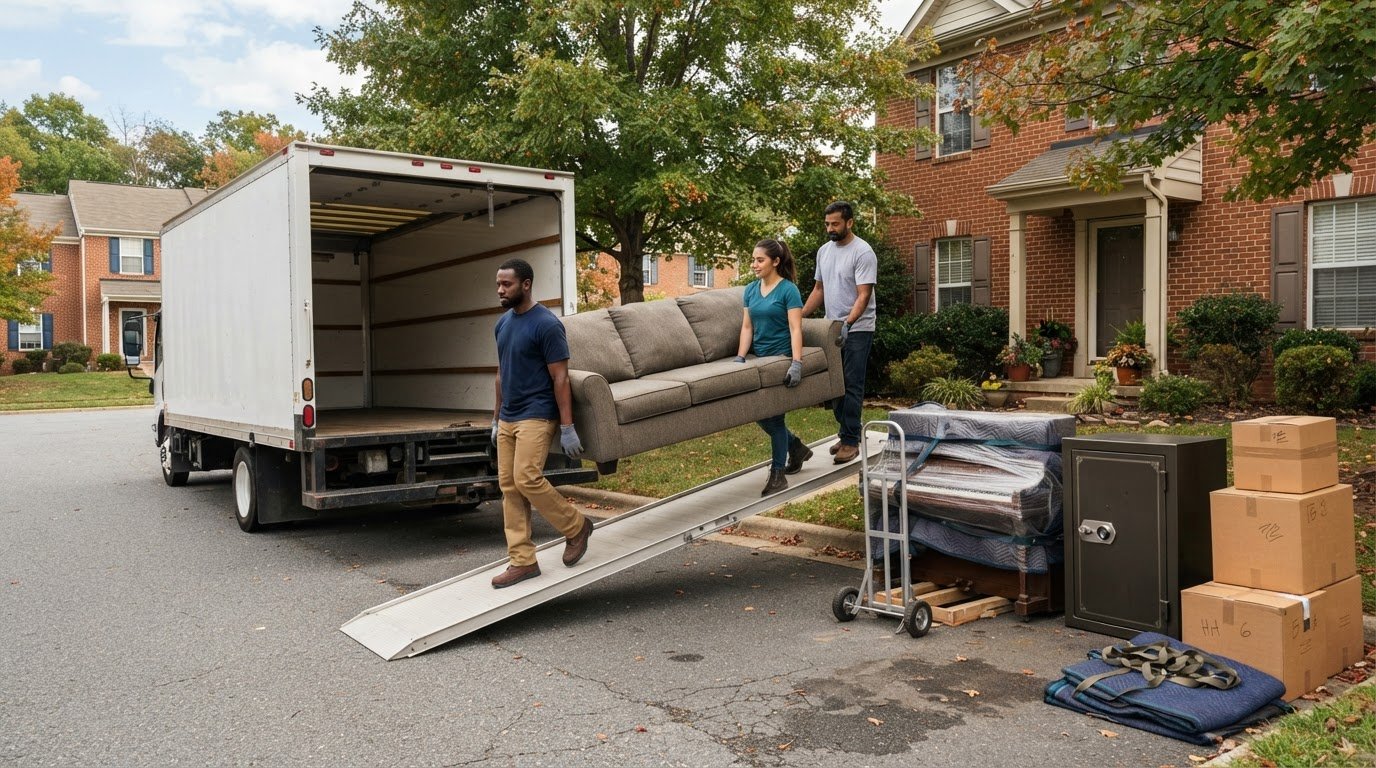
Residential moving support can help organize a local furniture move, while heavy-item moving is useful when a substantial household piece needs coordinated lifting. Sharing the antique’s estimated weight, dimensions, condition, and access challenges makes the moving conversation specific to your situation. The right plan depends on the piece and the route through each home.
Heavy Furniture Moving is veteran-family owned and operated and serves Dumfries among its Northern Virginia service areas. The company also serves Fairfax, Woodbridge, Manassas, Manassas Park, Aldie, Ashburn, Mclean, Vienna, Reston, Centreville, Chantilly, Clifton, South Riding, Fairfax Station, Haymarket, and Gainesville. For broader local context, explore reliable movers in Fairfax and Northern Virginia. Plan around the actual homes and route rather than assuming one approach fits every antique or property.
Make the next step straightforward
Have the item’s photos, dimensions, condition notes, and access details ready. Explain where the piece is now, where it needs to go, and any stairs, tight turns, or placement challenges along the way. Include concerns about delicate features or detachable parts. This gives the moving team a useful picture of the work and helps align expectations before the move.
Planning for peace of mind when moving valuable antiques Dumfries means treating preparation, access, and lifting as parts of the same job. You can organize the notes and route details, then arrange practical residential and heavy-item moving help for the physical work. Arrange your Dumfries moving help.
Take the Next Step With a Clear Plan
Let a practical plan guide your antique move instead of focusing on what might go wrong. Before setting the move in motion, decide who will share key instructions, where the piece needs to go, and what would help you feel ready for the handoff. A short conversation about the move’s priorities can bring focus to the details that matter most.
Planning for peace of mind when moving valuable antiques Dumfries means making room for both the physical work and the personal value of the piece. Give yourself time to prepare, communicate clearly, and arrange help that fits the move.
Heavy Furniture Moving provides local residential and heavy-item moving support for your move. Arrange your Dumfries moving help and take the next step with a clear plan for the item, route, and lifting involved.
Frequently Asked Questions
How do I get peace of mind when moving valuable antiques in Dumfries?
Start by learning what the piece is worth and what protection applies to it during the move. For a valuable antique, consider getting a professional appraisal and reviewing your homeowner’s policy or separate moving insurance. Keep written records of the item’s value and condition. Knowing who to contact about coverage and what documentation is needed can ease uncertainty beyond the physical move itself.
Can regular movers move valuable antique furniture?
Moving substantial antique furniture may be part of a residential or heavy-item move, but the item’s features and access route shape the plan. Heavy Furniture Moving provides residential and heavy-item moving support in Dumfries. Share details such as unusual construction, glass, or fragile ornament so those features can be considered as part of the move. Discuss the specific handling needs of the piece when arranging the work.
What should I do before movers handle an antique?
Tell the moving team about anything that could affect how the piece should be handled, such as an unstable leg, a door that doesn’t latch, or a repair that affects its structure. Don’t clean, polish, or apply products to the antique right before the move, since this can alter its surface or leave residue. Keep keys and any maker or care instructions available for reference.
How can I protect antique furniture from scratches during a move?
Reduce contact with nearby objects before the piece is moved. Clear the floor of small items, pull nearby chairs or tables out of the path, and keep doors from swinging into the furniture. Avoid placing household tape directly on the finish, since adhesive may leave residue or affect an aged surface. Point out delicate edges and polished areas so they’re considered during handling.
Should I empty antique drawers before moving?
Yes, remove loose contents from drawers and cabinets before the move. Objects inside can shift, press against the interior, or add weight in places that make the furniture harder to handle. Pack those belongings separately and keep fragile contents from mixing with hardware or other small parts. If a drawer itself is loose or difficult to remove, mention that before anyone tries to force it.
How do stairs and narrow hallways affect moving antiques in Dumfries?
Stairs and tight passages can limit the angle and room available to move a large piece, so the route may affect how the move is organized. Measure the narrowest doorway or passage and note landings, low ceilings, and sharp turns. A route that works at pickup may differ from the one at delivery. Share these details early to help avoid rushed decisions at either home.
Is professional moving help worthwhile for one valuable antique?
It can be worthwhile if the piece is heavy, awkward to carry, or difficult to maneuver through your home. Help with one item can reduce physical strain and give the move a clearer plan than an improvised lift with friends. Heavy Furniture Moving offers local residential and heavy-item moving support in Dumfries. Consider the item’s size, route, and your own ability when deciding how much help you need.
Frequently Asked Questions
Look for delicate finishes, glass or mirrors, veneers, carved ornament, and components that shift or detach. Note existing chips, scratches, worn edges, or loose fittings, and take photos for your records. Don’t attempt repairs or disassembly just to make the piece easier to carry. Weight and fragility are separate concerns: a heavy cabinet may need substantial lifting support, while its glass panels or finish need protection from bumps and rubbing.
Describe the piece with practical details: its approximate dimensions and weight, visible condition, and features that need care. Explain whether it has glass panels, delicate trim, loose hardware, or other parts that affect handling. Then walk through the route at both addresses, including stairs, turns, entryways, and where you want the antique placed. Specific information helps align expectations and gives the move a shared plan. Photos and written notes can make this conversation easier. Instead of saying only “it’s fragile,” point out what makes it vulnerable and where that feature is located. Mention a tight landing or narrow doorway rather than simply saying access is difficult. These details help the team understand the job before moving day and reduce reliance on last-minute explanations.
Start by learning what the piece is worth and what protection applies to it during the move. For a valuable antique, consider getting a professional appraisal and reviewing your homeowner’s policy or separate moving insurance. Keep written records of the item’s value and condition. Knowing who to contact about coverage and what documentation is needed can ease uncertainty beyond the physical move itself.
Moving substantial antique furniture may be part of a residential or heavy-item move, but the item’s features and access route shape the plan. Heavy Furniture Moving provides residential and heavy-item moving support in Dumfries. Share details such as unusual construction, glass, or fragile ornament so those features can be considered as part of the move. Discuss the specific handling needs of the piece when arranging the work.
Tell the moving team about anything that could affect how the piece should be handled, such as an unstable leg, a door that doesn’t latch, or a repair that affects its structure. Don’t clean, polish, or apply products to the antique right before the move, since this can alter its surface or leave residue. Keep keys and any maker or care instructions available for reference.
Reduce contact with nearby objects before the piece is moved. Clear the floor of small items, pull nearby chairs or tables out of the path, and keep doors from swinging into the furniture. Avoid placing household tape directly on the finish, since adhesive may leave residue or affect an aged surface. Point out delicate edges and polished areas so they’re considered during handling.
Yes, remove loose contents from drawers and cabinets before the move. Objects inside can shift, press against the interior, or add weight in places that make the furniture harder to handle. Pack those belongings separately and keep fragile contents from mixing with hardware or other small parts. If a drawer itself is loose or difficult to remove, mention that before anyone tries to force it.
Stairs and tight passages can limit the angle and room available to move a large piece, so the route may affect how the move is organized. Measure the narrowest doorway or passage and note landings, low ceilings, and sharp turns. A route that works at pickup may differ from the one at delivery. Share these details early to help avoid rushed decisions at either home.
It can be worthwhile if the piece is heavy, awkward to carry, or difficult to maneuver through your home. Help with one item can reduce physical strain and give the move a clearer plan than an improvised lift with friends. Heavy Furniture Moving offers local residential and heavy-item moving support in Dumfries. Consider the item’s size, route, and your own ability when deciding how much help you need.