Office Moving Services in McLean VA: Heavy Lifting Help
A McLean office move is easier to manage when the plan is clear before the first desk is lifted. Office moving services in McLean, VA depend on an accurate inventory, access plans for both locations, and a move sequence that gets essential workstations and equipment in place first. This level of careful coordination matters for every local commercial relocation.
Downtime is a sensible first concern. Packing, heavy lifting, building access, and setup can disrupt staff when they happen without a shared schedule. Assign each task and make clear what needs to be ready before moving day.
This guide covers how to map the move, coordinate building logistics, protect heavy and bulky items, and organize the work so your team can resume operations with less disruption. It also explains which decisions affect timing and how professional help from Heavy Furniture Moving can take the physical load off your staff. The goal is a practical path from your current office to the next one.
Key Takeaways
- Build a move plan around an item inventory, building access, and the order your team needs equipment and workstations ready.
- Coordinate loading and setup to help limit disruption, and account for building rules that may affect moving times.
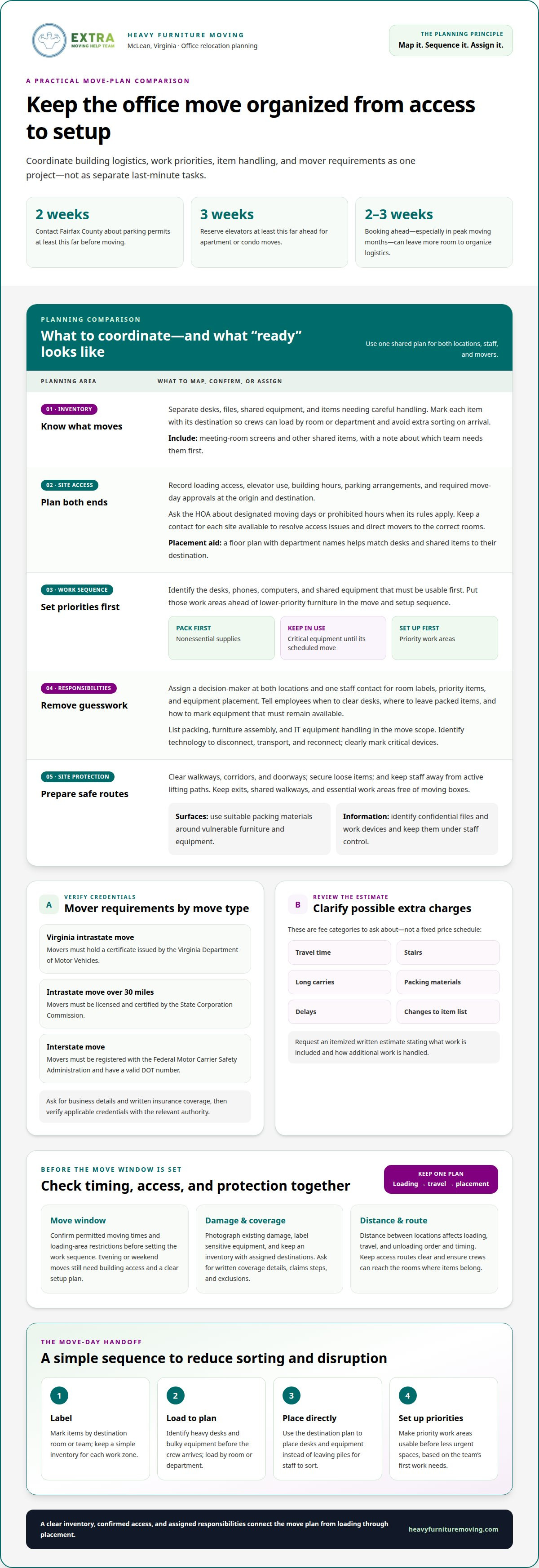
- For apartment or condo moves, reserve elevators at least 3 weeks in advance; contact Fairfax County about parking permits at least 2 weeks before moving.
- Start planning early. Booking 2-3 weeks ahead, especially during peak moving months, can give you more room to organize logistics.
- Identify heavy or bulky items that need extra hands, then choose moving help that fits the physical work involved.
Business relocation planning and project management
An office relocation in McLean needs a sequence for staff, equipment, building access, and loading. When comparing office moving services in McLean, VA, start by mapping each task and assigning a decision-maker at both locations.
Create an inventory that separates desks, files, shared equipment, and items needing careful handling. Mark each item with its destination so crews can load by room or department and avoid extra sorting on arrival. Include shared items such as meeting-room screens, and note which team needs them first.
Corporate Relocation Logistics
Coordinate the origin and destination as one project. Record loading access, elevator use, building hours, parking arrangements, and required move-day approvals. In McLean, contact Fairfax County about parking permits at least 2 weeks before moving. Ask the HOA about designated moving days or prohibited hours when the office is in a property with HOA rules.
For apartment or condo moves, reserve elevators at least 3 weeks in advance. Keep a contact for each site available to resolve access issues and direct movers to the correct rooms. A floor plan with department names helps match each desk and shared item to its destination.
Virginia intrastate movers must hold a certificate issued by the Virginia Department of Motor Vehicles. For an intrastate move over 30 miles, movers must be licensed and certified by the State Corporation Commission. Interstate movers must be registered with the Federal Motor Carrier Safety Administration and have a valid DOT number. Ask for business details and written insurance coverage, then verify applicable credentials with the relevant authority.
Risks and Hidden Moving Fees
Before signing, read the estimate and service terms for charges tied to travel time, stairs, long carries, packing materials, delays, or changes to the item list. These are possible fee categories to clarify, not a fixed price schedule. Request an itemized written estimate that states included work and how additional work is handled.
Damage, misplaced items, and delayed access can disrupt office operations. Photograph existing damage, label sensitive equipment, and keep an inventory with assigned destinations. Ask for written details about coverage, claims steps, and exclusions; don’t assume “insured” explains what protection applies.
Packing, furniture assembly, and IT equipment handling are separate tasks, so list each in the move scope and assign responsibility. Identify which technology needs to be disconnected, transported, and reconnected, and clearly mark critical devices. That lets movers follow the loading plan without guessing what is ready or where it belongs.
For safer loading, clear walkways, secure loose items, and keep staff away from active lifting paths. Identify heavy desks and bulky equipment before the crew arrives. In Northern Virginia, office moving services in McLean work best when the plan accounts for building access and assigns responsibility from loading through placement.
Minimizing business downtime
Decide what must be usable first at the new office to limit disruption. Identify essential desks, phones, computers, and shared equipment, then organize their move and placement around your team’s first work priorities. A department that needs its equipment immediately should not be left waiting behind lower-priority furniture.
Divide the move into clear work zones. Label items by destination room or team, and keep a simple inventory for each zone. This helps crews place desks and equipment directly instead of leaving piles for staff to sort. Mark items that need to stay accessible during packing, such as files or devices required for active work.
Plan the sequence around the business day. For example, pack nonessential supplies first, keep critical equipment in use until its scheduled move, then set up priority work areas before less urgent spaces. Tell employees when to clear desks, where to leave packed items, and how to identify equipment that must remain available.
Distance between locations affects the order and timing of loading, travel, and unloading. Keep access routes clear at both sites, and make sure the crew can reach the rooms where items belong. In Virginia, building rules can also shape the schedule: confirm permitted moving times and any restrictions on loading areas before setting the work sequence.
- Protect the route: Clear corridors and doorways before furniture moves through them.
- Protect surfaces: Use suitable packing materials around vulnerable furniture and equipment.
- Protect access: Keep exits, shared walkways, and essential work areas free of moving boxes.
- Protect information: Keep confidential files and work devices identified and under staff control.
These steps reduce unnecessary handling and help protect building surfaces and business assets. Assign one staff contact to answer questions about room labels, priority items, and equipment placement. A single decision-maker can reduce confusion if a doorway, loading area, or destination changes during the move.
After-hours and weekend business moves
An evening or weekend schedule may reduce overlap with staff and customers, but it still requires building access, loading arrangements, and a clear setup plan. Match the move window to the site’s permitted hours, then decide which work areas must be ready before the next business day. Don’t assume a building allows moves outside its usual schedule.
Plan access at both locations, including who can open doors and direct the crew. If HOA rules apply, designated moving days or prohibited hours may affect the schedule. Allow for packing, loading, travel, unloading, and basic placement when choosing the move window. A tight schedule leaves little room for unclear labels or last-minute decisions.
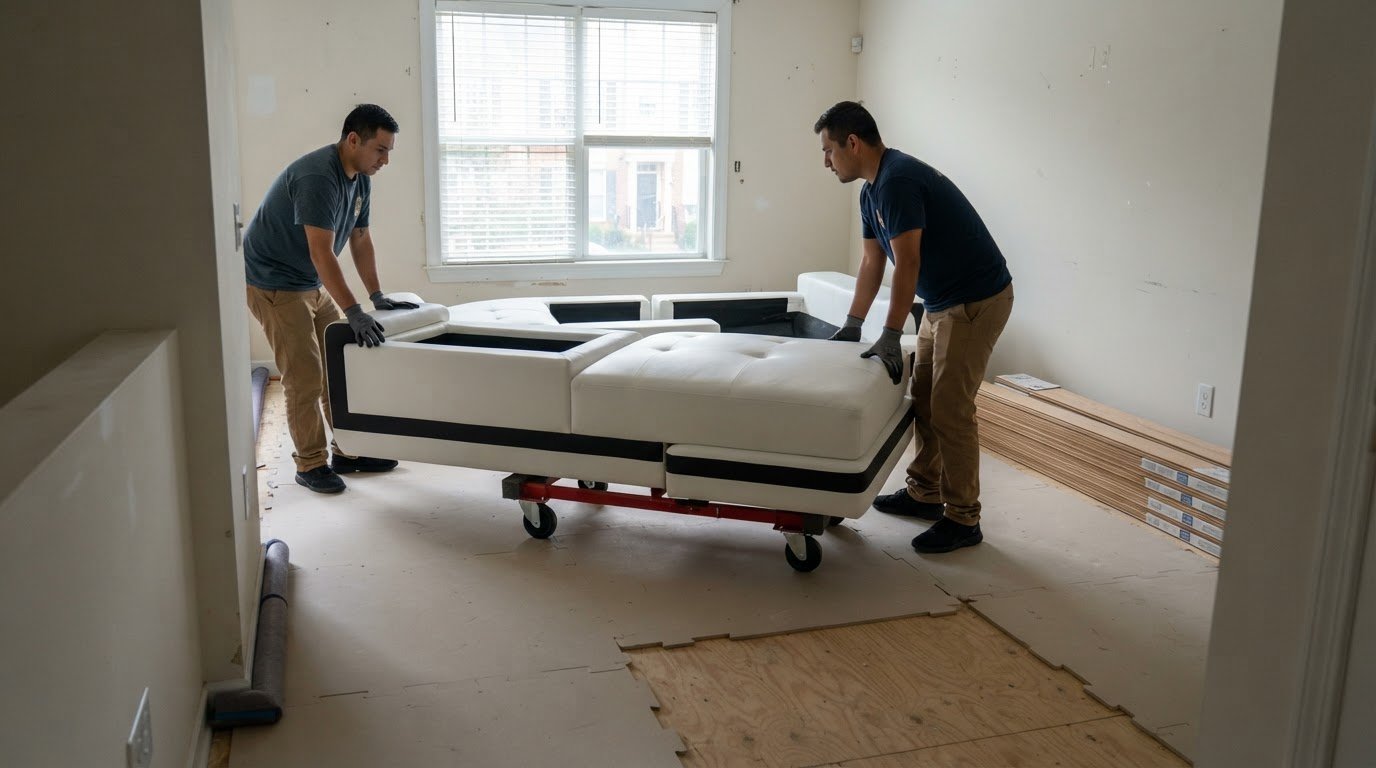
Heavy machines can add demanding lifting and placement tasks to an office move. If exercise equipment needs to be handled as a separate item, exercise equipment moving help may fit that part of the plan. Set its destination and access route before the move so it doesn’t obstruct priority work areas.
Commercial relocations in McLean and Tysons
Office moves in McLean and Tysons involve more than shifting furniture between buildings. Create a site plan for each address that covers loading access, shared entrances, elevators, and the rooms receiving equipment. This clarifies routes and placement before packing begins.
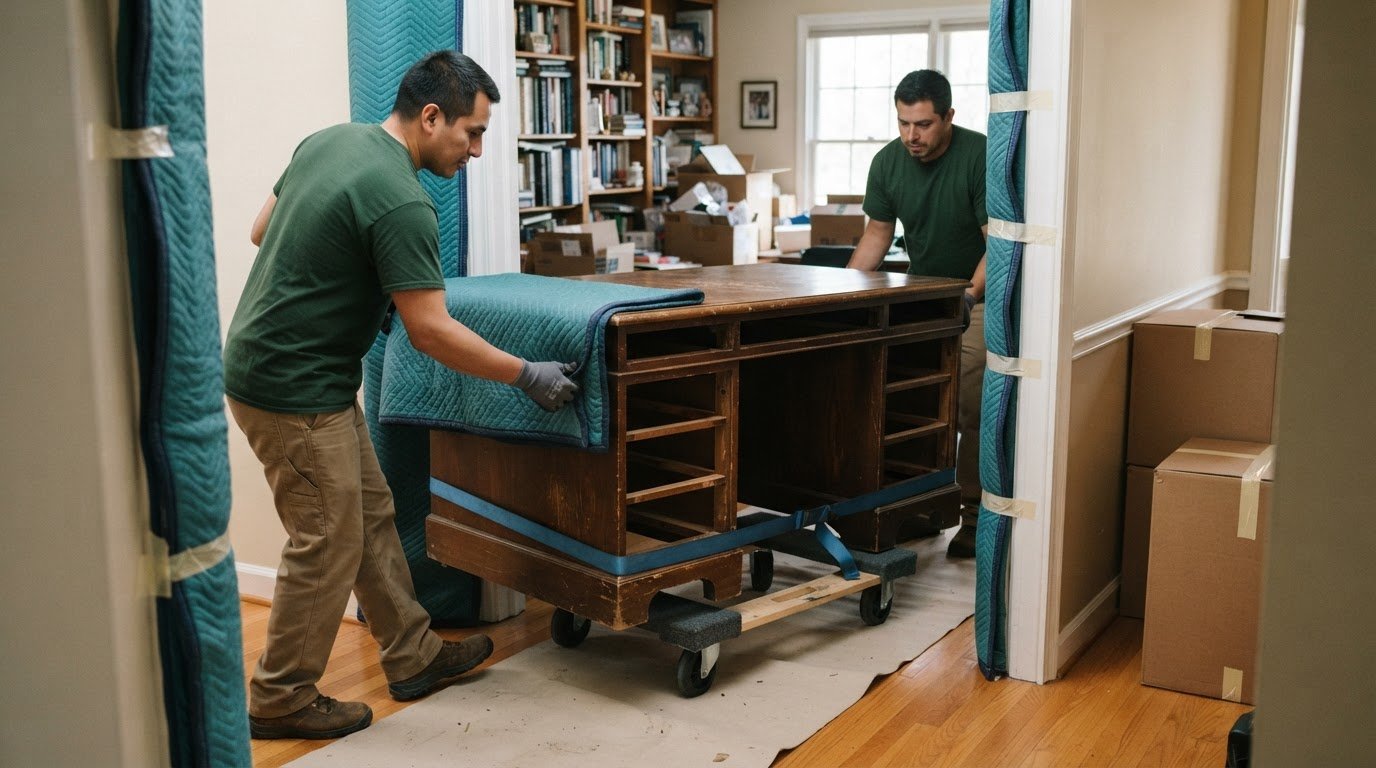
Building layouts shape the work. A ground-floor suite may allow direct access from a loading area, while an upper-floor office may require elevator coordination and staged deliveries. Walk the route at both locations, note tight turns and access points, and match large furniture to its destination. These details help prevent blocked corridors and unnecessary handling.
A Tysons office in a large commercial complex may have different access arrangements from a McLean destination. Treat each building as a separate site. Identify the entrance crews should use, where vehicles can load, and who can provide access. If the move involves several suites, label cartons and furniture by suite and room, not just department.
Pack in a way that supports the setup sequence. Group desk contents, shared supplies, and equipment by destination, then label each group clearly. Keep essential records and devices separate from general cartons. For example, when a team is moving to two floors, mark items for each floor separately to simplify placement and limit trips between spaces.
- Access: Confirm building entry instructions, loading locations, and elevator procedures.
- Layout: Mark furniture destinations on a floor plan for each office.
- Packing: Label cartons by suite, room, and team.
- Sequence: Load items in an order that supports placement at arrival.
For an interstate relocation, distinguish its scope from a local transfer. A move across state lines has different transport requirements from one within Virginia. The mover’s registration and credentials should match the route; for broader domestic or corporate transitions, specialized services such as atlasintlmovers.com coordinate these multi-jurisdictional relocation logistics. Put the origin, destination, inventory, packing responsibilities, and delivery expectations in the written agreement.
Before moving day, assign a site contact at each building. Each contact can direct crews, clarify room labels, and flag access changes. Keep an up-to-date inventory of furniture and equipment by destination. If a loading entrance becomes unavailable, the contacts can quickly communicate the revised route instead of leaving movers to guess.
Commercial relocation planning works best when building details shape the sequence. Confirm access, prepare destination labels, and have the receiving floor plan ready before loading starts. These steps give teams in McLean and Tysons a clearer path through packing, transport, and placement, whether the move is within one building or between offices.
Moving consultations and planning
A useful consultation turns an office move into clear tasks, responsibilities, and decisions. Bring details for both locations, an item inventory, and your preferred transition schedule.
Moving Estimates and Hourly Rates
Compare office moving services mclean va estimates using the same inventory and scope. A moving company bases an estimate on the work involved, including labor time, travel distance, building access, packing materials, and heavy furniture. Ask for written terms that explain included tasks and how changes are handled.
With hourly labor, the time needed for loading, travel, and unloading affects the total. Clarify which tasks are included, how working time is counted, and whether packing or furniture placement is part of the scope. Accurate item details and access information make estimates more useful for planning.
Booking Lead Time
Plan to book a McLean move 2-3 weeks ahead, especially during peak moving months. This allows time to coordinate building access, packing, staff schedules, and delivery priorities. Larger offices or moves involving several buildings need careful coordination between the origin and destination.
For parking permits, contact Fairfax County at least 2 weeks before the move. Apartment or condo moves require elevator reservations at least 3 weeks in advance. Building rules can also affect the schedule, so include permitted moving hours and loading arrangements in the plan.
During a consultation, walk through the move from the first packed item to final placement. Separate furniture, shared supplies, records, and equipment by destination. Identify items needing special handling and rooms or work areas that should be ready first. For example, note whether a conference table needs assembly before the meeting room can be used.
Put responsibilities in writing. Decide who will pack desk contents, prepare technology, and direct crews at each address. Record building entry instructions and loading-area details. If the office spans multiple suites, label each item by suite and room to keep delivery instructions precise.
Ask Heavy Furniture Moving to document the work, including packing, furniture handling, travel, and placement where needed. Confirm how schedule changes or additional items affect the estimate. For office moving services in McLean, a written scope gives everyone a shared reference for the work and its limits.
Finish with a move-day plan listing the sequence, site contacts, and priority destinations. Share it with employees so they know what to pack, what to keep accessible, and where labeled items belong. A clear handoff helps staff prepare their work areas while the moving crew follows the agreed plan.
McLean office and corporate moving
A commercial move in McLean needs a clear scope, careful handling, and a plan for each building. Match the mover’s documented work to the belongings and tasks involved.
Comparing Office Moving Companies
Compare written service scopes, customer reviews, and coverage documents side by side. Look for reviews describing similar work, such as moving office furniture between commercial buildings, rather than relying only on general praise. Read coverage terms for limits, exclusions, and claims steps. The written plan should identify included labor, packing responsibilities, and how inventory changes are handled.
Office Movers Serving McLean
For office moving services in McLean, confirm that the written scope covers the commercial tasks you need. Office furniture transport, packing, and equipment handling are distinct tasks. Heavy Furniture Moving focuses on residential moving and heavy-item handling, so it is suited to specific lifting needs rather than full corporate relocation management.
Start with the move itself. List the origin, destination, furniture, equipment, and any packing work, then compare each estimate against the same list. For example, one scope might include loading and placement, while another covers transportation only. Those details matter more than a broad label such as “full service.”
Reviews can help show how a moving company handled communication, scheduling, and belongings. Look for specific examples, such as careful desk handling or clear updates when building access changed. Consider patterns across reviews rather than treating one comment as proof. Keep the comparison focused on work resembling your McLean office move.
Review coverage documents separately. Read the written terms and claims process, and check how they apply to the items being moved. A certificate alone may not explain exclusions or limits. Compare the documents, not just a verbal description, and make sure the estimate identifies who handles claims if damage occurs.
Also compare the people and logistics assigned to the work. A move involving large desks, shared equipment, and separate office rooms needs clear destination labels and an unloading sequence. Check how the written scope accounts for building access, loading areas, and placement. These details show whether the plan fits the route through both buildings.
When comparing movers in McLean, match the service area, written scope, and coverage documents to your needs. Use the same inventory and destination details for each estimate. This makes it easier to distinguish a complete commercial relocation plan from focused furniture-moving help, much like how full-service providers such as JAS Removals & Storage structure comprehensive domestic and commercial moves with coordinated logistics.
Heavy Furniture Moving
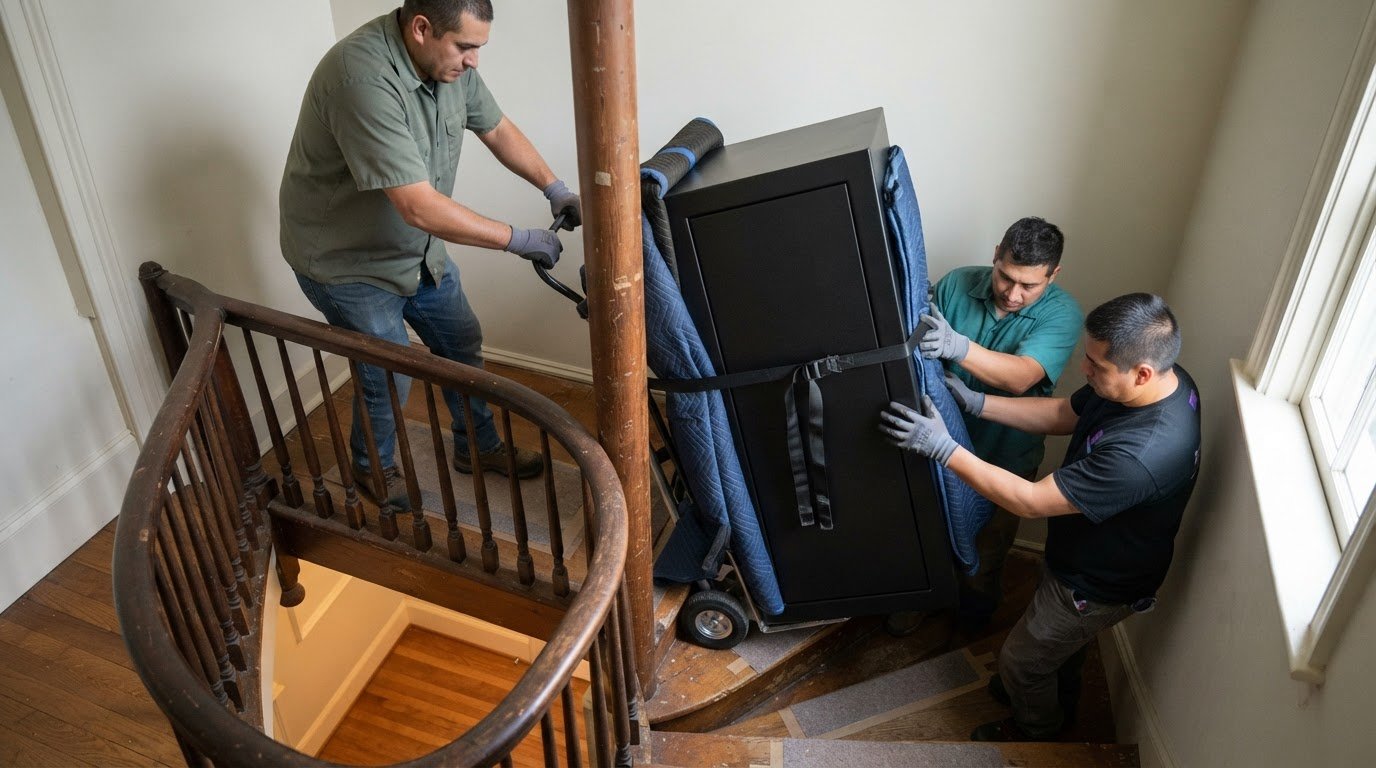
Heavy Furniture Moving can help with demanding lifts involving heavy and bulky items. If an office transition includes a heavy desk or exercise equipment, focused moving help can handle those pieces while your team manages the broader relocation.
Use this support for specific lifting needs, such as moving furniture within a home or arranging sofa hoisting. Share which items need moving and where they are going so the work is clear from the start. This suits a business with its broader office relocation plan in place that needs help with heavy items.
Contact Heavy Furniture Moving to discuss the heavy lifting your move requires.
Set Up Your Next Move With a Clear Plan
Organize your office transition around the work your team needs to keep moving. For office moving services in McLean, VA, carry your building plan and item priorities into the next planning step. Separate full relocation coordination from help with specific heavy pieces.
Heavy Furniture Moving offers Movers Near Me, Exercise Equipment Moving, and Sofa Hoisting for specific lifting needs. These services can support a move involving bulky furniture or equipment without replacing the broader office plan for access, packing, and setup.
Bring the item details and destination information together so the next step is clear. Contact Heavy Furniture Moving to discuss the moving help you need. A steady plan and the right support can help your team move forward with confidence.
Frequently Asked Questions
Do you handle local moves in McLean?
Yes. Heavy Furniture Moving provides local moving help in McLean for furniture and heavy items, including exercise equipment and sofa hoisting. Its local service area includes Fairfax, Woodbridge, Manassas, Manassas Park, Aldie, Ashburn, Vienna, Reston, Centreville, Chantilly, Clifton, Dumfries, South Riding, Fairfax Station, Haymarket, and Gainesville. For an office relocation, this help is item-focused rather than full commercial project management. Wrap, blankets, and straps are included on every job.
What office moving services are available in McLean, VA?
Heavy Furniture Moving offers help with specific heavy or bulky items, local furniture moves, exercise equipment moving, and sofa hoisting in McLean. These services can support a business that needs help with particular pieces, but they are not a full commercial office relocation service. Share which items need lifting and where they are going so the scope is clear. Wrap, blankets, and straps are included on every job.
What should a business do to prepare for an office move?
Before moving day, assign responsibility for confidential records, staff belongings, and technology. Secure sensitive files, back up important digital work, and have the appropriate staff prepare computers and network equipment for transport. Set aside essentials employees will need immediately, such as chargers, access cards, and basic desk supplies. This helps the team resume everyday tasks while other belongings are unpacked and placed.
Frequently Asked Questions
Yes. Heavy Furniture Moving provides local moving help in McLean for furniture and heavy items, including exercise equipment and sofa hoisting. Its local service area includes Fairfax, Woodbridge, Manassas, Manassas Park, Aldie, Ashburn, Vienna, Reston, Centreville, Chantilly, Clifton, Dumfries, South Riding, Fairfax Station, Haymarket, and Gainesville. For an office relocation, this help is item-focused rather than full commercial project management. Wrap, blankets, and straps are included on every job.
Heavy Furniture Moving offers help with specific heavy or bulky items, local furniture moves, exercise equipment moving, and sofa hoisting in McLean. These services can support a business that needs help with particular pieces, but they are not a full commercial office relocation service. Share which items need lifting and where they are going so the scope is clear. Wrap, blankets, and straps are included on every job.
Before moving day, assign responsibility for confidential records, staff belongings, and technology. Secure sensitive files, back up important digital work, and have the appropriate staff prepare computers and network equipment for transport. Set aside essentials employees will need immediately, such as chargers, access cards, and basic desk supplies. This helps the team resume everyday tasks while other belongings are unpacked and placed.