How to Move a 600 lb Gun Safe Down Spiral Stairs in Woodbridge
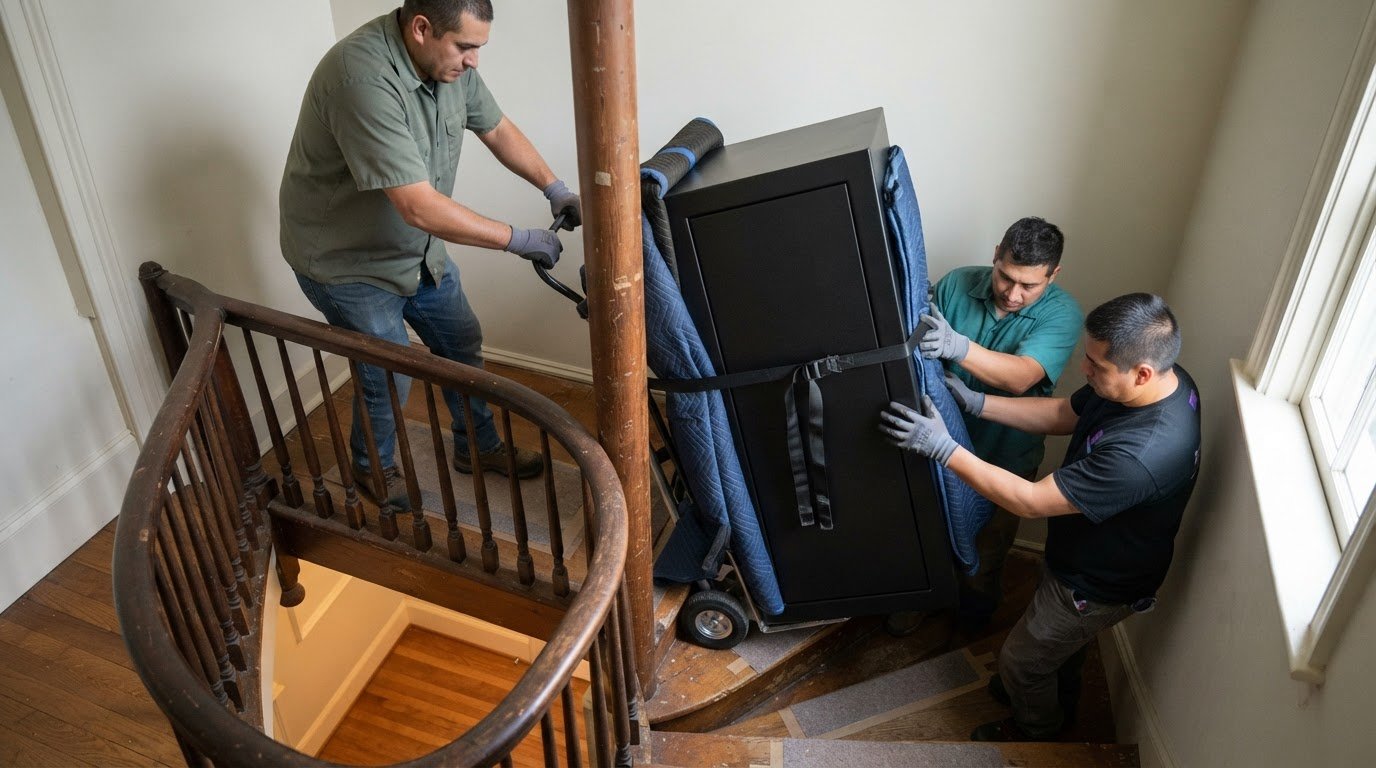
Treat a 600-pound gun safe on spiral stairs as a controlled lowering job, not a DIY carrying task. If you're planning how to move a 600 lb gun safe down spiral stairs in Woodbridge, use a trained crew with suitable rigging; the recommended crew size is three to four movers for safes over 500 pounds or moves involving stairs. A tight curve and limited landing space leave little room to recover if the safe shifts.
It’s reasonable to worry about damaged treads, scraped walls, or losing control. The right plan starts with measuring the safe and stairway, clearing the route, and checking whether each turn and landing can accommodate a controlled passage.
This guide covers the key planning steps, ways to protect stairs and floors, and the equipment and crew a safe move requires. You’ll also learn when a spiral staircase makes professional heavy-item moving the safer choice, so you can plan before the safe moves an inch.
Key Takeaways
- Choose a heavy-duty dolly and secure the safe with properly rated straps; ordinary hand trucks may not handle this kind of load.
- Protect the route with suitable floor coverings and load-spreading boards, but don’t treat padding as support for a weak stairway.
- Plan each turn on a spiral staircase before moving. A tight curve or small landing can make controlled passage impractical.
- Account for the safe’s actual loaded weight, not just its empty weight, when planning equipment and handling.
- Avoid sudden pulls or drops. Smooth, controlled movement helps reduce the risk of damage to the safe, stairs, and nearby surfaces.
Heavy-duty dollies, straps, and floor protection
Choose equipment for the safe’s full weight and the spiral stairway’s tight turns. A 600-pound load also calls for careful attention to floor support, wheel contact, and clearances.
-
Choosing Heavy-Duty Dollies and Straps
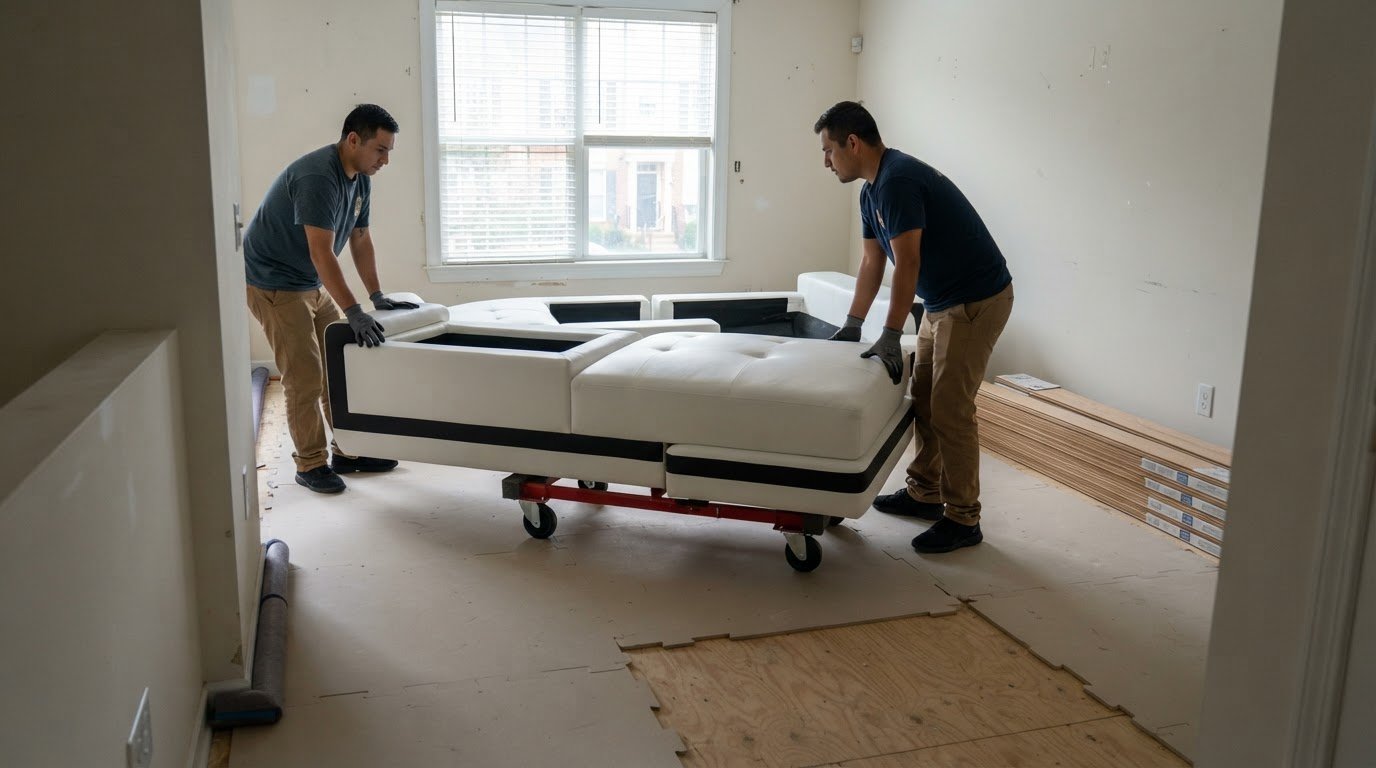
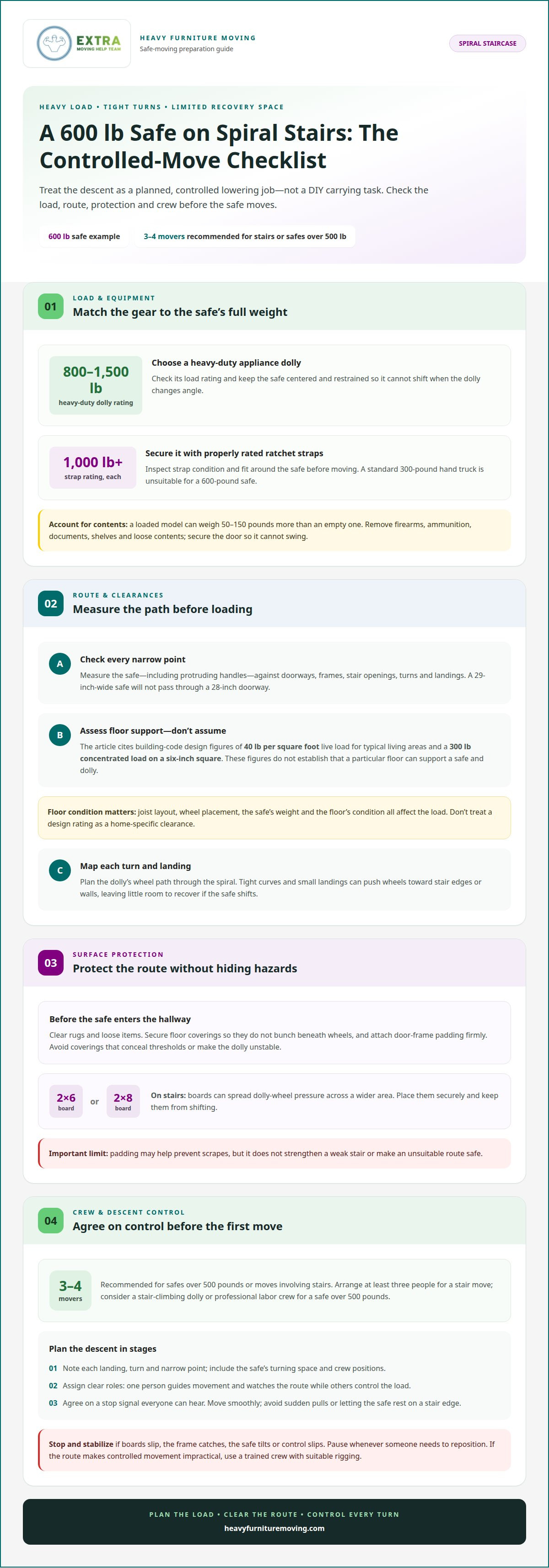
Select a heavy-duty appliance dolly rated for 800-1,500 pounds, then secure the safe with ratchet straps rated at 1,000 pounds or more each. Check the dolly’s load rating, strap condition, and fit around the safe before moving. A standard hand truck rated for 300 pounds is unsuitable for a 600-pound safe. Keep the load centered and restrained so it cannot shift as the dolly changes angle.
- Inspect the second-floor route before loading. The International Residential Code specifies a 40-pound-per-square-foot live load for typical living areas and a 300-pound concentrated load on a six-inch square. These design figures don’t establish that a particular floor can support a safe and dolly. The floor’s condition, joist layout, wheel placement, and the safe’s weight all affect the load. Don’t assume a rating settles the question for your home.
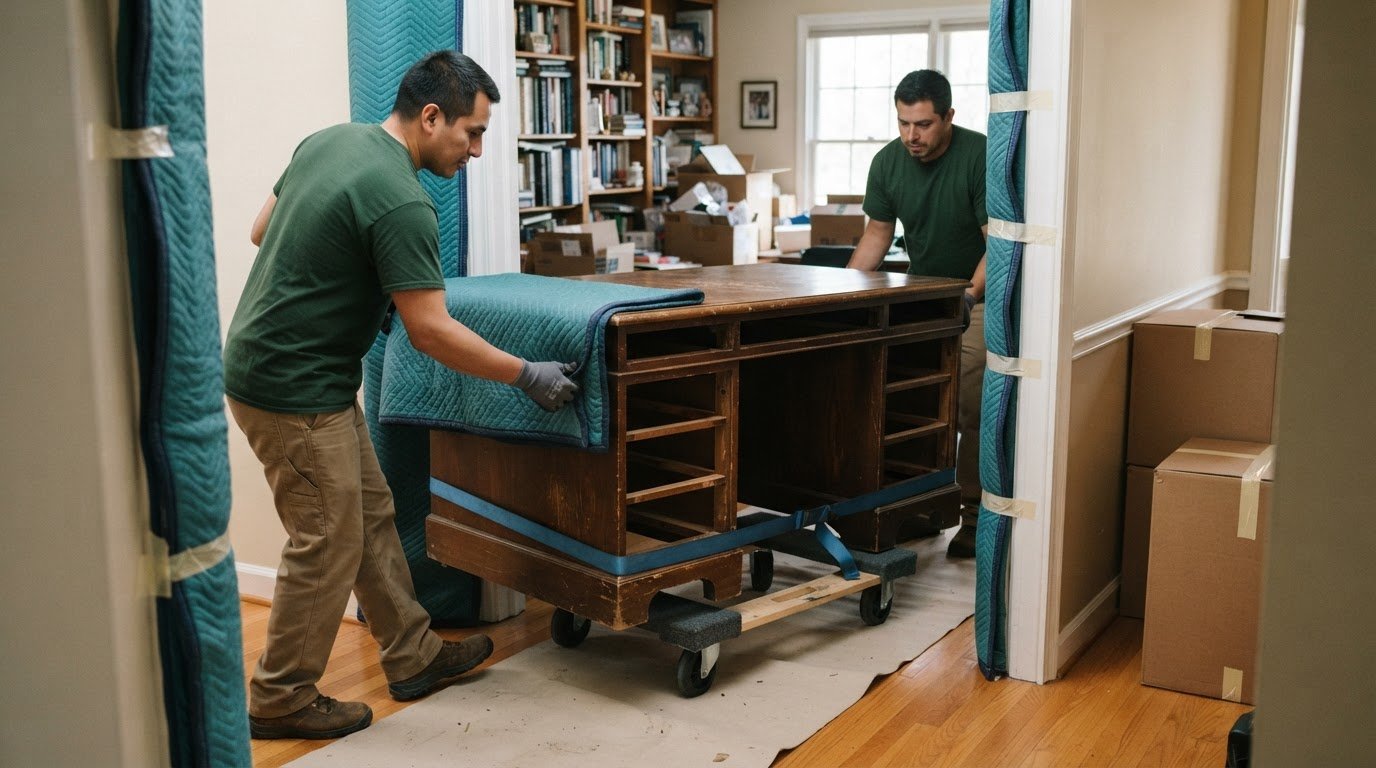
- Check the route’s narrowest doorway, frame, and stair opening against the safe’s dimensions, including protruding handles. For example, a 29-inch-wide safe won’t pass through a 28-inch doorway. Clear rugs and loose items, then protect exposed floor areas with secured coverings that won’t bunch beneath wheels. Keep door-frame padding firmly attached, and avoid coverings that conceal thresholds or make the dolly unstable.
-
Protecting Floors, Door Frames, and Staircases
Cover the floor and frame before the safe enters the hallway, and protect stair edges where the load could make contact. On stairs, boards such as 2x6 or 2x8 can spread dolly-wheel pressure across a wider area. Place them securely and keep them from shifting. Padding helps prevent scrapes, but it doesn’t strengthen a weak stair or make an unsuitable route safe.
- Plan each spiral turn around the dolly’s wheel path. Its small contact points concentrate pressure, and a tight curve can push wheels toward stair edges or a wall. Move only when the route is clear and the safe is secured. Stop if boards slip, the frame catches, or the load tilts. Heavy Furniture Moving handles demanding heavy-item moves when a stairway makes a controlled DIY move impractical.
Moving a safe on stairs
Plan the descent in stages, from preparing the safe to controlling each turn. A 600-pound safe needs a clear route, a capable crew, and steady movement.
-
Emptying and Securing the Safe
Remove firearms, ammunition, documents, shelves, and loose contents before moving the safe. A loaded model can weigh 50-150 pounds more than an empty one, changing the load the crew must control. Secure the door so it cannot swing during a turn, and keep the safe upright unless its design permits another position. Check inside again for small items that could shift as the safe moves. Once the safe reaches its new spot, ensuring it is properly leveled, locked, and bolted down is crucial—home security specialists like A Aable Locksmith often remind homeowners that proper safe anchoring and lock maintenance are just as vital as the physical move itself.
-
Assessing Crew Size and Lifting Risks
Arrange at least three people for a stair move, and consider a stair-climbing dolly or professional labor crew for a safe over 500 pounds. Assign clear roles before starting: one person guides the movement and watches the route, while others control the load. For anyone planning how to move a 600 lb gun safe down spiral stairs in Woodbridge, the key decision is whether the team can keep it stable through every turn. Don’t force the move if control slips.
-
Reviewing Moving Costs and Stair Surcharges
Compare the factors behind a quote, not just the headline price. The safe’s weight, stair access, the number and shape of turns, carrying distance, and equipment needs can affect the job. A spiral staircase may call for more controlled handling than a straight stairway. Describe access accurately, including tight landings and obstacles, so the estimate reflects the actual route rather than a simple move across a level room.
-
Checking Building, HOA, and Permit Rules
Review property access rules before scheduling. In Woodbridge, a building or HOA may set procedures for move times, shared hallways, elevator use, or protecting common areas. Carrying a safe through an existing staircase is different from altering a doorway or stair structure. Treat construction changes as a separate issue, and don’t begin them based on assumptions about permit requirements.
- Map the descent before moving the safe. Note each landing, turn, and narrow point, then agree on a stop signal everyone can hear. If you’re deciding how to move a 600 lb gun safe down spiral stairs in Woodbridge, include the safe’s turning space and crew positions in the route plan. Avoid sudden pulls or letting the safe rest on a stair edge. Pause and stabilize it whenever someone needs to reposition.
When to hire professional safe movers
Choose professional handling when the safe’s weight and stair geometry leave little room for error. A 600-pound safe on spiral stairs combines a heavy load, tight turns, and limited space to recover from a shift.
Before booking a safe move in Woodbridge, ask about insurance coverage for potential property damage and injuries during the job. Coverage details matter because the work involves both the home and the crew.
- Hire a trained crew for a safe weighing roughly 600 pounds or more, especially when stairs are involved. Safe-moving specialists generally treat loads over 500 to 600 pounds as jobs requiring trained crews and appropriate rigging. A spiral staircase adds turns that make steering and controlling momentum harder than moving the same safe across a level room.
- Compare a DIY plan with the actual route, not just the safe’s weight. A flat, open path gives a crew more room to control the load. A spiral staircase has close walls, curved treads, and little space to reposition. If the safe cannot turn without tilting unpredictably or catching the railing, stop the DIY plan and bring in professional movers.
- Use the doorway and stair measurements as decision points. A doorway narrower than 32 inches is a reason to hire professional movers. Measure the safe at its widest point, including handles, and account for the landing and stairwell clearance. If the safe barely fits the opening, its corners may still strike the frame as the crew rotates it.
- Match the crew and equipment to the obstacles. Three to four movers are recommended for gun safes over 500 pounds or moves involving stairs. For a safe over 500 pounds on a long stair run, consider a motorized stair-climbing dolly or a professional labor crew. A spiral descent also needs coordinated positions so one person can guide the turn while others control movement.
- Set a clear stop rule before the safe leaves its current position. Pause if the dolly shifts, a strap loosens, the safe leans, or the crew loses sight of the next turn. Don’t try to catch a moving safe by hand. A controlled stop gives the team a chance to reset before a small problem causes damage or injury.
Safe weights and recommended crew sizes
Use the safe’s actual moving weight and route to plan the crew. Residential gun safes can weigh 200 to 1,000 pounds, depending on size and fire rating.
- Find the safe’s weight before assigning people or equipment. Check the owner’s manual or manufacturer label, then account for contents and removable parts. A 600-pound model is already a demanding load before anyone considers the staircase. Larger safe doors can account for a third of total weight, so don’t assume removing one makes the remaining safe easy to control.
- Separate flat-ground moves from stair moves when estimating crew needs. At least two people are needed to move a gun safe across a flat surface; stairs call for at least three. Those figures are starting points, not a reason to split the load evenly between people. A dolly, stair shape, access, and the team’s ability to control the safe all affect the plan.
- Assign clear roles before moving the safe. On stairs, one person should direct movement and watch the route while the others manage control from safe positions. Agree on a stop command and use it if anyone loses footing or sight of the next step. Don’t add untrained helpers to a tight spiral simply to increase the head count.
- Match the crew to the route, not just the number on the scale. A 600-pound safe on straight, open stairs presents different handling challenges from the same load on a spiral staircase. Curved treads, a narrow landing, and limited hand positions can make control harder. If the safe can’t pass each turn without an unstable tilt, stop and plan professional handling.
- Prioritize control over brute force. The safe’s weight acts through the equipment and stair surfaces, so helpers must guide the movement rather than try to catch a slipping load. Keep the route clear and use short, coordinated movements. If someone needs to change position, pause and stabilize the safe first. Don’t continue just because the team has already started.
Most residential gun safes weigh 250-1,000 pounds; use that range only as context, and confirm the specific safe’s weight before finalizing the crew and equipment.
Common safety and damage-prevention mistakes
Prevent damage by planning for the safe’s weight, the staircase, and the equipment’s movement. A spiral route leaves little room to correct a mistake once the load is descending.
- Don’t assume sturdy-looking stairs can take a concentrated load. Stair construction varies, and a typical 2x12 riser doesn’t prove that a particular staircase can safely carry a heavy safe. Check for loose treads, visible damage, and movement before planning the route. If the stairs flex or show damage, don’t use them as a path for the safe.
- Avoid placing dolly wheels directly on narrow stair treads. Boards can distribute the load, but they must sit securely and stay aligned throughout the descent. Place them under the wheel path, not as loose pieces that can slide under pressure. If the stairs have thin boards or one-inch plywood, don’t assume they provide adequate support without reinforcement.
- Don’t skip support beneath wooden stairs when the structure needs it. Supporting basement stairs from underneath with several 2x4 risers has been recommended for heavy-safe moves. That is a structural task, not a substitute for a controlled moving plan. Keep people off the stairs while support is being fitted, and stop if the work area can’t be secured.
- Avoid sudden drops and jerking pulls. Shock loading can sharply increase force on the safe, rigging, and staircase. If using a winch, keep tension smooth and continuous; don’t let the safe slide and then catch it with a sudden pull. At a spiral turn, pause and reset the position instead of forcing the safe around a tight corner.
- Keep hands and feet clear of pinch points. As the safe turns, it can trap fingers against a railing, wall, or stair edge. Assign one person to call movements and pauses, and make sure everyone can hear the command. Clear pets, children, and loose objects from the route before the first step.
- Don’t let floor coverings or protective boards become trip hazards. Secure each covering flat, keep stair edges visible, and remove anything that bunches beneath a wheel. Check the route again after moving a board or changing the safe’s angle. For a heavy safe on a tight staircase, get help with heavy lifting rather than forcing a risky descent.
Heavy Furniture Moving
Heavy Furniture Moving handles demanding heavy-item moves when a safe’s weight, tight turns, or stair layout make a DIY descent risky. Its heavy-item moving service can help plan the route and handle bulky items with care.
Share the safe’s approximate weight, stair shape, landing space, and access details. This information helps define the challenges and support needed for the move. If you also need help with other household items, Heavy Furniture Moving offers local moving help and in-home furniture moving.
Contact Heavy Furniture Moving to discuss your safe and its spiral staircase.
Make the Next Move a Safe One
Planning how to move a 600 lb gun safe down spiral stairs in Woodbridge starts with a practical decision: can the route be managed without forcing a turn or losing control? If the staircase, landing, or doorway leaves too little room, don’t let momentum make the choice for you. Pause and plan a safer way forward.
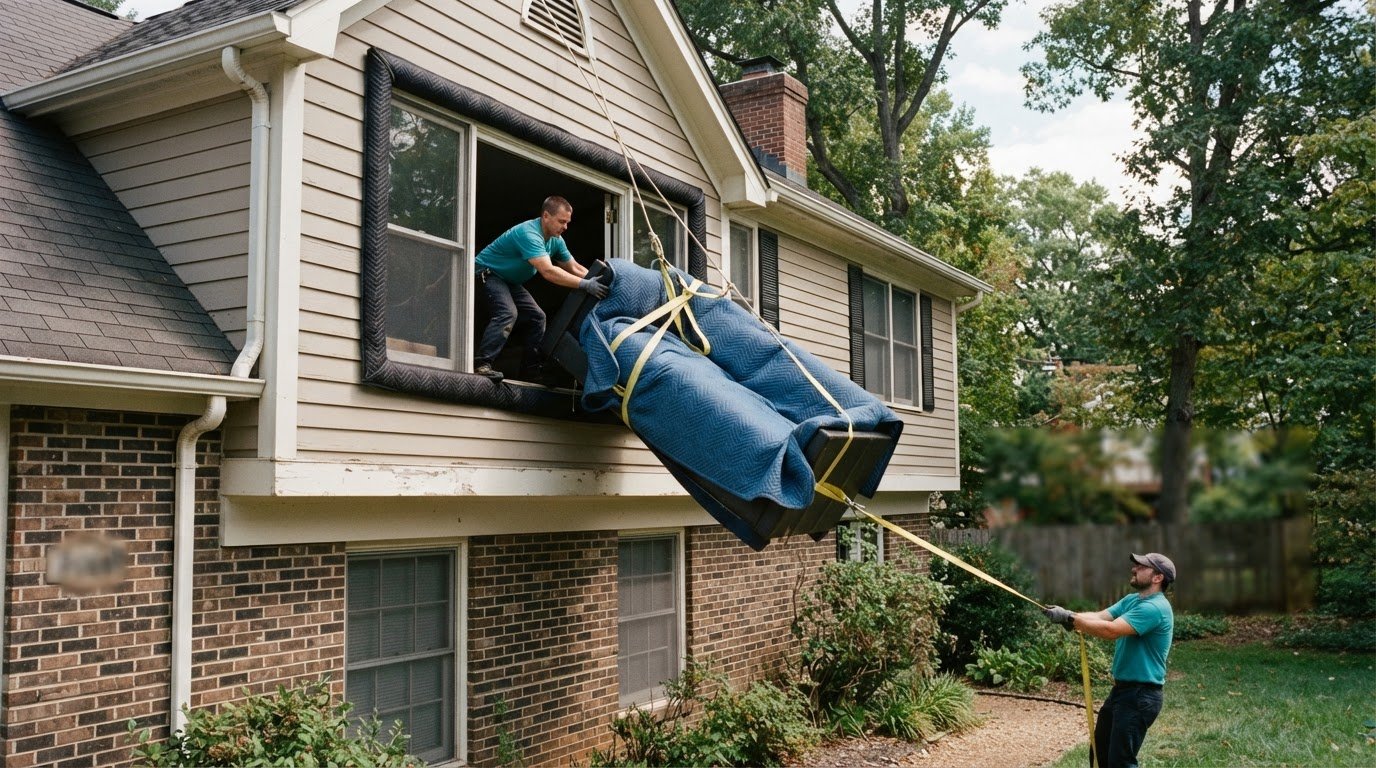
Heavy Furniture Moving provides heavy-item moving for demanding household moves, alongside Movers Near Me, Exercise Equipment Moving, and Sofa Hoisting. When discussing your move, share the safe’s weight, stair layout, and any tight access points. Clear details keep the conversation focused on the actual route and your home.
Contact Heavy Furniture Moving for help with planning your safe move. Take the next step with a clear plan and a team ready to help.
Frequently Asked Questions
How much does it cost to move a 600 lb gun safe in Woodbridge, Virginia?
The price depends on the safe, stair access, turns, carrying distance, and equipment needs. Heavy Furniture Moving quotes stair and landing details before the crew arrives. Share the safe’s weight, pickup and destination addresses, and clear photos of the staircase. These details help the estimate reflect the route’s challenges rather than treating the job like a simple move across a level room.
Can a 600 lb gun safe fit down a spiral staircase?
The safe can pass only if it and the moving equipment fit through every turn and landing without being forced. Width alone isn’t enough: the safe’s depth, orientation, handles, and dolly footprint affect the turning path. Measure the tightest point and account for the space the crew needs to guide the load. A safe that clears the entrance can still be blocked by the curve.
How do you measure a spiral staircase and safe before moving it?
Measure the safe’s height, width, and depth, including handles and other protrusions. Then record the staircase’s narrowest clear width, headroom, landing dimensions, and space around each turn. Compare these measurements with the safe on its moving equipment, not by itself. For a spiral staircase, sketch the route from above and mark where the safe must rotate or change direction.
What equipment is needed to move a heavy safe down stairs safely?
Use equipment rated for the load, with secure restraints and a controlled way to manage the descent. A stair-climbing dolly may suit some routes, but its turning ability must match the staircase. Heavy Furniture Moving includes wrap, blankets, and straps on every job, along with floor and corner protection. Inspect wheels, straps, and connection points before loading, and remove damaged equipment from the plan.
Should you hire professional safe movers or use a general moving company?
For a 600-pound safe on spiral stairs, choose a crew prepared for heavy safes and complex stair access. General movers are appropriate only when they have suitable equipment and a clear plan for controlling the safe through the turns. The deciding factors include the safe’s dimensions, landing space, stair condition, and the crew’s ability to manage the load without improvising.
What are the risks of moving a gun safe down spiral stairs yourself?
A poorly controlled safe can tip, slide, or trap someone against the railing or wall. Spiral stairs make recovery harder because the crew has little room to reposition. A sudden shift can also damage a stair edge, wall finish, or the safe. Don’t proceed if helpers can’t communicate clearly, maintain control, or stop safely at each turn.
How do you protect spiral stairs, walls, and floors when moving a safe?
Clear nearby furniture and loose objects before protecting the route. Use coverings that lie flat without making the walking surface slippery. Protect corners and door jambs where the safe may swing during a turn, and keep stair edges visible. Don’t drag the safe or shift protection while the load is moving; pause and reset the route first.
Does a 600 lb safe need to be emptied before moving?
Yes. Remove firearms, ammunition, documents, and loose items, then clear removable shelves that could shift. A loaded safe can weigh 50-150 pounds more than an empty one, which changes the moving load. Store the contents separately and secure the door before handling. Check inside once more for small items that could fall or move when the safe tilts.
Frequently Asked Questions
The price depends on the safe, stair access, turns, carrying distance, and equipment needs. Heavy Furniture Moving quotes stair and landing details before the crew arrives. Share the safe’s weight, pickup and destination addresses, and clear photos of the staircase. These details help the estimate reflect the route’s challenges rather than treating the job like a simple move across a level room.
The safe can pass only if it and the moving equipment fit through every turn and landing without being forced. Width alone isn’t enough: the safe’s depth, orientation, handles, and dolly footprint affect the turning path. Measure the tightest point and account for the space the crew needs to guide the load. A safe that clears the entrance can still be blocked by the curve.
Measure the safe’s height, width, and depth, including handles and other protrusions. Then record the staircase’s narrowest clear width, headroom, landing dimensions, and space around each turn. Compare these measurements with the safe on its moving equipment, not by itself. For a spiral staircase, sketch the route from above and mark where the safe must rotate or change direction.
Use equipment rated for the load, with secure restraints and a controlled way to manage the descent. A stair-climbing dolly may suit some routes, but its turning ability must match the staircase. Heavy Furniture Moving includes wrap, blankets, and straps on every job, along with floor and corner protection. Inspect wheels, straps, and connection points before loading, and remove damaged equipment from the plan.
For a 600-pound safe on spiral stairs, choose a crew prepared for heavy safes and complex stair access. General movers are appropriate only when they have suitable equipment and a clear plan for controlling the safe through the turns. The deciding factors include the safe’s dimensions, landing space, stair condition, and the crew’s ability to manage the load without improvising.
A poorly controlled safe can tip, slide, or trap someone against the railing or wall. Spiral stairs make recovery harder because the crew has little room to reposition. A sudden shift can also damage a stair edge, wall finish, or the safe. Don’t proceed if helpers can’t communicate clearly, maintain control, or stop safely at each turn.
Clear nearby furniture and loose objects before protecting the route. Use coverings that lie flat without making the walking surface slippery. Protect corners and door jambs where the safe may swing during a turn, and keep stair edges visible. Don’t drag the safe or shift protection while the load is moving; pause and reset the route first.
Yes. Remove firearms, ammunition, documents, and loose items, then clear removable shelves that could shift. A loaded safe can weigh 50–150 pounds more than an empty one, which changes the moving load. Store the contents separately and secure the door before handling. Check inside once more for small items that could fall or move when the safe tilts.