Moving a Large Sectional Sofa Between Rooms in Vienna, VA
What if the shortest move in your Vienna home is the one most likely to damage a wall? For “moving a large sectional sofa between rooms Vienna,” start by checking the tightest point on the route, not the distance between rooms. A narrow doorway, sharp hallway turn, or staircase can make a bulky sofa difficult to control.
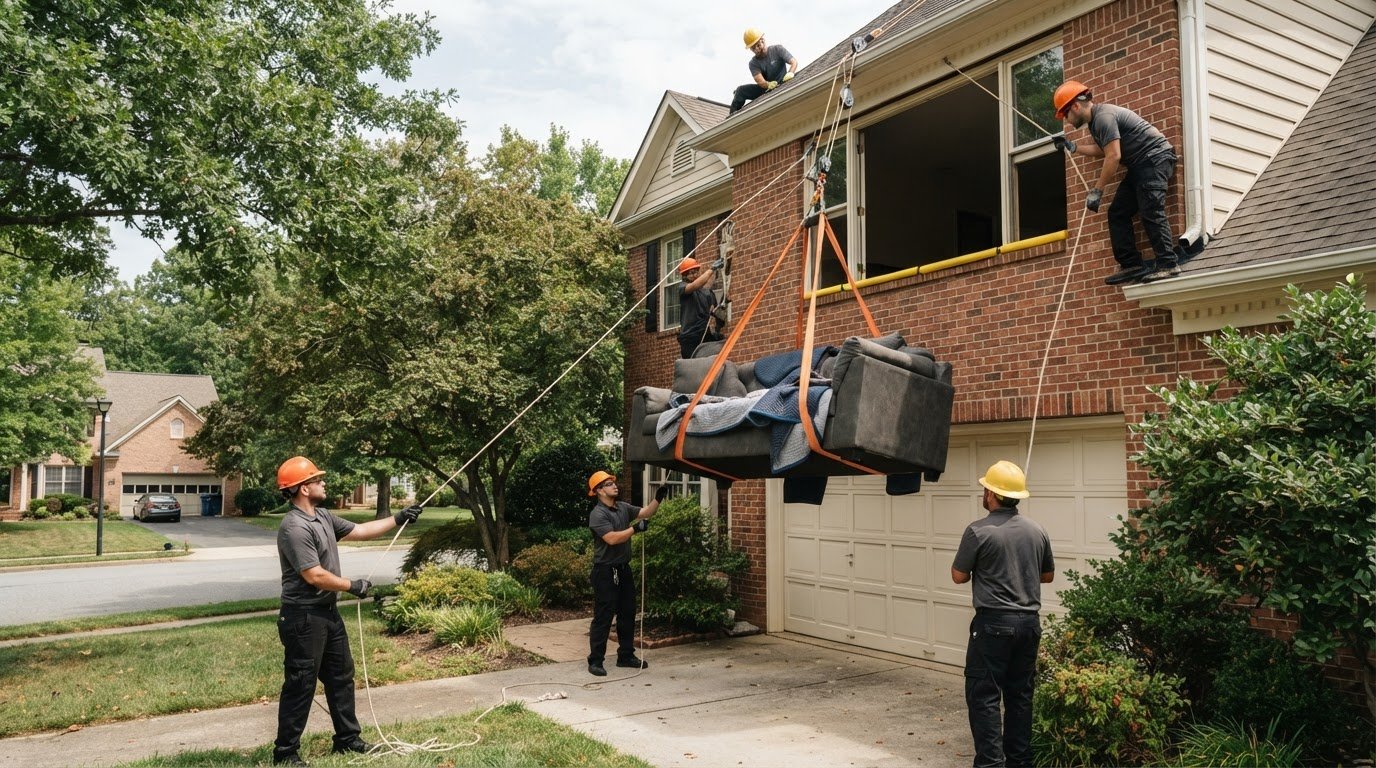
Lifting strength is only one consideration. You also need to protect the sectional, floors, walls, and everyone handling the move. Before moving day, measure each sofa section and every doorway, hallway, and turn along the route. Clear obstacles, protect vulnerable surfaces, and decide whether the pieces are manageable with household help or require experienced movers. This guide covers practical checks, preparation, and common DIY risks. If the sectional is too heavy or awkward to handle safely, in-home furniture movers can help. When it cannot fit through standard access points, sofa hoisting may be a solution.
Key Takeaways
- For moving a large sectional sofa between rooms Vienna, plan around the tightest doorway, turn, or hallway on the route.
- Measure each detachable sofa piece and the usable clearance through every restriction, not just the room dimensions.
- Consider the sofa’s size, route, available helpers, and ability to control the load before choosing a DIY move.
- Prepare both rooms by clearing obstacles, protecting vulnerable surfaces, and handling sections according to the manufacturer’s guidance.
- In-home furniture movers can help with a heavy or awkward sectional, while sofa hoisting may address access points the furniture cannot pass through.
Moving a Large Sectional Sofa Between Rooms in Vienna: What Makes It Difficult?
A sectional can look as though it will fit through the house until you try to turn it past a doorway. The challenge in moving a large sectional sofa between rooms Vienna isn’t just its weight. You also need to account for each piece’s size, how the sofa connects, the room needed to pivot, and whether the people lifting can keep it under control.
Even a short move may involve a tight corner, raised threshold, or narrow hallway. A sofa that clears a doorway straight on may not fit while turning. Rushing or forcing it can scrape a wall, mark a floor, damage upholstery, or strain someone’s back. A route assessment means checking every clearance from the sofa’s starting position to its destination. Walk the full path, not just the most obvious doorway.
Which parts of a sectional sofa can move separately?
A sectional sofa is made of multiple sections, but not every model comes apart easily. Modular designs may have sections that separate, while reversible layouts may let you change the arrangement. In fixed-piece designs, sections may remain connected or be difficult to detach.
Check the manufacturer’s instructions before removing connectors, legs, or other components. Take off loose cushions if they are designed to be removable, but treat the frame and connected sections as structural pieces. Don’t pry at joints or assume a component is detachable just because it looks separate.
What can make an indoor route difficult in a Vienna home?
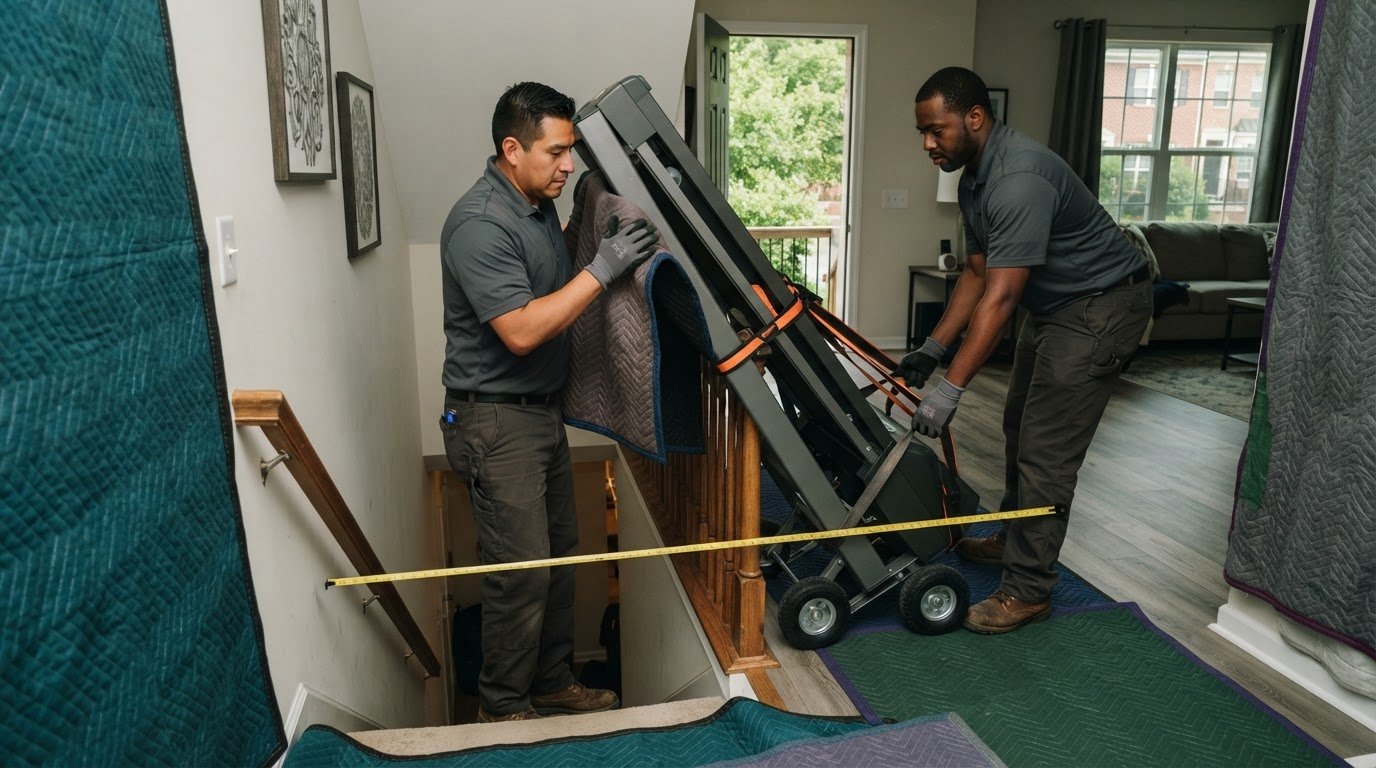
Walk the planned route before lifting. Inspect each doorway, hallway, corner, threshold, and the space where the sectional will sit. Pay particular attention to places where the sofa must pivot. If stairs or a change in entry level are part of the route, include them in your assessment.
Clear the path before moving. Nearby furniture can reduce turning space, rugs can shift underfoot, open doors can block a turn, and pets can enter the lifting area. Protect delicate finishes and clear the destination so helpers can set each piece down without twisting or backing into obstacles. If there is little room to maneuver, plan for help instead of forcing the sofa through.
How to Measure a Vienna Home’s Route Before Moving a Sectional
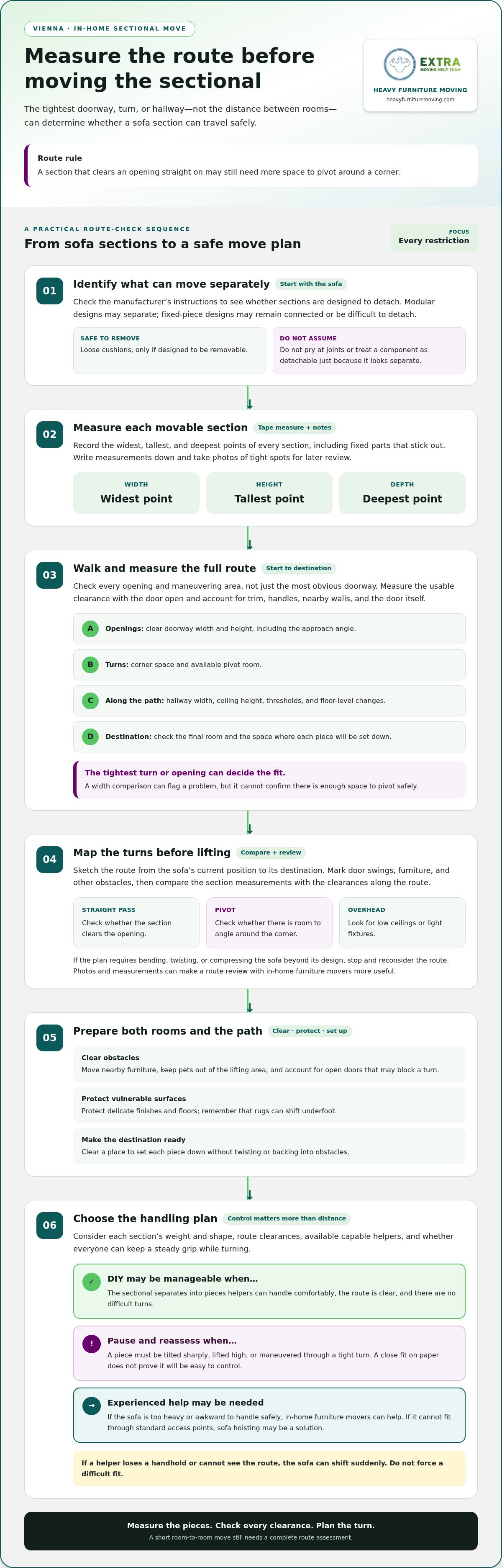
Measure before you lift. For moving a large sectional sofa between rooms Vienna, the goal is to determine whether each piece can travel the full route without being forced through a tight space. A doorway’s overall dimensions are not enough. Measure the clear opening, the unobstructed space available with the door open, and account for trim, handles, nearby walls, and the door itself.
How do you measure the sectional and each passage?
Work in order and write down each measurement. Use a tape measure, and take photos of tight spots so you can review the route later.
- Identify separable pieces. Check the sofa’s instructions to see which sections are designed to detach. Don’t assume connected pieces can be separated.
- Measure each movable section. Record its widest, tallest, and deepest points, including fixed parts that stick out.
- Measure every route restriction. Note clear door openings, hallway width, corner space, ceiling height, and thresholds or floor-level changes along the way. Check the destination, too.
Turning space matters. A section may fit through an opening when held straight but need more room to angle around a corner. Check overhead clearance, especially where a hallway or doorway has a low ceiling or light fixture. A hallway’s wall-to-wall width won’t show how much space an open door or nearby obstacle takes up.
| Section or route point | Width | Height | Depth or turning clearance |
|---|---|---|---|
| Largest movable sofa section | Record | Record | Record |
| Narrowest clear opening | Record | Record | Check approach angle |
| Tightest corner or turn | Record | Record ceiling height | Record available pivot space |
How can you test a tight turn without forcing the sofa?
Sketch the route from the sectional’s current position to its destination. Mark door swings, furniture, and other obstacles. Compare each piece’s measurements with the clearances along its route. The narrowest turn or opening can determine whether a sectional piece fits. Comparing widths can flag a problem, but it won’t show on its own whether there is enough room to pivot safely.
If the plan requires bending, twisting, or compressing the sofa beyond its design, stop. Rework the route or get experienced help. Photos and measurements can make a route review with in-home furniture movers more useful.
DIY or Professional Help: Which Is Safer for a Large Sectional Move?
A room-to-room move sounds simple because the distance is short. But a heavy sectional can be harder to control over a few steps than a smaller piece moved across the house. The safer choice depends on more than distance. Consider each piece’s weight and shape, the route’s clearances, how many capable helpers are available, and whether everyone can keep a steady grip while turning.
Use your measurements to make the decision. If a piece must be tilted sharply, lifted high, or maneuvered through a tight turn, don’t treat a close fit on paper as proof that the move will be easy. The sofa can shift suddenly if a helper loses a handhold or can’t see the route.
When might a careful DIY move be reasonable?
DIY may be manageable if the sectional separates into pieces your helpers can handle comfortably, the route is clear, and there are no difficult turns. Before lifting, agree on who will guide each end, where hands can safely grip, and which direction the piece will move. Keep the route clear and communicate before changing direction or setting the piece down.
Don’t improvise by dragging, twisting, or forcing a section through an opening. If the sofa catches, a grip slips, or the move feels less manageable once you lift, stop and reset. Continuing under strain can put people and the sofa at risk.
When should you use professional in-home moving help?
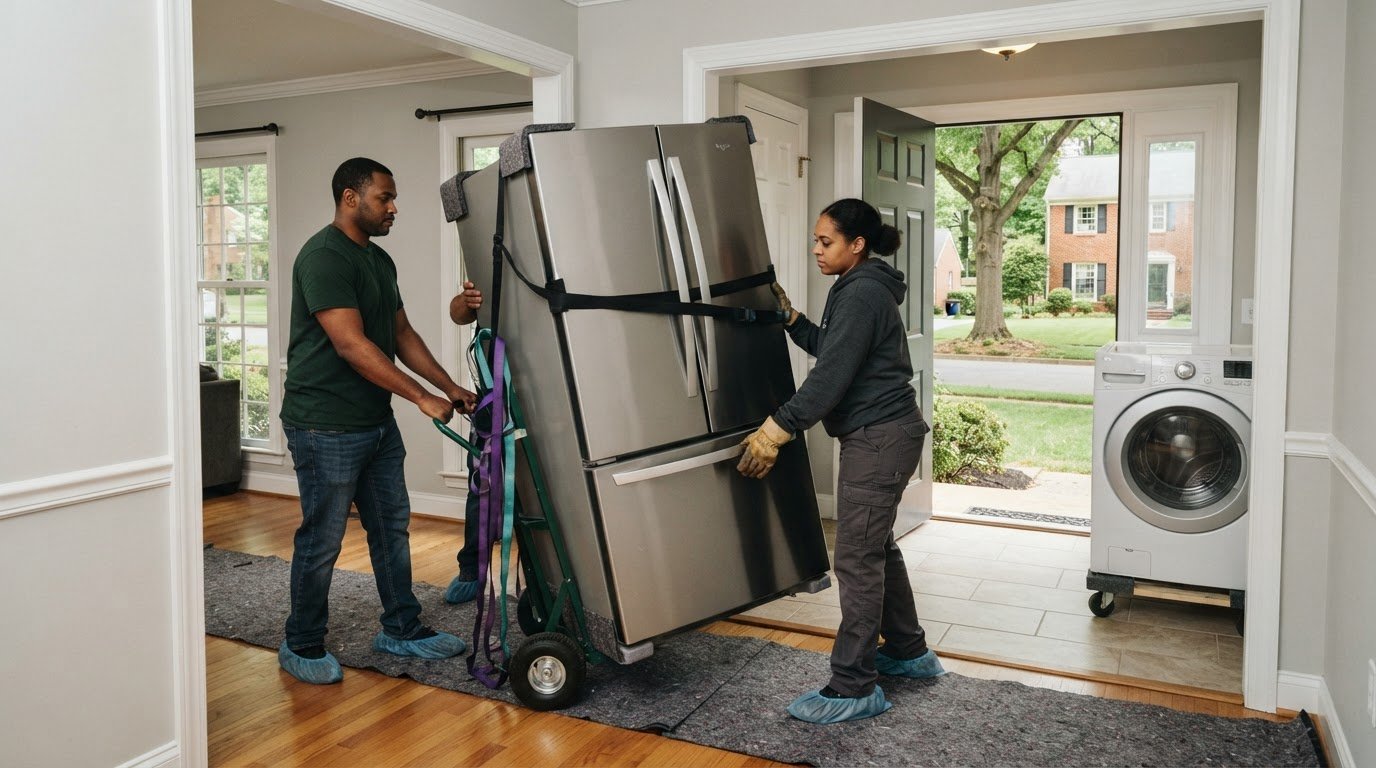
Consider experienced help if the sofa is awkward to hold, its pieces are difficult to separate, the route has narrow clearances, or delicate floors and finishes leave little room for error. These are practical warning signs, not a test of strength. A bulky section can be difficult to balance even with several people available.
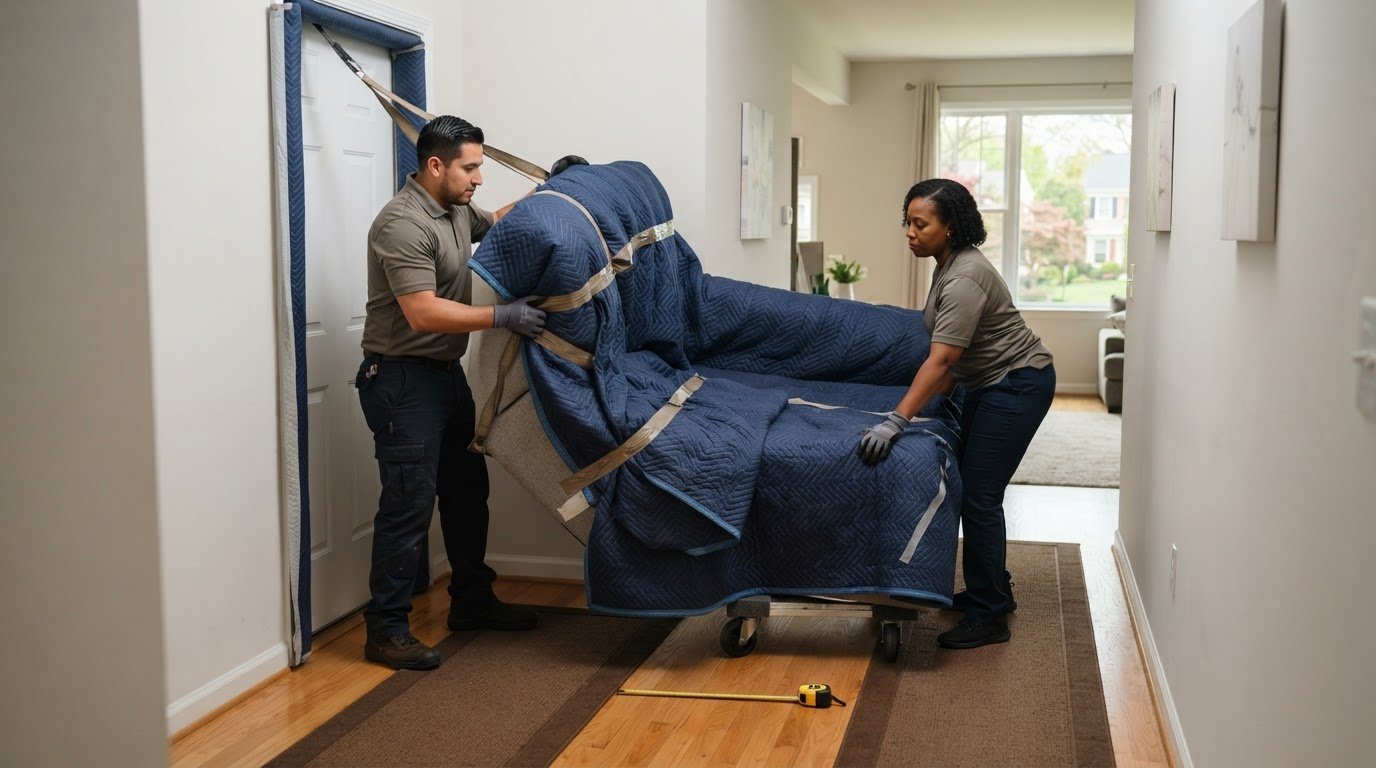
In-home movers can coordinate lifting, communicate through turns, and guide each piece through a constrained space. Heavy Furniture Moving provides in-home help with heavy and bulky furniture in Vienna, including room-to-room sectional moves. If a sectional can’t pass through standard access points, sofa hoisting is a specialized option to consider.
For moving a large sectional sofa between rooms Vienna, choose the method that gives you control throughout the route. A clear path and manageable pieces may suit a careful DIY effort. If you’re uncertain about the lift, the sofa’s construction, or a tight passage, experienced help is the safer choice.
How to Prepare Your Sectional and Rooms for a Safer Move
A little setup makes moving a large sectional sofa between rooms Vienna safer and easier to manage. Prepare the sofa, clear the full path, and make sure the destination is ready before anyone lifts. Use this checklist to prepare for a move inside your home.
What should you clear and protect before moving the sofa?
Walk the route once more and remove anything that could catch a corner or interrupt a helper’s footing. Clear both the path and the landing area in the destination room.
- Move small furniture, decorations, and other loose belongings out of the way.
- Remove rugs that shift underfoot. Keep a floor covering only if it lies flat, stays secure, and is suitable for the surface. Loose material can become a trip hazard.
- Use appropriate moving materials to cover vulnerable corners or surfaces, but make sure the protection does not block the route or hide hazards.
- Keep children and pets away from the work area until the sectional is in place.
- Clear enough space in the destination room to set down each section without bumping walls or other furniture.
Don’t create a new obstacle while protecting the home. Check that coverings stay in place and everyone can see the floor, thresholds, and turns.
What should you check before lifting each sectional piece?
Remove loose cushions and set them aside. Separate or secure sections, connectors, legs, and other components only as the manufacturer’s instructions allow. A removable cushion isn’t a structural part, and a piece that looks detachable may not be designed to come apart. Keep small removed parts together so they don’t end up underfoot.
- Check that the section is stable and identify safe places to grip before lifting.
- Choose one person to lead. Agree on simple commands such as “stop,” “turn,” and “lower” before moving.
- Make sure helpers can see the path and each other. Pause if a handhold slips, balance feels uncertain, or visibility is blocked.
- Don’t lift beyond anyone’s ability. Set the piece down safely and reconsider the plan if it feels uncontrolled.
Preparation can’t make an awkward lift manageable if the sectional is too heavy or difficult to control. If you’d rather leave the lifting and maneuvering to experienced hands, arrange in-home sectional moving help.
Get Sectional Moving Help in Vienna, VA
Choose your plan based on the measurements, the sectional’s layout, and how safely you can lift and guide each piece. A clear route and manageable sections may suit a careful DIY move. If the sofa is bulky, difficult to control, or a tight passage leaves little room to maneuver, professional in-home help can take the strain out of moving it within your home.
Heavy Furniture Moving provides in-home help with heavy and bulky furniture in Vienna. The team can coordinate lifting and guide sectional pieces through a challenging room-to-room route. If standard access points won’t accommodate the furniture, sofa hoisting is a specialized option. It may offer another approach when the sectional can’t pass through an ordinary entryway.
What details help plan a sectional move between rooms?
Clear details help identify the job and its challenges. Before arranging help, gather the information you already have from measuring and inspecting the route:
- How many sectional pieces need to move, their approximate dimensions, and whether they detach.
- The narrowest clear opening and any tight turns along the route.
- Whether stairs, thresholds, or other floor-level changes are part of the path.
- Where the sectional is going and whether nearby furniture, delicate finishes, or other belongings need extra care.
Photos of the sectional and the trickiest spots can also help explain the layout. You don’t need to solve every access challenge yourself. Sharing the details gives the move a clear starting point.
How can professional help make the move easier?
Large furniture takes coordination. Helpers need to lift together, keep the piece controlled, and communicate through turns without losing sight of the route or each other. Experienced in-home movers can manage that process carefully, especially when the sectional is awkward to grip or the path is constrained. Specialized sofa handling, including hoisting, can be considered when standard access doesn’t work. Hoisting is not the right solution for every home.
For more local moving guidance, see Reliable Movers Near Me in Fairfax and Northern VA. If you’re ready to arrange help for your in-home move, Get help moving your sectional in Vienna.
Make Your Sectional Move Safer and More Manageable
The safest plan starts with the route, not the distance. Measure each movable section and the tightest opening or turn, then prepare the rooms so the path is clear and surfaces are protected. Use a DIY approach only if the pieces feel manageable and your helpers can control them without forcing a tight fit. If the lift or route feels uncertain, getting help is the sensible move.
For moving a large sectional sofa between rooms Vienna, Heavy Furniture Moving provides residential help with heavy and bulky furniture. Vienna is part of the company’s local service area, and specialized sofa hoisting may help when standard access points can’t accommodate the sectional.
Share the sectional’s configuration and the route’s most challenging spots, then get help moving your sectional in Vienna. With a clear plan and the right support, you can make the room change with greater confidence.
Frequently Asked Questions
How do you move a large sectional sofa between rooms?
Plan the route and prepare each piece before lifting. Check which sections can separate, measure them and the clear openings along the path, then clear obstacles from both rooms. Remove loose cushions and follow the manufacturer’s instructions for detachable parts. Move slowly, communicate before turning, and stop if a piece catches or becomes hard to control. If the sectional is bulky or the route is tight, professional in-home moving help can reduce the strain.
Can a sectional sofa be taken apart to move it through a doorway?
Some sectional sofas separate into movable pieces, but not every model is designed to come apart. Check the manufacturer’s instructions before removing connectors, legs, or other components. Loose cushions may come off, but don’t mistake structural parts for detachable pieces or force a joint apart. Once you know what separates, measure each piece and compare its dimensions with the doorway’s clear opening and the space needed to turn.
How do you measure a doorway for a sectional sofa?
Measure the usable opening with the door open, not the full frame or rough doorway dimensions. Record the clear width and height, accounting for trim, handles, and anything else that narrows the passage. Then check the approach space on both sides, including nearby walls and room to angle the sofa. Measure every tight turn and hallway on the route, since a piece that clears the doorway straight on may not pivot through it.
Is it safe to move a large sectional sofa by yourself?
Moving a large sectional alone is generally unsafe because its size can make it difficult to grip, balance, and turn while keeping control. Even a short move can strain your back or lead to damage if the sofa shifts or catches. Don’t attempt a solo lift if the piece feels heavy or blocks your view. Separate only the parts the manufacturer allows, and get capable help for lifting and maneuvering.
When should I hire movers to move a couch between rooms in Vienna, VA?
Hire in-home movers if the couch is awkward to lift, the route has tight turns, you’re unsure about disassembly, or nearby finishes need careful handling. Heavy Furniture Moving helps with heavy and bulky furniture in Vienna and other local communities, including Fairfax, Woodbridge, Manassas, Manassas Park, Aldie, Ashburn, Mclean, Reston, Centreville, Chantilly, Clifton, Dumfries, South Riding, Fairfax Station, Haymarket, and Gainesville.
What should I do if my sectional will not fit through the hallway?
Stop rather than forcing the sofa through. Recheck the piece’s measurements, hallway clearance, and turning space, then see whether the manufacturer allows the sectional to separate into smaller sections. Clear removable obstacles, but don’t bend or compress the sofa beyond its design. If the route still won’t accommodate it, professional in-home movers can assess the maneuver, and sofa hoisting may be an option when ordinary access points won’t work.
Can movers hoist a sectional sofa when it will not fit through a doorway?
Yes. Heavy Furniture Moving offers sofa hoisting as a specialized option for furniture that cannot fit through standard access points. Hoisting may be worth considering if measurements show that a sectional cannot pass through the home’s ordinary route. Note the sofa’s dimensions, sectional configuration, and access challenges so the job can be planned. Hoisting is a possible solution, not a guaranteed fit for every home.
Frequently Asked Questions
A sectional sofa is made of multiple sections, but not every model comes apart easily. Modular designs may have sections that separate, while reversible layouts may let you change the arrangement. In fixed-piece designs, sections may remain connected or be difficult to detach. Check the manufacturer’s instructions before removing connectors, legs, or other components. Take off loose cushions if they are designed to be removable, but treat the frame and connected sections as structural pieces. Don’t pry at joints or assume a component is detachable just because it looks separate.
Walk the planned route before lifting. Inspect each doorway, hallway, corner, threshold, and the space where the sectional will sit. Pay particular attention to places where the sofa must pivot. If stairs or a change in entry level are part of the route, include them in your assessment. Clear the path before moving. Nearby furniture can reduce turning space, rugs can shift underfoot, open doors can block a turn, and pets can enter the lifting area. Protect delicate finishes and clear the destination so helpers can set each piece down without twisting or backing into obstacles. If there is little room to maneuver, plan for help instead of forcing the sofa through. Measure before you lift. For moving a large sectional sofa between rooms Vienna, the goal is to determine whether each piece can travel the full route without being forced through a tight space. A doorway’s overall dimensions are not enough. Measure the clear opening, the unobstructed space available with the door open, and account for trim, handles, nearby walls, and the door itself.
Work in order and write down each measurement. Use a tape measure, and take photos of tight spots so you can review the route later. Turning space matters. A section may fit through an opening when held straight but need more room to angle around a corner. Check overhead clearance, especially where a hallway or doorway has a low ceiling or light fixture. A hallway’s wall-to-wall width won’t show how much space an open door or nearby obstacle takes up.
Sketch the route from the sectional’s current position to its destination. Mark door swings, furniture, and other obstacles. Compare each piece’s measurements with the clearances along its route. The narrowest turn or opening can determine whether a sectional piece fits. Comparing widths can flag a problem, but it won’t show on its own whether there is enough room to pivot safely. If the plan requires bending, twisting, or compressing the sofa beyond its design, stop. Rework the route or get experienced help. Photos and measurements can make a route review with in-home furniture movers more useful. A room-to-room move sounds simple because the distance is short. But a heavy sectional can be harder to control over a few steps than a smaller piece moved across the house. The safer choice depends on more than distance. Consider each piece’s weight and shape, the route’s clearances, how many capable helpers are available, and whether everyone can keep a steady grip while turning. Use your measurements to make the decision. If a piece must be tilted sharply, lifted high, or maneuvered through a tight turn, don’t treat a close fit on paper as proof that the move will be easy. The sofa can shift suddenly if a helper loses a handhold or can’t see the route.
DIY may be manageable if the sectional separates into pieces your helpers can handle comfortably, the route is clear, and there are no difficult turns. Before lifting, agree on who will guide each end, where hands can safely grip, and which direction the piece will move. Keep the route clear and communicate before changing direction or setting the piece down. Don’t improvise by dragging, twisting, or forcing a section through an opening. If the sofa catches, a grip slips, or the move feels less manageable once you lift, stop and reset. Continuing under strain can put people and the sofa at risk.
Consider experienced help if the sofa is awkward to hold, its pieces are difficult to separate, the route has narrow clearances, or delicate floors and finishes leave little room for error. These are practical warning signs, not a test of strength. A bulky section can be difficult to balance even with several people available. In-home movers can coordinate lifting, communicate through turns, and guide each piece through a constrained space. Heavy Furniture Moving provides in-home help with heavy and bulky furniture in Vienna, including room-to-room sectional moves. If a sectional can’t pass through standard access points, sofa hoisting is a specialized option to consider. For moving a large sectional sofa between rooms Vienna, choose the method that gives you control throughout the route. A clear path and manageable pieces may suit a careful DIY effort. If you’re uncertain about the lift, the sofa’s construction, or a tight passage, experienced help is the safer choice. A little setup makes moving a large sectional sofa between rooms Vienna safer and easier to manage. Prepare the sofa, clear the full path, and make sure the destination is ready before anyone lifts. Use this checklist to prepare for a move inside your home.
Walk the route once more and remove anything that could catch a corner or interrupt a helper’s footing. Clear both the path and the landing area in the destination room. Don’t create a new obstacle while protecting the home. Check that coverings stay in place and everyone can see the floor, thresholds, and turns.
Remove loose cushions and set them aside. Separate or secure sections, connectors, legs, and other components only as the manufacturer’s instructions allow. A removable cushion isn’t a structural part, and a piece that looks detachable may not be designed to come apart. Keep small removed parts together so they don’t end up underfoot. Preparation can’t make an awkward lift manageable if the sectional is too heavy or difficult to control. If you’d rather leave the lifting and maneuvering to experienced hands, arrange in-home sectional moving help. Choose your plan based on the measurements, the sectional’s layout, and how safely you can lift and guide each piece. A clear route and manageable sections may suit a careful DIY move. If the sofa is bulky, difficult to control, or a tight passage leaves little room to maneuver, professional in-home help can take the strain out of moving it within your home. Heavy Furniture Moving provides in-home help with heavy and bulky furniture in Vienna. The team can coordinate lifting and guide sectional pieces through a challenging room-to-room route. If standard access points won’t accommodate the furniture, sofa hoisting is a specialized option. It may offer another approach when the sectional can’t pass through an ordinary entryway.
Clear details help identify the job and its challenges. Before arranging help, gather the information you already have from measuring and inspecting the route: Photos of the sectional and the trickiest spots can also help explain the layout. You don’t need to solve every access challenge yourself. Sharing the details gives the move a clear starting point.
Large furniture takes coordination. Helpers need to lift together, keep the piece controlled, and communicate through turns without losing sight of the route or each other. Experienced in-home movers can manage that process carefully, especially when the sectional is awkward to grip or the path is constrained. Specialized sofa handling, including hoisting, can be considered when standard access doesn’t work. Hoisting is not the right solution for every home. For more local moving guidance, see Reliable Movers Near Me in Fairfax and Northern VA. If you’re ready to arrange help for your in-home move, Get help moving your sectional in Vienna. The safest plan starts with the route, not the distance. Measure each movable section and the tightest opening or turn, then prepare the rooms so the path is clear and surfaces are protected. Use a DIY approach only if the pieces feel manageable and your helpers can control them without forcing a tight fit. If the lift or route feels uncertain, getting help is the sensible move. For moving a large sectional sofa between rooms Vienna, Heavy Furniture Moving provides residential help with heavy and bulky furniture. Vienna is part of the company’s local service area, and specialized sofa hoisting may help when standard access points can’t accommodate the sectional. Share the sectional’s configuration and the route’s most challenging spots, then get help moving your sectional in Vienna. With a clear plan and the right support, you can make the room change with greater confidence.
Plan the route and prepare each piece before lifting. Check which sections can separate, measure them and the clear openings along the path, then clear obstacles from both rooms. Remove loose cushions and follow the manufacturer’s instructions for detachable parts. Move slowly, communicate before turning, and stop if a piece catches or becomes hard to control. If the sectional is bulky or the route is tight, professional in-home moving help can reduce the strain.
Some sectional sofas separate into movable pieces, but not every model is designed to come apart. Check the manufacturer’s instructions before removing connectors, legs, or other components. Loose cushions may come off, but don’t mistake structural parts for detachable pieces or force a joint apart. Once you know what separates, measure each piece and compare its dimensions with the doorway’s clear opening and the space needed to turn.
Measure the usable opening with the door open, not the full frame or rough doorway dimensions. Record the clear width and height, accounting for trim, handles, and anything else that narrows the passage. Then check the approach space on both sides, including nearby walls and room to angle the sofa. Measure every tight turn and hallway on the route, since a piece that clears the doorway straight on may not pivot through it.
Moving a large sectional alone is generally unsafe because its size can make it difficult to grip, balance, and turn while keeping control. Even a short move can strain your back or lead to damage if the sofa shifts or catches. Don’t attempt a solo lift if the piece feels heavy or blocks your view. Separate only the parts the manufacturer allows, and get capable help for lifting and maneuvering.
Hire in-home movers if the couch is awkward to lift, the route has tight turns, you’re unsure about disassembly, or nearby finishes need careful handling. Heavy Furniture Moving helps with heavy and bulky furniture in Vienna and other local communities, including Fairfax, Woodbridge, Manassas, Manassas Park, Aldie, Ashburn, Mclean, Reston, Centreville, Chantilly, Clifton, Dumfries, South Riding, Fairfax Station, Haymarket, and Gainesville.
Stop rather than forcing the sofa through. Recheck the piece’s measurements, hallway clearance, and turning space, then see whether the manufacturer allows the sectional to separate into smaller sections. Clear removable obstacles, but don’t bend or compress the sofa beyond its design. If the route still won’t accommodate it, professional in-home movers can assess the maneuver, and sofa hoisting may be an option when ordinary access points won’t work.
Yes. Heavy Furniture Moving offers sofa hoisting as a specialized option for furniture that cannot fit through standard access points. Hoisting may be worth considering if measurements show that a sectional cannot pass through the home’s ordinary route. Note the sofa’s dimensions, sectional configuration, and access challenges so the job can be planned. Hoisting is a possible solution, not a guaranteed fit for every home.