Moving a Heavy Stair Climber into a Gainesville Home Gym
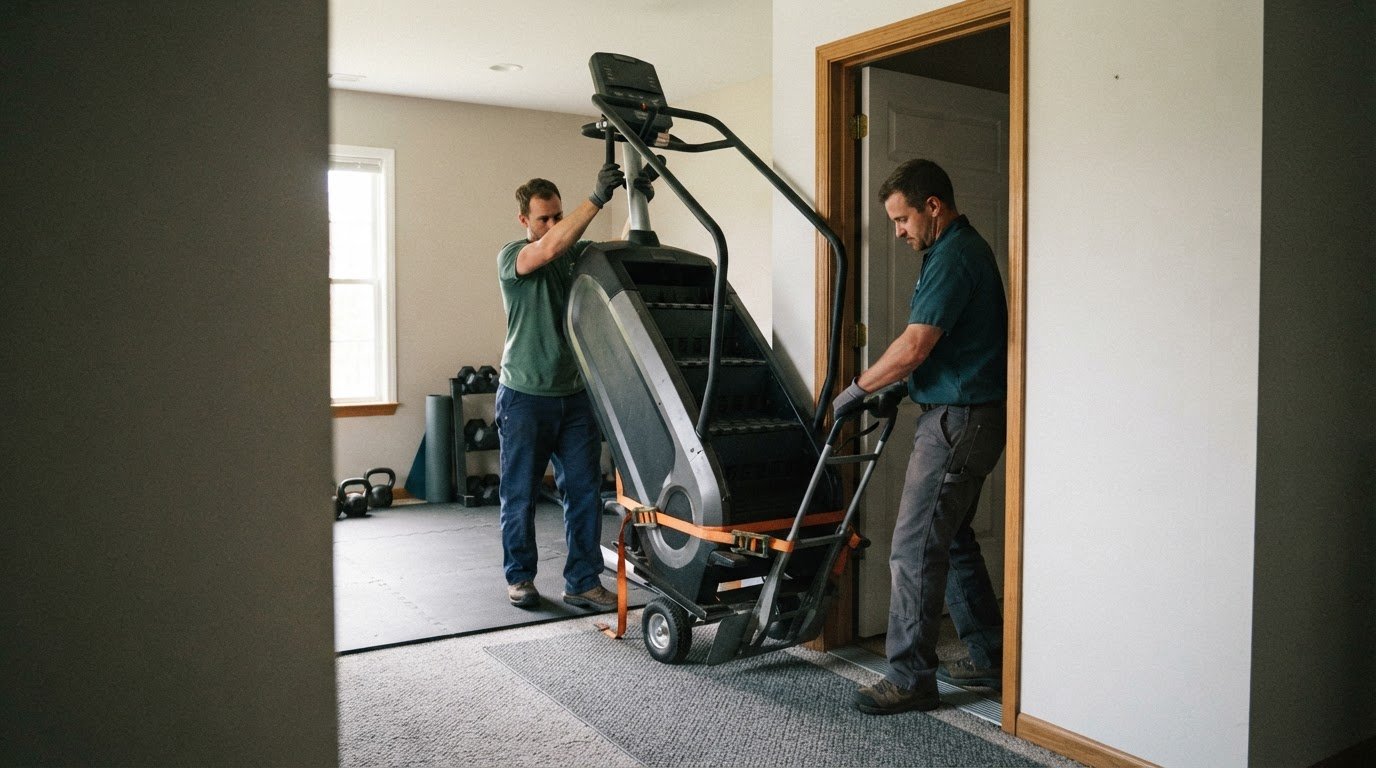
A stair climber’s weight is only one factor in whether it can reach your home gym. Moving a heavy commercial-grade stair climber into a home gym in Gainesville starts with measuring the machine and checking every doorway, turn, stairway, and other tight spot along the route.
Plan the route before moving day. A machine that fits through the entrance may still be difficult to maneuver around a landing or into its final position. This guide covers the measurements that matter, how moving equipment such as dollies and blankets can help, and when professional movers are a practical choice. You’ll also learn which access and equipment details to share so the move can be planned around your home’s layout and the stair climber’s size.
Key Takeaways
- Measure the stair climber and the full route, including doorways, landings, and tight turns, before planning its placement.
- Learn how movers choose equipment such as dollies, lifting straps, furniture skates, and stair-climbing tools for the job.
- Share the machine’s make and model, condition, and access details to help movers plan the move.
- See how documenting parts during disassembly can help guide reassembly at the destination.
- Find out when professional exercise equipment movers can make moving a commercial stair climber into your home gym easier.
Moving heavy commercial gym equipment in Gainesville
A commercial stair climber needs a move plan tailored to its frame, route, and destination. Moving a heavy commercial-grade stair climber into a home gym in Gainesville starts with the machine’s make and model, its assembly state, and any available instructions. These details help the crew plan how to handle and protect it during transport.
Keep small hardware and detached parts together, and save any packaging that can protect the equipment. Note existing damage before transport so it can be distinguished from marks noticed after arrival. Movers can wrap exposed surfaces and secure loose components to limit movement. If the stair climber has a digital console, protect the screen and keep cables from snagging nearby equipment.
Clear the work area and route before the crew arrives. Point out doors, stairs, elevators, and loading access, including a basement entrance or narrow landing. Permit needs depend on the specific work and property, while building rules may set access or loading procedures. Insurance terms vary by mover, so review the applicable service agreement before the move.
Protect floors with suitable coverings. Industrial-grade floor runners and plywood pathways can help shield flooring while heavy equipment moves through a home. The right protection depends on the route and equipment contact points. A home gym’s weight-bearing capacity depends on the building’s floor structure and the combined load of the equipment and its use. A qualified building professional can assess structural concerns.
Moving a heavy commercial-grade stair climber into a Gainesville home gym also requires planning its final position. Leave the clearances required by the manufacturer and decide where the machine will go before it enters the room. Local moves focus on home access and placement; longer relocations also need a plan to secure the equipment during transport. Include packing materials, protective wraps, and any old equipment components that need removal in the move plan.
Share the machine’s brand and model, quantity of equipment, condition, assembly status, available instructions, access details, placement preferences, and any separate delivery or removal needs. Photos can clarify tight access points. These details help the moving crew coordinate handling and placement. A clear plan makes moving a commercial stair climber into a Gainesville home gym more straightforward, from loading access to its intended position.
Heavy Furniture Moving says its local movers transport heavy fitness equipment around Gainesville, disassemble it, pack weight stacks and digital consoles, transport it securely, and reassemble it at the destination.
How professional movers use dollies, lifting straps, furniture skates, and stair-climbing tools
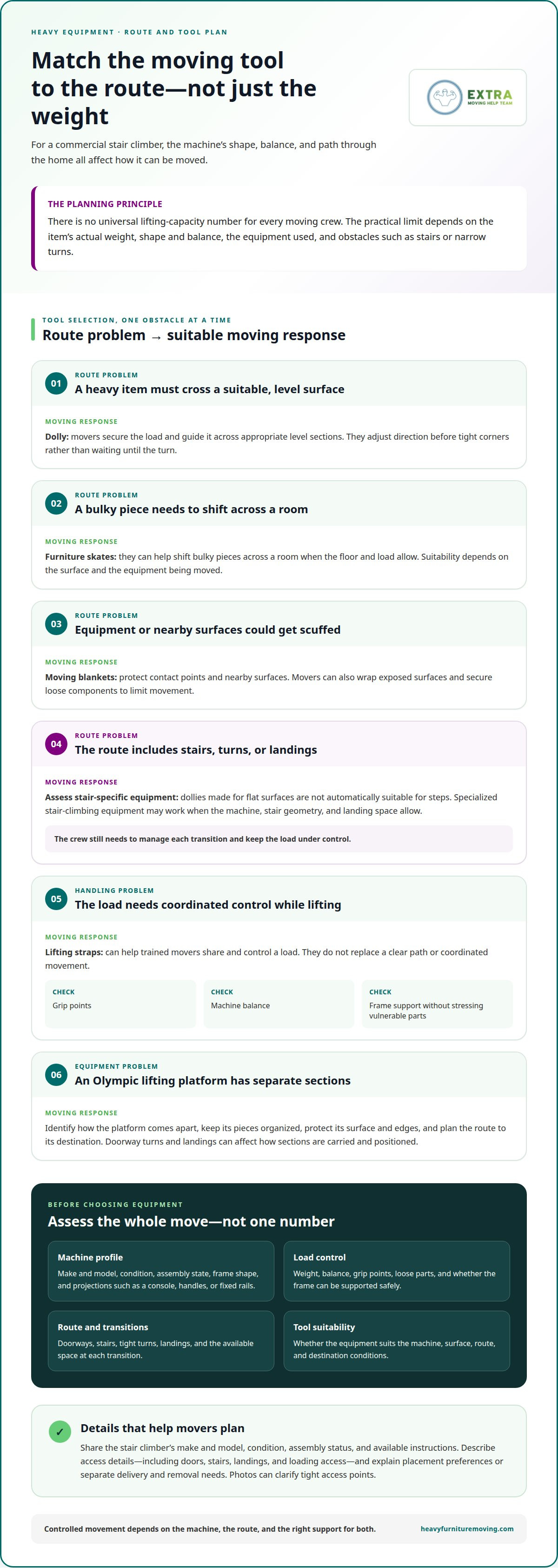
Professional movers match each tool to the equipment’s shape, balance, and route. A commercial stair climber may have a tall frame, projecting handles, or a console that changes how it can be tilted. Before lifting, the crew checks for loose parts and chooses a stable way to support the machine. The goal is controlled movement, not simply getting the equipment onto wheels.
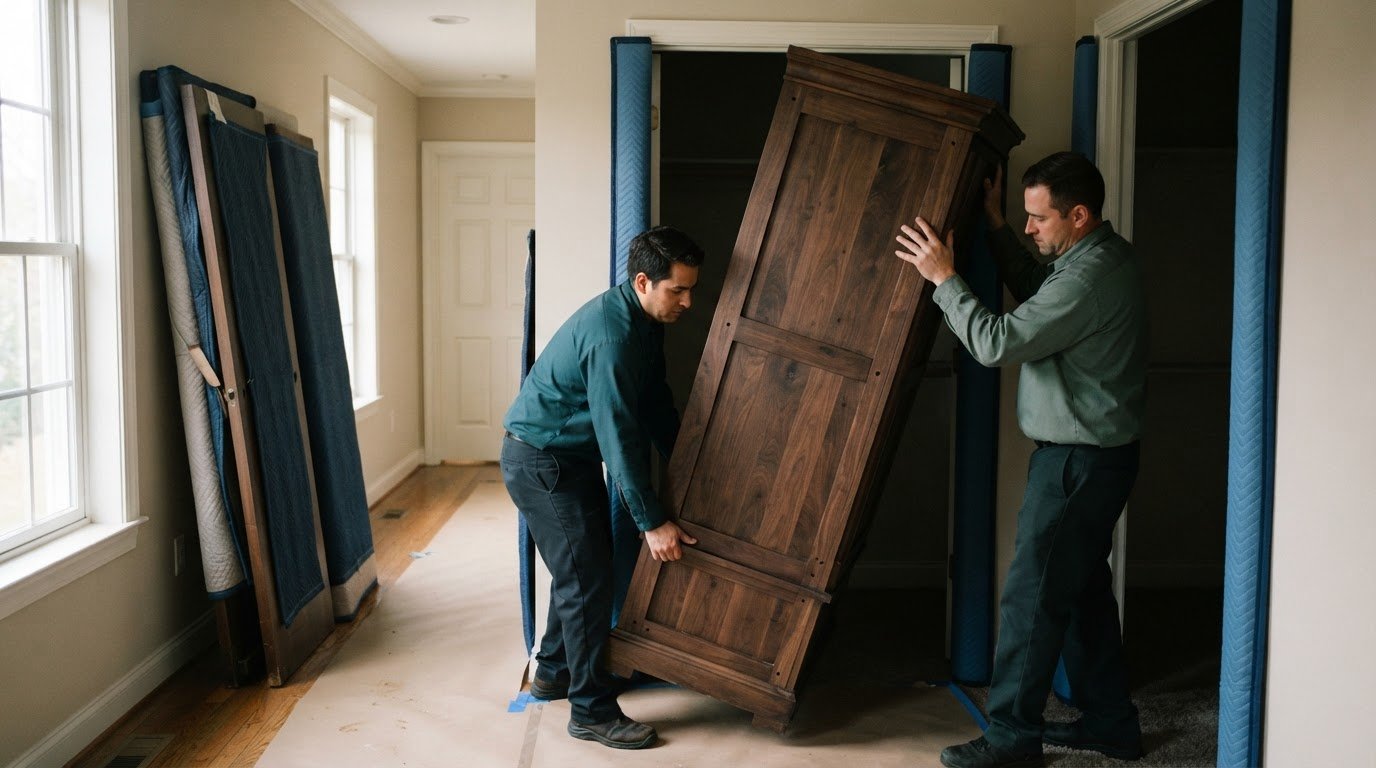
Dollies help move heavy items across suitable, level surfaces. Movers secure the load and guide it through open sections of the route, adjusting direction before tight corners. Furniture skates can help shift bulky pieces across a room when the floor and load allow. Moving blankets protect contact points and nearby surfaces from scuffs. Stairs need a different plan: dollies designed for flat surfaces aren’t automatically suitable for steps.
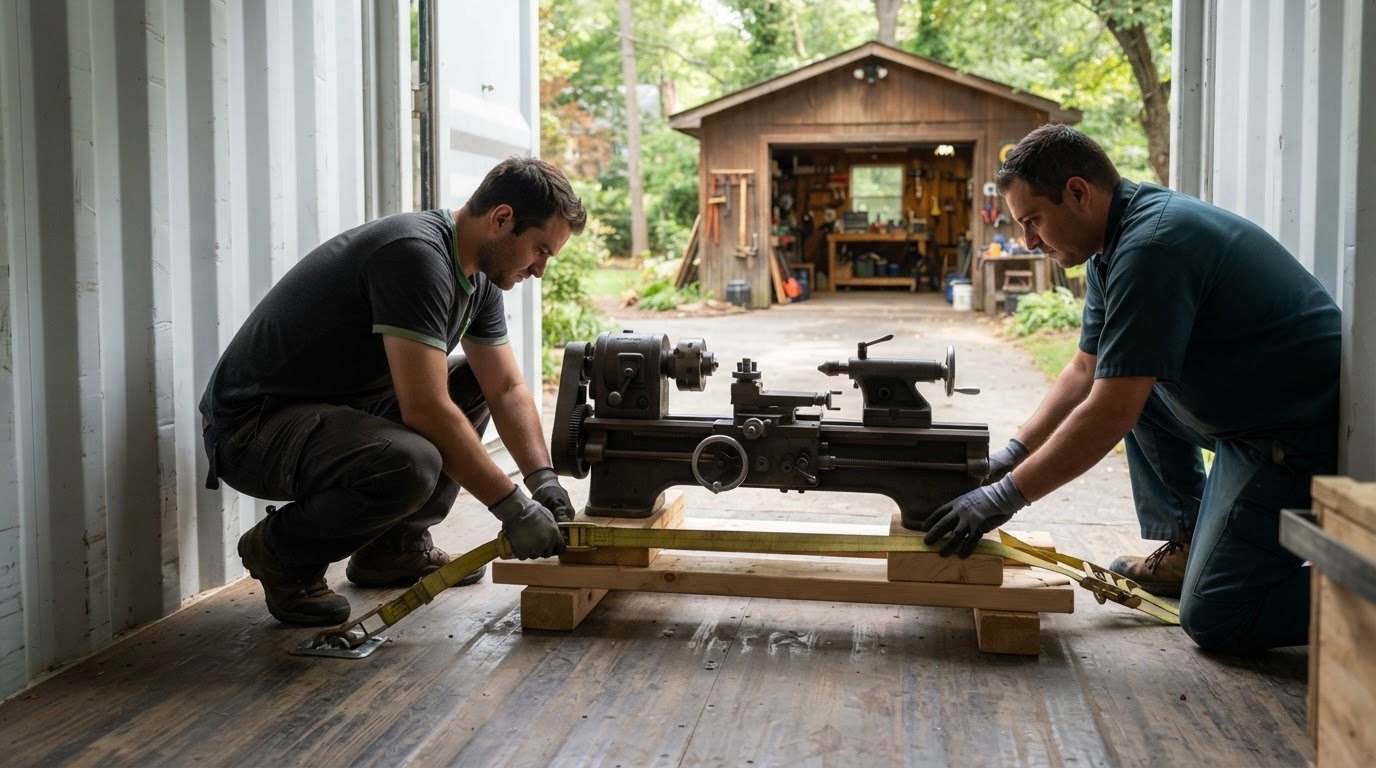
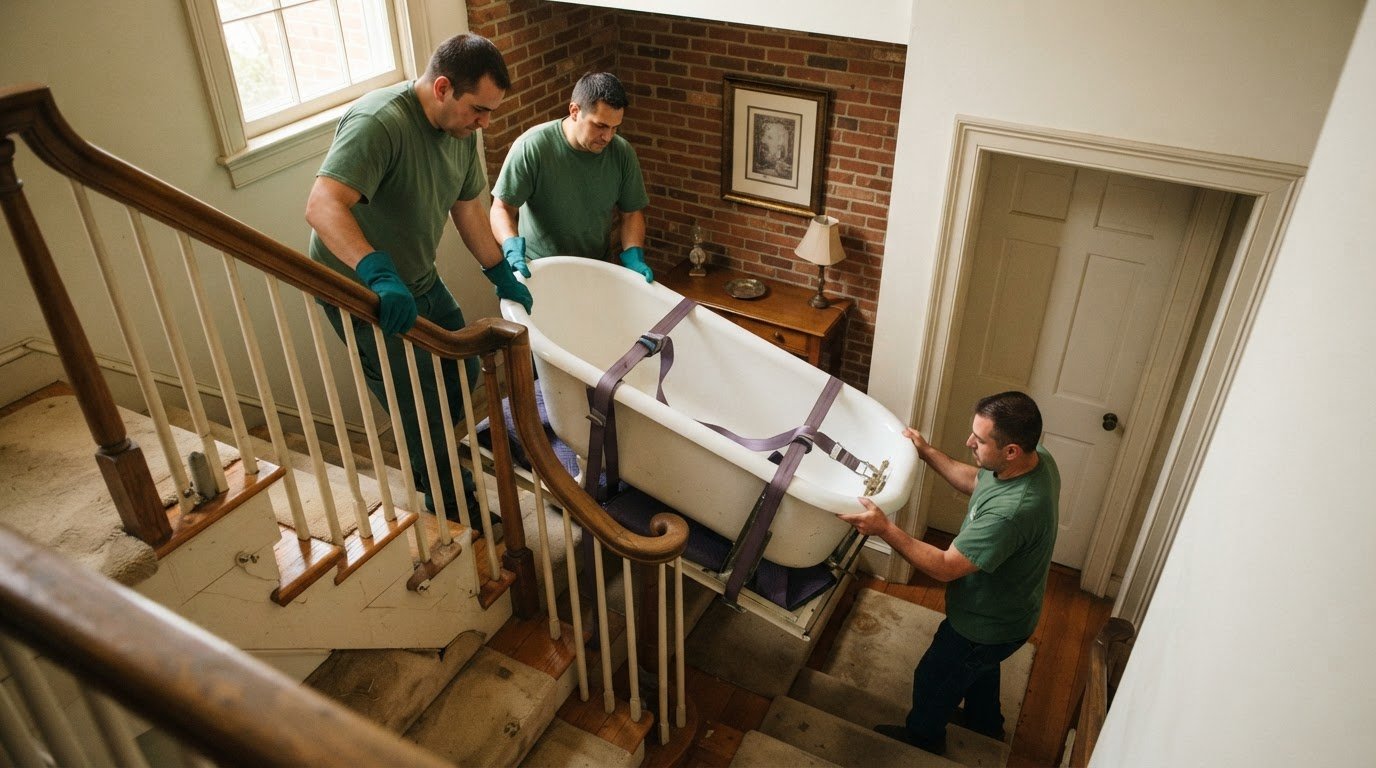
Lifting straps can help trained movers share and control a load, but they don’t replace a clear path or coordinated movement. The crew considers grip points, the machine’s balance, and whether its frame can be supported without stressing vulnerable parts. For stairs, specialized stair-climbing equipment may be suitable when the machine, stair geometry, and landing space allow. The crew still needs to manage each transition and keep the load under control.
Olympic lifting platforms need a different handling plan. A platform may consist of separate sections, so movers identify how it comes apart and keep its pieces organized for transport. They protect the platform’s surface and edges, then plan the route to its destination. If the home gym is upstairs or in a basement, doorway turns and landings can affect how pieces are carried and positioned. Consider the destination floor before placement, too.
There’s no universal lifting-capacity number that applies to every moving crew. The practical limit depends on the item’s actual weight, shape, and balance, the equipment used, and obstacles such as stairs or narrow turns. Movers assess those factors together rather than relying on strength alone. Sharing the stair climber’s model, condition, and access details helps them plan suitable equipment and staffing.
For a move involving a stair climber and other gym equipment, professional exercise equipment moving support can help coordinate handling, transport, and placement. A clear description of the equipment and route helps equipment movers plan the job efficiently, without treating every heavy item as the same load.
How professional movers measure doorways, stairs, and item weight
Movers plan around the stair climber’s full shape, not just its product listing. They record its height, width, and depth in the configuration being moved. Projections such as a console, handles, or fixed rails can change the widest point. If parts are removed for transport, the crew accounts for both the reduced frame and the separate components.
Door measurements focus on usable clearance. The crew considers the opening between the doorjambs, the height beneath the frame, and anything else that narrows the passage. A doorway’s listed size may not reflect the space available with hinges, trim, or a door in place. Movers compare the equipment’s dimensions with the actual opening and consider the angle needed to pass through.
Turns need their own measurements. A stair climber might clear a straight hallway but fail at a corner where the frame must pivot. Movers check the approach to each turn, nearby walls, and the space available to change direction. For stairs, they assess the stair width, handrails, landings, and overhead clearance. A low ceiling above a landing can restrict how the machine is tilted or turned.
The crew maps the complete route from loading access to the home gym, including the entrance, interior doors, hallways, staircases, and final position. A basement gym, for example, can require a different approach from a ground-floor room because stairs and ceiling clearance affect each move. The route also determines where movers can pause, adjust their grip, or reposition equipment.
Weight planning starts with the stair climber’s make and model. Product information or manufacturer instructions can help establish its listed weight and identify detachable parts. Movers account for the configuration being transported, including components removed beforehand. If the available information doesn’t match the equipment’s condition, the crew can plan around its observed construction and handling needs without assuming a precise weight.
Weight alone doesn’t determine the heavy-lifting plan. Balance, grip points, frame shape, stairs, and turning space all affect how movers coordinate the load. The crew uses these details to plan team positions and choose suitable handling equipment. A bulky machine may need a different approach from a compact item of the same weight.
Share the model, current assembly state, and clear photos of tight access points before scheduling. Movers can use these details to coordinate the route and make sure the plan accounts for the machine and home layout. If you’re concerned about the destination floor’s capacity, arrange an assessment by a qualified building professional before placing gym equipment there.
Choosing a moving company
Choose movers who treat a commercial stair climber as specialized fitness equipment, not ordinary household furniture. The job involves handling, protection, transport, and placement. A machine moving through a narrow hallway needs a different plan from one leaving through a wide, ground-floor entrance. In Gainesville, Virginia, look for a mover prepared to account for the actual equipment and home layout.
For heavy fitness equipment in Gainesville, Virginia, choose movers who handle exercise equipment and plan around the route and destination. Ask for a clear description of how the move will address the stair climber, including any requested disassembly, transport, and final placement. This helps distinguish a plan tailored to gym equipment from a general moving arrangement.
A useful moving plan connects the machine’s details with the home’s access. The model, assembly condition, and available manufacturer instructions help define handling needs. Access notes should cover the entrance, interior doors, stairs, landings, and loading area. A basement gym, for example, adds stair access and turning space to the plan. These details help coordinate equipment and placement before moving day.
Look for a clear explanation of how the team will protect the stair climber and home. The plan should address padding for vulnerable surfaces, secure handling of loose parts, and floor protection along the route. It should also distinguish transport from assembly or positioning. Manufacturer instructions can guide reassembly when parts are removed, while the intended room layout determines the final placement.
Precision matters at each handoff. During loading, the machine must remain stable and protected. During transport, loose parts and console surfaces need suitable protection. At the destination, movers should place the equipment according to the agreed layout and manufacturer-required clearances. If other gym machines are moving too, each needs its own handling plan rather than assumptions based on the stair climber.
Damage prevention starts with useful information. Share photos of the machine, its model details, and any tight access points. Describe visible damage or missing hardware before the move. Include other items or separate moving needs in the requested scope so the plan reflects the actual relocation, not just one piece of equipment.
Professional equipment movers can be a practical choice when the stair climber is bulky, the route has stairs or tight turns, or the move needs coordinated handling. A straightforward route may call for a simpler plan. To compare movers, consider how specifically each plan addresses the machine, access, floor protection, and placement. Moving costs depend on the case and are provided after a quote request; the equipment, route, and requested work shape the quote.
Choose professional equipment movers who handle exercise equipment and plan for the machine’s access route, protection, transport, and placement.
Disassembling Commercial Stair Climbers for Moving
Yes, a commercial stair climber can sometimes be partly disassembled for transport. The exact parts depend on its make, model, and manufacturer instructions. A professional crew reviews those instructions before removing anything. The aim is to reduce awkward dimensions without disturbing components that should remain assembled.
Before work begins, movers photograph the machine from multiple angles. These images record cable paths, console connections, covers, and the original placement of removable parts. The crew also notes existing damage and the stair climber’s condition. Clear records help guide reassembly and distinguish existing marks from any noticed after the move.
Disassembly follows model-specific instructions, not a one-size-fits-all sequence. Where the manufacturer permits removal, the crew identifies each component and keeps its hardware together. Small parts go into labeled bags, with labels tied to their location on the machine. Cables and connectors are documented before separation, so reassembly doesn’t rely on memory alone.
A commercial unit may include a digital console, wiring, moving arms, or other attached components. The crew protects the console and secures loose cables for transport. It won’t treat a connected part as removable unless the instructions support that step. For unfamiliar equipment, the model information and available manual help movers plan which parts can be separated.
Not every machine should be taken apart. If removing a component could affect alignment or make the equipment harder to reassemble, movers can plan transport around the assembled frame instead. They compare its dimensions with doorways, turns, stairs, and the destination space. Disassembly decisions should account for the full route, not just the machine’s size.
During packing, each removed part stays protected and matched to the correct machine. The crew can wrap vulnerable surfaces, secure the frame, and keep labeled hardware together. At the destination, photos and instructions guide reassembly. The crew places parts in their documented positions and follows the manufacturer’s assembly guidance rather than guessing at connections.
Before scheduling, share the stair climber’s brand and model, current assembly state, and any available instructions. Photos can help movers understand its configuration. Mention missing hardware or visible damage, too. These details help the crew prepare for disassembly, transport, and reassembly as one coordinated job.
If the route or equipment makes the work difficult to manage alone, arrange professional exercise equipment moving for help with the stair climber’s handling and transport.
Heavy Furniture Moving: in home furniture movers near me
Heavy Furniture Moving can help plan your stair climber’s move into a home gym. Turn to the team when the machine’s weight, a tight route, or stairs make handling difficult. Its Exercise Equipment Moving service covers heavy fitness equipment, and in-home furniture movers can assist with positioning bulky items inside your home.
Share the stair climber’s model, condition, access route, and intended placement. Include details about stairs, narrow turns, and any other gym equipment moving with it. This gives the movers practical information for planning transport and placement. If the machine cannot pass through a standard entrance, Sofa Hoisting may be a solution for getting it into the home.
Contact Heavy Furniture Moving to discuss moving your stair climber into your Gainesville home gym.
Make the Next Move a Clear One
Set up your Gainesville home gym for the equipment you want to use, not for a move that stalls the process. A well-planned relocation gives you a clearer path from loading to a usable training space. To move a heavy commercial-grade stair climber into a Gainesville home gym, turn the machine and home details into a practical moving plan.
Heavy Furniture Moving offers Movers Near Me for people who need help handling bulky household items. Share the stair climber you’re moving and describe the access challenges that matter most. That gives the conversation a useful starting point, focused on your move rather than a generic equipment checklist.
When you’re ready to plan the move, contact Heavy Furniture Moving. A capable team can help you move forward and get closer to a home gym that’s ready to use.
Frequently Asked Questions
What equipment do professional movers use to move a commercial stair climber safely?
Movers may use a suitable dolly, lifting straps, moving blankets, and stair-climbing equipment, depending on the machine and route. A dolly suits controlled movement across level areas, while blankets help protect exposed surfaces. For a model with a digital console, the crew should plan protection for the screen and attached connections. The equipment choice depends on the stair climber’s design, grip points, and access through the home.
How many movers are recommended for moving a commercial stair climber?
The right crew size depends on the stair climber’s weight, balance, dimensions, and route, so “commercial grade” alone doesn’t determine a safe number. Heavy Furniture Moving says most jobs are covered by two movers, while larger items may require three to four. That’s general guidance, not a stair-climber-specific staffing figure. Stairs, tight turns, and the machine’s handling points also affect the crew plan.
How do professional movers measure doorways, hallways, and stairs before delivery?
Movers compare the machine’s widest and tallest points with the route’s usable clearance. They account for door frames, door swings, hallway turns, stair rails, landings, and overhead space. A practical check considers whether the machine can pivot at a corner, not just pass through a straight opening. For a home in Gainesville, Virginia, photos of tight spots can help the crew plan around the actual layout.
How do Gainesville moving companies compare on price and fitness-equipment experience?
Compare the written scope: what handling, protection, transport, and placement include, and whether stair access is accounted for. Price depends on the move’s details and is provided after a quote request; the route, equipment, and requested work shape the quote. For Gainesville, Virginia, Heavy Furniture Moving offers Exercise Equipment Moving. Its experience with heavy and bulky items is relevant when a commercial machine needs careful handling.
What are the risks of moving a heavy stair climber without professional movers?
Without professional movers, a stair climber can be difficult to control around stairs, turns, and tight landings, increasing the risk of scuffing nearby surfaces or stressing vulnerable parts of the machine.
Which Gainesville, Florida movers handle heavy fitness equipment?
Heavy Furniture Moving handles heavy fitness equipment and small home gym moves in Gainesville.
Frequently Asked Questions
Movers may use a suitable dolly, lifting straps, moving blankets, and stair-climbing equipment, depending on the machine and route. A dolly suits controlled movement across level areas, while blankets help protect exposed surfaces. For a model with a digital console, the crew should plan protection for the screen and attached connections. The equipment choice depends on the stair climber’s design, grip points, and access through the home.
The right crew size depends on the stair climber’s weight, balance, dimensions, and route, so “commercial grade” alone doesn’t determine a safe number. Heavy Furniture Moving says most jobs are covered by two movers, while larger items may require three to four. That’s general guidance, not a stair-climber-specific staffing figure. Stairs, tight turns, and the machine’s handling points also affect the crew plan.
Movers compare the machine’s widest and tallest points with the route’s usable clearance. They account for door frames, door swings, hallway turns, stair rails, landings, and overhead space. A practical check considers whether the machine can pivot at a corner, not just pass through a straight opening. For a home in Gainesville, Virginia, photos of tight spots can help the crew plan around the actual layout.
Compare the written scope: what handling, protection, transport, and placement include, and whether stair access is accounted for. Price depends on the move’s details and is provided after a quote request; the route, equipment, and requested work shape the quote. For Gainesville, Virginia, Heavy Furniture Moving offers Exercise Equipment Moving. Its experience with heavy and bulky items is relevant when a commercial machine needs careful handling.
Without professional movers, a stair climber can be difficult to control around stairs, turns, and tight landings, increasing the risk of scuffing nearby surfaces or stressing vulnerable parts of the machine.
Heavy Furniture Moving handles heavy fitness equipment and small home gym moves in Gainesville.