Moving a Heavy Solid Maple Workbench into Your Basement Shop
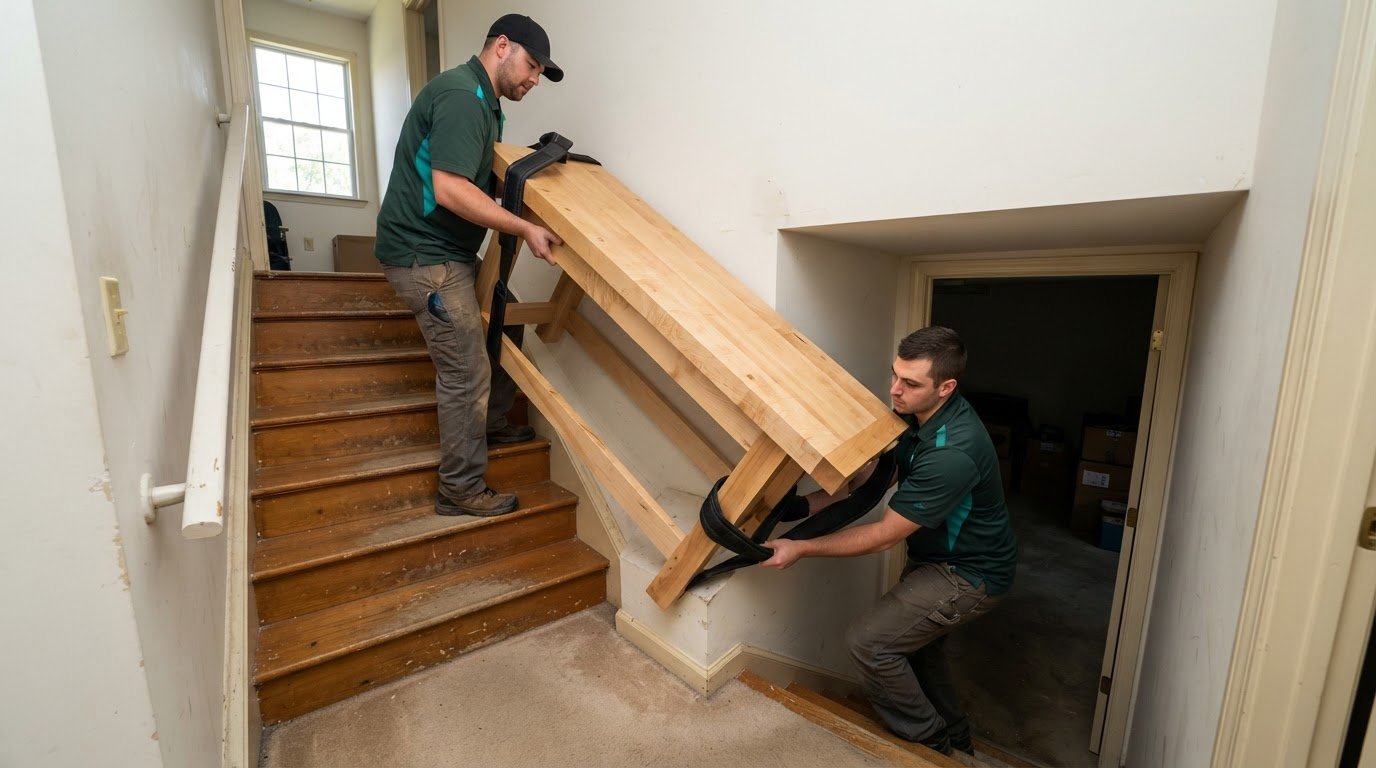
The stairs, doorway, and landing determine how to move a heavy solid maple workbench into a basement shop in Manassas Park. Measure the bench and its route first, then remove only parts that can be detached safely. If you cannot keep the workbench under control on the stairs, get professional heavy-lifting help instead of forcing the move.
A solid maple workbench is made for a workshop, but its weight and bulk can make tight turns and narrow basement access difficult. Caution is sensible: a slip could damage the bench or your home, or injure someone helping.
Plan the move in stages: map the route, check clearances, prepare the workbench, and decide how to bring it downstairs under control. You’ll also learn when to hand the lifting to experienced movers, so the bench can reach its new workspace without guesswork.
Key Takeaways
- Map the entire route before moving day, including doorway width, stair turns, landings, and overhead clearance.
- Decide whether removable parts can make the workbench easier to handle without risking damage or an unstable load.
- Choose a controlled way to move the bench that suits the basement access, rather than improvising with an unsafe ramp or lift.
- Protect the bench and home by clearing the path and planning how the load will be guided at each difficult point.
- Consider in-home furniture movers when the bench is too bulky or difficult to control safely on the stairs.
How to move heavy solid maple workbench into basement shop Manassas Park
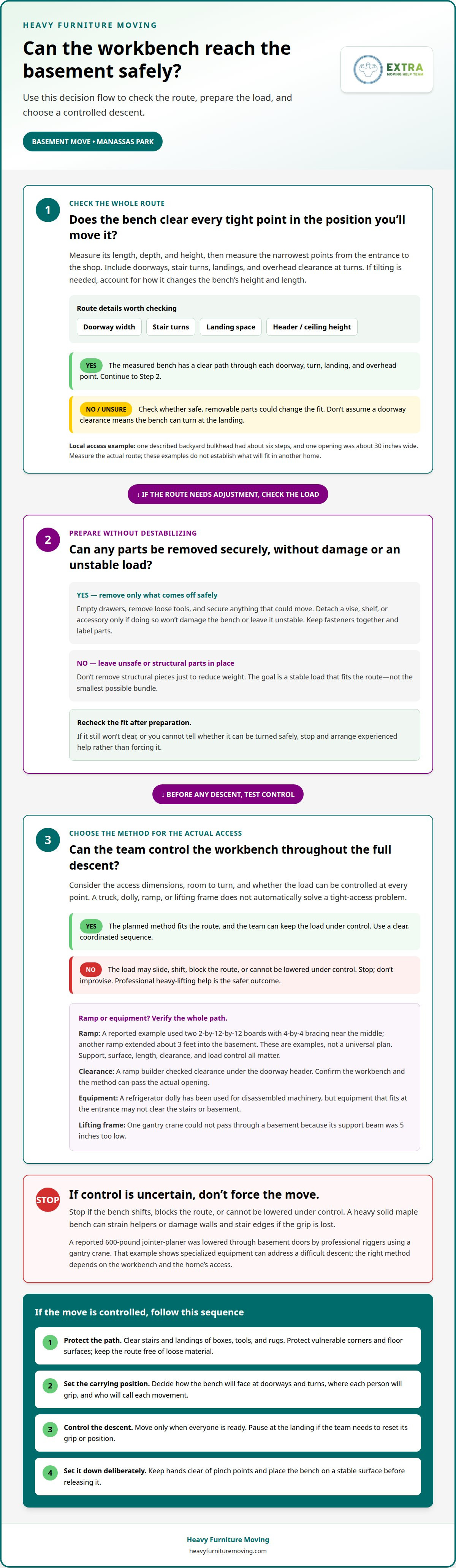
Plan the route before moving the workbench. Measure its length, depth, height, and the narrowest points from the entrance to the basement shop. Include doorways, stair turns, landings, and the ceiling or door header above each turn. A Manassas Park basement might have an internal staircase or a backyard bulkhead with about six steps. One described bulkhead opening was about 30 inches wide, a useful reminder to measure the actual opening rather than assume the bench will fit.
Measure the workbench in the position it will be moved, not just as it sits in the shop. If it needs to tilt through a doorway, account for how tilting changes its height and length. Map every turn and note where helpers can stand without blocking the next step. Sketch the route and compare its clearances with the bench’s dimensions. A doorway may clear the top of the bench but still leave too little room to turn at the landing.
Reduce the load only by removing parts that come off securely. Empty drawers, remove loose tools, and secure anything that can move. Detach a vise, shelf, or other accessory only if removal won’t damage the bench or leave it unstable. Keep fasteners together and label parts for reassembly. Don’t remove structural pieces just to reduce weight. The aim is a stable load that fits the route, not the smallest possible bundle.
- Protect the path. Clear the stairs and landing of boxes, tools, and rugs. Cover vulnerable corners and floor surfaces with suitable protection, then keep the route free of loose material.
- Set the carrying position. Choose how the bench will face at each doorway and stair turn. Identify where each person will grip and who will call each movement.
- Control the descent. Move only when everyone is ready. Pause at the landing if the team needs to reset its grip or position.
- Set it down deliberately. Keep hands clear of pinch points and place the bench on a stable surface before releasing it.
A ramp may suit a backyard bulkhead, but a makeshift ramp is not automatically safe. One reported example used two 2-by-12-by-12 boards, with 4-by-4 bracing underneath near the middle. Another ramp extended about three feet into the basement, and its builder checked clearance beneath the doorway header. These are examples, not a plan for every home. Ramp length, support, surface, and the workbench’s movement all affect control. A load that can slide faster than the team can manage should not go down that ramp.
A truck, dolly, or lifting frame won’t automatically solve an access problem. A refrigerator dolly has been used to move disassembled machinery, while a gantry crane could not pass through a basement because its support beam was too low. For a workbench, the key factors are the access dimensions, room to turn, and ability to control the load throughout the move. Equipment that fits at the entrance may not clear the stairs or fit through the basement.
Stop if the workbench shifts, blocks the route, or cannot be lowered under control. A heavy solid maple bench can strain helpers and scrape walls or stair edges if the team loses its grip. When the route demands a risky lift, professional help is the sensible next step. A reported 600-pound jointer-planer was lowered through basement doors by professional riggers using a gantry crane. That example shows how specialized equipment can address a difficult descent, but the right method depends on the workbench and the home’s access.
The original poster described either an internal narrow staircase or a backyard bulkhead with about six steps. Examples from other equipment moves can suggest options, but they don’t guarantee a workbench will fit: one person described taking machinery apart and moving its manageable components downstairs on a refrigerator dolly. Another forum participant said they backed a pickup close to the bulkhead and used a ramp to slide disassembled equipment into the basement. That approach depends on keeping the load controlled and confirming that it clears the opening.
A forum participant’s ramp extended about 3 feet into the basement, and the builder checked that the equipment would clear the doorway header. A gantry crane may also fail to solve the problem: one could not move across a basement because its support beam was 5 inches too low. For a heavy load, avoid improvising if control is uncertain. A forum participant recommended hiring a professional mover when the job poses a risk of injury or damage.
Heavy Furniture Moving
Heavy Furniture Moving can help when a solid maple workbench is too bulky or difficult to control on basement stairs. The team handles heavy, awkward items and can plan the move around the workbench’s dimensions, stairs, turns, and clearances. Share those details and the basement access route so the lifting can be assessed before the move. If the bench is difficult to control with the people and equipment available, professional help is a practical next step. Contact Heavy Furniture Moving to discuss your workbench move.
Make Room for Your Workbench
Planning how to move a heavy solid maple workbench into a basement shop in Manassas Park is also a chance to prepare the space. Decide where the bench will sit, whether you can reach its drawers and vise, and whether its final position leaves a clear path through the shop. Planning ahead can make the bench easier to use once it’s downstairs.
When the move calls for experienced hands, Heavy Furniture Moving offers moving help for heavy and bulky household items. Its services also include Movers Near Me, Exercise Equipment Moving, and Sofa Hoisting. Choose professional help when the workbench’s size, weight, or route makes a self-managed move difficult to control.
Share the details of your workbench move and take the next step toward getting your shop ready. Contact Heavy Furniture Moving to discuss the move. Your workshop plans can keep moving forward.