Moving a Heavy Solid Maple Dining Table in Ashburn: Leg Pairs or Pedestal
A pedestal base can leave more room for chairs, but it doesn’t guarantee easier legroom: its feet may still interfere with chair backs. When moving a heavy solid maple dining table with a pedestal base in Ashburn, the base design and chair clearance help determine how to position and handle the table.
It’s easy to focus on solid maple’s weight and overlook the shape beneath the tabletop. A central pedestal and paired legs affect where chairs fit, how people sit, and how the table moves through the home. This article explains differences in chair clearance and legroom, what to consider when moving either base style, and when a heavy table may call for professional help. Use the table’s shape, base, and surrounding space to plan the move, rather than assuming every pedestal table is the same job.
Key Takeaways
- Table weight depends on the maple top’s size and thickness, along with the pedestal’s design, so the moving plan should account for the whole piece.
- Pedestal and leg-pair bases affect chair clearance differently; their shape also influences how movers support and position the table.
- Whether to disassemble the pedestal depends on how it is attached and the table’s route through the home.
- Doorways, stairs, and tight turns shape the handling plan. Professional movers assess the path and choose equipment to control the table safely.
- Heavy Furniture Moving offers in-home furniture moving help for tables that need careful handling through a residential move.
How heavy is a solid maple dining table with a pedestal base?
There’s no dependable single weight for every solid maple pedestal table. The total depends on the tabletop’s length, width, thickness, construction, and the pedestal’s size and material. A small square table and a long extension table can both be maple yet need different handling. When moving a heavy solid maple dining table with a pedestal base in Ashburn, movers assess the complete piece, not just the wood.
The tabletop often accounts for much of the load because its mass increases with its surface area and thickness. A larger top also spreads the weight over a wider span, making grip and balance more challenging. The pedestal adds weight beneath the center, while its feet or floor plate affect how the table rests. Movers consider these parts together before deciding how to support and carry the table.
Table dimensions help explain why weight varies. A documented 120-year-old table measures 4 feet 6 inches square and extends to 8 feet 5 inches. Those measurements describe one table, not a standard maple-table size or weight. They show how extension leaves can change a table’s footprint and handling needs. A folded configuration may be easier to maneuver than the table fully extended.
- 48-60-inch tables: A pedestal base can leave useful space for chairs, while a manageable top may be easier to position.
- 60-72-inch tables: A pedestal or trestle base may work, depending on the table’s weight and base design.
- 72-96-inch tables: A trestle base provides support across more of the table’s length.
These size bands help compare table layouts, but they don’t estimate weight. A long rectangular top can place more load away from a central pedestal than a compact round top. A heavier base may reduce slight tilting when someone leans near an edge, but it also adds mass to the piece. Both the top’s dimensions and the base’s shape affect the moving plan.
Before moving, professional movers identify the tabletop’s shape, extension leaves, and pedestal footprint. They also consider whether paired legs, a central post, or a broad floor plate changes the balance and carrying position. For a heavy solid maple dining table with a pedestal base in Ashburn, this assessment helps determine how to handle the assembled piece and its route. The useful answer isn’t a guessed weight, but a plan based on the table’s construction and dimensions.
How professional movers protect a solid maple table and pedestal base during a move
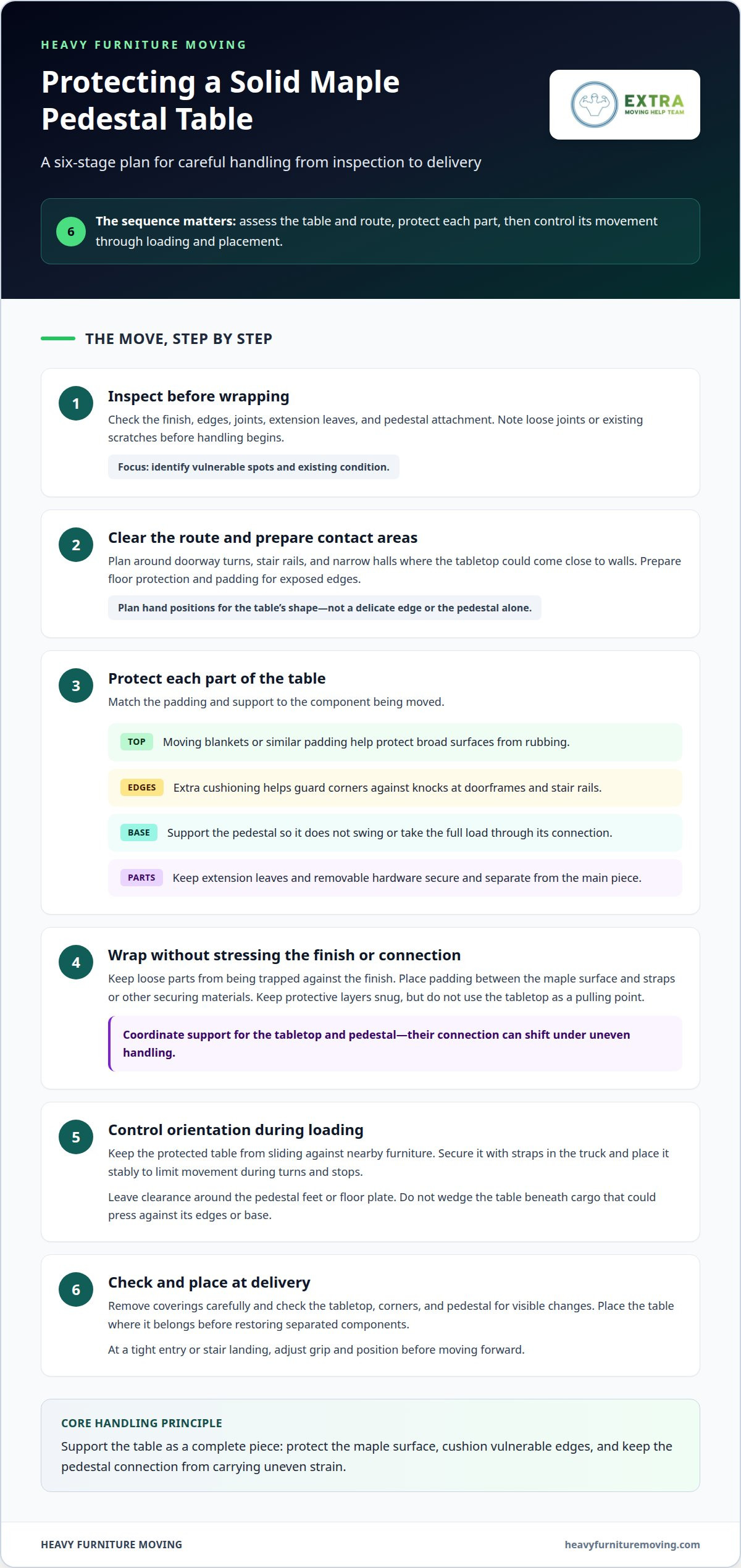
Protection starts with inspecting the table before wrapping. Movers note the tabletop’s finish, edges, joints, extension leaves, and pedestal attachment. They identify any loose joint or existing scratch before handling begins. This gives the crew a clear picture of vulnerable spots and helps distinguish existing damage from damage that occurs during the move.
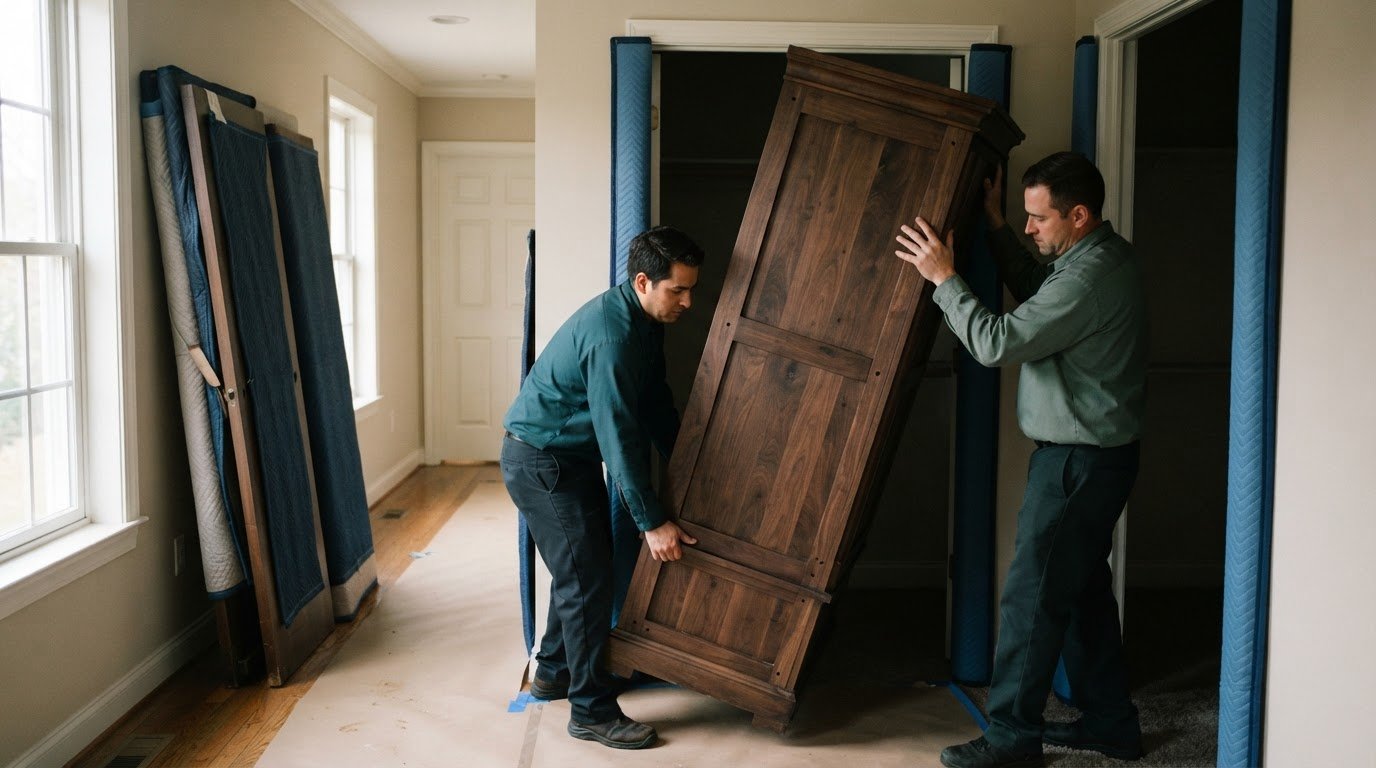
Next, movers clear the route and prepare surfaces the table could contact. A doorway turn, stair rail, or narrow hall can bring the tabletop close to walls. Floor protection and padding around exposed edges help limit scuffs during the carry. The crew also plans hand positions around the table’s shape, rather than gripping a delicate edge or relying on the pedestal alone.
- Tabletop: Moving blankets or similar padding protect broad surfaces from rubbing against other items.
- Edges and corners: Extra cushioning helps guard against knocks at doorframes and stair rails.
- Pedestal: Movers support the base so it doesn’t swing or take the full load through its connection.
- Loose components: Extension leaves and removable hardware are kept secure and separate from the main piece.
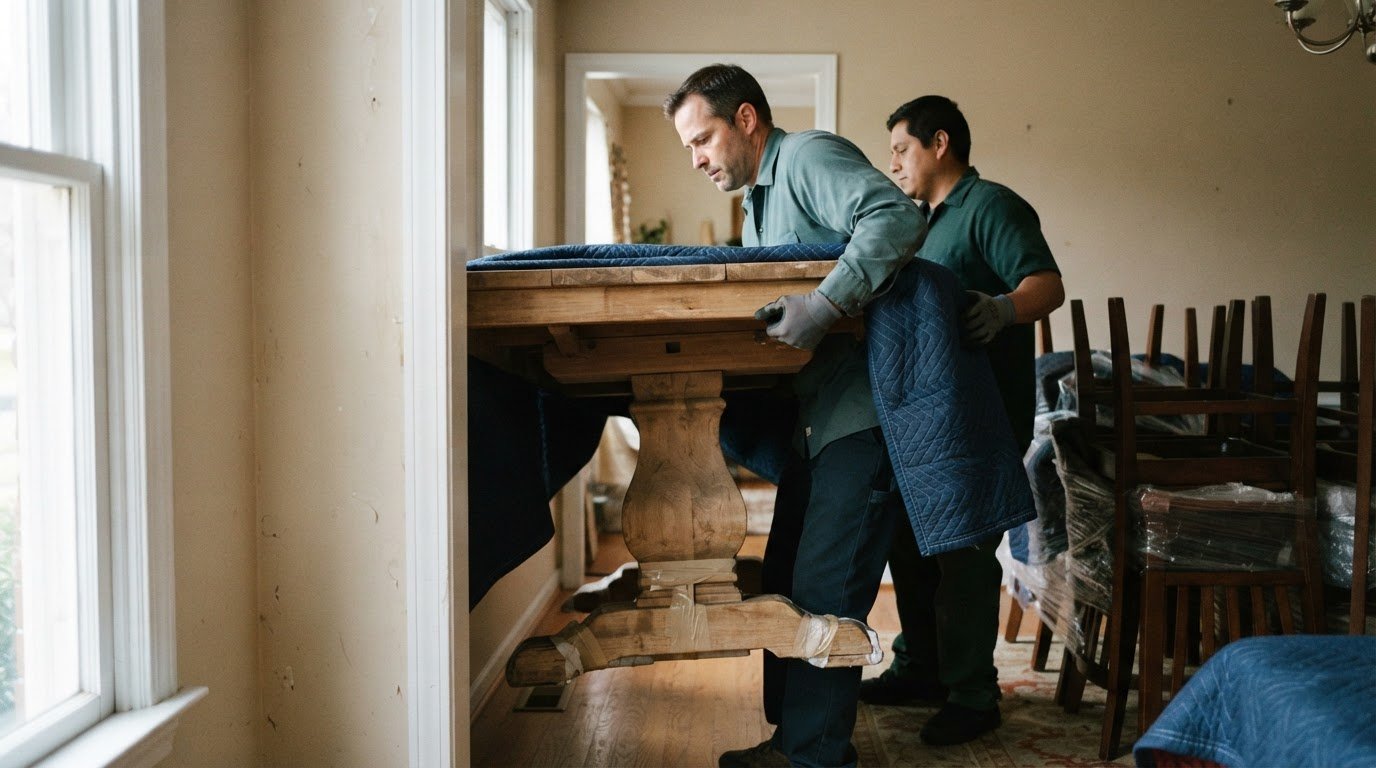
Wrapping should protect the finish without trapping loose parts against it. Movers place padding between the maple surface and straps or other securing materials. They keep protective layers snug, but don’t use the tabletop as a pulling point. With a pedestal design, the base and top need coordinated support because their connection can shift under uneven handling.
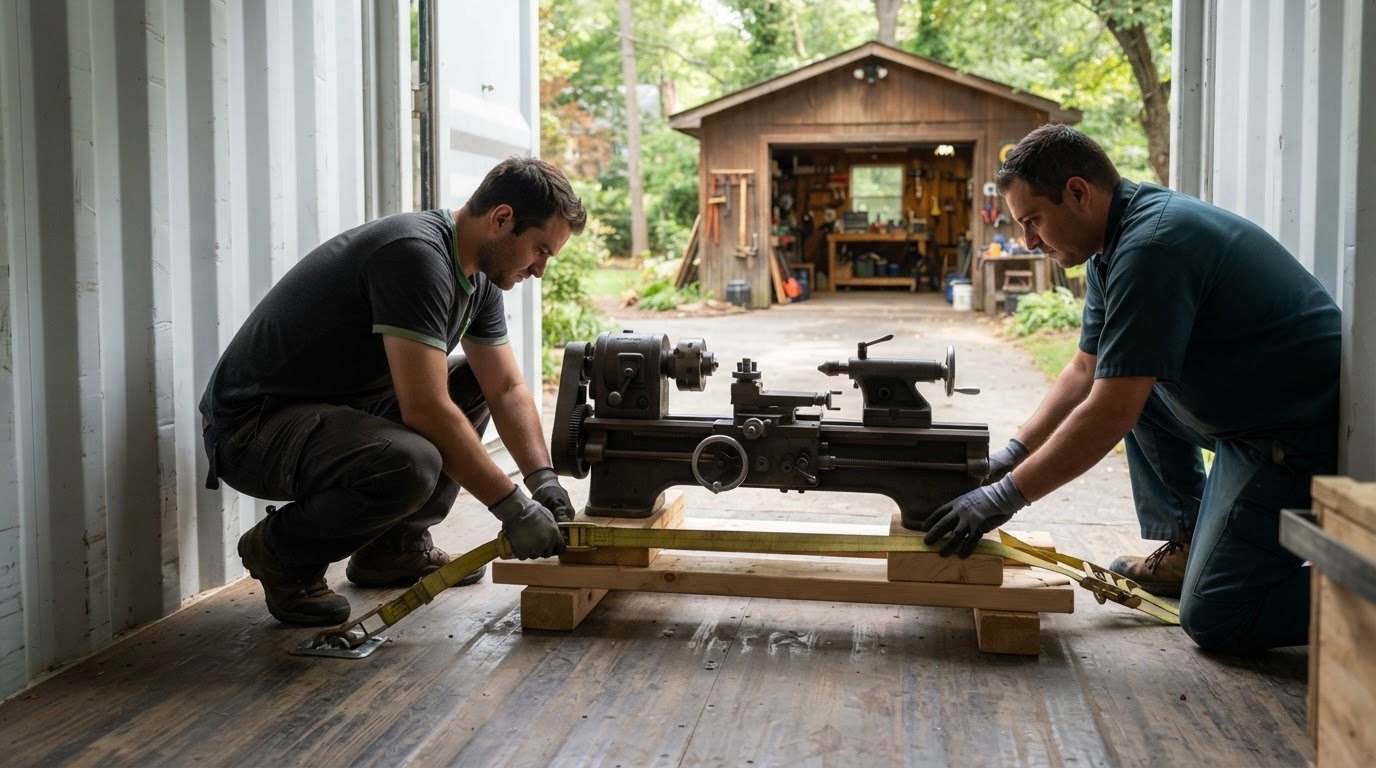
During loading, the crew controls the table’s orientation and keeps it from sliding against nearby furniture. Straps secure the protected piece in the truck, while stable placement limits movement during turns and stops. The pedestal’s feet or plate also need clearance from other cargo. A heavy solid maple table shouldn’t be wedged beneath items that could press against its edges or base.
At delivery, movers remove coverings carefully and check the tabletop, corners, and pedestal for visible changes. They place the table where it belongs before restoring any separated components. If the route includes a tight entry or stair landing, the crew adjusts its grip and position before moving forward. For careful handling inside a home, in-home furniture moving help can make sense for a large table with a vulnerable finish or base connection.
Should professional movers disassemble a pedestal dining table before moving it?
Not automatically. Professional movers decide based on the table’s construction, condition, and route through the home. A compact pedestal table may travel intact if its base is secure and doorways provide enough clearance. A long or bulky table may be easier to control after separating the top from the pedestal. The goal is to reduce strain on the joints while keeping each component supported throughout handling.
The connection matters. One documented pedestal design attaches its boards with 3/4-inch bolts. Movers inspect the attachment and surrounding wood before deciding whether to separate those parts. They look for loose hardware, movement between the base and top, or signs that the connection could shift during carrying. If the table is already unstable, carrying it assembled can place extra stress on the joint.
The route also affects the decision. A narrow doorway, sharp hallway turn, or stair landing can make an assembled tabletop difficult to angle safely. Separating the top can create a smaller, more manageable piece, while the pedestal can be carried independently. If the route has ample clearance and the base is firmly attached, keeping the table assembled may avoid unnecessary handling of the connection.
- Movers inspect the joint: They assess the bolts, boards, and surrounding wood for looseness or damage.
- They measure the route: Doorway width, turn space, and stair access help determine whether the assembled table can pass.
- They choose the configuration: The table travels assembled or in separate parts, based on stability and maneuverability.
- They track components: Removed bolts and fittings stay together so they can be matched during reassembly.
Disassembly should preserve the table’s original fit. Movers support the tabletop before releasing the base, so the joint doesn’t bear the full load as the parts separate. They protect the exposed connection and keep the top stable during transport. At the destination, they align the components and secure the base without forcing a misaligned joint. Any movement or looseness noticed during reassembly deserves attention before the table is used again.
For a solid maple table in Ashburn, the practical answer depends on its construction and the route from dining room to truck. Professional movers weigh the benefit of easier handling against the added steps of separation and reassembly. A stable table with clear passage may remain intact; a tight route or questionable joint may make disassembly the more controlled choice.
How professional movers handle a heavy dining table through narrow doorways or on stairs
Movers begin by tracing the route from the dining room to the truck. They inspect each doorway, hallway turn, stair landing, and exit. A rectangular tabletop may need a different angle than a round one. The crew identifies pinch points before lifting, such as a narrow hall beside a wall or a landing where the table can’t turn freely. Checking the route helps determine the safest orientation and whether the table should travel assembled.
At each doorway, movers control the table’s position rather than forcing it through. They keep the tabletop clear of the frame and guide its edges through the opening. A pedestal table needs attention beneath the top because its central base can change the balance as the crew tilts or turns it. With paired legs, movers also account for legs that could catch on the threshold or strike nearby trim. They pause and adjust if an edge approaches a wall.
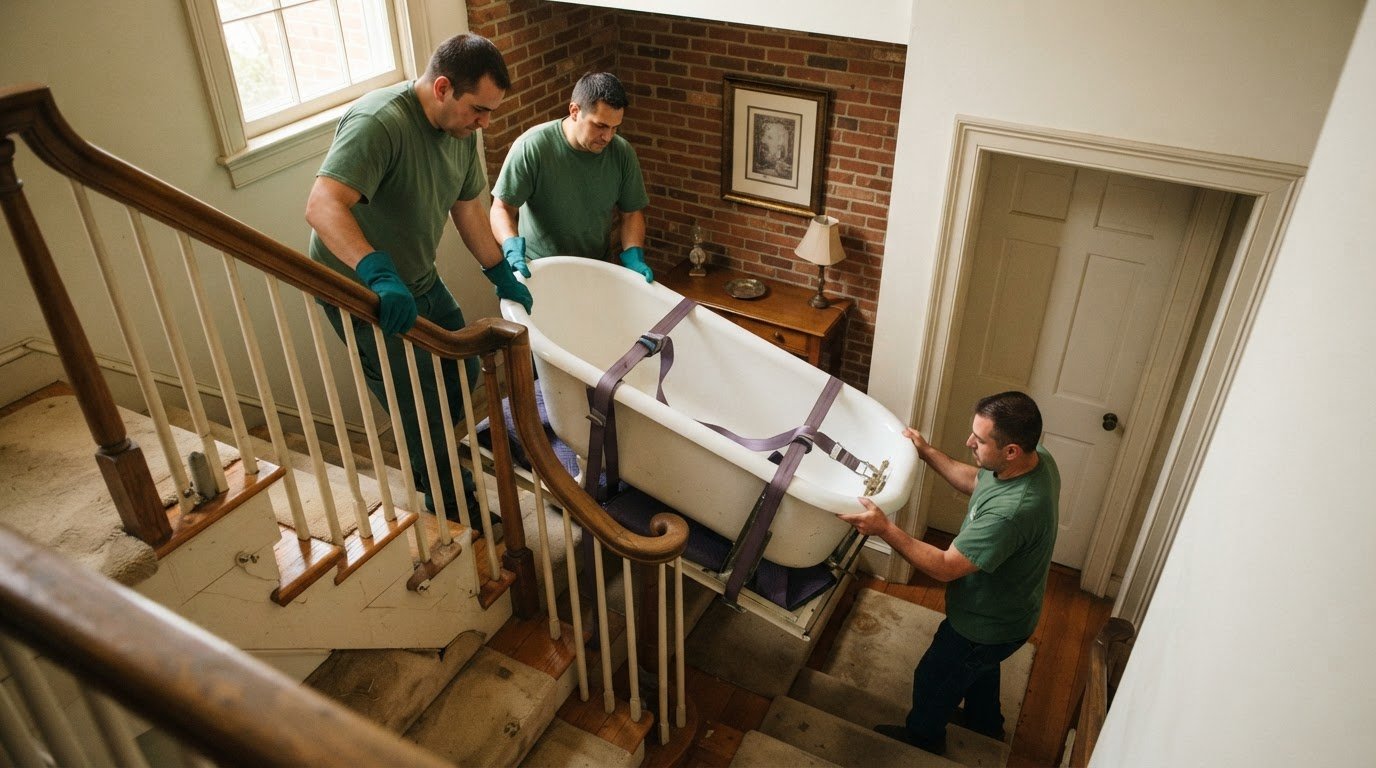
Stairs change both height and footing, so the crew coordinates movement between the upper and lower positions. They keep the table steady between steps, avoiding sudden shifts at a landing. A long tabletop can extend beyond the person guiding the base, so movers stay aware of both ends. They plan turns before entering the stairwell and communicate clearly to keep each movement controlled.
- Route assessment: Movers identify doorframes, tight corners, stair turns, and landing space.
- Table orientation: The crew chooses an angle that clears each opening without scraping edges.
- Base awareness: A central pedestal or paired legs changes where movers can hold and guide the piece.
- Controlled turns: Movers pause at corners and landings, then reposition before continuing.
For example, a table that clears a straight hallway may still be difficult to maneuver around a sharp turn. The tabletop can reach the corner before the base has room to follow. Movers account for this by changing the angle in a planned sequence. On stairs, they also consider the landing’s shape and the space available to reposition between flights. If the assembled table can’t pass cleanly, the crew may disassemble it as described in the previous section.
At the destination, movers carefully retrace the route. They guide the table through the final doorway, protect nearby walls from contact, and set it down in the intended room. The room’s layout matters too: a pedestal’s floor spread can affect chair placement, while paired legs may restrict where chairs fit. A clear path and deliberate handling help bring a heavy maple dining table into place without rough turns or rushed lifting.
Moving equipment for heavy solid wood tables
Professional movers choose equipment to match the table’s shape, weight distribution, and route. A solid maple tabletop needs broad support, while a pedestal base needs control beneath the center. Moving blankets, lifting straps, and a furniture dolly each serve a different purpose. The crew selects the right combination to keep the table steady from the dining room to the truck, rather than relying on one tool for every part of the move.
Moving blankets cushion the maple surface and protect corners from walls or other cargo. Movers place padding between the finish and straps, hardware, or nearby furniture. For example, a rectangular top passing through a hallway may need extra protection at its leading corners. Blanket placement also matters around the pedestal, where exposed edges and feet could rub against doorframes during a turn.
Lifting straps help movers control their grip and share the load while carrying a bulky table. Placement depends on the table’s balance and construction. A central pedestal changes where support is needed compared with paired legs. Movers avoid putting pressure on a vulnerable edge or letting the base swing. Straps support the planned carry, but the crew still guides the table by hand through turns and narrow passages.
A furniture dolly can help move a table across a clear, level stretch. Movers secure the table before rolling, then guide it slowly around corners and thresholds. A dolly doesn’t suit every route: stairs, uneven surfaces, or tight landings may call for a controlled carry instead. The team considers the tabletop’s dimensions and the base’s footprint before deciding whether wheeled equipment will improve control.
- Protective padding: Blankets cushion finished surfaces, corners, and pedestal parts.
- Straps: Movers use them to support a controlled carry and steady the load.
- Furniture dolly: It can assist on a suitable, level route but doesn’t replace careful handling.
- Floor coverings: Protective coverings help guard the path where equipment or table parts could make contact.
Equipment works as a system. Movers prepare the route, pad the table, choose support points, and secure the load for transport. A broad top may need steady support at multiple points, while a pedestal requires attention to its center and base. For a heavy table that needs coordinated lifting and moving equipment, arrange professional heavy lifting moving help for the move.
Heavy Furniture Moving
Heavy Furniture Moving can help plan a solid maple table move, from its pedestal base to the route out of your home. Its Movers Near Me and in-home furniture moving services suit residents who need hands-on help with heavy household pieces. Share the table’s shape, whether its base separates, and any tight doorway or stairway along the route. These details help clarify the handling needs before moving day. If the table’s size or weight makes the move difficult to manage alone, professional help can take the strain out of the heavy lifting. Contact Heavy Furniture Moving to discuss moving your dining table in Ashburn.
Get your table ready for a well-planned move
Before arranging the move, gather details that shape the plan: the tabletop’s approximate dimensions, whether the pedestal separates, and any narrow doorway or stairway along the route. A clear description helps movers anticipate your home’s handling and access needs. Photos of the base and route can also help explain the setup.
When moving a heavy solid maple dining table with a pedestal base in Ashburn, connect the table’s details with the move itself. Share where it sits, where it needs to go, and any concerns about its finish or stability. That gives the conversation a practical starting point, without requiring you to choose equipment or handling methods yourself.
Contact Heavy Furniture Moving to talk through your table move and the support you need. With the right plan in place, you can focus on settling into your dining space and enjoying the table there.
Frequently Asked Questions
How much does it cost to move a heavy solid maple dining table in Ashburn, VA?
There isn’t one fixed price for every table move. The price depends on the table, access, stairs, and handling needs, and is provided after a quote request. Share the table’s size and pickup and delivery details so the quote reflects the actual job. Heavy Furniture Moving provides an upfront quote before work begins, so you understand the planned service and total before moving day.
What do Ashburn movers charge for moving heavy furniture locally?
Heavy Furniture Moving uses hourly labor with a 2-hour minimum, while most single heavy-item moves have flat-rate pricing. For a dining table, the quote can account for access and stairs before work starts. Wrap and straps are included. The estimate should make the expected charge clear, so you can understand whether the move is priced hourly or as a flat rate.
How many movers are needed to move a heavy pedestal dining table safely?
Crew size depends on the table and the route, not just its pedestal base. Movers consider the top’s dimensions and bulk, whether the base separates, stair access, and room to turn at landings. A compact table on a clear path needs different handling than a large table carried through tight stairs. Share the table and access details to establish an appropriate crew plan.
Frequently Asked Questions
There isn’t one fixed price for every table move. The price depends on the table, access, stairs, and handling needs, and is provided after a quote request. Share the table’s size and pickup and delivery details so the quote reflects the actual job. Heavy Furniture Moving provides an upfront quote before work begins, so you understand the planned service and total before moving day.
Heavy Furniture Moving uses hourly labor with a 2-hour minimum, while most single heavy-item moves have flat-rate pricing. For a dining table, the quote can account for access and stairs before work starts. Wrap and straps are included. The estimate should make the expected charge clear, so you can understand whether the move is priced hourly or as a flat rate.
Crew size depends on the table and the route, not just its pedestal base. Movers consider the top’s dimensions and bulk, whether the base separates, stair access, and room to turn at landings. A compact table on a clear path needs different handling than a large table carried through tight stairs. Share the table and access details to establish an appropriate crew plan.