Moving a Heavy Concrete Garden Bench to an Ashburn Patio
A concrete bench move depends on more than its weight. Moving a heavy concrete garden bench to a backyard patio in Ashburn starts with identifying whether it’s built in or freestanding, then planning the route and final placement. The same considerations apply to concrete planters and attached seating.
If you’re concerned about tight access, patio damage, or moving the bench without putting people or property at risk, those are practical concerns. A professional moving team can assess the bench and route first, then plan around the actual layout instead of relying on guesswork.
This guide explains what affects moving a concrete bench, including its construction, access, ground conditions, and final patio placement. You’ll also learn what information helps a moving team prepare and when heavy-lifting support can make the job easier. With a clear plan, a bulky concrete feature is more manageable.
Key Takeaways
- A bench’s weight and size depend on its design and whether it’s built in or freestanding, so movers assess the piece before planning the move.
- The route to the patio, including narrow access and changes in surface, helps determine the equipment and handling plan.
- The number of movers depends on the bench and the conditions around it, not on a one-size-fits-all rule.
- Careful planning and protective materials help reduce the risk of damage to the bench, lawn, and patio.
- Heavy Furniture Moving can help with demanding lifting and furniture moves when a concrete feature needs professional handling.
What is the typical weight and size of a concrete garden bench?
Concrete garden benches vary in size and construction. A short, freestanding seat differs from a long, built-in bench, while decorative legs or a thick base affect how it can be handled. To move a heavy concrete garden bench to a backyard patio in Ashburn, the moving team needs details about that specific bench, not a generic estimate.
Start by measuring the bench’s length, depth, and height. These dimensions show whether it can pass through a gate, along a side path, or around a patio corner. A long seat may fit the destination but still be difficult to turn through a narrow access route. Its shape matters too: a solid slab, separate legs, curved ends, or a wide backrest each affects how movers can support and carry it.
The bench’s construction affects how it can be handled. A solid seat and base differ from a design with open space beneath the seat, while attached backs, broad pedestals, and built-in ends add bulk. A concrete planter joined to the seating is also a different object from a separate bench, even if both occupy the same patio area. These details help the team plan the move.
- Freestanding bench: The mover assesses its full footprint and whether the seat and supports form one piece.
- Built-in seating: The mover looks for connections to walls, paving, or other structures before planning relocation.
- Bench with planters: The mover considers the combined shape and how attached sections affect balance.
Garden Room with Spa and Greenhouse illustrates why the visible setup matters: its benching system uses plastic benches supported by concrete blocks. That arrangement differs from a solid concrete garden bench. Identifying whether concrete forms the seat, supports it, or anchors a built-in feature gives the moving team a clearer picture of what must be handled.
Before planning the route, the moving team records the bench’s widest and longest points, its overall height, and any sections that extend beyond the seat. They also note cracks, loose joints, or uneven surfaces that may affect support. A broad base, for example, may need a different carrying position from narrow legs. These observations guide equipment choices and help the team avoid an awkward turn or unstable lift.
The useful answer depends on the specific bench: measure its full shape and identify how it is assembled. Those details, along with the patio route and final placement, matter more than a generic “typical” bench measurement.
Equipment for Moving a Heavy Concrete Bench Safely
Professional movers choose equipment after assessing the bench, its supports, and the route. A freestanding concrete seat may need a different setup from a bench joined to a planter. The team considers where it can be supported, whether it can move intact, and how it will pass through gates or around patio corners. Equipment must suit both the concrete piece and the ground beneath it.
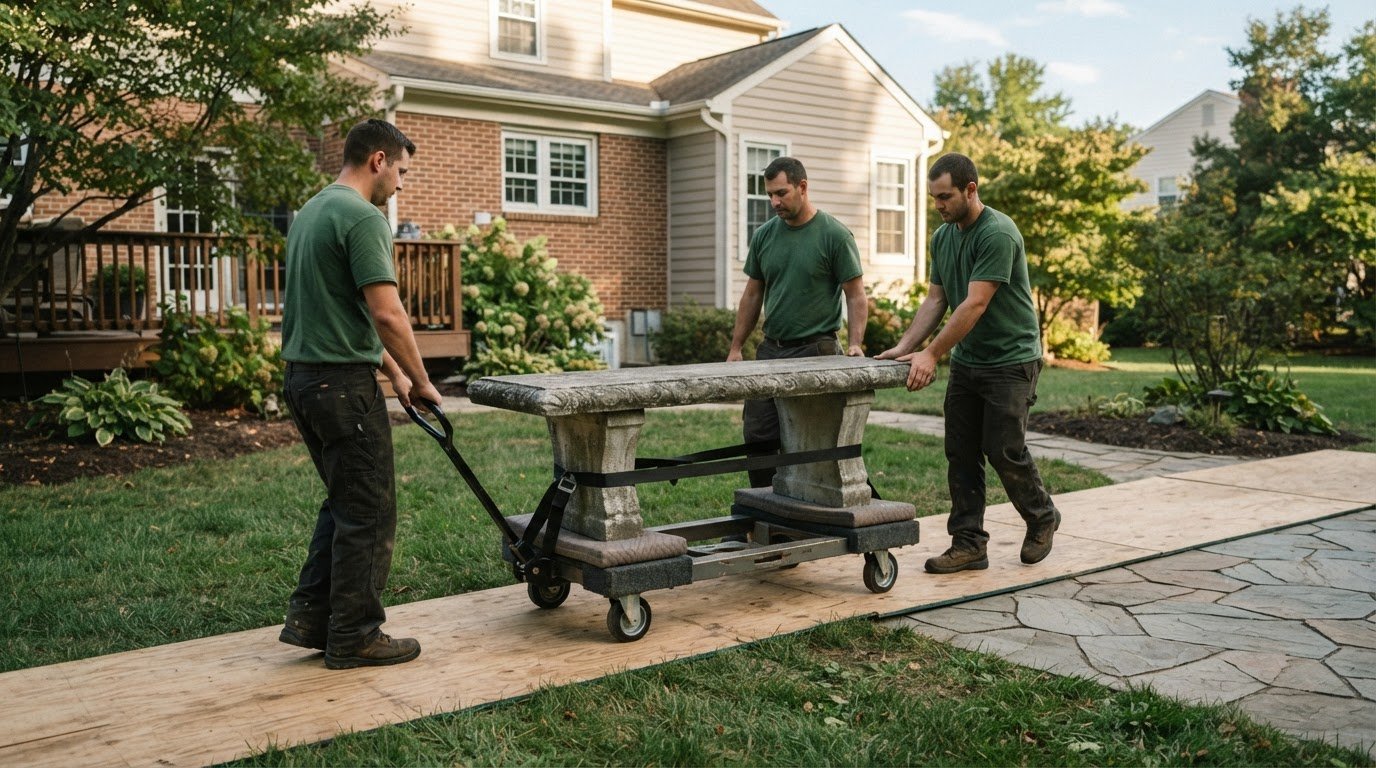
For controlled handling, movers may use lifting straps, a suitable dolly, and protective padding. Straps help coordinate a lift, while padding cushions contact points. A dolly can help move a piece across suitable, firm surfaces, but it is not right for every bench. Uneven paving, soft lawn, or a narrow route can change the plan.
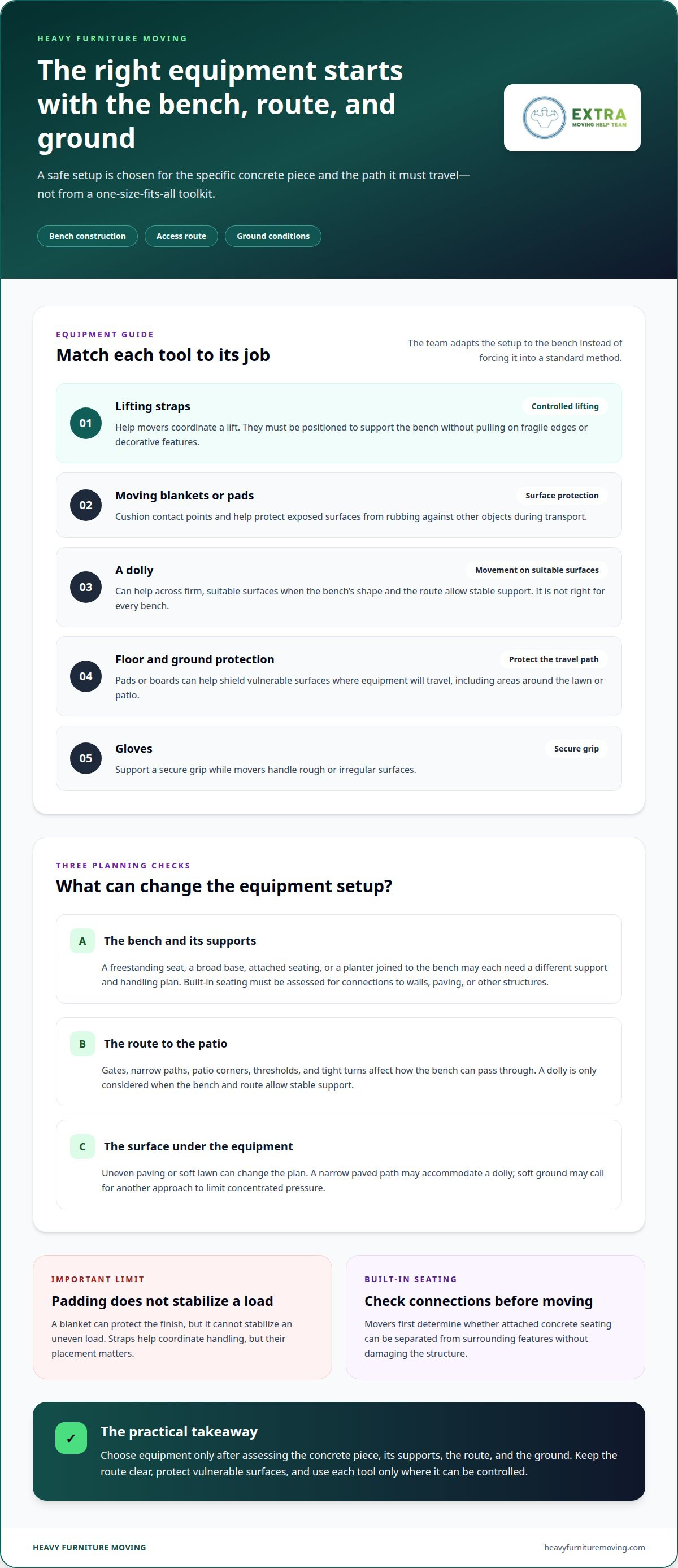
- Lifting straps: Movers position them to support the bench without pulling on a fragile edge or decorative feature.
- Moving blankets or pads: These protect exposed surfaces from rubbing against other objects during transport.
- A dolly: The team uses one when the bench’s shape and the route allow stable support.
- Floor and ground protection: Pads or boards can help shield vulnerable surfaces where equipment will travel.
- Gloves: They support a secure grip while movers handle rough or irregular surfaces.
Each tool has a specific purpose. A blanket can protect the finish, but it cannot stabilize an uneven load. Straps help coordinate handling, but their placement matters. Movers avoid relying on a single tool when a bench has a broad base, attached seating, or a planter joined to one end. They adapt the setup to the piece rather than forcing it into a standard method.
Ground conditions also affect equipment choices. A narrow paved path may accommodate a dolly, while soft lawn may call for another approach to limit concentrated pressure. At a patio entrance, a threshold or tight turn may require careful repositioning before the bench reaches its final spot. The crew keeps the route clear and uses equipment only where it can be controlled.
For a built-in bench, movers first determine whether it can be separated from surrounding features without damaging the structure. Equipment for a freestanding seat won’t automatically suit attached concrete seating. If the job calls for substantial lifting and careful handling, a heavy lifting moving service is a practical fit. The right equipment supports the plan, but experienced handling and a clear route matter just as much.
How many movers are needed to lift and move a concrete garden bench?
There isn’t one crew size for every concrete garden bench. Movers determine the team size from the bench’s shape, weight, construction, and route. A compact freestanding seat on a clear, firm path presents different handling needs from attached seating beside a planter. The goal is a controlled move, with enough people to guide and support the bench throughout each stage.
The team first assesses the bench and its surroundings. They determine whether it is freestanding or built into a wall, patio, or planter, and look for fragile edges, uneven supports, or sections that could shift. A bench joined to a planter, for example, may need coordinated support across both parts rather than a lift focused only on the seat.
Access can affect the crew plan. A wide, unobstructed route allows movers to position themselves differently from a narrow gate or a sharp turn beside a house. Steps, sloping ground, soft lawn, and transitions between paving and grass add handling demands. Movers consider who can support the bench, who can guide its direction, and how to keep the route clear.
- Bench construction: A single solid piece differs from separate legs or attached concrete features.
- Route layout: A direct paved path differs from a route with gates, turns, steps, or lawn.
- Handling position: Broad bases and delicate edges affect where movers can safely support the piece.
- Destination: A tight patio corner may require extra coordination during placement.
The number of movers alone does not make a plan suitable. Without clear roles, adding people can make a lift harder to coordinate. Before moving the bench, the crew agrees on positions, signals, direction, and where to pause. During a turn, one mover can guide the path while others maintain controlled support. The team adjusts its formation when the route changes.
Built-in seating needs a different assessment from a portable bench. Movers determine how it connects to nearby structures and whether it can move as one piece. A long bench with attached planters may need more coordinated handling than a separate seat crossing open paving. The crew’s plan reflects the actual object and route, not a preset number.
When arranging help in Ashburn, share the bench’s construction, access route, and patio location. Photos of the bench, gate, and tight turns can clarify the layout. The moving team uses these details to plan staffing and handling, so the crew is prepared for the actual job rather than a generic scenario.
Steps to Move a Concrete Bench to a Backyard Patio
A professional move follows a clear sequence, from assessing the bench to setting it in place. In Ashburn, the crew plans around the actual route, including gates, garden paths, lawn, and patio access. Each stage helps protect the bench and makes the next step manageable. For built-in seating, the team also assesses its connection to nearby structures before planning the move.
- Inspect the bench and its setting. Movers identify whether the seat is freestanding, joined to planters, or attached to a wall. They note existing cracks, loose sections, and surfaces that need protection. A concrete bench with a planter at one end needs a different support plan from a separate seat.
- Map the route to the patio. The team traces the path from the bench’s current position to its destination. They look for gates, sharp turns, steps, and transitions from lawn to paving. For example, a narrow side gate may require a different approach than an open garden path.
- Prepare the work area. Movers clear the planned passage and position protective materials where equipment or the bench will travel. They confirm the patio’s intended placement, so the crew doesn’t need to maneuver the concrete piece repeatedly after arrival.
- Set up the handling plan. The crew selects suitable support and assigns roles before moving. They coordinate their grip, direction, and pauses. If the bench’s design makes one carrying position unsuitable, they adjust the plan before starting rather than forcing the piece through.
- Move and position the bench. Movers guide the piece along the prepared route, managing turns and surface changes carefully. At the patio, they align it with the chosen spot and lower it in a controlled manner. They then check its position and stability before clearing the work area.
For a built-in bench, assessment comes before relocation planning. Movers determine whether it is separate from surrounding structures or connected to them. A seat attached to a wall cannot be handled like a freestanding bench. The plan must account for that connection and avoid putting strain on adjacent concrete, paving, or planter sections.
Changes along the route can affect the sequence. If a gate is narrower than the bench’s path requires, the crew reassesses access before proceeding. If the lawn is soft or the patio entrance has a raised edge, movers adapt how they support and guide the piece. These decisions help keep the move controlled from the garden to the final patio position.
Clear information about the bench, access points, and desired placement helps the moving team plan each stage. Photos of the starting location, route, and patio can reveal a tight turn or attached planter. With those details, the crew can prepare a practical sequence for moving the concrete feature into place.
How do professional movers protect a concrete bench, lawn, and patio during the move?
Professional movers protect the bench and surrounding surfaces by planning before lifting. They inspect the concrete for existing cracks, chips, or loose attachments, then choose contact points that avoid decorative edges. A bench with a narrow backrest, for example, needs different padding placement from a solid slab seat. The crew also identifies where equipment will travel across the lawn and patio.
Protection depends on the ground. A dolly crossing firm paving creates different pressure points from equipment crossing soft grass. Movers may use protective boards along a lawn route to spread contact and limit wheel ruts. At a patio entrance, they place suitable padding where equipment could scrape an edge. The route and surface conditions guide these choices, rather than one setup for every yard.
- Concrete surfaces: Movers wrap exposed edges with padding and secure it so it won’t shift during handling.
- Bench supports: The crew places lifting straps where they support the structure without pressing against fragile corners.
- Lawn: Protective boards can create a firmer travel path for equipment across grass.
- Patio paving: Movers cover vulnerable contact areas before rolling or setting down equipment.
- Nearby features: The team clears pots, garden décor, and furniture from the planned route.
During the move, controlled positioning matters as much as padding. Movers guide the bench around a gatepost or patio corner instead of letting it swing against nearby surfaces. They pause before moving from lawn to paving, then adjust their support and direction. This helps limit sudden contact with the bench, a fence, or the patio edge.
At the destination, movers lower the bench carefully onto its planned footprint. They avoid dragging it across paving, which can scrape the surface or chip a concrete edge. If the final position is near a planter or wall, the crew guides the piece into place with controlled adjustments. They remove protective materials only after the bench is settled and the route is clear.
For a concrete bench move, share details about fragile edges, existing damage, soft lawn, and tight patio access. Those examples help the crew prepare protection for the actual setting. If you need help with careful heavy lifting, arrange professional moving help for the bench and its route.
Heavy Furniture Moving
Heavy Furniture Moving helps with challenging residential moves involving bulky, heavy items. For a concrete bench headed to an Ashburn patio, professional moving support can make handling and placement easier to plan, especially when the route includes a narrow gate, lawn, or tight patio entrance.
Turn to the team when the bench is difficult to move safely without coordinated lifting, or when you’re also moving other heavy household items. Heavy Furniture Moving offers Movers Near Me and heavy lifting moving service options for demanding moves.
Share the bench’s current location, its destination, and any access concerns. Contact Heavy Furniture Moving to discuss your move.
Make the Patio Move Your Next Step
Before arranging the move, decide where the bench should sit and which route the crew will use. A clear destination helps the moving team plan its final approach, especially if the patio has limited space or the bench needs to align with existing seating. Share details that make your yard unique, such as a narrow gate, attached planter, or lawn between the bench and patio.
If you’re planning to move a heavy concrete garden bench to a backyard patio in Ashburn, professional support can ease the work of coordinating this demanding item. Heavy Furniture Moving handles heavy residential moves and offers Movers Near Me, Exercise Equipment Moving, and Sofa Hoisting.
Contact Heavy Furniture Moving to discuss your bench move and the details of your patio access. A well-planned next step can help turn the space you have in mind into a comfortable place to enjoy.
Frequently Asked Questions
How much does it cost to move a heavy concrete garden bench in Ashburn, Virginia?
Heavy Furniture Moving provides upfront quotes before work begins. Most single heavy items have flat-rate pricing, while hourly labor has a two-hour minimum. For a concrete bench, the quote can depend on its construction, access, and handling requirements. You’ll receive the total upfront, so you can decide with the job details in hand.
Should I hire professional movers or use a landscaping company to move a concrete bench?
Professional movers are a good fit when the main task is transporting and positioning a heavy bench. A landscaping company may be better suited if the job also involves changing the garden layout or altering a built-in feature. A freestanding bench moving from one part of the yard to a patio is primarily a moving task. If the bench is attached to a wall or planter, describe that connection when arranging help.
Frequently Asked Questions
Heavy Furniture Moving provides upfront quotes before work begins. Most single heavy items have flat-rate pricing, while hourly labor has a two-hour minimum. For a concrete bench, the quote can depend on its construction, access, and handling requirements. You’ll receive the total upfront, so you can decide with the job details in hand.
Professional movers are a good fit when the main task is transporting and positioning a heavy bench. A landscaping company may be better suited if the job also involves changing the garden layout or altering a built-in feature. A freestanding bench moving from one part of the yard to a patio is primarily a moving task. If the bench is attached to a wall or planter, describe that connection when arranging help.