Moving a Heavy Cast Iron Sink and Vanity in Dumfries
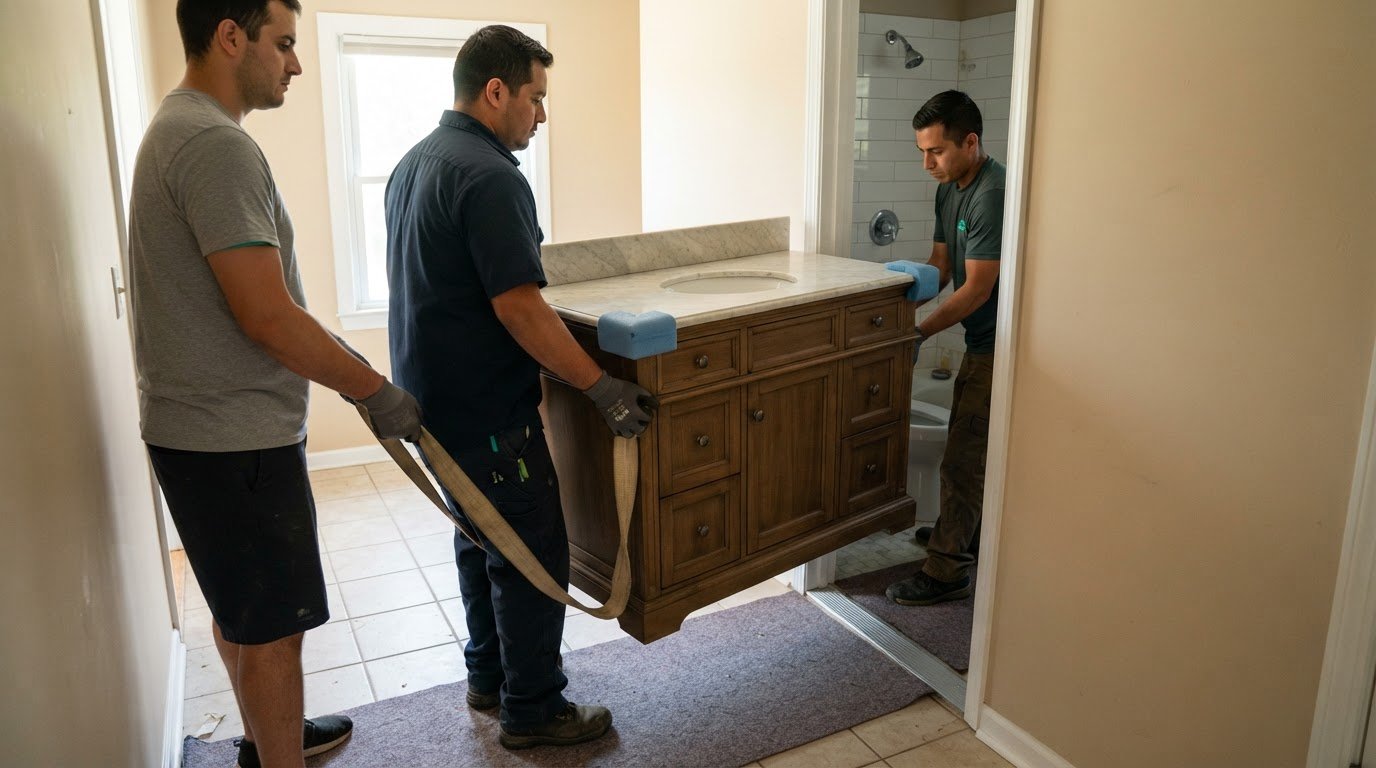
The toughest part of moving a heavy cast-iron sink and vanity isn’t brute strength alone. Moving a heavy cast iron sink and vanity combo in Dumfries takes planning: movers need to manage the load through tight spaces and protect tile or Terrazzo floors along the route.
It’s understandable to worry about a bulky fixture scraping the floor or catching on a doorway. Professional movers assess the path, prepare floor protection, and coordinate the lift to guide the vanity into the bathroom carefully.
Learn what movers assess before lifting, how they manage the route and flooring, and what can affect the move. You’ll also see when Heavy Furniture Moving’s heavy-lifting and in-home furniture moving services can help with the job.
Key Takeaways
- Learn how movers plan the route and guide a vanity with its countertop into a bathroom.
- See why the combined weight varies with the sink, vanity, and countertop materials.
- Understand how crew size and lifting equipment are matched to the item and access conditions.
- Find out how careful handling helps reduce the risk of injury and damage to tile or Terrazzo floors.
- Discover how movers protect and secure the sink for transport in a truck.
How do professional movers move a heavy vanity into a bathroom?
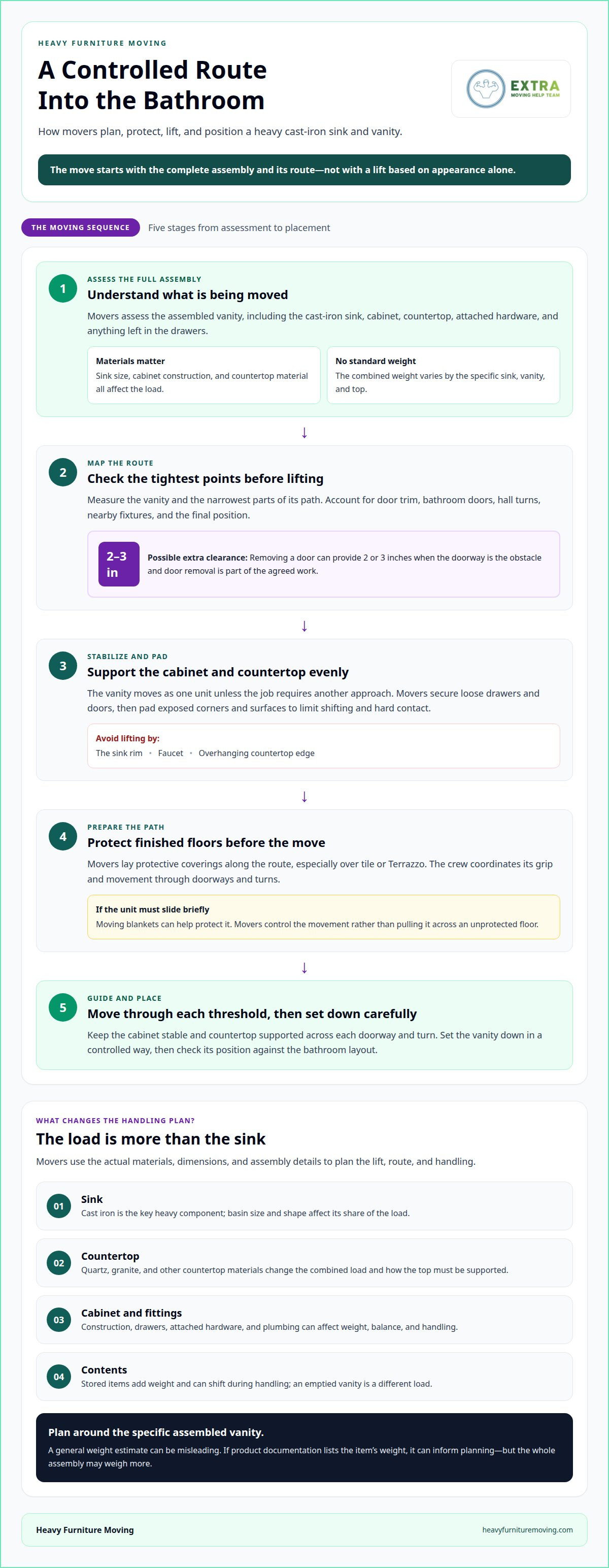
Professional movers plan the route before lifting a vanity with its countertop attached. They assess the assembled unit, doorway clearance, turns, floor surface, and final position. That plan helps the crew control the load without twisting the countertop or dragging the vanity across tile or Terrazzo.
First, movers measure the vanity and the narrowest points along its route. They account for door trim, bathroom doors, hall turns, and nearby fixtures. Removing a door can provide 2 or 3 inches of extra clearance. The crew considers that option when the doorway is the obstacle and door removal is part of the agreed work.
With the countertop attached, the vanity moves as one unit unless the job requires another approach. Movers support the cabinet and countertop evenly, rather than lifting by a sink rim, faucet, or overhanging edge. They secure loose drawers and doors, then pad exposed corners and surfaces. This limits shifting and reduces the chance of a hard contact point striking a wall.
Before lifting, movers prepare the route and floor. They lay protective coverings along the path, especially over finished tile or Terrazzo. The crew coordinates its grip and movement through each doorway and turn. If the unit must slide briefly, moving blankets can help protect it, but movers control its movement rather than pulling it across an unprotected floor.
For bulky-item pickup or sink disposal in Dumfries, local waste-service rules depend on the address and disposal method. Moving a fixture inside a home is different from setting it out for collection.
A usable vanity may be suitable for donation if an organization accepts its condition and size. Cast iron can be recycled as scrap metal where accepted; the cabinet and countertop may need separate handling based on their materials.
Before carrying the unit into the bathroom, a professional crew typically focuses on these details:
- Confirm the vanity’s dimensions against the full route, including tight turns.
- Protect the floor and vulnerable corners before the lift begins.
- Keep the countertop supported and the cabinet stable as the crew crosses each threshold.
- Set the vanity down in a controlled way, then check its position against the bathroom layout.
With a heavy cast-iron sink and vanity, the countertop changes how movers balance and support the load. A careful route assessment and coordinated lift help the unit reach its bathroom position without using the floor, sink rim, or countertop edge as a shortcut.
How much does a cast iron sink and vanity combo weigh?
A cast-iron sink and vanity combo has no standard weight. The total depends on the sink’s size, the cabinet’s construction, and the countertop material. A compact cabinet with a cast-iron basin differs from a wider unit with a stone top, even when both have one sink. Movers assess the complete assembly rather than judging its weight by appearance.
The sink is only part of the load. A vanity may also include a countertop, faucet, drawers, doors, and attached hardware. Quartz, granite, and other countertop materials add weight, while solid wood differs from lighter cabinet construction. Plumbing can also affect handling if pipes or fixtures remain attached. Each component changes the load’s balance as well as its total weight.
Width alone doesn’t tell the full story. One homeowner described a single-sink vanity measuring 49 inches wide, but that measurement does not establish the weight of its sink, cabinet, or top. Depth, material thickness, and construction still matter. For a moving assessment, movers need the dimensions and material details alongside the sink configuration.
Movers plan around the actual item. They identify what stays attached, note the countertop material, and account for the cabinet’s contents. An emptied vanity is a different load from one with drawers full of belongings. If product documentation lists the item’s weight, that figure can inform planning, but the whole assembly may weigh more.
These details explain why a general weight estimate can be misleading:
- Sink: Cast iron is the key heavy component, and basin size and shape affect its share of the load.
- Countertop: Quartz or granite changes the combined load and how the top must be supported.
- Cabinet: Construction, drawers, and attached fittings affect both weight and balance.
- Contents: Stored items add avoidable weight and can shift during handling.
For a move, the useful figure is the weight of the specific assembled vanity, not a generic number for all cast-iron combinations. Movers use the materials, dimensions, and assembly details to plan the lift, route, and handling. Those details also help determine whether the sink and cabinet should travel together or separately.
If the assembled unit is too heavy or awkward for a household move, professional heavy-item moving help can take the strain of lifting and maneuvering it.
How many movers and what equipment are needed to move a heavy cast iron sink safely?
The crew size depends on whether movers handle the sink alone or lift it with the vanity. They consider the item’s weight, grip points, route, and landing position before choosing a plan. A forum participant suggested two people for a cast-iron sink lift using rope through its drain holes, secured to a 2x4. That example shows a possible coordinated lift, not a universal crew size or method.
For a sink attached to a vanity, movers need to manage the cabinet and countertop as one load. Equipment may include lifting straps, protective padding, and a dolly suited to the route. The choice depends on how the sink is attached and whether the crew can keep the load supported and level. A tight bathroom entry can change the plan, even when the item seems manageable.
Some proposed lifting setups involve fixed overhead support. One forum participant described securing a 2x4 to three or four floor joists with 4" deck screws, then attaching a 3/8 eye hook for a come-along and strap. That is a structural rigging proposal, not a general moving instruction. A professional must assess the structure and lifting method before using any overhead support.
Some people suggest using a scissors car jack and a piece of wood to lift a disposal or help hold a sink level. For a professional move, the crew selects and positions support equipment for the task. The priority is controlled support, not improvising with a tool that could shift or put pressure on the wrong part of the sink.
A crew’s equipment plan can include several distinct jobs:
- Grip and lifting: Straps or other suitable aids help movers control the load without relying on fragile edges.
- Temporary support: Stable supports can help keep a sink level during fitting or repositioning.
- Movement: A dolly may help move a secured vanity across an accessible route.
- Protection: Padding and floor coverings reduce direct contact with fixtures and finished surfaces.
Movers coordinate who supports each side and who guides the route. The number of people alone doesn’t make a lift safe: the load must stay balanced, and the path must allow controlled movement. For a cast-iron sink and vanity together, the crew accounts for both components and any attached countertop before deciding whether to move them assembled or separately.
A professional heavy lifting moving service can help when a sink’s weight, awkward grip, or bathroom access calls for a planned crew and suitable handling equipment.
What are the risks of moving a cast iron sink, and how do professional movers prevent injuries or damage?
A cast-iron sink can shift suddenly if its weight isn’t supported evenly, putting hands, feet, walls, and finished floors at risk. A professional crew plans each lift, controls the load, and clears the route before moving. Tile and Terrazzo need protection from hard edges, dropped tools, and grit trapped beneath a moving load.
Back and wrist strain are real concerns during heavy lifting. One contributor described a contractor developing 2 herniated discs after helping move granite slabs. Another described injuring a wrist nerve after kneeling with a hand fully bent or extended for several days; numbness lasted about 2 months. These are individual accounts, not predictions, but they show why awkward positions and repeated strain deserve attention.
Movers reduce handling risks by assigning clear roles before lifting. One person can guide the route while others keep the sink steady. The crew agrees when to lift, pause, turn, and lower. That communication matters at doorways and tight bathroom turns, where a sudden change in direction can pull the load off balance.
Surface protection starts before the move. Movers cover vulnerable floor areas and clear loose items from the path. They pad exposed sink and vanity edges, then control contact with walls and door frames. On tile or Terrazzo, avoiding uncontrolled sliding helps prevent scratches and impact damage. The crew also chooses a stable resting position for each pause.
Risk checks focus on the specific load and route:
- Grip: Movers avoid relying on a faucet, sink rim, or countertop edge as a lifting point.
- Balance: The crew keeps support even so the sink doesn’t tilt or shift unexpectedly.
- Path: Doorways, turns, and floor transitions are cleared before movement begins.
- Landing: Movers lower the item deliberately onto a prepared, stable surface.
If the sink is part of a vanity assembly, the countertop and cabinet add handling challenges. Movers consider how the parts connect and where the load can be safely supported. They avoid rushing a lift to clear a doorway. A controlled pause lets the crew reset its grip and direction without setting the sink down carelessly.
Professional handling can’t remove every risk, but planning reduces avoidable strain and contact damage. For a Dumfries move, key safeguards include a clear route, coordinated lifting, stable support, and floor protection suited to the home’s surfaces.
How to transport and secure a cast iron sink in a truck
Professional movers prepare the truck before loading a cast-iron sink. They clear a stable space, protect the floor, and choose a position that limits shifting. Moving a heavy cast-iron sink and vanity combo in Dumfries takes planning for both the fixture and the other household goods sharing the truck. A sink traveling with its vanity needs support for the complete assembly. A detached basin needs its own stable, secure position.
Padding protects the sink’s finish and helps prevent hard contact with the truck or nearby items. Movers wrap exposed edges and cushion surfaces that could rub during travel. If the basin is detached, the crew positions it so its weight rests on a stable area, without pressure on delicate rims or attached fittings.
Next, movers secure the load against movement. They use suitable straps and securement points to keep the sink or vanity steady during travel. Straps should hold firmly without crushing padding or pressing on vulnerable parts. The crew checks that the sink won’t slide, tip, or collide with nearby cargo as the truck moves.
Position matters. A cast-iron sink shouldn’t be left loose in an open area or balanced on an unstable stack. Movers arrange nearby cargo to prevent contact while keeping the fixture accessible for controlled unloading. For a vanity with a countertop, they consider how the full unit is supported and whether other items could press against the top.
Before the truck leaves, the crew checks the setup:
- Support: Confirm the sink or assembly rests on a stable, padded base.
- Protection: Cover exposed surfaces and separate the fixture from hard cargo.
- Securement: Tighten straps to limit movement without stressing the sink or countertop.
- Load arrangement: Keep other objects from falling or shifting against the fixture.
At delivery, movers release the securement carefully and maintain control while unloading. They carry or guide the item along the planned route instead of dragging it across the truck floor. Checking the padding and contact points helps the crew spot any shifting during the trip and plan how to handle the sink at its destination.
For moving a heavy cast-iron sink and vanity combo in Dumfries, careful truck loading helps protect the fixture and nearby household goods. Support, padding, and securement depend on whether the sink travels alone or stays attached to its vanity. Arrange professional help for your heavy sink move when loading and transport call for controlled handling.
Heavy Furniture Moving
Heavy Furniture Moving helps homeowners with demanding household moves, including bulky items that need careful handling through tight interior spaces. For a cast-iron sink and vanity, professional movers can plan the lift and route, then guide the assembly with care for the bathroom and flooring.
Turn to Heavy Furniture Moving when the fixture is too heavy or awkward to move safely without a coordinated crew. Its in-home furniture moving and heavy-lifting services address the physical challenge and keep the move organized around the item and its destination.
Share details about the sink and vanity, including whether the countertop is attached and what surfaces line the route. Contact Heavy Furniture Moving to discuss help with your move.
Set Up the Next Step
Moving a heavy cast-iron sink and vanity combo in Dumfries starts with the details of your job. Share whether the sink and countertop are attached, the vanity’s materials, and where it needs to go. Describe the route through your home, including narrow doorways, stairs, and finished flooring. This gives the moving team useful context for planning around your space.
Think about the outcome you need: moving the assembled vanity, handling the sink separately, or getting help with a particular part of the move. Clear priorities make it easier to discuss the right kind of support and keep the next steps focused. You don’t need to solve the lifting plan alone. Contact Heavy Furniture Moving to discuss your sink and vanity move. With the job’s details in hand, you can move forward with a practical plan and less uncertainty.
Frequently Asked Questions
What is the cost to hire movers for a heavy sink and vanity in Dumfries, Virginia?
The price depends on the item and work involved, and you receive an upfront quote before work begins. For a Dumfries sink-and-vanity move, factors include whether the pieces remain attached, the indoor route, stairs, and protection needs. Share the item details and access information so the quote reflects the actual move.
Are there Dumfries-area companies that move or remove cast iron sinks?
Heavy Furniture Moving provides help with heavy household items in Dumfries, including moving a sink and vanity. Moving a fixture to another location differs from removing it for disposal. For a move, describe the sink, vanity, and destination so the team can understand the job. Disposal handling depends on the item’s materials and disposal route.
How do professional movers protect floors, walls, and stairs when moving a heavy sink?
Movers use protective materials suited to the home’s surfaces and access points. Heavy Furniture Moving uses masonite floor protection and door-jamb covers. Blankets cushion the item, while shrink-film and ratchet straps help secure it during handling. On stairways, movers account for landings and turns, keeping the sink controlled and clear of walls, trim, and stair edges.
Frequently Asked Questions
The price depends on the item and work involved, and you receive an upfront quote before work begins. For a Dumfries sink-and-vanity move, factors include whether the pieces remain attached, the indoor route, stairs, and protection needs. Share the item details and access information so the quote reflects the actual move.
Heavy Furniture Moving provides help with heavy household items in Dumfries, including moving a sink and vanity. Moving a fixture to another location differs from removing it for disposal. For a move, describe the sink, vanity, and destination so the team can understand the job. Disposal handling depends on the item’s materials and disposal route.
Movers use protective materials suited to the home’s surfaces and access points. Heavy Furniture Moving uses masonite floor protection and door-jamb covers. Blankets cushion the item, while shrink-film and ratchet straps help secure it during handling. On stairways, movers account for landings and turns, keeping the sink controlled and clear of walls, trim, and stair edges.