Moving a Heavy Cast Iron Radiator to Scrap Pickup in Gainesville
A cast-iron radiator is not a one-person curbside load. These radiators can weigh 150-500 lbs each, so moving a heavy cast iron radiator to the scrap pickup area in Gainesville takes stable handling and a clear route. Stairs, tight turns, and the distance to the pickup spot all affect the carry.
Moving a heavy cast-iron radiator to the scrap pickup area in Gainesville can be harder than the pickup itself. This guide covers how to prepare the radiator, plan its route, and decide when professional help is useful. If stairs, tight turns, or the radiator’s weight make the carry difficult, Heavy Furniture Moving provides labor to help move heavy items.
Key Takeaways
- Plan the radiator’s route from its current spot to the pickup area, including doorways, turns, and stairways.
- Drain a hot-water radiator before moving it to help prevent water from spreading across floors.
- A dolly or caster cradle may support the radiator during the move; the right setup depends on its shape and the route.
- For Gainesville residential bulk collection, place eligible items within 4 feet of the curb and leave 4 feet of clearance from the garbage cart.
- Stairs add handling challenges, so consider the radiator’s weight, landing space, and equipment before moving it.
Cast-iron radiator pickup and handling
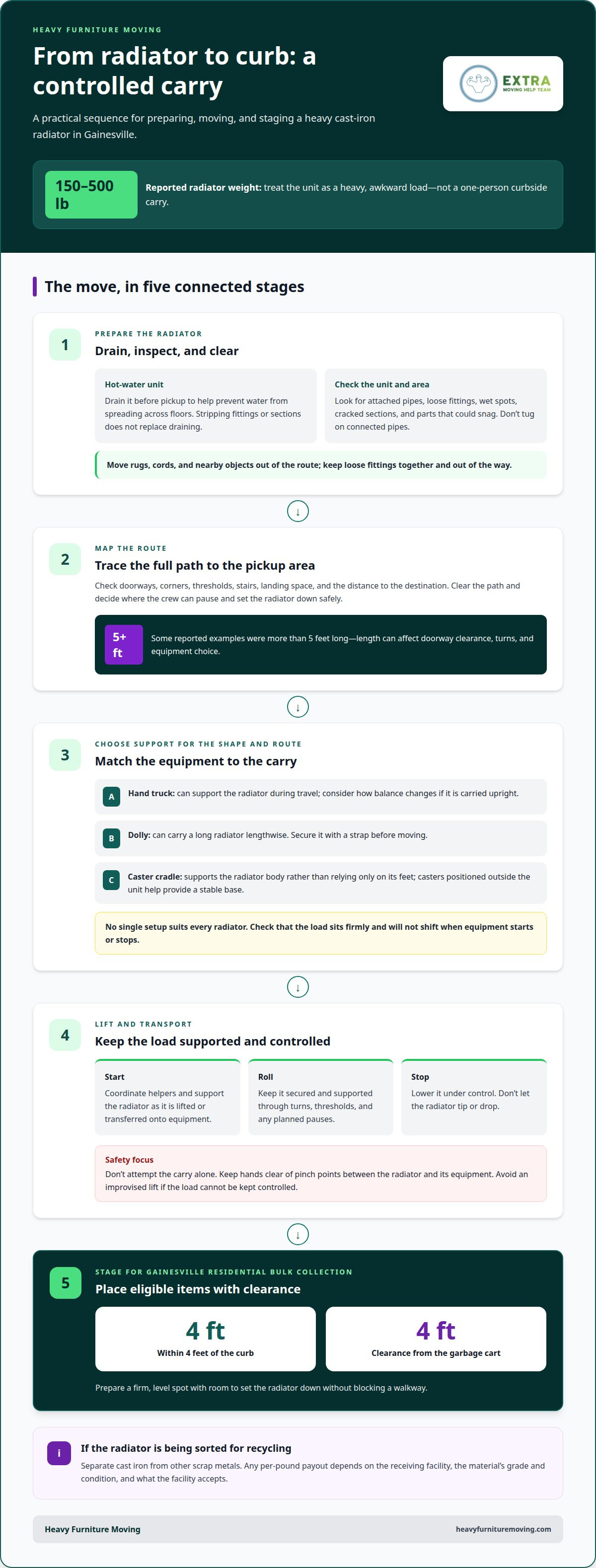
Plan the carry before moving a heavy cast-iron radiator to the scrap pickup area in Gainesville. Some reported examples were more than 5 feet long. Length affects doorway clearance, turns, and the equipment needed for transport.
Trace the route from the radiator to the pickup area. Check doorways, corners, thresholds, and stairs, and note where the load may need to turn. Clear the path before moving. A long radiator may fit through a doorway upright on a hand truck, but its balance changes in that position. Plan where the crew can pause and set it down safely.
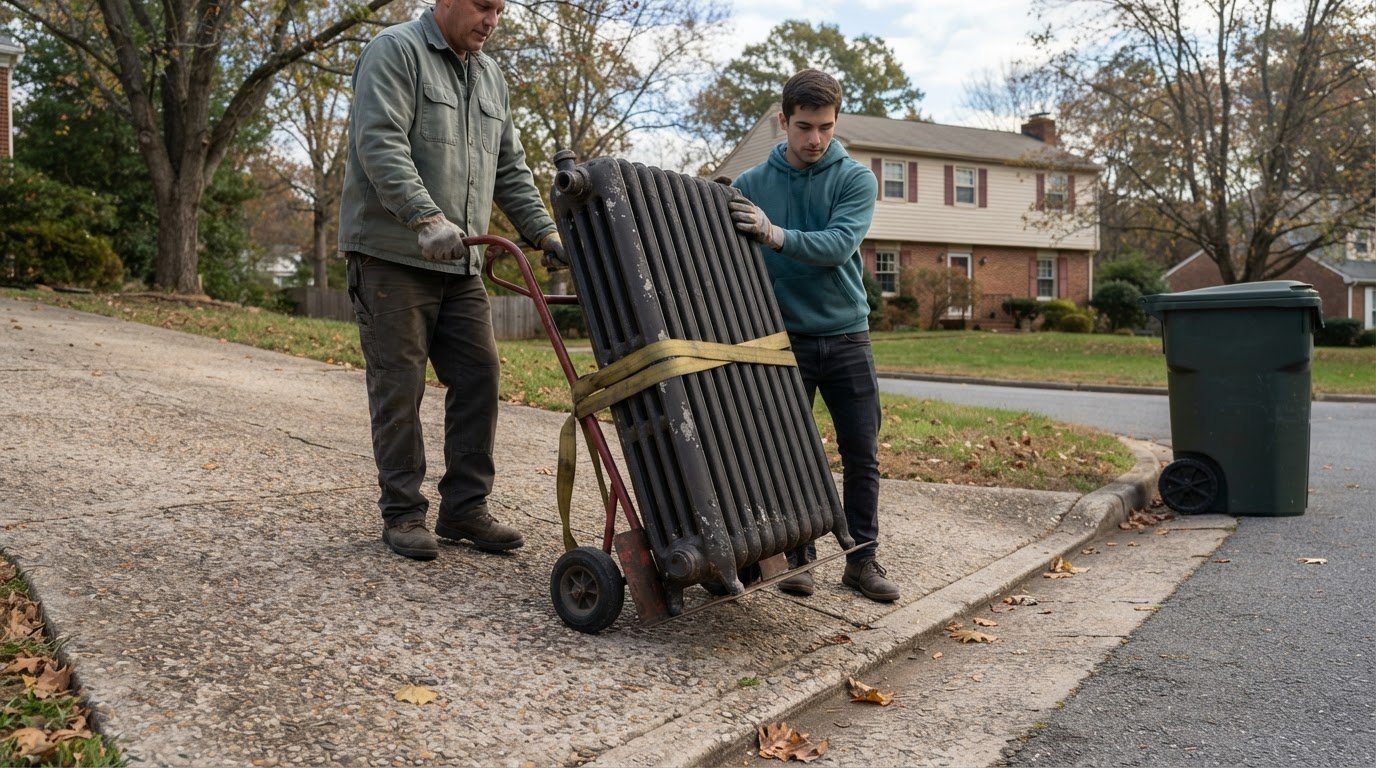
A dolly can carry a long radiator lengthwise, secured with a strap. A caster cradle supports the radiator body rather than relying only on its feet, with casters positioned outside the unit for stability. Choose equipment to suit the radiator’s shape and route. Don’t improvise a lift if you can’t keep the load controlled.
A hand truck and several strong helpers have also been recommended. Helpers need to coordinate the lift and keep the radiator supported as it starts, rolls, and stops. A pipe lever and 2-by-4 blocks have been used to raise a radiator’s feet before lowering it onto a caster cradle. That method requires careful control at each stage.
- Before moving: Clear the path and identify tight turns.
- During transport: Keep the radiator supported and secured to its equipment.
- At the pickup area: Lower the radiator under control instead of letting it tip or drop.
Scrap value depends on the material’s grade and condition. Cast iron should be separated from other scrap metals when sorting for recycling. Any per-pound payout depends on what the receiving facility accepts and how it grades the material.
Moving a heavy cast-iron radiator to the scrap pickup area in Gainesville may call for help with the carry. Heavy Furniture Moving handles heavy-item moves, with the work planned around the access and handling involved. Share the route and destination to discuss the job and its pricing.
Before moving an old radiator, look for connected pipes, water, cracked sections, and obstacles along the route. Drain a hot-water radiator before pickup to prevent water from spreading across floors. Keep hands clear of pinch points between the radiator and equipment, and don’t attempt the carry alone.
Junk removal can include carrying bulky items, while the right moving plan depends on access and handling needs. Consider the radiator’s route, stairs, and pickup location before starting. Moving a heavy cast-iron radiator to the scrap pickup area in Gainesville begins with a clear path and a controlled carry. Heavy Furniture Moving also offers junk removal and help moving heavy items.
Preparing radiators for pickup
Prepare the radiator before it leaves its current position. For a hot-water unit, drain it before pickup to prevent water from spreading across floors. That step reduces the chance of a wet path during removal and helps keep the pickup area cleaner. Draining and stripping are different tasks: removing fittings or sections doesn’t replace draining the water.
Do Gainesville scrap yards require radiators to be drained or stripped before drop-off? Drain a hot-water radiator before pickup to prevent floor spills. Stripping is not a substitute for draining, and it is not an automatic preparation step.
Inspect the radiator and the area around it. Look for wet spots, loose fittings, and parts that could catch on a doorway or moving equipment. Note whether pipes remain attached. Don’t tug on a connected pipe to free the unit, since a sudden shift can make the radiator harder to control. Clear nearby objects before handling begins.
Prepare the destination before moving the radiator. Choose a firm, level spot with enough room to set it down without blocking a walkway. Clear rugs, cords, and small items from the route. Even a short carry across one room needs a clear path, since a sudden stop or detour can disrupt control.
Protect the floors along the route. Use suitable coverings where equipment may roll or where the radiator may be set down briefly. Keep coverings flat so their edges don’t create trip hazards. Avoid loose boards or blocks in the path unless they are part of a stable, planned setup. The goal is a clear surface, not extra obstacles.
- Drain: Prepare hot-water units to avoid water spreading indoors.
- Inspect: Note attached pipes, loose fittings, wet areas, and snag points.
- Clear: Move rugs, cords, and nearby objects out of the carrying route.
- Stage: Make a level destination ready before the radiator is lifted.
Keep any loose parts together during preparation. Don’t leave fittings where someone could step on them or mistake them for debris. Set removable attachments beside the radiator, out of the route. These staging steps help prevent interruptions once the heavy item is moving.
If the radiator is still inside and the preparation involves a difficult carry, heavy lifting moving help can assist with moving bulky items toward a pickup area.
Radiator weight and crew equipment
Cast iron is dense, and a radiator’s size alone doesn’t show how difficult it is to move. A short unit can still need careful control, while a longer one can make turns and doorway clearance harder. Treat it as a heavy, awkward load, not ordinary furniture.
Choose equipment based on the radiator’s shape and route. A hand truck can support it during travel, while a dolly can carry it lengthwise. A caster cradle supports more of the radiator body than its feet alone, with casters outside the unit for a stable base. Each option addresses different handling needs, so no single setup suits every radiator.
Before loading, position the equipment beside the radiator and plan how to transfer its weight. Secure a long radiator to a dolly with a strap before moving it. Check that it sits firmly and won’t shift when the equipment starts or stops. A caster cradle should support the radiator body rather than leave the load precariously balanced on its feet.
A controlled move depends on the crew, too. Several strong helpers have been recommended for radiator handling. Each person needs a clear role during the lift and movement. Agree on when to raise, roll, pause, and lower the radiator. If one person changes position, stop the move before the load becomes uneven. Keep the route clear so helpers can focus on the radiator and equipment.
- Hand truck: Consider it when the radiator can be balanced and guided on its frame.
- Dolly: Use a lengthwise position for a long radiator, secured with a strap.
- Caster cradle: Choose support beneath the radiator body, with casters outside it.
- Helpers: Coordinate each lift, pause, and set-down before moving.
A lever and 2-by-4 blocks have also been used to transfer a radiator onto a caster cradle. The lever raises the unit slightly, allowing its feet to rest on the blocks before lowering. That sequence calls for controlled movement at each stage. Don’t place hands under a suspended radiator or reach into a gap as it lowers.
Match the setup to the hardest part of the route. A clear, level path may allow equipment to roll smoothly, while a tight turn may require repositioning. If the radiator can’t be secured, supported, and guided along the route, stop before lifting. The right setup keeps the load controlled from its starting point through the final set-down.
In Brooklyn, cast-iron radiators weigh 200-400 pounds each. A Brooklyn boiler swap can leave about four hundred pounds of cast iron in a cellar.
Stairs and carrying labor
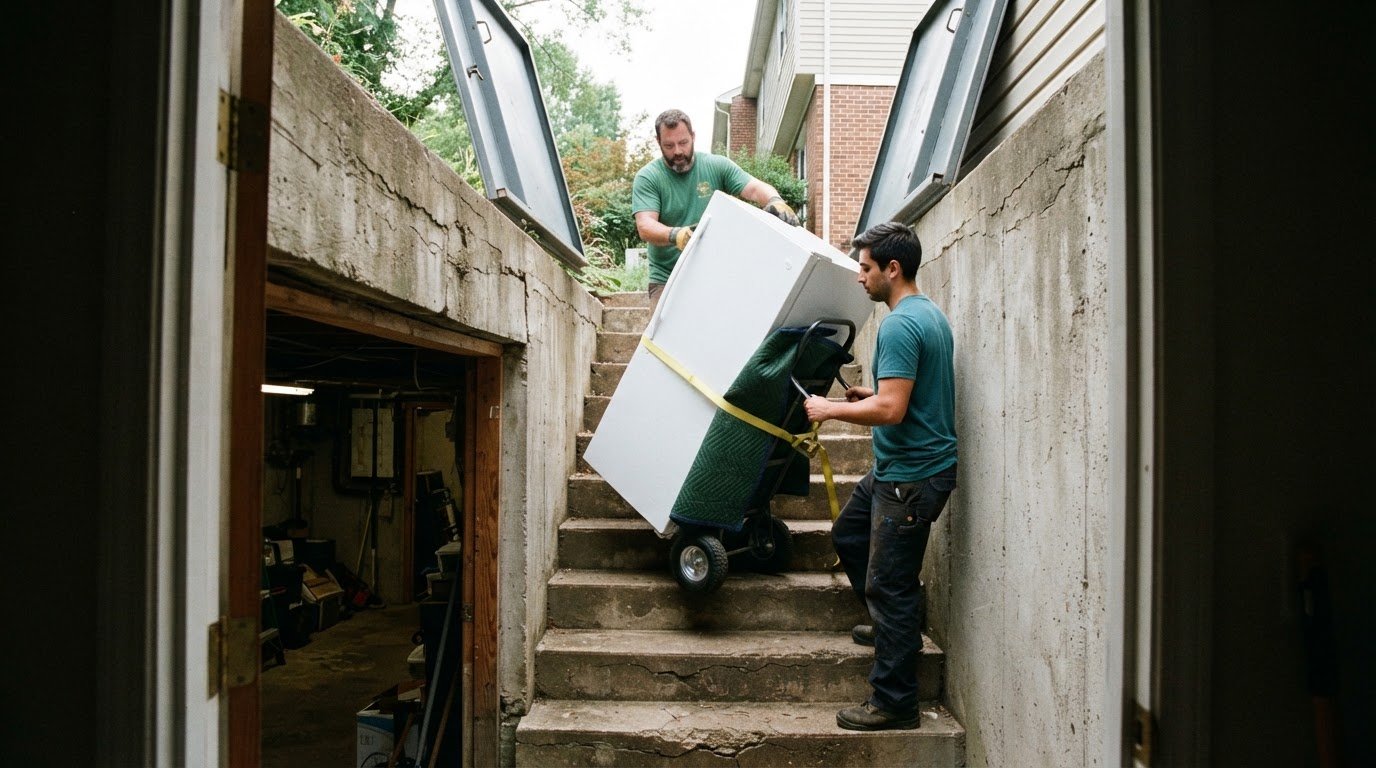
Stairs change the task from rolling a load to controlling it through elevation changes. Each step can shift the radiator’s balance, and a narrow landing may limit where helpers can reposition. Map the stair route before moving, including the turns at the top and bottom. Note handrails, doorways, and any point where the radiator must change angle.
Even a short stair run needs a planned approach. A mover has described using a skateboard method to move a radiator over two stairs. That example shows why even a small elevation change needs deliberate support. It is not a universal method: the stairs, radiator dimensions, and available clearance determine whether wheeled support can be used safely.
A stair-climbing dolly is one possible option for moving a radiator out of a house. Another approach uses small skateboards and a ramp. Either method requires a controlled path and stable contact points. A ramp must meet the stairs without shifting, and the radiator needs support during transitions. Never let the load roll freely down a ramp or across a landing.
Labor depends on the handling demands, not only the number of steps. A straight staircase with a clear landing is different from stairs with a tight turn or doorway at the bottom. Helpers need room to balance the load and communicate through transitions. If the radiator blocks the view of a step, move slowly and use clear verbal cues.
- Before lifting: Identify every stair, landing, turn, and doorway on the route.
- At each transition: Pause and confirm the radiator remains supported before changing position.
- For wheeled equipment: Keep the dolly, ramp, or small skateboards aligned with the travel path.
- At the landing: Make space to reposition without leaving the radiator unsupported.
Stairs also affect how helpers divide the work. One person can guide the movement and call pauses while others control the load. The number and positions of helpers should suit the radiator and route. Avoid having someone pull from below while others push from above, since coordinated stopping can become harder.
Stop if the radiator shifts, equipment catches, or helpers can’t see the next step clearly. Set the load down only in a stable spot, then reassess the route. A tight turn at the foot of the stairs, for example, may require repositioning before the radiator reaches the pickup area. Heavy Furniture Moving offers labor to help with difficult carries, including moves involving stairs.
One commenter suggested renting a stair-climbing dolly or using small skateboards and a ramp to move a radiator out of a house. Treat either idea as conditional: the route must still allow controlled handling from the stairs to the pickup area.
Gainesville Curbside Scrap Metal Rules
Gainesville curbside bulk collection follows specific placement rules for eligible residential bulk items. According to the City of Gainesville, residents must set items out by 7 AM on their scheduled collection day. Place them within 4 feet of the curb or traveled edge of the road. Keep at least 4 feet between bulk items and the garbage cart.
Residential bulk waste is collected weekly on each home’s scheduled garbage collection day. Collection days are Tuesday, Wednesday, and Thursday. The program requires no appointment and has no additional cost. It is available only to residential homes receiving the City’s Residential Curbside Service Program. These details describe the City’s bulk collection, not scrap-yard drop-off or payment for metal.
Set items where they’re clearly visible, while preserving the required clearance around the garbage cart. For a long radiator, the curbside location still needs to meet the 4-foot placement rule. Don’t block the traveled edge of the road or leave the item where it could obstruct access. The City’s rules govern collection placement; they don’t establish a per-pound scrap-metal payout.
The City of Gainesville distinguishes appliance and electronic recycling from ordinary bulk collection. Residents must make a collection appointment for appliances and electronic materials collected for recycling. Residential bulk collection, by contrast, needs no appointment. These categories alone do not establish whether a radiator counts as an appliance or electronic item.
Remodeling debris has its own limits. Gainesville DIY interior remodeling debris is limited to 2 cubic yards per week. Individual pieces may be no longer than 5 feet and may weigh no more than 40 pounds each. Smaller debris must go in personal reusable waste containers weighing no more than 40 pounds per container. A heavy cast-iron radiator does not fit the listed 40-pound piece limit for DIY remodeling debris.
Contractor work follows a separate rule. Under City of Gainesville Ordinance Ch. 27-73.11, contractors must haul away debris generated by their work. If a radiator is removed during contractor-led work, this requirement matters. Keep the debris category clear: residential bulk items, appliance recycling, and contractor-generated debris have different collection instructions.
- Residential bulk: Set eligible items out by 7 AM on the scheduled day.
- Placement: Keep items within 4 feet of the curb and 4 feet from the garbage cart.
- Appliances and electronics: Arrange a recycling collection appointment.
- Contractor work: Contractors haul away debris they generate under Ch. 27-73.11.
Before moving a radiator curbside, identify which collection category applies and prepare the required placement area. For help carrying a heavy item toward its pickup location, get help moving a heavy item.
Heavy Furniture Moving
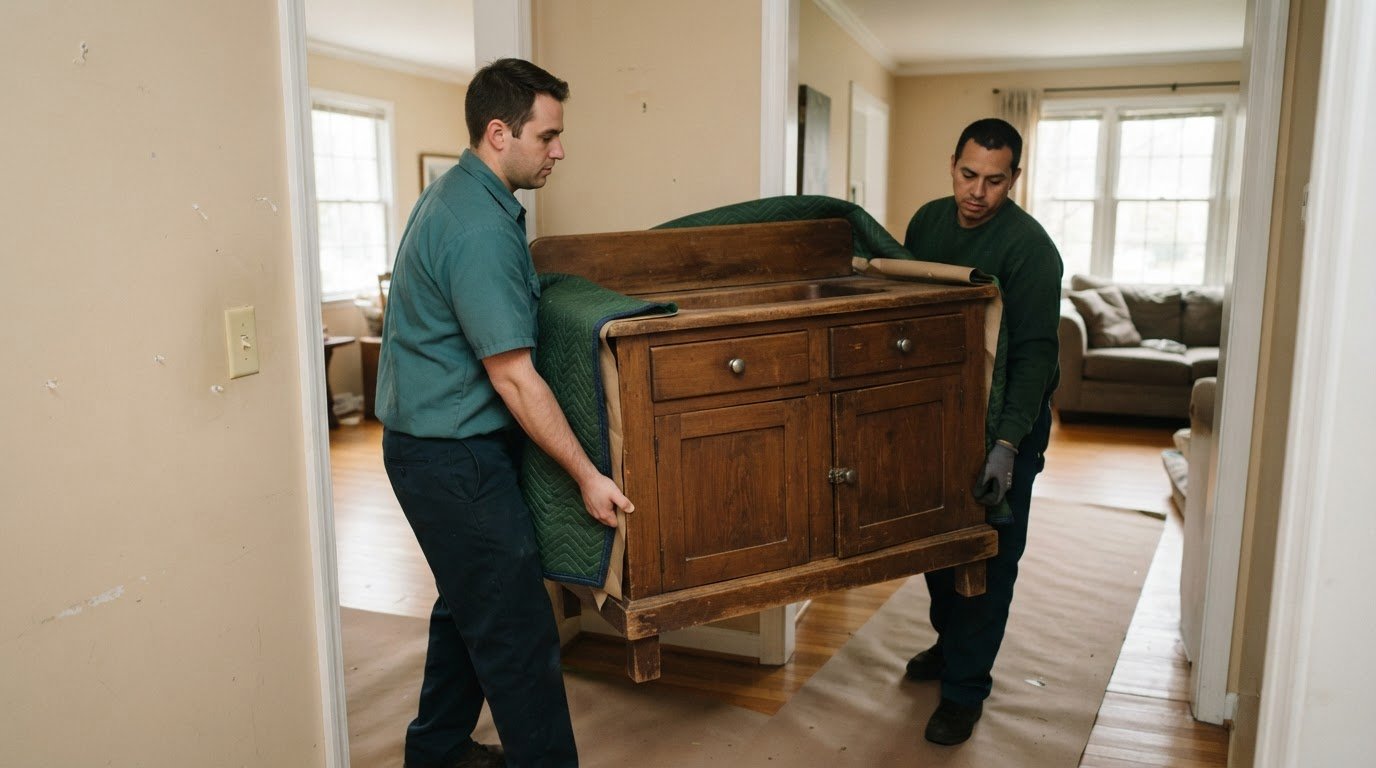
Heavy Furniture Moving can help carry the radiator from your home to a designated pickup area. Turn to the team when its weight, tight access, or stairs make the move difficult. The service focuses on heavy and bulky items, with the carry planned around your home’s layout and the item’s destination. Wrap, blankets, and straps are included on every job.
Keep the roles clear: moving help gets the radiator to the pickup area, while scrap acceptance and curbside collection follow separate arrangements. Share the radiator’s location, the route, and any stairs when describing the job. For help with a heavy carry, contact Heavy Furniture Moving.
Make the Radiator’s Next Move Easier
Preparing a radiator for scrap is only part of the decision. Next, decide whether you need help with the carry or broader support moving a heavy item through your home. For moving a heavy cast-iron radiator to the scrap pickup area in Gainesville, share the route and the help you need with Heavy Furniture Moving.
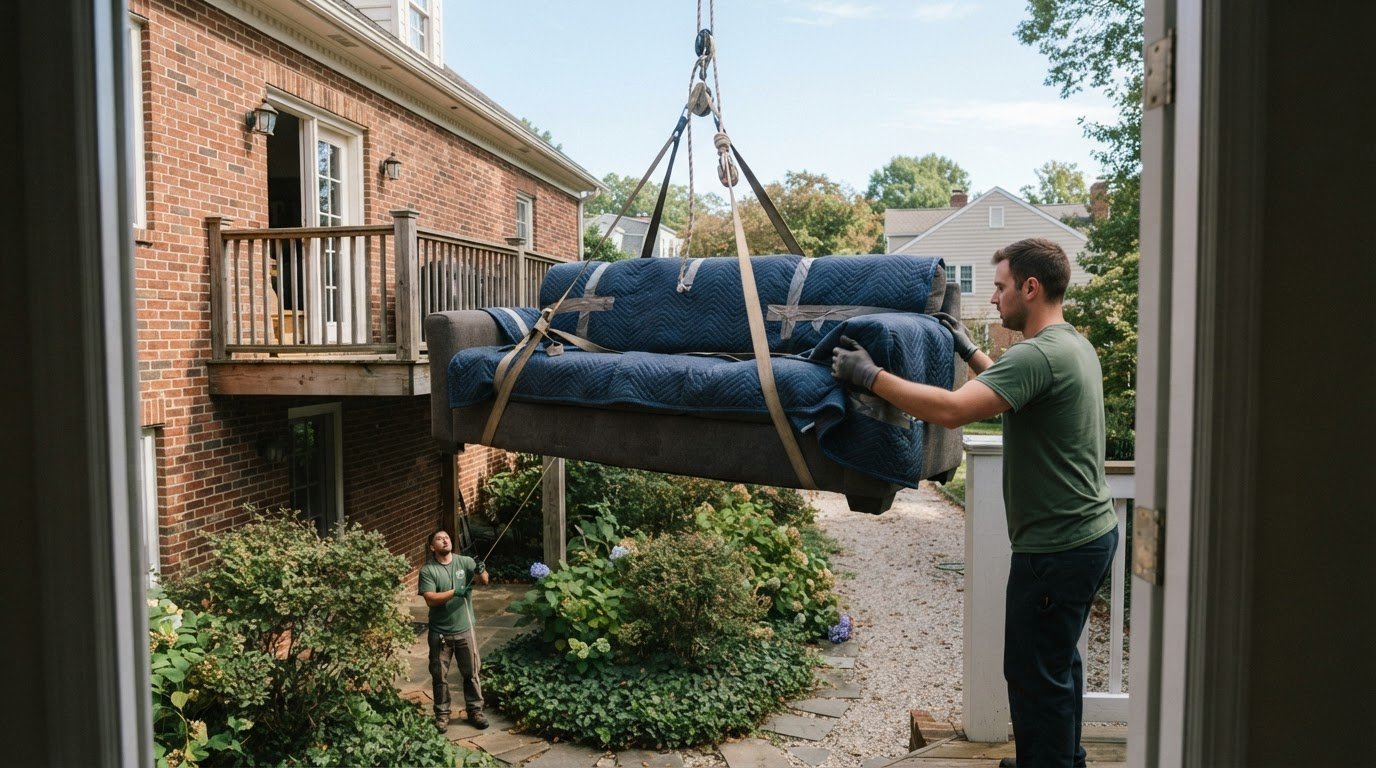
Heavy Furniture Moving offers Movers Near Me, Exercise Equipment Moving, and Sofa Hoisting. These services reflect experience with bulky items and challenging moves. Share the radiator’s starting location and destination so the conversation can focus on the work involved, rather than leaving you to solve every handling detail alone.
If you’re ready to discuss moving help, contact Heavy Furniture Moving. Take the next step with a clear plan for the radiator’s move, and leave the heavy lifting to capable hands.
Frequently Asked Questions
Where can I take a heavy cast iron radiator for scrap metal pickup in Gainesville?
For recycling, take the radiator to a scrap-metal facility that accepts cast iron, or use a curbside option if your home qualifies for Gainesville residential collection. The City’s bulk collection information does not name a scrap yard or establish that every radiator qualifies. Keep scrap recycling separate from municipal pickup: facility acceptance determines the first option, while residential collection rules govern the second.
Does Gainesville offer curbside pickup for cast iron radiators or bulky metal items?
Gainesville provides weekly residential bulk collection for homes enrolled in the City’s Residential Curbside Service Program, but that rule alone doesn’t confirm a cast-iron radiator is an accepted bulk item. If an item remains uncollected by the end of its scheduled collection day, residents should report it to the Solid Waste Division. Don’t assume bulk collection means scrap-metal recycling or payment for the radiator.
What is the safest way to move a heavy cast iron radiator to a pickup area?
Use planned equipment and a controlled route rather than carrying the radiator by hand. Identify where the load must turn or change direction, and pause at those points to keep the movement deliberate. Don’t use attached pipes as handles. If the radiator shifts or the route becomes obstructed, stop and reset rather than trying to correct its balance while it is moving.
What equipment or number of people are needed to move a cast iron radiator safely?
Use equipment that supports and secures the radiator, such as a hand truck, dolly, or caster cradle. A long radiator can be placed lengthwise on a dolly and strapped in place. Don’t move it alone. The appropriate helpers and setup depend on the radiator’s shape, the route, and whether stairs or tight turns make it harder to control. Heavy Furniture Moving provides help with difficult heavy-item carries, with wrap, blankets, and straps included on every job.
Frequently Asked Questions
For recycling, take the radiator to a scrap-metal facility that accepts cast iron, or use a curbside option if your home qualifies for Gainesville residential collection. The City’s bulk collection information does not name a scrap yard or establish that every radiator qualifies. Keep scrap recycling separate from municipal pickup: facility acceptance determines the first option, while residential collection rules govern the second.
Gainesville provides weekly residential bulk collection for homes enrolled in the City’s Residential Curbside Service Program, but that rule alone doesn’t confirm a cast-iron radiator is an accepted bulk item. If an item remains uncollected by the end of its scheduled collection day, residents should report it to the Solid Waste Division. Don’t assume bulk collection means scrap-metal recycling or payment for the radiator.
Use planned equipment and a controlled route rather than carrying the radiator by hand. Identify where the load must turn or change direction, and pause at those points to keep the movement deliberate. Don’t use attached pipes as handles. If the radiator shifts or the route becomes obstructed, stop and reset rather than trying to correct its balance while it is moving.
Use equipment that supports and secures the radiator, such as a hand truck, dolly, or caster cradle. A long radiator can be placed lengthwise on a dolly and strapped in place. Don’t move it alone. The appropriate helpers and setup depend on the radiator’s shape, the route, and whether stairs or tight turns make it harder to control. Heavy Furniture Moving provides help with difficult heavy-item carries, with wrap, blankets, and straps included on every job.