Moving a Heavy Antique Wardrobe Downstairs in Manassas Park
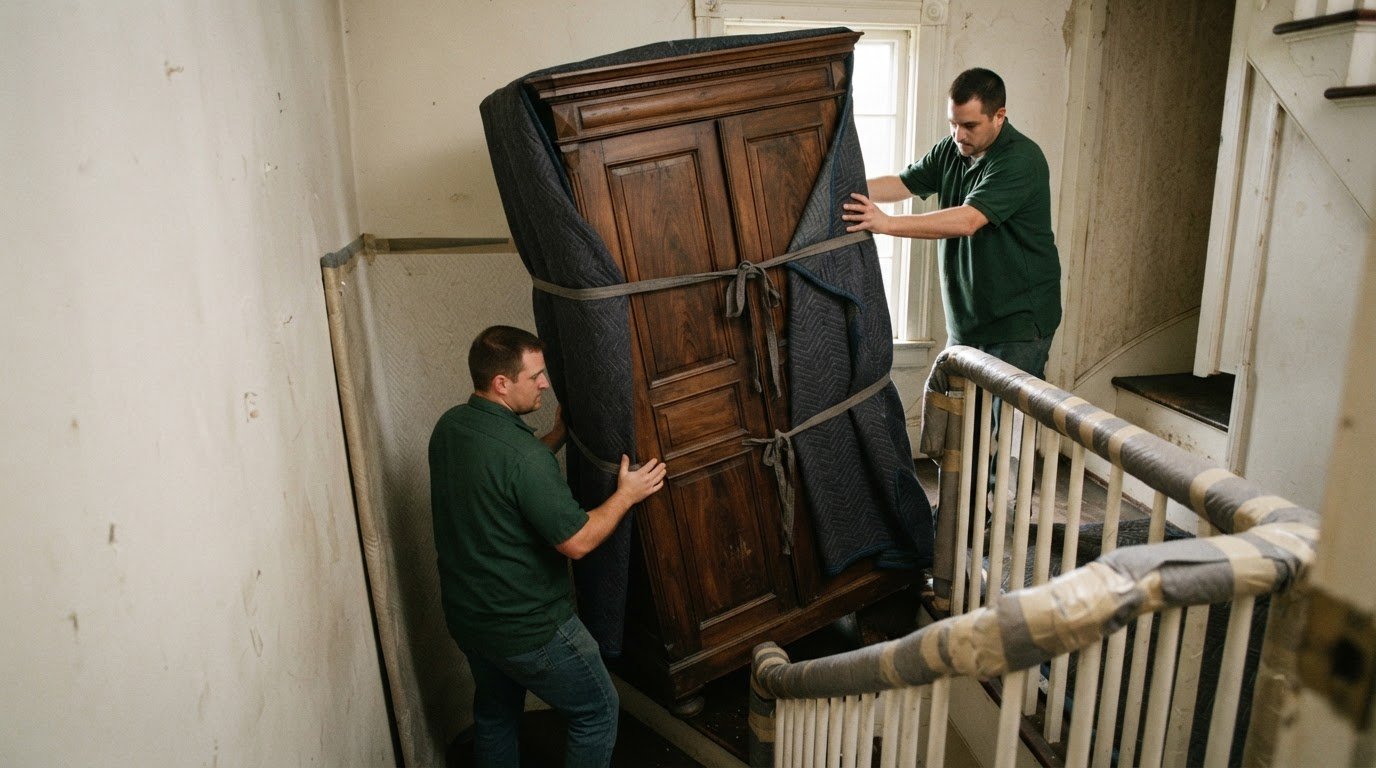
A heavy antique wardrobe can turn a simple move downstairs into a tight-space challenge. Moving a heavy antique wardrobe down a narrow staircase in Manassas Park takes planning around the wardrobe’s size, the stairway, and access at each end. In Manassas, labor pricing depends on the case and is given after a quote request; the scope of the move shapes the work involved.
If you’re concerned about scuffed walls, awkward turns, or putting strain on a valuable piece, that’s understandable. This article explains what affects moving labor costs in Manassas and how professionals plan for heavy wardrobes, stairs, and narrow spaces in Northern Virginia homes. You’ll learn what details influence the quote, how movers assess the route and handle the piece, and when in-home furniture moving help can make the job easier. A clear plan starts with the wardrobe and the space it needs to pass through.
Key Takeaways
- Moving labor costs depend on the work involved, including the route inside the home and the wardrobe’s size and handling needs.
- A stairway assessment considers turns, landings, hallway clearance, and doorway access before movers plan the carry.
- Sharing details about the wardrobe and its path helps clarify the scope of an in-home move.
- Older homes can bring narrow passages and tight turns, so careful route planning helps movers prepare for the job.
Need Help Moving Furniture Within Your Home?
Moving furniture between floors means planning the route before lifting begins. For a heavy wardrobe in Manassas Park, stair turns, landings, and doorways shape the moving plan.
Furniture Handling Across Rooms and Floors
In-home furniture moving can cover a wardrobe traveling from an upstairs bedroom to a downstairs room. Movers examine the stairwell, including its turns, landing space, handrail, and nearby doorways. They plan each position change around those features rather than forcing the furniture through a tight point. Careful route planning also helps avoid surprises during a rearrangement or home project.
For bulky furniture moving between floors, the destination matters too. A wardrobe going into a basement, for example, may face a low ceiling or narrow final doorway. A move across rooms may need less stair planning but still require clear passage around corners and other furniture.
Planning an Antique Wardrobe Move
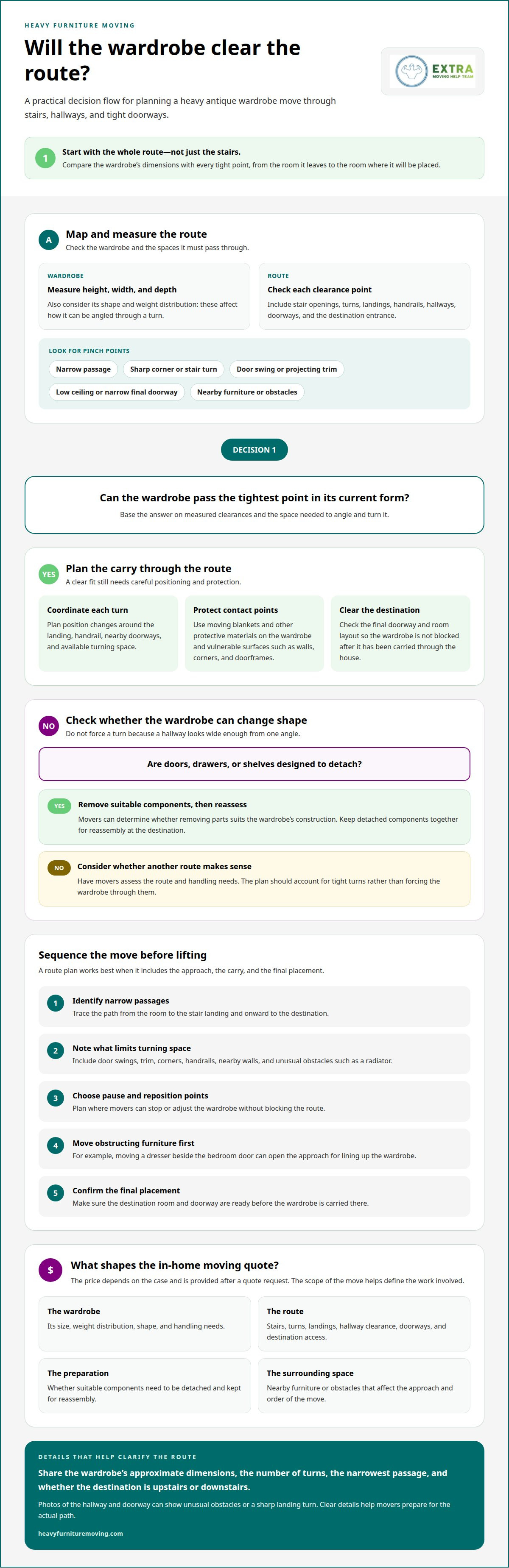
Professional movers assess both the wardrobe and its route before carrying it. They measure its height, width, and depth, then compare those dimensions with the stair opening, landing, and doorway clearances. They also consider the wardrobe’s shape and weight distribution, since these details affect how it can be angled through a turn.
For moving a heavy antique wardrobe down a narrow staircase in Manassas Park, measurements help identify tight points before the carry begins. Movers can then decide whether removable parts should come off. If drawers, shelves, or doors are designed to detach, the team can keep them together for reassembly at the destination.
Protecting Antiques and Stairways
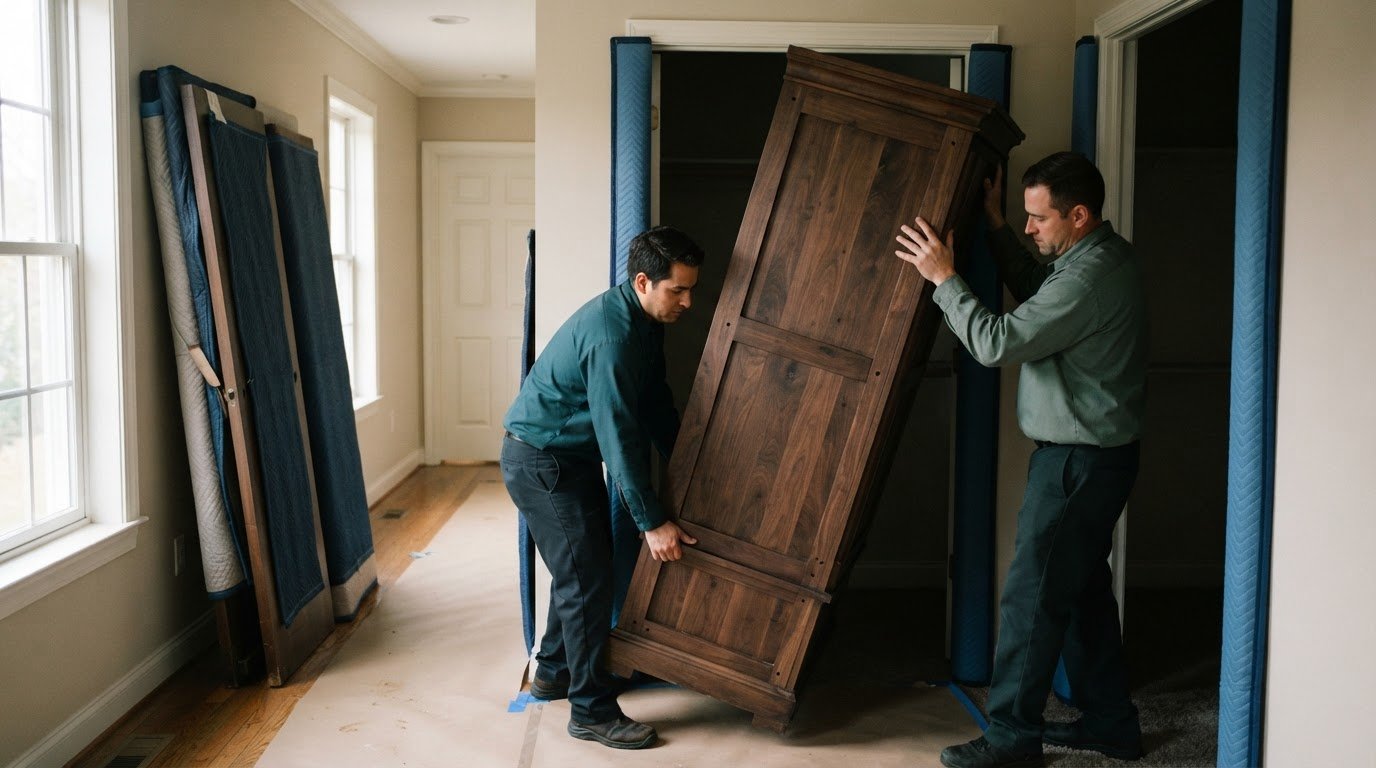
Movers protect the wardrobe’s finish and the home’s vulnerable surfaces as part of the carry plan. They use moving blankets and other protective materials on furniture surfaces and guard contact points along the stairway, such as a close wall corner or doorframe. The team coordinates each turn so the wardrobe stays controlled instead of swinging against the railing.
Moving an antique wardrobe downstairs without professional help can lead to loss of control, damaged woodwork, or marks on stairs and walls. Antique finishes and joints may also be vulnerable if the piece twists under strain. A careful team plans the grip and route before moving the wardrobe.
At the destination, movers can return detached components to their proper places and position the wardrobe to suit the room layout. For a home project, that may mean shifting furniture between rooms first, then bringing larger pieces downstairs once the route is clear. This sequence reduces unnecessary handling.
When reviewing Manassas Park furniture moving companies, look for feedback that describes antique furniture, stair carries, and protection of the home, rather than relying only on general praise. Insurance documents should explain what property or home damage coverage applies, along with relevant limits and exclusions. Ask for those terms in writing before the move.
Narrow hallways, doorways, and tight spaces
A wardrobe can clear a stairwell yet become stuck at the hallway turn. In Manassas Park homes, movers assess the whole route, from the upstairs room to the final placement. A short hallway, projecting door trim, or nearby furniture can change how the piece must travel. The key is identifying each pinch point before the carry begins.
Doorways create a different challenge from straight hallways. The frame may allow the wardrobe through only when it’s angled, while a nearby wall limits the space needed to pivot. Movers consider the wardrobe’s shape and the direction of each turn. They also account for attached trim or hardware that could catch during passage.
Before moving, the crew can map the route in sequence:
- Identify narrow passages between the room and stair landing.
- Note door swings, projecting trim, and corners that limit turning space.
- Choose where movers can pause or reposition without blocking the route.
- Plan the order for nearby furniture that must move out of the way.
That sequence matters in a tight home. For example, a dresser beside the bedroom door might prevent movers from lining up the wardrobe for the hallway. Moving the dresser first can open the approach and reduce awkward handling. The plan should also account for the destination room, so the wardrobe isn’t carried through the house only to be blocked by furniture at the final doorway.
Some antique wardrobes have removable doors, shelves, or other components. Removing a part can change the piece’s shape and make a narrow turn easier to manage. Movers determine whether disassembly suits the construction, then keep removed parts organized for reassembly. They don’t force a turn simply because the hallway looks wide enough from one angle.
Share useful details when arranging a move: the wardrobe’s approximate dimensions, the number of turns, the narrowest passage, and whether the destination is upstairs or downstairs. Photos of the hallway and doorway can show unusual obstacles, such as a radiator or a sharp landing turn. Clear details help movers prepare for the actual route instead of relying on a general description.
Serving homes with tight access calls for a plan that includes every doorway, not just the stairs. If the wardrobe cannot pass safely in its current form, movers can consider whether removable components or a different route make sense. For an in-home move through challenging spaces, explore in-home furniture moving help as a practical next step.
Factors that affect in-house moving costs
An in-home move involves more than carrying furniture from one room to another. A wardrobe moving from an upstairs bedroom to a downstairs den calls for a different plan than a piece traveling across one open room. Movers consider the route, the wardrobe’s handling needs, and the work involved. Each detail helps define the move.
For an in-house move, the price depends on the case and is given after a quote request. Important cost factors include the time and labor involved, access through the home, and whether the wardrobe needs disassembly. A tight staircase can require more planning and careful repositioning than a clear, straight path.
The wardrobe itself also affects the work. Its size, shape, construction, and condition determine how movers can hold and guide it. An antique piece with delicate trim may need more careful handling than a sturdy, simple cabinet. Removable doors or shelves can change the plan, especially if they reduce the piece’s profile for a narrow turn.
Route complexity matters at both ends of the move. A bedroom doorway, hall corner, stair landing, and destination entrance each create a separate access point. For example, a clear staircase may still lead to a tight downstairs doorway. Movers account for the whole path, not just the most obvious obstacle.
- Distance inside the home: A nearby room differs from a move across several floors.
- Stair and hallway access: Landings, turns, and narrow doorways can affect handling.
- Furniture preparation: Detaching suitable components may change the wardrobe’s dimensions.
- Other items in the scope: Moving several pieces adds work beyond one wardrobe.
- Placement needs: Positioning the wardrobe in a specific room affects the final steps.
Preparation helps movers understand the actual job. Share the wardrobe’s approximate dimensions, its starting room, the destination, and any tight turns along the way. Photos of the stair landing or doorway can clarify unusual access. Mentioning detachable parts also helps the crew plan how to handle the piece.
Ask for a clear description of the work scope. Moving one wardrobe between floors is different from rearranging several rooms or handling additional furniture. Knowing what the quote covers makes it easier to understand how the requested work shapes the total.
For a heavy antique wardrobe, a useful quote discussion connects the work to the actual route and handling plan. Clear details about the home, the furniture, and the requested placement help movers plan before relocating the piece.
Heavy-item lifting and carrying items upstairs or downstairs
A heavy wardrobe needs coordinated lifting from the room to the destination. For a second-floor bedroom move, professionals plan how the piece will leave the room, approach the stairs, and reach the downstairs space. Each change in direction affects the carry. The team considers the wardrobe’s shape, balance, and available handholds before choosing how to transport it.
Antique furniture can be heavy without distributing its weight evenly. A projecting top, carved trim, or attached mirror can affect how movers position and support it. The crew identifies vulnerable areas and avoids using decorative parts as grips. If the wardrobe has removable components, movers decide whether taking them off makes the carry more manageable.
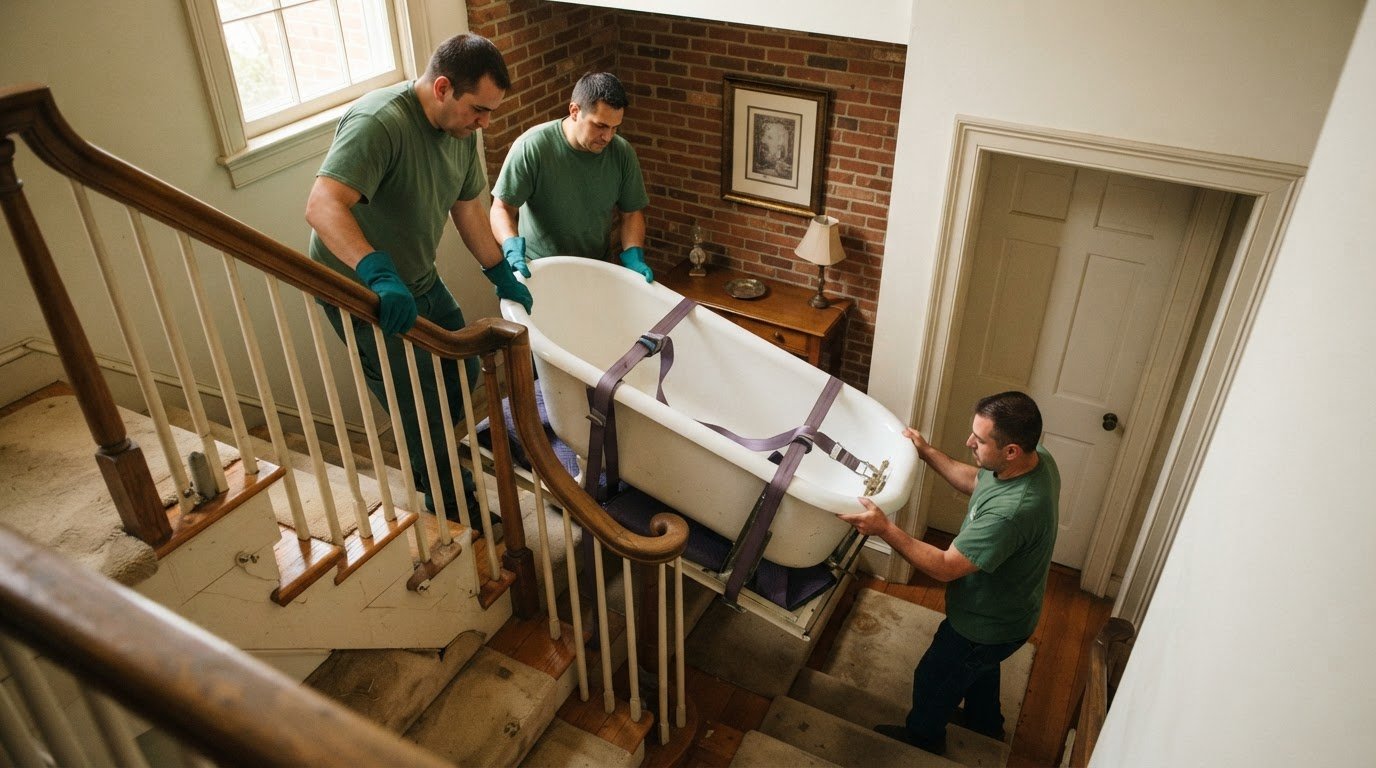
On a staircase, coordination matters at every landing. Movers agree on clear directions before lifting, then move the wardrobe in controlled stages. At a turn, the team pauses to adjust its angle and check the next stretch. They clear loose items, such as a rug or hallway chair, from the path before transport begins.
For an upstairs-to-downstairs move, the work commonly follows a planned sequence:
- Prepare the wardrobe by securing or removing suitable loose components.
- Position the item for the bedroom doorway and hallway approach.
- Coordinate the lift and carry to the stair entrance.
- Pause at landings to reposition for turns and changing clearance.
- Guide the wardrobe into the destination room and place it as directed.
The sequence changes with the home. A straight staircase presents a different route from stairs with a tight landing or nearby doorway. A basement destination may add a low ceiling or another turn. Movers plan around these details rather than assuming the same carrying method works throughout.
Professional lifting also accounts for the people carrying the piece. The crew coordinates movement so one person’s shift doesn’t surprise another. Clear instructions, agreed pauses, and a controlled pace help maintain shared handling through a narrow passage. The wardrobe stays oriented for the next step instead of being turned abruptly at the landing.
During the move, the team watches for contact between the wardrobe and nearby surfaces. A close wall, banister, or doorframe can affect positioning, especially while changing direction. Movers adjust the carry path to suit the space. They don’t force heavy furniture through a turn that needs a different approach.
For a wardrobe that must travel between floors, a heavy lifting moving service is suited to the task when careful carrying and route coordination are central. The plan connects each lift to the next doorway, landing, and final placement, keeping the full transport sequence in view.
Moving in older, narrow Northern Virginia homes
An older home in Northern Virginia can have a route that differs from room to room. A wardrobe may leave a bedroom easily, then meet a narrow landing or a doorway with limited turning space. Movers assess the home’s actual layout rather than assume every staircase or hallway follows a standard plan. In Virginia, the details of the individual home shape the approach.
Previous renovations can create changes along a route. A replacement door, added trim, or new flooring may affect clearance or the safest path for furniture. A crew notes those features before carrying a wardrobe. If a hallway narrows near a doorway, movers can plan how to approach it and where to pause without blocking the next turn.
Room access also depends on what surrounds the wardrobe. A bed near the bedroom exit or a table beside the stair entrance can limit the space movers need. The team considers how to sequence nearby furniture, whether the piece travels upstairs or downstairs, and where it will sit afterward. That helps prevent repeated repositioning through a tight home.
During a move in an older Northern Virginia home, the crew can pay particular attention to:
- Changes in floor height between rooms, thresholds, or landings.
- Door swings and trim that restrict turning space.
- Banisters, wall corners, and other close surfaces along the route.
- Flooring or finishes that need protection during furniture handling.
- Destination access, including a low ceiling or narrow room entrance.
These details matter because the route includes more than the staircase. For example, a wardrobe might clear a landing but need a controlled turn through a doorway immediately afterward. Movers plan for that transition as part of the same carry. They also consider whether removable wardrobe parts change its shape enough to improve access.
Clear information about the home helps the moving plan match its layout. Describe the starting room, destination, stairs, and unusual features to give the crew useful context. Photos can show a tight landing or added doorway trim that’s hard to explain in words. That preparation keeps the focus on the actual obstacles rather than assumptions about the house’s age.
Choose a moving team that discusses the specific route and explains how it will handle close clearances and fragile finishes. For help planning an in-home move through an older Virginia property, arrange professional furniture moving help.
Heavy Furniture Moving
Heavy Furniture Moving helps with bulky furniture that needs to move between rooms or floors. For an antique wardrobe in Manassas Park, in-home furniture moving can address the challenges of a stairway, tight landing, or narrow doorway as part of the move.
Turn to professional help when the wardrobe is difficult to handle or its route leaves little room for error. Share where it starts, where it needs to go, and any access concerns, such as a sharp stair turn or limited hallway clearance. Those details help define the job and keep the plan focused on your home.
If a heavy wardrobe needs to move downstairs, contact Heavy Furniture Moving to discuss the move.
Plan Your Wardrobe’s Next Move
Moving a heavy antique wardrobe down a narrow staircase in Manassas Park starts with a clear description of the home and the piece. Share where the wardrobe stands, where it needs to go, and what makes the route challenging. That gives the moving team a useful starting point for planning the work.
Heavy Furniture Moving handles residential furniture moves, with related help for exercise equipment and sofa hoisting. Whether the wardrobe is part of a larger home rearrangement or the only item changing floors, focus the conversation on your specific piece and the access inside your home.
There’s no need to have every detail figured out before taking the next step. A short conversation can help you explain the move and decide how to proceed. Contact Heavy Furniture Moving to discuss your wardrobe move and get started with a clear plan.
Frequently Asked Questions
How much does moving labor cost in Manassas, VA?
Moving labor costs depend on the work involved and access through the home. Heavy Furniture Moving provides an upfront quote before work begins, with stairs and wrapping included in the quoted scope. For a wardrobe move, share the item, starting room, destination, and route details. Those specifics help define the job, whether it involves one piece or several furniture items.
Can you handle single-item moves in high-rise apartments or older, narrow homes common in Northern Virginia?
Yes, Heavy Furniture Moving handles single-item and in-home furniture moves, including moves in apartments and houses. In a high-rise, elevator access and building entry affect the route; in an older home, tight doorways or turns can shape the plan. Share the building type and item details so the moving team can account for the actual access and destination.
How soon can labor help arrive?
Same-day help is often available when a crew slot is open, and heavy-item jobs can often be scheduled the same day or next day. Same-day availability is usually possible when you call before 2 PM, but it depends on open scheduling. If timing matters, contact the team with your preferred date and move details.
What does it cost to move a heavy wardrobe down narrow stairs in Manassas Park?
There’s no single price for every wardrobe and staircase. Heavy Furniture Moving provides an upfront quote, and most single heavy items use flat-rate pricing. The quote accounts for details such as the wardrobe, stair access, and wrapping needs. Share the move’s starting point and destination to get a price for the specific job before work begins.
What professional techniques help move a heavy wardrobe down narrow stairs?
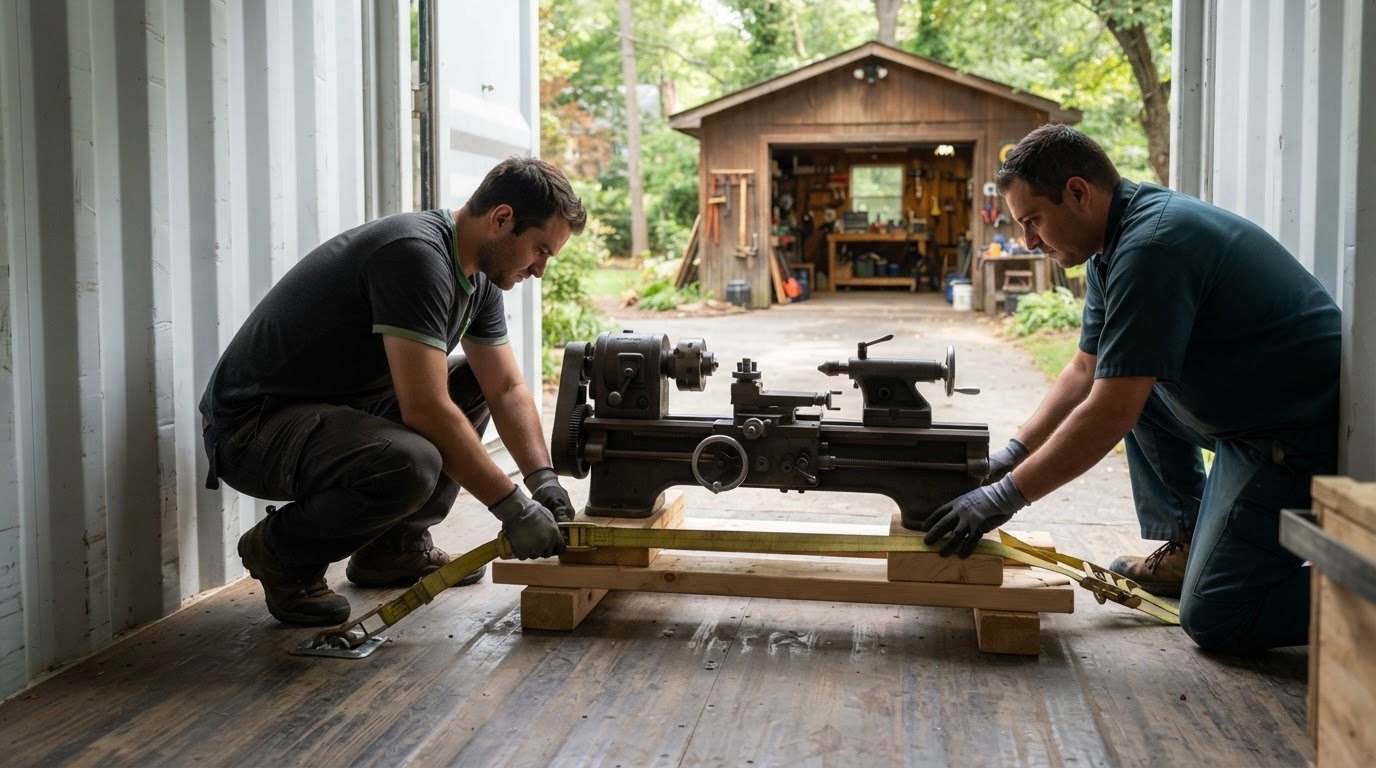
Professional movers protect the item and home with moving blankets, shrink film, ratchet straps, floor protection, and door-jamb covers as appropriate. They coordinate the carry and position the wardrobe for the route. For example, a close doorway may need a jamb cover, while a finished floor may need protective material. The method depends on the home and furniture.
Can an antique wardrobe be disassembled for moving through a narrow staircase?
Yes, suitable furniture can be disassembled and reassembled as part of the moving service. For an antique wardrobe, movers assess its construction and removable parts before deciding whether disassembly helps with access. They keep removed components together for reassembly. The wardrobe’s design determines which parts can come off, so describe its features when arranging the move.
Manassas Park furniture moving companies antique wardrobe reviews
Look for reviews describing experience with antique furniture, stair carries, and protection of the home.
Frequently Asked Questions
Moving labor costs depend on the work involved and access through the home. Heavy Furniture Moving provides an upfront quote before work begins, with stairs and wrapping included in the quoted scope. For a wardrobe move, share the item, starting room, destination, and route details. Those specifics help define the job, whether it involves one piece or several furniture items.
Yes, Heavy Furniture Moving handles single-item and in-home furniture moves, including moves in apartments and houses. In a high-rise, elevator access and building entry affect the route; in an older home, tight doorways or turns can shape the plan. Share the building type and item details so the moving team can account for the actual access and destination.
Same-day help is often available when a crew slot is open, and heavy-item jobs can often be scheduled the same day or next day. Same-day availability is usually possible when you call before 2 PM, but it depends on open scheduling. If timing matters, contact the team with your preferred date and move details.
There’s no single price for every wardrobe and staircase. Heavy Furniture Moving provides an upfront quote, and most single heavy items use flat-rate pricing. The quote accounts for details such as the wardrobe, stair access, and wrapping needs. Share the move’s starting point and destination to get a price for the specific job before work begins.
Professional movers protect the item and home with moving blankets, shrink film, ratchet straps, floor protection, and door-jamb covers as appropriate. They coordinate the carry and position the wardrobe for the route. For example, a close doorway may need a jamb cover, while a finished floor may need protective material. The method depends on the home and furniture.
Yes, suitable furniture can be disassembled and reassembled as part of the moving service. For an antique wardrobe, movers assess its construction and removable parts before deciding whether disassembly helps with access. They keep removed components together for reassembly. The wardrobe’s design determines which parts can come off, so describe its features when arranging the move.