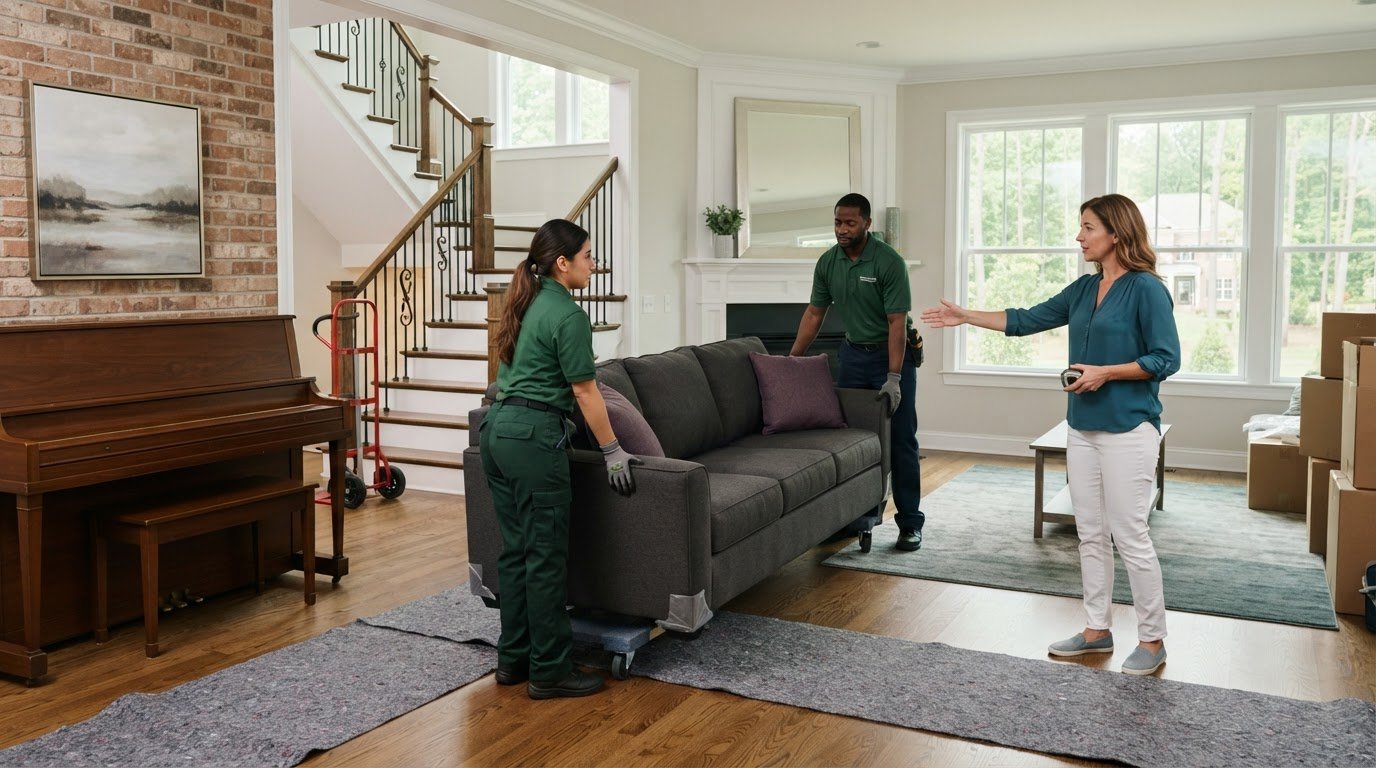
Moving a Couch Into a Basement in Reston: A Safe Step-by-Step Guide
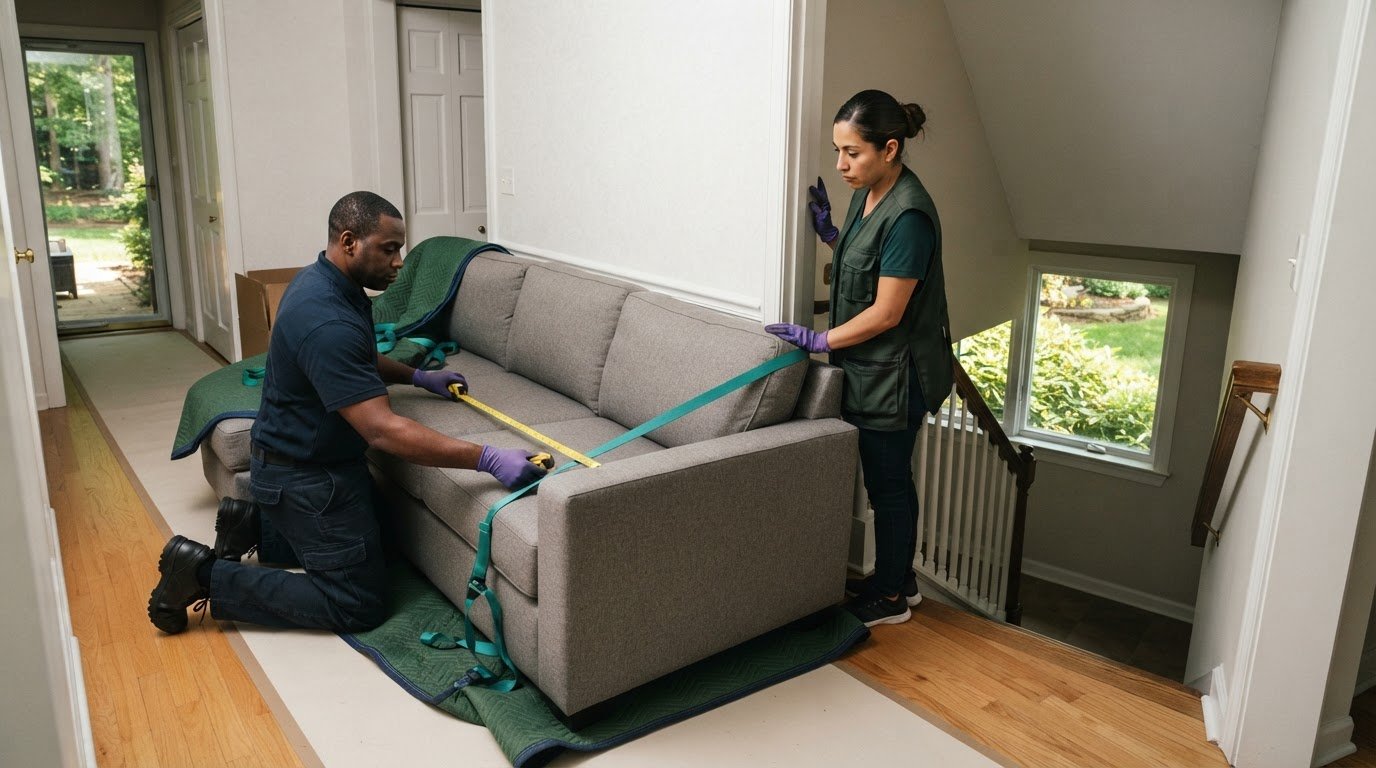
What if the safest way to move a couch downstairs is to stop before lifting? When moving a couch into a basement Reston homeowners should measure the entire route first. A sofa that fits through the basement doorway may still jam at a stair turn, scrape a wall, or become unsafe to carry on the steps.
It’s understandable to want to handle the move yourself, especially if the couch seems close to fitting. But a tight turn, steep stairs, or awkward grip can put people and furniture at risk. This guide explains how to measure the couch and route, clear and protect the path, and prepare the sofa before moving day.
You’ll also compare a careful DIY move with professional furniture-moving help. If the route won’t work, sofa hoisting can provide an alternative to forcing the couch through a tight opening. By checking the full path before lifting, you can decide what’s practical and protect your home along the way.
Key Takeaways
- For moving a couch into a basement Reston homeowners should measure the sofa, doorways, stairs, landings, and tight turns before lifting.
- Clear the route and protect floors, stair edges, and walls to help prevent damage during the move.
- Compare DIY and professional in-home moving help based on the couch’s size, the route’s difficulty, and the capable help available.
- Use a step-by-step plan that keeps the move controlled, and stop if the couch or helpers can’t pass safely.
- If the couch won’t fit through the basement route, sofa hoisting offers an alternative to forcing it through a tight space.
Moving a Couch Into a Reston Basement Starts With a Route Check
A bulky couch, narrow basement stairs, and a doorway that looks just a little too small can make moving day stressful. Before anyone lifts, check whether the couch can travel from its current room to its final spot without getting wedged or putting people and property at risk. For moving a couch into a basement Reston homeowners should plan around the entire route, not just the basement door.
The tightest point along the route determines whether the couch can pass. A sofa may clear a doorway straight on but fail at a sharp turn or low landing. Measure each part of the route, then decide whether the move is manageable.
Which measurements matter before moving a couch downstairs?
Start with the couch: record its width, height, and depth. Check whether the legs, cushions, or other parts are designed to come off, and note how removing them changes its dimensions. Then measure each doorway opening, the stairway’s usable width, ceiling clearance, and every landing. Measure the clear space available for the couch, accounting for handrails and door frames, rather than relying on a rough visual estimate.
Consider the couch’s shape and the angle it may need to pass through. A measurement that works on paper can still be a problem if a handrail, door swing, or low ceiling reduces the room to maneuver.
How do you check a Reston basement route?
Trace the full route from the couch’s current location to its planned basement position. Include every doorway, hallway, stair section, and turn. Look for handrails, low ceilings, sharp corners, door swings, and changes in floor level. These details can limit movement even when each opening seems wide enough on its own.
Take clear photos of the couch and the tightest access points, including stair turns and landings. Keep your measurements with the photos so the route is easier to review before moving day. If you’re considering a DIY move, review these safe manual handling techniques as part of your preparation.
Prepare the Couch, Basement Stairs, and Reston Home Before the Move
Once you’ve assessed the route, take care of the setup before moving day. A clear path gives helpers room to work and reduces the chance of a rushed decision on the stairs. Clear access and accurate measurements help prevent avoidable damage during a basement move.
How should you prepare a couch for basement stairs?
Remove loose cushions and detachable parts that are meant to come off. Keep small components and hardware together in a labeled bag so they don’t get lost. Secure drawers, reclining sections, and other moving parts according to the manufacturer’s instructions. Don’t take apart the frame or remove unfamiliar components based on guesswork. If the couch’s construction is unclear, leave it intact and plan the move around its current shape.
How can you protect the home’s route?
Clear the path well before the lift. Move rugs, decor, plants, and small furniture out of hallways and away from stair landings. Choose protective coverings for vulnerable floors, stair edges, and wall corners. Make sure the coverings lie flat and won’t slide or create a trip hazard. Keep the stairway and landings clear so helpers aren’t forced to step around obstacles while guiding the couch.
Make a protection checklist as you walk the route. Note vulnerable spots, such as hardwood flooring at the starting point, a painted corner by the stairs, or a narrow landing where the couch may brush the wall. Set out coverings before the move begins, and keep pets and bystanders away from the work area.
Before anyone starts, agree on who will guide the move and how helpers will communicate. Don’t attempt a solo lift on basement stairs. If the couch shifts unexpectedly, catches on an edge, or blocks the route, stop rather than trying to force it through. Reassess the setup or choose another plan. For moving a couch into a basement Reston homeowners can prepare thoroughly, but a difficult or awkward route may still call for experienced in-home furniture movers. CPSC guidance on securing furniture after the move can also help you consider whether nearby tall furniture needs to be anchored in its new position.
If the couch is bulky or the stair access feels difficult to manage, professional in-home furniture moving help can help plan and handle the move.
DIY, Professional Movers, or Hoisting: Compare Couch-Moving Options in Reston
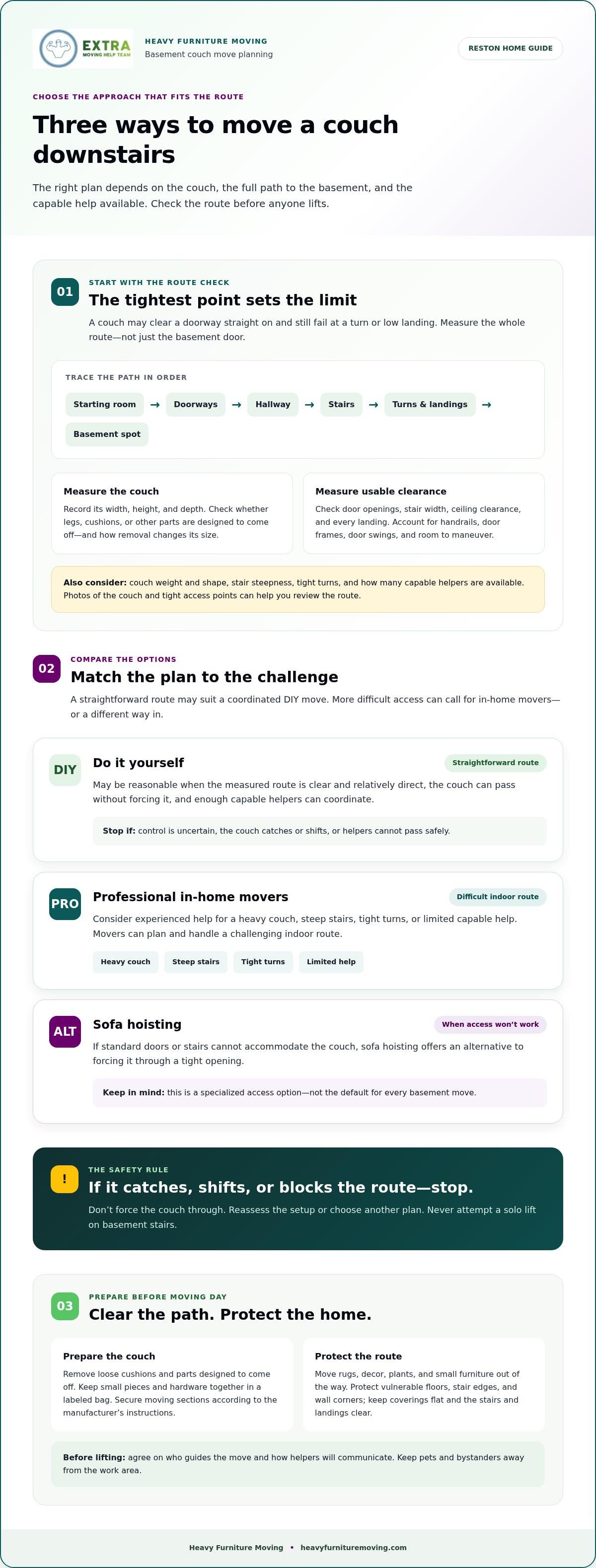
Even one couch can require careful planning and coordinated help. The right option depends on more than whether the sofa fits through a doorway. Consider its weight and shape, stair steepness, tight turns, usable route width, and how many capable helpers are available. Use this comparison to decide whether a DIY attempt is reasonable or another approach makes more sense.
| Option | Best fit | Key consideration |
|---|---|---|
| DIY | A straightforward route, manageable couch, and enough capable helpers | Stop if control is uncertain or the couch catches or shifts. |
| Professional in-home movers | A heavy couch, steep stairs, tight turns, or limited help | Experienced movers can plan and handle a challenging indoor route. |
| Sofa hoisting | Standard doors or stairs can’t accommodate the couch | A specialized access option, not the default for every basement move. |
When might a DIY basement couch move be reasonable?
A DIY move may be reasonable if the measured route is clear and relatively direct, the couch can pass without forcing it, and enough capable helpers can coordinate. Yale’s guidance on safe lifting techniques reinforces the value of planning before handling a heavy item. Even a favorable route doesn’t guarantee an easy move. Set a firm stop point: if the couch snags, shifts, or can’t be controlled, pause and reassess rather than pushing through.
When should you hire couch movers in Reston?
Choose professional in-home moving help when the couch is heavy, the stairs are steep, a turn leaves little room, or you don’t have enough capable assistance. For moving a couch into a basement Reston residents can also consider sofa hoisting if the standard route won’t accommodate the furniture. Hoisting is a specialized alternative access plan, not a reason to skip a route assessment.
Heavy Furniture Moving serves Reston and specializes in moving heavy, bulky items, including sofa hoisting for furniture that cannot pass through standard entryways. For broader moving guidance, see Reliable Movers Near Me in Fairfax and Northern VA.
Use a Safe, Step-by-Step Plan for Moving a Couch Into a Basement
A careful plan keeps everyone working from the same information. Before moving a couch into a basement in Reston, confirm the route measurements, clear the path, and decide who will guide the move. Don’t treat these steps as a reason to push through a difficult lift. If the couch won’t move in a controlled way, stop and change the plan.
What should happen before anyone lifts the couch?
- Confirm the route and destination. Make sure the couch’s current configuration matches your measurements, and check that the basement spot is clear and accessible.
- Clear and protect the path. Remove obstacles and set out suitable protection for floors, stair edges, and walls. Keep the stairway and landings free of people, pets, and loose items.
- Assign roles. Agree on who will guide the move and who will watch the route. Everyone should know the plan before handling the couch.
- Set a stop signal. Choose a clear word or signal that anyone can use if the couch shifts, catches, or someone needs a pause.
Keep communication simple. Call out what’s happening and pause whenever someone can’t see the path or hear the others. Don’t improvise a new angle mid-move. Stop first, then reassess the route and approach.
When should you stop and change the plan?
Stop if the couch catches on a doorway or stair edge, blocks a helper’s view, or shifts in a way the group can’t control. A snag is a warning, not a cue to push harder. Pause if anyone feels strain, loses a secure position, or can’t follow the agreed plan. Forcing furniture around a tight turn can put people, walls, stairs, and the couch at risk.
After stopping, clear the area and decide whether the route or approach needs to change. If the couch still can’t pass smoothly, or the stairs and turns exceed what your group can manage, professional help is the safer next step. Heavy Furniture Moving helps with challenging in-home furniture moves in Reston, including heavy and bulky couches.
If the route looks too difficult to manage on your own, get help with a difficult couch move.
Get Professional Help for a Difficult Basement Couch Move in Reston
A couch can be too heavy or awkward for an ordinary furniture move, especially when basement stairs are steep, a landing is tight, or a turn leaves little room to maneuver. Heavy Furniture Moving serves Reston and specializes in heavy and bulky items, bringing focused experience to challenging in-home moves. If you’re planning moving a couch into a basement Reston homeowners can make the next step easier by sharing the route details before the move.
How can specialized couch-moving help reduce the challenge?
Specialized heavy-item moving takes the couch’s size and weight into account alongside the limits of the home’s access route. That’s different from carrying a small piece of furniture through an open hallway. Professional movers can help plan a difficult route involving stairs, tight turns, or narrow doorways, so there’s less pressure to improvise while moving the couch.
If the couch cannot pass through standard entryways, sofa hoisting is an alternate access solution. It isn’t the default for every basement move. The plan depends on the couch and the home’s access conditions.
What information helps plan a couch move in Reston?
Share details that make the access challenge clear. Useful information includes:
- The couch’s approximate width, height, and depth, plus any detachable parts.
- The basement route, including stair width and steepness, landings, turns, and doorways.
- Photos of tight access points and the intended basement destination.
- Any known obstacles or points where the couch may need to change direction.
These details help plan the move around the actual home rather than assumptions. If the stairs appear unsuitable, include that in the route information. A standard route and an alternate access plan are different approaches, and sofa hoisting is a specialized option when the couch cannot pass through standard entryways.
Reston homeowners don’t have to force a couch through a route that doesn’t work. Share the couch and access details with Heavy Furniture Moving to plan professional couch-moving help or sofa hoisting for your project. Contact Heavy Furniture Moving for help planning a difficult basement couch move.
Make Your Basement Couch Move a Safer One
A smooth move starts before anyone lifts. Measure the couch and the full route, prepare the furniture and protect the home, then choose an approach that matches the stairs, turns, and available help. If the couch catches or can’t be controlled, pause instead of forcing it.
Planning moving a couch into a basement Reston homeowners can rely on means knowing when the route is manageable and when it calls for experienced help. Heavy Furniture Moving serves Reston and specializes in heavy-item moving. If standard entryways won’t accommodate your couch, sofa hoisting offers an alternate access plan tailored to the project.
Share the couch’s dimensions and details about the basement access to plan your next step. Get help moving your couch into a Reston basement. With a clear plan and the right support, you can move forward with confidence.
Frequently Asked Questions
Can I move a couch into a basement by myself?
Moving a couch downstairs alone isn’t a sensible plan. A couch can be bulky and hard to control, especially on stairs or around turns. Even a clear route doesn’t remove the risk of losing control or getting stuck midway. Arrange capable help and agree on how you’ll communicate before moving it. If the couch shifts, catches, or feels beyond the group’s control, stop and choose another plan.
How do I know if my couch will fit down basement stairs?
Compare the couch’s dimensions with the usable clearance at every point along the route, including doorways, stairs, landings, and turns. Consider whether it can pass at an angle without hitting a handrail, ceiling, or wall. A couch that fits through a doorway straight on may not clear a tight stair turn. Measurements help identify problems, but don’t force the couch through if the fit or control is uncertain.
What should I measure before moving a couch into a basement?
Measure the couch’s width, height, and depth, then note any removable legs or other detachable parts. Measure door openings, stair width, ceiling clearance, and landing dimensions along the full route. Check tight turns, handrails, door swings, and other obstructions that reduce usable space. Record the intended basement placement too, so you can verify the couch can reach its final position, not just make it downstairs.
Should I remove the couch legs before moving it downstairs?
Remove the legs only if they’re designed to detach and the manufacturer’s instructions allow it. Taking them off may change the couch’s measurements and help with a tight opening, but don’t force parts loose or dismantle the frame based on guesswork. Keep removed pieces and hardware together, then remeasure the couch and route. If you’re unsure how the couch comes apart, leave it assembled and plan around its current dimensions.
When should I hire movers to take a couch into a basement in Reston?
Hire professional help if the couch is heavy, the stairs are steep, a turn is tight, or you don’t have enough capable assistance. Heavy Furniture Moving serves Reston and nearby communities, including Fairfax, Woodbridge, Manassas, Manassas Park, Aldie, Ashburn, McLean, Vienna, Centreville, Chantilly, Clifton, Dumfries, South Riding, Fairfax Station, Haymarket, and Gainesville. Its heavy-item moving experience can help with challenging in-home couch moves.
Can movers hoist a couch into a basement if it will not fit through the stairs?
Sofa hoisting is an option when a couch can’t pass through standard entryways or stairs. It’s a specialized access solution, not the default for every basement. Whether it suits the move depends on the couch and the home’s access conditions. Heavy Furniture Moving offers sofa hoisting for difficult furniture access. Share details about the couch and basement route to plan the right approach for your project.
How can I protect basement stairs and walls while moving a couch?
Before moving day, clear rugs, decor, and small furniture from the route. Identify vulnerable flooring, stair edges, and wall corners, then prepare protective coverings that stay flat and don’t create a trip hazard. Keep pets and bystanders away from the stairs and landings. If the couch catches or shifts, stop rather than pushing it against a wall or forcing it around a corner.
Frequently Asked Questions
Start with the couch: record its width, height, and depth. Check whether the legs, cushions, or other parts are designed to come off, and note how removing them changes its dimensions. Then measure each doorway opening, the stairway’s usable width, ceiling clearance, and every landing. Measure the clear space available for the couch, accounting for handrails and door frames, rather than relying on a rough visual estimate. Consider the couch’s shape and the angle it may need to pass through. A measurement that works on paper can still be a problem if a handrail, door swing, or low ceiling reduces the room to maneuver.
Trace the full route from the couch’s current location to its planned basement position. Include every doorway, hallway, stair section, and turn. Look for handrails, low ceilings, sharp corners, door swings, and changes in floor level. These details can limit movement even when each opening seems wide enough on its own. Take clear photos of the couch and the tightest access points, including stair turns and landings. Keep your measurements with the photos so the route is easier to review before moving day. If you’re considering a DIY move, review these safe manual handling techniques as part of your preparation. Once you’ve assessed the route, take care of the setup before moving day. A clear path gives helpers room to work and reduces the chance of a rushed decision on the stairs. Clear access and accurate measurements help prevent avoidable damage during a basement move.
Remove loose cushions and detachable parts that are meant to come off. Keep small components and hardware together in a labeled bag so they don’t get lost. Secure drawers, reclining sections, and other moving parts according to the manufacturer’s instructions. Don’t take apart the frame or remove unfamiliar components based on guesswork. If the couch’s construction is unclear, leave it intact and plan the move around its current shape.
Clear the path well before the lift. Move rugs, decor, plants, and small furniture out of hallways and away from stair landings. Choose protective coverings for vulnerable floors, stair edges, and wall corners. Make sure the coverings lie flat and won’t slide or create a trip hazard. Keep the stairway and landings clear so helpers aren’t forced to step around obstacles while guiding the couch. Make a protection checklist as you walk the route. Note vulnerable spots, such as hardwood flooring at the starting point, a painted corner by the stairs, or a narrow landing where the couch may brush the wall. Set out coverings before the move begins, and keep pets and bystanders away from the work area. Before anyone starts, agree on who will guide the move and how helpers will communicate. Don’t attempt a solo lift on basement stairs. If the couch shifts unexpectedly, catches on an edge, or blocks the route, stop rather than trying to force it through. Reassess the setup or choose another plan. For moving a couch into a basement Reston homeowners can prepare thoroughly, but a difficult or awkward route may still call for experienced in-home furniture movers. CPSC guidance on securing furniture after the move can also help you consider whether nearby tall furniture needs to be anchored in its new position. If the couch is bulky or the stair access feels difficult to manage, professional in-home furniture moving help can help plan and handle the move. Even one couch can require careful planning and coordinated help. The right option depends on more than whether the sofa fits through a doorway. Consider its weight and shape, stair steepness, tight turns, usable route width, and how many capable helpers are available. Use this comparison to decide whether a DIY attempt is reasonable or another approach makes more sense.
A DIY move may be reasonable if the measured route is clear and relatively direct, the couch can pass without forcing it, and enough capable helpers can coordinate. Yale’s guidance on safe lifting techniques reinforces the value of planning before handling a heavy item. Even a favorable route doesn’t guarantee an easy move. Set a firm stop point: if the couch snags, shifts, or can’t be controlled, pause and reassess rather than pushing through.
Choose professional in-home moving help when the couch is heavy, the stairs are steep, a turn leaves little room, or you don’t have enough capable assistance. For moving a couch into a basement Reston residents can also consider sofa hoisting if the standard route won’t accommodate the furniture. Hoisting is a specialized alternative access plan, not a reason to skip a route assessment. Heavy Furniture Moving serves Reston and specializes in moving heavy, bulky items, including sofa hoisting for furniture that cannot pass through standard entryways. For broader moving guidance, see Reliable Movers Near Me in Fairfax and Northern VA. A careful plan keeps everyone working from the same information. Before moving a couch into a basement in Reston, confirm the route measurements, clear the path, and decide who will guide the move. Don’t treat these steps as a reason to push through a difficult lift. If the couch won’t move in a controlled way, stop and change the plan.
Keep communication simple. Call out what’s happening and pause whenever someone can’t see the path or hear the others. Don’t improvise a new angle mid-move. Stop first, then reassess the route and approach.
Stop if the couch catches on a doorway or stair edge, blocks a helper’s view, or shifts in a way the group can’t control. A snag is a warning, not a cue to push harder. Pause if anyone feels strain, loses a secure position, or can’t follow the agreed plan. Forcing furniture around a tight turn can put people, walls, stairs, and the couch at risk. After stopping, clear the area and decide whether the route or approach needs to change. If the couch still can’t pass smoothly, or the stairs and turns exceed what your group can manage, professional help is the safer next step. Heavy Furniture Moving helps with challenging in-home furniture moves in Reston, including heavy and bulky couches. If the route looks too difficult to manage on your own, get help with a difficult couch move. A couch can be too heavy or awkward for an ordinary furniture move, especially when basement stairs are steep, a landing is tight, or a turn leaves little room to maneuver. Heavy Furniture Moving serves Reston and specializes in heavy and bulky items, bringing focused experience to challenging in-home moves. If you’re planning moving a couch into a basement Reston homeowners can make the next step easier by sharing the route details before the move.
Specialized heavy-item moving takes the couch’s size and weight into account alongside the limits of the home’s access route. That’s different from carrying a small piece of furniture through an open hallway. Professional movers can help plan a difficult route involving stairs, tight turns, or narrow doorways, so there’s less pressure to improvise while moving the couch. If the couch cannot pass through standard entryways, sofa hoisting is an alternate access solution. It isn’t the default for every basement move. The plan depends on the couch and the home’s access conditions.
Share details that make the access challenge clear. Useful information includes: These details help plan the move around the actual home rather than assumptions. If the stairs appear unsuitable, include that in the route information. A standard route and an alternate access plan are different approaches, and sofa hoisting is a specialized option when the couch cannot pass through standard entryways. Reston homeowners don’t have to force a couch through a route that doesn’t work. Share the couch and access details with Heavy Furniture Moving to plan professional couch-moving help or sofa hoisting for your project. Contact Heavy Furniture Moving for help planning a difficult basement couch move. A smooth move starts before anyone lifts. Measure the couch and the full route, prepare the furniture and protect the home, then choose an approach that matches the stairs, turns, and available help. If the couch catches or can’t be controlled, pause instead of forcing it. Planning moving a couch into a basement Reston homeowners can rely on means knowing when the route is manageable and when it calls for experienced help. Heavy Furniture Moving serves Reston and specializes in heavy-item moving. If standard entryways won’t accommodate your couch, sofa hoisting offers an alternate access plan tailored to the project. Share the couch’s dimensions and details about the basement access to plan your next step. Get help moving your couch into a Reston basement. With a clear plan and the right support, you can move forward with confidence.
Moving a couch downstairs alone isn’t a sensible plan. A couch can be bulky and hard to control, especially on stairs or around turns. Even a clear route doesn’t remove the risk of losing control or getting stuck midway. Arrange capable help and agree on how you’ll communicate before moving it. If the couch shifts, catches, or feels beyond the group’s control, stop and choose another plan.
Compare the couch’s dimensions with the usable clearance at every point along the route, including doorways, stairs, landings, and turns. Consider whether it can pass at an angle without hitting a handrail, ceiling, or wall. A couch that fits through a doorway straight on may not clear a tight stair turn. Measurements help identify problems, but don’t force the couch through if the fit or control is uncertain.
Measure the couch’s width, height, and depth, then note any removable legs or other detachable parts. Measure door openings, stair width, ceiling clearance, and landing dimensions along the full route. Check tight turns, handrails, door swings, and other obstructions that reduce usable space. Record the intended basement placement too, so you can verify the couch can reach its final position, not just make it downstairs.
Remove the legs only if they’re designed to detach and the manufacturer’s instructions allow it. Taking them off may change the couch’s measurements and help with a tight opening, but don’t force parts loose or dismantle the frame based on guesswork. Keep removed pieces and hardware together, then remeasure the couch and route. If you’re unsure how the couch comes apart, leave it assembled and plan around its current dimensions.
Hire professional help if the couch is heavy, the stairs are steep, a turn is tight, or you don’t have enough capable assistance. Heavy Furniture Moving serves Reston and nearby communities, including Fairfax, Woodbridge, Manassas, Manassas Park, Aldie, Ashburn, McLean, Vienna, Centreville, Chantilly, Clifton, Dumfries, South Riding, Fairfax Station, Haymarket, and Gainesville. Its heavy-item moving experience can help with challenging in-home couch moves.
Sofa hoisting is an option when a couch can’t pass through standard entryways or stairs. It’s a specialized access solution, not the default for every basement. Whether it suits the move depends on the couch and the home’s access conditions. Heavy Furniture Moving offers sofa hoisting for difficult furniture access. Share details about the couch and basement route to plan the right approach for your project.
Before moving day, clear rugs, decor, and small furniture from the route. Identify vulnerable flooring, stair edges, and wall corners, then prepare protective coverings that stay flat and don’t create a trip hazard. Keep pets and bystanders away from the stairs and landings. If the couch catches or shifts, stop rather than pushing it against a wall or forcing it around a corner.