Move a Heavy Filing Cabinet to Your Chantilly Home Office Safely
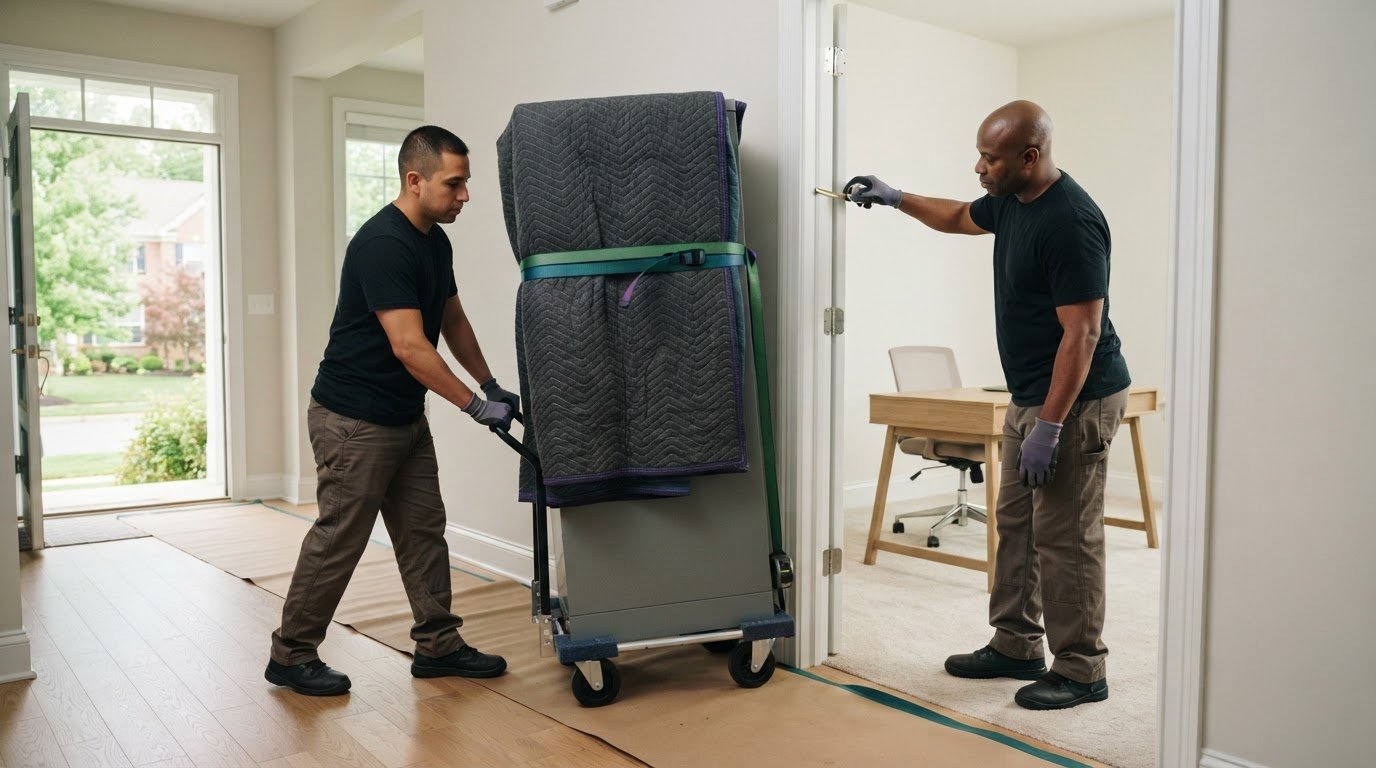
What makes moving a filing cabinet safer often happens before the first lift. If you’re planning to move heavy filing cabinet to home office Chantilly, start by mapping the route. A tight doorway, sharp turn, stairway, or delicate floor can make a heavy, awkward cabinet harder to manage than it looks.
Plan how you’ll handle the cabinet before moving day. Measure doorways and hallways, clear the path, and decide whether to empty or remove drawers. Moving a loaded cabinet without enough help can make it harder to control and increase the risk of damage to your home.
This guide explains how to prepare the route, protect your home, and decide when professional help makes sense for a single heavy item. Heavy Furniture Moving provides residential moving help in Chantilly, including specialized handling for heavy and bulky household items.
Key Takeaways
- To move heavy filing cabinet to home office Chantilly safely, plan the full route before lifting, including turns, stairs, and flooring.
- Measure the cabinet, including handles and other protruding parts, and compare its dimensions with every doorway and hallway along the route.
- Empty the drawers and secure loose parts to reduce shifting and make the cabinet easier to manage.
- Consider the cabinet’s weight, the route, and the available help when deciding whether to move it yourself or arrange professional support.
- Heavy Furniture Moving provides local residential help with heavy household items, including moving a cabinet into a home office.
Moving a Heavy Filing Cabinet to a Chantilly Home Office: What Makes It Tricky?
A single filing cabinet can be difficult to lift, balance, and guide through a home without scraping a wall or floor. The challenge isn’t only its weight. You also need enough room to hold it securely, steer through openings, and place it in the office without bumping nearby furniture.
This is an in-home furniture move, not a commercial office relocation. Even one item can be awkward to manage without enough help. Consider the cabinet’s construction, the route, and how much control you’ll have at each turn before deciding whether to move it yourself or arrange residential moving help in Chantilly.
Why a filing cabinet can be harder to move than it looks
Cabinets vary in size, construction, and weight, so appearance alone won’t show how manageable one is. Metal or solidly built models can be heavy, while narrow sides, handles, or recessed grips can make it difficult to hold securely. Loaded drawers add weight, and shifting contents can change the cabinet’s balance. For background on safe manual handling techniques, consider how the load’s shape and grip affect control, not just how heavy it feels.
Check the drawers before moving. A drawer that slides open or contents that shift can make the cabinet harder to steady. Don’t assume your cabinet weighs the same as another model. Its weight and dimensions depend on its design and what’s inside.
Which parts of the Chantilly home office route need attention?
Check the entire path from the cabinet’s current location to the home office. Measure doorways, note hallway turns, and identify thresholds or stairs that could interrupt a smooth carry. A cabinet may clear a doorway straight on but still be difficult to turn through it if the surrounding space is tight.
Look at the floor as well as the walls. Rugs, uneven transitions, or flooring that could be scratched may affect how you plan the move. Wall corners, nearby furniture, and items left in the hallway can limit maneuvering room. Clear the route and decide where the cabinet will go before moving day. To move heavy filing cabinet to home office Chantilly, account for every turn between the starting room and the final position, not just the office doorway.
How to Plan the Cabinet’s Route Before Moving It
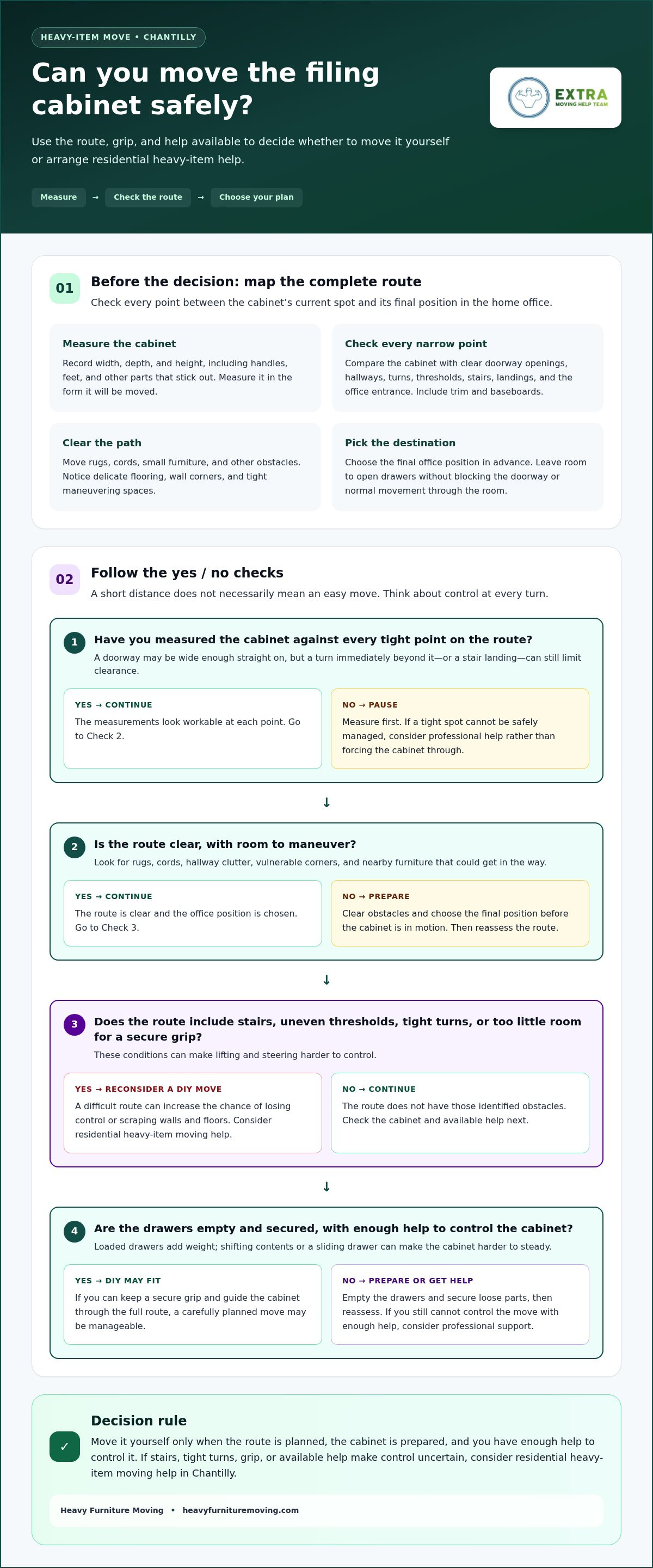
A route plan helps you catch clearance problems before the cabinet is in motion. Work through these steps in order:
- Measure the cabinet. Record its width, depth, and height, including handles, feet, and other parts that stick out. If you plan to remove drawers or other components, measure the cabinet in the form it will be moved.
- Map the route. Trace the full path from the starting room to the home office. Note each doorway, narrow hallway, turn, threshold, stair landing, and the office entrance.
- Clear obstacles. Move rugs, cords, small furniture, and other items out of the way. Make room around corners so the people guiding the cabinet can maneuver without twisting around obstacles.
- Plan the final position. Choose where the cabinet will sit before moving it. Check that the location leaves room to open the drawers and doesn’t block the doorway or normal movement through the room.
Measure the cabinet and every narrow point
Use a tape measure rather than estimating by sight. Measure the clear opening of each doorway, not just the door itself. Check tight turns from the angles the cabinet may need to pass through. Include trim and baseboards, which can reduce usable space, and allow room to guide and turn the cabinet. Write down the measurements so you can compare them before the move.
Check the cabinet’s dimensions against every point on the route, including stair landings where there may be little room to pivot. A doorway that seems wide enough may still be difficult if the cabinet must turn immediately after passing through it. Measuring each narrow point in advance can reveal clearance problems before they lead to scrapes, a stuck turn, or a last-minute change of plan.
Clear the path and choose the final office position
Make the route easy to walk through. Pick up loose cords, move small furniture, and remove rugs that could shift or catch. Note vulnerable wall corners and narrow passages so you can plan how to move through them. CDC’s safe material handling guidelines offer broader guidance on planning and handling heavy loads.
Choose the cabinet’s destination before moving it into the office. This avoids searching for space or changing direction while holding a bulky item. For more context on careful handling, read this heavy furniture moving guide. Heavy Furniture Moving provides local Chantilly heavy-item moving help for moving bulky household items into your home office.
Move It Yourself or Hire Heavy-Item Movers in Chantilly?
The right choice depends on the cabinet’s weight, how securely you can grip it, the route into the home office, and whether you have enough help. A short, level route with plenty of space is different from a cabinet that must pass through a narrow turn or go up or down stairs.
Moving without enough help can strain your back or leave fingers caught between the cabinet and a wall or doorframe. Losing control can also scuff floors or damage walls. These risks increase when you’re trying to lift and steer at the same time. Don’t judge the job only by distance. Consider how safely you can control the cabinet through every part of the route.
When attempting the move yourself may be a poor fit
Reconsider a solo move if the route includes stairs, uneven thresholds, tight turns, or too little room to get a secure grip. Loaded drawers can shift the cabinet’s balance, and a drawer that slides open can make it harder to steady. Emptying the drawers helps with preparation, but it doesn’t make every cabinet manageable alone.
If the cabinet catches at an opening or won’t turn smoothly, stop. Don’t force it, tilt it sharply, or keep pulling if your grip is slipping. Recheck the clearance and revise the plan before moving again. Pausing is safer than risking an injury or damage to the home.
What professional heavy-item moving help changes
Professional help is a practical option when the cabinet is too heavy or awkward to control, the route is complicated, or you don’t have enough assistance. Movers can plan the path, coordinate the lift, and guide the cabinet toward its intended position. Route planning and controlled handling matter even for a single item.
Heavy Furniture Moving provides residential moving help in Chantilly and specializes in heavy, bulky household items. Its heavy-item handling can support an in-home move into your home office without treating the job as a commercial office relocation. When deciding whether to move heavy filing cabinet to home office Chantilly yourself or arrange help, consider whether you can manage the cabinet’s weight and every turn without strain or loss of control.
How to Prepare Your Filing Cabinet and Home Office for Moving Day
Prepare the drawers, route, and destination before moving day. This helps reduce shifting inside the cabinet and gives everyone helping a clear path to the office. If professional movers are handling the lift, these steps also help them focus on guiding and placing the cabinet.
Prepare the cabinet without risking its contents
Remove files and loose items from every drawer. Contents add weight and can shift during the move, making the cabinet harder to control. Sort paperwork into labeled boxes or folders, and keep important documents somewhere accessible rather than packing them away with less-used files.
Secure drawers and loose parts so they don’t slide or swing during handling. The right preparation depends on the cabinet’s design. Don’t assume it needs to be disassembled. Avoid removing parts unless you know how they’re attached and can keep them organized for reassembly. If the drawers are removable, set them aside safely and make sure everyone helping knows whether they’ll be moved separately.
Set up the home office for a smooth placement
Clear a landing area before the cabinet arrives. Move chairs, boxes, and nearby furniture out of the placement zone. Check that the final position allows the drawers to open fully and leaves the office entrance and walkways clear. Choosing a specific spot in advance prevents last-minute rearranging while the cabinet is being carried.
Prepare the entire route, not just the office. Pick up loose cords and small objects, move rugs that could shift, and keep pets and bystanders away from the walking path. If movers are helping, point out the intended position and any surfaces or corners you’re concerned about before the lift begins.
Quick moving-day checklist:
- Empty the drawers and keep paperwork organized and accessible.
- Secure drawers and loose components; handle removable parts according to the cabinet’s design.
- Clear cords, rugs, small furniture, and other trip hazards from the route.
- Keep pets and bystanders away from the walking path.
- Make space in the office and choose a final position with room for the drawers and clear walkways.
Heavy Furniture Moving provides local residential help with bulky household items for Chantilly residents. Get help moving your heavy filing cabinet into your home office.
Get Your Heavy Filing Cabinet Into Your Chantilly Home Office
A well-planned cabinet move has three main steps: measure the route, prepare the cabinet, and choose a moving plan suited to the weight and access points. Even one item deserves careful planning. A tight turn or stairway can make a short in-home move more demanding than expected.
This is a residential furniture move, not a commercial office relocation. Heavy Furniture Moving provides local residential help in Chantilly and specializes in heavy, bulky household items. If you’re planning to move heavy filing cabinet to home office Chantilly, note the cabinet’s dimensions and the route so the move can be planned around your home.
What to share when arranging the move
Describe the cabinet’s width, depth, and height, including handles or other parts that stick out. Share its approximate weight if you know it, and whether the drawers will be empty. Describe the route from the current room to the office, including stairs, narrow turns, thresholds, and entry access. Point out the intended position and any surfaces or corners you’re concerned about.
These details make it easier to plan for your home rather than treating the job like a generic furniture move. If you’ve measured the openings, keep those measurements handy. Mention any tight clearance where the cabinet may need to turn or pivot.
A simpler path from the current room to your home office
Moving one heavy item may be simpler than moving an entire home, but it still takes attention to the route. The cabinet needs to stay controlled through doorways and turns, then be placed where it won’t block drawers or walkways. Professional handling can reduce the physical strain on you and help limit avoidable contact with walls, floors, and nearby furniture.
Before the move, empty the drawers, secure loose components, and clear the path. Then share the cabinet and destination details so the lift and placement can be planned around your home. You don’t have to move a bulky cabinet through a difficult route alone.
For a practical next step, request local moving help for your Chantilly filing cabinet.
Make the Move Into Your Home Office With Confidence
A safer cabinet move starts before anyone lifts. Measure the cabinet and the full route, including doorways and turns. Empty the drawers, secure loose parts, and clear the path. Then choose a final office position that leaves room to open the drawers and move comfortably around the room.
If the cabinet feels too heavy or the route is awkward, you don’t have to handle it alone. Heavy Furniture Moving provides local residential moving help in Chantilly, with specialized handling for heavy and bulky household items. A clear plan helps keep the move focused on careful handling and placement in your home office.
Ready to move heavy filing cabinet to home office Chantilly without taking on the heavy lifting yourself? Get help moving your heavy filing cabinet in Chantilly. With the route planned and the right help in place, you can focus on setting up your home office.
Frequently Asked Questions
How do I move a heavy filing cabinet into a home office?
Start by emptying the drawers, then measure the cabinet and compare its dimensions with each doorway, hallway turn, stairway, and the office entrance. Clear the full route and decide where the cabinet will go before moving it. To move heavy filing cabinet to home office Chantilly safely, consider the cabinet’s weight and how much room you have to guide it. If it’s awkward to grip or the route is tight, professional heavy-item movers can help.
Should I empty a filing cabinet before moving it?
Yes. Remove files and loose contents before moving the cabinet. This reduces shifting inside the drawers and helps you prepare the cabinet, though it may still be heavy. Keep important paperwork organized and accessible outside the cabinet. Measure the cabinet and check the full route before moving. If an opening feels too tight or the lift feels unsafe, don’t force it. Pause and adjust the plan or arrange professional heavy-item moving help.
Can movers move one filing cabinet inside my house?
Yes. A residential furniture move can involve a single filing cabinet traveling from one room to another. Heavy Furniture Moving provides local residential help with heavy and bulky household items in Chantilly and nearby Fairfax, Woodbridge, Manassas, Manassas Park, Aldie, Ashburn, McLean, Vienna, Reston, Centreville, Clifton, Dumfries, South Riding, Fairfax Station, Haymarket, and Gainesville. Share where the cabinet starts, where it needs to go, and whether stairs or tight turns are on the route.
How do I know if a filing cabinet will fit through a doorway?
Measure the cabinet at its widest and tallest points, including handles and anything else that protrudes. Then measure the doorway’s clear opening, accounting for trim and the space needed to guide the cabinet through. Consider the angle it must pass at, too. Check every doorway and turn along the route, not just the first opening. A narrow hall, corner, or stair landing may limit maneuvering even if the doorway seems wide enough.
Is it safe to move a heavy filing cabinet by myself?
It depends on the cabinet’s weight, your grip, and the route. Stairs, narrow turns, slippery floors, and limited maneuvering room can make a solo move risky. Empty the drawers and assess the full path before deciding. If you can’t control the cabinet without straining, stop rather than forcing the lift. Professional heavy-item movers can help with the route and handling, especially when a cabinet is bulky or difficult to maneuver alone.
What should I do before movers arrive to move a cabinet?
Empty the drawers, secure loose parts, and clear the route of cords, rugs, and small furniture. Make space in the home office and choose the cabinet’s final position, leaving room for drawers to open and walkways to stay clear. Measure the cabinet and tight points along the path. When arranging the move, share useful details such as stairs, narrow turns, entry access, and whether the cabinet will be empty.
Frequently Asked Questions
Check the entire path from the cabinet’s current location to the home office. Measure doorways, note hallway turns, and identify thresholds or stairs that could interrupt a smooth carry. A cabinet may clear a doorway straight on but still be difficult to turn through it if the surrounding space is tight. Look at the floor as well as the walls. Rugs, uneven transitions, or flooring that could be scratched may affect how you plan the move. Wall corners, nearby furniture, and items left in the hallway can limit maneuvering room. Clear the route and decide where the cabinet will go before moving day. To move heavy filing cabinet to home office Chantilly, account for every turn between the starting room and the final position, not just the office doorway. A route plan helps you catch clearance problems before the cabinet is in motion. Work through these steps in order:
Start by emptying the drawers, then measure the cabinet and compare its dimensions with each doorway, hallway turn, stairway, and the office entrance. Clear the full route and decide where the cabinet will go before moving it. To move heavy filing cabinet to home office Chantilly safely, consider the cabinet’s weight and how much room you have to guide it. If it’s awkward to grip or the route is tight, professional heavy-item movers can help.
Yes. Remove files and loose contents before moving the cabinet. This reduces shifting inside the drawers and helps you prepare the cabinet, though it may still be heavy. Keep important paperwork organized and accessible outside the cabinet. Measure the cabinet and check the full route before moving. If an opening feels too tight or the lift feels unsafe, don’t force it. Pause and adjust the plan or arrange professional heavy-item moving help.
Yes. A residential furniture move can involve a single filing cabinet traveling from one room to another. Heavy Furniture Moving provides local residential help with heavy and bulky household items in Chantilly and nearby Fairfax, Woodbridge, Manassas, Manassas Park, Aldie, Ashburn, McLean, Vienna, Reston, Centreville, Clifton, Dumfries, South Riding, Fairfax Station, Haymarket, and Gainesville. Share where the cabinet starts, where it needs to go, and whether stairs or tight turns are on the route.
Measure the cabinet at its widest and tallest points, including handles and anything else that protrudes. Then measure the doorway’s clear opening, accounting for trim and the space needed to guide the cabinet through. Consider the angle it must pass at, too. Check every doorway and turn along the route, not just the first opening. A narrow hall, corner, or stair landing may limit maneuvering even if the doorway seems wide enough.
It depends on the cabinet’s weight, your grip, and the route. Stairs, narrow turns, slippery floors, and limited maneuvering room can make a solo move risky. Empty the drawers and assess the full path before deciding. If you can’t control the cabinet without straining, stop rather than forcing the lift. Professional heavy-item movers can help with the route and handling, especially when a cabinet is bulky or difficult to maneuver alone.
Empty the drawers, secure loose parts, and clear the route of cords, rugs, and small furniture. Make space in the home office and choose the cabinet’s final position, leaving room for drawers to open and walkways to stay clear. Measure the cabinet and tight points along the path. When arranging the move, share useful details such as stairs, narrow turns, entry access, and whether the cabinet will be empty.