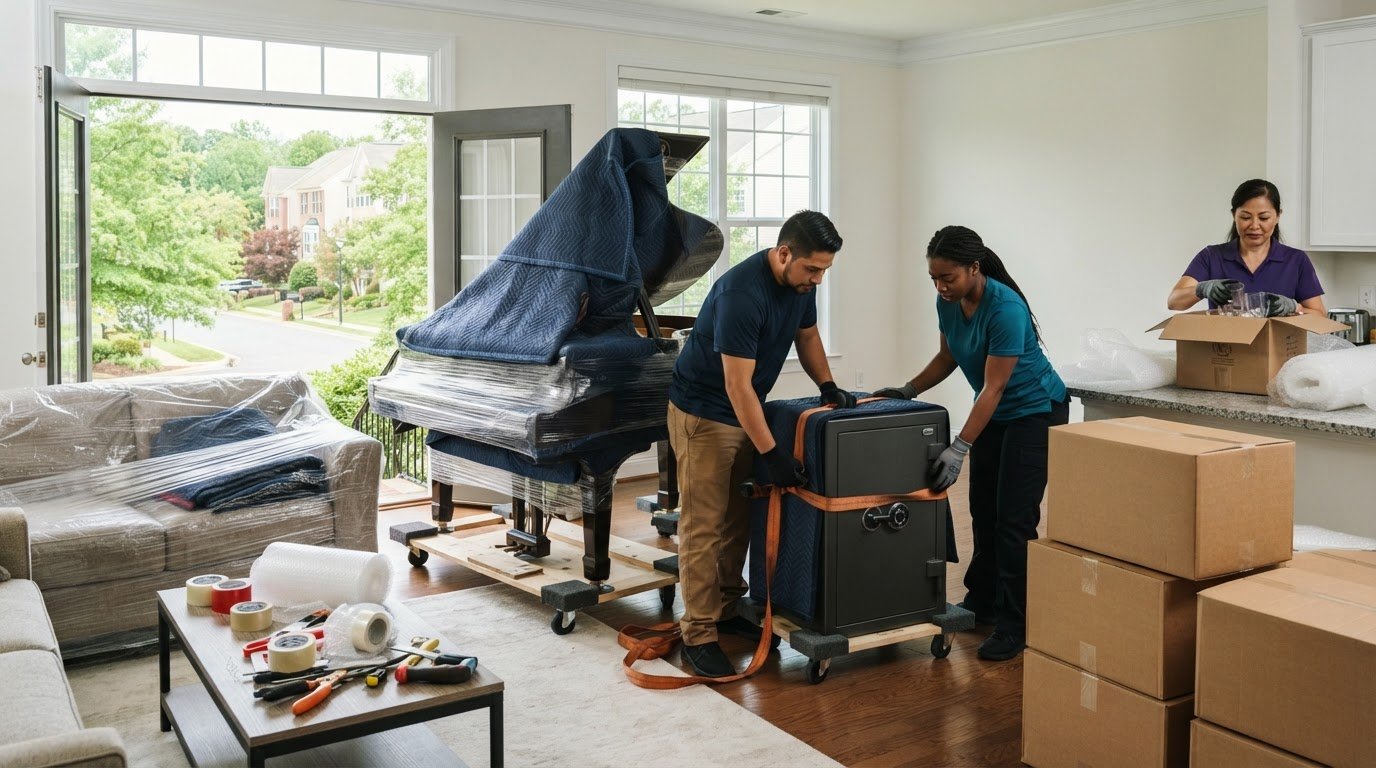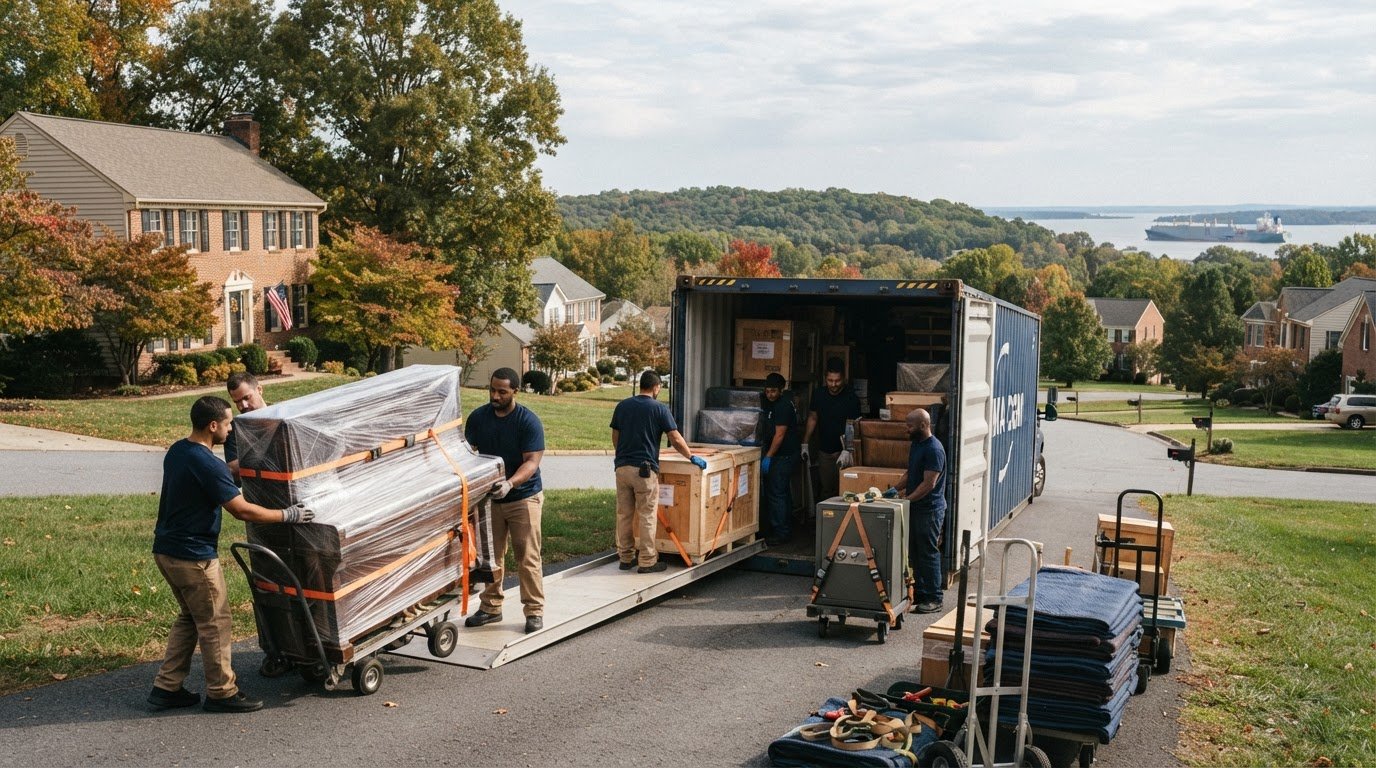
Manassas Sofa Moving Through a Window: A Safe, Step-by-Step Guide
What if the safest route for your sofa isn’t through the front door? If you’re looking into Manassas sofa moving through window options, you may already know the frustration of a couch that won’t clear a doorway, hallway, or stairwell. It’s also natural to worry about damage to the sofa, window, siding, or walls.
A window hoist can be a sensible solution when the usual route is too tight, but it takes more than a last-minute workaround. Start with an access assessment. The sofa, window opening, exterior approach, and landing area all need to be considered before the lift is planned.
This guide explains when sofa hoisting may work, what movers assess, and how to prepare your Manassas home. Heavy Furniture Moving provides professional sofa hoisting for difficult access situations, with a plan based on the sofa and the property.
Key Takeaways
- Manassas sofa moving through window may be practical when doorways, hallways, or stairs block the usual route.
- Share the sofa’s measurements and access details so the team can assess the window opening, exterior approach, and landing area.
- Compare doorway, stairway, and window access by looking at clearances, turns, and space to maneuver.
- Prepare by clearing the indoor path and intended landing area before the work begins.
- Professional sofa hoisting provides a planned way to handle a difficult access problem without attempting a hazardous lift yourself.
Why a Manassas Sofa May Need to Move Through a Window
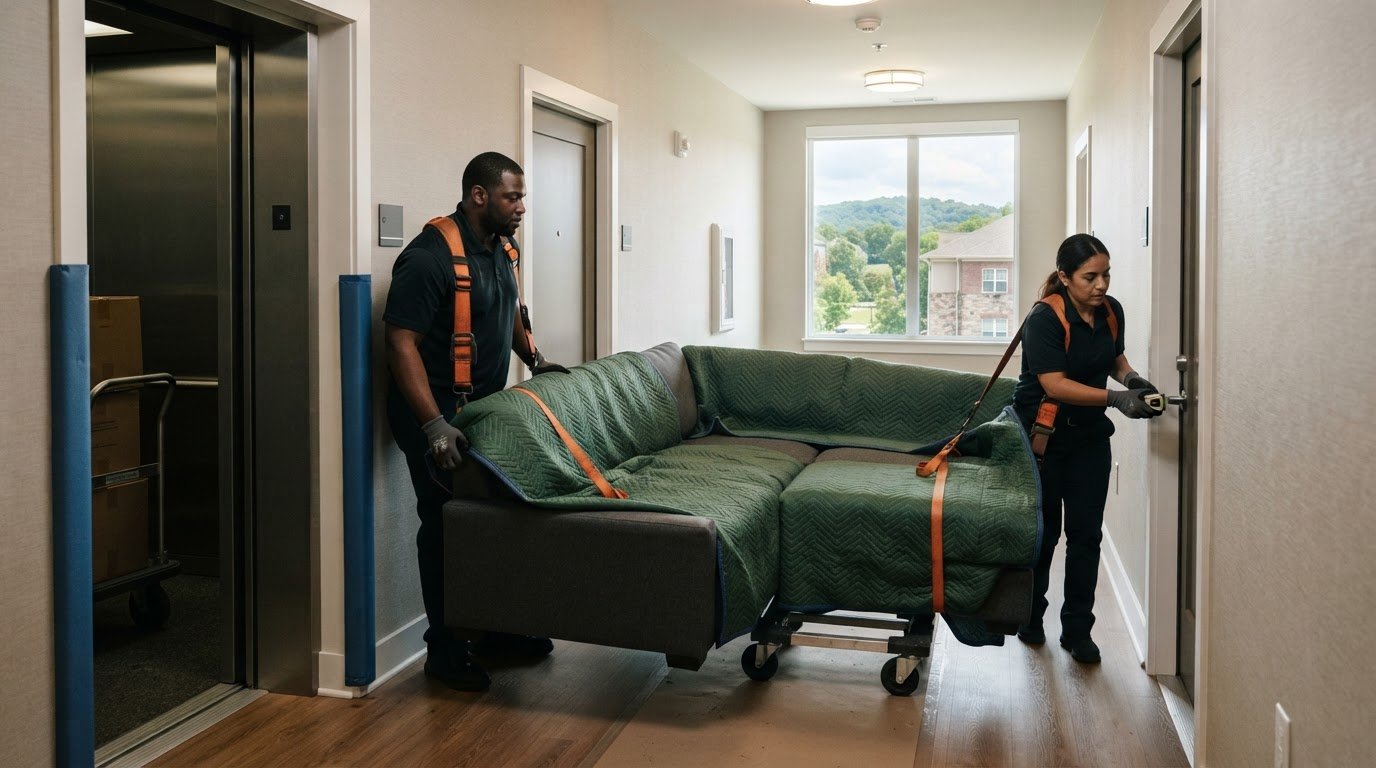
A sofa can look as though it should fit, then get stuck at the first tight turn. A doorway may be wide enough for the frame but leave no space to angle it. A narrow hallway, fixed stair layout, low ceiling, or cramped landing can make the standard route impractical. In that case, a different access route may be worth assessing.
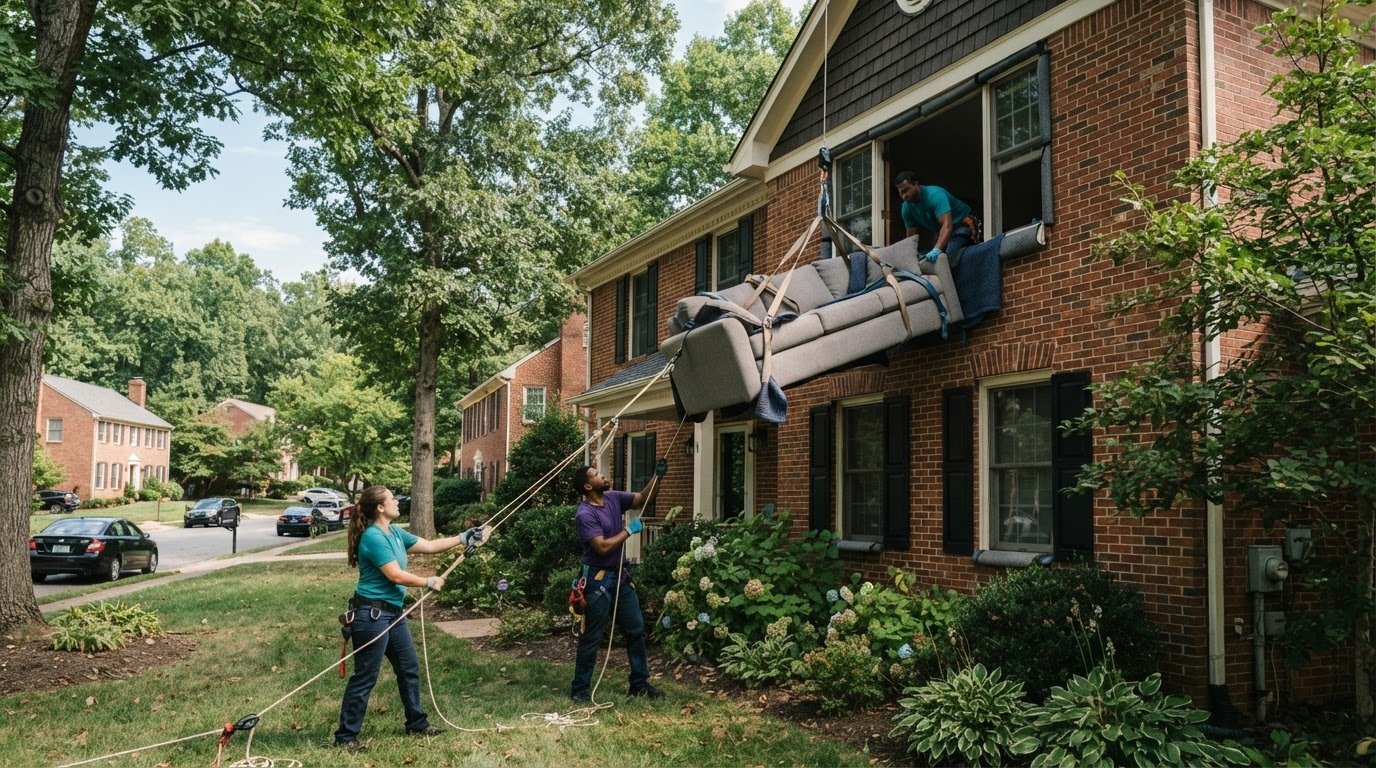
Sofa hoisting is the planned movement of a sofa through a suitable window opening using a controlled lift. It offers another route when interior access is blocked, but it isn’t suitable for every home. For Manassas sofa moving through window, the decision depends on the sofa and the entire path, including the opening, exterior access, and landing space.
Even a small change in angle can affect whether an item clears a tight space. The mathematical Moving Sofa Problem explores an idealized version of maneuvering a sofa through a narrow passage. Real homes add turns, furnishings, and the sofa’s specific shape, so the route needs to be assessed as a whole.
Which sofa and home conditions can make a window route worth assessing?
Oversized, sectional, or rigid sofas are examples to evaluate, not automatic candidates for hoisting. A sectional may separate into pieces, while a rigid frame may be difficult to rotate around a tight corner. Consider the sofa’s dimensions alongside the room available to turn and reposition it.
- Doorways and hallways: Check the usable clearance and whether there’s room to angle the sofa.
- Stairs and landings: Note narrow turns, low ceilings, fixed railings, and limited space to pause or pivot.
- Window and exterior: Consider the clear opening, the approach outside, and whether there’s a suitable place to receive the sofa.
A window route isn’t automatically easier just because the sofa is large. The opening and exterior access also need to work for a planned lift. Share accurate sofa measurements and details about the home so the access challenge can be assessed on both sides of the wall.
Why a do-it-yourself window lift can create avoidable risks
A heavy sofa lifted outside can shift, swing, or become difficult to control. This creates a risk of injury and can damage the upholstery, frame, window, siding, or nearby property. Improvised ropes or lifting equipment don’t make the route safer. A professional assessment helps determine whether the opening and exterior conditions are suitable before the lift is planned.
Don’t treat a window lift as a workaround to attempt with friends. Heavy Furniture Moving provides professional sofa hoisting and assesses the access challenge before planning the work around the item and property. If the sofa can’t use its standard route, start with that careful evaluation rather than a rushed lift.
How Professional Sofa Hoisting Through a Manassas Window Is Planned
A successful hoist starts with information, not a lift. For Manassas sofa moving through window, the moving team needs to understand the sofa and the route before deciding how to proceed. Planning helps replace guesswork with a defined path and attention to both the item and the home.
A site-specific assessment determines whether a sofa hoist is feasible by matching the item’s dimensions to the window, exterior approach, and available landing space. No single measurement tells the whole story. A sofa might fit through an opening but still lack a clear approach outside or enough room to receive it.
What the access and sofa assessment needs to establish
Gather the sofa’s width, height, and depth, including its largest fixed dimensions. Note whether legs, cushions, or sections detach, and describe how the piece is configured. Removable parts may affect how a sectional is handled, but the full item still needs to be considered in the configuration in which it will move.
Then describe the proposed window and the space around it. Useful details include the window’s location, clear opening dimensions, floor level, and exterior approach. Mention nearby obstacles and the intended landing area. A fence, landscaping, narrow side passage, or limited room indoors could shape the plan. Photos can help show details that measurements alone may not capture.
How the lift plan coordinates the people, item, and property
Once the route details are clear, the team can plan how the sofa will travel from its current position to the window, through the opening, and toward its intended room placement. Every part matters. A clear indoor route won’t solve the problem if the exterior work area is obstructed or the landing space is occupied.
Planning also helps everyone understand where the sofa needs to go and which areas must stay clear during the work. Discussing the route and timing reduces last-minute confusion. The team can account for protecting the sofa and nearby property as part of the plan, while taking the home’s specific conditions into consideration.
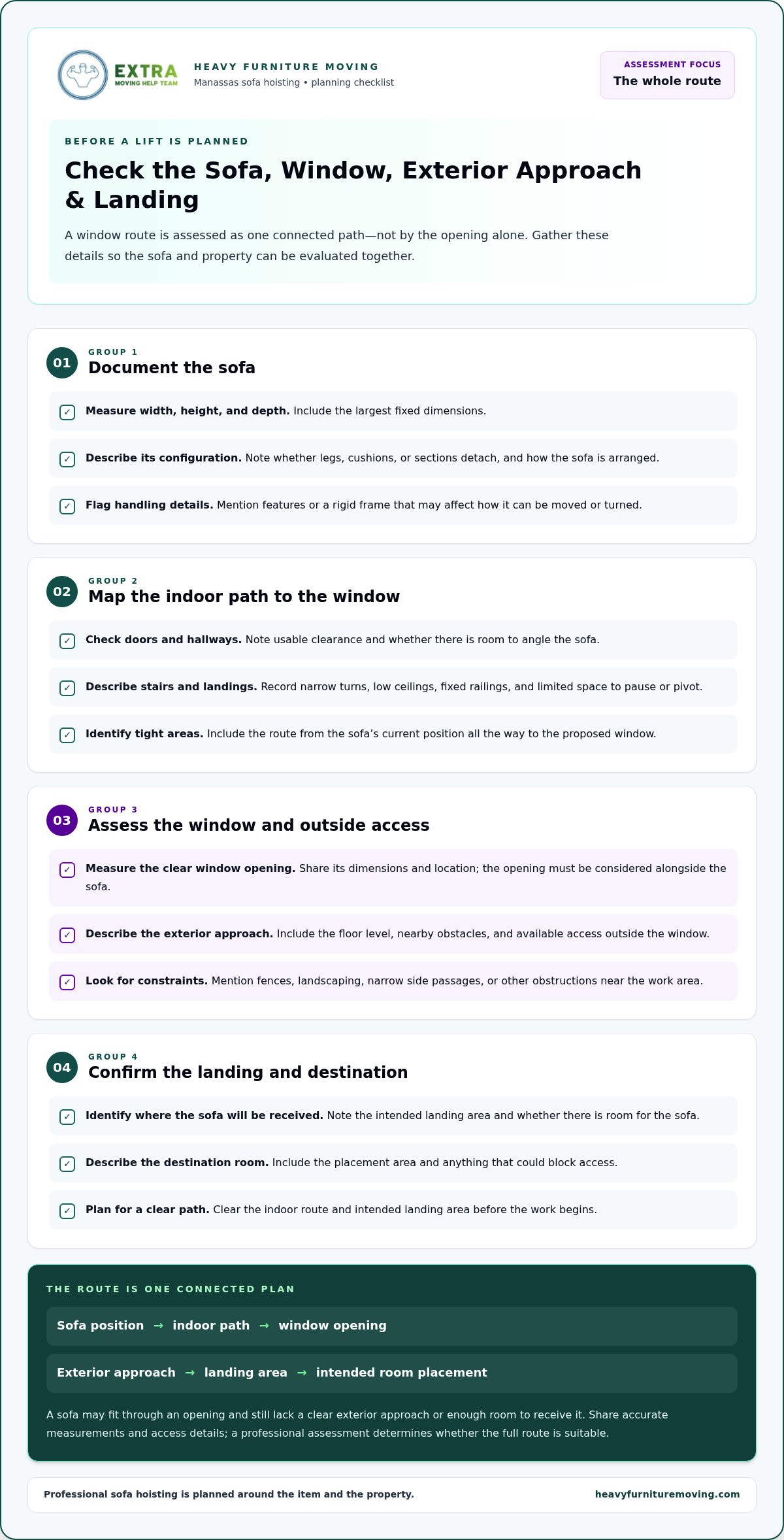
Prepare a concise set of details for the assessment:
- Sofa: Dimensions, configuration, detachable parts, and features that may affect handling.
- Interior route: The path to the window, including doors, turns, stairs, and tight areas.
- Window and exterior: Clear opening measurements, floor level, approach, nearby obstacles, and landing space.
- Destination: The room and placement area, plus anything that could block access.
With those details, Heavy Furniture Moving can plan professional sofa hoisting in Manassas around the actual access challenge. For a sofa that can’t use a standard entry route, professional sofa hoisting provides a planned way forward.
Window Hoisting vs. Doorway or Stairway Moving for a Manassas Sofa
The best route isn’t always the shortest. A doorway may offer a direct path but leave too little room to turn. A window may bypass a tight stairwell but introduce exterior obstacles and a limited landing area. For Manassas sofa moving through window, compare the complete route, not just the distance from the sofa to the exit.
| Access route | Clearances and turns | Landing space | Exterior access and property constraints |
|---|---|---|---|
| Doorway | Door width, frame, and nearby corners determine whether the sofa can pass and turn. | Room is needed beyond the door to reposition the sofa. | Usually avoids exterior access concerns, but interior walls and door features may limit movement. |
| Stairway | Stair width, ceiling height, railings, and turns shape the route. | Stair landings must allow the sofa to be repositioned without blocking the path. | Interior layout and fixed features can restrict movement between floors. |
| Window | The opening must suit the sofa and the planned path through it. | A clear receiving area is needed inside, outside, or both, depending on the plan. | Exterior approach, nearby structures, landscaping, and property conditions affect feasibility. |
This comparison is a starting point, not a verdict. A route that seems possible on paper may prove difficult once turning space and obstacles are considered. Heavy Furniture Moving assesses the options against the sofa and home. Don’t assume a route will fit based on a single measurement.
When can a doorway or stairway still work?
Compare the sofa’s dimensions with the tightest points along the interior route, including the room needed to pivot at corners and landings. The sofa’s overall measurements matter, as does its position as it moves. If a component is designed to detach, removing it may change the route. Don’t force parts apart or dismantle components that aren’t made to come off.
A challenging turn doesn’t automatically rule out an interior move. Checking the clearances can reveal a path that wasn’t obvious at first. An assessment can compare that option with a window route before the move proceeds.
What makes a window lift dependent on the property?
A window route depends on the clear opening, its height, the exterior approach, and room to receive the sofa. A narrow side passage, nearby structure, landscaping, or limited landing area can affect the plan. Every home presents different conditions, so a window isn’t automatically the easier alternative.
Share what surrounds the opening, not just the window measurements. The moving team considers the access conditions and intended landing area together, then plans the appropriate route. The right option is the one that works for the sofa and property after assessment.
Prepare Your Manassas Home for a Sofa Hoist Through the Window
Good preparation gives the moving team a clear view of the job and keeps the work area easier to manage. For Manassas sofa moving through window, share useful access details ahead of the planned lift, then clear the route and landing area. You don’t need to move the sofa yourself or prepare lifting equipment.
What information should you have ready before the move?
Write down the sofa’s approximate width, height, and depth. Note whether it separates into sections and whether any parts are designed to detach. These details help the team understand what needs to pass through the window and how the sofa is configured.
Describe the window location and floor level, along with the exterior approach. Mention visible barriers such as fencing, landscaping, nearby structures, or a narrow path. If your building or community has access procedures or coordination steps, share them before the planned lift so they can be included in the preparation.
A short, clear description is useful. Photos of the sofa, window, exterior approach, and destination room can show details that are hard to explain in a message.
How should you ready the room and surrounding access?
Choose the sofa’s intended placement before moving day. Clear that area so the team can bring the piece into the room without shifting other furniture during the work. If you’re choosing between two locations, make the decision ahead of time and keep the route clear.
- Clear the interior route: Move loose items, small furniture, and trip hazards away from doorways and the path to the room.
- Prepare the landing area: Remove belongings near the window and clear the space where the sofa is expected to arrive.
- Secure pets: Keep them in a separate, closed room away from the active work area.
- Keep people clear: Ask household members and visitors to stay away from the window, exterior approach, and indoor route while the team works.
- Share changes: Tell the moving team if access conditions or the planned room placement change before the lift.
Before the planned lift, share the access details, clear the indoor path, and make room at the intended landing area. This checklist helps everyone start with the same understanding of the route and destination. Leave the lift itself to the professionals, and follow the team’s directions about keeping the work area clear.
Details about the route and landing area help Heavy Furniture Moving plan professional sofa hoisting in Manassas.
Book Professional Sofa Hoisting in Manassas and Plan the Next Step
If a sofa can’t clear its doorway, hallway, stairs, or elevator, don’t force the standard route. Identify the access problem and share the sofa and property details with Heavy Furniture Moving. The team can plan the route and determine whether a window hoist suits the home.
Heavy Furniture Moving provides professional sofa hoisting for difficult access situations, including moves in Manassas. The service is designed for sofas that can’t use standard entryways, with planning centered on the specific item and property. No two access challenges are identical, so describe what you know about the route rather than assuming a particular window or lift method will work.
What to share when arranging a Manassas sofa-hoisting job
Give the team a clear picture of the sofa, the entry problem, and the proposed route. Approximate measurements and a description of the sofa’s configuration help explain what needs to move. Include its destination room so the intended placement is part of the plan from the start.
- Sofa details: Approximate width, height, and depth; whether it separates into sections; and any relevant features.
- Access issue: Explain what blocks the usual route, such as a narrow doorway, tight stair turn, or limited hallway clearance.
- Window and exterior: Describe the window location, floor level, exterior approach, and visible barriers or restrictions.
- Destination: Name the room and identify the space where you want the sofa placed.
Share building access procedures or other property coordination details that may affect the planned work. Include a photo if it helps show a narrow approach or obstacle. Clear information gives the team a useful starting point for planning around your home.
Make the next step simple
You don’t need to attempt a risky window lift yourself. Leave the heavy handling to professionals and focus on explaining the access challenge. Whether the obstacle is a fixed stair layout or a sofa that cannot turn through a doorway, those details help shape the route plan.
Manassas sofa moving through window starts with describing what won’t fit, sharing details about the window and exterior, and identifying the sofa’s destination. Heavy Furniture Moving provides local sofa hoisting in Fairfax, Woodbridge, Manassas, Manassas Park, Aldie, Ashburn, McLean, Vienna, Reston, Centreville, Chantilly, Clifton, Dumfries, South Riding, Fairfax Station, Haymarket, and Gainesville. Plan professional sofa hoisting with Heavy Furniture Moving.
Give Your Sofa a Clear Path Forward
A stubborn sofa doesn’t have to hold up your plans. Treat the access challenge as a separate moving task, and plan the route around the furniture and your home. You can focus on deciding where the sofa belongs while experienced movers handle the difficult lift.
For Manassas sofa moving through window, Heavy Furniture Moving provides professional sofa hoisting. Share what’s blocking the usual route and where you want the sofa to go. A conversation about the actual access challenge is the practical first step toward a plan. Contact Heavy Furniture Moving to arrange sofa hoisting in Manassas.
Frequently Asked Questions
Can a sofa be moved through a window in Manassas?
Yes, a sofa can sometimes be moved through a window in Manassas if the opening, exterior approach, and receiving space suit a planned lift. Heavy Furniture Moving provides professional sofa hoisting for items that can’t use standard entryways. Whether a window route works depends on the specific sofa and property, so don’t assume it’s suitable just because the couch won’t fit through the front door.
How do movers decide whether a window is suitable for sofa hoisting?
Movers compare the sofa’s shape and dimensions with the usable window opening and the path outside. They also consider how the sofa will approach the window, obstacles around the exterior, and whether there’s room to receive it. A photo can show context, but it doesn’t replace an assessment of the actual access conditions. The team uses those details to determine whether the window route is appropriate.
Is sofa hoisting safer than forcing a couch through a narrow doorway?
A planned professional hoist may be safer than forcing a sofa through a passage where it catches or requires awkward handling. Forcing it can put people, upholstery, doorframes, and nearby walls at risk. Window access isn’t automatically safer, however. The opening and exterior route need assessment, too. Don’t proceed with either route if the sofa can’t be moved under control.
What measurements should I take before arranging a sofa window lift?
Record the sofa’s approximate width, height, and depth, then measure the window’s clear opening rather than relying on the frame’s outside dimensions. If the sofa separates into sections, note the size of each piece and whether it’s designed to come apart. Measurements of tight interior turns can also clarify why the usual route is difficult. Share the figures as estimates and mention anything that could affect how you took them.
Can a sectional sofa be hoisted through a window?
Possibly. A sectional may be assessed as separate pieces if its sections are designed to detach, but the assembled sofa’s size and configuration still matter to the route plan. Describe how the pieces connect and whether any parts are fixed. Don’t dismantle the frame or force components apart. The team can consider the sections, window access, and intended room placement together to determine whether hoisting is suitable.
What should I clear before movers hoist a sofa into my home?
Clear the room where the sofa will land, along with the route between that room and the window. Move fragile décor, floor items, and small furniture out of the work area. Keep children, household members, and pets away from the active route. If window coverings or nearby objects could obstruct access, point them out during planning rather than reaching into the work area during the lift.
What happens if the window or exterior access is not suitable for hoisting?
If the window route isn’t suitable, the team won’t proceed with that lift. The next step is to discuss whether another access route, such as a different opening or a workable interior path, can be assessed. Some homes may not have a suitable alternative for that sofa. Share other possible routes and obstacles so the moving team can talk through practical options without attempting an unsafe workaround.
Frequently Asked Questions
Oversized, sectional, or rigid sofas are examples to evaluate, not automatic candidates for hoisting. A sectional may separate into pieces, while a rigid frame may be difficult to rotate around a tight corner. Consider the sofa’s dimensions alongside the room available to turn and reposition it. A window route isn’t automatically easier just because the sofa is large. The opening and exterior access also need to work for a planned lift. Share accurate sofa measurements and details about the home so the access challenge can be assessed on both sides of the wall.
Compare the sofa’s dimensions with the tightest points along the interior route, including the room needed to pivot at corners and landings. The sofa’s overall measurements matter, as does its position as it moves. If a component is designed to detach, removing it may change the route. Don’t force parts apart or dismantle components that aren’t made to come off. A challenging turn doesn’t automatically rule out an interior move. Checking the clearances can reveal a path that wasn’t obvious at first. An assessment can compare that option with a window route before the move proceeds.
A window route depends on the clear opening, its height, the exterior approach, and room to receive the sofa. A narrow side passage, nearby structure, landscaping, or limited landing area can affect the plan. Every home presents different conditions, so a window isn’t automatically the easier alternative. Share what surrounds the opening, not just the window measurements. The moving team considers the access conditions and intended landing area together, then plans the appropriate route. The right option is the one that works for the sofa and property after assessment. Good preparation gives the moving team a clear view of the job and keeps the work area easier to manage. For Manassas sofa moving through window, share useful access details ahead of the planned lift, then clear the route and landing area. You don’t need to move the sofa yourself or prepare lifting equipment.
Write down the sofa’s approximate width, height, and depth. Note whether it separates into sections and whether any parts are designed to detach. These details help the team understand what needs to pass through the window and how the sofa is configured. Describe the window location and floor level, along with the exterior approach. Mention visible barriers such as fencing, landscaping, nearby structures, or a narrow path. If your building or community has access procedures or coordination steps, share them before the planned lift so they can be included in the preparation. A short, clear description is useful. Photos of the sofa, window, exterior approach, and destination room can show details that are hard to explain in a message.
Choose the sofa’s intended placement before moving day. Clear that area so the team can bring the piece into the room without shifting other furniture during the work. If you’re choosing between two locations, make the decision ahead of time and keep the route clear. Before the planned lift, share the access details, clear the indoor path, and make room at the intended landing area. This checklist helps everyone start with the same understanding of the route and destination. Leave the lift itself to the professionals, and follow the team’s directions about keeping the work area clear. Details about the route and landing area help Heavy Furniture Moving plan professional sofa hoisting in Manassas. If a sofa can’t clear its doorway, hallway, stairs, or elevator, don’t force the standard route. Identify the access problem and share the sofa and property details with Heavy Furniture Moving. The team can plan the route and determine whether a window hoist suits the home. Heavy Furniture Moving provides professional sofa hoisting for difficult access situations, including moves in Manassas. The service is designed for sofas that can’t use standard entryways, with planning centered on the specific item and property. No two access challenges are identical, so describe what you know about the route rather than assuming a particular window or lift method will work.
Yes, a sofa can sometimes be moved through a window in Manassas if the opening, exterior approach, and receiving space suit a planned lift. Heavy Furniture Moving provides professional sofa hoisting for items that can’t use standard entryways. Whether a window route works depends on the specific sofa and property, so don’t assume it’s suitable just because the couch won’t fit through the front door.
Movers compare the sofa’s shape and dimensions with the usable window opening and the path outside. They also consider how the sofa will approach the window, obstacles around the exterior, and whether there’s room to receive it. A photo can show context, but it doesn’t replace an assessment of the actual access conditions. The team uses those details to determine whether the window route is appropriate.
A planned professional hoist may be safer than forcing a sofa through a passage where it catches or requires awkward handling. Forcing it can put people, upholstery, doorframes, and nearby walls at risk. Window access isn’t automatically safer, however. The opening and exterior route need assessment, too. Don’t proceed with either route if the sofa can’t be moved under control.
Record the sofa’s approximate width, height, and depth, then measure the window’s clear opening rather than relying on the frame’s outside dimensions. If the sofa separates into sections, note the size of each piece and whether it’s designed to come apart. Measurements of tight interior turns can also clarify why the usual route is difficult. Share the figures as estimates and mention anything that could affect how you took them.
Possibly. A sectional may be assessed as separate pieces if its sections are designed to detach, but the assembled sofa’s size and configuration still matter to the route plan. Describe how the pieces connect and whether any parts are fixed. Don’t dismantle the frame or force components apart. The team can consider the sections, window access, and intended room placement together to determine whether hoisting is suitable.
Clear the room where the sofa will land, along with the route between that room and the window. Move fragile décor, floor items, and small furniture out of the work area. Keep children, household members, and pets away from the active route. If window coverings or nearby objects could obstruct access, point them out during planning rather than reaching into the work area during the lift.
If the window route isn’t suitable, the team won’t proceed with that lift. The next step is to discuss whether another access route, such as a different opening or a workable interior path, can be assessed. Some homes may not have a suitable alternative for that sofa. Share other possible routes and obstacles so the moving team can talk through practical options without attempting an unsafe workaround.