Labor to Carry a Heavy Commercial Elliptical Upstairs in Clifton
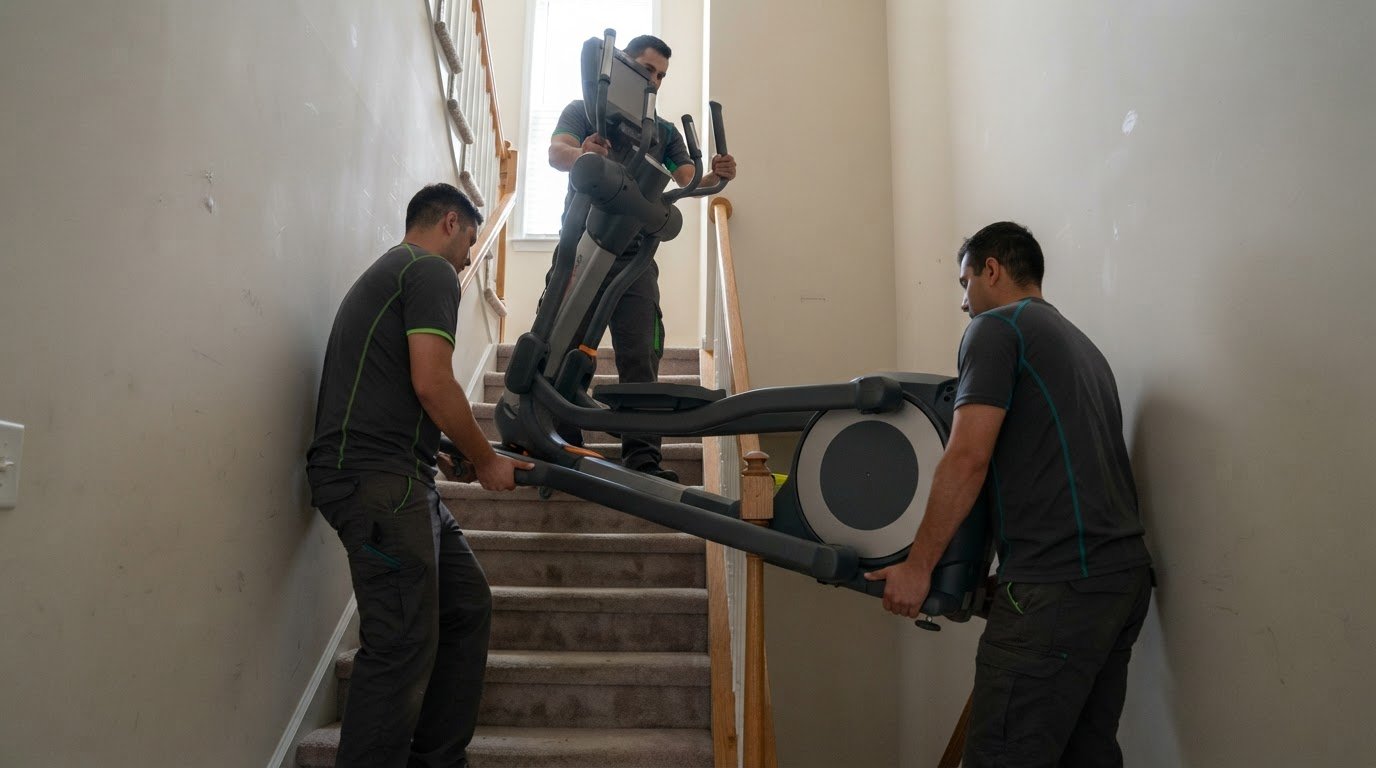
A staircase changes the job: labor to carry a heavy commercial elliptical upstairs in Clifton should be planned as a three-person move at minimum. The crew also needs a clear route and a safe way to manage the machine’s weight on the stairs. A commercial elliptical is bulky, so forcing it through a tight turn can risk damage to the equipment or the home.
It’s reasonable to want a clear idea of the cost before arranging help. The final price depends on factors such as the stair layout, access, and whether the machine needs to be taken apart, so a single estimate won’t fit every move. This guide explains what can affect the cost, when disassembly may make sense, and what to consider when arranging labor for an upstairs carry in Clifton. You’ll also find practical preparation steps to help the move go smoothly, without taking on a heavy lift that calls for experienced hands.
Key Takeaways
- Compare DIY, labor-only, full-service, and specialty moving approaches to see which best fits the size and complexity of your move.
- Measure tight doorways and stair turns, then assess whether removing parts will make the elliptical easier to maneuver.
- Secure loose cords and moving handles before the carry, and keep the route clear to reduce snags and delays.
- Choose a crew and moving method that can control the machine steadily on stairs, rather than relying on strength alone.
- Heavy Furniture Moving offers exercise equipment moving and labor-only help for heavy carries that call for an experienced crew.
How Much Does It Cost To Move an Elliptical?
The cost depends on the machine, route, stairs, and preparation needed. Plan the move around the equipment’s actual size and the crew required, rather than guessing from a home model.
-
Estimate Moving Time
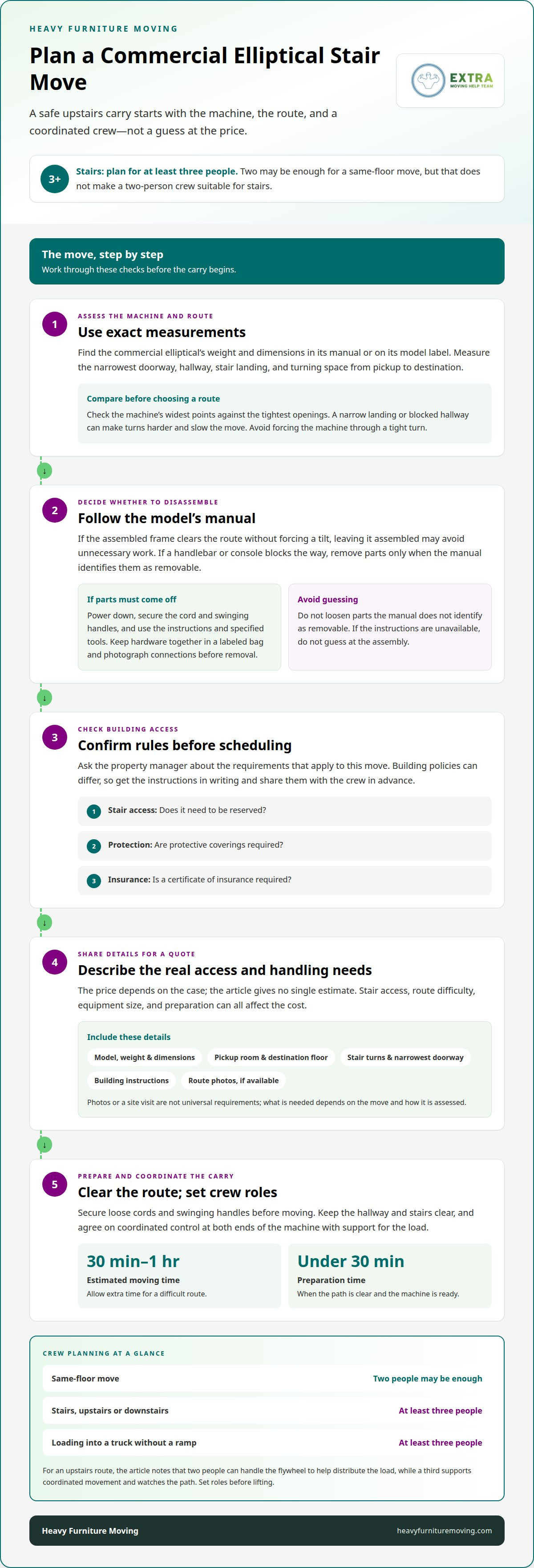
Allow 30 minutes to 1 hour for moving an elliptical, then add time for a difficult route. Preparation takes under 30 minutes when the path is clear and the machine is ready. Before the carry, secure its cord and swinging handles. Measure doorways, hallways, and turns from the starting room to the destination. A narrow landing or blocked hallway can slow the move and complicate each turn.
-
Check Weight and Dimensions
Find the commercial elliptical’s weight and dimensions in its manual or on its model label before planning the carry. Sizes vary by model, so use the exact specifications. Measure the narrowest doorway and stair landing along the route, not just the room entrances. Compare those measurements with the machine’s widest points to identify tight turns ahead of time.
-
Confirm Building and Insurance Requirements
Check the building’s moving rules before scheduling an upstairs carry in Clifton. Ask the property manager whether stair access must be reserved, protective coverings are required, or a certificate of insurance must be provided. Building policies can differ, so don’t assume a certificate or reservation is automatically required. Get the applicable instructions in writing and share them before the move. This helps avoid arriving with a crew that cannot start.
-
Prepare for a Moving Quote
Send clear details about the elliptical, pickup room, destination floor, stair turns, and narrowest doorway when requesting a quote. Photos of the machine and the route can show obstacles that measurements alone may miss. A site visit or photos aren’t universal requirements; the information needed depends on the move and how it’s assessed. Include model details and any building instructions, so the quote reflects the actual access and handling needs.
- Plan for at least 2 people to move an elliptical safely. For stairs, treat the carry as a three-person job, with coordinated control at both ends and support for the load. Two people may be enough for a same-floor move, but that doesn’t make them suitable for stairs. The price depends on the case and is given after a quote request; key factors include stair access, route difficulty, equipment size, and preparation.
Two people might be enough to move an elliptical to another room on the same floor, while loading an elliptical into a moving truck without a ramp requires at least 3 people to keep the unit level. Measure hallways, doorways, and other spaces the elliptical must pass through before moving it, then use those checks to plan a clear route and appropriate help.
Disassembling an elliptical for narrow doors and stairs
Take the machine apart only when its manual identifies the parts that can be removed. Reducing its profile may help with a tight doorway, but rushed disassembly can damage wiring, fasteners, or moving parts.
- Measure the route before deciding to disassemble. Check the narrowest doorway, hallway, and stair landing, including the turning space. Compare those measurements with the elliptical’s widest points. If the frame clears each opening without forcing a tilt, leaving it assembled may avoid unnecessary work. If a handlebar or console blocks the route, check the manual for removal instructions.
- Read the model’s instructions before loosening any fastener. Commercial machines differ, so don’t assume a part that comes off one elliptical is removable on another. Follow the approved order and use the tools specified in the manual. Avoid loosening frame joints, flywheel covers, or other parts the instructions don’t identify as removable. If the instructions aren’t available, don’t guess at the assembly.
- Power down and secure loose parts before moving the machine. Disconnect it from its power source, then secure the cord and swinging handles so they don’t snag during handling. Protect the console and its connections from pulling or impact. Don’t yank a cable to separate a component; follow the model instructions. This also keeps loose pieces from swinging while the crew works.
- Remove only the parts needed to clear a tight spot, and keep each set of hardware together. Put screws and small fittings in a labeled bag beside the part they secure. Photograph each connection before removal, especially where wires or covers meet. Store removed components where they won’t block the hallway or stairs. Keep the route clear during disassembly and while the main frame passes through.
- Protect the machine and plan for reassembly before the carry begins. Wrap removed pieces separately so they don’t scrape the frame, then keep them with the elliptical rather than mixing them with household items. After moving, use the manual’s assembly sequence and check that removed parts sit firmly in place before using the machine. For a complex model or narrow stair route, professional exercise equipment moving can help manage the heavy frame and its parts.
Hiring helpers for stair moves
- Arrange a three-person crew for an upstairs or downstairs elliptical move. A stair carry should be treated as at least a three-person job, not a two-person lift. On an upstairs route, two people can handle the flywheel to help distribute the load. The third person supports coordinated movement and watches the path. Set those roles before lifting, so no one has to improvise on a landing or narrow turn.
- Give Heavy Furniture Moving the machine’s model, weight, and dimensions when requesting help. Commercial ellipticals vary, and the exact model helps the team plan the grip and route. Share the number of stair flights, landing turns, and tight doorways. A stairwell with a sharp turn needs a different movement plan from straight stairs. Also note any parts already removed and where they’ll be carried.
- Walk through the route with the crew before anyone lifts. Point out the starting room, each landing, railings, door swings, and the final placement spot. Move loose items that could block the path, and keep other people clear of the stairs during the carry. Agree on clear verbal cues, such as “stop” or “lower,” before the elliptical leaves the floor. Clear commands help everyone pause together.
- Match any moving equipment to the machine and stair route. A heavy-duty furniture dolly for an elliptical should be rated for at least 250-300 pounds. A dolly may help along a level hallway, but stairs require a controlled carry rather than assuming the dolly solves every obstacle. Keep the machine stable, and don’t let helpers pull from a console, cord, or unsecured handle. The crew should follow the machine’s manual for approved handling points.
- Plan the handoff at the top landing before the lift begins. Decide where the crew can pause, how the machine will turn, and who will clear the doorway. Keep the destination area open so helpers don’t have to hold the elliptical while furniture is moved. If the route changes or a landing proves too tight, stop and reassess before continuing. Preparation helps the crew manage a difficult turn without rushing.
Carrying an elliptical upstairs or downstairs
Use a controlled, coordinated carry on every stair flight. Plan each movement before lifting, and stop if the route or grip becomes unstable.
-
Carry the Elliptical on Stairs
Assign at least three people to move an elliptical up or down stairs. Before lifting, agree on who leads, who supports the opposite end, and who watches the route. Keep the machine steady and move only when everyone is ready. On an upstairs carry, two people can handle the flywheel to help distribute the load. Pause at a landing if the crew needs to reset its grip.
-
Manage Risks and Protect Surfaces
Protect the route before carrying the machine. A heavy elliptical can damage walls, floors, or stair edges if it swings or contacts a surface. Lay suitable protective coverings along the path, and secure them so they don’t shift underfoot. Keep the frame clear of walls and railings during turns. Leave enough space for the crew to control the load without scraping door trim.
- Secure moving parts before the first step. Fasten the power cord so it can’t trail underfoot, and secure swinging handles that could shift during the carry. Check that pedals won’t move into a helper’s path. Use the machine’s approved handling points, not the console, cord, or a loose component. If a part shifts, stop and stabilize the elliptical before continuing.
- Move one stair at a time and keep the crew’s pace controlled. The person leading should call each movement, especially at a landing or turn. Avoid twisting the frame as helpers change hand positions. For labor to carry a heavy commercial elliptical upstairs in Clifton, plan the turns and communicate clearly. If the crew can’t maintain a firm hold, pause and reset rather than rushing.
- Check the landing and destination before the final lift. Clear bags, furniture, and loose items from the area where the elliptical will turn or rest. For labor to carry a heavy commercial elliptical upstairs in Clifton, account for the full route, not just the stair flight. On level sections, a heavy-duty furniture dolly rated for at least 250-300 pounds may help. Don’t assume a dolly can manage stairs.
Costs for DIY, labor-only, full-service, and specialty movers
Compare the work each option covers, not just its starting expense. A stair carry, rented equipment, and a larger household move involve different cost factors.
- Calculate DIY costs only after listing the equipment you already own. These figures cover the DIY approach, not professional labor. Add only expenses that apply to your route, such as equipment rental when you don’t own a suitable dolly.
- Separate labor-only help from truck rental and transport. With labor-only service, the crew handles the physical moving work while you arrange any vehicle. For an elliptical moving upstairs within a home, describe the stair layout, machine dimensions, route access, and any disassembly needs. Heavy Furniture Moving provides a quote based on the specific job, with a two-hour minimum.
- Consider a full-service move if the elliptical is part of a larger household relocation. The estimate for that work covers the broader move, not just carrying one piece of fitness equipment upstairs. List the other items and destinations, then compare that scope with a labor-only request for the elliptical. This helps distinguish a household move from a single-item stair carry.
- Consider specialty handling for high-end equipment or complex stairs, but judge the estimate by its actual scope. A difficult turn, limited access, or extra handling can change what the work involves. Ask for the quote to reflect the exact elliptical and route, rather than comparing a complex stair move with a simple ground-floor transfer. Share model details, access information, and any disassembly needs so the estimate describes the actual job.
- Choose the option that matches the work you can safely handle. DIY may suit a prepared same-floor move when suitable equipment is already available; stairs call for a planned crew and controlled handling. For help with the physical work, request help moving your elliptical and share the route details for a quote.
Treat any broad planning figure as a starting point, not a quote for every job. The work may involve a simple transfer or a demanding stair carry. When comparing estimates, check that each covers the same equipment, route, access conditions, and handling tasks. A price for moving the machine alone isn’t directly comparable with an estimate for a broader household move.
That hourly figure applies to the larger-move service, so confirm what the crew will handle and whether the estimate includes the elliptical’s particular route. If the equipment is only one part of the move, identify it clearly when requesting an estimate. For a standalone carry, describe the job separately and ask for pricing based on that specific scope. This makes it easier to compare options without assuming that a household-move rate represents the cost of moving the elliptical by itself.
Heavy Furniture Moving: labor only movers near me
Heavy Furniture Moving offers labor-only help for an elliptical that needs careful handling on stairs. Choose labor-only movers when you have transportation arranged but need help with the physical carry. Exercise Equipment Moving is also a fit when the machine’s size, weight, or route calls for focused handling. Wrap, blankets, and straps are included on every job.
Share the elliptical’s model, pickup and destination locations, and details about stairs, landings, and tight turns when requesting help. These details describe the work involved. If the elliptical is part of a larger local move, Heavy Furniture Moving can help with that broader relocation as well. For a stair carry, keep the request focused on the equipment and access.
Contact Heavy Furniture Moving to discuss help with your elliptical move.
Make the Next Move With a Clear Plan
Before the move, decide exactly where the elliptical should go and clear the destination area. A placement plan helps the crew finish the carry without shifting the machine around a crowded room. For labor to carry a heavy commercial elliptical upstairs in Clifton, share the route and destination details when arranging help. Call Heavy Furniture Moving for a quote based on the actual job.
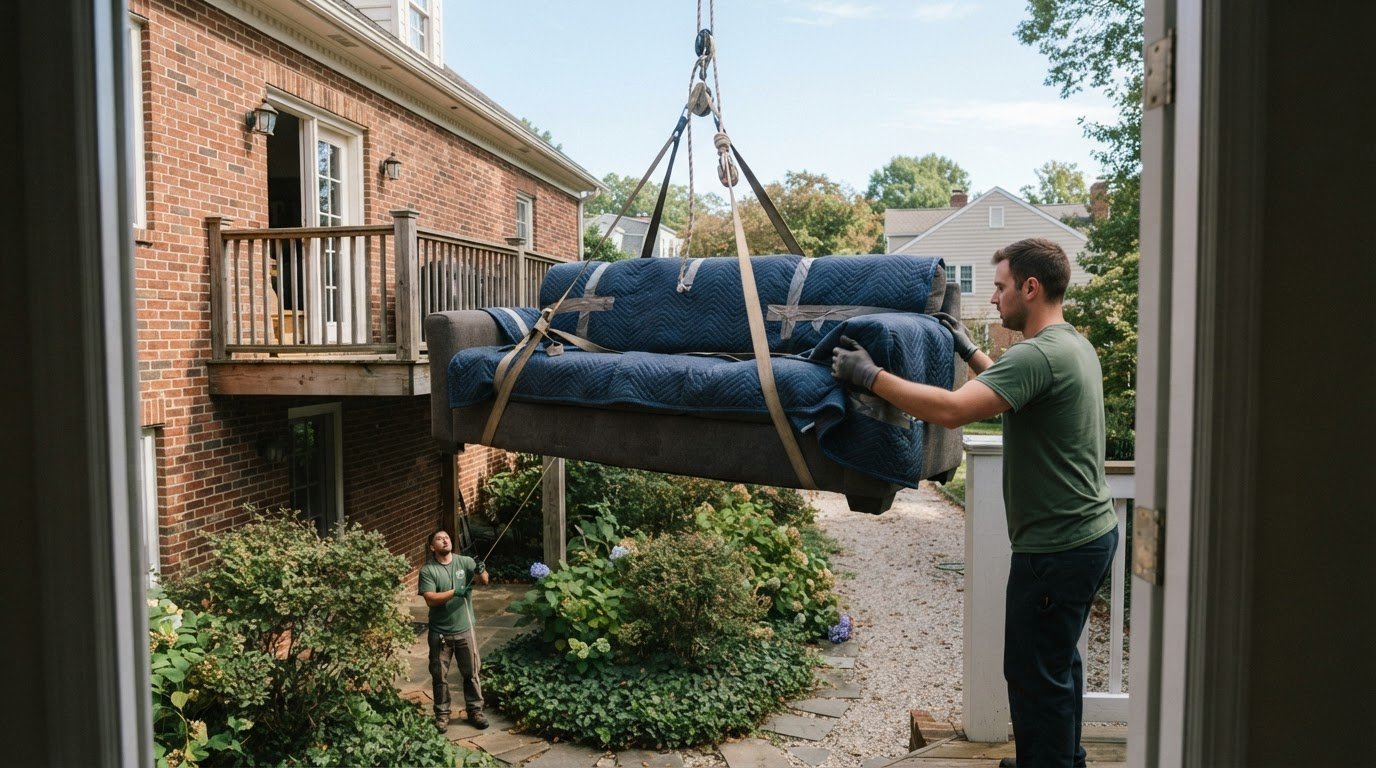
Heavy Furniture Moving handles exercise equipment moves and other heavy-item work, including sofa hoisting. Choose the support that fits the task, whether the elliptical is moving within your home or as part of a broader move. Clear details help the crew focus on the physical work and keep the plan straightforward.
Contact Heavy Furniture Moving to discuss your move and take the next step with confidence.
Frequently Asked Questions
What moving companies in Clifton, Virginia carry heavy commercial ellipticals upstairs?
Heavy Furniture Moving handles exercise equipment moves in Clifton, Virginia. Exercise Equipment Moving covers elliptical moves, and labor-only help suits jobs where you have transportation arranged but need lifting assistance. The crew measures access before lifting. Wrap, blankets, and straps are included, along with floor and corner protection. Share the machine model and stair layout so the team can plan for your home.
How much does it cost to move a commercial elliptical upstairs in Clifton, Virginia?
The cost depends on the machine and route, so stair layout and access details matter. A quote should account for the elliptical’s size, doorway clearance, landings, and any required disassembly. Heavy Furniture Moving provides a quote for the specific move. Share the pickup and destination details to get an estimate based on the actual work, rather than a general moving rate.
Can a commercial elliptical be disassembled to move it upstairs?
Yes, removable parts can be taken off when the manufacturer’s instructions allow it and the route requires more clearance. Heavy Furniture Moving includes disassembly and reassembly for items it moves. Use the model’s manual to identify which pieces can come off safely. Keep the hardware with its matching part, and protect wires and the console during handling. Reassemble the machine according to its instructions before using it.
What equipment and crew size are needed to carry a commercial elliptical upstairs safely?
Plan for at least three people on stairs, with coordinated grips and clear movement cues. A heavy-duty furniture dolly should be rated for at least 250-300 pounds, though stairs still require a controlled carry. Moving blankets and straps help protect and secure the machine, while floor and corner protection guards the route. The exact equipment depends on the elliptical’s model and the stairway layout.
How do local movers compare with specialty fitness-equipment movers near Clifton, Virginia?
Because a stair carry needs at least three people, share the stair layout when requesting a quote from Heavy Furniture Moving to ensure proper handling of your commercial equipment.
Frequently Asked Questions
Heavy Furniture Moving handles exercise equipment moves in Clifton, Virginia. Exercise Equipment Moving covers elliptical moves, and labor-only help suits jobs where you have transportation arranged but need lifting assistance. The crew measures access before lifting. Wrap, blankets, and straps are included, along with floor and corner protection. Share the machine model and stair layout so the team can plan for your home.
The cost depends on the machine and route, so stair layout and access details matter. A quote should account for the elliptical’s size, doorway clearance, landings, and any required disassembly. Heavy Furniture Moving provides a quote for the specific move. Share the pickup and destination details to get an estimate based on the actual work, rather than a general moving rate.
Yes, removable parts can be taken off when the manufacturer’s instructions allow it and the route requires more clearance. Heavy Furniture Moving includes disassembly and reassembly for items it moves. Use the model’s manual to identify which pieces can come off safely. Keep the hardware with its matching part, and protect wires and the console during handling. Reassemble the machine according to its instructions before using it.
Plan for at least three people on stairs, with coordinated grips and clear movement cues. A heavy-duty furniture dolly should be rated for at least 250–300 pounds, though stairs still require a controlled carry. Moving blankets and straps help protect and secure the machine, while floor and corner protection guards the route. The exact equipment depends on the elliptical’s model and the stairway layout.
Because a stair carry needs at least three people, share the stair layout when requesting a quote from Heavy Furniture Moving.