How to Transport Heavy Flat-Pack Cartons Upstairs in Dumfries
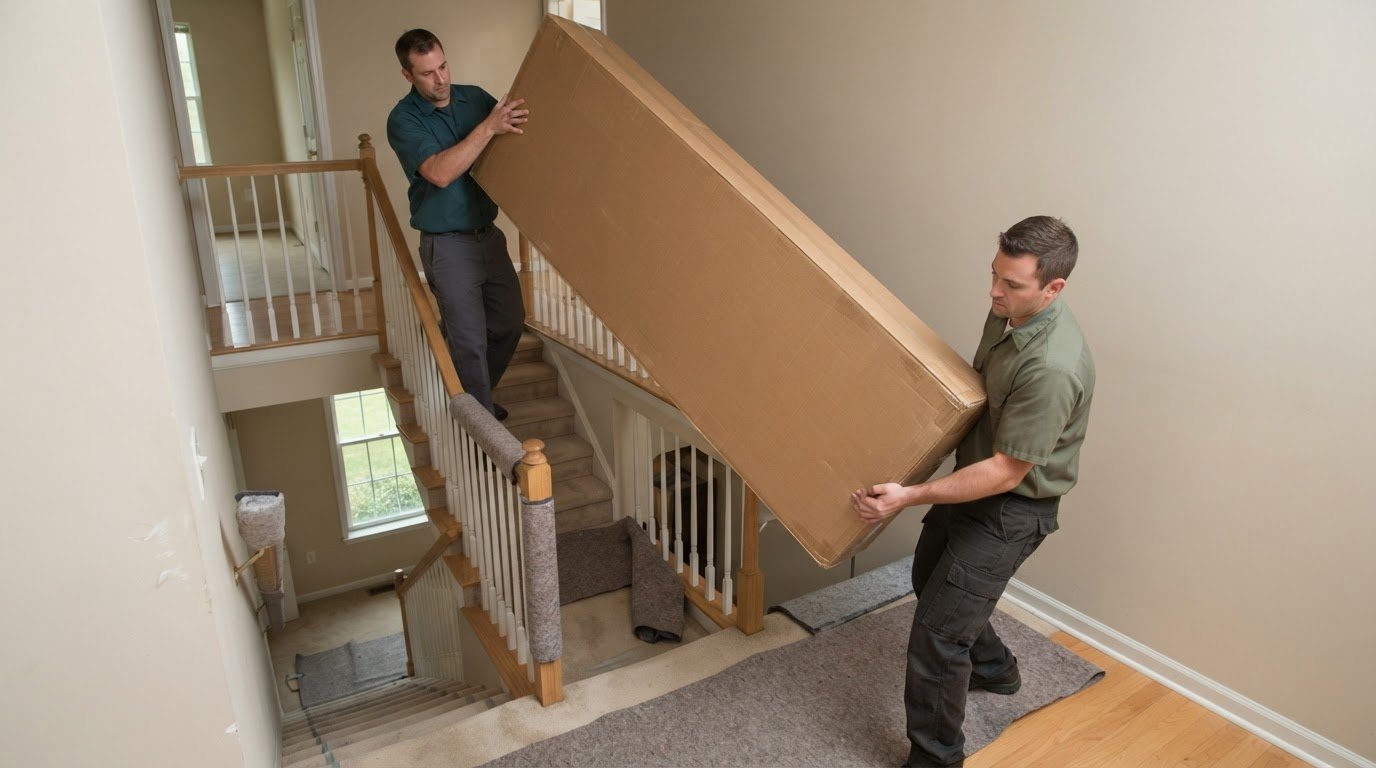
Three flights call for a planned team carry, not a rushed lift. To transport heavy flat-pack furniture cartons up three flights in Dumfries, movers assess each carton’s dimensions and marked weight, map a clear route, protect the property and coordinate the carry. That preparation helps keep the load controlled from the entrance to its destination.
It’s understandable to worry about tight turns, awkward cartons and damage to the property. The right approach is to match the carrying plan to the cartons and the staircase, with enough people to handle bulky or heavy loads safely. This guide explains how movers prepare, lift, protect and carry cartons, and why access, load size and the number of trips can affect the time and cost. You’ll also see when professional moving help can take the strain off you and make a three-flight move more manageable.
Key Takeaways
- Movers plan the route and protect cartons, walls and stair edges before the carry begins.
- Dollies can help on flat surfaces, while stair moves may call for another approach.
- Carton size, weight, stair turns and landing space all shape the carrying plan.
- A coordinated team can manage awkward loads with clear roles and controlled movements.
- Unpacking downstairs may make some loads easier to carry, but the contents and furniture parts need careful handling.
How professional movers use dollies, straps and protective gear
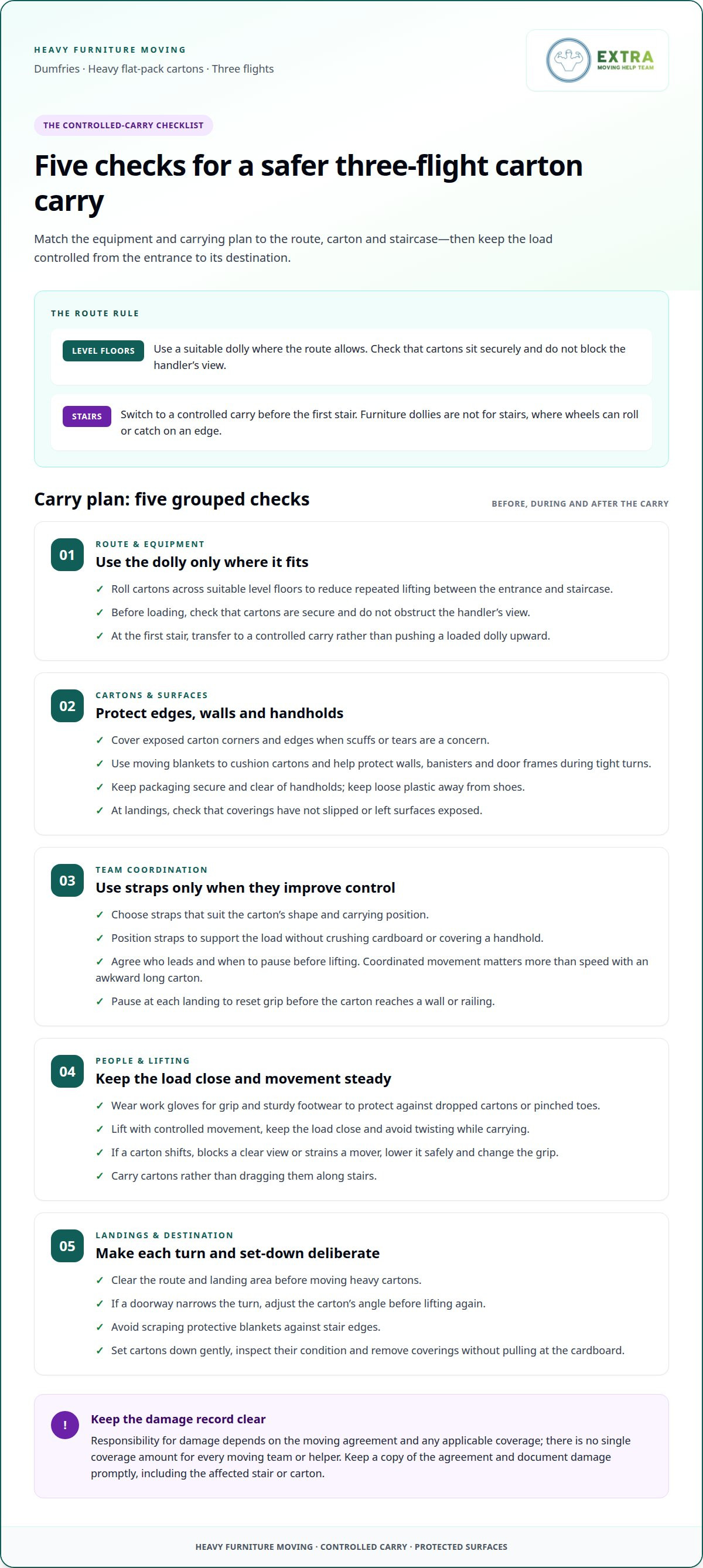
Responsibility for damage in a Dumfries home depends on the moving agreement and any applicable coverage. There is no single coverage amount that applies to every moving team or helper. Keep a copy of the agreement and document any damage promptly, including the affected stair or carton.
- Match the dolly to the part of the route. Movers use a suitable dolly to roll cartons across level floors, reducing repeated lifting between the entrance and staircase. They don’t take furniture dollies onto stairs, where wheels can roll or catch on an edge. Before loading, the crew checks that cartons sit securely and don’t block the handler’s view. At the first stair, they switch to a controlled carry rather than trying to push a loaded dolly upward.
- Protect cartons and nearby surfaces. Movers wrap exposed carton corners and edges with protective coverings when scuffs or tears are a concern. Moving blankets can cushion cartons and help protect nearby walls, banisters and door frames during a tight turn. Plastic covering can help keep surfaces protected, while the crew keeps packaging secure and clear of handholds. At each landing, movers pause to reset their grip before the carton reaches a wall or railing.
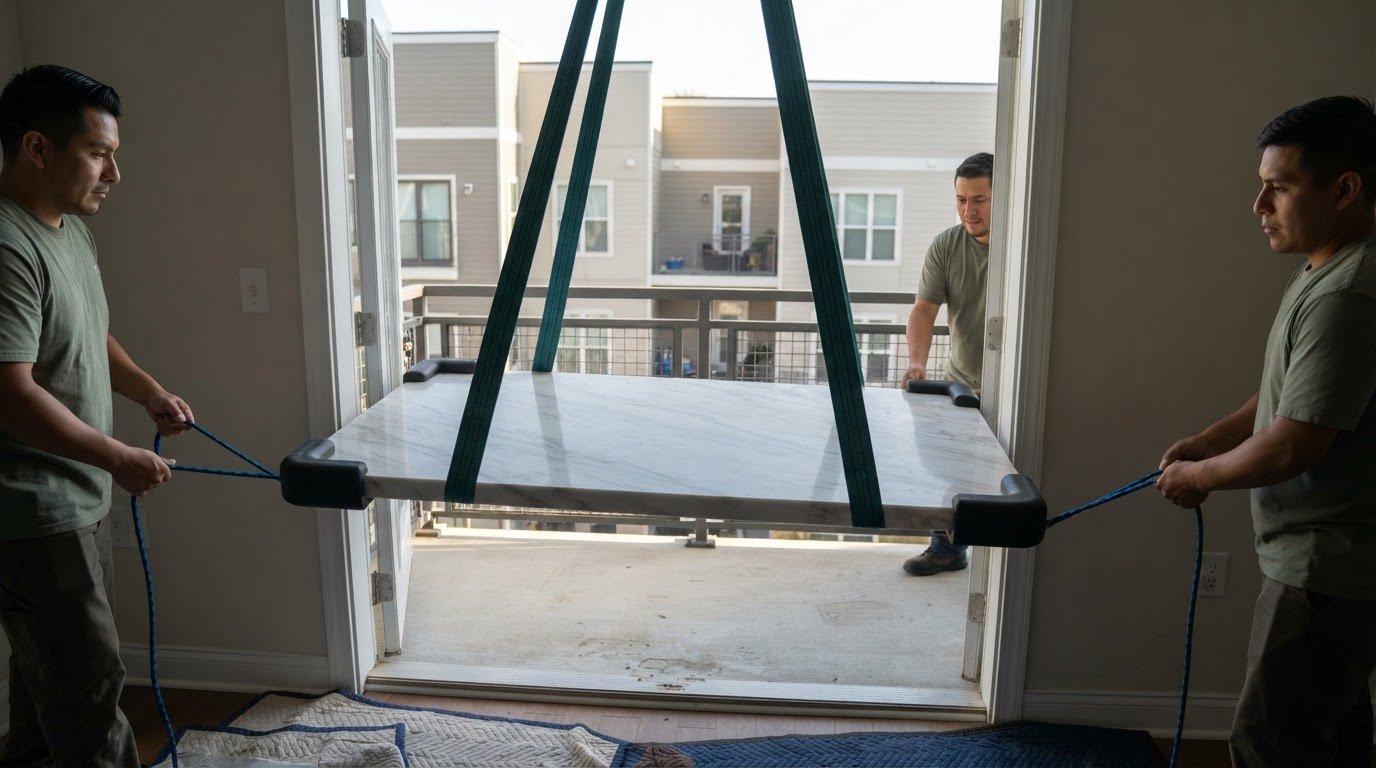
- Use straps only when they improve control. Carrying straps help distribute a load between team members, but they must suit the carton’s shape and carrying position. Movers position straps so they support the load without crushing cardboard or covering a handhold. The team agrees on who leads and when to pause before lifting. For an awkward long carton, coordinated movement matters more than speed, especially while turning between flights.
- Wear protective equipment and use steady lifting techniques. Movers use work gloves for grip and sturdy footwear to protect against dropped cartons or pinched toes. They keep the load close, lift with controlled movement and avoid twisting while carrying. A carton that shifts, blocks a clear view or strains a mover gets lowered safely before the team changes its grip. These techniques help the crew manage weight without dragging cartons along stairs.
- Check protection at each landing. Before moving heavy furniture cartons, the crew clears the route and landing area, then checks coverings for slipped corners or exposed surfaces. If a doorway narrows the turn, movers adjust the carton’s angle before lifting again. They avoid scraping protective blankets against stair edges and keep loose plastic away from shoes. At the destination, they set each carton down gently, inspect its condition and remove coverings without pulling at the cardboard.
Hiring professional movers or labor assistance
- Bring in a trained crew for repeated stair carries. On a stair route, cartons may need to be repositioned at landings, so plan for controlled handoffs. A coordinated team can manage handoffs without rushing or leaving one person to control an awkward load alone. Carrying furniture on stairs is linked to well over 100,000 injuries each year. A crew is especially useful when cartons are bulky, heavy or difficult to grip.
- Choose help that fits the task. Full-service movers can manage a broader move, while labor assistance can suit a focused stair carry when cartons are already packed. The right scope depends on whether the work includes packing, loading, travel between addresses or carrying upstairs only. Planning how to transport heavy flat-pack furniture cartons up three flights in Dumfries starts with describing which tasks the crew needs to handle.
- Describe the load and access clearly. Share the number of cartons, their dimensions and any marked weights. A long furniture panel may be harder to turn than a compact box, even if its weight seems manageable. Mention narrow landings, sharp turns, limited headroom and the distance from the entrance to the stairs. Those details help movers plan the order and carrying positions.
- Ask how the crew will handle the route. Dollies can help move cartons over suitable level floors, while furniture sliders can reposition suitable items across smooth surfaces. Neither replaces a controlled stair carry. The movers may bring compact cartons upstairs before long panels, keeping landing space available for turns. A clear sequence helps avoid crowding the stair route.
- Match the plan to heavy loads. Furniture is typically considered heavy at 250 pounds or more. A 500-pound item shows why professional handling may be appropriate. Flat-pack cartons vary, so movers consider their actual weight, shape, grip points and stair access.
- Discuss the factors that shape the job. Carton quantity, stair layout, access distance, packing needs and obstacles affect the work involved. Extra trips or a difficult landing can change the pace. A practical plan for how to transport heavy flat-pack furniture cartons up three flights in Dumfries accounts for those details before the carry. For help planning the physical work, discuss the stair carry in relation to your cartons and access.
How movers assess dolly capacity and stair limitations
- Check the dolly’s load rating against the actual load. Movers compare the equipment rating with the combined weight of the dolly and cartons. They also assess whether cartons can sit securely without overhanging or shifting. A dolly that works for a compact box may not suit a long, unbalanced furniture carton. The rated capacity applies to suitable rolling conditions, not carrying the loaded dolly upstairs.
- Separate level-floor travel from stair travel. Dollies are generally best suited to level floors, so plan a separate method for stairs. Movers use them on level floors where the route allows, then transfer cartons to a controlled carry before the first step. The crew plans that handoff so the load stays supported and the stairs remain clear. Three flights also mean repeated turns and landings, which affect how each carton can be handled.
- Measure doorways and stair width against each carton. Movers consider the carton’s height, width and depth, plus the room needed to angle it through a turn. For example, a 48-inch-high, 60-inch-wide, 20-inch-deep dresser is being compared with a 34-inch-wide stairway. Its listed width exceeds the stair width, so the movers assess whether turning or another carrying orientation allows passage.
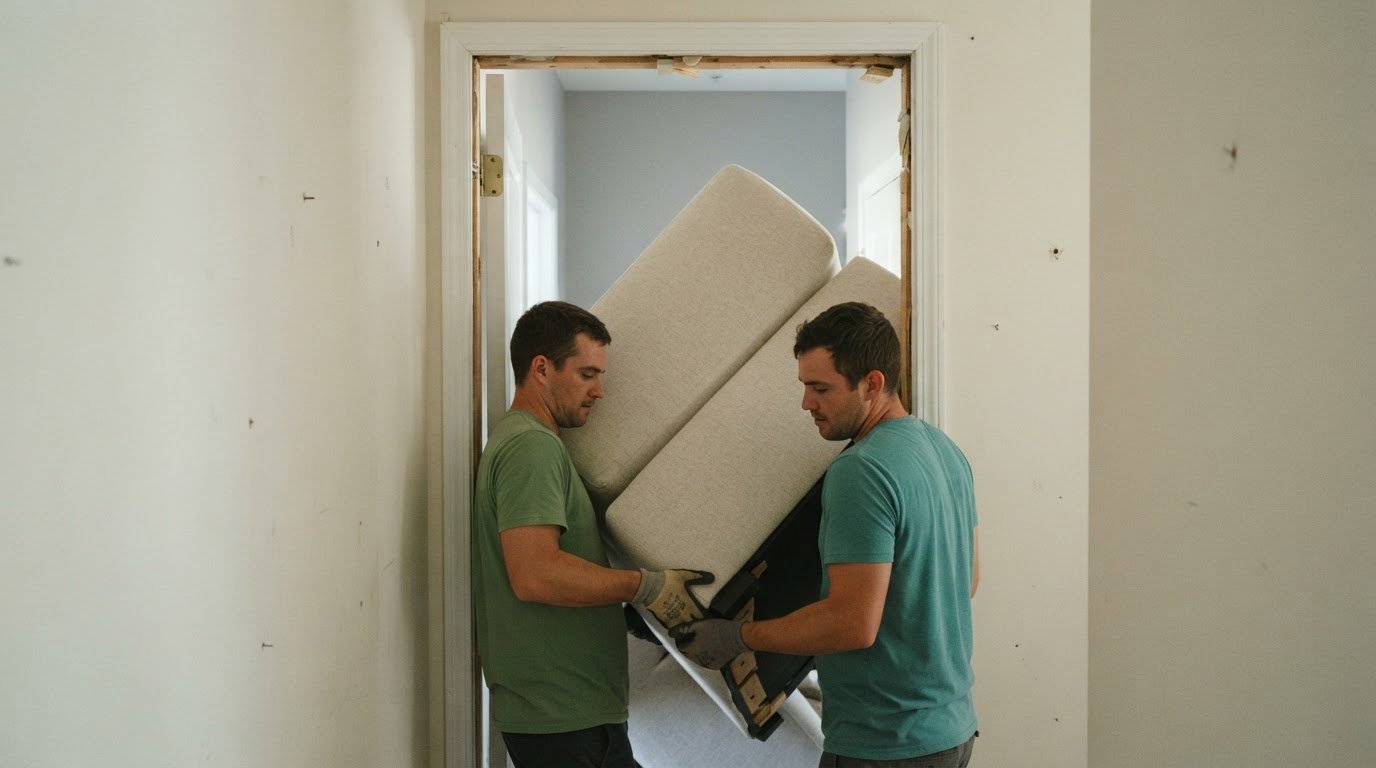
- Account for doorway clearance and landing space. A 36-inch-wide front doorway can limit how a carton enters before it reaches the stairs. Movers also check whether a landing gives enough room to rotate the load without striking walls or blocking the next flight. A carton that clears a straight doorway may still be difficult to turn at a tight landing. Dimensions must be considered together, not one at a time.
- Factor in how stairs change the load. A typical sofa weighs between 150 and 250 pounds. A 200-pound sofa may feel like a 240-260-pound load to the person at the bottom of a standard staircase. That example shows why movers assess each person’s position, grip and control, not just the item’s floor weight. Flat-pack cartons also need balanced handling as their weight shifts during a turn.
- Choose the safest method for each piece. Movers weigh the dolly’s rating, carton dimensions, stair shape and available grip points before choosing how to move each piece. If a load cannot be rolled securely on the floors or carried through a turn with control, the team changes the sequence or handling method. That assessment keeps a difficult carton from being forced through a doorway or onto stairs.
Arranging professional help for heavy or awkward items
- Give the crew a clear load description. List the number of cartons, their dimensions, and any marked weights. Point out unusually long panels, uneven packages or loose parts that could shift during a carry. For a three-flight Dumfries stairway, describe each landing, turn and narrow doorway. These details help movers plan who handles each carton and where the team may need to pause.
- Flag awkward grips before the move. A carton can be difficult to control even if its weight seems manageable. Tell the movers if there are no handholds, if the cardboard feels soft, or if the package is too wide to hold close. The team can then choose a carrying position that avoids balancing the load on one shoulder. That matters most where stairs or tight turns limit movement.
- Assign clear roles for tall pieces. For tall furniture, one person should hold the top while another holds the bottom. Movers coordinate the tilt and direction before lifting, so the upper end doesn’t swing into a ceiling or wall. A long carton on a staircase may need the same clear division of responsibility. The person at each end needs an unobstructed grip and a shared signal to stop.
- Plan the handoffs across all three flights. Movers map where the load can be set down securely without blocking a landing or doorway. They agree on short commands for lifting, turning and pausing, then keep the pace steady. If a carton shifts, the team stops and resets its grip rather than trying to correct the movement mid-step. This keeps each change of direction deliberate.
- Match the help to the work involved. A labor-only request may suit cartons already packed and waiting at the property. A broader moving task may include other handling needs. Explain whether the crew must carry everything upstairs or only selected pieces, such as a boxed wardrobe and its separate panels. Clear scope helps the team prepare for the actual work instead of assuming every item follows the same route.
- Make the property details part of the plan. Tell movers about fragile stair edges, low ceilings, pets in the route or furniture already occupying a landing. A narrow turn beside a banister calls for a different approach than a straight, open stair. The crew can then sequence smaller cartons before long panels and keep access clear. The takeaway is simple: specific information lets the team plan roles, route and pace before lifting begins.
Can professional movers unpack flat-pack furniture downstairs and carry it upstairs in smaller pieces?
- Consider unpacking downstairs when cartons are difficult to turn. Yes, movers can assess whether a flat-pack carton can be opened downstairs and its separate panels carried upstairs. This can help when the carton is wider than a landing or hard to grip through a turn. The contents still need careful handling, because exposed edges can scrape walls or become damaged during the carry.
- Check the carton contents before separating them. Movers identify panels, fittings and protective inserts before moving pieces individually. Keeping small hardware together prevents screws or brackets from being misplaced between floors. For example, a wardrobe’s long side panels may need a different route from its shorter shelves. The team can group related parts so they reach the destination together.
- Keep each exposed piece protected. Once a panel leaves its carton, movers use suitable coverings to protect its corners and finish. They keep the part supported rather than letting a long edge drag against a wall or stair tread. A narrow landing may require the team to carry a panel upright or change its angle before turning. The chosen position depends on its shape and available clearance.
- Weigh the handling trade-off. Smaller pieces may be easier to steer, but unpacking adds more separate items to track and carry. Movers consider how many panels the carton contains, whether pieces can be gripped securely, and whether the stair turns allow a safe carry. If the carton already fits the route, carrying it intact may avoid extra handling. The team chooses based on access and load control.
- Separate moving from furniture assembly. Carrying unpacked panels upstairs is different from assembling furniture at the destination. The crew can focus on transporting the parts and keeping them together, while the assembly instructions remain with the fittings. For an already assembled dresser, removing drawers can reduce its weight by 25% or more. That example applies to drawers, not unopened flat-pack cartons.
- Plan the final placement before opening cartons. Movers consider where each piece will be set down upstairs, so panels don’t block a doorway or landing while other cartons are carried. They can sequence long pieces before smaller components when that keeps the route clear. Share which room each package belongs in, and the team can keep related parts together during the move. Arrange help carrying furniture upstairs when cartons or panels need a coordinated stair carry.
Heavy Furniture Moving
Heavy Furniture Moving can help when flat-pack cartons need careful handling through stair turns, narrow landings or several flights. Its moving help and in-home furniture moving support are relevant when you want a team to manage the carry and protect the route through your home. Share the carton sizes, marked weights, number of flights and any tight access points so the job can be planned around the load and layout. This is a practical next step if the cartons feel too heavy or awkward to move safely without help. Contact Heavy Furniture Moving to discuss your flat-pack stair carry and the support you need.
Make the stair carry your next clear step
When planning how to transport heavy flat-pack furniture cartons up three flights in Dumfries, match the moving help to the load and the home. Check what needs carrying, where access is tight and whether cartons can remain packed. A clear route and accurate carton details make it easier to plan the carry and decide what help is needed.
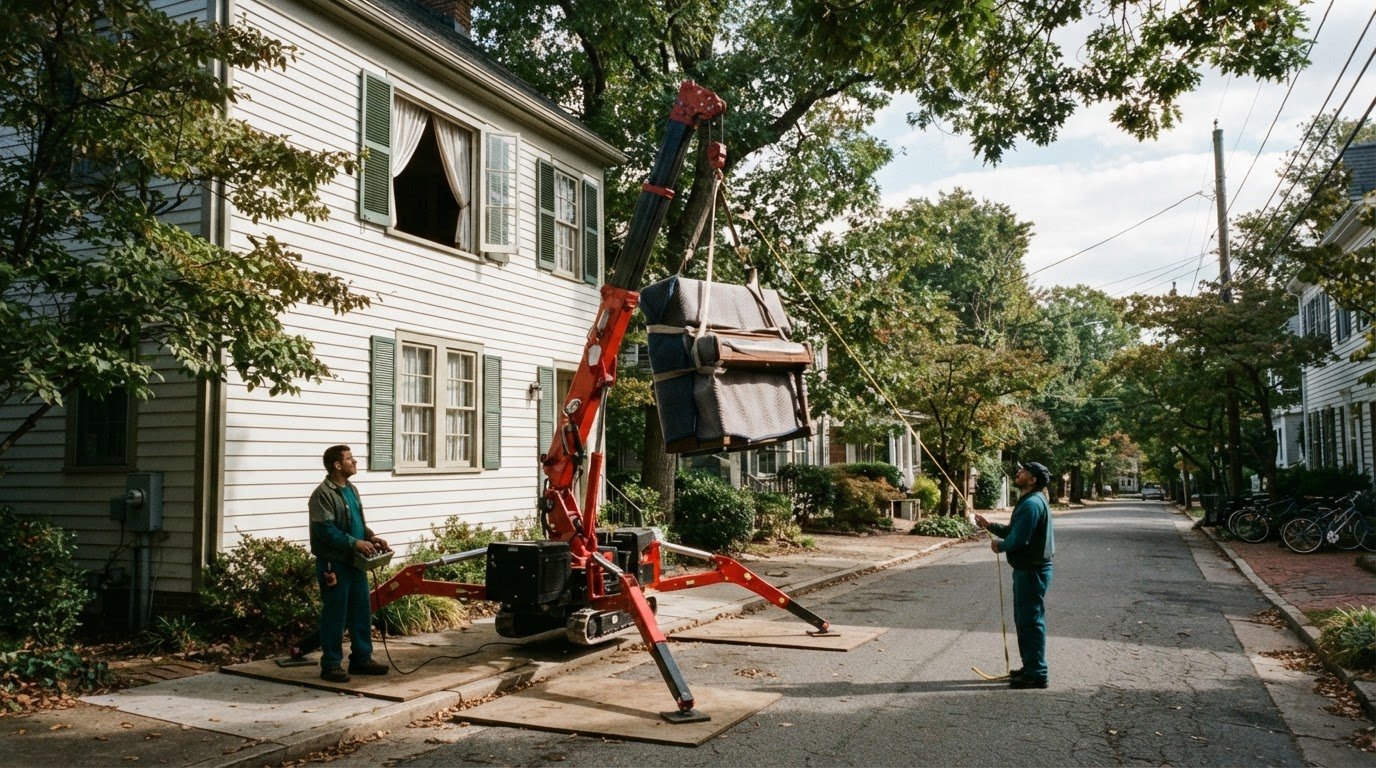
Heavy Furniture Moving handles demanding residential moving work, including local moving help, exercise equipment moves and sofa hoisting. Its experience with heavy and bulky items is relevant to planning a flat-pack carton carry, where dimensions, grip and stair access shape the approach.
Share the details of your stair carry and take the next step when you’re ready. Contact Heavy Furniture Moving for help. A well-planned move starts with a straightforward conversation.
Frequently Asked Questions
What can professional movers do if a heavy carton won't fit through a door or tight hallway?
Movers stop before forcing a carton through and reassess its orientation and route. They can check whether a different angle clears the doorway, or whether unpacking downstairs allows separate furniture panels to pass. If the carton still cannot fit safely, the crew can explain the practical options based on its contents and access. For a tight hallway, the turn into the room matters as much as the doorway width.
How do professional movers safely carry heavy flat-pack furniture cartons up three flights of stairs?
Before lifting, movers agree on signals and how to coordinate the carry. They communicate at turns, pause if the carton shifts or someone loses a secure grip, and choose stopping points that do not block access. If a carton has poor handholds, adjust the grip and carrying position before moving again instead of trying to correct it mid-step.
Which local Dumfries man-and-van services carry heavy cartons upstairs, and what do they charge?
Heavy Furniture Moving provides labor-only moving help in Dumfries, not a vehicle service. Customers supply their own truck or pod when one is needed. The crew can focus on handling and carrying cartons upstairs. Quotes are provided upfront before work begins, based on the job details. Share the carton load and access conditions to discuss the appropriate labor service.
How do movers measure staircases, landings and doorways to check whether flat-pack cartons will fit?
Measure each carton against the narrowest doorway, stair width, landing and ceiling clearance along the route. Allow room to tilt or turn a long panel: a carton that passes straight through a doorway may not clear the turn at the landing. Measuring the entire path helps establish a workable carrying position before lifting.
What equipment do professional movers use for heavy cartons on stairs, such as stair-climbing trolleys or lifting straps?
The carrying method should suit the carton and staircase. Movers may use suitable straps to share control, while blankets and coverings can help protect exposed surfaces. A standard furniture dolly is for level floors, not stairs. Do not assume a stair-climbing trolley will suit every carton or staircase; consider the load shape, available grip and access.
How many professional movers are needed to carry a heavy flat-pack furniture carton safely upstairs?
The right crew size depends on the load. Heavy Furniture Moving says most jobs are covered by two movers, while larger items may require three or four movers as specified. For a flat-pack carton, the team considers its weight, length, grip points and the room available at turns. A long, awkward carton may need a different team arrangement than a compact, balanced package.
What manual-handling risks do movers manage when carrying bulky cartons on stairs?
Common risks include losing grip, twisting under load, striking a wall or carrying a carton that blocks the view. At stair turns, hands can also get pinched between the carton and banister. If a carton shifts, it can put uneven strain on a mover’s shoulder or back. Keep the route clear, coordinate each movement and stop to regain control if the load becomes unstable.
Frequently Asked Questions
Movers stop before forcing a carton through and reassess its orientation and route. They can check whether a different angle clears the doorway, or whether unpacking downstairs allows separate furniture panels to pass. If the carton still cannot fit safely, the crew can explain the practical options based on its contents and access. For a tight hallway, the turn into the room matters as much as the doorway width.
Before lifting, movers agree on signals and how to coordinate the carry. They communicate at turns, pause if the carton shifts or someone loses a secure grip, and choose stopping points that do not block access. If a carton has poor handholds, adjust the grip and carrying position before moving again instead of trying to correct it mid-step.
Heavy Furniture Moving provides labor-only moving help in Dumfries, not a vehicle service. Customers supply their own truck or pod when one is needed. The crew can focus on handling and carrying cartons upstairs. Quotes are provided upfront before work begins, based on the job details. Share the carton load and access conditions to discuss the appropriate labor service.
Measure each carton against the narrowest doorway, stair width, landing and ceiling clearance along the route. Allow room to tilt or turn a long panel: a carton that passes straight through a doorway may not clear the turn at the landing. Measuring the entire path helps establish a workable carrying position before lifting.
The carrying method should suit the carton and staircase. Movers may use suitable straps to share control, while blankets and coverings can help protect exposed surfaces. A standard furniture dolly is for level floors, not stairs. Do not assume a stair-climbing trolley will suit every carton or staircase; consider the load shape, available grip and access.
The right crew size depends on the load. Heavy Furniture Moving says most jobs are covered by two movers, while larger items may require three or four movers as specified. For a flat-pack carton, the team considers its weight, length, grip points and the room available at turns. A long, awkward carton may need a different team arrangement than a compact, balanced package.
Common risks include losing grip, twisting under load, striking a wall or carrying a carton that blocks the view. At stair turns, hands can also get pinched between the carton and banister. If a carton shifts, it can put uneven strain on a mover’s shoulder or back. Keep the route clear, coordinate each movement and stop to regain control if the load becomes unstable.