How to Transport a Heavy Soapstone Stove Safely in Centreville
A heavy soapstone stove can turn a short move into a serious lifting hazard. To transport a heavy soapstone wood stove safely in Centreville, clear the route, use equipment suited to the load, and get enough help to control every lift and roll.
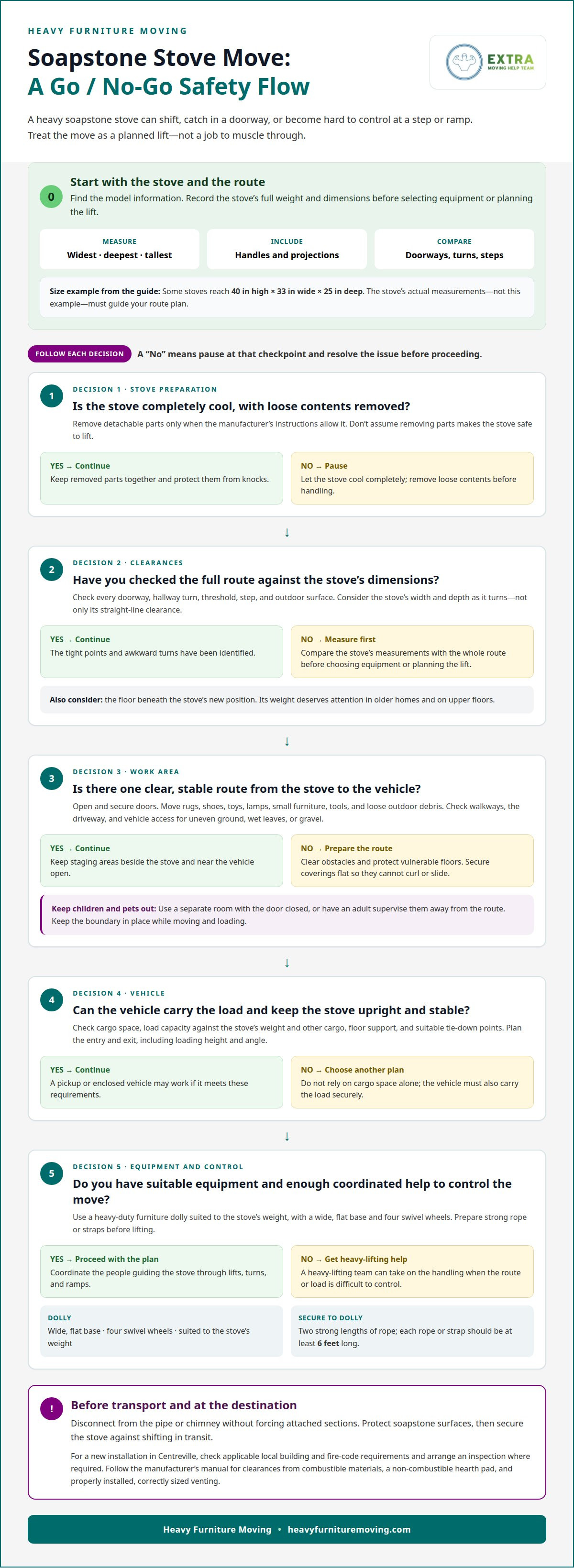
Weight is only part of the challenge. A stove can shift, catch in a doorway, or become hard to control at a step or ramp. Treat the move as a planned lift, not a job to muscle through.
This guide explains why these stoves are risky to move and how to prepare the route, choose a suitable vehicle, secure the stove, and guide it safely. You’ll also learn which equipment can help and when professional movers can take on the heavy lifting.
Key Takeaways
- Measure the stove and the tightest parts of the route so you can spot clearance problems before moving day.
- Clear the path, protect vulnerable surfaces, and keep children and pets away from the moving area.
- Choose a vehicle that can handle the load, then secure the stove so it can’t shift during transit.
- Use suitable moving equipment and coordinated help to control the stove through lifts, turns, and ramps.
- Know when a heavy-lifting team can take on the move and reduce the strain of handling a bulky stove.
Why are wood stoves so risky to move?
Start with the stove’s weight, shape, and route, then plan each handling step. For a new installation in Centreville, check applicable local building and fire-code requirements and arrange an inspection where required.
-
Assess Stove Weight and Dimensions
Find the model information and record the stove’s weight and dimensions before choosing equipment or planning the lift.
Measure the body at its widest, deepest, and tallest points. Some stoves reach 40 inches high, 33 inches wide, and 25 inches deep. Note handles or other parts that extend beyond the body.
-
Identify Weight and Size Risks
Use the stove’s full weight and dimensions to identify the challenging parts of the move. A heavy load can strain the people supporting it, while a bulky shape can make it hard to grip or maneuver through a doorway. A stove that fits through a doorway on paper may still be difficult to turn through a narrow hall.
Compare the measurements with every doorway, turn, and step along the route. Account for the stove’s width and depth as it changes direction, not just its straight-line clearance. Consider the floor beneath its new position, too. Soapstone stoves are heavy, so floor support deserves attention in older homes and on upper floors.
-
Disconnect and Prepare the Stove
Let the stove cool completely, then remove loose contents before handling it. Remove detachable parts only when the manufacturer’s instructions allow it. Firebricks, the door, or the top may come off on some models, but don’t assume every part should be removed or that doing so makes the stove safe to lift.
Before transport, disconnect the stove from its pipe or chimney without forcing attached sections. Keep removed parts together and protect them from knocks during the move. For reinstallation, prepare the new location according to the manufacturer’s manual, which specifies the stove’s required clearances from combustible materials such as walls, furniture, and ceilings.
A safe installation also depends on the hearth and venting. The stove needs a non-combustible hearth pad and a properly installed, correctly sized chimney or stove pipe. Follow the manual’s requirements at the destination, not just the clearances at the old location.
Clearing the route and keeping children and pets away
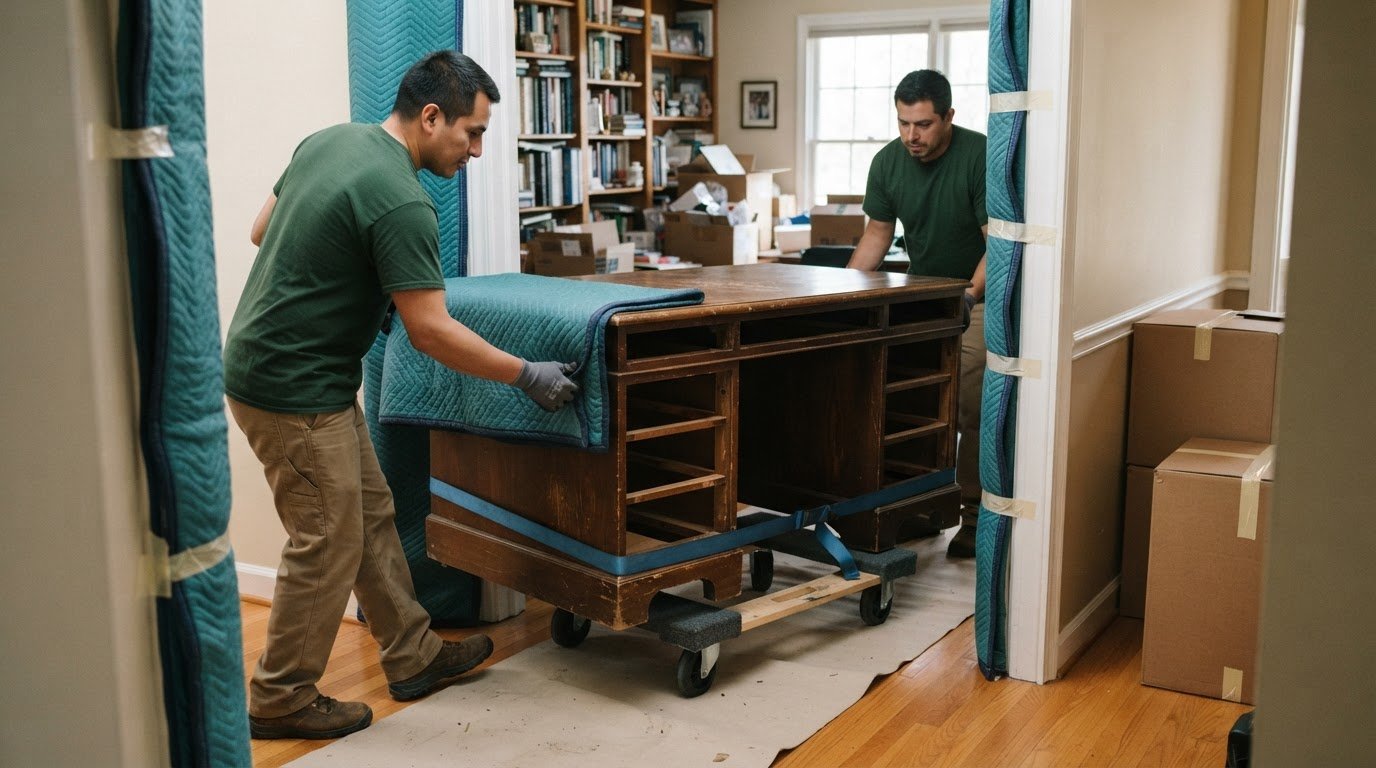
Prepare one continuous route from the stove’s current position to the vehicle. Clear obstacles and keep household traffic out of the work area until the move is complete.
- Walk the full route before moving day, starting at the stove and ending at the vehicle. Check doorways, hallway turns, thresholds, steps, and outdoor surfaces. A hallway may look clear from one end but still have a tight turn at a bedroom door. Mark problem spots so the moving team can plan its approach.
Open doors fully and secure them so they won’t swing into the load. Move rugs, shoes, toys, lamps, and small furniture out of the way. A loose mat at a threshold can catch equipment or trip someone. Planning how to transport a heavy soapstone wood stove safely in Centreville starts with spotting obstacles early.
- Clear a staging area beside the stove and another near the vehicle. Keep both free of boxes, tools, and belongings that could block a turn or safe pause. These open spaces let the team position equipment without backing into a table or squeezing past stored items. If clearing the area or preparing for a hearth renovation involves managing substantial household clutter or debris, North Point Junk Removal offers dumpster rentals to keep access routes and staging zones wide open.
Protect floors along the route, especially at corners and in narrow passages. Secure coverings flat. A curled edge can snag equipment, while a sliding cover can cause a trip. Keep the path wide and stable instead of piling protective materials against walls.
- Set a clear boundary around the work zone for children and pets. Keep them in a separate room with the door closed, or have an adult supervise them away from the route. A child entering from the kitchen or a pet darting across the hall can distract people guiding the stove.
Tell everyone which rooms and entrances are off-limits during the move. Keep the boundary in place while the stove is being loaded and the route is active. Give clear instructions before equipment starts moving, rather than relying on a quick warning during a lift.
- Check the outdoor approach, including the walkway, driveway, and vehicle access point. Move garden tools, planters, hoses, and loose debris. Look for uneven ground, wet leaves, or gravel that could affect wheel control. Choose a clear route with fewer obstacles and turns.
Keep the vehicle loading area open and separate from household activity. Point out any narrow entrance or awkward corner before moving begins. A clear route is an important part of how to transport a heavy soapstone wood stove safely in Centreville. For a complicated household route, get help with a heavy move instead of clearing obstacles while carrying the load.
Choosing a vehicle and securing the stove in transit
Match the vehicle and moving equipment to the stove’s measured load. Protect the soapstone surfaces, then secure the stove against shifting before travel.
-
Choose a Suitable Vehicle
Choose a vehicle with enough cargo space for the stove to travel upright and stable. Check its load capacity against the stove’s weight, equipment, and any other cargo. Make sure the cargo floor can support the load and that suitable tie-down points are available.
A pickup or enclosed vehicle may work if it meets those requirements. Don’t assume a roomy cargo area is enough: the vehicle must also carry the weight securely. Plan how the stove will enter and exit before loading, including the height and angle of the loading surface. If you are arranging long-distance transport or broader cargo shipping rather than a local trip, freight forwarding specialists at dubointl.com help move freight reliably across North America.
-
Gather Moving Equipment
Use a heavy-duty furniture dolly suited to the stove’s weight. Look for a wide, flat base and four swivel wheels to help position the load through turns.
Prepare two strong lengths of rope to secure the stove to the dolly. Each rope or strap used for securing should be at least 6 feet long. Set the equipment beside the loading area before lifting, so nobody has to leave the stove unsupported to fetch supplies.
-
Protect Soapstone Panels and Stove Parts
Wrap exposed soapstone panels in protective padding before loading. Keep padding between stone surfaces and nearby hard objects, and don’t place straps directly across delicate panels. Pressure concentrated at one point can damage a surface even when the stove appears firmly held.
Pack removed parts separately so they can’t knock against the stove or one another. Keep small hardware together, and label parts by their location on the stove. Secure each wrapped piece in the vehicle rather than leaving it loose beside the main load.
-
Secure the Stove for Transit
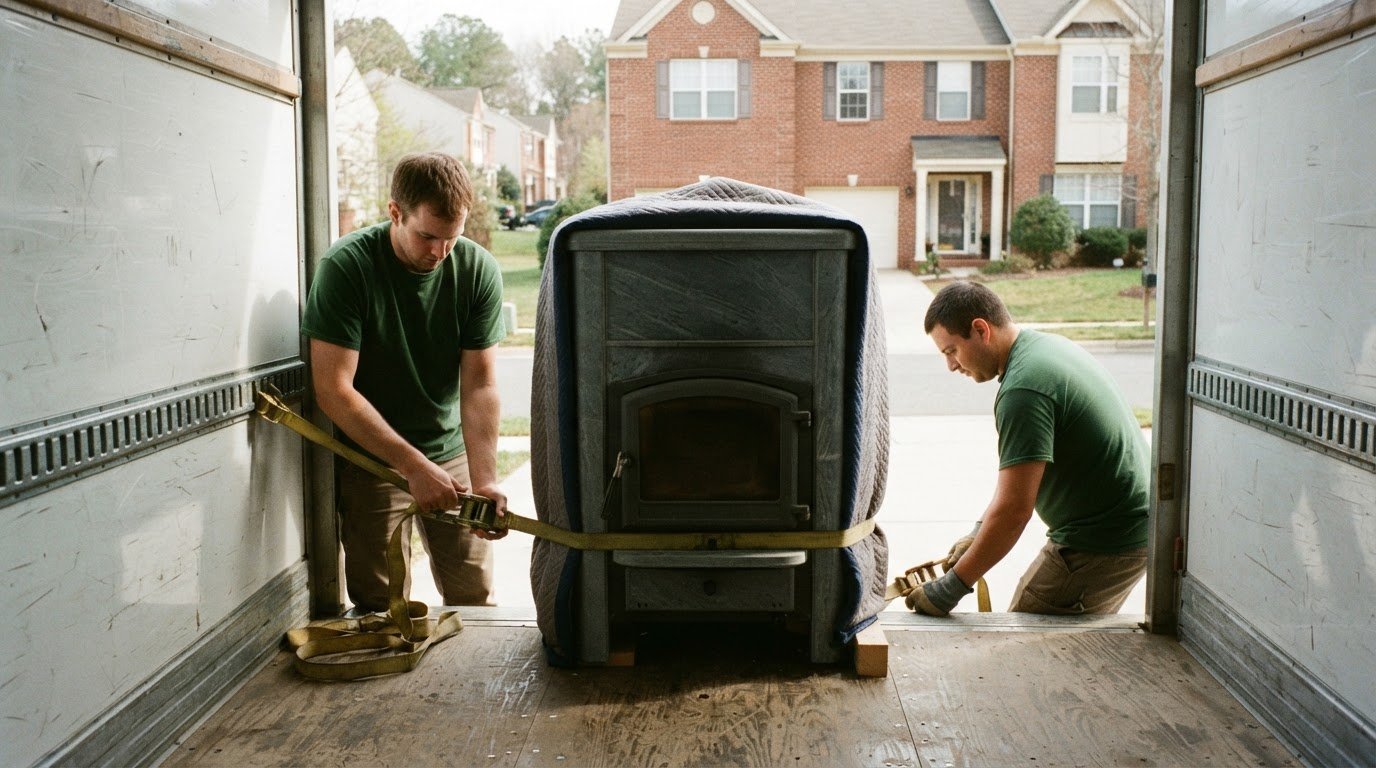
Position the stove on a stable part of the cargo floor, then use tie-downs to limit movement in every direction. Keep straps clear of exposed stone panels and fragile parts. Tighten them enough to hold the stove firmly without damaging its surfaces.
If the stove stays on the dolly during loading, secure it with the two prepared lengths of rope. Check each attachment point and remove slack. Before travel, test for shifting with controlled pressure, then recheck the load after loading is complete.
- Plan unloading before departure. A pickup tailgate’s support cables aren’t a substitute for a stable unloading setup. Make sure the route from the vehicle is clear and the equipment and helpers are ready before releasing any tie-downs. Keep the stove secured until the team is prepared to control it.
Lifting and guiding the stove safely
Assign clear roles before moving, and make sure everyone can help control the load. Stairs and tight turns call for extra caution, not rushed lifting.
-
Plan the Moving Crew
Use enough capable helpers for the planned move. The recommended setup is at least three helpers in addition to the person directing the move. When lifting a stove onto a furniture dolly, position four people at its corners so they can coordinate the lift. To move it to another room on a dolly, use at least four people altogether.
Choose one person to give simple commands such as “lift,” “stop,” and “lower.” Everyone should understand the route and their position before the stove moves. Don’t let several people call instructions at once. Pause if anyone loses their grip, footing, or clear view of the path.
A short move within the same room is different: one helper may be sufficient when the stove is slid rather than lifted. That doesn’t make lifting a one-person task. Match the crew to the action, and don’t substitute extra effort for adequate help. Professional movers are the safer choice for moving a stove between floors because of the injury risk.
-
Navigate Stairs and Narrow Doorways
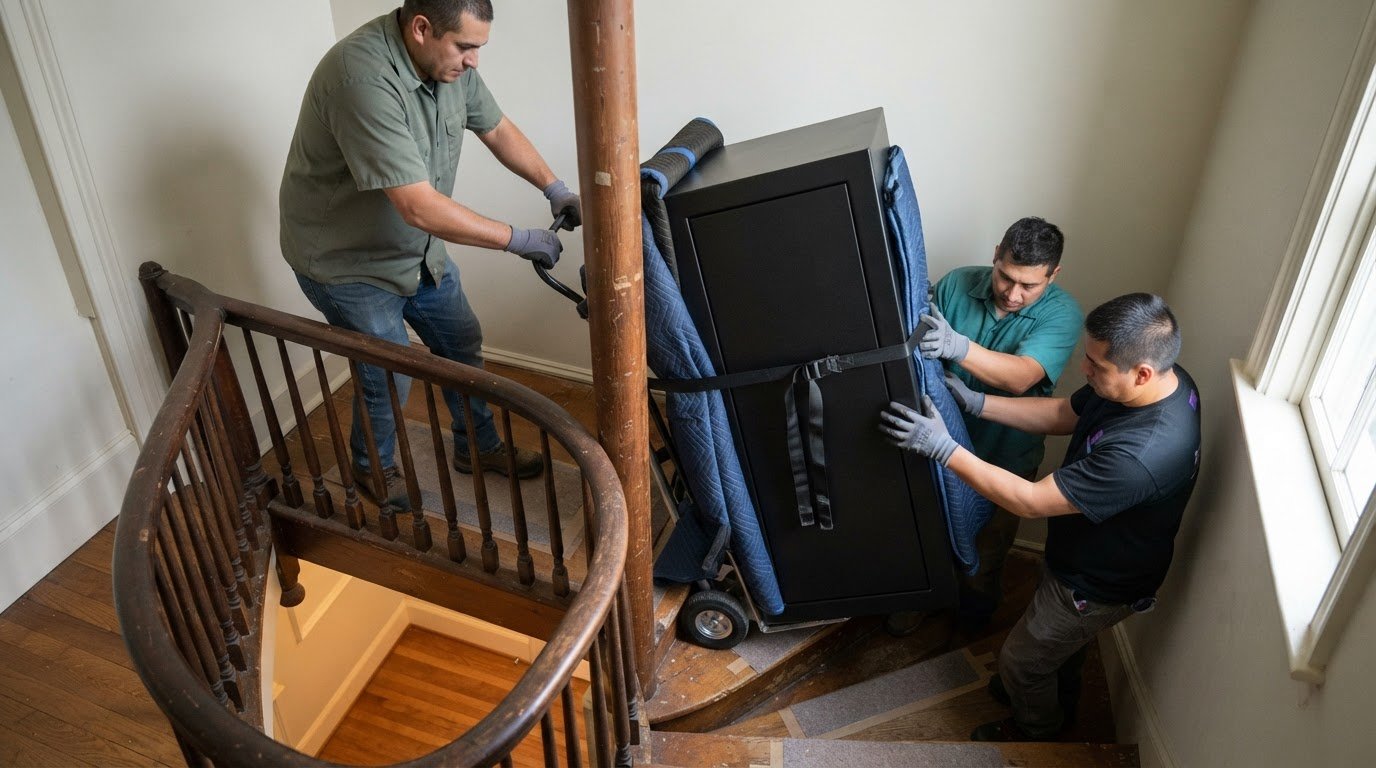
Stop before a stairway and plan the full approach, including where the load can be controlled at each end. Don’t attempt to carry a heavy stove down stairs with an improvised grip. For a move between floors, use professional movers equipped to handle it. A stair-climbing hand truck or boards aren’t a safe shortcut without the right handling plan.
Approach a narrow doorway squarely and move slowly. Keep the stove under control as you guide it through, and stop if a corner, handle, or protective covering catches. Don’t twist the load while people are supporting its weight. Clear the next turn before advancing so the crew doesn’t have to change direction in a cramped space.
For a loaded dolly going up a ramp, the recommended arrangement is two people pulling from the front while two helpers push from behind. Keep the team coordinated and stop if the dolly starts to roll unevenly. On stairs, ramps, or at tight doorways, pausing is safer than forcing the stove forward. Resume only when each helper is ready and the path is clear.
What equipment is needed to move a heavy wood stove safely?
Choose equipment to suit the stove’s measured weight and route. Set everything out before lifting so the load never sits unsupported while someone searches for a tool.
- Use a heavy-duty furniture dolly with a wide, flat base and four swivel wheels. A broad base supports the stove, while swivel wheels help guide it through turns.
Inspect the dolly before use. Check that its wheels roll freely and the base sits level. Don’t use a dolly that rocks, has damaged wheels, or can’t support the stove’s footprint. Position the load so it rests securely on the base, not precariously near an edge.
- Prepare strong straps or rope to keep the stove from shifting on the dolly. Use two lengths to secure the load, and make sure each is long enough to pass around the stove and attach securely. Keep tie-downs away from soapstone panels and parts that could crack under pressure.
Have protective padding ready for exposed surfaces. Place it between the stove and any contact point where rubbing or impact could occur. Keep removed parts together and protect them separately so they don’t strike the stove or get lost during loading.
- Use a stable loading ramp only when the ramp and vehicle setup suit the load. The ramp must sit securely, provide a controlled path, and stay aligned with the dolly. Don’t improvise with loose boards or push the stove onto a ramp without enough coordinated help.
Boards have been used as stove ramps, including two 2x12 boards and three to four 2x10 boards. Those examples don’t make an unsecured ramp safe. The setup must stay firm under the combined load, and helpers need clear positions before the stove moves.
- Stage the dolly, tie-downs, padding, and ramp beside the route before lifting. Check each item in sequence, then assign someone to watch the stove and equipment as the load moves. If a wheel catches or a strap loosens, stop and stabilize the stove before adjusting anything.
Heavy equipment can be difficult to control without suitable gear and coordinated help. For hands-on support with a demanding load, get help with heavy lifting through a heavy lifting moving service. Keep the move planned around the stove, the dolly, and the route.
Heavy Furniture Moving
Heavy Furniture Moving provides heavy lifting help for bulky household items that are difficult to handle safely. If the stove’s weight, stairs, or tight route make a do-it-yourself move impractical, the crew can handle the demanding lifting and guide the load through your home. Wrap, blankets, and straps are included on every job.
Plan the move around the stove’s dimensions, the route, and the equipment needed. Heavy Furniture Moving also provides local moving help for challenging household moves, so you can get support with the physical work without rushing the lift.
Contact Heavy Furniture Moving to discuss help with your heavy move.
Make the Next Move with Confidence
Before moving day, decide who will manage the stove’s handling and who will coordinate the route at each end. A clear plan keeps the work organized and helps prevent last-minute changes around a heavy, delicate appliance. If you’re considering how to transport a heavy soapstone wood stove safely in Centreville, account for the tightest part of the route and any steps, not just the distance to the vehicle.
If the move feels too demanding to manage alone, Heavy Furniture Moving can help with the heavy lifting. Share the stove’s measurements, route, and any stairs or narrow turns when arranging help. That gives the move a practical starting point without adding pressure.
Contact Heavy Furniture Moving for help with your stove move. Take the next step with a steady plan and the right support.
Frequently Asked Questions
What Are the Risks Associated With Moving a Wood Stove?
The main risks are losing control of the load, damaging the stove, and injuring someone during a lift or turn. Hands and feet can also get caught between the stove and a doorway, dolly, or floor. Soapstone panels may chip if struck, while a sudden shift can damage floors or nearby walls. Plan where the stove will pause, especially at doorways and vehicle loading points.
How much does a typical soapstone wood stove weigh, and can it be safely dismantled?
Some parts may be removable, but don’t dismantle a stove by guesswork. Follow the model’s instructions and keep removed pieces organized for reassembly. Removing parts doesn’t make the remaining stove safe to lift without suitable equipment and coordinated help.
Should I hire a stove installer, piano mover, or general moving company?
Choose based on the job. A moving crew handles physical transport, while a stove installer handles installation and venting at the destination. A piano mover may specialize in heavy loads, but piano experience alone doesn’t establish expertise with stove disconnection or reinstallation. If the job involves both transport and setup, keep the lifting and installation roles distinct, and follow the stove manual when reconnecting it.
Which Centreville, Virginia movers or stove professionals transport heavy wood stoves?
For physical moving help in Centreville, Heavy Furniture Moving handles heavy and bulky household items. Use moving help for carrying, loading, and transport. Reconnecting the stove or chimney is a separate installation task, so plan that work separately. This distinction matters when your move includes both getting the stove to its new location and preparing it for use.
What are the main injury, property-damage, and carbon-monoxide risks when moving a wood stove?
During handling, the load can shift, pinch fingers, or strike walls, floors, and stone panels. Keep the stove shut down and disconnected during transport. Carbon monoxide is a concern if the stove is operated with venting disconnected, damaged, or incorrectly reassembled. Don’t light the appliance until its chimney or stove pipe is properly installed, and have the installation inspected where required.
How should a wood stove be secured in a truck or trailer for transport?
Place the stove upright on a stable cargo surface, then secure it so it cannot slide or tip during braking or turns. Attach restraints to sound vehicle tie-down points, not loose cargo or parts of the stove that could bend or break. Protect soapstone surfaces from strap pressure, and secure removable components separately. Recheck the restraints before travel and after any stop.
Frequently Asked Questions
The main risks are losing control of the load, damaging the stove, and injuring someone during a lift or turn. Hands and feet can also get caught between the stove and a doorway, dolly, or floor. Soapstone panels may chip if struck, while a sudden shift can damage floors or nearby walls. Plan where the stove will pause, especially at doorways and vehicle loading points.
Some parts may be removable, but don’t dismantle a stove by guesswork. Follow the model’s instructions and keep removed pieces organized for reassembly. Removing parts doesn’t make the remaining stove safe to lift without suitable equipment and coordinated help.
Choose based on the job. A moving crew handles physical transport, while a stove installer handles installation and venting at the destination. A piano mover may specialize in heavy loads, but piano experience alone doesn’t establish expertise with stove disconnection or reinstallation. If the job involves both transport and setup, keep the lifting and installation roles distinct, and follow the stove manual when reconnecting it.
For physical moving help in Centreville, Heavy Furniture Moving handles heavy and bulky household items. Use moving help for carrying, loading, and transport. Reconnecting the stove or chimney is a separate installation task, so plan that work separately. This distinction matters when your move includes both getting the stove to its new location and preparing it for use.
During handling, the load can shift, pinch fingers, or strike walls, floors, and stone panels. Keep the stove shut down and disconnected during transport. Carbon monoxide is a concern if the stove is operated with venting disconnected, damaged, or incorrectly reassembled. Don’t light the appliance until its chimney or stove pipe is properly installed, and have the installation inspected where required.
Place the stove upright on a stable cargo surface, then secure it so it cannot slide or tip during braking or turns. Attach restraints to sound vehicle tie-down points, not loose cargo or parts of the stove that could bend or break. Protect soapstone surfaces from strap pressure, and secure removable components separately. Recheck the restraints before travel and after any stop.