How to Protect Wood Floors When Moving Heavy Items in Reston
What if the biggest risk to your wood floors isn’t the furniture’s weight, but how that weight moves? If you’re searching for “how to protect wood floors moving heavy items Reston,” start by controlling the load before it crosses the room. A sofa, safe, or exercise machine can leave scratches, dents, or gouges if it shifts or drags.
It’s natural to worry about your floors when a bulky item has to pass through a tight hallway or doorway. A few careful steps can help reduce the risk: prepare the floor, choose suitable coverings and sliders, and clear a safe route through your Reston home.
Sweep before laying protection, decide when lifting is safer than sliding, and assess whether the move is too awkward to handle alone. For especially heavy or bulky items, moving help can take strain off your back and help keep the load controlled from start to finish.
Key Takeaways
- Understand how heavy, dragged, or shifting furniture can mark wood floors, and why controlling the load matters.
- Learn how to protect wood floors moving heavy items Reston homeowners value by preparing the route and choosing floor protection suited to the move.
- See when DIY moving may work and how stairs, tight turns, awkward grips, or limited lifting help can raise the risk.
- Follow a practical sequence: inspect, clear, clean, protect, test, and move slowly. Note existing marks and vulnerable spots before you begin.
- Recognize when bulky items or complex routes call for help. Heavy Furniture Moving provides residential moving help and specialized handling for heavy items in Reston.
Why Heavy Items Put Reston Wood Floors at Risk During a Move
A heavy item doesn’t need to fall to damage wood flooring. Dragging, uneven pressure, or grit caught underneath can scratch, dent, or wear the finish. Understanding wood flooring and how it responds to friction and weight helps you plan a safer move.
Protecting the floor means controlling how the item makes contact with it, not just covering a large area. A blanket or runner can help, but grit trapped beneath it may still scratch the surface as the load shifts. Clean contact points and a planned route matter just as much as the covering.
How heavy furniture scratches, dents, or scuffs wood floors
Dragging creates friction between furniture feet and the floor. That rubbing can leave scuffs, especially if a foot catches or the item twists. A sofa leg or the narrow base of a safe concentrates weight on a small area. A scuff comes from rubbing, while a dent forms when concentrated weight presses into the floor. Small stones and grit can make either problem worse by scraping beneath furniture feet, shoes, or protective coverings.
Different floors and finishes can respond differently, so don’t assume a mark is harmless or that every covering suits every surface. Don’t push through resistance. If an item catches, stop and reassess its support and direction before moving again.
Why Reston move planning should start with the route
Before lifting, map the full path from the item’s current spot to its destination. Include every doorway, hallway, threshold, turn, and set of stairs. Check tight clearances and decide where the item may need to change direction. A route that looks clear from the room can become difficult at a narrow turn, increasing the chance of a sudden shift or an uncontrolled set-down.
Walk the route with the item’s shape in mind. Clear anything that could force a detour, and identify places where movers may need to pause, adjust their grip, or coordinate a turn. Reston homes have different layouts, so plan for the actual path rather than assuming the move will be straightforward. If the item is too heavy or awkward to control along the route, get moving help instead of risking a rushed lift.
That planning is the starting point for how to protect wood floors moving heavy items Reston homeowners want to preserve. A clear route helps you control the load from the first lift to the final placement, reducing the chance of dragging, bumping, or setting furniture down hard.
Choose Wood-Floor Protection That Fits the Move
No single covering suits every item or route. A walking path needs a stable surface underfoot, while furniture feet need protection from friction and concentrated pressure. Choose coverings based on the item, route, and floor condition. A clean runner may work for a short, clear path. A bulky safe or exercise machine moving farther may call for more substantial protection, provided the materials suit the floor.
Check each covering before laying it down. Dust, grit, or dampness trapped against wood can cause problems instead of preventing them. Follow the material maker’s instructions, and avoid anything that leaves residue or could react poorly with the floor’s surface. If you’re unsure whether a material suits your flooring, choose another option rather than risk a mark.
When to use runners, blankets, or rigid panels
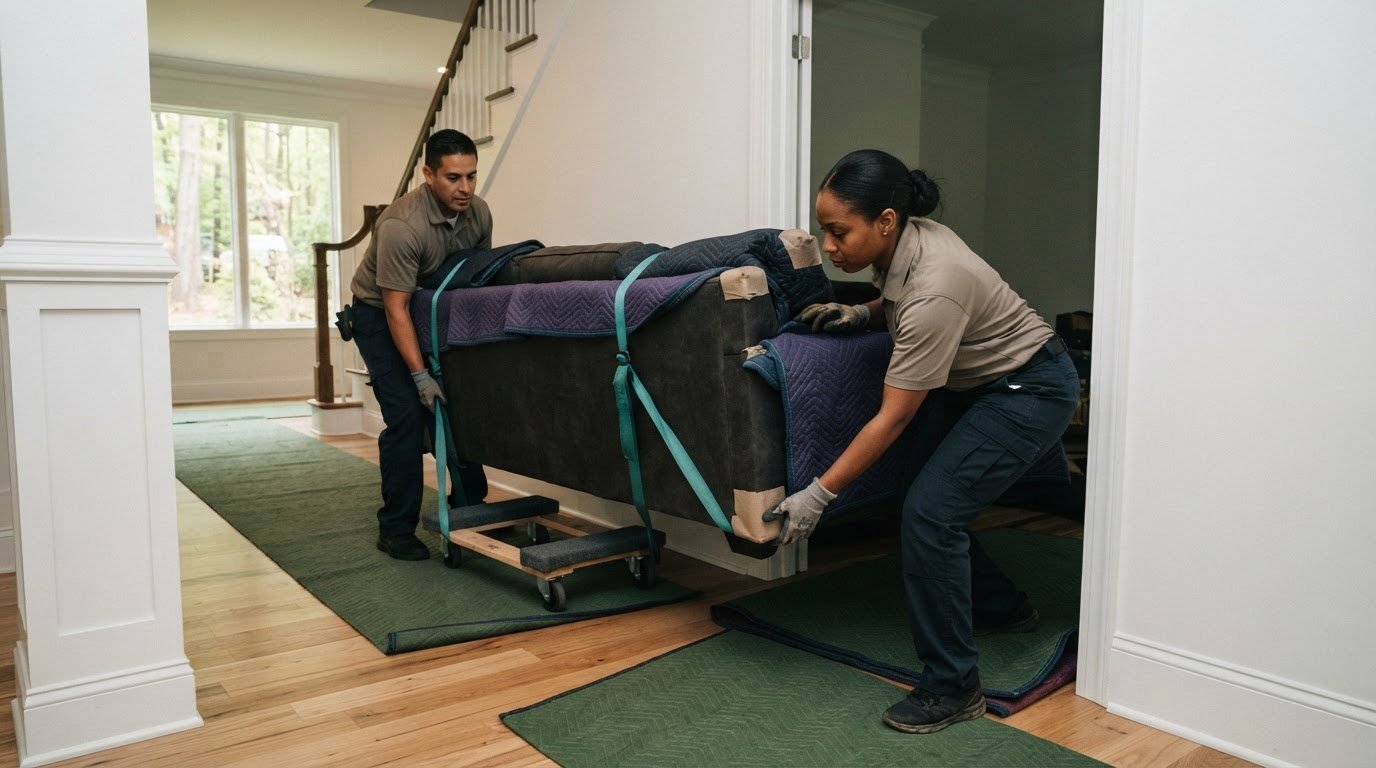
Use a clean floor runner for a planned walking route if it stays flat and stable. Moving blankets can cushion furniture contact, but loose fabric isn’t a dependable walking surface. Rigid panels, such as suitable plywood or hardboard, can spread concentrated loads, but they must sit securely and suit the floor. Don’t let any covering bunch, slide, or leave an exposed edge in the path.
Match the material to the job:
- Runners: Cover a walking path and help keep shoes and equipment off the exposed floor. Secure them so they don’t creep as people pass.
- Moving blankets: Cushion contact between an item and the floor or help protect nearby surfaces. Keep them smooth and out of the walking lane unless they’re secured for that use.
- Rigid panels: Consider them when a concentrated load needs a firmer protective layer. Check that the panel is stable and won’t shift or scratch the floor beneath it.
Furniture sliders and pads: useful only when correctly matched
Sliders can reduce the effort needed to move furniture, but choose a type suited to both the floor and the furniture feet. Follow the manufacturer’s directions, and clean the slider and contact points before placing them. Dirt caught underneath can scratch the floor. Sliders don’t prevent tipping, sudden shifts, or problems at a doorway, stair, or tight turn, so keep the route clear and move with control.
Before committing to a covering, lay a small section in place and check that it sits flat without catching or shifting. Recheck it if the route changes or the material gets dirty or damp. These details are central to how to protect wood floors moving heavy items Reston residents want to move safely. If an item is too heavy or awkward to manage while keeping protection in place, residential heavy-item moving help can make the lift easier to control.
DIY Floor Protection vs. Professional Help for Heavy Furniture
DIY preparation can work for a light, manageable item and a short, clear route. But floor coverings don’t make an unsafe lift safe. The real test is control: can everyone lift, steer, and set down the item without straining or losing their grip? If you’re uncertain, pause before the item leaves the floor. Protecting the wood also means protecting the people doing the lifting.
When a careful DIY move may be manageable
A DIY move is more reasonable when the route is clear, the floor protection lies flat, and everyone can handle the item confidently. Choose a pace that lets everyone communicate and stop easily. Move only what you can control without straining, twisting awkwardly, or relying on a last-second catch.
Before lifting, agree on who will guide the item and where you’ll pause if needed. Check that there’s room to turn and set the furniture down without shifting the protective materials. If the piece starts to tilt, your grip slips, or someone feels strain, stop and reset. Don’t try to solve a handling problem by pushing harder or adding more covering beneath an unstable load.
Signs a heavy-item move needs experienced help
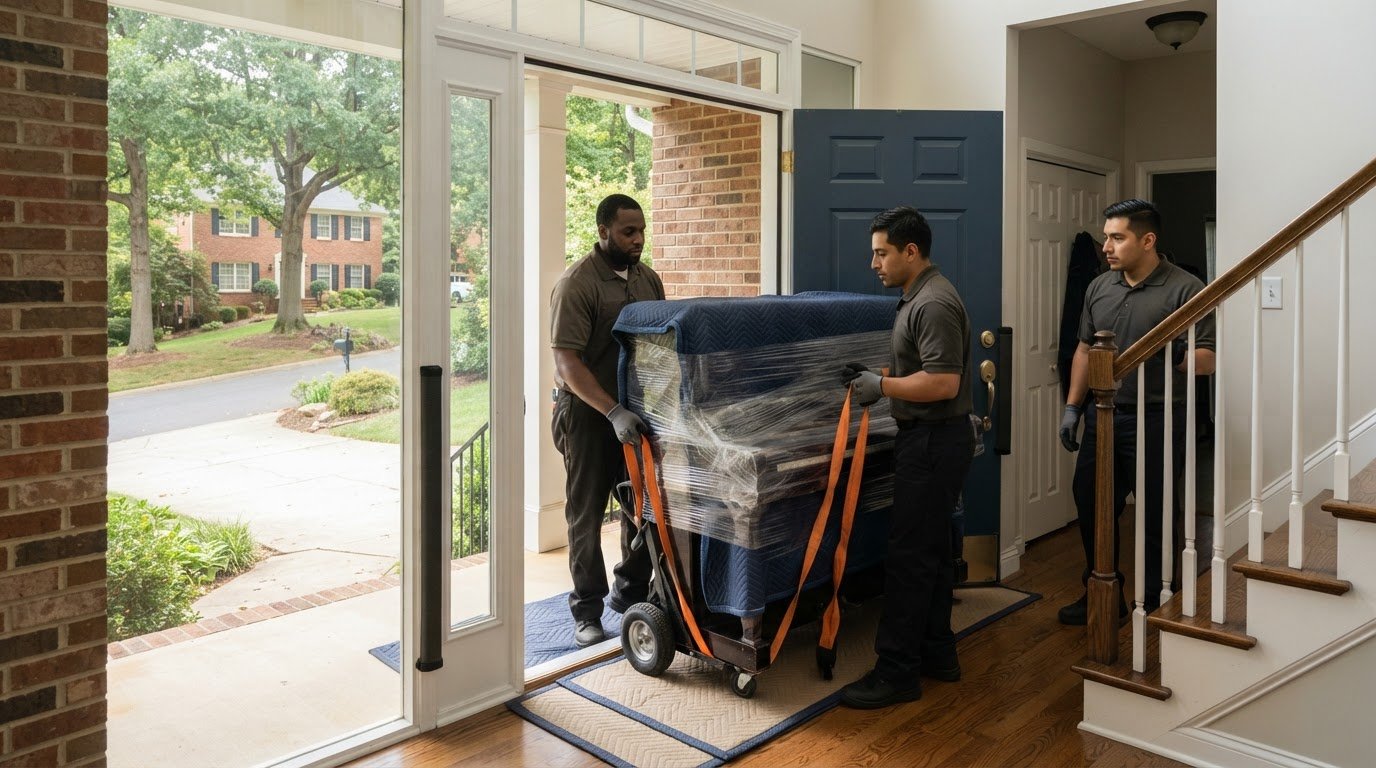
Pause and reassess if the item blocks your view, offers no secure grip, or feels difficult to keep steady. Stairs, sharp turns, and tight doorways add coordination challenges, especially when there’s little room to change hand position. Heavy Furniture Moving provides residential moving help in Reston, including specialized handling for bulky items such as pianos, safes, and exercise equipment.
Use this quick decision check before moving:
- Grip: Can each person hold the item securely throughout the lift and turn?
- Visibility: Can the people carrying it see the route and communicate clearly?
- Clearance: Is there enough room at doorways, corners, and stairs to move without forcing the item?
- Control: Can everyone stop and lower the load smoothly if something changes?
If any answer is no, getting experienced help is a sensible choice, not a failure to prepare. A bulky piece that shifts mid-turn can put the floor, the item, and the people carrying it at risk. A clear plan and capable hands help keep movement deliberate rather than rushed.
That judgment is central to how to protect wood floors moving heavy items Reston homeowners want to move safely. Choose DIY for manageable loads and simple paths. Bring in help when size, weight, grip, or route makes steady control uncertain. The goal isn’t simply to move furniture from one room to another. It’s to do so without forcing a lift or risking an uncontrolled drop.
How to Protect Wood Floors Before and During the Move
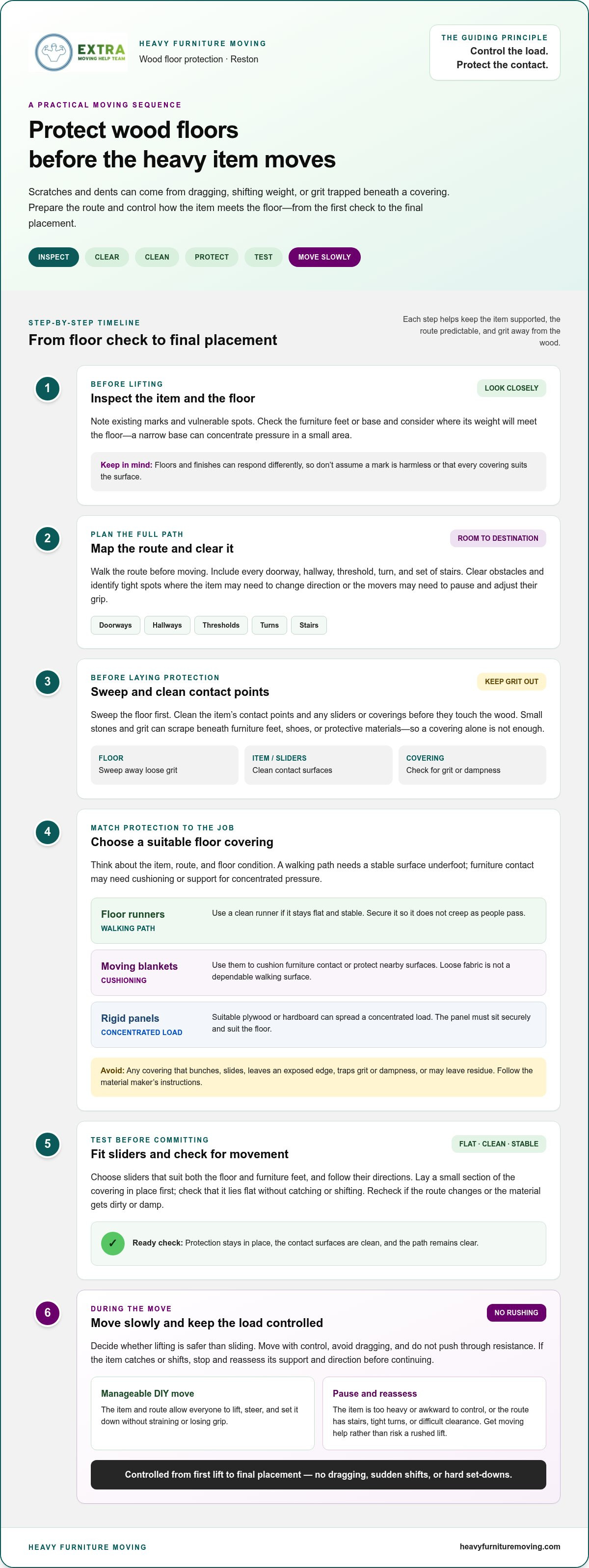
A steady move starts before anyone lifts. Take a few minutes to document the floor, prepare the route, and check that the protection stays in place. This gives everyone a clear plan and helps you spot trouble before the furniture is in motion.
Prepare the room, route, and floor surface
Use this sequence before moving:
- Inspect: Check the floor and route for moisture, existing damage, loose coverings, or areas that need extra care. Photograph existing marks and note vulnerable spots before work begins.
- Clear: Remove small rugs, loose objects, and anything else that could snag a foot or interrupt the path. Check the full route, including the item’s starting point and destination.
- Clean: Sweep or vacuum the floor and the contact surfaces of shoes, wheels, sliders, and protective materials. Grit trapped under a covering can scratch as it shifts.
- Protect: Lay the chosen floor covering smoothly, without folds or exposed edges. Keep walking areas clear and make sure the covering doesn’t block a doorway or create a trip hazard.
- Test: Walk over the protected path and gently check that it stays flat and secure. Reposition it before moving if it slides, bunches, or lifts at an edge.
- Move slowly: Lift or guide the item with control instead of dragging it directly across the wood. Keep communication clear and allow time to stop.
Move slowly and check protection as you go
Don’t assume the covering will stay put for the whole trip. Check it as the item advances, especially after a pause or change in direction. At a threshold or turn, stop first. Reposition the people carrying the item and adjust the protection before continuing. A short reset is safer than forcing a difficult angle.
Stairs need particular care because a load can shift as people change their footing or hand positions. If you’re planning on moving heavy furniture upstairs, account for each step, landing, and turn before lifting. Clear the route and make sure everyone knows when to pause. If the item tilts, a covering shifts, or anyone loses a secure grip, stop and set the load down safely before reassessing.
Keep the floor protection and contact points clean throughout the move. If a wheel, slider, shoe, or panel picks up debris, remove it and clean the surface before continuing. These deliberate checks support how to protect wood floors moving heavy items Reston homeowners want to preserve. For a heavy or awkward piece, get moving help for heavy furniture and leave the difficult handling to experienced hands.
Get Heavy Furniture Moving Help in Reston Without Guesswork
Some furniture moves are manageable with careful preparation. Others call for more hands and experience. Professional help makes sense when an item is bulky, difficult to grip, or awkward to steer through a complex route. Stairs, narrow passages, tight turns, and limited lifting support can make it harder to control both the load and your footing.
Heavy Furniture Moving provides residential moving help in Reston, including specialized handling for heavy and bulky items such as pianos, safes, and exercise equipment. If you’re looking for movers near me in Fairfax and nearby communities, consider the demands of the specific move: the item, the route, and the support available. Clear details help make a challenging lift easier to plan.
What to prepare before arranging help
Share the details that affect handling and access. You don’t need a technical inventory. A clear description helps establish what the move involves and where the challenges may be.
- Item: Name the furniture or equipment, and provide approximate dimensions if you know them.
- Starting point and destination: Note the rooms and floors involved, including whether the item must go upstairs or downstairs.
- Route: Describe stairs, narrow passages, thresholds, sharp turns, and tight doorways along the way.
- Access: Mention any restricted space at the pickup or destination that could affect how the item moves.
- Floor concerns: Point out existing marks or vulnerable areas, and describe the route and preparation you’ve already considered.
These details are useful even if you’ve already prepared coverings. They help identify where the move may need extra coordination, rather than leaving a difficult turn or change in level to be figured out while carrying the item.
Reston heavy-item moving support
Local professional assistance is a practical option when the weight, shape, or route makes a move hard to control alone. Experienced help can reduce the physical strain of handling a demanding item and support a more deliberate move through the home. Floor protection still depends on choosing suitable materials and keeping the route clear. Don’t rely on a covering to solve an unsafe lift.
For a piano, safe, exercise machine, or other bulky piece, let a capable team handle the difficult part while you focus on the home and the move plan. You’ve learned how to protect wood floors moving heavy items Reston homeowners care about, from preparation to controlled movement. If you need support with a challenging furniture move, get help with a heavy furniture move.
Set Up Your Next Move for Success
Before moving day, decide which items you can handle confidently and which ones need extra support. That clear boundary can prevent a rushed lift from putting your floors or your back at risk. Keep the route and floor concerns in mind, and choose a pace that lets everyone stay in control.
For Reston homeowners considering how to protect wood floors moving heavy items Reston, support with a difficult lift can make the next step more manageable. Heavy Furniture Moving is a veteran-family owned and operated business serving local households in Fairfax, Woodbridge, Manassas, Manassas Park, Aldie, Ashburn, McLean, Vienna, Reston, Centreville, Chantilly, Clifton, Dumfries, South Riding, Fairfax Station, Haymarket, and Gainesville. If a bulky or awkward item is making you second-guess the plan, bring in a team familiar with demanding furniture moves.
Get help planning your heavy furniture move, then take moving day one careful step at a time. With a workable plan and the right support, you can move forward with confidence and give your home’s floors thoughtful care.
Frequently Asked Questions
Is cardboard enough to protect wood floors when moving heavy furniture?
Cardboard can offer a temporary buffer for light foot traffic, but it may shift, crease, or tear under heavy furniture or repeated steps. It also won’t reliably spread a concentrated load. If you use it, keep it clean and dry, secure it so it can’t slide, and check it often. For a heavy piece, choose a more stable covering suited to the floor and the move.
Can furniture sliders scratch hardwood floors?
Yes. Sliders can scratch if grit gets caught between the slider and floor, or if the slider material doesn’t suit the floor. Check the underside and furniture feet before use, then test gently in an inconspicuous spot if the manufacturer’s directions allow. Stop if a slider catches or leaves a mark. Don’t force it around corners. A slider can move an item, but it can’t keep an unstable load from tipping.
Should I put a rug under heavy furniture before moving it?
Usually, don’t slide heavy furniture over a loose rug. The rug can bunch beneath the item, shift suddenly, or create an uneven surface that makes the load harder to control. A rug may be useful as a stationary buffer only if it lies securely and won’t move, but it isn’t a substitute for a suitable moving surface. For a piece that needs to travel, use protection designed for that route.
What should I do if a wood floor gets scratched during a move?
Stop moving items over the mark, then take a clear photo in good light and note where it is. Remove loose grit gently with a soft brush or vacuum attachment. Don’t scrub, sand, or apply polish before identifying the floor’s finish. A shallow surface scuff and a deeper scratch may need different care. Check the flooring maker’s care guidance before attempting a repair, especially if the finish is unknown.
Can I move heavy furniture across hardwood floors by myself?
For a genuinely heavy piece, moving it alone is usually a poor risk. You may not be able to keep the item balanced, see the route, and protect the floor at the same time. Consider moving a small, light item only if you can control it without strain and it won’t block your view. If it’s a sofa, safe, or exercise machine, get lifting support rather than improvising with a solo push.
How do I protect wood floors from movers’ shoes and debris?
Set aside a clean path before moving begins, and keep outdoor shoes, wheel surfaces, and protective materials free of grit. Put a mat at the entry for debris, but keep it outside the furniture route if it could shift or bunch. Check the path as people go in and out, especially near doors where small stones can collect. These simple checks support how to protect wood floors moving heavy items Reston homeowners want to keep in good shape.
Do professional movers help protect wood floors in Reston?
Professional movers can help reduce handling risks by planning how a heavy item will be carried and keeping its movement controlled. Heavy Furniture Moving provides residential moving help in Reston for heavy and bulky household items. Floor coverings and surface care still need to suit the home and move, so point out vulnerable areas or existing marks before work starts. Clear communication helps the team account for your floor concerns.
Frequently Asked Questions
Cardboard can offer a temporary buffer for light foot traffic, but it may shift, crease, or tear under heavy furniture or repeated steps. It also won’t reliably spread a concentrated load. If you use it, keep it clean and dry, secure it so it can’t slide, and check it often. For a heavy piece, choose a more stable covering suited to the floor and the move.
Yes. Sliders can scratch if grit gets caught between the slider and floor, or if the slider material doesn’t suit the floor. Check the underside and furniture feet before use, then test gently in an inconspicuous spot if the manufacturer’s directions allow. Stop if a slider catches or leaves a mark. Don’t force it around corners. A slider can move an item, but it can’t keep an unstable load from tipping.
Usually, don’t slide heavy furniture over a loose rug. The rug can bunch beneath the item, shift suddenly, or create an uneven surface that makes the load harder to control. A rug may be useful as a stationary buffer only if it lies securely and won’t move, but it isn’t a substitute for a suitable moving surface. For a piece that needs to travel, use protection designed for that route.
Stop moving items over the mark, then take a clear photo in good light and note where it is. Remove loose grit gently with a soft brush or vacuum attachment. Don’t scrub, sand, or apply polish before identifying the floor’s finish. A shallow surface scuff and a deeper scratch may need different care. Check the flooring maker’s care guidance before attempting a repair, especially if the finish is unknown.
For a genuinely heavy piece, moving it alone is usually a poor risk. You may not be able to keep the item balanced, see the route, and protect the floor at the same time. Consider moving a small, light item only if you can control it without strain and it won’t block your view. If it’s a sofa, safe, or exercise machine, get lifting support rather than improvising with a solo push.
Set aside a clean path before moving begins, and keep outdoor shoes, wheel surfaces, and protective materials free of grit. Put a mat at the entry for debris, but keep it outside the furniture route if it could shift or bunch. Check the path as people go in and out, especially near doors where small stones can collect. These simple checks support how to protect wood floors moving heavy items Reston homeowners want to keep in good shape.
Professional movers can help reduce handling risks by planning how a heavy item will be carried and keeping its movement controlled. Heavy Furniture Moving provides residential moving help in Reston for heavy and bulky household items. Floor coverings and surface care still need to suit the home and move, so point out vulnerable areas or existing marks before work starts. Clear communication helps the team account for your floor concerns.