How to Protect Hardwood Floors When Sliding a Safe in Fairfax
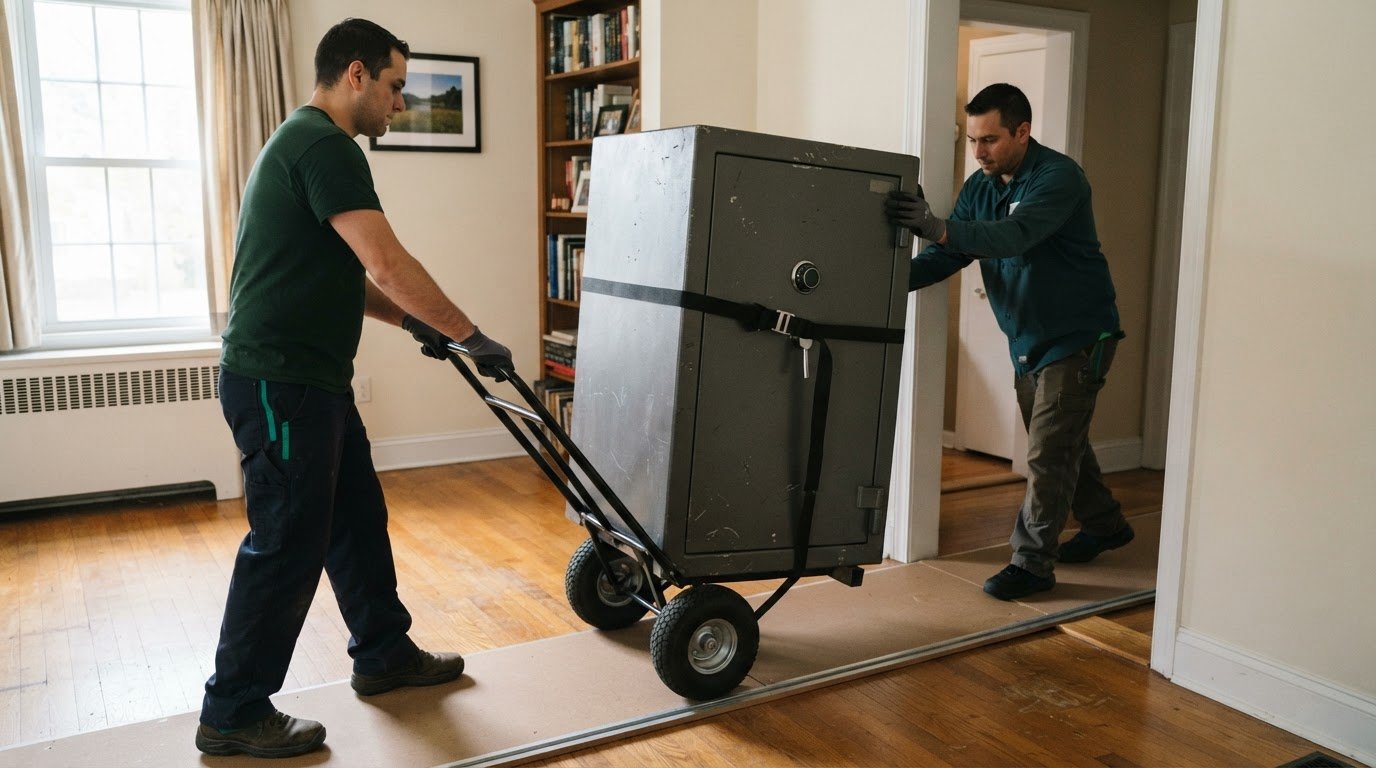
The smoothest-looking path across hardwood can still put a heavy safe at risk of scratching or denting the floor. The safest answer to how to protect hardwood floors when sliding a 500 lb safe in Fairfax is to avoid moving it directly over exposed wood. For a high-risk move, professionals can use rigid floor protection, such as plywood or Masonite at least 3/8 inch thick, and keep the safe’s route on the protected surface.
It makes sense to focus on the covering, but the moving method matters just as much. Hard wheels, shifting coverings, and concentrated weight can all threaten a wood floor. This guide explains which materials can help, how professionals prepare the route, and why lifting or carefully controlled equipment may be safer than dragging a safe across hardwood. You’ll also learn what to expect when bringing in experienced help for a heavy, delicate move in Fairfax.
Key Takeaways
- Plan the safe’s route around the full path, including doorways and thresholds, so protection covers every surface the moving equipment will cross.
- Keep dollies on protected surfaces and use controlled handling to reduce the risk of wheel marks, shifting loads, or floor damage.
- Choose stable floor coverings for the move, and avoid relying on loose blankets or plastic sheeting directly on hardwood.
- Have the floor cleaned and dried before covering it, and overlap protector seams to help prevent gaps along traffic paths.
- For a heavy safe, professional movers can coordinate the equipment and handling needed to protect both the floor and the item.
Which floor protection materials do professional movers use?
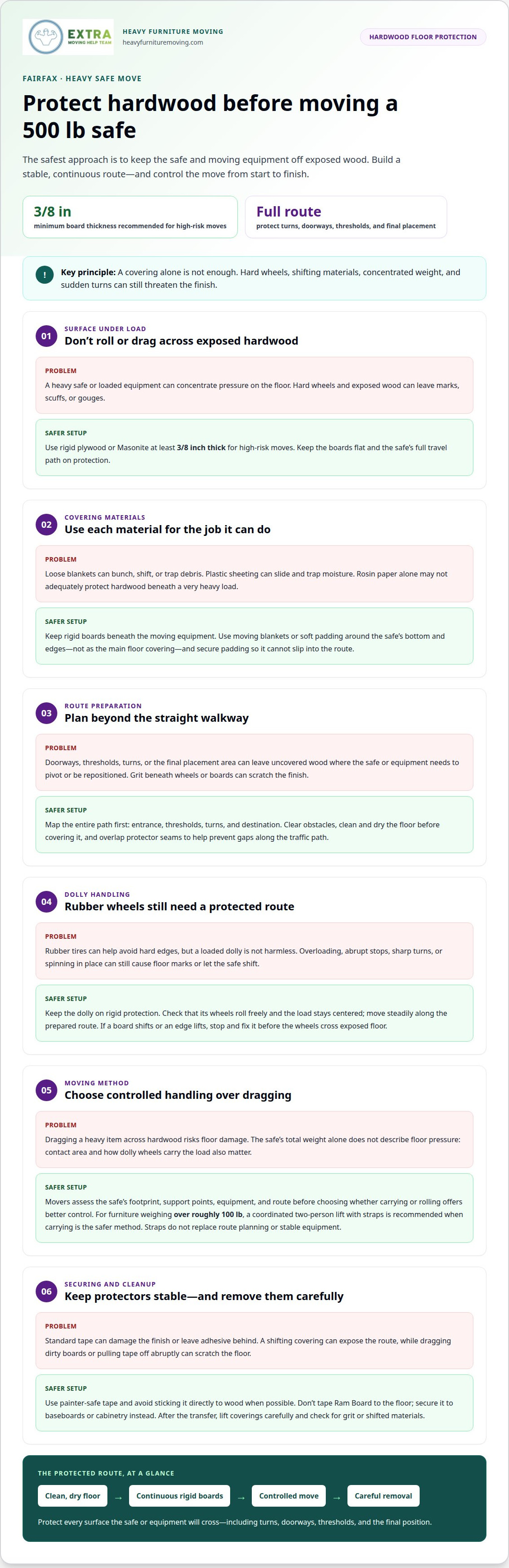
For a Fairfax safe move, professional movers choose a stable floor covering suited to the load and route. To understand how to protect hardwood floors when sliding a 500 lb safe in Fairfax, start with rigid protection beneath equipment, not loose fabric alone.
- Match the material to the safe’s route. Plywood or Masonite sheets at least 3/8 inch thick are recommended for high-risk moves. Their rigid surface helps distribute weight and withstand dollies and loaded hand trucks better than lighter coverings. Movers consider doorways, turns, and the final placement area before deciding how much protection the path needs.
Protect more than the straight walkway. A safe may need room to turn or be repositioned, so uncovered hardwood at those points can still be exposed to wheels or edges. Keep the route protected wherever the safe or equipment travels.
- Use hardboard where it suits the surface and handling plan, and keep it stable beneath the safe. Plywood or Masonite is the specified choice for high-risk moves. Choose the setup based on the route, equipment, and area to protect, not simply by picking the lightest material.
Don’t rely on rosin paper alone beneath a very heavy load. It may not adequately protect the floor under a safe or similarly heavy furniture. Lightweight covering can help in lower-risk areas, but it shouldn’t replace rigid boards beneath moving equipment.
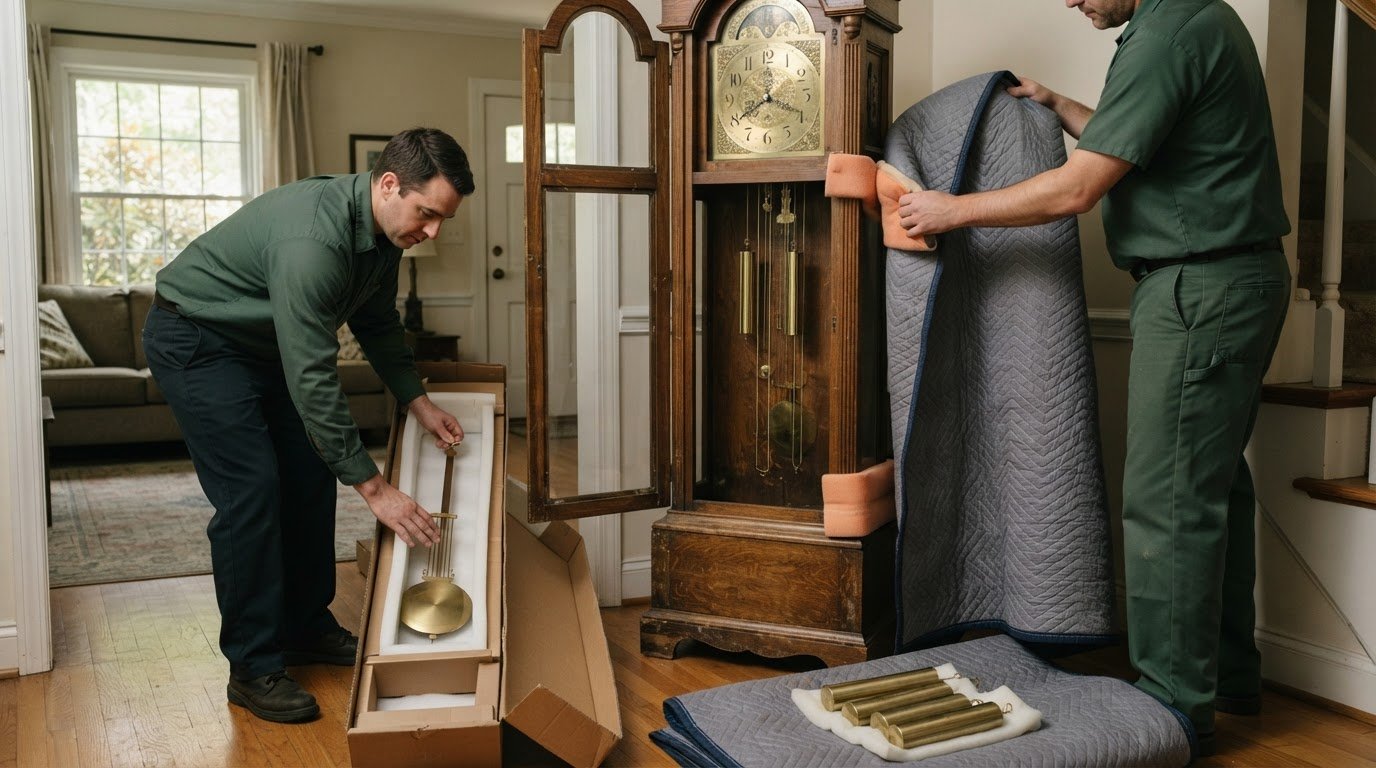
- Use moving blankets to pad the safe, not as the main floor covering. Blankets can bunch up, shift underfoot, or trap debris that scratches hardwood. Separate the tasks: use stable floor protection and soft padding around the safe’s bottom and edges.
Plastic sheeting directly on hardwood can trap moisture and slide, creating a safety risk. A slippery layer also makes controlled handling harder. Keep the moving surface firm and secure, especially where a dolly must turn.
- Choose tape and attachment points carefully. Standard tape can damage the hardwood finish or leave adhesive behind, so use painter-safe tape and avoid applying it directly to wood when possible. Don’t tape Ram Board to the floor; secure it to baseboards or cabinetry instead.
For the question of how to protect hardwood floors when sliding a 500 lb safe in Fairfax, the attachment method matters because a covering that shifts may expose the route during the move.
- Protect the safe’s contact points, too. Soft cloth or padding over its bottom and edges can help limit floor damage if the item touches down unexpectedly. Secure the padding so it cannot slip beneath a wheel or become debris on the route.
Once the safe is in place, remove temporary coverings carefully. Don’t drag dirty boards or coverings across hardwood, and don’t yank tape off the finish. Careful cleanup helps avoid scratches after the heavy lifting is done.
How professional movers use rubber-wheeled dollies and moving straps
Movers assess a safe’s footprint and support points to understand how its weight reaches the hardwood. The load per square foot depends on the contact area and how the dolly wheels carry the weight, so the safe’s total weight alone doesn’t describe the pressure on the floor.
- Clear the full route before moving day. Identify the front door, thresholds, turns, and final position, then remove obstacles that could force a sudden stop or sharp change in direction. A clear path helps keep a loaded dolly moving steadily instead of pivoting on exposed hardwood.
Check the floor for grit and debris as well. Small particles caught beneath wheels or boards can scratch the finish. This preparation matters for a refrigerator as well as a safe, since either item can be difficult to redirect once moving.
- Use rubber-wheeled dollies on protected surfaces, not exposed hardwood. Rubber tires can help avoid the hard edges that cause floor marks, but they don’t make a loaded dolly harmless. Hard wheels or an overloaded dolly can still leave scuffs or gouges, especially when equipment turns or stops abruptly.
Movers check that the wheels roll freely and the load stays centered. They keep the dolly aligned with the prepared route instead of spinning it in place. Controlled movement helps protect the finish and reduces the chance of the safe shifting.
- Place rigid plywood beneath the dolly’s travel path. Plywood at least 3/8 inch thick is recommended for high-risk moves. Rigid boards spread the load and handle dollies or loaded hand trucks better than lighter coverings, helping limit concentrated pressure on the floor.
Movers lay boards flat and keep the protected route continuous through doorways and turns. They reposition the dolly only while it remains on protection. If a board shifts or an edge lifts, they stop and fix it before the wheels cross exposed floor.
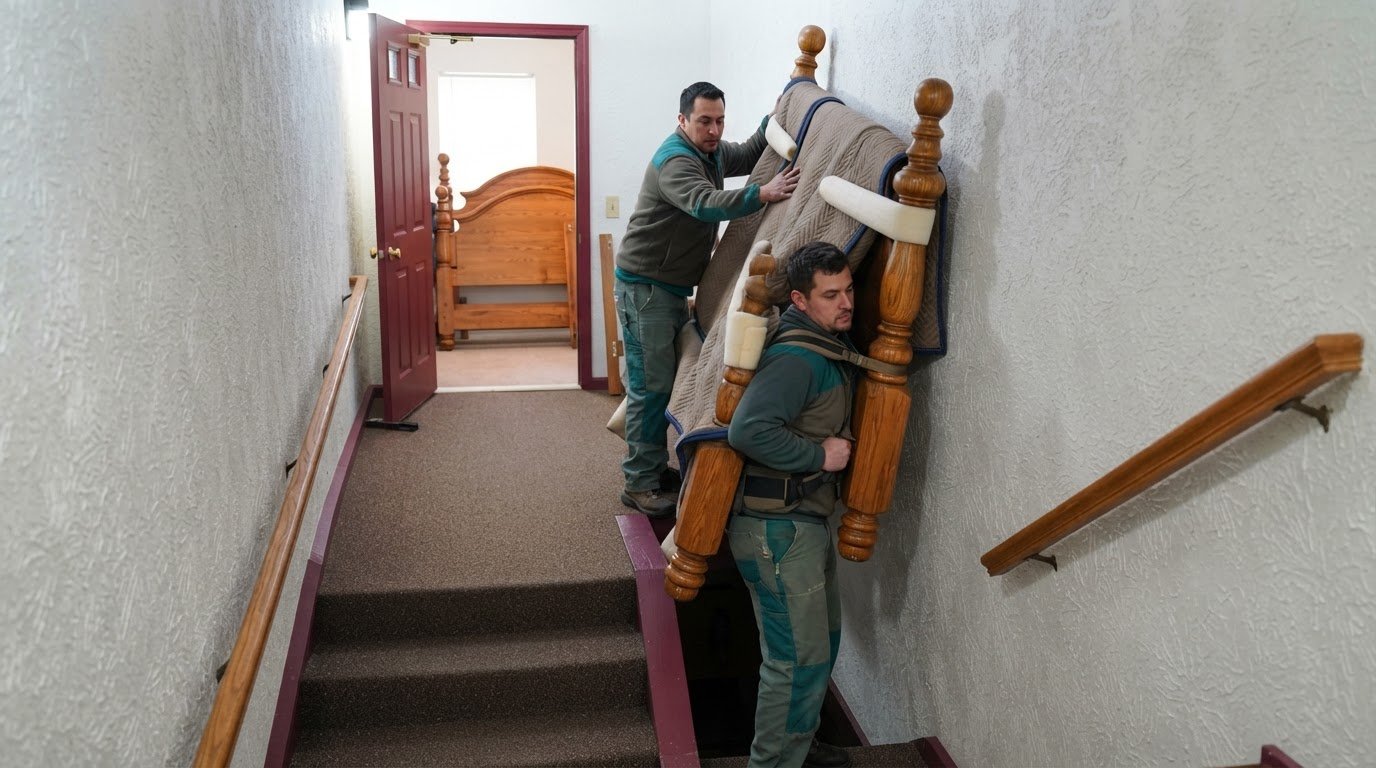
- Use moving straps when carrying is the safer method. For furniture weighing over roughly 100 lbs, a two-person lift with straps is recommended. The movers coordinate the lift and keep the item controlled, avoiding a drag across hardwood.
Straps support coordinated handling, but they don’t replace route planning. Movers account for door clearance and turns before lifting. If the safe must travel on a dolly, they use the protected path and don’t treat straps as a substitute for stable equipment.
- Match the method to the load and floor. Movers consider the safe’s contact points, the dolly wheels, the route, and whether carrying or rolling offers better control. For a heavy-lifting move, professional heavy-item moving help can handle the equipment and coordinated movement.
After the transfer, movers remove boards carefully and check for trapped grit or shifted coverings. This final pass helps catch marks early. The goal is controlled movement from entry to placement, without dragging the safe over hardwood.
Materials for protecting hardwood floors
- Match the covering to the load and route. A heavy safe needs a firm surface that resists shifting under equipment. Lighter coverings can suit foot traffic, but may not withstand concentrated weight or repeated wheel passes. Choose materials with turns, thresholds, and the distance from entry to placement in mind.
Protect the full traffic path, not just the area beneath the safe. A gap can expose hardwood when movers reposition equipment. Covering the route also helps limit scratches from grit caught between the floor and moving gear.
- Consider Ram Board for broad traffic paths where a flexible temporary covering suits the move. Don’t tape it directly to hardwood; secure it to baseboards or cabinetry instead. This keeps adhesive off the floor finish.
It can serve as a lighter covering in areas without concentrated loads. Choose materials based on what will cross each part of the route.
- Don’t use plastic sheeting as a direct floor layer on hardwood. Plastic can trap moisture against the wood and slide underfoot, creating a hazard while movers handle the safe. A slick surface also makes it harder to keep the equipment and load steady.
Moving blankets aren’t a substitute for stable floor protection. They can bunch up, shift underfoot, and trap debris that may scratch the finish. Use soft padding to protect the safe, and choose a separate covering for the floor.
- Choose tape carefully when securing temporary protection. Standard tape can damage the hardwood finish or leave adhesive behind.
Where suitable, secure coverings to baseboards or cabinetry instead. Before moving day, movers can check that the edges lie flat and equipment won’t catch them. This small choice helps prevent loose protection from shifting during handling.
- Protect the safe with soft cloth or padding over its bottom and edges. If the load tilts or touches a doorway, padding can help limit damage to the safe and nearby surfaces. Keep it secure so it can’t fall beneath wheels or become debris on the floor.
Compare materials by load, route, and attachment method, not price alone. A low-cost covering that shifts can expose the hardwood, while a stable setup protects it through turns and placement. After the move, remove coverings carefully. Don’t drag dirty material across the wood or yank tape off the finish.
How professional movers clean and measure floors before covering them
Before laying protection, movers clean the hardwood and measure the safe’s route. A clean, dry surface helps prevent grit or moisture from getting trapped beneath the covering.
- Map the full route from the entry to the safe’s destination. Include the front door, thresholds, turns, and any narrow passage where equipment may need repositioning. Measuring the entire traffic path helps movers estimate the covering needed and avoid exposed strips alongside the route.
Account for where the safe and moving equipment will turn. Protection should reach those areas, not just the straight section of floor. This plan also helps movers identify where boards or other rigid materials need to meet without leaving gaps.
- Measure the route before preparing materials. Add the lengths and widths of each traffic section, including the area where the safe will be placed. Movers should buy 10-15% more floor-protection material than the measured path requires, allowing for overlaps and cuts around turns.
Check how the material will fit at doorways and corners. Where the route changes direction, add coverage so the dolly won’t cross uncovered hardwood while turning. Plan the layout before placing the first sheet.
- Clean and dry the hardwood before covering it. Sweep away sand and dirt that could act like sandpaper beneath a board or moving blanket. Clear debris from the full path, including corners where dust can collect and get trapped under protection.
Keep water off the floor. Standing water can harm hardwood even for a short time, so dry any damp area before setting down a covering. If a spill happens during preparation, clean it promptly rather than trapping moisture beneath the protection.
- Lay the covering flat and overlap adjoining seams by at least 2 inches along hardwood traffic routes. This overlap helps reduce gaps as equipment rolls over the protected path. Check the seams at turns and doorways, where sheets can separate during movement.
Use moving blankets to pad furniture, not as the main route covering. Blankets can bunch up or shift underfoot, and debris trapped beneath them may scratch the surface. For a safe’s route, use stable floor protection suited to the weight and equipment.
- Remove temporary protection carefully after the safe reaches its destination. Lift or roll coverings away instead of dragging dirty material across the hardwood. Peel tape gently rather than yanking it from the floor, since adhesive or sudden force can affect the finish.
As each section comes up, look for trapped grit or moisture before walking across the exposed surface. This final check catches debris beneath the covering and helps keep it from being ground into the floor after moving day.
Getting professional help with heavy or delicate items
For a safe move in Fairfax or elsewhere in Virginia, don’t assume an insurance label explains what coverage applies. Ask for written details about the move and the safe before booking. That gives you a clearer basis for choosing help with heavy items.
- Describe the safe and the home before moving day. Tell movers its approximate weight, dimensions, current location, and destination. Mention stairs, tight turns, narrow doorways, and the hardwood route. These details help the crew plan equipment and handling instead of making decisions mid-move.
Mention nearby appliances or delicate pieces that share the route. A refrigerator, cabinet, and safe can each have different turning needs. Clear details help movers plan the sequence and protect the floor along the full path.
- Ask how the crew will manage each transition. A safe leaving a room, crossing a threshold, and entering another space presents different handling challenges. Movers should explain where they’ll carry it, where they’ll use equipment, and how they’ll keep the load controlled.
Look for a plan that addresses the actual layout, not just the destination. For example, a sharp turn near a doorway may require repositioning before the safe advances. A clear sequence reduces rushed moves and accidental contact with trim or flooring.
- Discuss how floor protection fits the handling method. Moving blankets can protect an item’s surfaces, while sliders can help reposition suitable furniture. Neither replaces a stable route for a safe. Ask how the crew will keep wheels, sliders, and the load off exposed hardwood.
Clarify who prepares and removes each covering, too. The plan should account for the entry, thresholds, turns, and final placement, then leave the floor clear of debris when the materials come up.
- Confirm the insurance details in writing before the move. Ask which items and circumstances the coverage applies to, and how a claim involving the safe or hardwood would be handled. Keep the written response with the moving arrangements so the scope is clear.
Don’t treat a general statement about insurance as a description of the specific move. The safe’s handling, the home’s access, and the stated coverage all matter to your decision.
- Choose a professional plan tailored to the safe, not a generic furniture move. The crew’s approach should address the weight, route, floor protection, and equipment together. Resolve any unclear steps before moving day.
For coordinated help with heavy items, arrange professional heavy-item moving help. Share the safe’s route and the hardwood concerns so the handling plan can account for both.
Heavy Furniture Moving
Heavy Furniture Moving helps plan the handling of safes and other bulky household items. Turn to professional help when a safe’s weight, tight access, or hardwood route makes it difficult to move safely. A clear plan accounts for the entry, turns, floor coverings, and final placement before work begins.
Heavy Furniture Moving also handles residential furniture moves and heavy lifting. The right approach depends on the item and the home’s layout, so share details about the safe, stairs, doorways, and hardwood route when arranging help. That gives the movers practical information to plan the work and protect the floor.
Contact Heavy Furniture Moving to discuss moving your safe.
Plan the safe’s next move with confidence
Protecting hardwood starts with a moving plan that fits the safe, the home’s layout, and the floor’s condition. For how to protect hardwood floors when sliding a 500-pound safe in Fairfax, the key next step is arranging controlled handling rather than treating the move like ordinary furniture. Share the safe’s location, destination, and any tight turns or thresholds so the moving plan can account for the route.
Heavy Furniture Moving offers Movers Near Me, Exercise Equipment Moving, and Sofa Hoisting alongside help with heavy household moves. If you’re preparing to relocate a safe and want support planning its handling, contact Heavy Furniture Moving. A clear conversation about the item and access points can help set the move in motion. Your hardwood floors and heavy safe deserve careful planning, and you can take that next step with confidence.
Frequently Asked Questions
What floor protection materials do professional movers use when moving a heavy safe across hardwood?
Professional movers use rigid floor panels beneath the safe’s moving equipment and soft padding to protect its edges. Plywood or Masonite can create a stable path, while moving blankets are better suited to protecting the item itself. At doorways, panels should cover the transition where wheels or equipment might otherwise touch exposed flooring. The right setup depends on the route and how the safe will move.
How do professional movers slide a 500 lb safe safely across hardwood, step by step?
Professional movers first review the access route and decide where the safe can be carried or needs to roll. They protect the route, position the safe on suitable moving equipment, and coordinate the movement to keep it controlled. At a doorway or turn, they pause and adjust the equipment before proceeding. They finish by placing the safe in its intended position, rather than dragging it across bare hardwood.
What dollies or moving equipment do professionals use for a 500 lb safe?
For safe moves, Heavy Furniture Moving lists a safe dolly as part of its equipment approach, along with Masonite floor protection, blankets, and straps. Its stated safe-move range is 300-1,500 lb, with 3 movers and a safe dolly listed for that work. Equipment selection and crew needs depend on the safe and access conditions. A refrigerator dolly or general hand truck shouldn’t be assumed to suit every safe.
How do professional movers assess whether a 500 lb safe could damage hardwood floors or the subfloor?
Movers consider the safe’s footprint, where its weight contacts the floor, the travel route, and the visible condition of the flooring. A narrow support area concentrates force more than a broad one, and wheels add pressure at their contact points. Movers can inspect accessible flooring for damage or movement, but a surface inspection alone doesn’t establish the subfloor’s capacity. Structural concerns call for an assessment of the floor assembly, not a guess based on the safe’s weight alone.
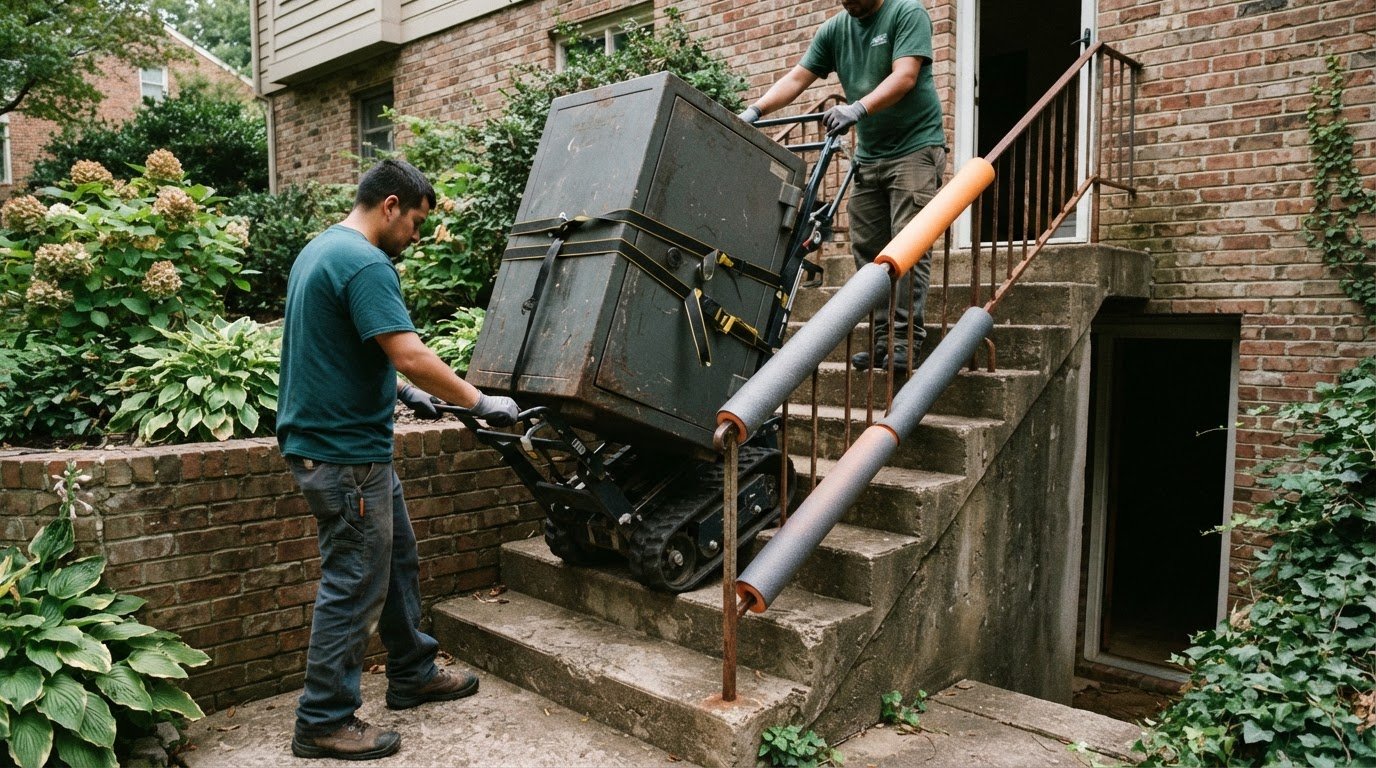
How do professional movers safely move a heavy safe over thresholds or stairs?
Thresholds and stairs require a planned transition, not a sudden push or pull. Movers assess clearance and the safe’s approach, then use equipment and coordinated handling suited to the route. Heavy Furniture Moving lists 3 movers and a safe dolly for safe moves. Stair geometry, landing space, and the surface at each transition affect the method. A route that can’t be controlled safely should be reconsidered before the safe moves.
Which safe-moving companies serve Fairfax, Virginia, and what precautions do they recommend?
Heavy Furniture Moving serves Fairfax and specializes in moving heavy items, including safes. Its stated precautions include Masonite floor protection, blankets, straps, and door-jamb covers. Before a move, provide the safe’s location and destination, plus details about stairs, tight turns, and narrow doorways. Those specifics help the movers plan access and handling for the home. The company’s safe-move information lists safes from 300-1,500 lb.
Frequently Asked Questions
Professional movers use rigid floor panels beneath the safe’s moving equipment and soft padding to protect its edges. Plywood or Masonite can create a stable path, while moving blankets are better suited to protecting the item itself. At doorways, panels should cover the transition where wheels or equipment might otherwise touch exposed flooring. The right setup depends on the route and how the safe will move.
Professional movers first review the access route and decide where the safe can be carried or needs to roll. They protect the route, position the safe on suitable moving equipment, and coordinate the movement to keep it controlled. At a doorway or turn, they pause and adjust the equipment before proceeding. They finish by placing the safe in its intended position, rather than dragging it across bare hardwood.
For safe moves, Heavy Furniture Moving lists a safe dolly as part of its equipment approach, along with Masonite floor protection, blankets, and straps. Its stated safe-move range is 300–1,500 lb, with 3 movers and a safe dolly listed for that work. Equipment selection and crew needs depend on the safe and access conditions. A refrigerator dolly or general hand truck shouldn’t be assumed to suit every safe.
Movers consider the safe’s footprint, where its weight contacts the floor, the travel route, and the visible condition of the flooring. A narrow support area concentrates force more than a broad one, and wheels add pressure at their contact points. Movers can inspect accessible flooring for damage or movement, but a surface inspection alone doesn’t establish the subfloor’s capacity. Structural concerns call for an assessment of the floor assembly, not a guess based on the safe’s weight alone.
Thresholds and stairs require a planned transition, not a sudden push or pull. Movers assess clearance and the safe’s approach, then use equipment and coordinated handling suited to the route. Heavy Furniture Moving lists 3 movers and a safe dolly for safe moves. Stair geometry, landing space, and the surface at each transition affect the method. A route that can’t be controlled safely should be reconsidered before the safe moves.
Heavy Furniture Moving serves Fairfax and specializes in moving heavy items, including safes. Its stated precautions include Masonite floor protection, blankets, straps, and door-jamb covers. Before a move, provide the safe’s location and destination, plus details about stairs, tight turns, and narrow doorways. Those specifics help the movers plan access and handling for the home. The company’s safe-move information lists safes from 300–1,500 lb.