How to Prevent Wall Damage When Moving Furniture in Centreville
What if the best way to protect your walls isn’t adding more padding, but planning a better route? Blankets and corner guards can help when a sofa or dresser passes through a tight doorway, but they can’t compensate for a blocked path or a rushed turn. If you’re looking to prevent wall damage moving furniture Centreville, start by checking the route before you lift.
Bulky pieces are difficult to control around corners, door frames, and narrow hallways. Before moving, measure the furniture and the tightest openings, clear obstacles, and decide where protection will do the most good. Then agree on how to guide the item through each turn.
This guide explains how to plan the route, choose protective materials, and move furniture carefully through tight spaces. It also covers when heavy or awkward items are better handled with experienced help. If a couch won’t fit through a standard entryway, sofa hoisting may be an option.
Key Takeaways
- To prevent wall damage moving furniture Centreville homes, plan the route before lifting and check the tightest spaces.
- Measure bulky pieces and doorways, then clear obstacles before the move starts.
- Use blankets, corner guards, or sliders where they suit the route and the item.
- Keep the path visible and communicate before turns, pauses, or changes in direction.
- Get experienced help for heavy items, stairs, tight turns, or a sofa that won’t fit through a standard entryway.
Why Furniture Moves Damage Walls in Centreville Homes
Moving damage can be more than a deep dent. A furniture edge may leave a dark scuff, scrape paint, chip trim, or press a shallow mark into drywall. These marks often happen during a turn or when a piece catches on a doorway. To prevent wall damage moving furniture Centreville homes, look at where contact is most likely and what could make the item hard to control.
Poor visibility is a common cause. A tall bookcase can block the person carrying the front from seeing a hallway corner. An awkward grip can make it harder to adjust the angle, and a rushed turn gives the furniture momentum that can be difficult to stop. The Moving (relocation) overview describes moving as a process that involves planning and preparation. That same deliberate approach helps avoid hurried handling inside the home.
Which surfaces and room features need protection?
Pay attention to more than open stretches of wall. Painted corners, exposed drywall, baseboards, door frames, and stairwell walls can all sit close to furniture as it passes. Hallway corners, door jambs, narrow passages, and stair landings are especially vulnerable because there may be little room to turn.
Nearby floors and the furniture’s finish need attention, too. A tilted piece can scrape flooring, while a hard edge rubbing against a wall may scratch wood or upholstery. Before moving, note any marks along the route. A quick visual check helps distinguish existing scuffs from damage that occurs during the move.
Why heavy furniture is harder to control
Weight is only one challenge. Large pieces can be difficult to grip securely, and limited handholds may leave carriers in an unstable position. The item can block sightlines, and a small change in angle may shift its balance. When it’s tilted around a tight turn, a top, bottom, or far corner can swing wider than expected.
A move that feels easy in an open room can become difficult at a stair landing or narrow doorway. One person may focus on lifting while another watches the clearance. If either person can’t see the route or communicate clearly, the furniture may drift toward a wall before anyone can correct it.
A visible route and controlled movement leave less room for accidental contact. Don’t assume that a familiar-looking hallway or doorway in a Centreville home has enough clearance. Inspect the actual path from the item’s starting point to its destination, including corners and transitions. This route-specific check shows where contact is most likely and what to address before moving.
Prepare a Centreville Furniture-Moving Route Before You Lift
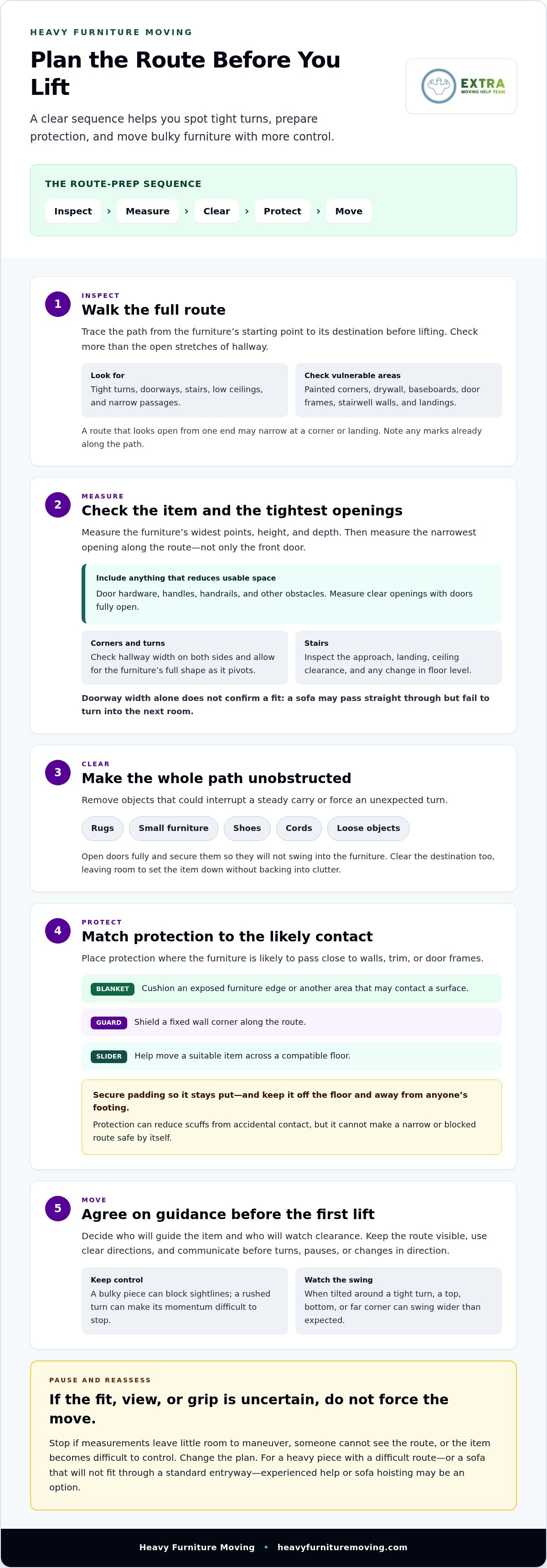
Start with the path, not the first lift. Follow this sequence: inspect, measure, clear, protect, then move. Walk the full route from the furniture’s current position to its destination. Look for tight turns, doorways, stairs, low ceilings, and places where a carrier could lose sight of an edge. A path that looks open from one end may narrow at a corner or landing.
Next, check the item. Note its widest points, height, and depth, along with any parts that can be safely removed according to the manufacturer’s instructions. Measure the narrowest opening on the route, not just the front door. Consider the space needed to turn the furniture and the room needed to hold and guide it.
Measure doorways, corners, and stair approaches
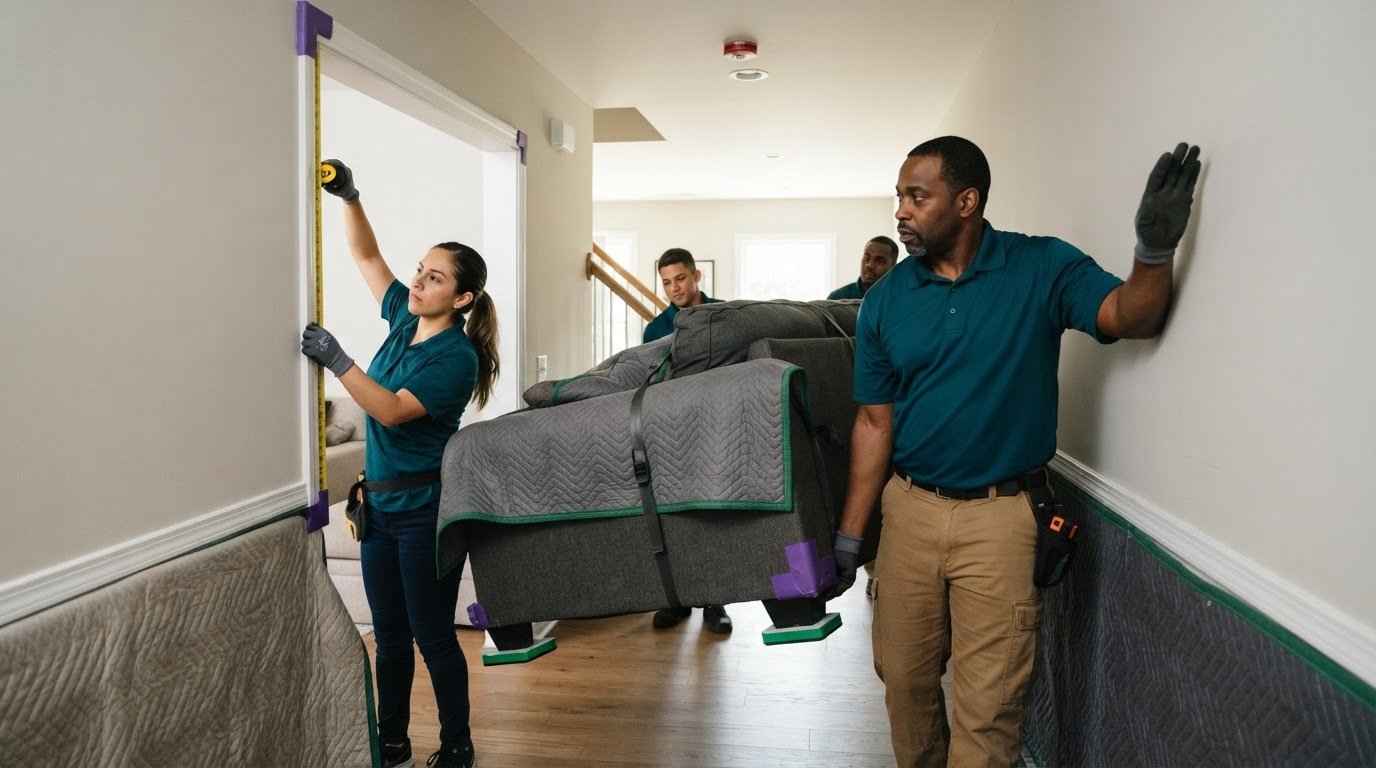
Measure clear openings with the door fully open. Include handles, door hardware, handrails, and anything else that reduces usable space. At corners, check the hallway width on both sides and consider the item’s full shape as it pivots. On stairs, inspect the approach, landing, ceiling clearance, and any change in floor level.
Doorway width alone doesn’t tell you whether a piece will fit. A sofa might pass through straight on but fail to turn into the next room. If measurements leave little room to maneuver, or you’re unsure how the item will angle through, pause and reassess before lifting.
Clear and protect the path
Remove rugs, small furniture, shoes, cords, and loose objects from the entire route. Even a minor obstacle can disrupt a steady carry or force an unexpected turn. Open doors fully and secure them so they won’t swing into the furniture. Clear the destination, too, so there’s room to set the item down without backing into clutter.
Place moving blankets or corner guards where furniture is likely to pass close to walls, trim, or door frames. Secure protective materials so they stay put, and keep them off the floor and away from anyone’s footing. Padding can reduce scuffs from accidental contact, but it can’t make a narrow or blocked route safe by itself.
Before moving, agree on who will guide the item and who will watch the clearance. Keep the route visible, use clear directions, and stop if the item blocks someone’s view or becomes difficult to control. Don’t push through uncertain dimensions, poor visibility, or an unstable grip just to keep moving. Pause and change the plan instead.
If a heavy piece has a difficult route or can’t be controlled confidently, Centreville heavy-item moving help can be a sensible option. Planning the path first also makes it easier to describe access challenges and determine whether the item can pass through the entryway or needs another approach.
Choose the Right Wall-Protection Method for Each Furniture Move
Different materials address different risks. A moving blanket can cushion an exposed edge, a corner guard can shield a fixed wall corner, and furniture sliders can help move a suitable item across a compatible floor. Choose protection based on where contact is likely and how the furniture will travel. To prevent wall damage moving furniture Centreville homes, treat these tools as backup, not permission to rush or force a tight turn.
When blankets, guards, and sliders can help
Moving blankets can cover furniture edges or other areas that might brush a wall. Secure the blanket so it won’t slip, bunch up, or cover a handhold. Corner guards are useful where a stationary wall edge sits beside the planned route. They protect that spot, but won’t shield every surface as a large item changes angle.
Sliders may help move an item across a level floor when they suit both the floor surface and the furniture’s weight. Follow the slider instructions and check that the item sits steadily on them before moving. Sliders aren’t a substitute for carrying furniture over a threshold or on stairs.
- Blankets: Cushion furniture edges and likely contact areas.
- Corner guards: Cover fixed wall corners along the route.
- Sliders: Help with controlled movement across a compatible floor.
Use materials that fit the task. A blanket caught between furniture and a wall may shift out of place, while an unsuitable slider may move unevenly. Check that each item is secure and doesn’t interfere with a firm grip, a clear view, or safe footing. If protection moves or makes the furniture harder to control, stop and adjust it.
When protection materials are not enough
Tight turns, stairs, and oversized items require a workable route and careful control, even when walls are padded. A guard can’t create turning space, and a blanket can’t keep a heavy item balanced. Don’t force furniture through an opening you haven’t measured or continue if the item shifts beyond your control.
Protective materials reduce the risk of contact, but don’t eliminate it. Consider the item’s shape and the path it must take. A piece may clear a doorway straight on but still be too large to turn into the next room. Sliders may help on a clear, level stretch, but they won’t solve a narrow stair landing or awkward threshold.
Choose a movement method for each part of the route. Slide only where the floor and item make it suitable. Use a controlled lift or carry over thresholds and on stairs, with clear communication and a steady grip. If the route becomes uncertain, pause rather than relying on more padding. Heavy or bulky furniture that’s difficult to control may be safer to move with experienced help.
Move Furniture Through Doorways and Hallways Without Scraping Walls
A clear route and good padding help, but coordination protects walls during the move itself. Before lifting, agree on who will lead, who will watch the clearance, and what to say to mean “stop” or “turn.” Keep instructions simple. If someone can’t see the other carrier or the route, pause and reset before moving again.
Keep the path visible as you go. Move slowly through narrow hallways, doorways, and stair approaches, where a small amount of clearance can make the difference between passing a frame and scraping it. A controlled pace gives everyone time to notice a snag and adjust before it becomes a hard bump.
Use controlled turns instead of forcing a tight fit
Make small, deliberate adjustments rather than pivoting suddenly. Keep the item balanced, and don’t let an edge drag against painted walls or trim as you turn. Before changing direction, check that everyone has secure footing and knows which way the furniture will move.
If the next move or another person’s position isn’t clear, stop. A short pause is safer than guessing.
At a doorway, move only when the person guiding the far end can see the clearance. If the furniture catches, don’t yank it free. Set it down if you can do so safely, identify what’s blocking it, and adjust the angle or reconsider the route. Stop and reassess if the item tilts unpredictably, slips from a secure grip, or presses against a wall. Continuing under pressure can damage the home and make the load harder to control.
Stairs need extra care because the load and footing change from step to step. Keep the stair path clear and protect vulnerable floor areas without creating a slippery surface or tripping hazard. Plan each transition before lifting, and make sure the person carrying the lower end can communicate with the person above. A guide to moving heavy furniture upstairs without scratching floors can also help you consider floor protection alongside wall clearance.
Know when to switch from DIY to professional help
A small, manageable piece on a clear, level route may be reasonable to move yourself. Get experienced help with furniture that’s heavy, bulky, awkward to grip, or difficult to keep steady, especially if the route includes stairs, tight turns, or challenging access. A complicated path can require more planning and coordination than a simple room-to-room move.
If an item can’t pass through a standard entryway, don’t force it or keep trying new angles without a safe plan. Sofa hoisting may be an option for a couch that won’t fit through a standard entryway. For local support with a difficult heavy-item move, get help moving heavy furniture in Centreville. Arranging experienced help before moving day can make a difficult route easier to manage and reduce the risk of wall contact.
Get Wall-Conscious Furniture Moving Help in Centreville
Some furniture moves are straightforward. Others involve a heavy dresser on stairs, a bulky piece that needs a tight turn, or a route where carriers can’t keep the item steady and the walls in view. In those situations, local moving help can make sense. A planned, coordinated move helps manage the item and its path with care.
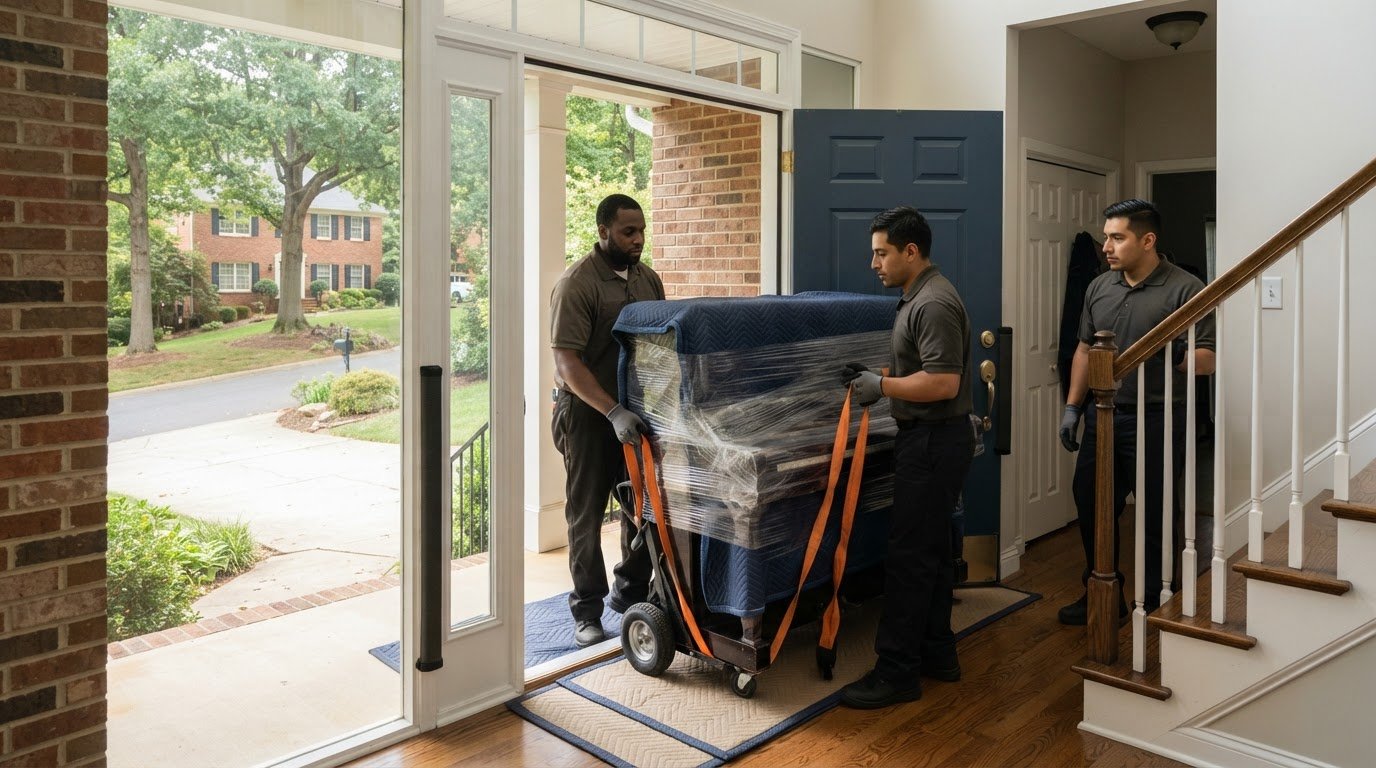
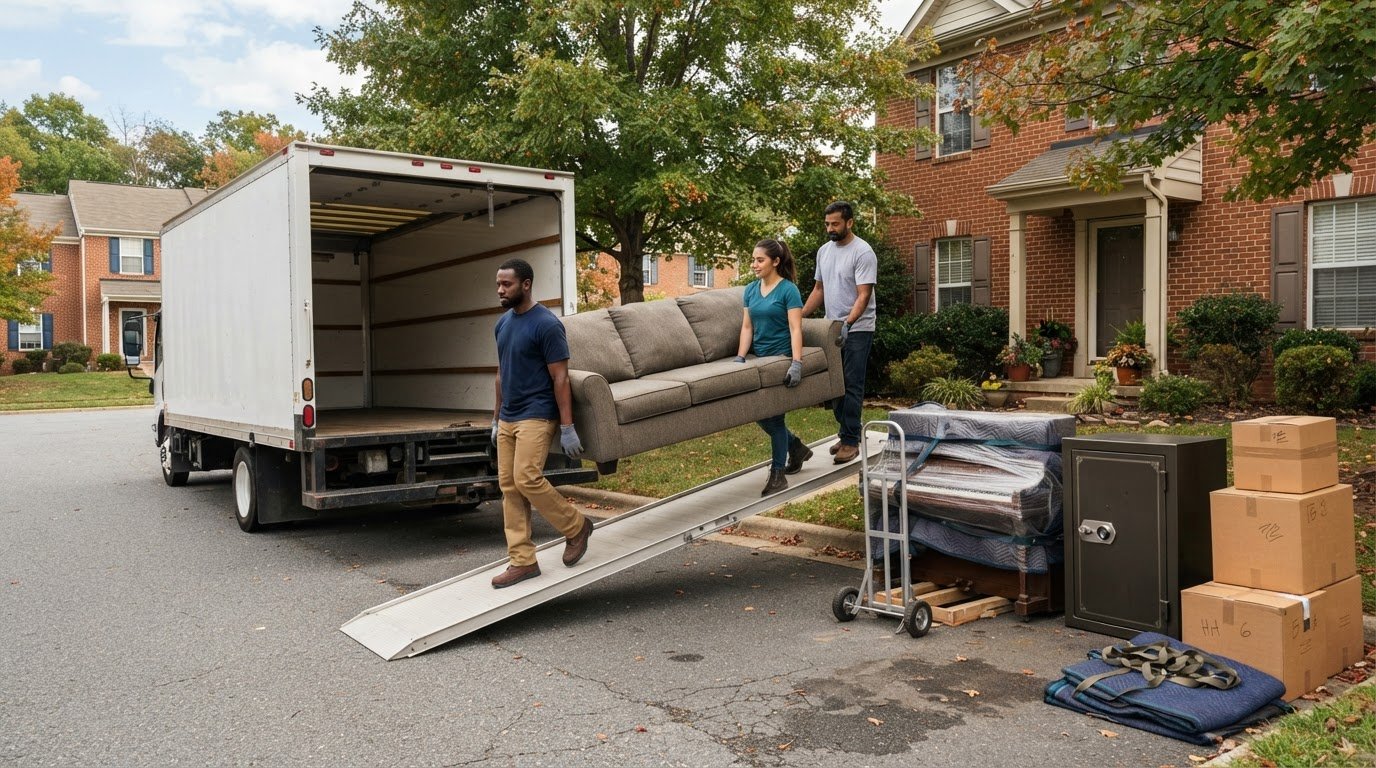
Heavy Furniture Moving provides residential moving help in Centreville, with a focus on heavy and bulky items. The team moves furniture and handles specialized heavy items, including pianos, safes, and exercise equipment. If a couch can’t pass through a standard entryway or elevator, sofa hoisting may offer another way to move it.
Before arranging help, consider the entire route the item needs to travel. A short move can still be challenging if it involves narrow access, stairs, or a sharp turn. Sharing those details early helps shape a plan around the home and furniture.
What to share when arranging a furniture move
Describe the item and where it needs to go. Include its starting location, destination, and any obstacles along the way. Useful details include:
- The type of furniture and its approximate dimensions, especially its widest points.
- Whether it’s upstairs, downstairs, or in a room with limited access.
- Narrow hallways, tight corners, stair landings, elevators, or doorways that could affect the route.
- Unusual access conditions, such as a difficult approach to the home.
Measurements can help explain why a route feels tight. Photos of the item, doorway, hallway turn, or stair approach can also show details that are hard to describe. Share what you know and point out any part of the route where you’re unsure the item will clear safely.
Early route details help movers plan a more controlled furniture move. They give the team a clearer picture of the access, turns, and handling challenges before work begins.
Make the next step simple
Heavy and bulky residential items are a core focus at Heavy Furniture Moving. If you’re unsure whether a large piece is manageable on your own, don’t force the move or risk a difficult turn. Describe the furniture and route to get help suited to the job.
Get moving help for your Centreville furniture and share the route details so the move can be planned with the item and home in mind.
Make Your Next Furniture Move Easier to Plan
A calmer move starts with one clear decision: don’t force a piece through a route that feels uncertain. Consider what the furniture needs and whether you can keep it steady from start to finish. If not, experienced help is a practical way to protect your home and avoid turning a difficult lift into a stressful one.
For residents looking to prevent wall damage moving furniture Centreville, Heavy Furniture Moving provides residential support for heavy and bulky pieces. If a couch can’t pass through a standard entryway or elevator, sofa hoisting may be an option. Share the item, its location, and any access challenges when arranging help so the move can be planned around the actual route.
Heavy Furniture Moving serves residential customers in Fairfax, Woodbridge, Manassas, Manassas Park, Aldie, Ashburn, Mclean, Vienna, Reston, Centreville, Chantilly, Clifton, Dumfries, South Riding, Fairfax Station, Haymarket, and Gainesville.
Get moving help for your Centreville furniture and take the next step with a plan that fits your home.
Frequently Asked Questions
Can I prevent wall damage by covering furniture with moving blankets?
Moving blankets can cushion furniture edges and reduce scuffs if a piece brushes a surface. They won’t shield every wall or prevent dents from a heavy impact. Secure the blanket so it stays in place, cover exposed corners, and clear the path. Move slowly, especially near turns. With tight corners or heavy pieces, control matters more than padding alone.
How do I move a couch through a narrow doorway without scratching the walls?
Measure the couch at its widest points and compare those dimensions with the doorway’s clear opening. Check the next turn, too. Passing through the frame doesn’t mean the couch can pivot into the room. Remove obstacles and, if there’s room, check the intended angle before lifting. Don’t force or drag the couch. If it can’t pass through a standard entryway, professional sofa hoisting may be an option.
What should I put on wall corners when moving furniture?
Use corner guards or securely placed protective padding on exposed edges along the furniture’s route. Make sure the guards stay in place and don’t stick out where they could catch clothing or interfere with footing. Identify the most exposed corners before moving, such as the turn into a room. Guards can protect those spots, but steady handling still matters.
Is it safer to slide or carry heavy furniture across a room?
The right method depends on the item, floor, and route. Suitable sliders may help move a stable piece across a compatible, level surface, but they aren’t right for every floor or piece of furniture. Use another approach for thresholds, stairs, or an item that shifts easily. Don’t drag furniture directly across the floor, and stop if you can’t keep it under control.
What happens if furniture gets stuck in a doorway during a move?
Stop instead of pushing harder. Stabilize the piece if you can do so safely, then check where it’s caught and whether it’s pressing against trim, hinges, or a wall. Once you understand the obstruction, make only a small, controlled adjustment. Don’t yank or twist blindly. If the furniture remains stuck or difficult to steady, get experienced help rather than forcing it through.
When should I hire furniture movers to protect walls in Centreville?
Consider professional help for heavy or bulky pieces, stairs, narrow turns, or furniture that’s difficult to grip and control. These conditions can make a move challenging even over a short distance. Heavy Furniture Moving serves Centreville and specializes in heavy and bulky residential items. Matching help to the route and item is a sensible step when you want to prevent wall damage moving furniture in Centreville.
Can movers hoist a couch if it will not fit through my doorway?
Sofa hoisting can be an option when a couch can’t pass through a standard entryway or elevator. Describe the couch and the access conditions when arranging help. Details such as where the couch is located and what makes the usual route difficult help explain the move. Hoisting isn’t automatically suitable for every property or window.
Frequently Asked Questions
Pay attention to more than open stretches of wall. Painted corners, exposed drywall, baseboards, door frames, and stairwell walls can all sit close to furniture as it passes. Hallway corners, door jambs, narrow passages, and stair landings are especially vulnerable because there may be little room to turn. Nearby floors and the furniture’s finish need attention, too. A tilted piece can scrape flooring, while a hard edge rubbing against a wall may scratch wood or upholstery. Before moving, note any marks along the route. A quick visual check helps distinguish existing scuffs from damage that occurs during the move.
Moving blankets can cushion furniture edges and reduce scuffs if a piece brushes a surface. They won’t shield every wall or prevent dents from a heavy impact. Secure the blanket so it stays in place, cover exposed corners, and clear the path. Move slowly, especially near turns. With tight corners or heavy pieces, control matters more than padding alone.
Measure the couch at its widest points and compare those dimensions with the doorway’s clear opening. Check the next turn, too. Passing through the frame doesn’t mean the couch can pivot into the room. Remove obstacles and, if there’s room, check the intended angle before lifting. Don’t force or drag the couch. If it can’t pass through a standard entryway, professional sofa hoisting may be an option.
Use corner guards or securely placed protective padding on exposed edges along the furniture’s route. Make sure the guards stay in place and don’t stick out where they could catch clothing or interfere with footing. Identify the most exposed corners before moving, such as the turn into a room. Guards can protect those spots, but steady handling still matters.
The right method depends on the item, floor, and route. Suitable sliders may help move a stable piece across a compatible, level surface, but they aren’t right for every floor or piece of furniture. Use another approach for thresholds, stairs, or an item that shifts easily. Don’t drag furniture directly across the floor, and stop if you can’t keep it under control.
Stop instead of pushing harder. Stabilize the piece if you can do so safely, then check where it’s caught and whether it’s pressing against trim, hinges, or a wall. Once you understand the obstruction, make only a small, controlled adjustment. Don’t yank or twist blindly. If the furniture remains stuck or difficult to steady, get experienced help rather than forcing it through.
Consider professional help for heavy or bulky pieces, stairs, narrow turns, or furniture that’s difficult to grip and control. These conditions can make a move challenging even over a short distance. Heavy Furniture Moving serves Centreville and specializes in heavy and bulky residential items. Matching help to the route and item is a sensible step when you want to prevent wall damage moving furniture in Centreville.
Sofa hoisting can be an option when a couch can’t pass through a standard entryway or elevator. Describe the couch and the access conditions when arranging help. Details such as where the couch is located and what makes the usual route difficult help explain the move. Hoisting isn’t automatically suitable for every property or window.