How to Move Heavy Iron Patio Furniture Up Reston Terrace Steps
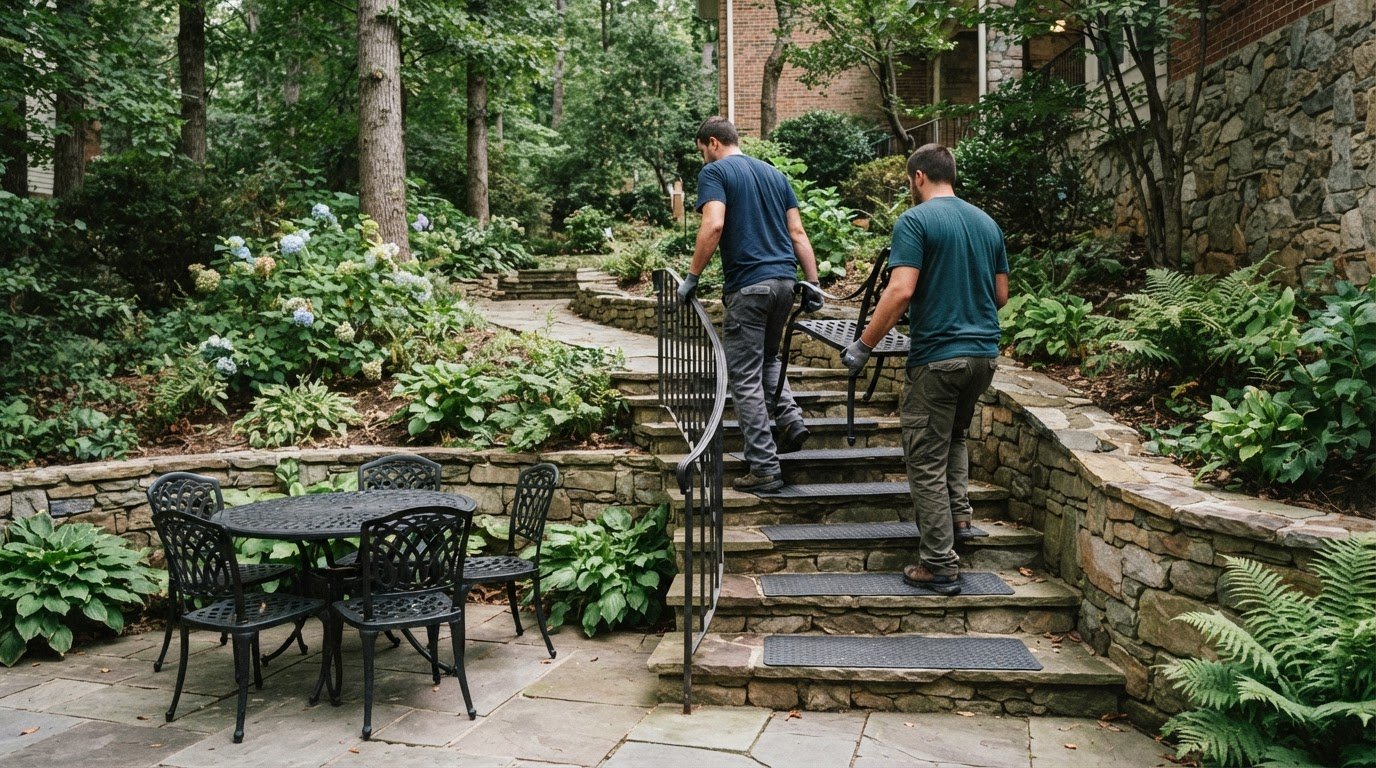
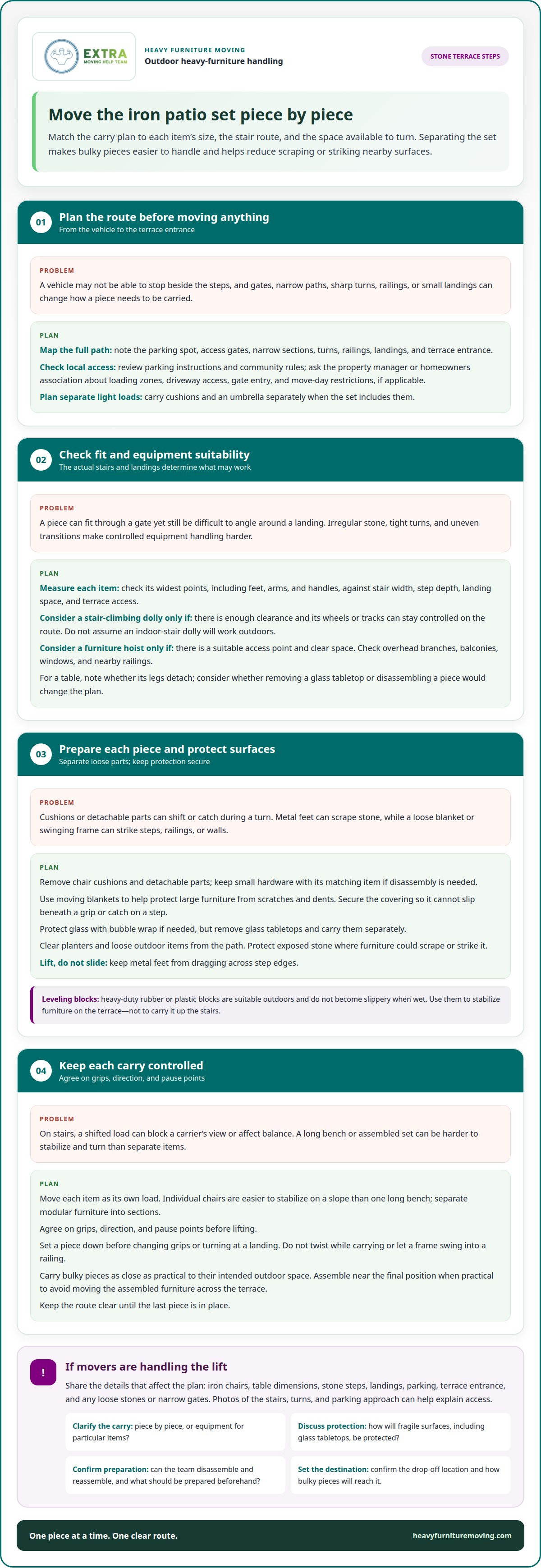
Move a heavy iron patio set up stone terrace steps piece by piece, rather than carrying it assembled. For moving a heavy iron patio furniture set up stone terrace steps in Reston, the safest approach depends on each item’s size and weight, along with the space available to turn on the stairs and landings.
It’s natural to wonder whether a sturdy set can be lifted in one go. Iron furniture can be awkward to grip, and a narrow stairway makes balancing a table and chairs harder. Separating the pieces makes them easier to handle and helps reduce the risk of scraping the stone or striking a railing.
This guide explains when to separate chairs, tables, cushions, and detachable parts, and how to plan the route before moving anything. You’ll also learn what delivery and moving help can handle when bulky furniture needs to go up terrace steps, so you can choose a practical approach without making the lift harder than it needs to be.
Key Takeaways
- Move an iron patio set piece by piece instead of trying to carry it assembled up stone steps.
- Plan the route around stair width, landings, turns, and access to the terrace.
- Remove cushions and detachable parts before moving to make bulky pieces easier to handle.
- Use moving blankets to help protect heavy furniture, and choose outdoor-suitable leveling blocks where needed.
- Heavy Furniture Moving can help with bulky lifting through its moving and in-home furniture moving services.
Delivery options for heavy or awkward furniture
Choose a moving approach after mapping the route from the vehicle to the terrace. With outdoor furniture, stair shape, landing space, and removable parts determine whether pieces should travel assembled or separately.
-
Check Local Access and Parking Rules
Check the parking instructions and community rules for your Reston address. Ask the property manager or homeowners association about loading zones, driveway access, gate entry, and move-day restrictions, if applicable. Access requirements vary by property, so don’t assume a vehicle can stop beside the terrace steps.
Trace the route from the parking spot to the stone stairs. Note gates, narrow paths, sharp turns, railings, and landings. A clear path helps determine whether a chair can pass upright or needs careful repositioning. Identify where the vehicle can stop without blocking a driveway or shared access. If the set includes an umbrella or cushions, plan a separate carry for those lighter pieces.
-
Assess Hoist and Stair-Climbing Dolly Suitability
Compare each piece’s size with the stair width, step depth, and landing space before choosing equipment. A stair-climbing dolly may work if there is enough clearance and its wheels or tracks can stay controlled. Irregular stone, tight turns, and uneven transitions make handling more difficult. Don’t assume a dolly designed for indoor stairs will work outdoors.
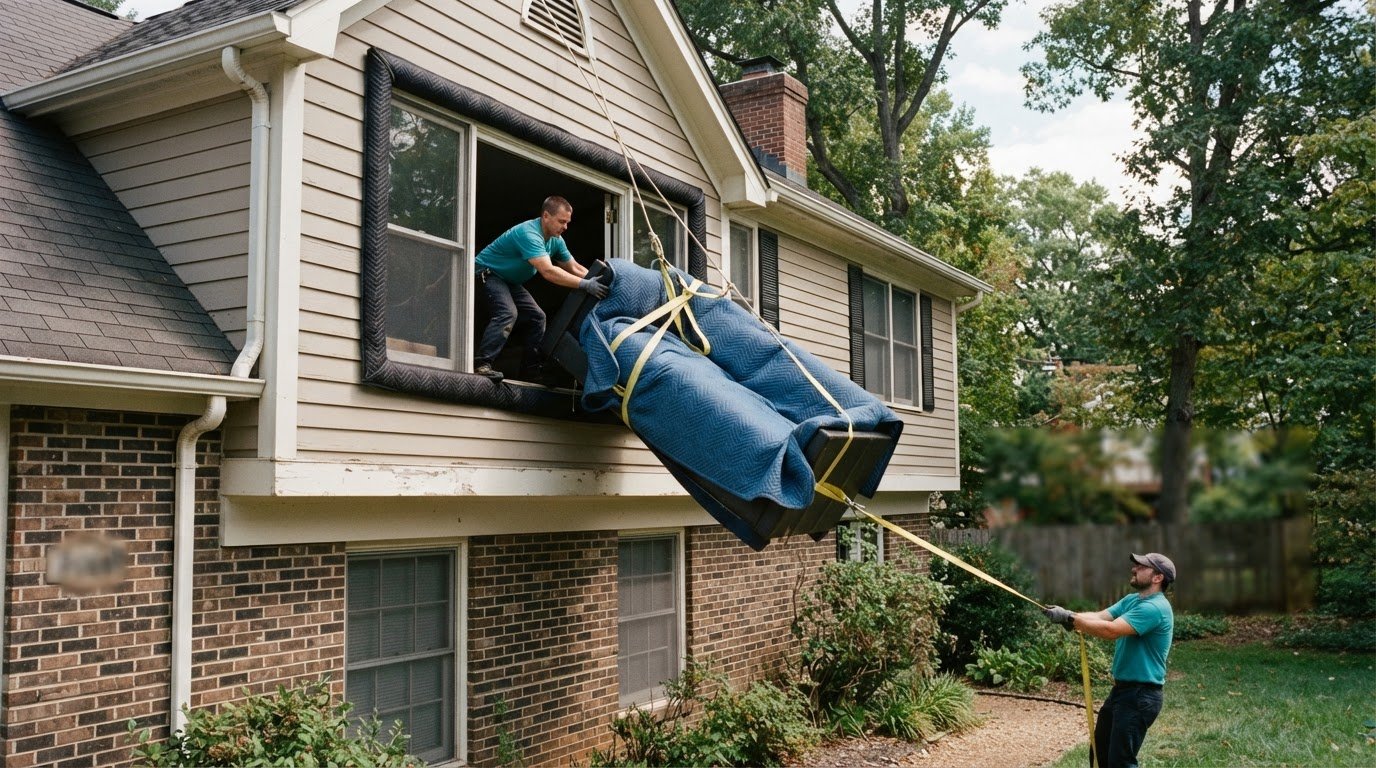
A furniture hoist may help if a bulky item cannot turn on the stairs, but it requires a suitable access point and clear space. Check for overhead branches, balconies, windows, and nearby railings. A table with wide legs, for example, may be difficult to angle through a narrow landing even when its top fits. Ask which approach suits the route and whether disassembly or removing a glass tabletop would change the plan.
-
Ask Movers Before Booking
Describe the full job before booking: the iron chairs, table dimensions, stone steps, landings, parking, and terrace entrance. Ask whether the crew will carry the set piece by piece or use equipment for particular items. Clarify how fragile surfaces, including glass tabletops, will be protected and whether cushions or an umbrella should travel separately.
Then ask what access details affect the delivery plan. Share photos of the stairs, turns, and parking approach, and point out loose stones or narrow gates. Ask whether the team can handle disassembly and reassembly, and what preparation they expect before arrival. A careful, accurate description helps prevent surprises at the curb. Confirm the planned drop-off location and how bulky pieces will reach it before finalizing the booking.
Heavy and bulky furniture handling
Move each item as its own load, matching the handling plan to its shape. Moving a heavy iron patio furniture set up stone terrace steps in Reston calls for a clear route and controlled carries.
-
Assess Furniture Weight and Dimensions
Measure each item at its widest points, including feet, arms, and handles. Compare the measurements with the stair width, landing space, and terrace entrance. For a table, note whether its legs detach; for modular furniture, identify where sections separate. Consider how the frame balances when lifted. A wide piece can be awkward even if it physically fits through a gate.
Remove chair cushions and carry them separately. Take off detachable parts that could catch on railings or shift during a turn. Keep small hardware with its matching item if disassembly is needed. These steps reduce loose pieces and make each load easier to position along the route.
-
Choose Equipment for Outdoor Stone Steps
Match equipment to the furniture, stair surface, and available clearance. Heavy-duty rubber or plastic leveling blocks are suitable outdoors because they don’t become slippery when wet. Use them to stabilize furniture after it reaches the terrace, not to carry it up the stairs. Use a dolly only if it allows controlled movement along the actual route.
Moving blankets help protect large furniture from scratches and dents. Secure the covering so it won’t slip beneath a grip or catch on a step. Bubble wrap can protect glass surfaces, but remove glass tabletops and carry them separately. Moving a heavy iron patio furniture set up stone terrace steps in Reston is easier to plan when each piece and tool has a clear purpose.
-
Protect Stone Steps During the Move
Clear the route, then protect exposed stone where furniture could scrape or strike it. Keep metal feet from dragging across step edges, and lift rather than slide each piece. A dropped leg or swinging frame can damage stone, railings, and nearby walls. Move planters and loose outdoor items away from the carrying path before starting.
Carry bulky pieces as close as possible to their intended outdoor space. This reduces extra lifting and contact with finished surfaces. Assemble furniture near its final position when practical, so it doesn’t need to cross the terrace assembled. Keep the route clear until the last piece is in place.
-
Manage Carrying and Tipping Risks
Agree on grips, direction, and pause points before lifting. On stairs, a shifted load can block a carrier’s view or throw them off balance. Individual chairs are easier to stabilize on a slope than one long bench. Separate modular furniture into sections so each load can be carried and positioned independently.
Set a piece down before changing grips or turning at a landing. Don’t twist while carrying or let a frame swing into the railing. For a difficult lift, professional heavy furniture handling can help plan the carry. A moving heavy iron patio furniture set up stone terrace steps in Reston requires each load to remain balanced from the first step to the final placement.
Heavy iron, steel, and solid-wood furniture
Iron, steel, and solid wood can be much heavier than lightweight outdoor furniture. Choose a handling method based on the furniture’s construction, shape, and route.
- Identify the material and support points. Check whether the chairs, table, and benches are iron, steel, solid wood, or a combination. Look underneath for crossbars, joints, and legs that can support a controlled lift. Avoid gripping thin decorative sections or moving parts. A solid frame may feel sturdy, but a narrow grip can still strain a joint or shift the load.
- Move one stable piece at a time. Heavy materials are less likely to move on their own than lightweight furniture, but their weight makes them harder to reposition on steps. Separate the chairs from the table instead of carrying the set assembled. Keep a heavy table balanced, and never lift it by a glass top or unsupported edge. The right method depends on its shape and available handholds.
- Check how the furniture meets the ground. Inspect feet, glides, and leg ends before moving each piece. A plastic glide can catch on a stone edge, while a bare metal foot can scratch the surface if dragged. Lift the feet clear of each step instead of sliding them. On the terrace, set the furniture down evenly and check that every leg rests securely.
- Decide whether disassembly will help. Some tables have removable legs, and some benches separate into sections. Remove a part only if its fasteners are accessible and the frame remains stable afterward. Keep parts together by item and protect exposed joints during the carry. If the furniture is welded or built as one frame, leave it assembled and plan the lift around its full dimensions.
- Protect the finish during handling. Iron and steel can scrape stone, railings, and door frames if a frame swings during a turn. Wrap contact points with a moving blanket and keep the covering secure as the furniture changes position. For solid wood, avoid bearing down on decorative trim or thin slats. Clear a landing area so each piece can be set down without striking another item.
- Set the furniture in its final position before releasing it. Carry heavy pieces close to their intended outdoor space when access allows. This limits extra lifting across the yard and reduces repeated contact with stone. Place chairs individually around the table rather than moving them as a group. Once positioned, check that the table and each chair sit firmly without rocking or sliding.
How do movers assess the weight and dimensions of an iron patio furniture set?
Movers assess each item separately, then compare its size and handling needs with the route. A table, chair, and bench create different loads, even when they belong to the same iron set.
- Inventory each piece. List every chair, table, bench, and separate section before planning the move. Note whether the set is assembled or has removable parts. A complete inventory prevents a wide table from being treated like an individual chair. It also helps movers plan which items travel separately and which parts need protection.
- Measure the widest points. Record the width, height, and depth of each piece, including table legs, chair arms, and decorative edges. Measure the item in the position used for carrying, not only as it sits on the patio. A chair turned sideways, for example, may need more clearance at the arms than its front-facing width suggests.
- Describe the frame and construction. Identify whether each item is solid iron, tubular steel, or a combination of materials. Point out thick bases, crossbars, curved arms, and joined sections. These features affect where movers can grip and how the load balances. A broad iron table base, for instance, may be heavier and harder to angle than its top suggests.
- Check removable parts. Note detachable table legs, cushions, glass tops, and other components that change an item’s size or handling. Keep hardware with the piece it belongs to. Removing a glass tabletop can reduce the carried item’s bulk, while leaving a fixed frame assembled preserves its structure. Movers use these details to plan separate loads and safer grips.
- Match measurements to the route. Compare each item’s dimensions with doorways, gates, stair width, landings, and turns. A table may fit through a gate but still be difficult to pivot on a narrow landing. Share measurements and clear route photos with the movers. This helps them identify tight spots and plan the orientation of each piece before lifting.
- Explain the load and access together. Describe the material, dimensions, removable parts, and route as one job. Mention uneven stone, railings, low branches, or a restricted terrace entrance. These details help movers decide whether the set should travel piece by piece and choose a handling approach for each item. Accurate information supports a practical plan without guesswork.
What equipment is safest for moving heavy furniture up outdoor stone steps?
Match each tool to the item and the stone route. Outdoors, heavy-duty rubber or plastic leveling blocks are recommended because they don’t become slippery when wet.
- Choose carrying equipment for the route. Check stair width, landing space, and turns before selecting a dolly or other moving aid. A stair-climbing dolly may suit a straight, clear run, but tight turns or irregular stone can make it harder to use. Don’t force wheels over uneven edges. If the item cannot remain balanced and controlled, choose another handling method.
- Use lifting straps only when they support a controlled carry. Straps can help position a heavy table or chair, but they don’t eliminate the need to balance its frame. Keep the load close and avoid pressing straps against glass, thin arms, or decorative ironwork. On a narrow landing, pause and reset the grip before turning rather than pivoting with the furniture suspended.
- Protect contact points with moving blankets. Wrap iron feet, table edges, and chair arms where they could strike stone or railings. Secure the blanket so it doesn’t slip into a carrier’s grip or drag beneath the furniture. Remove a glass tabletop and protect it separately; padding around the frame won’t prevent the glass from shifting.
- Keep equipment stable on each step. Before moving a piece, clear loose objects and place tools where they won’t obstruct the route. Don’t use a dolly on a landing if it cannot turn without tipping or hitting the railing. Heavy-duty rubber or plastic leveling blocks can stabilize furniture once it reaches the terrace, but they are not for carrying it up the stairs.
- Secure the load during vehicle transport. Once the furniture is loaded, strap it in place to prevent shifting. Position bulky pieces so the straps hold the frame, not fragile surfaces or removable parts. Keep cushions and small components separate from the iron frame, and confirm every item is secure before the vehicle moves.
For a heavy iron table or awkward chair that needs careful handling, arrange heavy furniture moving help for the lift up your outdoor stone steps.
Once the furniture is on the terrace, stability still matters. The UL outdoor furniture guide emphasizes structural integrity, proper instructions, and safety considerations for outdoor-use products. Follow the product instructions when setting up pieces, and treat a stable position as part of safe use rather than relying only on a carrier or pad. Adjustable outdoor furniture legs can be screwed in or out individually to stabilize furniture on a slope. After setup, outdoor dining furniture should be checked by pushing the table and sitting in every chair to confirm nothing wobbles, rocks, or slides.
On a very steep patio, a permanent professional fix may be the safest long-term choice. For properties dealing with uneven grades, hardscaping and outdoor construction teams like Cascade Outdoor Services show how proper terrace leveling and structural masonry can create a stable, safe foundation for heavy dining sets. Outdoor furniture made from heavier materials such as iron, steel, or solid wood is less likely to move than lightweight furniture. That resistance can help once a piece is in place, but the furniture still needs to be moved under control up the steps. Check each piece after positioning, especially on sloped ground, and choose handling and setup methods that keep it stable.
Heavy Furniture Moving
Heavy Furniture Moving helps with iron patio pieces that are too heavy or awkward to carry up terrace steps without support. The team’s residential moving and heavy-lifting services handle bulky furniture, with the plan tailored to the item and its access route.
Turn to the team when a table is difficult to grip, stair landings limit maneuvering, or carrying the set assembled feels impractical. Share the furniture type and describe the stone steps, turns, and terrace access. These details give the move a clear starting point and help the team plan how to handle each piece.
For a demanding lift at home, Heavy Furniture Moving’s in-home furniture movers can help with heavy items. Contact the team to discuss your patio furniture and the steps leading to your terrace.
Make the Terrace Move Your Next Easy Upgrade
Getting the furniture onto the terrace is only part of the job. Decide how you want the outdoor space to work: as a dining area, a quiet place to sit, or both. That choice can guide where each piece goes after the lift, so the set feels settled rather than temporarily parked.
For moving a heavy iron patio furniture set up stone terrace steps in Reston, bring the access details and your preferred setup together in one conversation. Heavy Furniture Moving handles residential moves, including bulky items. The team also offers Movers Near Me, Exercise Equipment Moving, and Sofa Hoisting.
When you’re ready to discuss the patio furniture move, contact Heavy Furniture Moving. A clear plan can help turn a challenging carry into a more manageable step toward enjoying your terrace.
Frequently Asked Questions
Can you pick up an entire outdoor set at once, or just individual pieces?
On stone terrace steps, move the set as separate pieces rather than lifting it assembled. Carry chairs individually and handle the table on its own, especially if its legs or top detach. An assembled set is wider, harder to grip, and more difficult to turn on a landing. Treat each piece as its own load, then arrange it on the terrace once the path is clear.
Questions about patio furniture removal?
First decide whether “removal” means relocating the furniture or discarding it. If you’re moving it elsewhere, identify which pieces are going, where they’re headed, and whether cushions or detachable parts should stay with the set. You might move the iron table, for example, while leaving the chairs in place. A clear item-by-item plan helps prevent confusion about what should be carried away.
What moving companies in Reston, VA handle heavy iron patio furniture?
Heavy Furniture Moving serves Reston with residential moving help for heavy and bulky items. Share the furniture type and photos of the steps and access route so the team can plan around the actual setup. The company measures before lifting, and wrap, blankets, and straps are included on every job. This service can help with a heavy iron table or chairs that need careful handling at home.
Frequently Asked Questions
On stone terrace steps, move the set as separate pieces rather than lifting it assembled. Carry chairs individually and handle the table on its own, especially if its legs or top detach. An assembled set is wider, harder to grip, and more difficult to turn on a landing. Treat each piece as its own load, then arrange it on the terrace once the path is clear.
First decide whether “removal” means relocating the furniture or discarding it. If you’re moving it elsewhere, identify which pieces are going, where they’re headed, and whether cushions or detachable parts should stay with the set. You might move the iron table, for example, while leaving the chairs in place. A clear item-by-item plan helps prevent confusion about what should be carried away.
Heavy Furniture Moving serves Reston with residential moving help for heavy and bulky items. Share the furniture type and photos of the steps and access route so the team can plan around the actual setup. The company measures before lifting, and wrap, blankets, and straps are included on every job. This service can help with a heavy iron table or chairs that need careful handling at home.