How to Move an Elliptical Down Tight Basement Stairs in Gainesville
Don’t try to move a full-size elliptical down tight basement stairs alone. Plan for a coordinated team and suitable moving equipment to control the machine rather than attempting a solo carry. If you’re figuring out how to move an elliptical down tight basement stairs without disassembly in Gainesville, assess the machine and the route before lifting.
A bulky frame, swinging pedals, and a narrow landing can turn a simple move into a difficult, risky job. Keeping the elliptical intact is practical only if it can clear every doorway and turn without being forced against the stairs or walls.
First, check the elliptical’s weight and dimensions, then plan how to secure and balance it on suitable equipment and negotiate tight turns. Protect stair edges, walls, and floors, and decide whether the route calls for experienced lifting help instead of a do-it-yourself move.
Key Takeaways
- Plan for a team, not a solo carry, and assess the elliptical’s weight before moving it.
- Measure the machine, doorways, stairs, and landings to spot clearance problems before lifting.
- Secure the frame and moving parts to a suitable dolly so the elliptical stays stable as you guide it.
- Take tight turns slowly, one step at a time, and protect nearby walls, stair edges, and floors.
- When the route or load feels difficult to control, Exercise Equipment Moving can take the heavy lifting off your hands.
How heavy is an elliptical machine, and can I move it alone?
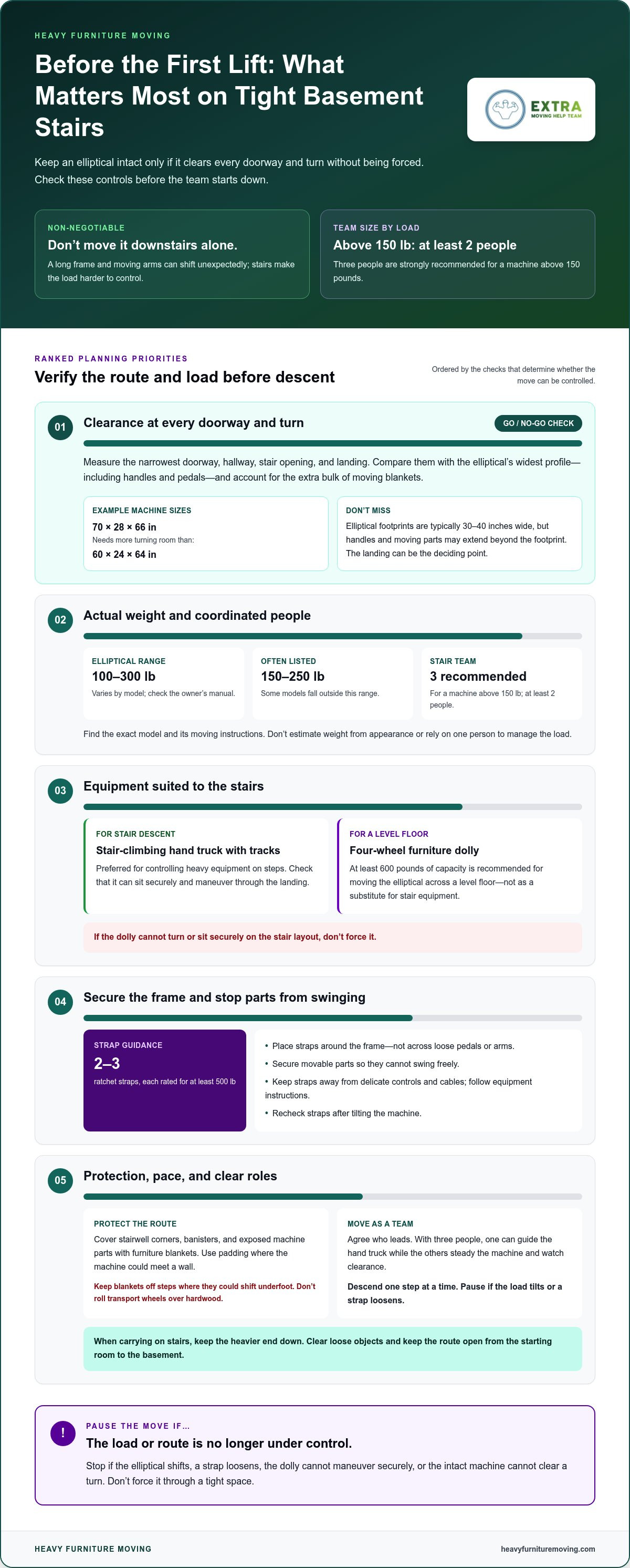
- Read the owner’s manual and locate the model’s weight before planning the lift. Most ellipticals weigh between 150 and 250 pounds, while some models fall outside that range. A machine above 150 pounds calls for at least two people, with three strongly recommended. Don’t move an elliptical downstairs alone. Its long frame and moving arms can shift unexpectedly, making the load difficult to control. Stairs add another challenge: the team must coordinate each movement while keeping the machine steady.
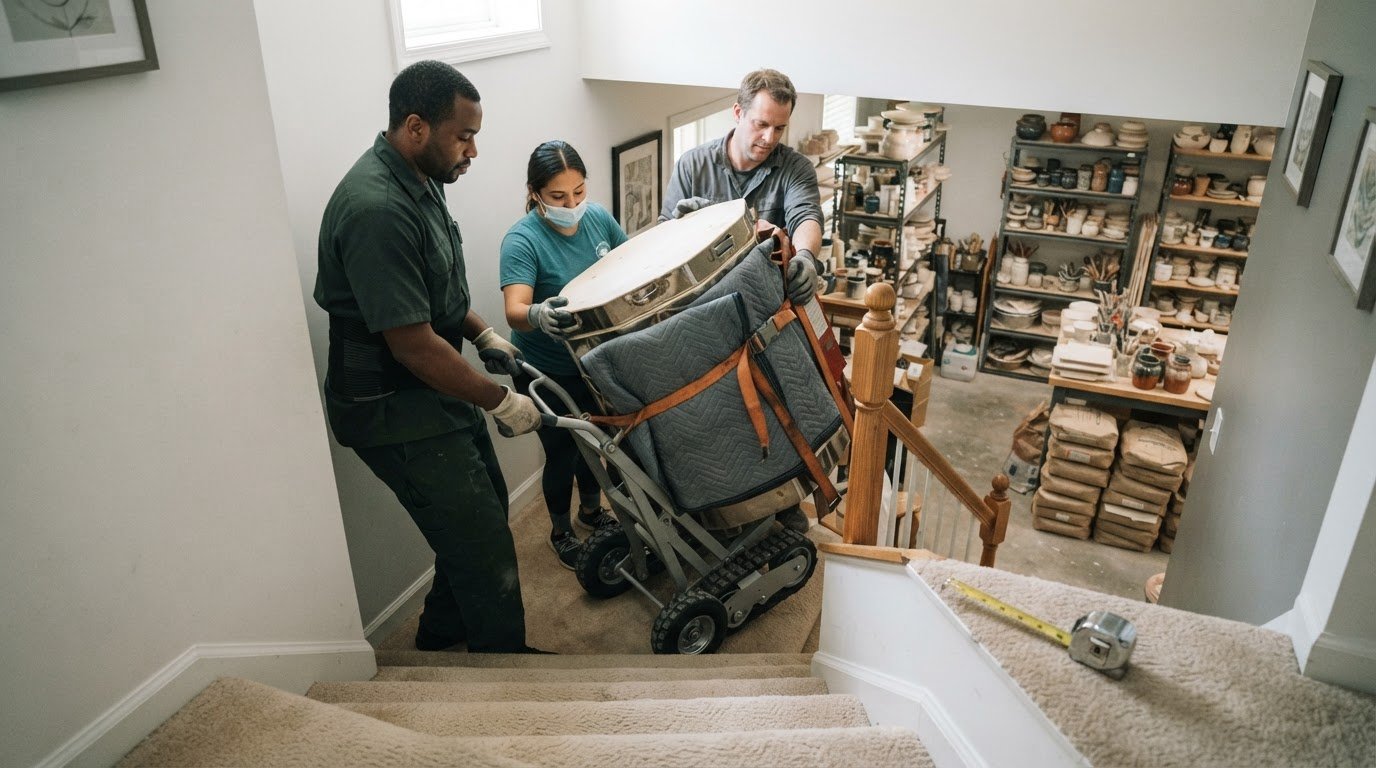
- Choose equipment for the stairs, not just the flat hallway. A stair-climbing hand truck with tracks is preferable for controlling heavy equipment on steps. Secure the elliptical with moving straps so the frame and moving parts stay together. Shoulder straps may help distribute lifting effort, but they don’t replace a stable grip or coordinated teamwork. Follow the strap and hand-truck instructions, and agree on who leads each movement before starting. If a dolly cannot turn or sit securely on the stair layout, don’t force it.
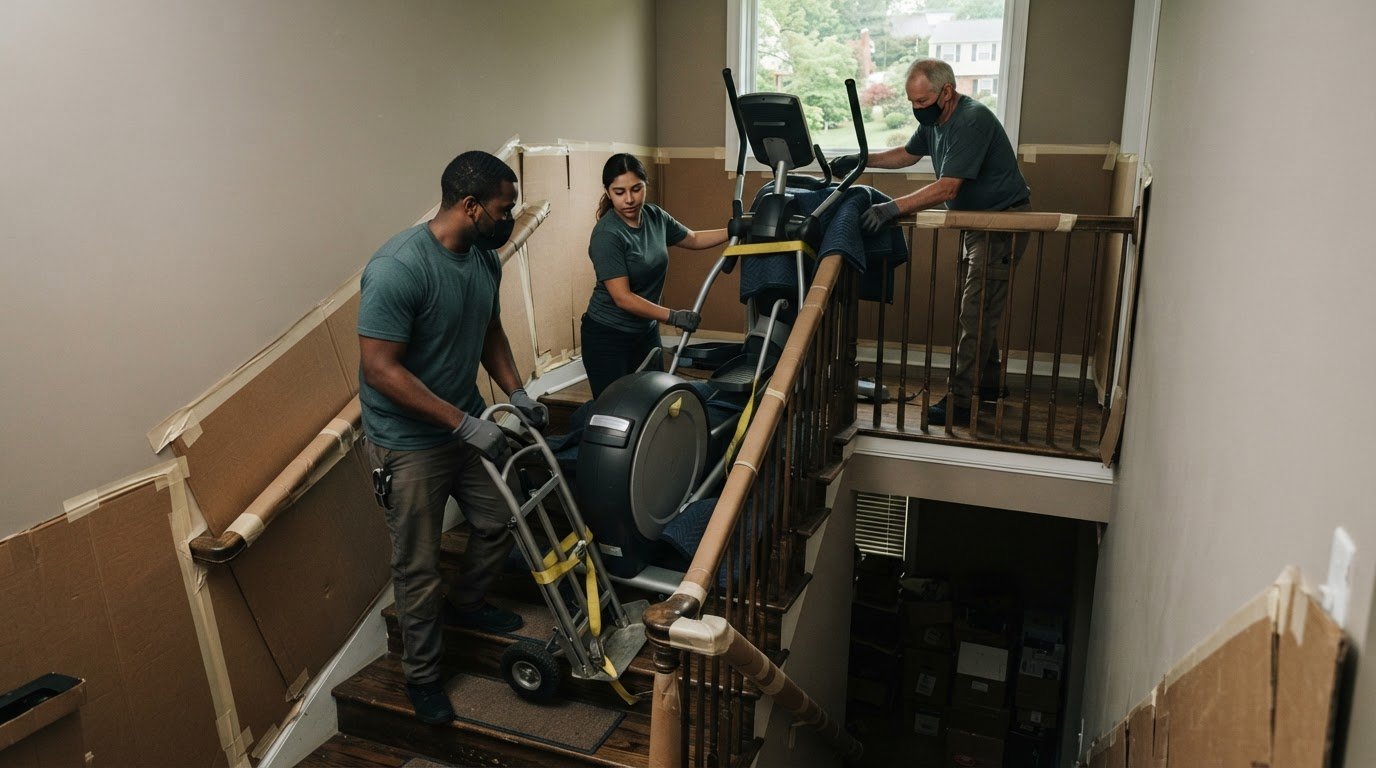
- Protect contact points before the first lift. Use furniture blankets to cover stairwell corners, banisters, and exposed parts of the elliptical. Place a blanket between the machine and wall wherever a tight turn could bring them together, but keep blankets off the steps where they could shift underfoot. Don’t roll the elliptical on its transport wheels across hardwood, since they can damage the floor. Clear loose objects and keep the route open from the starting room to the basement.
- Assign clear roles and move at a controlled pace. With three people, one person can guide the hand truck while the others steady the machine and watch its clearance. Keep the heavier end down when carrying on stairs, and pause if the load tilts or a strap loosens. Don’t rely on a single person to manage the weight. Two people may move an elliptical between rooms on the same floor, but stairs demand more control. For stationary bikes, the manual may allow removal of pedals, a seat, or a console to reduce width or weight. An intact machine that cannot clear the turn should not be forced through.
Assessing elliptical weight and size
- Find the exact model and read its owner’s manual before planning the route. Ellipticals can weigh from 100 to 300 pounds, depending on the model, so don’t estimate from appearance. Check the machine’s listed weight and moving instructions. Record its assembled height, length, and width, including the widest parts, such as handles or pedals. These measurements help determine whether the machine can pass through the basement route intact. For anyone deciding how to move an elliptical down tight basement stairs without disassembly in Gainesville, start with the model’s own measurements.
- Measure the narrowest doorway, hallway, stair opening, and landing, then compare each measurement with the elliptical’s widest profile. A frame may fit through a doorway straight on but fail at a turn. Include protruding arms and pedals in your measurement. For example, a model measuring 70 x 28 x 66 inches needs more turning room than one measuring 60 x 24 x 64 inches. The landing can be the deciding point, even when the stairs look clear.
- Use the machine’s dimensions to picture how it will travel, not just how it stands in the fitness room. Elliptical footprints are typically 30-40 inches wide, but a footprint doesn’t capture every handle or moving part. Measure the machine at its widest point and consider how its length affects tilting and turning.
- Check clearance with protective materials in place. Moving blankets add bulk around the frame, so include that extra layer when comparing the machine with narrow doorways and stair turns. Measure the wrapped width before lifting. Don’t compress a blanket so tightly that frame edges lose protection. If the bare machine only just clears a doorway or landing, padding may affect whether it passes smoothly.
- Assess each piece of gym equipment separately instead of assuming every heavy item moves the same way. For an elliptical, consider its actual configuration, width, and turning space together. If you’re figuring out how to move an elliptical down tight basement stairs without disassembly in Gainesville, use those measurements to judge whether it can clear every turn intact. Don’t force it through a tight space.
Securing and balancing an elliptical on a dolly
For narrow basement stairs, secure the elliptical, balance it over a stair-climbing dolly, and descend one step at a time with a coordinated team. Keep the pedals and arms from swinging, and stop if the load shifts or blocks a safe handhold.
- Prepare the machine before positioning any dolly. Unplug it and remove console batteries, then consult the owner’s manual for model-specific moving directions. Secure the frame and movable parts so they can’t swing freely. Tie the arms and pedals in place, keeping straps away from areas where they could slip or press on delicate controls. A loose pedal can shift the load while the team adjusts its grip.
- Choose equipment for the surface and stair route. A stair-climbing dolly with tracks is preferable for going downstairs. For moving the elliptical across a level floor, a four-wheel furniture dolly with at least 600 pounds of capacity is recommended. Don’t assume a flat-floor furniture dolly is suitable for stairs. Check that the stair-climbing dolly can be positioned securely and maneuvered through the landing before lifting.
- Use enough straps to hold the machine firmly against the dolly. The recommendation is two to three ratchet straps, each rated for at least 500 pounds. Position them around the frame, not across loose pedals or arms. Tighten each strap until the elliptical stays in place without crushing exposed controls or cables. Check the straps again after tilting the machine, since the frame’s position can change as it settles against the dolly.
- Balance the load around its center of gravity before moving. With a suitable furniture dolly, one person can lift the lighter end while another positions the dolly near the machine’s center of gravity. Lower the frame gradually, then check that it sits evenly rather than leaning to one side. Keep hands clear of wheels and pinch points. An off-center load can tip during a turn or make steering difficult.
- Move downstairs with clear calls and controlled steps. Keep the heavy end down when carrying an elliptical on stairs, and guide it one step at a time. Agree who gives movement commands and who watches the frame, straps, and stair clearance. Pause on a landing to check stability before turning. Don’t rush a stair-climbing dolly or drag a furniture dolly over stair edges. If balance fails, stop and reset rather than risk injury or damage to the machine.
Navigating tight turns and landings
Measure the elliptical at its widest points, then compare those dimensions with every doorway, stair opening, landing, and turn. Check the owner’s manual for model-specific moving guidance, and clear obstacles before lifting.
- Start with the route, not the first stair. Measure the narrowest doorway and hallway, then record the landing’s usable width and depth. At each turn, compare that space with the machine’s widest profile and the room needed to pivot it. A frame may fit through a straight doorway, while a short landing prevents the turn. Include protruding pedals and arms in your measurements, even when secured.
- Map the elliptical’s path from its starting position to the basement floor. Note whether the stairway turns left or right, where the banister narrows the passage, and whether a door swings into the route. Measure between fixed obstacles, not across an open doorway that will change when the door moves. Mark the tightest point on a simple sketch so everyone knows where to pause and reposition.
- Check the machine’s orientation at each corner before attempting the move. A long frame may clear a landing when tilted lengthwise, but that angle can raise its upper end toward a low ceiling. Consider the frame, dolly, straps, and blankets together. Test the proposed position while the elliptical is stationary, and identify where the team can grip it securely without pressing hands against a wall or rail.
- Clear the entire route before lifting. Move rugs, loose items, and furniture that could block a step or limit turning space. Open doors fully and secure them so they don’t swing into the team. Check stair treads and landings for anything that could catch the dolly. Keep the path well lit, including the basement entrance, so the person guiding the lower end can see each step and signal a stop.
- Use the manual’s moving instructions alongside your route measurements. If a turn appears too tight, don’t force the elliptical against a wall or twist it under load. A tight turn or landing is a reason to use professional movers rather than risk an uncontrolled lift. If the route clears, agree on a stop signal and move one step at a time, checking alignment before each turn. Stop whenever the dolly, frame, or team loses stable positioning.
Protecting stairs, walls, and floors
An unsecured elliptical can shift on stairs, creating a risk of injury and property damage. Protect contact points, keep the load stable, and stop whenever the team loses control.
Identify Stair-Moving Risks
Inspect the route and the machine before lifting. An intact elliptical has protruding arms, pedals, and a console that can strike walls or catch on a stair edge. A shifting frame can also pull the team off balance. Check each landing, tread, and doorway for obstacles, weak footing, and surfaces that could be damaged by pressure or friction.
- Look for tight corners where the frame could scrape paint or catch a banister. Note exposed stair edges and flooring that could be marked by the dolly’s wheels.
- Check the elliptical’s moving parts and straps before descent. A loose pedal or arm can swing into a wall, while a slipping strap can destabilize the load.
- Identify where the team can pause without blocking the stairs. If a landing cannot safely hold the machine and movers, don’t use it as a turning point.
Prevent Damage and Injury
Protect contact surfaces before moving the exercise equipment. Place furniture blankets over stairwell corners, banisters, and exposed frame areas. Use a blanket to shield a wall where the elliptical must pass close. Secure the protective material and keep it out of the walking path so it won’t bunch beneath someone’s foot or interfere with a stable grip.
- Remove loose objects from the route, then cover vulnerable corners and rails with blankets. Check that each covering stays in place as the team passes.
- Keep the elliptical balanced and controlled as it descends. Move one step at a time, pausing to reset if the frame tilts, a strap shifts, or someone loses footing.
- Don’t roll the machine on its transport wheels across hardwood floors. The wheels can damage the surface, so carry or guide the equipment without rolling them over the floor.
- Protect the console from bumps and pressure, and keep hands clear of pinch points between the frame and stair rail. Call a stop before anyone adjusts their grip or position.
- For a difficult, heavy lift, use exercise equipment moving help to reduce the strain of managing the machine through a narrow stairwell.
Heavy Furniture Moving: Movers Near Me
Heavy Furniture Moving provides Exercise Equipment Moving for difficult basement-stair moves. Turn to the team when the elliptical is too heavy to control safely, the landing makes turning difficult, or protecting nearby walls and floors feels like too much to manage alone. Wrap, blankets, and straps are included on every job.
Heavy Furniture Moving’s Movers Near Me service can help with heavy and bulky household moves. Share the elliptical’s model, dimensions, and stair layout so the moving plan reflects the equipment and route. Keeping the machine assembled may work when it clears every doorway and turn; a tight corner or unstable stair carry can make professional help the more practical choice.
Contact Heavy Furniture Moving to discuss your elliptical move.
Make Your Next Move With Confidence
Before moving day, consider whether the route and available help make this a manageable job. If the path demands awkward lifting or leaves little room to control the machine, choosing professional help is a practical way to protect your home and avoid a stressful, last-minute decision. A well-planned move starts with knowing when not to push ahead.
If you’re figuring out how to move an elliptical down tight basement stairs without disassembly in Gainesville, you don’t have to handle the difficult parts alone. Heavy Furniture Moving can help plan a challenging heavy-item move, so you can focus on the rest of your home and your next workout. Wrap, blankets, and straps are included on every job.
Contact Heavy Furniture Moving to discuss your move, and take the next step with confidence.
Frequently Asked Questions
What Equipment Actually Helps on a Staircase?
A tracked stair-climbing hand truck, secure tie-downs, and moving blankets can help with a basement stair move. Choose a dolly rated for the elliptical’s weight and follow its operating instructions on stairs. Blankets cushion vulnerable contact points, while straps help keep moving parts from swinging. A flat-floor furniture dolly is useful on level surfaces, but it cannot replace equipment designed for stairs.
When should I hire movers instead of moving gym equipment myself?
Hire movers if the elliptical is too heavy to control, the landing leaves little room to turn, or your team can’t keep the load stable. Professional help is recommended for an elliptical weighing over 250 pounds. Also stop if the route requires forcing the frame through a doorway or if anyone would need to stand in an unsafe position to support it.
Do Gainesville moving companies move elliptical machines down narrow basement stairs without disassembly?
Yes, Heavy Furniture Moving provides Exercise Equipment Moving in Gainesville, Virginia. The crew measures the item and route before lifting, and disassembly and reassembly are included when needed. Wrap, blankets, and straps are included on every job. Whether the elliptical can stay assembled depends on its dimensions and clearances along the actual stair route, including doorways and landings.
What measurements are needed to determine whether an elliptical will fit down a tight basement stairway?
Measure the elliptical’s full width, length, and height, including protruding arms and pedals. Then measure the narrowest doorway, stair opening, landing, and turn. Check vertical headroom and door swing, too. Compare the route with the machine in the position it must take while moving, and include the dolly and protective blankets in your clearance check.
What equipment is needed to safely move a heavy elliptical down stairs without taking it apart?
Use a stair-climbing dolly suited to the route, straps to secure the frame and movable parts, and blankets to cushion contact points. Check the dolly’s weight rating against the machine’s listed weight. Keep the owner’s manual handy for model-specific instructions, and make sure the team can maintain control while turning. Don’t substitute a basic furniture dolly for a stair-rated unit. Wrap, blankets, and straps are included on every Heavy Furniture Moving job.
How many people are needed to move a heavy elliptical down stairs?
Plan for a coordinated team to move an elliptical on stairs. Assign one person to lead and call each step, while others steady and guide the machine. Agree on commands before lifting, and keep roles clear at turns. If the team can’t control the load together, pause and reconsider the move rather than asking one person to manage a shifting machine.
When should you hire professional movers or use a stair-climbing dolly for an elliptical?
Use a stair-climbing dolly when the stairs and landings allow it to be positioned and controlled safely. Hire professional movers if a landing creates a tight turn, the load feels unstable, or the elliptical weighs over 250 pounds. A dolly helps manage movement, but it can’t solve a route that lacks clearance or provide enough control when the team can’t guide the machine securely.
Gainesville, Virginia appliance or fitness equipment movers for basement stair moves
This article covers Gainesville, Virginia. Heavy Furniture Moving serves Gainesville and nearby communities, including Fairfax, Woodbridge, Manassas, Manassas Park, Aldie, Ashburn, McLean, Vienna, Reston, Centreville, Chantilly, Clifton, Dumfries, South Riding, Fairfax Station, and Haymarket. Its Movers Near Me service helps with local moving needs, including difficult household-item moves. For a basement elliptical, describe the item and stair route when arranging the move.
Frequently Asked Questions
A tracked stair-climbing hand truck, secure tie-downs, and moving blankets can help with a basement stair move. Choose a dolly rated for the elliptical’s weight and follow its operating instructions on stairs. Blankets cushion vulnerable contact points, while straps help keep moving parts from swinging. A flat-floor furniture dolly is useful on level surfaces, but it cannot replace equipment designed for stairs.
Hire movers if the elliptical is too heavy to control, the landing leaves little room to turn, or your team can’t keep the load stable. Professional help is recommended for an elliptical weighing over 250 pounds. Also stop if the route requires forcing the frame through a doorway or if anyone would need to stand in an unsafe position to support it.
Yes, Heavy Furniture Moving provides Exercise Equipment Moving in Gainesville, Virginia. The crew measures the item and route before lifting, and disassembly and reassembly are included when needed. Wrap, blankets, and straps are included on every job. Whether the elliptical can stay assembled depends on its dimensions and clearances along the actual stair route, including doorways and landings.
Measure the elliptical’s full width, length, and height, including protruding arms and pedals. Then measure the narrowest doorway, stair opening, landing, and turn. Check vertical headroom and door swing, too. Compare the route with the machine in the position it must take while moving, and include the dolly and protective blankets in your clearance check.
Use a stair-climbing dolly suited to the route, straps to secure the frame and movable parts, and blankets to cushion contact points. Check the dolly’s weight rating against the machine’s listed weight. Keep the owner’s manual handy for model-specific instructions, and make sure the team can maintain control while turning. Don’t substitute a basic furniture dolly for a stair-rated unit. Wrap, blankets, and straps are included on every Heavy Furniture Moving job.
Plan for a coordinated team to move an elliptical on stairs. Assign one person to lead and call each step, while others steady and guide the machine. Agree on commands before lifting, and keep roles clear at turns. If the team can’t control the load together, pause and reconsider the move rather than asking one person to manage a shifting machine.
Use a stair-climbing dolly when the stairs and landings allow it to be positioned and controlled safely. Hire professional movers if a landing creates a tight turn, the load feels unstable, or the elliptical weighs over 250 pounds. A dolly helps manage movement, but it can’t solve a route that lacks clearance or provide enough control when the team can’t guide the machine securely. Gainesville, Virginia appliance or fitness equipment movers for basement stair moves This article covers Gainesville, Virginia. Heavy Furniture Moving serves Gainesville and nearby communities, including Fairfax, Woodbridge, Manassas, Manassas Park, Aldie, Ashburn, McLean, Vienna, Reston, Centreville, Chantilly, Clifton, Dumfries, South Riding, Fairfax Station, and Haymarket. Its Movers Near Me service helps with local moving needs, including difficult household-item moves. For a basement elliptical, describe the item and stair route when arranging the move.