How to Move a King Box Spring Up Woodbridge Stairs Without Gouging Walls
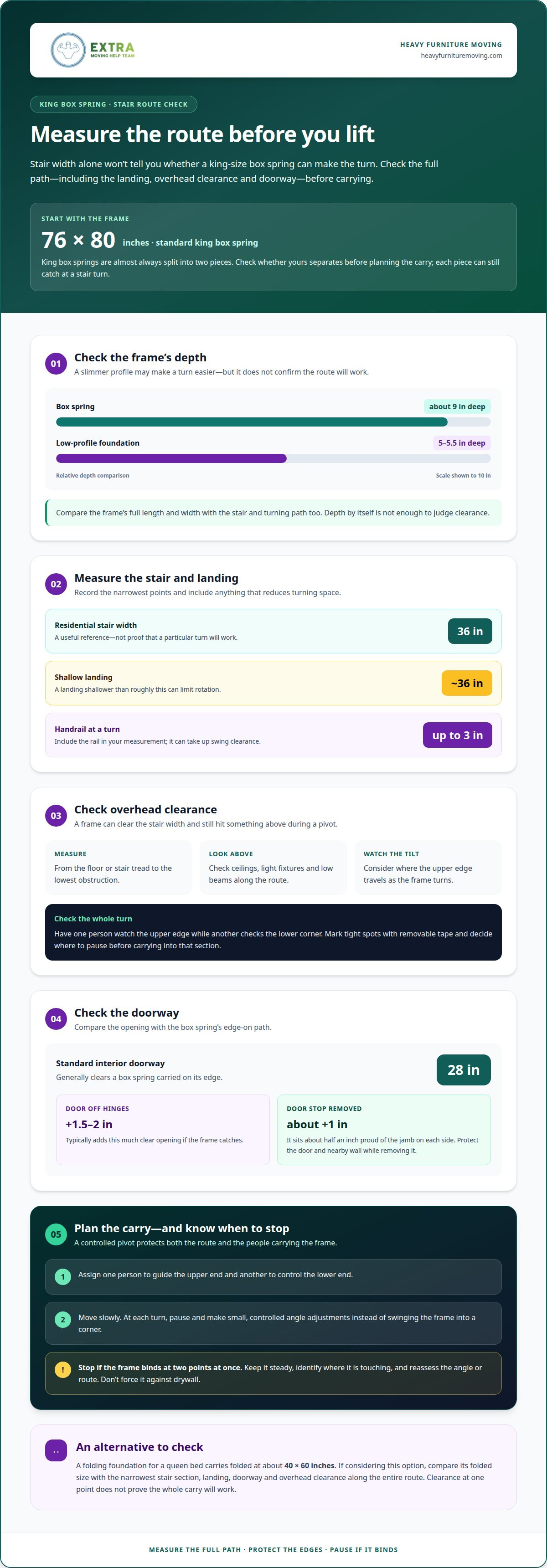
Don't force a king box spring around a tight stair turn. To prevent drywall gouges when moving a king-size box spring up stairs in Woodbridge, measure the stair width, landing, and overhead clearance first, then stop if the frame binds at two points at once. A standard king box spring measures 76 by 80 inches and is almost always split into two pieces, so check whether yours separates before planning the carry.
It’s reasonable to worry about scraping walls when a bulky frame has to turn in a confined space. A careful route check and controlled pivot can help you spot trouble before the box spring reaches the stairs. This guide explains what to measure, how to protect the path, how to carry and turn the frame, and when to stop rather than force it.
Key Takeaways
- Map the full route before lifting, including tight turns, doorways, and overhead obstacles.
- Protect vulnerable corners, walls, and railings so small shifts are less likely to leave marks.
- Choose moving supplies that improve grip and cushion contact without making the box spring harder to control.
- Coordinate each pivot with your carrying partner, and pause if the frame won’t move freely.
- When the stairs or turns are too tight to manage confidently, in-home furniture movers can help with the heavy lift.
Avoiding damage by stopping when the frame binds
Stop as soon as the box spring binds at two points. A king frame measures 76 by 80 inches and is almost always split into two pieces, but each piece can still catch at a stair turn. Never force it against drywall.
- Pause at the first hard contact. Keep the frame steady and tell your partner to stop moving. Note where it touches, such as an upper corner against a wall and a lower edge against a railing. Contact at two points means the frame cannot pivot through its current position without changing its angle or route.
- Set the frame down safely before adjusting it. Choose a stable landing or clear floor area, then agree who will support each end. Don’t twist while one person pulls and the other pushes. A rigid frame won’t bend around a corner, and extra force can turn a light touch into a long drywall gouge.
- Find the exact obstruction. Check whether a handrail, doorway trim, ceiling, or narrow landing blocks the next movement. Look at the frame’s top and bottom edges, not just its center. The lower corner might clear the wall while the upper corner catches beneath the ceiling.
- Change one part of the approach at a time. With the box spring supported, try a small angle adjustment or a different orientation. Move only when both carriers can control the frame and see the contact points. If it binds again at two places, stop and reassess the route rather than pushing harder.
- Use enough help to keep control. Moving a heavy box spring upstairs without enough people makes it harder to hold steady, coordinate a pivot, and prevent a sudden shift. Losing control can strain the carriers or send an edge into drywall, a railing, or trim. Don’t start unless the team can manage the frame safely.
- Understand damage terms before a move. Read the mover’s written paperwork to understand how property damage is reported and handled. Don’t assume drywall damage is covered. The applicable terms depend on the agreement and circumstances of the move.
- Repair a gouge after the move. Remove loose drywall or torn paper, then apply patching compound to the damaged spot. Let it dry as directed, sand it smooth, and prime and paint the area. For a deep gouge, rebuild the surface with thin layers of compound instead of filling it all at once.
- Choose a different route when the frame still won’t pass. Recheck the doorway and stair turn, or carry the pieces separately if the split frame allows it. If no safe position clears the obstruction, stop. Protecting the wall starts with recognizing when the route won’t work.
Stair width, landing clearance, and overhead obstructions
Box springs can be difficult to maneuver through tight stairwells. Measure the route, including turns and ceiling clearance, before lifting it.
-
Assess Stair and Landing Clearance
Measure the narrowest stair section and landing, then compare those spaces with the box spring’s depth and turning path. A box spring is about 9 inches deep; a low-profile foundation is 5 to 5.5 inches deep. The slimmer profile may make a turn easier, but it doesn’t replace checking the frame’s full length and width.
A residential stair width of 36 inches is a useful reference, not proof that a particular turn will work. A landing shallower than roughly 36 inches can limit rotation. Include the handrail in your measurements: it can take 3 inches of swing clearance at a turn.
-
Check Overhead Obstructions
Walk the route and look above each stair, landing, and doorway. Measure from the floor or stair tread to the lowest obstruction, such as a ceiling, light fixture, or low beam. Then picture the box spring’s upper edge as it tilts. A frame that clears the stair width may still hit overhead during a pivot.
Check the whole turn, not just where it starts and ends. Have one person watch the upper edge while another checks the lower corner. Mark tight spots with removable tape, then decide where to pause before carrying the frame into that section.
-
Remove a Door for Clearance
Measure the doorway with the door open and compare it with the box spring’s edge-on path. A standard 28-inch interior door generally clears a box spring carried on its edge. If the frame catches, removing the door from its hinges typically adds 1.5 to 2 inches of clear opening.
Protect the door and nearby wall while removing the door stop, then set it aside. Removing the stop can add about an inch of doorway width. It sits about half an inch proud of the jamb on each side, so account for both sides before deciding whether removal will help.
-
Carry and Pivot the Box Spring
Plan the pivot before lifting. Assign one person to guide the upper end and another to control the lower end. Move slowly, keeping the frame’s edges clear of the wall and ceiling. At each turn, pause and make small, controlled angle adjustments instead of swinging the frame into a corner.
If the stair geometry still makes the lift awkward, local moving helpers can provide support with the heavy carry.
A folding foundation for a queen bed carries folded at about 40 by 60 inches, which may offer an alternative when a box spring cannot make a stair turn. Check that folded size against the narrowest stair section, landing, doorway, and overhead clearance along the route; clearance at one point does not establish that the entire carry will work.
A folding option still needs careful handling through turns. Plan the route before lifting, coordinate the people guiding it, and pause to reassess if any edge approaches a wall, ceiling, or other obstruction.
How to protect drywall, corners, and stair railings when moving furniture upstairs
Protect the surfaces most likely to meet the frame: hallway corners, stair walls, and railing posts. Cover likely contact points before lifting, then inspect each covering as the move progresses.
- Clear the route first. Remove shoes, baskets, and loose rugs from the hallway and stairs. A clear path lets carriers focus on the box spring instead of stepping around obstacles. Open doors fully and move nearby furniture away from the wall. Check the route again before lifting, especially at the foot of the stairs.
- Cover exposed wall corners. Place corner guards or firm cardboard over vulnerable outside corners along the route. Secure the protection so it won’t slide if the box spring brushes it. For example, protect the hallway corner beside the stair entrance, where the frame may swing during a turn. Keep fasteners away from painted surfaces.
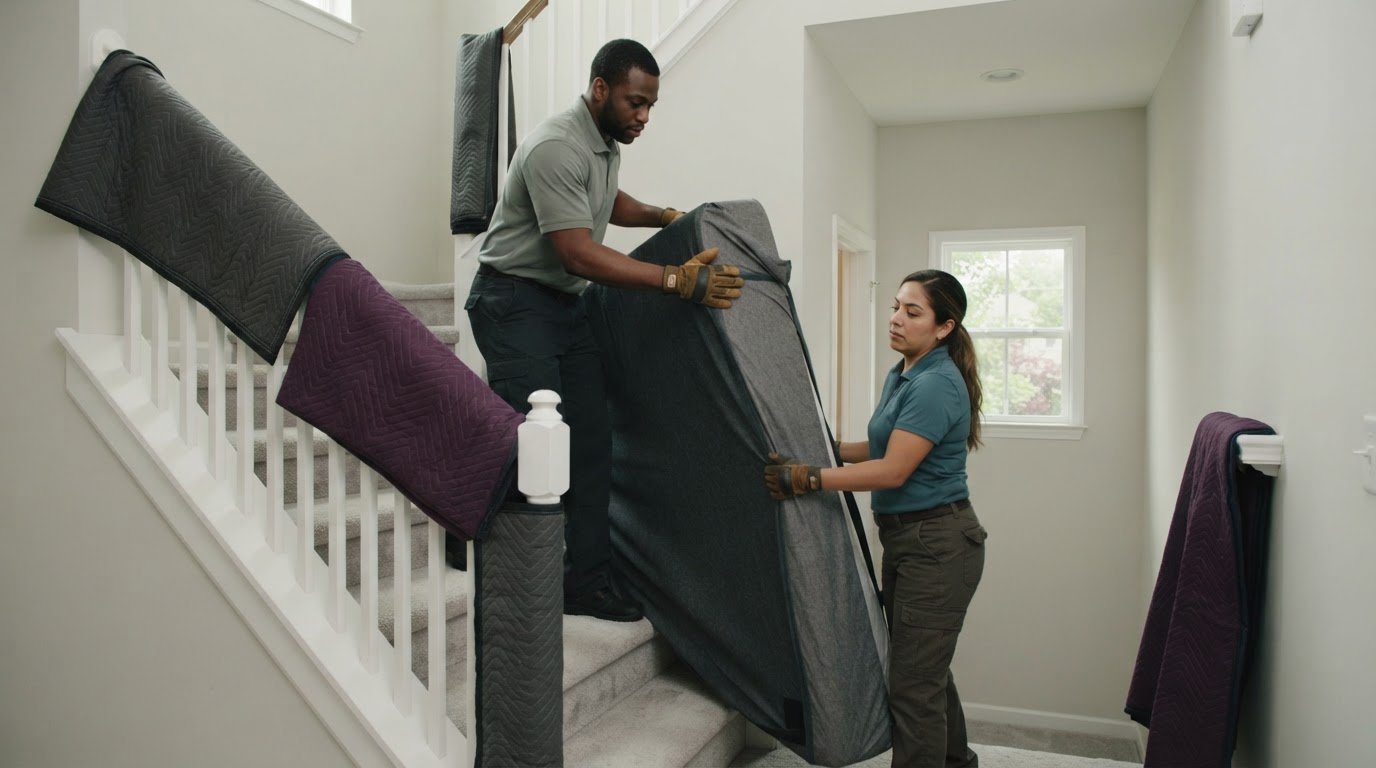
- Pad broad wall sections. Hang moving blankets over wall areas beside tight turns and stair landings. Fasten each blanket securely, keeping fabric clear of steps and handholds. A loose blanket can fall or snag the frame. Smooth out folds before carrying, especially where the box spring passes close to a wall.
- Protect the railing separately. Wrap a handrail or exposed post with a moving blanket, then secure it in place. Don’t cover a grip area someone needs for balance. At a stair turn, protect the post where the box spring’s lower corner could bump it during a pivot.
- Use tape with care. Choose painter’s tape to hold lightweight coverings, and test it on a hidden spot before applying it to painted trim. Press the tape onto the covering rather than directly across delicate paint. Remove it slowly after the move. Avoid strong adhesive tape on drywall, which can pull paint away.
- Keep protection from hiding trouble. Before moving, inspect the wall, stair rail, and trim for existing chips or loose pieces. Photograph visible marks so you can distinguish them from new contact later. Make sure padding doesn’t conceal a loose railing or block anyone’s view of the stair edge.
- Check the setup as you go. After the first short carry, stop in a clear area and inspect the blankets and corner guards. Re-secure anything that shifted before continuing. If you’re learning how to prevent drywall gouges when moving a king-size box spring up stairs in Woodbridge, this check can catch loose protection before it exposes a wall.
- Reset shifted coverings. If cardboard slips or a blanket hangs near a step, fix it before the next lift. To prevent drywall gouges when moving a king-size box spring up stairs in Woodbridge, keep protective materials secure without narrowing the walking path. Check the setup again after each tight turn.
What equipment and supplies prevent wall damage when moving a box spring up stairs
Gather protective supplies before lifting. Use a tape measure, stable padding, and clear lighting to prepare the path and control contact.
- Use a tape measure to plan protection. Measure the stair route and note corners where the frame could brush a wall. Mark those spots with removable painter’s tape, then place supplies nearby. This avoids carrying blankets or cardboard while supporting the box spring.
- Set out moving blankets for broad surfaces. Drape them over exposed wall sections, stair rails, and nearby trim. Secure each blanket so it cannot slip onto a step or catch the frame. Check the covering before lifting, especially around a landing where the box spring may change direction.
- Use corner protectors at vulnerable edges. Fit firm corner guards over hallway corners and stairwell projections along the route. Keep each guard secure without placing hard fasteners against painted drywall. For example, protect the corner beside the first stair turn, where a long frame can swing wider than expected.
- Keep painter’s tape handy for light coverings. Use it to hold a blanket edge or cardboard shield in place. Test a small hidden area before taping painted trim, and remove the tape slowly after the move. Avoid strong adhesive tape on drywall, since it can pull paint away.
- Wear gloves that support a steady grip. Choose work gloves that let carriers hold the frame without blocking their view of its edges. Check that the material isn’t loose or slick. A secure grip helps each person make small adjustments near a railing instead of grabbing the wall for balance.
- Bring a flashlight for dim stair corners. Light the underside of landings, stair edges, and any low ceiling before lifting. A clear view helps carriers spot trim and rail brackets that may be hard to see from below. Keep the flashlight outside the walking path.
- Skip wheeled sliders on stairs. Sliders can move unpredictably on steps and make the box spring harder to control. Use them on flat floors only, and carry the frame by hand on stairs. Clear loose rugs and cords before lifting so no one trips while holding an edge.
- Stage supplies at both ends of the route. Place spare blankets and corner guards near the stair entrance and upstairs landing. Carriers can then reset shifted coverings before continuing. Keep supplies away from the steps and doorway to leave a clear walking line.
A box spring is a rigid frame and cannot be bent or folded without risking damage. Keep it unbent while moving rather than squeezing it around a tight spot. Protective blankets and guards can limit contact with walls and edges, but they do not make bending the frame safe.
The page advises stopping a box spring move if the frame binds at two points at once, because forcing it can damage drywall. Treat that condition as a reason not to push harder or try to flex the frame through. Stop the move instead of risking damage to the wall or frame.
How to safely carry and pivot a king-size box spring on stairs
Set the carrying order before lifting. Clear communication and controlled movements help keep the frame steady near stair edges and painted walls.
- Assign positions and commands. Put one carrier at each end, with a clear view of the next step. Choose simple commands such as “lift,” “hold,” and “lower.” Both people should repeat each command before moving, so one end doesn’t turn while the other stays fixed.
- Grip the frame, not its fabric. Hold a sturdy part of the frame with both hands, keeping fingers away from pinch points. Don’t pull on loose upholstery or seams. A firm, balanced grip helps prevent the box spring from slipping toward a stair rail during the climb.
- Lift together and keep the load close. Bend at the knees, maintain a stable stance, and raise the frame on a shared count. Keep it close enough to control without pressing it against the wall. If either carrier loses grip or footing, call “hold” and set it down safely.
- Move one stair at a time. The lower carrier should announce each step while the upper carrier matches the pace. Keep the frame’s corners visible and avoid sudden upward pulls. At a narrow section, pause on stable footing before changing the angle or shifting hand positions.
- Make a pivot in small movements. Stop at the turn and agree which end moves first. The carrier on the inside of the turn should guide the frame while the other end follows gradually. Make small adjustments and watch both corners instead of swinging the frame toward a wall.
- Keep hands and feet clear during pauses. Before lowering the frame, choose a stable spot that doesn’t block the stairs. Tell your partner before changing grip or setting down an edge. Never place fingers beneath the frame or leave one carrier supporting the full load alone.
- Reassess if the frame shifts. If one end tilts or a carrier’s footing changes, stop and reset together. Don’t try to catch a slipping frame by pushing against drywall or grabbing a railing. Regain a stable grip before continuing the climb.
- Get help for a difficult stair carry. If the route demands a pivot you can’t control, don’t force the lift. Arrange moving help for the heavy carry when you need support moving a bulky frame upstairs.
Heavy Furniture Moving: Movers Near Me
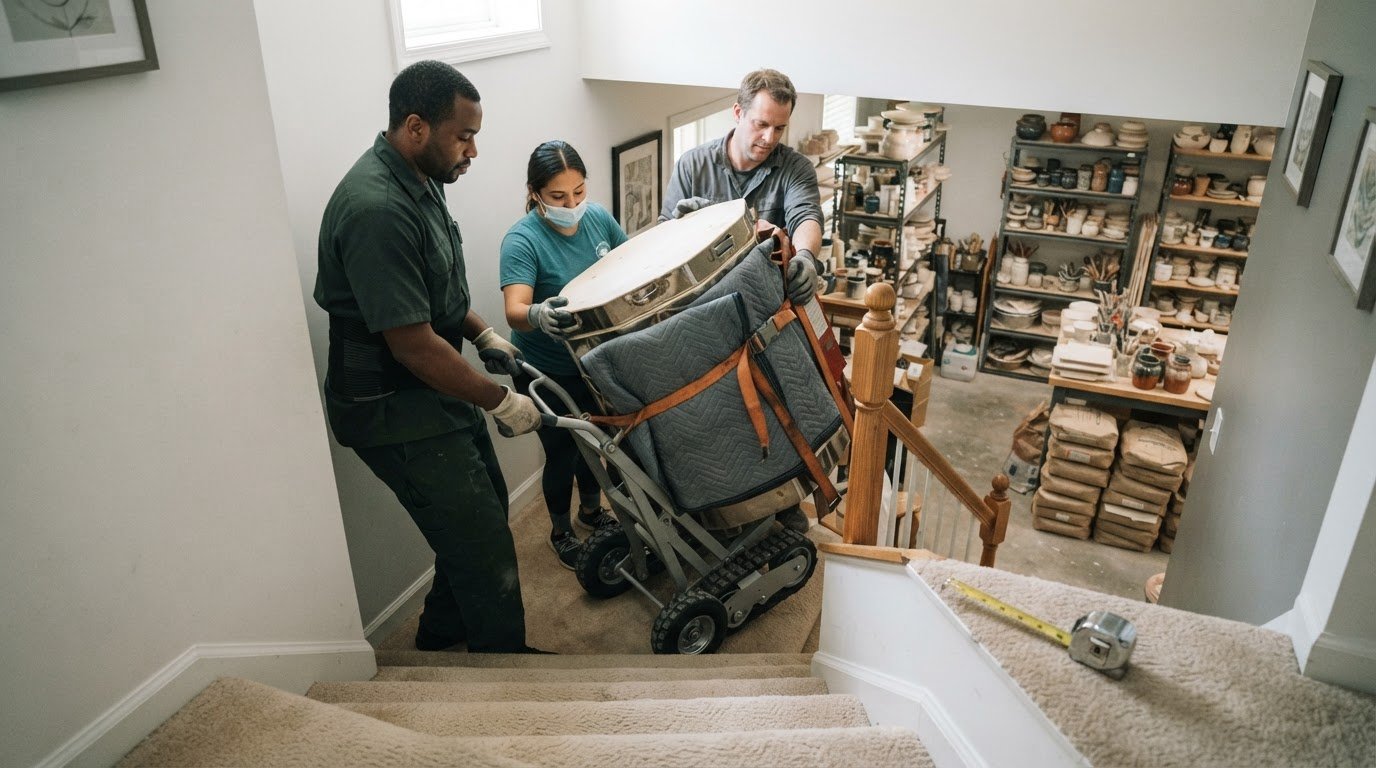
Heavy Furniture Moving provides local moving help for bulky items and tight stair routes. If a king-size box spring feels difficult to control around a landing, its in-home furniture movers can manage the carry through your home. This can be a practical next step when the frame binds, the turn feels awkward, or you can’t keep it clear of walls while moving upstairs.
Share the stair layout and the box spring’s condition when describing the move. Explain the challenge, such as a narrow landing or difficult pivot, and send photos of the item and stairs when requesting a quote. For help with your move, contact Heavy Furniture Moving or visit heavyfurnituremoving.com.
Choose a Move You Can Control
A successful move isn’t about getting the box spring upstairs at any cost. It’s about choosing a plan that keeps people, walls, and the frame under control. If the route still feels uncertain, pause before lifting and decide whether you have the space and help to manage each turn safely.
Knowing how to prevent drywall gouges when moving a king-size box spring up stairs in Woodbridge starts with recognizing when a careful DIY attempt is no longer the right fit. Get help with a bulky carry that feels difficult to control, and focus on keeping the move calm and coordinated.
Contact Heavy Furniture Moving for help, and take the next step with confidence.
Frequently Asked Questions
How do I measure a king-size box spring and stairwell before moving it?
Measure the box spring’s length, width, and thickness, then measure the stairway’s narrowest clear width, each landing, and nearby doorways. Check handrails, light fixtures, and ceiling height along the route, too. At a turn, compare the landing space with the box spring’s dimensions, allowing room to tilt and pivot. Write down the measurements and take photos so you can review tight spots before moving day.
How do I find local movers in Woodbridge, Virginia, who protect walls and stairs?
Ask whether the crew checks the item and route before moving day, and what protection they use on stairs, corners, and doorways. Heavy Furniture Moving serves Woodbridge, Fairfax, Manassas, Manassas Park, Aldie, Ashburn, McLean, Vienna, Reston, Centreville, Chantilly, Clifton, Dumfries, South Riding, Fairfax Station, Haymarket, and Gainesville. Its service includes floor and corner protection, plus wrap, blankets, and straps on every job. Share stair and box-spring photos when requesting a quote.
Frequently Asked Questions
Measure the box spring’s length, width, and thickness, then measure the stairway’s narrowest clear width, each landing, and nearby doorways. Check handrails, light fixtures, and ceiling height along the route, too. At a turn, compare the landing space with the box spring’s dimensions, allowing room to tilt and pivot. Write down the measurements and take photos so you can review tight spots before moving day.
Ask whether the crew checks the item and route before moving day, and what protection they use on stairs, corners, and doorways. Heavy Furniture Moving serves Woodbridge, Fairfax, Manassas, Manassas Park, Aldie, Ashburn, McLean, Vienna, Reston, Centreville, Chantilly, Clifton, Dumfries, South Riding, Fairfax Station, Haymarket, and Gainesville. Its service includes floor and corner protection, plus wrap, blankets, and straps on every job. Share stair and box-spring photos when requesting a quote.