How to Move a Heavy Upright Freezer Through a Narrow Vienna Doorway
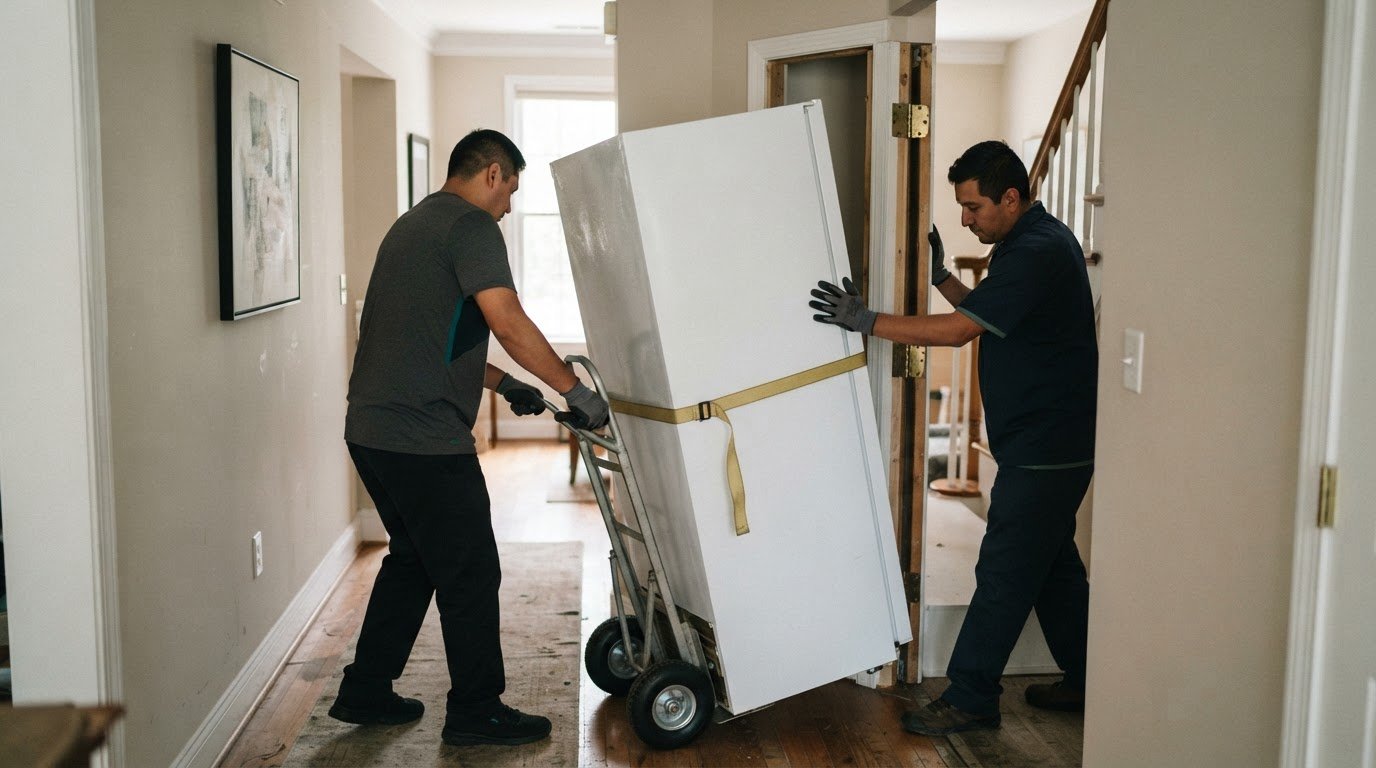
The doorway is only one part of the move. The turn beyond it can determine whether a heavy appliance clears safely. If you’re figuring out how to move a heavy upright freezer through a narrow doorway in Vienna, measure the entire route and keep the freezer upright whenever the route and equipment allow.
It’s reasonable to wonder whether laying a freezer down will make a tight passage easier. Upright transport is generally preferred. If side transport is necessary, consult the owner’s manual for the correct side and restart instructions. Don’t force the appliance through a turn that won’t accommodate its angle.
This guide explains how to measure doorways, hallways, stairs, and the truck opening; prepare and secure the appliance; and plan a controlled move with a strapped appliance dolly and a helper. You’ll also learn when removing a door might improve clearance and what to consider before powering the freezer on after transport. Planning the route can help protect the appliance, walls, and people moving it.
Key Takeaways
- Measure the freezer with its handles included, then compare its dimensions with every doorway and part of the route.
- Plan for hallway turns and stair landings, not just the narrowest doorway, and don’t force an awkward angle.
- Keep the refrigerator upright when possible; if it must travel on its side, follow the manufacturer’s instructions.
- Prepare the appliance before moving day, including defrosting it 24 to 48 hours ahead and securing loose doors.
- Use a strapped appliance dolly and another person to help control the move over thresholds, stairs, and ramps.
Does the Appliance Type Change the Plan?
Measure the freezer and the full route, then plan the equipment and preparation around the tightest clearance.
A freezer’s doors, handles, shape, and turning space can all affect the moving plan.
-
Measure the Freezer and Doorway Clearance
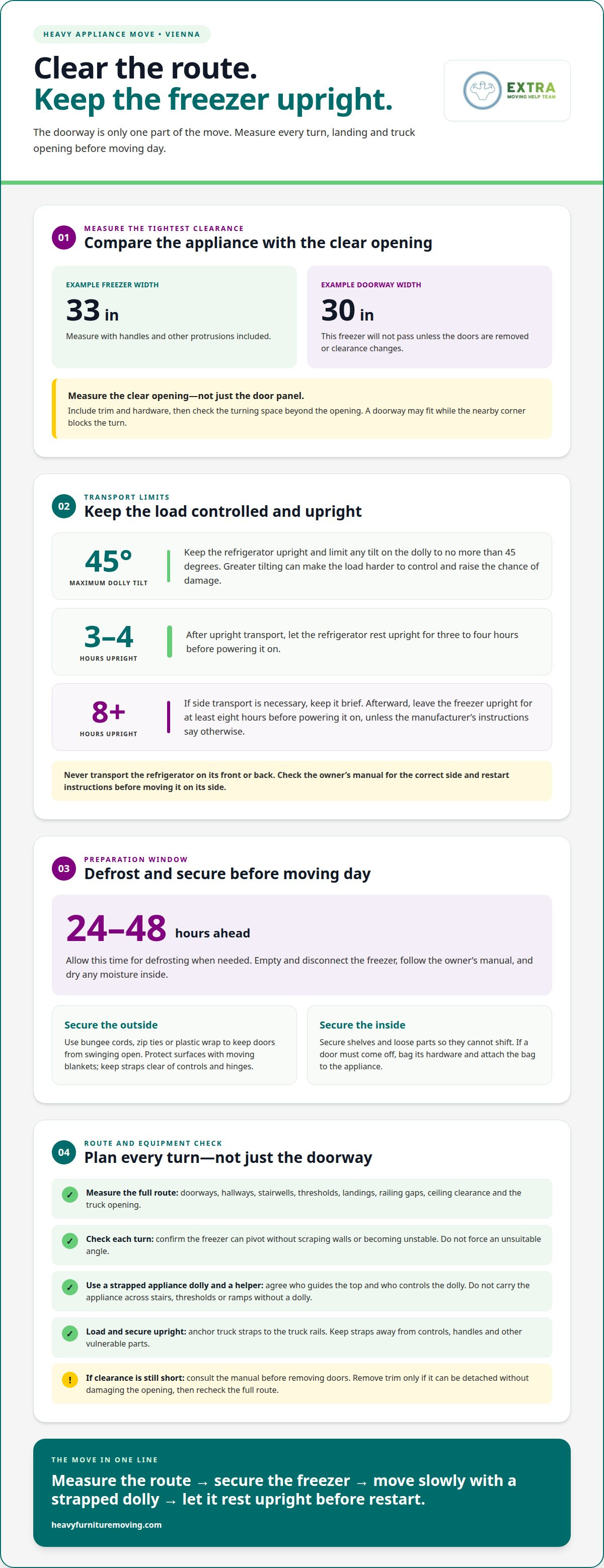
Measure the freezer’s height, width, and depth, including handles and other protrusions. Compare those dimensions with each doorway, hallway, stairwell, and the truck opening along the planned route. Measure the clear opening, not just the door panel, and note trim or hardware that narrows it. A 33-inch refrigerator, for example, won’t pass through a 30-inch doorway unless its doors are removed or clearance changes. Check the appliance’s turning space too: a straight opening may fit, while a nearby corner blocks the turn. Record the tightest point before moving.
-
Secure the Appliance for Transport
Prepare the freezer before moving it. Empty and disconnect it, then follow the owner’s manual for model-specific instructions. If it needs defrosting, allow time for that and dry any moisture inside. Secure the doors with bungee cords, zip ties, or plastic wrap so they don’t swing open. Protect exposed surfaces with moving blankets, keeping straps clear of controls and hinges. If a door must come off, put its hardware in a bag and attach the bag to the unit. Secure shelves and loose parts so they can’t shift inside.
-
Plan the Route Through Stairs and Tight Turns
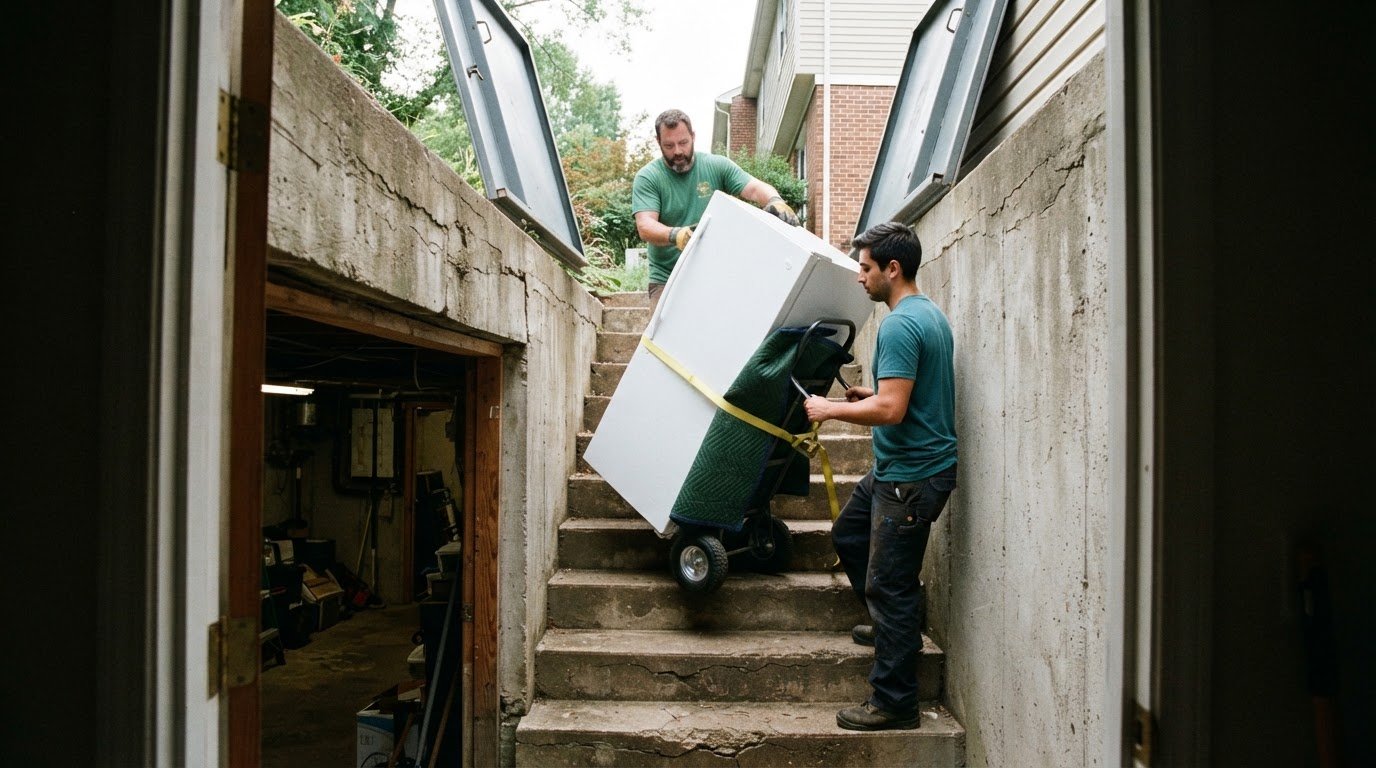
Walk the full route before moving the appliance. Check thresholds, stair landings, railing gaps, hallway corners, and ceiling clearance. At each tight turn, consider whether the freezer can pivot without scraping walls or becoming unstable. Don’t force it through an unsuitable angle. Keep it upright where the route allows, and use a strapped appliance dolly instead of carrying it across stairs, thresholds, or ramps. Moving a refrigerator onto a dolly requires a helper. Before starting, agree on who will guide the top and who will control the dolly.
-
Choose Moving Equipment and Clearance Options
Use an appliance dolly with secure straps and a helper to guide and steady the load. These are the essentials for moving a heavy upright freezer; moving blankets can help protect its surfaces. If you’re moving it yourself in Vienna, ask an equipment-rental business about appliance dollies. If the doors prevent the freezer from passing, consult the owner’s manual before removing them. Bag the hardware and attach it to the unit. Doorway trim may also limit clearance, but remove it only if it can be detached without damaging the opening. Recheck your measurements afterward and confirm the full route is clear.
Need Help Moving a Refrigerator?
Keep the freezer upright during transport whenever the route and equipment allow. If side transport is necessary, keep it brief and follow the owner’s manual for the correct side and restart instructions.
-
Keep the Refrigerator Upright During Transport
Use a strapped appliance dolly and another person to guide the refrigerator. Keep it upright as you move it, and limit any tilt on the dolly to no more than 45 degrees. Tilting farther can make the load harder to control and raise the chance of damage. Keep furniture and loose objects out of the path so the dolly can move smoothly. At the truck, secure the appliance upright with straps anchored to the truck rails, preventing it from tipping during transport.
-
Understand Moving an Upright Freezer on Its Side
Consult the owner’s manual before laying a freezer on its side. Manufacturers may specify a particular side for the appliance’s design, so don’t guess. Keep side transport to the time needed to complete the move. Afterward, leave the freezer upright for at least eight hours before powering it on, unless the manufacturer’s restart instructions specify otherwise.
- Plan the loading angle before lifting. Don’t transport a refrigerator on its front or back. If the truck opening or interior height makes upright loading difficult, pause and adjust the setup instead of forcing the appliance down. A taller truck that allows the refrigerator to stand upright against its side can make it easier to secure. Check that the straps hold the unit firmly without pressing on controls, handles, or other vulnerable parts.
Use the dolly straps to steady the appliance as you move it. One person should control the dolly while the helper guides the freezer and watches for contact with walls or doorframes. Don’t carry the refrigerator across stairs, thresholds, or ramps without a dolly. Slow, coordinated movements help protect the appliance and nearby surfaces.
- After unloading, leave the refrigerator upright before reconnecting it. Following upright transport, let it rest for three to four hours before powering it on. If it travelled on its side, keep it upright for at least eight hours, then follow the model’s manual for restart guidance. Waiting times vary, so don’t assume one period applies to every freezer.
If controlling a strapped dolly or keeping the appliance steady feels difficult, heavy lifting moving help can assist with the physical move. A steady team and a clear transport plan make it easier to keep the refrigerator upright and secured.
Assessing stairs, tight turns, and hallways
Map each stair, landing, hallway, and turn before moving day. For an apartment in Vienna, Virginia, building access arrangements can differ. Plan around the property’s procedures instead of assuming one rule applies everywhere.
-
Assess Stairs, Landings, and Tight Turns
Walk the route from the freezer’s current position to the exit. Measure stair width, landing depth, railing gaps, ceiling height, and hallway corners. At each turn, picture the freezer’s full footprint as it pivots, not just its narrowest edge. A landing may fit the appliance straight but leave too little room to turn it. Don’t force an angle that makes the load unstable or risks scraping the walls.
-
Check Apartment Access and Building Rules
Ask the property manager about elevator reservations, loading access, and procedures for moving large items through shared spaces. These are building arrangements, not a Vienna-wide rule. Plan so the appliance won’t block a hallway or entrance. Confirm which door to use and whether the elevator can accommodate the freezer upright.
- Mark potential problem points on a simple route sketch. Include every stair flight, landing, doorway, and corner between the room and the truck. Note which direction the freezer must face at each turn. For example, mark where it must pivot from a hallway into a stairwell. This gives everyone the same plan before lifting begins and helps reveal when the route needs to change.
Check whether the freezer can remain upright through every stair section. A narrow landing may not leave enough room to rotate it safely. Don’t begin carrying it on stairs if the team can’t control both the appliance and its direction. A strapped appliance dolly and coordinated help can support the move, but the route must still accommodate the dolly and load.
- Protect the route before moving day. Remove loose rugs, shoes, small furniture, and other obstacles from hallways and stairs. Keep doors open only if they won’t swing into the freezer or block the team. Pad vulnerable corners and wall surfaces, and leave enough space for movers to stand and guide the load.
Set a clear stop point at each landing. The person guiding the freezer should call the next move before the team changes direction. If it can’t clear a corner without a forced tilt, stop and reassess. Consider another exit or a different approach instead of pushing into a tight turn.
Disconnecting and preparing a refrigerator
- Empty the refrigerator and freezer before disconnecting them. Remove food, ice trays, shelves, and loose bins so nothing slides during the move. Pack small removable parts separately and keep them with the appliance. Clear the kitchen floor and the path to the exit. This gives the moving team room to work and helps prevent impacts with cabinets or nearby furniture.
- Defrost the fridge-freezer 24 to 48 hours before moving. This gives ice time to melt and water time to drain before the appliance travels. Place towels near the base to catch drips, then dry the interior and removable parts. If the refrigerator is unplugged the night before, it can dry out completely. Don’t leave pooled water inside, where it can spill during transport or leave the appliance damp.
- Disconnect the refrigerator and follow its owner’s manual for model-specific moving instructions. Consult the manual before detaching a water line or removing a door, since appliance designs vary. Put door hardware in a labeled bag and attach it securely to the unit so screws and fittings don’t get lost between locations. Don’t pull the refrigerator by its handles or power cord.
- Secure the doors after cleaning and drying the appliance. Use bungee cords, zip ties, or plastic wrap to keep them closed during the move. Protect the finish with moving blankets, but keep the straps snug around the appliance rather than over loose parts. If the doors have been removed to clear an opening, wrap and carry them separately. Keep the hardware bag attached to the refrigerator so it stays with the correct model.
- If the refrigerator will be stored temporarily, clean and dry its interior before moving it. Secure shelves and bins separately, and avoid closing the doors against damp surfaces. For a long-distance move, secure the appliance upright in the truck whenever the route and equipment allow. Straps should hold it steady without pressing on controls, hinges, or handles. After arrival, consult the owner’s manual before reconnecting power.
Measuring and planning a narrow doorway route
Planning how to move a heavy upright freezer through a narrow doorway in Vienna starts with the full route, not just one doorway. Measure every approach, turn, and exit, then build the plan around the tightest point.
- Measure the freezer in its moving configuration, including handles and other parts that project outward. Record its height, width, and depth, and note which side will face forward through each opening. Compare its dimensions with the clear space between the door stops, not the full frame. This helps determine whether it can pass straight or needs a different angle.
- Measure every transition along the route, including the kitchen doorway, hallway, threshold, stairwell, and truck opening. At corners, measure the approach space as well as the opening. A freezer may fit through a doorway but lack room to pivot beyond it. Include nearby walls, handrails, cabinets, and door swings in your route sketch.
- Mark the narrowest clearance and plan the freezer’s position before moving. Sketch where it must turn, and assess whether its full height and depth can clear the corner without hitting a wall. Don’t expect extra force to make an unsuitable angle work. If the route requires a forced tilt or uncontrolled pivot, plan another approach.
- Unplug and prepare the appliance before checking the route. Secure the doors and loose parts, then consider whether removing a door could provide the necessary clearance. Consult the owner’s manual first, and keep the hardware with the unit. Re-measure the appliance after removing any parts so your plan reflects its actual dimensions.
- Assess the handling demands by checking the freezer’s weight and the route’s obstacles. Find the weight on the appliance label or in the manual, then consider how stairs, thresholds, and tight corners affect control. Plan to use a strapped appliance dolly with a helper to guide the move. Before moving day, confirm the truck opening and interior allow upright, secured transport.
- If you’re deciding how to move a heavy upright freezer through a narrow doorway in Vienna, use the measurements to judge whether the route is manageable with your equipment and help. If weight, a stair turn, or limited clearance makes control difficult, get help planning and moving the heavy appliance. Share the route details so the moving approach accounts for the actual doorway and obstacles.
Heavy Furniture Moving
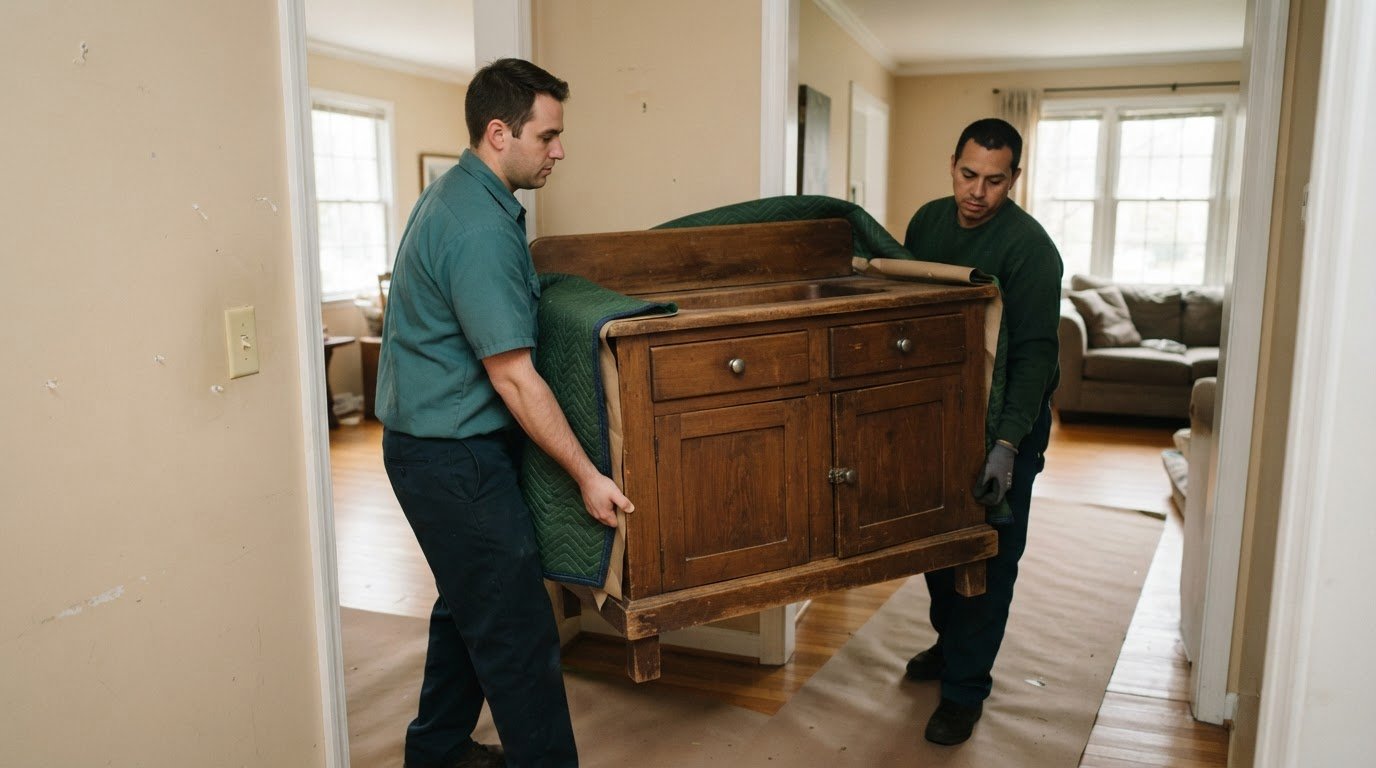
Heavy Furniture Moving helps when an item’s weight, a narrow doorway, or a difficult route makes lifting hard to manage. If you’ve measured the path but need help handling heavy furniture and navigating tight spaces, professional moving help can make the next step more manageable.
Share the route details, including narrow openings, stairs, and turns, so the moving plan reflects the real obstacles. If you’re handling the freezer yourself, use the measurements and preparation steps above to guide your setup. For help with the heavy lifting, contact Heavy Furniture Moving.
Make the Next Move with a Clear Plan
Decide what would make the move manageable: a clearer path, more hands, or help controlling the lift. If the appliance can’t pass a turn without forcing its angle, pause and change the plan rather than pushing ahead. A controlled approach can help protect the space around it.
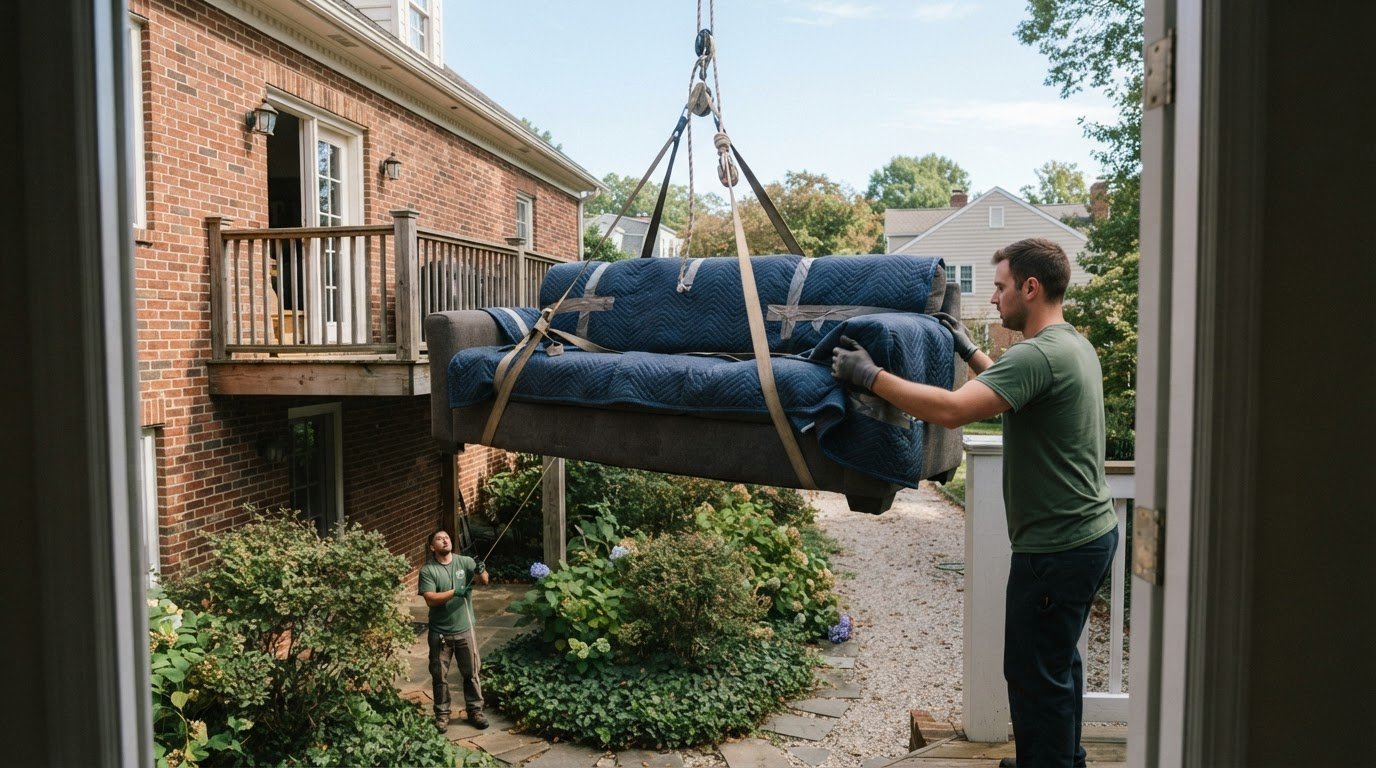
If you’re still working out how to move a heavy upright freezer through a narrow doorway in Vienna, share the route details when you arrange help. Heavy Furniture Moving offers Movers Near Me, Exercise Equipment Moving, and Sofa Hoisting, alongside moving help for heavy items. Choose support when the freezer’s weight or the route feels difficult to handle on your own.
Contact Heavy Furniture Moving to discuss help with your move. With a workable plan and the right support, you can tackle the doorway with confidence.
Frequently Asked Questions
Can You Lay a Refrigerator Down To Move It?
Keep a refrigerator upright whenever the route and transport setup allow. Laying it down can affect how compressor oil settles, so consult the owner’s manual if side transport is unavoidable. Manufacturers may specify a particular side for the appliance’s design. Don’t place it on its front or back. After the move, follow the manual’s restart instructions instead of assuming one waiting time applies to every model.
Can I move my fridge by myself?
Moving a refrigerator alone isn’t a safe plan, especially when loading it onto a dolly. Get a helper to steady and guide the appliance. A strapped appliance dolly helps control its weight but doesn’t replace the need for another person. For a narrow entry or stairs in Vienna, assess whether you can manage both the appliance and the route before beginning.
Can You Lay a Fridge Down for Transport?
Only treat side transport as a last resort, not a shortcut through a tight doorway. If the fridge must travel on its side, consult its manual for the correct side and then stand it upright after unloading. A fridge-freezer laid on its side for more than 30 minutes should stand upright for up to 24 hours after transport. Follow your model’s restart directions.
Can you lay a refrigerator down to transport it?
Transport a refrigerator upright and secure it against tipping whenever possible. If that won’t work, consult the owner’s manual before choosing a side, since the manufacturer’s instructions depend on the appliance design. Never lay it on its front or back. At the destination, leave it upright and follow the manual before plugging it in. Don’t assume another refrigerator’s waiting instructions apply to yours.
How Do Crews Handle Stairs and Narrow Doorways?
Heavy Furniture Moving plans around the appliance’s dimensions, the route, and the turning space at each landing. Pre-move measurements of doorways, stairs, and item dimensions are included. Wrap, blankets, and straps are included on every job, along with floor and corner protection. For a move in Vienna, Fairfax, or Reston, share the tricky access points so the team can plan for them.
How to measure an upright freezer and narrow doorway before moving?
Record the freezer’s height, width, and depth, including its handles. Measure the clear doorway opening between the stops, then note the hallway space beyond it. If the doorway leads to a right-angle turn, check whether the freezer can pivot without hitting a wall or railing. Include the stairs and truck opening in your route notes. These measurements help identify the tightest point before the move.
How to safely move a heavy freezer through a narrow doorway step by step?
First, empty and prepare the freezer according to its owner’s manual. Measure the doorway and route, then determine whether the appliance can pass upright. Secure its doors, use a strapped appliance dolly, and have a helper guide the load. Move slowly through the opening and stop if the angle becomes difficult to control. Never force the freezer around a tight corner.
How many people are needed to move a large upright freezer safely?
At least two people are needed to move a refrigerator onto a dolly: one person to control it and a helper to guide it. A large freezer, stairs, or a tight landing can make the move harder to manage, so match the team to the appliance and route. One person can guide the path while the other controls the dolly. Don’t try to handle the load alone.
Frequently Asked Questions
Keep a refrigerator upright whenever the route and transport setup allow. Laying it down can affect how compressor oil settles, so consult the owner’s manual if side transport is unavoidable. Manufacturers may specify a particular side for the appliance’s design. Don’t place it on its front or back. After the move, follow the manual’s restart instructions instead of assuming one waiting time applies to every model.
Moving a refrigerator alone isn’t a safe plan, especially when loading it onto a dolly. Get a helper to steady and guide the appliance. A strapped appliance dolly helps control its weight but doesn’t replace the need for another person. For a narrow entry or stairs in Vienna, assess whether you can manage both the appliance and the route before beginning.
Only treat side transport as a last resort, not a shortcut through a tight doorway. If the fridge must travel on its side, consult its manual for the correct side and then stand it upright after unloading. A fridge-freezer laid on its side for more than 30 minutes should stand upright for up to 24 hours after transport. Follow your model’s restart directions.
Transport a refrigerator upright and secure it against tipping whenever possible. If that won’t work, consult the owner’s manual before choosing a side, since the manufacturer’s instructions depend on the appliance design. Never lay it on its front or back. At the destination, leave it upright and follow the manual before plugging it in. Don’t assume another refrigerator’s waiting instructions apply to yours.
Heavy Furniture Moving plans around the appliance’s dimensions, the route, and the turning space at each landing. Pre-move measurements of doorways, stairs, and item dimensions are included. Wrap, blankets, and straps are included on every job, along with floor and corner protection. For a move in Vienna, Fairfax, or Reston, share the tricky access points so the team can plan for them.
Record the freezer’s height, width, and depth, including its handles. Measure the clear doorway opening between the stops, then note the hallway space beyond it. If the doorway leads to a right-angle turn, check whether the freezer can pivot without hitting a wall or railing. Include the stairs and truck opening in your route notes. These measurements help identify the tightest point before the move.
First, empty and prepare the freezer according to its owner’s manual. Measure the doorway and route, then determine whether the appliance can pass upright. Secure its doors, use a strapped appliance dolly, and have a helper guide the load. Move slowly through the opening and stop if the angle becomes difficult to control. Never force the freezer around a tight corner.
At least two people are needed to move a refrigerator onto a dolly: one person to control it and a helper to guide it. A large freezer, stairs, or a tight landing can make the move harder to manage, so match the team to the appliance and route. One person can guide the path while the other controls the dolly. Don’t try to handle the load alone.