How to Move a Heavy Solid Cherry Credenza Down a Tight Haymarket Hallway Safely
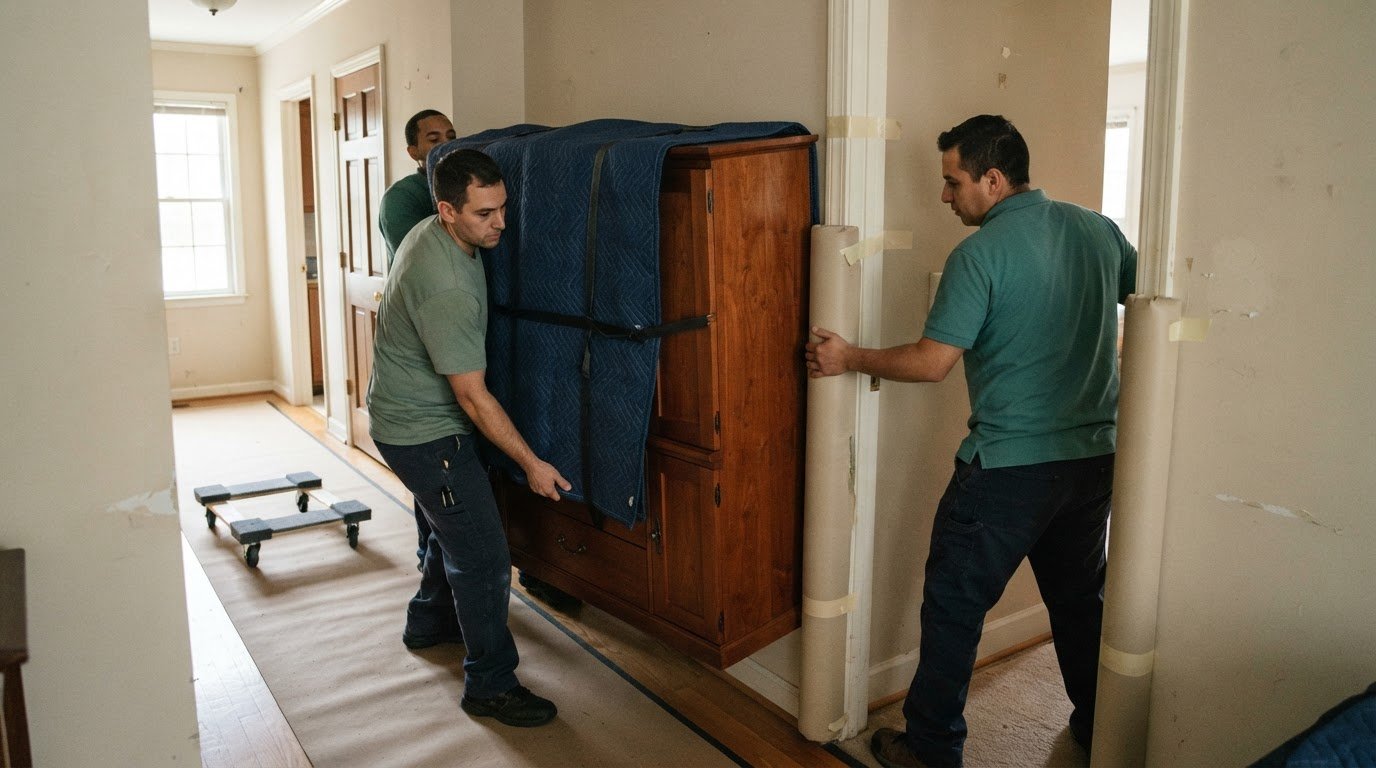
Never force a heavy solid cherry credenza through a tight turn. If you’re planning how to move a heavy solid cherry credenza down a tight hallway in Haymarket, measure the credenza and the full route, protect walls and floors, and use suitable equipment and a coordinated crew. If a corner or stair landing is too tight, stop and reassess the angle or route rather than pushing ahead.
A narrow hallway leaves little room to maneuver a large, heavy piece, so planning matters as much as lifting strength. This guide explains how movers assess the route, protect the home, choose equipment, and manage tight corners and stairs. You’ll also learn what details to share and when professional help can take the strain off you.
Key Takeaways
- Professional movers map the credenza’s route in advance, including hallway turns, doorways, and stair landings.
- Equipment choices depend on the piece and the path, helping movers keep the credenza steady and protected.
- At tight corners and stairs, controlled angles and coordinated movement matter more than force.
- Clear communication between movers helps manage the load and reduce strain during lifting.
- Protecting floors, walls, and the credenza itself is part of planning a careful move through a narrow home.
How professional movers plan a route and clear the landing area
Movers measure the credenza and route, clear obstacles, and plan each turn before lifting. They check openings and landings, then adjust the piece or route if it cannot pass safely.
-
How Professional Movers Plan the Route Through Tight Spaces
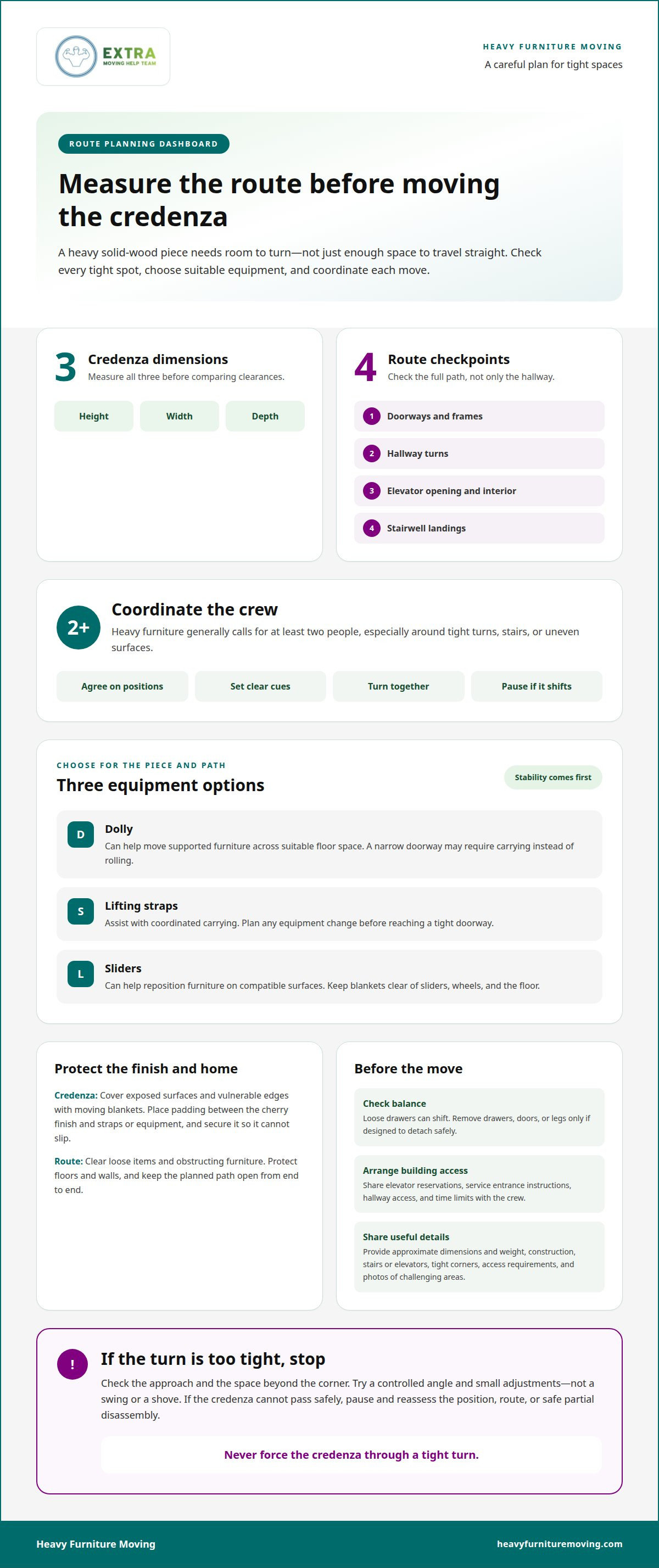
Have the crew trace the full path from the credenza’s current position to its destination. Measure the piece, doorways, hallway turns, elevator openings and interiors, and stairwell landings. This reveals tight spots before lifting begins. Clearing the hallway entrance does not guarantee the piece will fit around a sharp turn or onto a stair landing.
Movers also identify a safe place to pause before each tight section. They plan where the crew can reposition the credenza without blocking the route or hitting nearby walls. In a narrow Haymarket hallway, the plan should account for the credenza’s orientation at each turn, not just the corridor’s straight-line width.
-
How Professional Movers Clear and Measure the Route
Have movers clear the planned path before carrying the credenza. They move loose items and furniture that obstruct doorways, corners, or landings, then check that the route remains open from end to end. Clear floors give the crew room to place equipment and adjust their footing during lifting.
Measure the credenza’s height, width, and depth, then compare those dimensions with every tight spot. Account for door frames, hallway turns, elevator interiors, and stairwell landings. If an opening is too tight, consider another route or remove drawers, doors, or legs only if they are designed to detach safely. Removing components may reduce bulk or shifting weight, but never force a fixed part or risk damaging the furniture.
-
How Professional Movers Check the Credenza’s Fit Around Corners
Compare the credenza’s dimensions with the usable space at each corner, including the approach and the space beyond the turn. Assess whether the piece can be angled and rotated without its corners hitting walls, door frames, or nearby furniture. Hallway width alone does not show whether the credenza can pivot through.
Plan the carrying angle before lifting and coordinate each adjustment as the credenza approaches a corner. Check the next landing or opening, too, so a successful turn does not leave the piece stuck farther along. If it becomes wedged near an elevator, stop rather than forcing it. Reposition, reroute, or consider partial disassembly.
How professional movers use dollies, straps, sliders, and moving blankets
Choose equipment to suit the credenza, floor surface, and tightest part of the route. Arrange building access and handling details before moving day.
-
How Professional Movers Choose Dollies, Straps, and Sliders
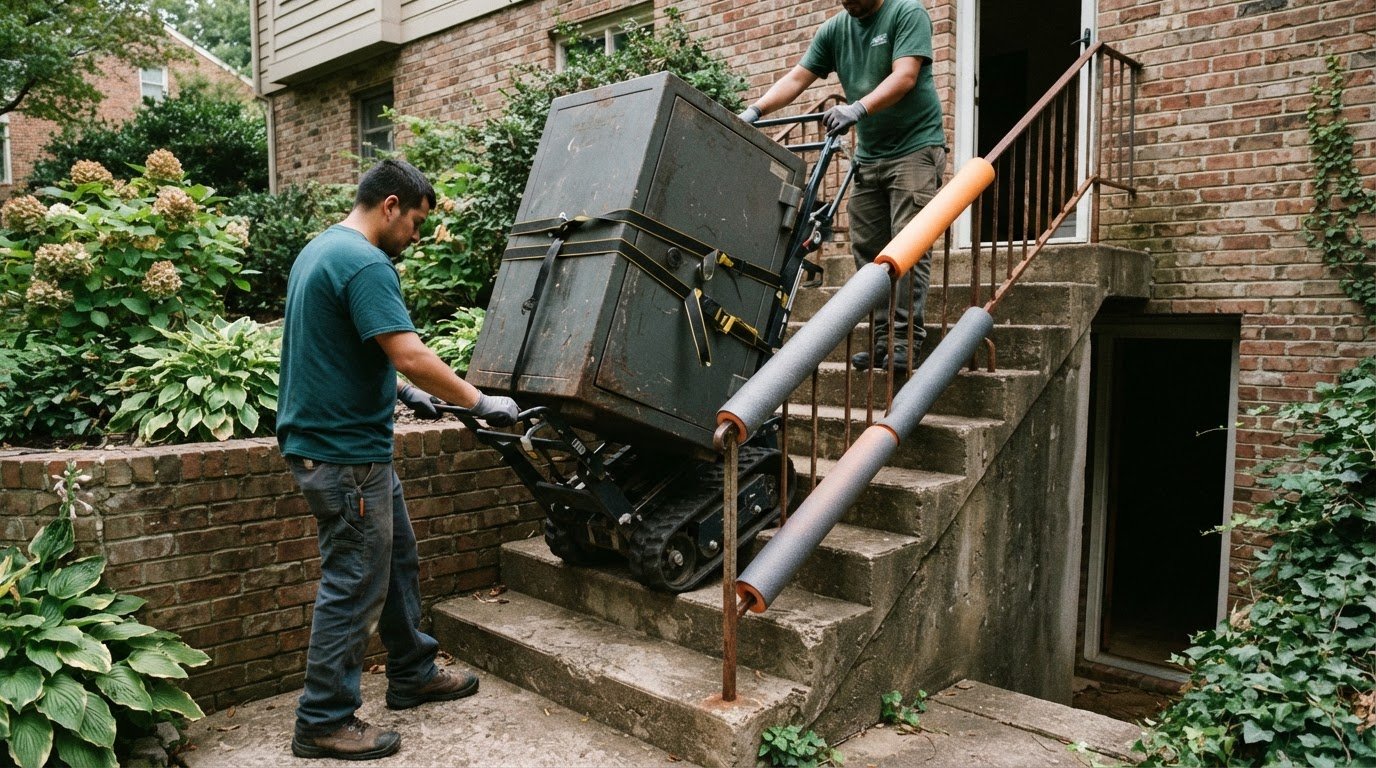
Have the crew select equipment after assessing the credenza’s weight, shape, and route. A dolly can help move supported furniture across suitable floor space, while lifting straps assist with coordinated carrying. Sliders can help reposition furniture on compatible surfaces. Movers avoid equipment that makes the piece unstable or difficult to control.
A narrow doorway, for example, may require carrying instead of rolling. Plan any equipment change before reaching the doorway, rather than switching methods while supporting the load. Check the credenza’s balance before moving, since loose drawers can shift.
-
How Professional Movers Use Moving Blankets
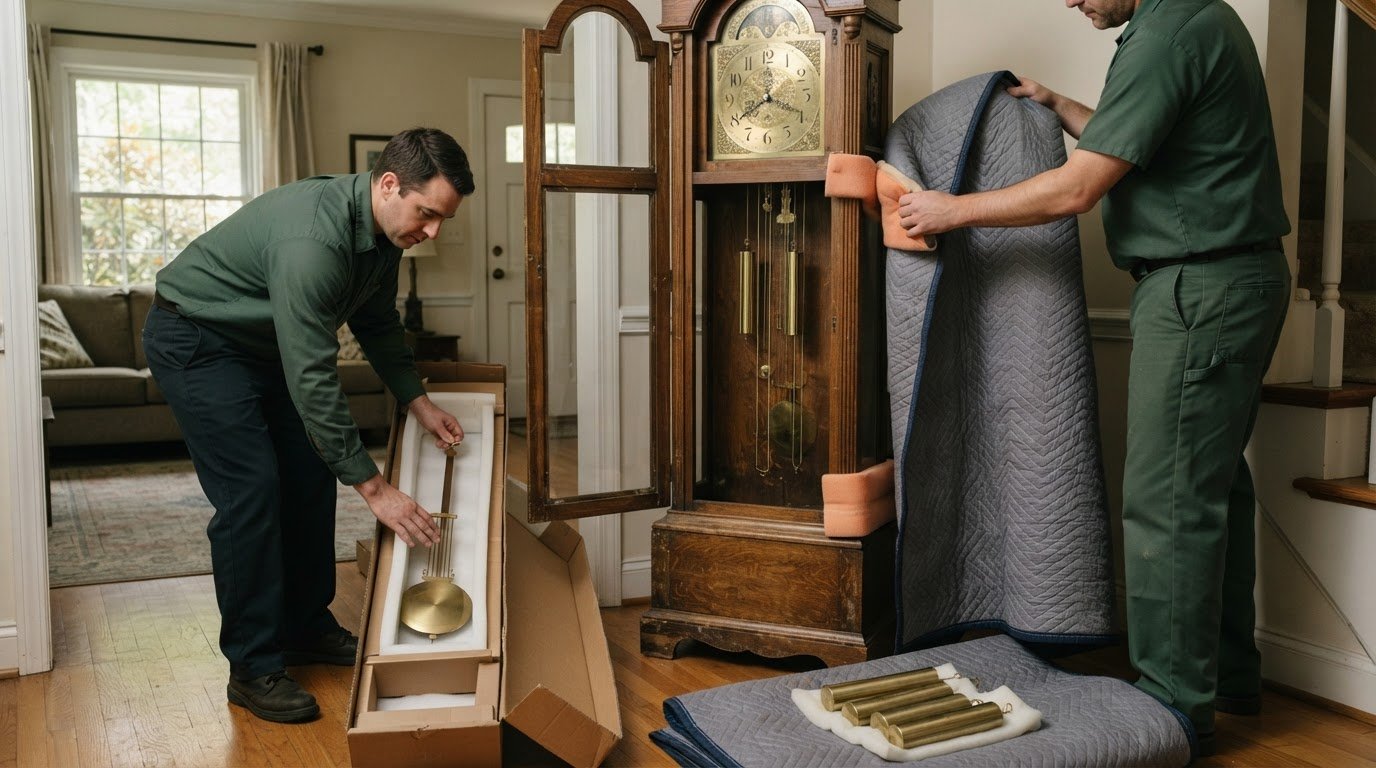
Cover exposed surfaces and vulnerable edges before handling the credenza. Place moving blankets between the cherry finish and straps or equipment, and secure the covering so it will not slip during a turn. Take particular care with frames and corners near tight walls.
Blankets also protect the furniture as it passes door frames or rests briefly during repositioning. Keep the covering smooth and clear of wheels, sliders, and the floor so a loose fold does not catch as the furniture moves.
- Arrange condo access before the move. Building rules may affect elevator reservations, service entrances, hallway access, and the time available. Share the instructions and reservation details with the crew. If the route includes an elevator, plan around its opening, interior, and landing rather than assuming the credenza will fit.
- Share useful details for an estimate: the credenza’s approximate dimensions and weight, its construction, pickup and delivery locations, stairs or elevators, tight corners, and building access requirements. Photos of the piece and challenging parts of the route can show its shape and the obstacles. Mention whether drawers, doors, or legs detach and whether other furniture is included.
- Decide whether the credenza is moving to another room, another home, or out of the property. Hauling may make more sense if the piece is damaged, no longer wanted, or impractical for the new layout. Moving with a friend may suit a manageable item on a flat floor, but a heavy solid-wood piece through tight turns or stairs calls for coordinated lifting. For help with the move, explore in-home furniture moving help.
How professional movers navigate tight corners and staircases
For corners and stairs, professional movers plan each change in direction before lifting. They coordinate the crew, control the credenza’s angle, and move steadily rather than forcing heavy furniture past an obstacle.
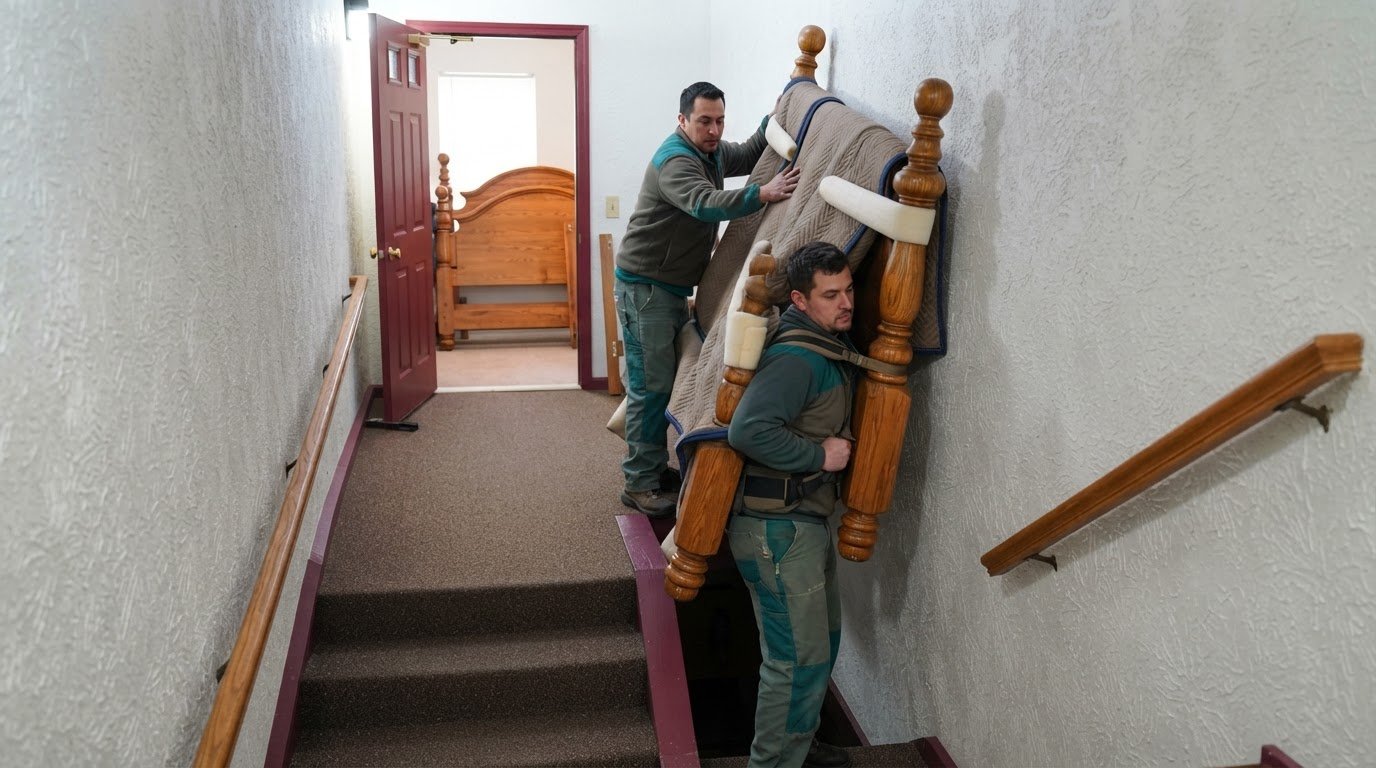
- Approach each corner with a planned carrying angle. Check the credenza’s path into the turn and the clearance beyond it, then coordinate which end leads. Make small, controlled adjustments instead of swinging the piece, which can bring its edges into walls or door frames. If the angle does not work, pause and reposition before continuing.
- Agree on positions before lifting. Heavy furniture generally calls for at least two people, especially around tight turns, stairs, or uneven surfaces. Set clear cues for lifting, turning, pausing, and lowering. A shared plan helps the crew respond together if the credenza shifts or needs an adjustment.
- Prepare the staircase as a separate part of the route. Movers assess the stair width, turns, and landing space, then decide how the credenza must be angled at each transition. A standard staircase is described as having a 37-degree angle, but the actual stair shape and landing determine how a specific piece can pass. They don’t assume a straight stair run guarantees a clear turn at the landing.
- Move one step at a time on stairs. When two people carry furniture upstairs, the person at the bottom usually supports more of the weight, so movers coordinate their positions and pace before starting. They keep the credenza balanced, stop when footing or alignment needs attention, and avoid rushing between steps. The same controlled approach helps manage the load on a descent.
- Stop and reassess if the credenza won’t clear a corner or landing. Movers can consider changing its angle, choosing another route, or removing detachable components such as legs or doors. They don’t force a piece through a space that cannot accommodate it. Heavy solid-wood furniture above 150 pounds is a reason to call for help, and stair moves deserve particular care: more than 100,000 injuries each year are linked to carrying items such as furniture up or down stairs.
How professional movers use proper lifting techniques
Professional movers match their grip, stance, and pace to the credenza’s shape and weight. For a heavy solid-wood piece, coordinated lifting helps control the load through a doorway without twisting or rushing.
- Assess the load before lifting. Movers consider the credenza’s weight, balance, and available handholds, then decide how the crew will carry it. A piece that shifts because of loose contents needs attention before it leaves the room. A solid-wood dresser weighing more than 150 pounds is a reason to call for help, rather than attempt a solo lift.
- Set a stable stance and grip. Each mover plants their feet securely and takes a firm hold at an agreed position on the furniture. Bend at the knees and keep the piece close while rising together. Avoid twisting under load. To change direction, move your feet and turn as a coordinated unit.
- Agree on commands before lifting. One person leads with clear cues such as “lift,” “move,” and “lower,” so the crew acts together. Before crossing a doorway, pause to check the path and hand positions. If someone needs to reset their grip, lower the credenza to a stable position first.
- Use straps only when they improve control. Position lifting straps to suit the credenza’s shape and route, then check that the load stays balanced as the crew takes its weight. Straps support coordinated handling, but do not replace a secure grip or clear communication. Adjust or stop if straps shift or restrict movement through a narrow opening.
- Set a realistic limit for solo handling. A dresser weighing about 100 pounds or less is the stated limit for moving it solo, but weight alone doesn’t determine whether a lift is manageable. Shape, grip, hallway turns, and stairs affect control. A heavy cherry credenza is not a suitable solo carry through tight spaces; movers use a coordinated crew and lower the item whenever control changes.
- Keep a controlled pace from room to room. Take short, coordinated steps and watch the person carrying the opposite end, especially near a doorway or change in floor level. Pause before fatigue affects grip or balance. If the route changes or the credenza becomes difficult to control, stop, stabilize it, and reset positions before continuing.
How professional movers clear and protect the moving path
Professional movers prepare the floor, walls, and credenza before carrying it. A clear, protected route helps prevent snags and unwanted contact during the move.
- Clear the full path before moving the credenza. Remove loose items, rugs, and small furniture from hallways and landings, including anything that could shift underfoot. Check the destination, too, so boxes or furniture are not blocking the landing when the crew arrives. A clear route gives everyone room to move without sudden stops.
- Protect floors and exposed surfaces along the route. Place suitable coverings where carrying or repositioning could mark the floor, then make sure they lie flat and do not create a slipping or tripping hazard. Pay particular attention to turns, thresholds, and landings, where the crew may need to adjust its footing. A loose covering can create more risk than leaving a surface unprotected.
- Shield walls, door frames, and vulnerable corners before carrying. Place protective material where the credenza’s edges may pass close to painted surfaces or trim. At a narrow doorway, keep the piece controlled and prevent its corners from scraping the frame. Check the covering as you progress, since a shifted pad can expose a surface at the next turn.
- Prepare the credenza to prevent shifting weight. Movers remove loose contents and secure drawers, doors, or hardware that could open or move during transport. If drawers are removed, the crew handles and stages them safely rather than leaving them in the route. Removing dresser drawers can reduce that dresser’s weight by 25% or more, but the crew considers the item’s construction and balance before choosing what to detach.
- Keep the route protected during pauses and repositioning. Choose stable places to rest the load, keep equipment clear of floor coverings, and check that blankets or pads have not slipped. If the credenza catches near a frame or wall, stop and reset its position instead of dragging it. This helps protect both the furniture and nearby surfaces.
For a heavy credenza moving through a tight home, arrange professional furniture-moving help to manage the carrying path and protect the home.
Heavy Furniture Moving
Heavy Furniture Moving handles heavy household furniture moves and can help plan a careful route through a tight hallway, around corners, or down stairs. If you’re figuring out how to move a heavy solid cherry credenza down a tight hallway in Haymarket, share the route details and difficult access points. The team can consider the furniture and home layout together when planning your move.
If you’re deciding how to move a heavy solid cherry credenza down a tight hallway in Haymarket, professional help can take on the lifting and coordination. Contact Heavy Furniture Moving to discuss the credenza and its route.
Make Your Haymarket Move Easier to Plan
If you’re deciding how to move a heavy solid cherry credenza down a tight hallway in Haymarket, treat the piece and the building as one moving challenge. The credenza’s finish matters, but so do the route, access points, and room available at the destination. Sharing those details helps a moving team understand the job before moving day and plan around the home’s specific layout.
For a smoother handoff, share the pickup and delivery locations, building access details, and any stairs or tight turns. You do not need to work out every handling detail yourself. The moving team can use this information to plan an approach for the furniture and home.
Ready to discuss the move? Contact Heavy Furniture Moving and describe the credenza and the route. A clear first conversation can help you take the next step with confidence.
Frequently Asked Questions
What local moving companies in Haymarket handle heavy solid wood credenzas?
Heavy Furniture Moving serves Haymarket and handles heavy household furniture moves. Share the credenza’s approximate dimensions, whether it has detachable parts, and whether the route includes stairs or an elevator. Mention any fragile finish or existing damage so the team can account for the piece’s condition when planning.
How do professional movers measure a credenza and hallway before moving furniture?
Professional movers measure the credenza’s height, width, and depth, then compare those dimensions with the narrowest points along its route. They consider doorway openings, hallway turns, elevator interiors, and landings. For example, a piece that fits through a doorway may still be difficult to rotate in a short corridor. Measurements help the crew assess clearance and plan how the furniture will be oriented at each transition.
What equipment do professional movers choose for a heavy credenza, such as a furniture dolly or lifting straps?
Choose equipment based on the credenza’s shape, balance, floor surface, and route. A dolly can help on a suitable flat path, while lifting straps can assist with a coordinated carry. Moving blankets protect the finish during handling. Equipment is not interchangeable: wheels may not suit stairs, and straps must allow the crew to control the piece. The route determines when movers carry, roll, or reposition it.
How many professional movers are needed to move a solid cherry credenza safely?
A heavy credenza generally calls for a coordinated crew rather than a solo carry, especially when the route includes stairs or tight turns. The exact number depends on the credenza’s weight, dimensions, balance, and available handholds. Professional movers assess those factors alongside the route before assigning positions. They also plan who leads turns and communicates pauses, so the team can respond together if the furniture shifts.
How do professional movers protect hardwood floors, walls, and doorframes while moving heavy furniture?
Floor protection, moving blankets, and door-jamb covers can help shield vulnerable surfaces along the route. Pay attention to thresholds and tight corners, where furniture edges may pass close to hardwood, trim, or painted walls. Floor coverings should lie flat and stay clear of equipment. Avoid dragging the credenza, which can scrape floors or catch on a frame.
What are the risks of tipping or carrying a heavy credenza, and how do professional movers prevent injuries?
Tipping a heavy credenza without control can shift its weight, strain the people carrying it, or cause contact with walls and doorframes. Movers assess balance and handholds before lifting, then coordinate their movements with clear cues. They change direction by repositioning their feet instead of twisting under load. If grip, footing, or balance becomes uncertain, they pause and stabilize the piece before continuing.
Are there building or HOA rules for moving large furniture in Haymarket residences?
Building and HOA procedures vary by property. A condo may have designated moving hours, elevator reservations, or a required service entrance. Share written building instructions with the moving team before the move to coordinate access and avoid arriving when an elevator or hallway is unavailable for moving furniture.
How much does it cost to hire furniture movers in Haymarket, Virginia?
Frequently Asked Questions
Heavy Furniture Moving serves Haymarket and handles heavy household furniture moves. Share the credenza’s approximate dimensions, whether it has detachable parts, and whether the route includes stairs or an elevator. Mention any fragile finish or existing damage so the team can account for the piece’s condition when planning.
Professional movers measure the credenza’s height, width, and depth, then compare those dimensions with the narrowest points along its route. They consider doorway openings, hallway turns, elevator interiors, and landings. For example, a piece that fits through a doorway may still be difficult to rotate in a short corridor. Measurements help the crew assess clearance and plan how the furniture will be oriented at each transition.
Choose equipment based on the credenza’s shape, balance, floor surface, and route. A dolly can help on a suitable flat path, while lifting straps can assist with a coordinated carry. Moving blankets protect the finish during handling. Equipment is not interchangeable: wheels may not suit stairs, and straps must allow the crew to control the piece. The route determines when movers carry, roll, or reposition it.
A heavy credenza generally calls for a coordinated crew rather than a solo carry, especially when the route includes stairs or tight turns. The exact number depends on the credenza’s weight, dimensions, balance, and available handholds. Professional movers assess those factors alongside the route before assigning positions. They also plan who leads turns and communicates pauses, so the team can respond together if the furniture shifts.
Floor protection, moving blankets, and door-jamb covers can help shield vulnerable surfaces along the route. Pay attention to thresholds and tight corners, where furniture edges may pass close to hardwood, trim, or painted walls. Floor coverings should lie flat and stay clear of equipment. Avoid dragging the credenza, which can scrape floors or catch on a frame.
Tipping a heavy credenza without control can shift its weight, strain the people carrying it, or cause contact with walls and doorframes. Movers assess balance and handholds before lifting, then coordinate their movements with clear cues. They change direction by repositioning their feet instead of twisting under load. If grip, footing, or balance becomes uncertain, they pause and stabilize the piece before continuing.
Building and HOA procedures vary by property. A condo may have designated moving hours, elevator reservations, or a required service entrance. Share written building instructions with the moving team before the move to coordinate access and avoid arriving when an elevator or hallway is unavailable for moving furniture.