How to Move a Heavy Safe on Carpet in Reston: A Safer Plan
The safest move may be to leave the safe where it is until you’ve checked the route. If you’re searching “how to move a heavy safe on carpet Reston,” you’re right to think beyond strength. A safe can strain your back, trap fingers, or leave carpet crushed or torn if it shifts or drags.
It’s tempting to gather a few helpers and push, but the safe’s weight, carpet, tight turns, doorways, and any steps all affect whether the move is manageable. Guessing about equipment or trying to tip the safe can turn a difficult job into a risky one.
This guide explains how to prepare without rushing into the lift. You’ll learn what to check about the carpet and route, and when to stop and ask for an assessment. We’ll also cover when specialized safe movers may be the safer choice in Reston. Plan around the safe, the carpet, and the path, not brute force.
Key Takeaways
- For how to move a heavy safe on carpet Reston, start by confirming the safe’s weight and checking its manual for handling instructions.
- Trace the entire route, including tight turns and doorways, to spot access problems before moving day.
- Compare DIY and professional help based on the load, route, and available equipment. No single weight cutoff makes a DIY move safe for every home.
- Prepare without attempting the lift: document the safe and route, clear access, coordinate building requirements, and share key details with movers.
- If the weight, carpet, or access is uncertain, pause and consider an assessment. Heavy Furniture Moving lists specialized safe handling and serves Reston.
Moving a Heavy Safe on Carpet in Reston: Start With the Risks
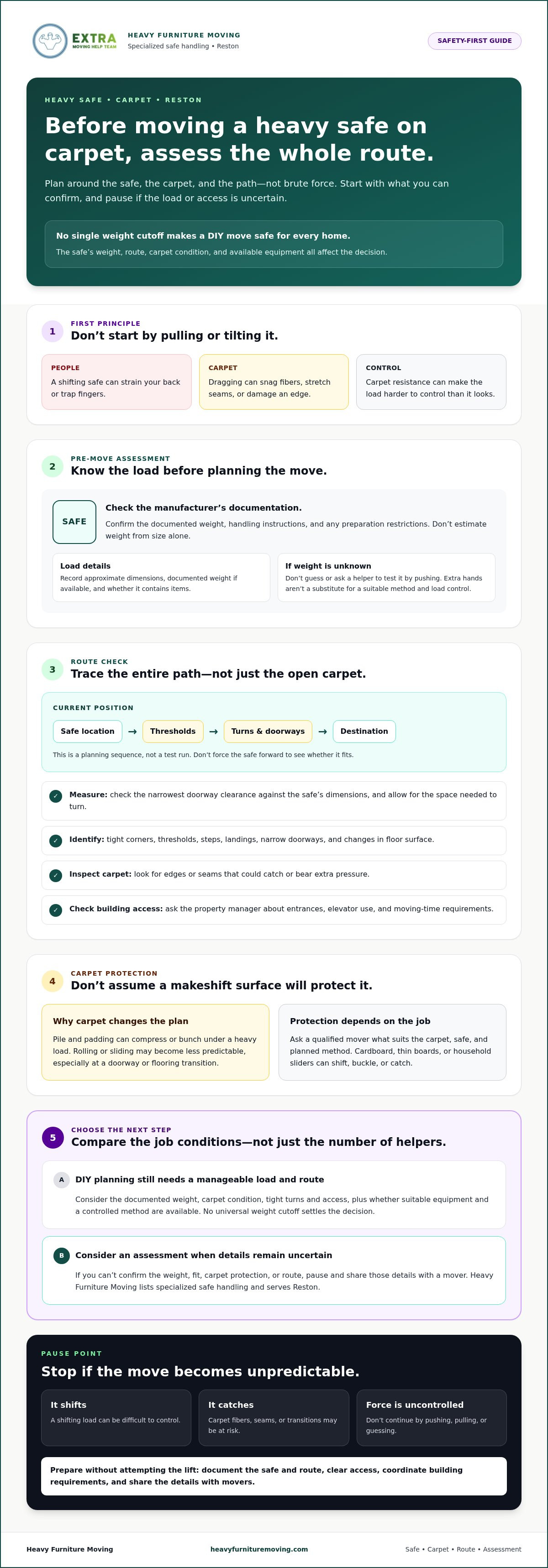
A heavy safe can shift without warning. Carpet adds resistance, making the load harder to control than it may look. Before planning how to move a heavy safe on carpet Reston, focus on protecting people, carpet, the safe, and the full route. Don’t start by pulling or tilting it. First, establish what you’re dealing with.
Safe weight and construction vary widely. Check the manufacturer’s documentation for the model’s weight and any moving instructions or restrictions. Don’t estimate by size alone. Whether the safe is empty or contains items can also affect its total load and how stable it feels. For a basic overview of the risks involved in moving heavy items, read about Manual handling of loads.
Why carpet changes the moving plan
Carpet pile and padding can compress or bunch under a heavy load. That makes rolling or sliding less predictable, especially at a doorway or flooring transition. Dragging may snag fibers, stretch seams, or damage a carpet edge. Carpet friction and an uncertain load make improvised pulling a poor plan. No single protective surface suits every carpet, safe, and route, so don’t assume a makeshift solution will prevent damage.
What to assess before deciding to move it
Inspect the complete path from the safe’s current position to its destination. A clear stretch of carpet isn’t enough if a threshold, tight corner, step, narrow doorway, or flooring transition creates a pinch point. Note these details before deciding whether the move is manageable or asking for an assessment.
- Record the safe’s approximate dimensions and its documented weight, if available.
- Note whether it contains items, and check the manual for preparation instructions.
- Identify thresholds, corners, steps, narrow doorways, and changes in floor surface.
- Look for carpet edges or seams that could catch or bear extra pressure.
Use these observations to describe the job clearly if you consult a mover. Don’t test the route by forcing the safe forward. Stop if it shifts, catches, or requires uncontrolled force to move. Pausing is a sensible safety decision, not a setback. Once you understand the load and route, you can make a more informed choice about what to do next.
Assess the Safe, Carpet, and Route Before Moving It in Reston
A route that looks open from across the room may still have a tight turn or doorway the safe won’t fit through. Before deciding how to move a heavy safe on carpet Reston, map the path from its current position to the destination, including places where it would need to change direction. The safe’s weight, route, and carpet condition determine the moving approach.
Check the manufacturer’s manual for handling restrictions and preparation instructions. If the safe’s weight isn’t documented, don’t guess based on its size or ask a helper to test it by pushing. A second person can help with planning, but extra hands aren’t a substitute for a suitable method, equipment, and control of the load. The CDC’s Ergonomic Guidelines for Manual Material Handling explain why handling heavy loads requires attention to both the task and the conditions around it.
Measure the route and identify obstacles
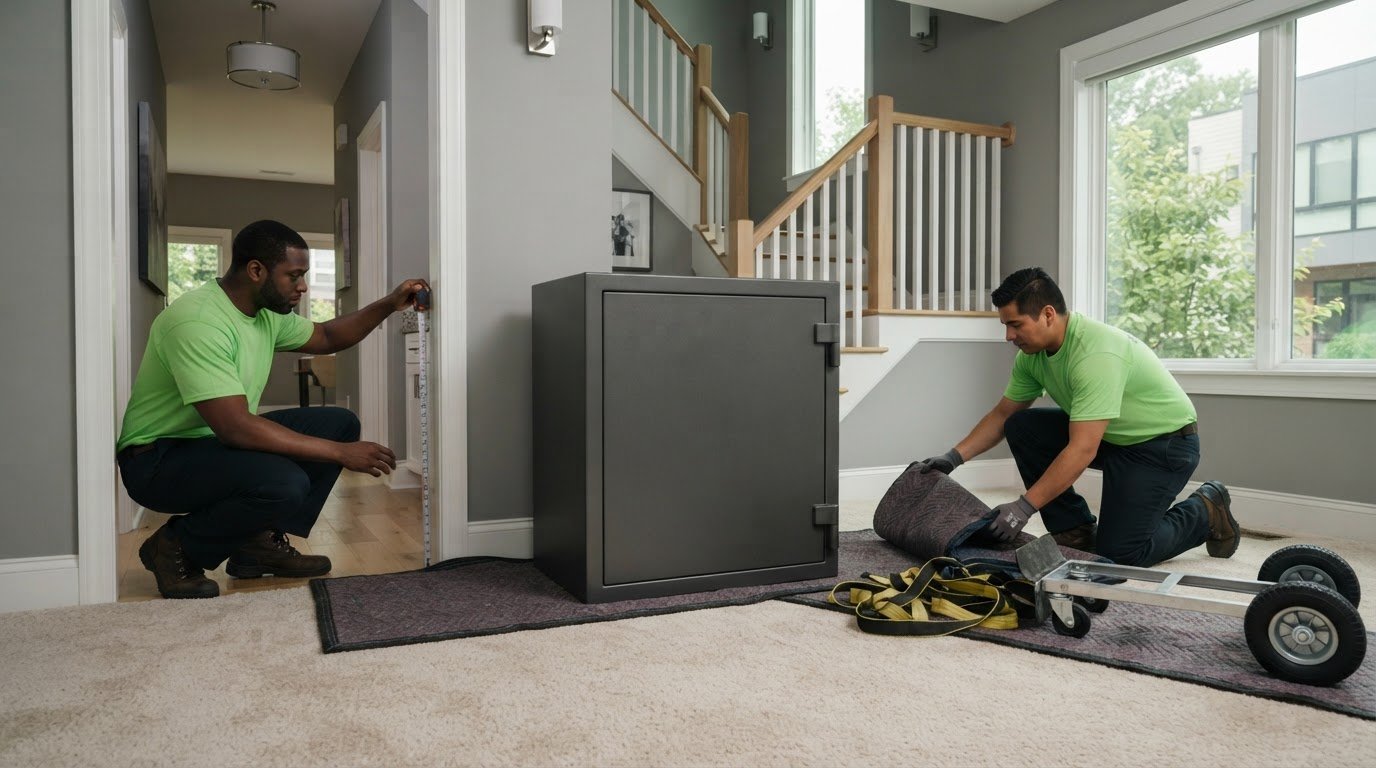
Measure the narrowest doorway clearance and compare it with the safe’s dimensions. Consider the space needed to turn, not just the doorway width. Record tight corners, thresholds, stairs, and landings. Remove doors or hold them open only if that can be done safely. Clear rugs and other movable obstacles in advance, but don’t shift anything heavy just to make room.
In an apartment or shared building, ask the property manager about access requirements before moving day. Confirm whether you need to use a particular entrance or elevator, or follow a specific moving-time restriction. Share those details with the movers early so they can assess the route under the actual conditions.
Protect carpet without improvising
Carpet protection must suit the surface, the safe, and the planned method. Ask a qualified mover what protection is appropriate rather than laying down cardboard, thin boards, or household sliders and assuming they can carry the load. Material that shifts, buckles, or catches at a transition could add risk instead of reducing it.
Clear the route and include nearby walls and floor transitions in your assessment. If you can’t confirm that the safe will fit, the carpet can be protected, or the route can be managed, pause before moving day. A safe-moving assessment may help clarify the next step when those details remain uncertain.
DIY or Professional Safe Movers in Reston: Compare the Risks
There’s no single weight cutoff that makes a DIY safe move safe. The decision depends on the load, how well you understand its balance and handling instructions, the route, the carpet, and whether suitable equipment and control are available. A safe on a straight, clear path presents different challenges from one that must cross soft carpet, negotiate a tight turn, or pass over stairs.
Saving the cost of a service call isn’t worth risking an uncontrolled move. If you’re weighing how to move a heavy safe on carpet Reston, treat uncertainty as a reason to pause, not a challenge to push through.
When a DIY attempt should stop before it starts
Don’t proceed if the safe’s weight, balance, or handling requirements are unknown. Stairs, tight turns, soft carpet, uneven transitions, and too few capable helpers can all make a move harder to control. Avoid pulling, pushing, or tilting the safe without a suitable plan based on the actual load and route. If anything shifts or catches, stop rather than trying to muscle it through.
A helper can support a sound plan, but can’t replace one. Agreeing to “just give it a push” doesn’t address how the safe will stay stable, cross the carpet, or pass each obstacle. If you can’t answer those questions before starting, don’t start.
What professional help can clarify
A mover can assess the safe, access route, and floor conditions before work begins. That can help clarify whether the move is practical and which details need attention. Ask about their experience handling safes, how they plan to protect the carpet, and what information or access they need from you. Describe the specific route, including stairs, tight turns, and flooring changes. Confirm the method, crew size, equipment, and protection directly rather than assuming what will be used.
For security or lock-related questions, the ALOA Security Professionals Association is a resource for learning about locksmith and security professionals. That’s separate from assessing the physical move, so ask movers directly about their safe-moving experience and job requirements.
Heavy Furniture Moving lists specialized safe handling and serves Reston. If the load or route still feels uncertain, ask Heavy Furniture Moving about safe-moving help before attempting the move. Discussing the conditions can help you decide whether to proceed, adjust the plan, or leave the handling to experienced movers.
Prepare a Reston Home for a Safer Heavy-Safe Move
Good preparation gives movers useful details and helps prevent last-minute surprises. It doesn’t mean you should test the safe, shift it, or try to position it yourself. If the weight, route, or carpet condition is still uncertain, preparation isn’t a substitute for an assessment.
A practical pre-move checklist
Use this checklist to organize information and clear the way without handling the safe:
- Document the safe. Note its location, approximate dimensions, known or estimated weight, and destination. Check the manual for handling or preparation instructions, and distinguish documented weight from a guess.
- Share route details. Describe the path from the safe to its destination. If movers request photos, include doorways, corners, stairs, and places where carpet meets another floor surface. Photos can help explain the layout, but they don’t replace an assessment if conditions are unclear.
- Clear personal belongings. Move small items, loose rugs, and other removable obstacles out of the route if you can do so safely. Don’t try to shift the safe or move heavy objects to make room.
- Explain concerns clearly. Point out soft or uneven carpet, narrow access, thresholds, and areas where the safe might need to turn. Ask what information the moving team needs before the move.
Confirm access and protect the destination
For a shared building, coordinate access with the property manager. Confirm any elevator rules, permitted access points, or parking arrangements, and relay those details to the movers. At the destination, identify the safe’s intended placement and mention nearby flooring, doorway, or wall concerns before work begins.
Don’t lay down protective material or move furniture based on guesswork. Ask the moving team what should remain in place until they’ve assessed the safe and route. A clear destination plan helps the team understand the job, but it doesn’t establish that the route or floor protection is suitable.
If you’re still working out how to move a heavy safe on carpet Reston, organized details can make the next conversation more useful. For broader local moving context, see reliable movers near me in Fairfax and Northern VA. Heavy Furniture Moving lists specialized safe handling and serves Reston. Ask Heavy Furniture Moving about safe-moving help if you’d like to discuss the safe and its access conditions before deciding how to proceed.
Get Heavy-Safe Moving Help for Your Reston Home
Don’t move the safe until its weight, route, carpet condition, and handling requirements are understood. If any of those details are uncertain, pause and get guidance before attempting to shift it. That’s a practical safety decision, not a failure to tackle the job yourself.
Heavy Furniture Moving lists specialized safe handling and serves Reston. If you’re considering how to move a heavy safe on carpet Reston, a clear description of the job can help the company explain what information it needs and whether the service fits your situation.
What to include when requesting a moving assessment
Give a straightforward picture of the move. Include the safe’s location, approximate size, known weight if available, and intended destination. Explain whether it’s on carpet and describe the route, including stairs, tight access, thresholds, or changes in flooring. If the safe’s weight is only an estimate, say so rather than presenting it as confirmed.
Building rules can affect access, too. Mention any elevator requirements, restricted entrances, or parking arrangements you’ve been asked to follow. Ask what details or photographs the team needs to assess the job. If photos are requested, show the route clearly, not just the safe, and don’t move the safe to get a better picture.
What to expect from the next step
Confirm the service scope and logistics directly with the company. Ask what the next step involves, what information is still needed, and whether the route or carpet conditions call for an assessment before moving day. Don’t assume a particular schedule, crew size, equipment, or outcome until those details have been confirmed.
If the route or load remains unclear, leave the safe in place while you get answers. Heavy Furniture Moving is veteran-family owned and operated, and its specialized safe handling is relevant to homeowners seeking help in Reston. You can contact Heavy Furniture Moving about a Reston safe move to discuss the safe, its location, and the route. Ask questions, confirm the details, and choose a plan you’re comfortable with.
Make the Safer Move With a Clear Plan
The safest next step is based on facts, not force. Confirm the safe’s weight and handling instructions, inspect the full route, and consider how carpet and access conditions affect control. If any detail is uncertain, pause before moving it. Knowing how to move a heavy safe on carpet Reston starts with deciding whether the move is manageable or needs experienced help.
Heavy Furniture Moving lists specialized safe handling among its heavy-item moving services and serves Reston. The veteran-family owned and operated company may be an option to discuss when the load, carpet, or route raises questions. Share the safe’s location, size, destination, and access concerns, then confirm the service scope and logistics directly.
Contact Heavy Furniture Moving about safe-moving help in Reston to talk through your next step. A careful plan can help you move forward with greater confidence while keeping people, carpet, and the safe in view.
Frequently Asked Questions
Can I move a heavy safe across carpet by myself?
There’s no reliable yes-or-no answer without knowing the safe’s weight, balance, route, and your ability to handle the task safely. Check the manufacturer’s instructions before making a plan. Don’t improvise by pulling, tilting, or lifting the safe. If you can’t confirm the load or the path is difficult, pause and ask experienced movers to assess it. A helper alone doesn’t make an uncertain move safe.
How do you move a safe without damaging carpet?
The right approach depends on the carpet pile and padding, the safe’s weight, and the full route. Ask movers to assess those conditions and explain what floor protection they recommend. Don’t assume cardboard, thin boards, or household furniture sliders can support the load or stay in place. No method can be assumed to prevent all damage. Stop if the safe catches or shifts, and don’t force it forward.
Should I empty a safe before moving it?
Check the safe manufacturer’s instructions and ask the moving professional what preparation is appropriate for your model. Contents can affect the safe’s weight and handling, but designs and requirements differ, so there’s no universal rule to empty it or leave everything inside. Protect valuables and follow any security guidance that applies. If you don’t know the safe’s weight or preparation requirements, share that uncertainty before the move is planned.
What equipment is needed to move a heavy safe on carpet?
The right equipment depends on the safe’s weight, dimensions, construction, carpet, and access route. Don’t choose a dolly, slider, or lifting device based on appearance or assume it suits your safe. Ask a qualified safe mover what equipment and floor protection fit the specific job. Owning moving equipment doesn’t ensure the load will stay controlled, especially on carpet or near thresholds, stairs, and tight turns.
When should I hire professional safe movers in Reston?
Contact experienced movers if the safe’s weight or handling instructions are unknown, the route includes stairs or tight turns, or carpet makes movement hard to predict. Professional advice is also sensible if helpers would have to improvise. Heavy Furniture Moving lists specialized safe handling and serves Reston, Fairfax, Woodbridge, Manassas, Manassas Park, Aldie, Ashburn, McLean, Vienna, Centreville, Chantilly, Clifton, Dumfries, South Riding, Fairfax Station, Haymarket, and Gainesville. Share the safe’s location, dimensions, destination, and route details.
Can movers move a safe that is already on carpet?
Yes, a safe being on carpet doesn’t automatically rule out a move, but the carpet’s condition and the full route need review first. Ask the moving company to confirm that it handles safes and what details it needs to assess the job. Explain whether the route has stairs, thresholds, tight access, or flooring changes. Don’t assume a particular method or outcome until the company has discussed the conditions with you.
What should I do if the safe gets stuck while moving?
Stop applying force and keep everyone clear of the safe’s path. Don’t try to catch, stabilize, tilt, or pull it free, since it could shift without warning. Contact experienced movers to assess the situation and follow their direction. If anyone is injured or in immediate danger, seek appropriate emergency assistance. Don’t resume the move until the cause of the problem and a safe next step are clear.
Frequently Asked Questions
There’s no reliable yes-or-no answer without knowing the safe’s weight, balance, route, and your ability to handle the task safely. Check the manufacturer’s instructions before making a plan. Don’t improvise by pulling, tilting, or lifting the safe. If you can’t confirm the load or the path is difficult, pause and ask experienced movers to assess it. A helper alone doesn’t make an uncertain move safe.
The right approach depends on the carpet pile and padding, the safe’s weight, and the full route. Ask movers to assess those conditions and explain what floor protection they recommend. Don’t assume cardboard, thin boards, or household furniture sliders can support the load or stay in place. No method can be assumed to prevent all damage. Stop if the safe catches or shifts, and don’t force it forward.
Check the safe manufacturer’s instructions and ask the moving professional what preparation is appropriate for your model. Contents can affect the safe’s weight and handling, but designs and requirements differ, so there’s no universal rule to empty it or leave everything inside. Protect valuables and follow any security guidance that applies. If you don’t know the safe’s weight or preparation requirements, share that uncertainty before the move is planned.
The right equipment depends on the safe’s weight, dimensions, construction, carpet, and access route. Don’t choose a dolly, slider, or lifting device based on appearance or assume it suits your safe. Ask a qualified safe mover what equipment and floor protection fit the specific job. Owning moving equipment doesn’t ensure the load will stay controlled, especially on carpet or near thresholds, stairs, and tight turns.
Contact experienced movers if the safe’s weight or handling instructions are unknown, the route includes stairs or tight turns, or carpet makes movement hard to predict. Professional advice is also sensible if helpers would have to improvise. Heavy Furniture Moving lists specialized safe handling and serves Reston, Fairfax, Woodbridge, Manassas, Manassas Park, Aldie, Ashburn, McLean, Vienna, Centreville, Chantilly, Clifton, Dumfries, South Riding, Fairfax Station, Haymarket, and Gainesville. Share the safe’s location, dimensions, destination, and route details.
Yes, a safe being on carpet doesn’t automatically rule out a move, but the carpet’s condition and the full route need review first. Ask the moving company to confirm that it handles safes and what details it needs to assess the job. Explain whether the route has stairs, thresholds, tight access, or flooring changes. Don’t assume a particular method or outcome until the company has discussed the conditions with you.
Stop applying force and keep everyone clear of the safe’s path. Don’t try to catch, stabilize, tilt, or pull it free, since it could shift without warning. Contact experienced movers to assess the situation and follow their direction. If anyone is injured or in immediate danger, seek appropriate emergency assistance. Don’t resume the move until the cause of the problem and a safe next step are clear.