How to Move a Heavy Multi-Stack Gym in Gainesville Without Losing Cables
Moving a multi-stack gym machine without losing its cables takes planning, not a casual lift. For Gainesville homeowners wondering how to move a heavy multi-stack gym machine without losing cables, professional help is worth considering when the frame is heavy, the route is tight, or the pulley system is complex. Documenting cable routes before disassembly helps preserve the correct setup for reassembly.
The machine’s weight is only part of the challenge. Cables can shift, small parts can go missing, and tight doorways or stairs can complicate the carry. A sound moving plan accounts for these risks before the equipment leaves its current spot.
Here, you’ll learn when to bring in moving help and how professionals can document cable layouts, protect the machine and your home, secure the load for transport, and reconnect the system at its destination. You’ll also learn what details about the equipment and route can help the move go smoothly.
Key Takeaways
- Know when a multi-stack machine’s weight, complexity, or moving path makes professional help the safer choice.
- See how clear photos and component records can make disassembly and reassembly easier to manage.
- Learn how organized cable labels and hardware storage help keep parts matched to the right locations.
- Find out how movers can reduce the risk of damage to the machine, floors, and doorways during the move.
- Understand the checks that help ensure frames and pulleys are properly aligned before the machine is used again.
How Professional Movers Load and Secure Heavy Gym Equipment in a Truck
Professional movers measure the equipment, plan the route, and secure the load before transport. In Gainesville, building access and property rules can vary, so the move should follow the instructions that apply to the property.
-
Professional Assessment of Equipment and the Moving Route
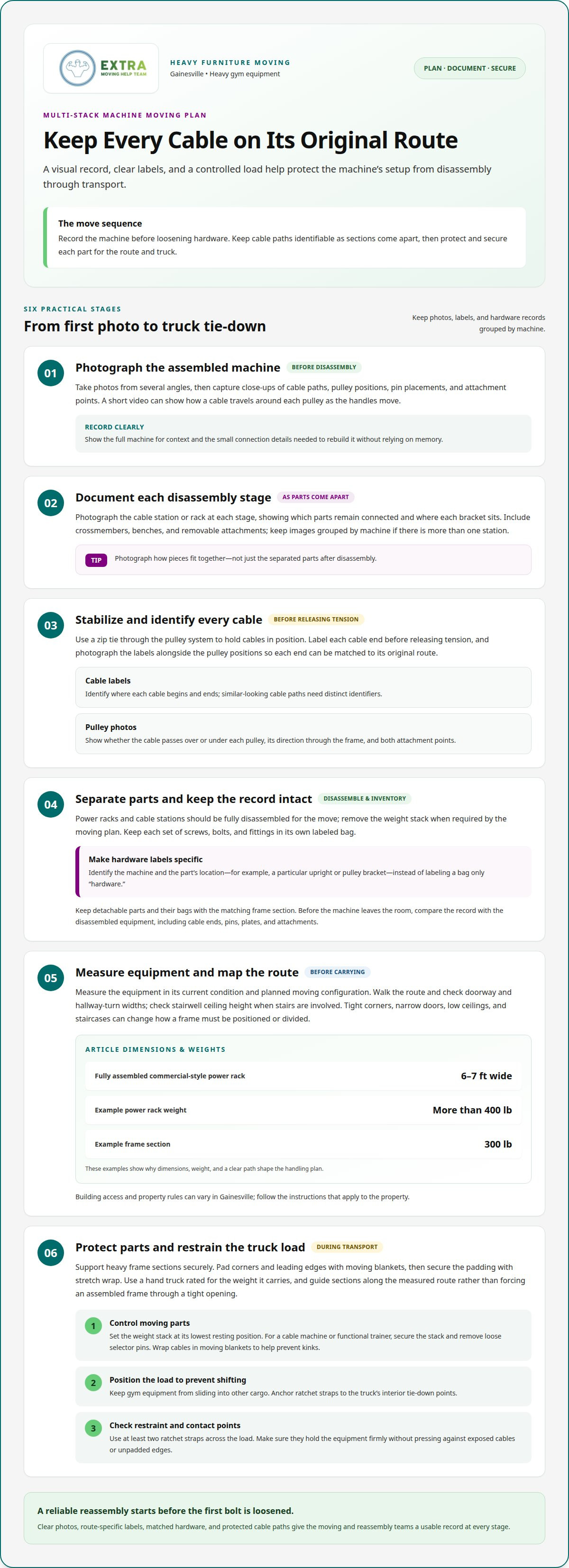
The crew measures the gym equipment in its current condition and in the configuration planned for the move. A fully assembled commercial-style power rack can be six to seven feet wide and weigh more than 400 pounds, so dimensions and weight shape the handling plan. Movers also assess whether the machine should be disassembled to pass safely through the home.
-
Professional Route Planning
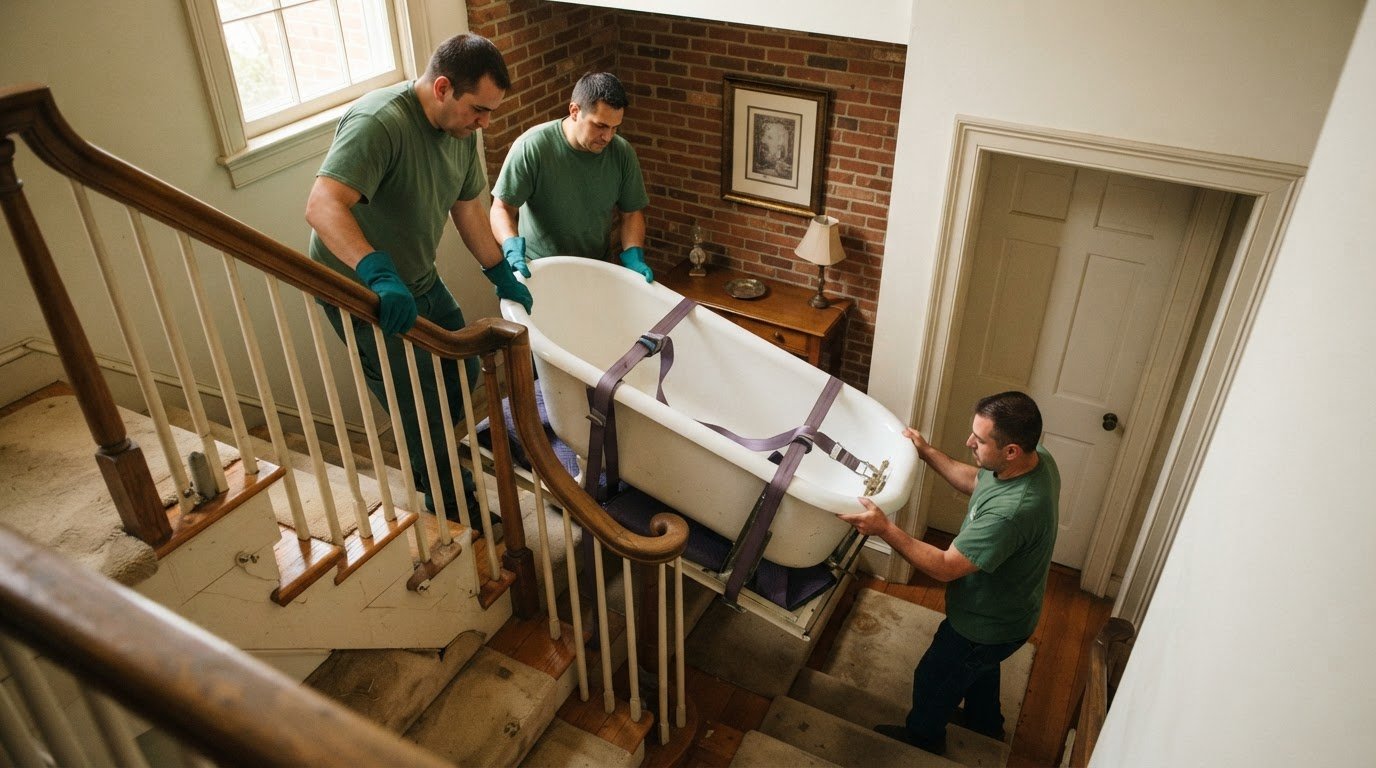
The moving crew walks the route from the home gym to the truck before carrying equipment. They measure doorway and hallway-turn widths, plus stairwell ceiling height when stairs are involved. Tight corners, narrow doors, low ceilings, and staircases can change how a frame must be positioned or divided. A 300-pound frame section calls for a clear path and deliberate handling.
-
Professional Loading and Strapping in the Vehicle
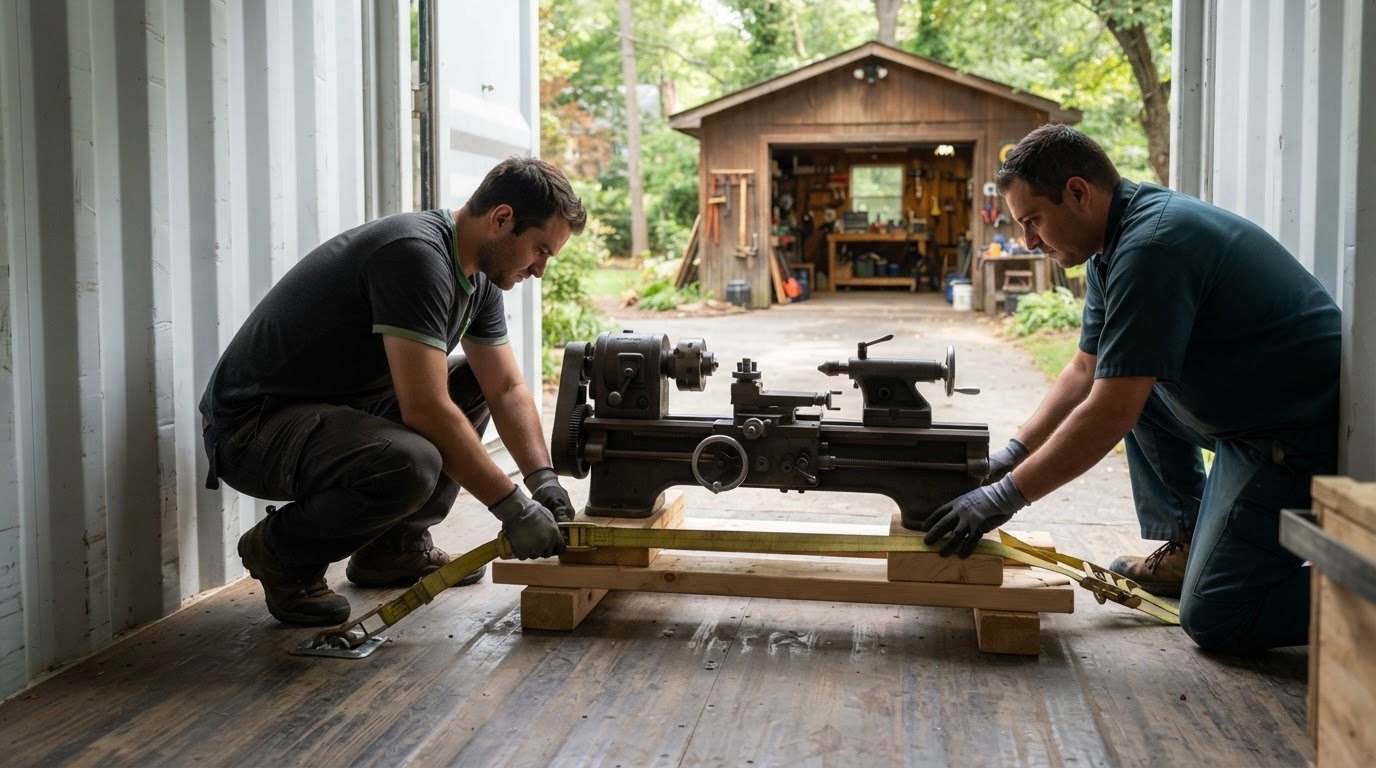
Movers support heavy frame sections securely and protect cable components from shifting loads. They pad corners and leading edges with moving blankets, then secure the padding with stretch wrap before navigating tight turns or loading the equipment. In the truck, ratchet straps connect to interior tie-down points to keep the load secure during transport.
- Keep moving parts under control. Before moving the machine, the crew secures the weight stack at its lowest resting position. For a cable machine or functional trainer, movers secure the stack and remove loose selector pins so parts don’t shift or go missing. They wrap cables in moving blankets to help prevent kinks.
- Match handling equipment to the load. A hand truck must be rated for the weight it carries, since an uneven load can tip an unsuitable one. Movers use appropriate equipment to guide heavy sections along the measured route instead of forcing an assembled frame through an opening that is too tight.
- Finish the truck load with restraint, not guesswork. Movers position gym equipment so it cannot slide into other cargo, then tighten at least two ratchet straps across the load, anchored to the truck’s tie-down points. They check that straps hold the equipment firmly without pressing against exposed cables or unpadded edges.
How Professional Movers Document Cable Routing and Machine Components Before Disassembly
- Start with a complete visual record before loosening any hardware. Movers photograph the assembled multi-stack machine from several angles, then capture close-ups of cable paths, pulley positions, pin placements, and attachment points. A short video can show how a cable travels around each pulley as the handles move. These images give the reassembly crew a visual reference instead of relying on memory, especially when the machine has several similar-looking cables.
- Document each section as it comes apart. Movers photograph the cable station or power rack at each stage, showing which parts remain connected and where each bracket sits. This is especially useful for a frame with multiple crossmembers, benches, or removable attachments. The records should clearly show how the pieces fit together, not just a pile of parts after disassembly. Keep images grouped by machine if the home gym has more than one station.
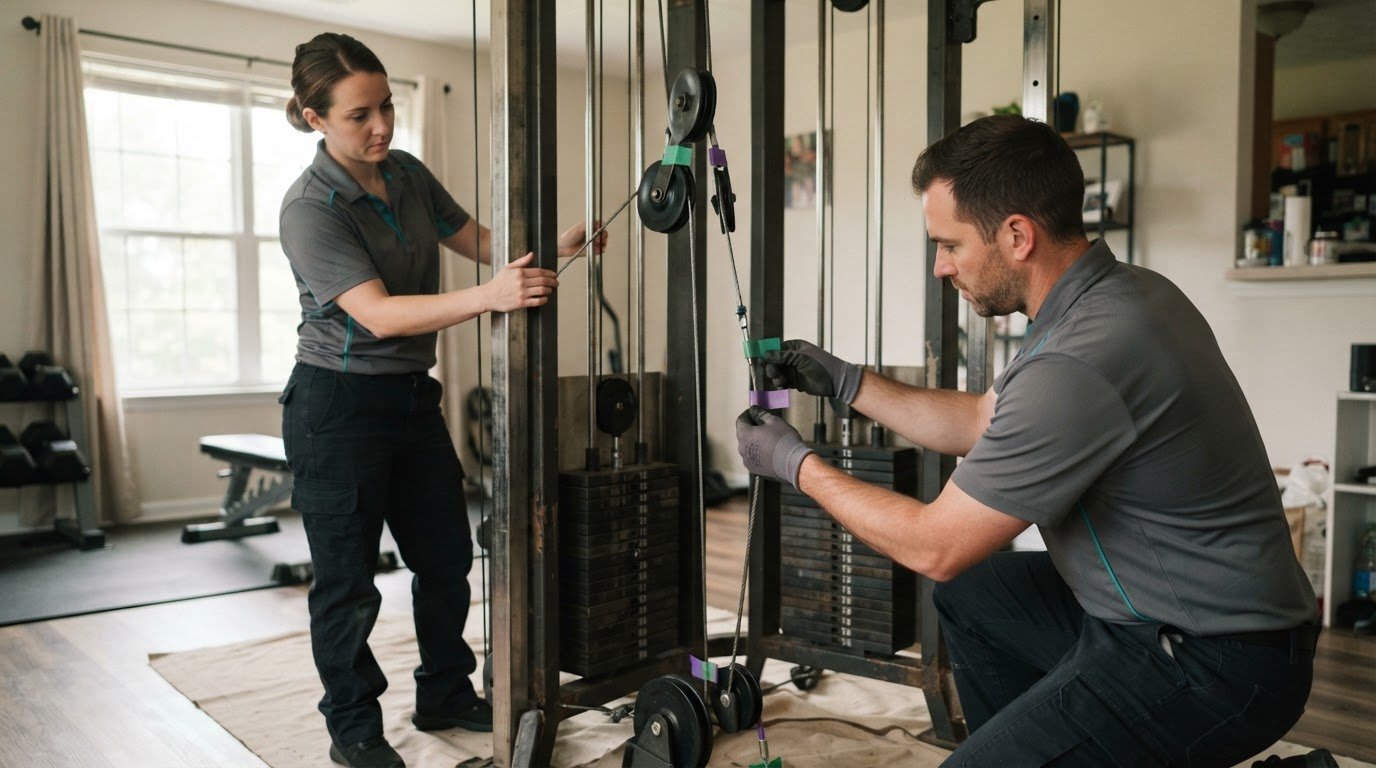
- Stabilize the cable path before disconnecting anything. A mover can thread a zip tie through the pulley system to hold cables in position, then label each cable end before releasing tension. Photograph the pulley positions alongside the labels so each end can be matched to its original route. This helps prevent cables from slipping through the frame or tangling with plates and other loose parts during handling and loading.
- Separate the machine into manageable sections while keeping the assembly record intact. Power racks and cable stations should be fully disassembled for the move, with the weight stack removed when required by the moving plan. Movers keep each set of screws, bolts, and small fittings in its own labeled bag. Labels should identify the machine and the part’s location, such as a specific upright or pulley bracket, rather than simply saying “hardware.”
- Keep detachable parts and protective materials with the right equipment. Movers remove loose components that could shift, record where each belongs, and keep associated bags with the matching frame section. Moving blankets protect separated pieces, while clear labels keep covered parts identifiable. Before the equipment leaves the room, the crew compares the documented sections with the disassembled machine, including its cable ends, pins, plates, and attachments. This inventory gives the reassembly team a useful starting point.
How Professionals Label Cables and Document Pulley Routing
- Identify each cable by its endpoints before releasing tension. A multi-stack station may have several cables following similar pulley paths, so labels should distinguish where each cable begins and ends. Movers photograph the pulley positions alongside those identifiers. Together, the labels and photos help the reassembly crew match each cable to its route instead of guessing from a loose cable or relying on memory.
- Make pulley positions clear in the photos. Capture the cable’s path over or under each pulley, its direction through the frame, and the attachment point at each end. Take close-ups where a cable passes behind a bracket or changes direction. A wider view of the same section shows how the pulley relates to the rest of the home gym equipment.
- Keep labels readable after parts are removed. Mark cable ends and the related frame section with matching descriptions, such as “left station” and “upper pulley.” Use the same wording in photo notes and the parts record. Don’t rely on cable color or length alone to identify a route, since similar components can look alike once removed from the assembled machine.
- Sort screws and bolts by the connection they secure. Movers place each set in a separate labeled bag, identifying the machine and part location, such as a pulley bracket or frame joint. Keep the bags with the relevant section. This makes it easier to find the right hardware during reassembly and reduces the chance of mixing fasteners from a rack, bench, or cable station.
- Record other detachable parts before removing them from the frame. Photograph the attachment point, remove the part, and label it to match that location. For a treadmill, document the console and its connections separately from the frame. Keep small items such as the safety key with the treadmill’s labeled parts, not loose among unrelated gym equipment.
- Keep records together as a matched set during loading and setup. Associate each labeled cable, hardware bag, and component record with its machine section. Before wrapping parts in moving blankets, movers compare the labels with the photographs and notes. At the destination, these records give the crew a clear reference for restoring each pulley, cable, and attachment to its documented position.
How Professional Movers Protect Floors and Doorways During Transport
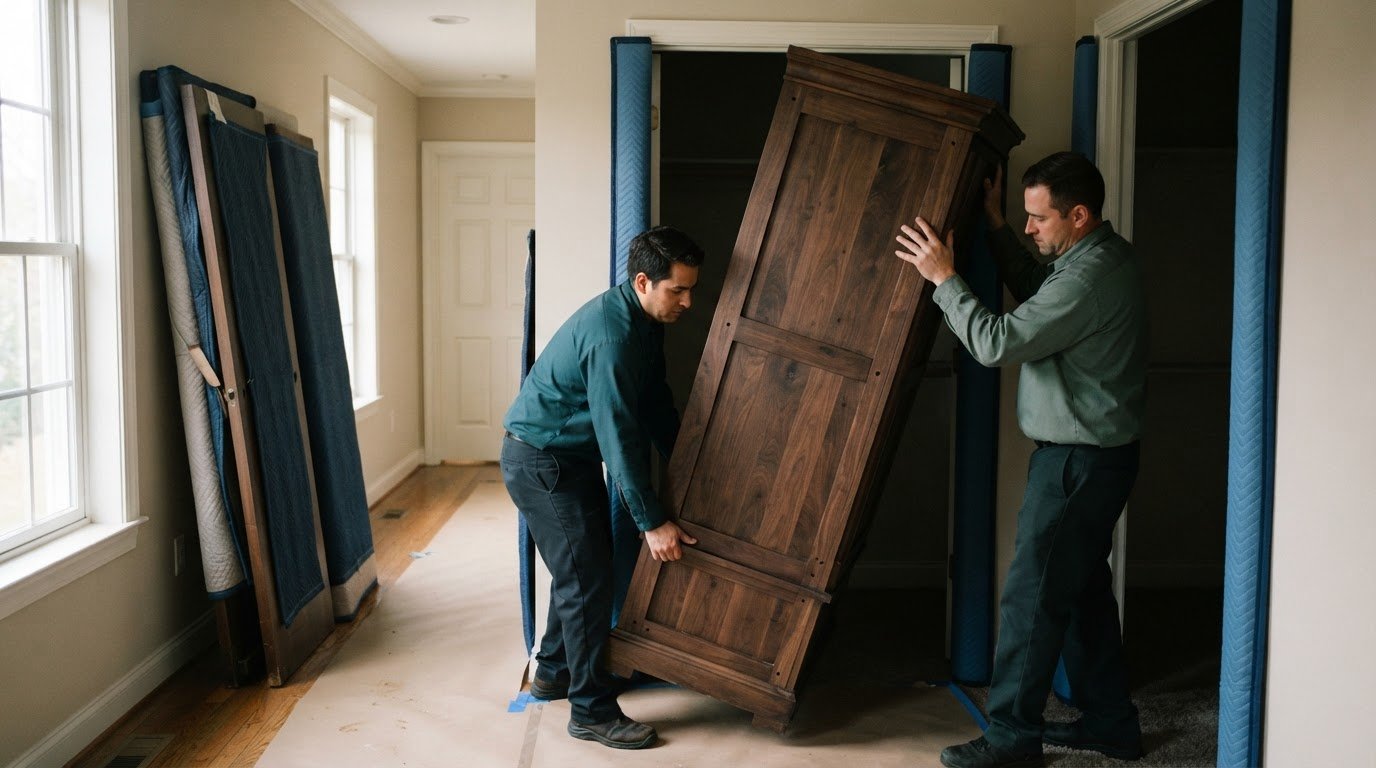
- Have movers prepare the route before moving the first frame section. Furniture sliders help move heavy gym equipment across hardwood or tile without dragging it. For wheeled moves, a furniture dolly carries the load instead of scraping it over the floor. Movers choose the method to suit the machine’s shape and the surface, then keep the equipment controlled as it passes through the room.
- Protect vulnerable frame edges before navigating a tight doorway or turn. Movers cover corners and leading edges with moving blankets, securing the padding with stretch wrap. This creates a buffer between exposed metal and nearby door frames or walls. Keep the padding in place during the passage, especially when a long upright or crossmember must pivot through a narrow opening.
- Move each section along a clear, coordinated path. Before a frame enters a doorway, movers position it so its padded edges face nearby walls and trim. They guide the section through without scraping it along the jamb. At a stair landing or tight corner, the crew pauses to adjust the angle rather than forcing the frame past an obstruction.
- Separate loose weight plates from the rack before transport. Movers wrap plates weighing 25 pounds and up individually, then load them flat in the truck. This keeps hard plate edges from striking the machine frame or other cargo. The crew also keeps the plates stable during loading, so they don’t shift into padded equipment or become an obstacle along the truck’s path.
- Use blankets and dollies to protect both the equipment and the home. Moving blankets help guard surfaces against scratches, scuffs, and dents, while a dolly lets movers roll a heavy section instead of carrying it across the floor. They keep the machine supported throughout the move rather than letting an edge drag or a component swing into a wall.
- Check contact points before each stage of transport. After a tight passage, movers inspect the frame corners, doorway edges, and floor beneath the dolly. If the padding has shifted, they reset it before continuing. This quick check can catch exposed metal or a dragging edge before the next turn, stairs, or truck-loading step.
How Professionals Reassemble and Align Frames and Cables
Reassembly follows the documented order, with the frame secured before cables are routed. Movers inspect each connection and test pulley action before loading the weight stack.
-
Reconnect and Check Cable Routing with Professional Reassembly
Have movers rebuild the frame and route each cable using the photos taken before disassembly. They match each cable path to the recorded pulley positions and attachment points, then check that the cable sits in its intended track. Incorrect routing can create a safety hazard, so don’t add tension to compensate for a path that looks wrong.
-
Professional Testing of Reassembled Cable Machines
Ask the crew to check that the pulleys spin freely before adding tension. After inspecting the cable paths and connections, movers test pulley action before loading the weight stack. They look for cables that catch, slip out of place, or move unevenly. These checks can reveal a routing problem while the machine is still unloaded.
- Rebuild the power rack in a stable sequence. Movers position the uprights and crossmembers according to the disassembly record, then secure the frame connections. They compare the assembled structure with the original photos to catch a reversed bracket or misplaced crossmember. Keep loose straps and moving blankets clear of the frame so they don’t obstruct reassembly or hide a connection that needs inspection.
- Secure bolts and inspect attachment points before use. Movers tighten bolts to specification and examine each cable attachment and frame connection. A loose bolt or damaged attachment point needs attention before the machine is operated. They also confirm that cable ends are seated correctly instead of assuming the machine is ready because the frame looks assembled.
- Finish the setup without trapping parts beneath the machine. Movers remove packing blankets, check the equipment’s position, and ensure the rubber gym flooring lies flat around the base. If other furniture or gym items share the room, keep access clear for the final inspection. Before use, account for all parts and confirm that the cables and pulleys move as intended.
Need help with the move and reassembly? Arrange professional exercise equipment moving for your multi-stack machine.
Heavy Furniture Moving
Heavy Furniture Moving helps ease the strain of relocating bulky home gym equipment. Turn to the team when a multi-stack machine is too heavy, awkward, or complicated to move safely alone. Exercise Equipment Moving provides help with handling and transport, while keeping the machine’s documented cable and component details together for reassembly.
Share the machine’s size, its current setup, and any tight doorways or stairs along the route. These details help shape a practical moving plan for your Gainesville home and reduce surprises on moving day. If the machine needs professional muscle and coordinated handling, contact Heavy Furniture Moving to discuss the move.
Make Your Gym Move the Next Clear Step
For Gainesville homeowners, the next step is turning the machine’s details into a practical moving plan. Note its assembled dimensions, access route, and any known reassembly needs when arranging the move. This gives the crew useful context for planning how to handle the equipment and set it up at its destination. A heavy multi-stack machine isn’t ordinary furniture, especially when its cables need careful reconnection.
If you’re deciding how to move a heavy multi-stack gym machine without losing cables, choose help suited to the equipment and the move. Heavy Furniture Moving offers Movers Near Me, Exercise Equipment Moving, and Sofa Hoisting. Its Exercise Equipment Moving service is a natural fit when the machine’s weight, awkward frame, or cable system makes moving it alone impractical.
Share the details of your move and take the next step with Contact Heavy Furniture Moving. With a clear plan in hand, you can move forward with confidence.
Frequently Asked Questions
Should You Hire Professional Movers for Your Home Gym?
Hire professional movers if a machine is too heavy, complex, or awkward to handle safely without help. Stairs, tight turns, and complicated disassembly can make moving a home gym more demanding. A professional crew can handle the heavy lifting and transport while keeping the machine’s parts organized. This is especially helpful if you’d rather not manage the frame and its moving components yourself.
Is it hard to move a home gym?
Yes. A home gym can be difficult to move because it may include a multi-stack unit, weight plates, benches, and separate attachments. Each piece has its own shape and handling needs. A narrow hallway can make even a detached component difficult to move, while a full machine may need disassembly to pass through an opening. The route and equipment design determine how involved the job will be.
What tools and materials do professional movers use to secure equipment during transit?
Movers may use a dolly, moving blankets, stretch wrap, and ratchet straps to handle and secure gym equipment. Floor protection and door-jamb covers can help protect surfaces along the route. The crew selects materials to suit the item and moving path. Blankets, for example, can cushion exposed frame edges, while properly placed straps help keep equipment from shifting during transport.
How do professional movers safely disassemble a multi-stack cable gym machine for moving?
Professionals use the machine’s assembly instructions and construction to guide disassembly. They document connections and separate components in an order that supports reassembly. A multi-stack unit combines a frame, cables, pulleys, and weight-stack parts, so its pieces need to stay organized as they come apart. The exact sequence depends on the machine’s design and the connections that need to be released.
How do professional movers label and secure gym machine cables so they do not come off pulleys during transport?
Movers label cable ends and document pulley paths before disconnecting them. A temporary tie can help hold cables in position during disassembly, while labels distinguish similar-looking lines by their endpoints. During transport, cables should stay separate from loose hardware and shifting frame sections. At the destination, labels and records help the crew reconnect each cable along its original path.
What tools and equipment do professional movers use to move a heavy multi-stack gym machine?
Movers may use a load-rated hand truck or dolly, moving blankets, stretch wrap, and ratchet straps. They choose equipment based on the machine’s weight and shape, as well as the home’s access route. A detached frame section may need different handling from a bench or attachment. If you’re deciding how to move a heavy multi-stack gym machine without losing cables in Gainesville, consider the machine and route together.
Gainesville, Virginia gym equipment movers for multi-station weight machines
Heavy Furniture Moving offers Exercise Equipment Moving for heavy and bulky home gym items in Gainesville, Virginia. The service area also includes Fairfax, Woodbridge, Manassas, Manassas Park, Aldie, Ashburn, McLean, Vienna, Reston, Centreville, Chantilly, Clifton, Dumfries, South Riding, Fairfax Station, and Haymarket. When arranging a move for a multi-station machine, share its setup and your home’s access details. This helps define the job.
Can a multi-stack gym machine be moved assembled, and what are the risks?
It may be possible, but an assembled machine can be too wide or awkward for the route. The frame could catch on a doorway or corner, and a constrained carry can strain connected parts. If you’re deciding how to move a heavy multi-stack gym machine without losing cables in Gainesville, base the decision on the machine’s dimensions and the available clearance. Disassembly can make handling easier.
Professional gym equipment moving costs depend on the equipment and the work involved.
Frequently Asked Questions
Hire professional movers if a machine is too heavy, complex, or awkward to handle safely without help. Stairs, tight turns, and complicated disassembly can make moving a home gym more demanding. A professional crew can handle the heavy lifting and transport while keeping the machine’s parts organized. This is especially helpful if you’d rather not manage the frame and its moving components yourself.
Yes. A home gym can be difficult to move because it may include a multi-stack unit, weight plates, benches, and separate attachments. Each piece has its own shape and handling needs. A narrow hallway can make even a detached component difficult to move, while a full machine may need disassembly to pass through an opening. The route and equipment design determine how involved the job will be.
Movers may use a dolly, moving blankets, stretch wrap, and ratchet straps to handle and secure gym equipment. Floor protection and door-jamb covers can help protect surfaces along the route. The crew selects materials to suit the item and moving path. Blankets, for example, can cushion exposed frame edges, while properly placed straps help keep equipment from shifting during transport.
Professionals use the machine’s assembly instructions and construction to guide disassembly. They document connections and separate components in an order that supports reassembly. A multi-stack unit combines a frame, cables, pulleys, and weight-stack parts, so its pieces need to stay organized as they come apart. The exact sequence depends on the machine’s design and the connections that need to be released.
Movers label cable ends and document pulley paths before disconnecting them. A temporary tie can help hold cables in position during disassembly, while labels distinguish similar-looking lines by their endpoints. During transport, cables should stay separate from loose hardware and shifting frame sections. At the destination, labels and records help the crew reconnect each cable along its original path.
Movers may use a load-rated hand truck or dolly, moving blankets, stretch wrap, and ratchet straps. They choose equipment based on the machine’s weight and shape, as well as the home’s access route. A detached frame section may need different handling from a bench or attachment. If you’re deciding how to move a heavy multi-stack gym machine without losing cables in Gainesville, consider the machine and route together. Gainesville, Virginia gym equipment movers for multi-station weight machines Heavy Furniture Moving offers Exercise Equipment Moving for heavy and bulky home gym items in Gainesville, Virginia. The service area also includes Fairfax, Woodbridge, Manassas, Manassas Park, Aldie, Ashburn, McLean, Vienna, Reston, Centreville, Chantilly, Clifton, Dumfries, South Riding, Fairfax Station, and Haymarket. When arranging a move for a multi-station machine, share its setup and your home’s access details. This helps define the job.
It may be possible, but an assembled machine can be too wide or awkward for the route. The frame could catch on a doorway or corner, and a constrained carry can strain connected parts. If you’re deciding how to move a heavy multi-stack gym machine without losing cables in Gainesville, base the decision on the machine’s dimensions and the available clearance. Disassembly can make handling easier.