How to Move a Heavy Fireproof Safe Upstairs in Clifton
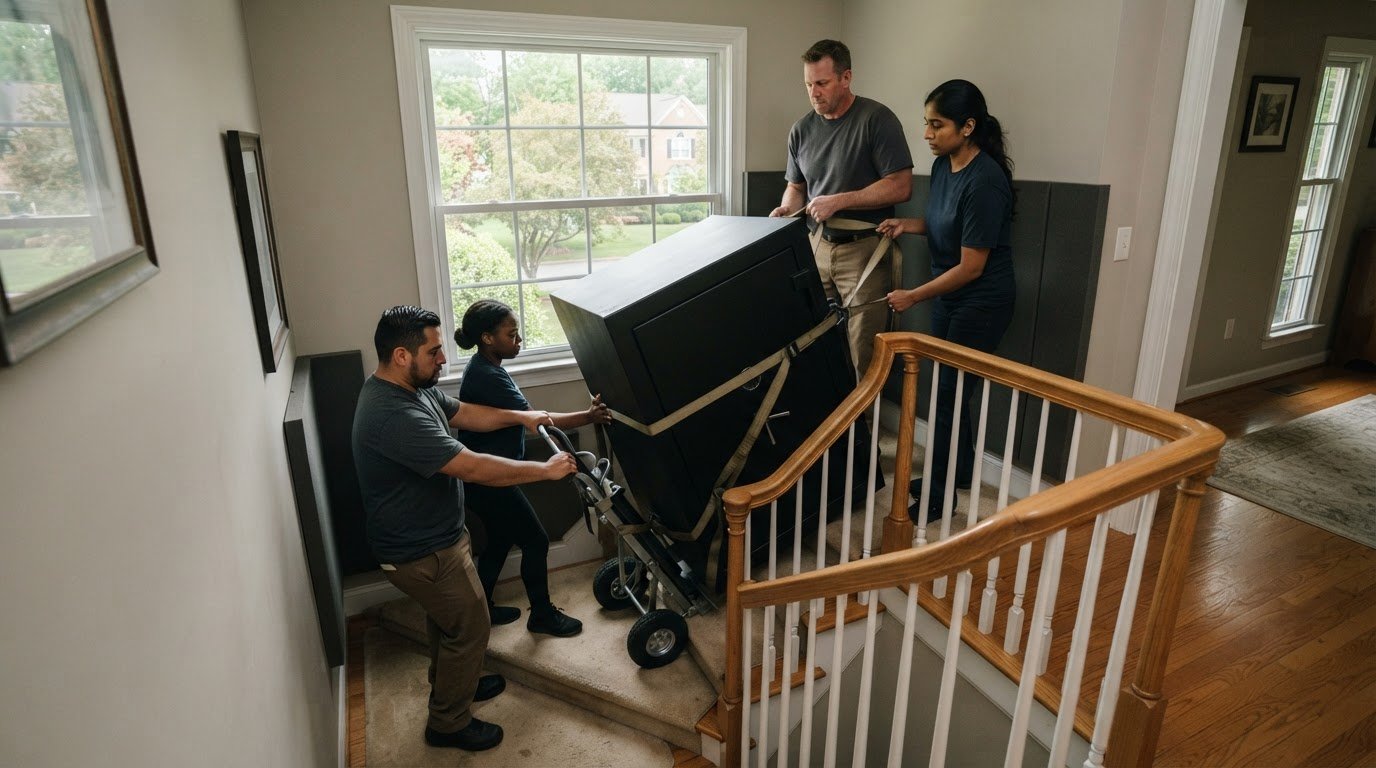
A fireproof document safe weighing 100 pounds or more can be difficult to move once it’s in place. To plan how to transport a heavy fireproof document safe upstairs in Clifton, start by checking its weight and dimensions, then measure the stairs, turns, and landings to make sure there’s room to maneuver. Clear the route and use suitable heavy-lifting help rather than trying to force the safe through a tight space.
It’s understandable to feel cautious: a safe can be compact yet awkward to handle, and a narrow stairwell can change the entire plan. For how to transport a heavy fireproof document safe upstairs in Clifton, start by assessing its weight and dimensions, the stair layout, and the space available upstairs. This guide covers what to measure, how to evaluate the route, and when professional moving help can make the job easier.
Key Takeaways
- Record the safe’s weight and dimensions before planning the move; both affect how it can be handled on stairs.
- Measure stair widths, turns, landings, and the destination area to spot clearance problems early.
- Assess the staircase and the route as a whole rather than assuming the stairs can support the safe and movers.
- Compare the job’s weight, access challenges, and handling needs when deciding between general moving help and specialized safe movers.
- Check applicable property or building rules before moving the safe, then use the decision guide to choose a practical next step.
Moving a heavy safe
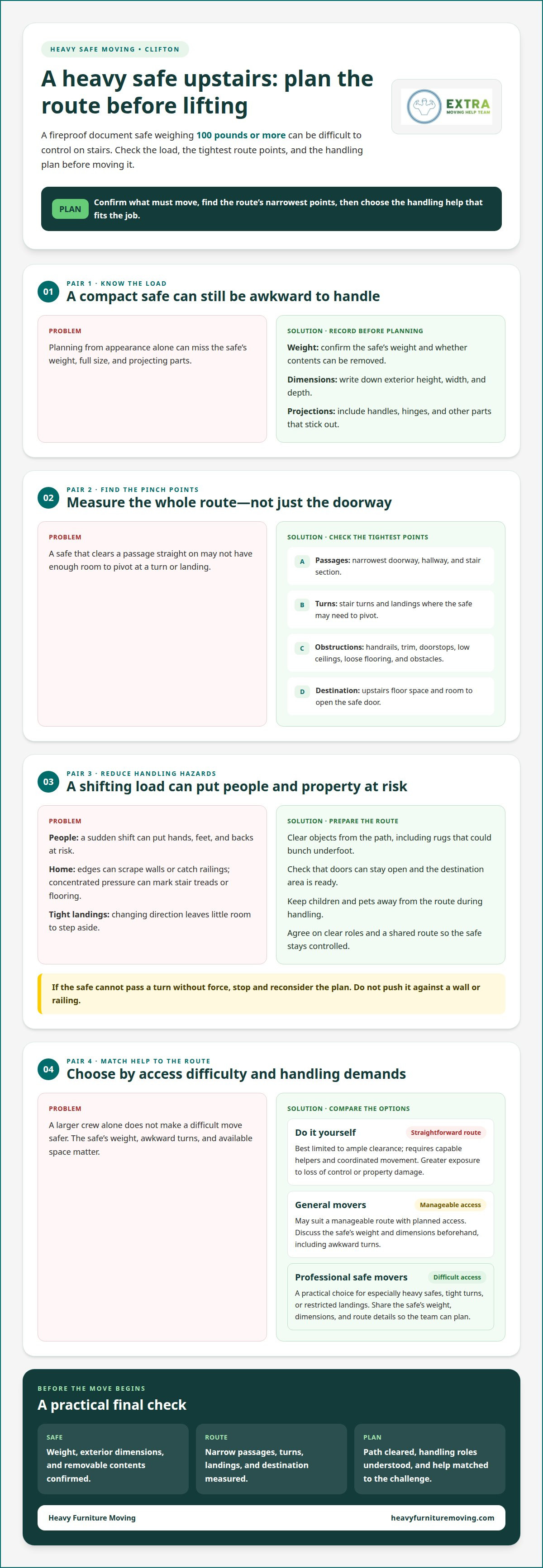
A fireproof safe weighing 100 pounds or more can be difficult to move once in place. The main risks are losing control on stairs, injuring someone, or damaging steps, walls, and railings.
Plan before lifting. Confirm the safe’s weight and whether its contents can be removed, then map the route from its current position to the upstairs room. Measure the narrowest doorway, stair section, and landing. Note turns, low ceilings, loose flooring, and obstacles that could interrupt a controlled move.
Professional Safe Movers
Professional safe movers are a practical choice when a safe is especially heavy, the staircase has tight turns, or the route leaves little room to reposition it. Specialized handling focuses on the safe’s shape and the home’s access points. Before the move, share the safe’s weight, dimensions, and route details so the team can plan accordingly.
Stair Damage and Injury Risks
A safe can shift suddenly if its weight isn’t controlled, putting hands, feet, and backs at risk. Its edges can scrape walls or catch railings, while concentrated pressure can mark stair treads or damage flooring. A narrow landing adds another hazard: the load may need to change direction where there’s little room to step aside.
Use these checks before deciding who should handle the move:
- Clear objects from the path, including rugs that could bunch underfoot.
- Check that doors can stay open and that the destination area is ready.
- Identify tight turns and landings where the safe may need careful repositioning.
- Keep children and pets away from the route during handling.
Don’t assume a larger crew alone makes the move safer. Everyone needs a clear role, a shared route, and enough space to keep the safe stable. If it cannot pass through a turn without force, stop and reconsider the plan instead of pushing it against a wall or railing.
| Option | Stair complexity | Handling demands | Risk considerations |
|---|---|---|---|
| Do it yourself | Best limited to a straightforward route with ample clearance | Requires capable helpers and coordinated movement | High exposure to loss of control or property damage |
| General movers | May suit a manageable route and planned access | Discuss the safe’s weight and dimensions beforehand | Plan around safe-specific weight and awkward turns |
| Professional safe movers | Useful for difficult stairs, turns, or restricted landings | Focused on safe handling and route planning | Can address handling risks specific to the safe |
Choose an option that suits the safe’s weight, the tightest point on the route, and the handling experience the move requires.
Safe dimensions and floor space
To secure a safe upstairs, place it on a firm, level surface and follow the manufacturer’s anchoring instructions. Check whether it has a bolt-down provision, then consider the floor structure and approved fixing method before anchoring it.
Measure the safe itself, not just its door. Record its height, width, and depth, including handles, hinges, and other parts that project outward. Compare those measurements with the stair opening, hallway, landing, and final room. A safe that fits through a doorway straight on may not clear a turn when you account for its full depth.
Measure the route at its narrowest points. Include handrails, trim, doorstops, and wall features that reduce usable clearance. At a turn, measure the landing’s open area and note where the safe would need to pivot. Sketching the route can reveal a corner that looks manageable from the entrance but leaves little room to rotate the load.
Check the destination before moving day. Measure the available floor area and consider how the safe’s door will swing. Leave enough room to open it and reach the contents without blocking a doorway or walkway. Note nearby furniture, vents, and built-in storage, too. A clear patch of floor may still be unsuitable if it puts the safe in the path of daily traffic.
- Write down the safe’s exterior height, width, and depth.
- Measure the narrowest passage and each stair landing.
- Account for handles, trim, railings, and door swing.
- Mark the intended upstairs position and the clear space around it.
Floor protection and anchoring are separate decisions. A protective layer can help prevent scuffs during placement, but it won’t secure the safe. Avoid improvised wedges or fasteners, which can leave it unstable or damage the floor. The right anchoring approach depends on the safe’s design and the floor beneath it. If installation requires drilling, identify what lies under the finished surface before work begins.
These measurements also inform the handling plan. A bulky safe may need a different orientation to clear a landing, while limited room upstairs can make final positioning harder than the climb. Don’t force it through a tight turn. Recheck the measurements and revise the route or placement before the move starts.
If the staircase or destination leaves little maneuvering room, get help planning a heavy-item move around the safe’s size and final position.
Can a residential staircase support the weight of a heavy safe and movers?
You can’t judge a staircase’s capacity by appearance alone. The safe, the people handling it, and the moving equipment create a combined load. Stair construction and condition also affect how that load is carried.
Start by identifying what’s beneath the stairs. Framing, support points, span, and the condition of the steps all matter. Sturdy-looking treads may still conceal damage or limited support. The safe’s position matters, too: placing it near a landing or over a supported area differs from concentrating its weight midway along a stair run.
Account for the entire moving setup, not just the safe. Include the people handling it and the equipment used to control or support the load. As the group moves, weight shifts between steps. Pausing on a landing or turning can also concentrate pressure in a smaller area than the full staircase.
Before planning the lift, look for visible signs that call for caution:
- Cracked, loose, or uneven treads along the route.
- Movement or unusual sounds when someone walks on the stairs.
- Visible sagging, separation, or damage near the stair supports.
- Recent repairs or water damage affecting the stairs or nearby framing.
These signs don’t provide a load rating, but they can flag concerns to address before moving the safe. Don’t test the staircase by placing the safe on it, and don’t use a person’s body weight as proof that the structure can handle a concentrated, shifting load.
When structural capacity is uncertain, a qualified structural professional can assess the staircase. The assessment considers construction, materials, support locations, condition, and where the load will travel. Provide the safe’s weight, planned route, and number of people involved. These details describe the actual move more accurately than the safe’s weight alone.
Separate structural capacity from access planning. A staircase may be structurally sound yet too narrow for safe handling. Open stairs may provide room to maneuver but still need a capacity assessment. Check both before moving day, and don’t treat clearance as evidence of strength.
Once the route and structure have been assessed, plan where the safe can pause, how the group will communicate, and which areas must stay clear. If an inspection raises concerns, postpone the move until they’re addressed. It’s safer to assess carefully than to discover a problem with the safe already on the stairs.
When should you hire professional safe movers instead of general movers?
Choose professional safe movers when the job calls for safe-specific handling, not simply carrying a bulky object. A narrow stair turn, limited landing space, unusual safe shape, or difficult final placement may require a plan built around the safe’s balance and route.
General movers may suit a straightforward route if the crew can handle the safe’s weight and dimensions. Before booking, describe the route from the pickup point to the upstairs room, including stairs, turns, doorways, and tight landings. Clear details help the team assess the handling demands instead of relying on the word “safe” alone.
Professional safe movers are a strong fit when the safe is awkward to grip or needs repositioning during the climb. Their work focuses on safe moves, while general movers handle a broader range of household items. That distinction matters when the route requires careful changes in position or leaves little room to adjust.
- Choose safe movers for a difficult stair layout or tight turns.
- Consider general movers for an accessible route and a manageable handling plan.
- Pause the move if the safe cannot be controlled without forcing it.
- Describe the safe and route before scheduling either type of help.
Be specific about the safe’s exterior dimensions, approximate weight, and whether it will be empty. Explain where the stairway changes direction and where movers can pause. A safe that clears a straight hallway, for example, may still be difficult to turn at a compact landing. That detail can affect the team and equipment needed for a controlled move.
Ask how the plan accounts for the safe’s route, doorway clearance, and final placement. A useful plan covers the entire route, not just lifting the safe from its current spot. It should also explain how the crew will communicate during turns and keep the path clear.
Don’t base your decision on crew size alone. More people won’t solve a route without enough clearance or make an uncontrollable turn safe. If the staircase or landing raises structural concerns, address them before scheduling the move. Moving expertise and structural approval are separate needs.
Use this simple guide: choose general movers when access is clear and the handling plan suits the safe; choose professional safe movers when its weight, shape, or stair complexity calls for specialized handling. If any part of the route remains unresolved, stop and revise the plan before moving day.
Generally keep recent tax returns for 3-7 years. If those papers are inside the safe, include them in your inventory of contents before the move and decide how you want them handled during loading and placement. Tell the crew only what is necessary to plan the move, and keep personal records under your own control if you prefer. Confirm the safe’s final location before the crew begins, so you can account for its contents after placement.
What permits or building rules apply to moving a heavy safe in Clifton?
For an inside-the-home move in Clifton, separate permit questions from property rules and access planning. Moving a safe between floors differs from work that alters a building, blocks shared space, or affects public access. Don’t assume the same rules apply to every route or property.
Start with the property type. In a detached home, focus on the route, floor protection, and any work needed to anchor the safe. In a rental, condominium, or shared building, review the lease or building procedures for moving large items. Rules may cover elevator use, shared hallways, stair access, or protection of common areas.
Ask the property manager or owner about the specific move, rather than just saying “moving a safe.” Provide the planned date, entry route, and destination floor. Explain whether the safe will pass through a shared entrance or hallway. If anchoring requires drilling, describe that work separately from carrying the safe upstairs.
Keep these points together before the move:
- The safe’s dimensions and approximate weight.
- The entrance, stairway, and destination room on the route.
- Any shared hallway, elevator, or common-area access involved.
- Whether the upstairs placement includes floor anchoring or other alterations.
These details help distinguish a straightforward interior move from a plan involving building changes or shared access. Carrying a safe through a private stairway, for example, raises different property questions than moving it through a condominium lobby and shared corridor. Anchoring also raises different considerations from placing the safe without altering the floor.
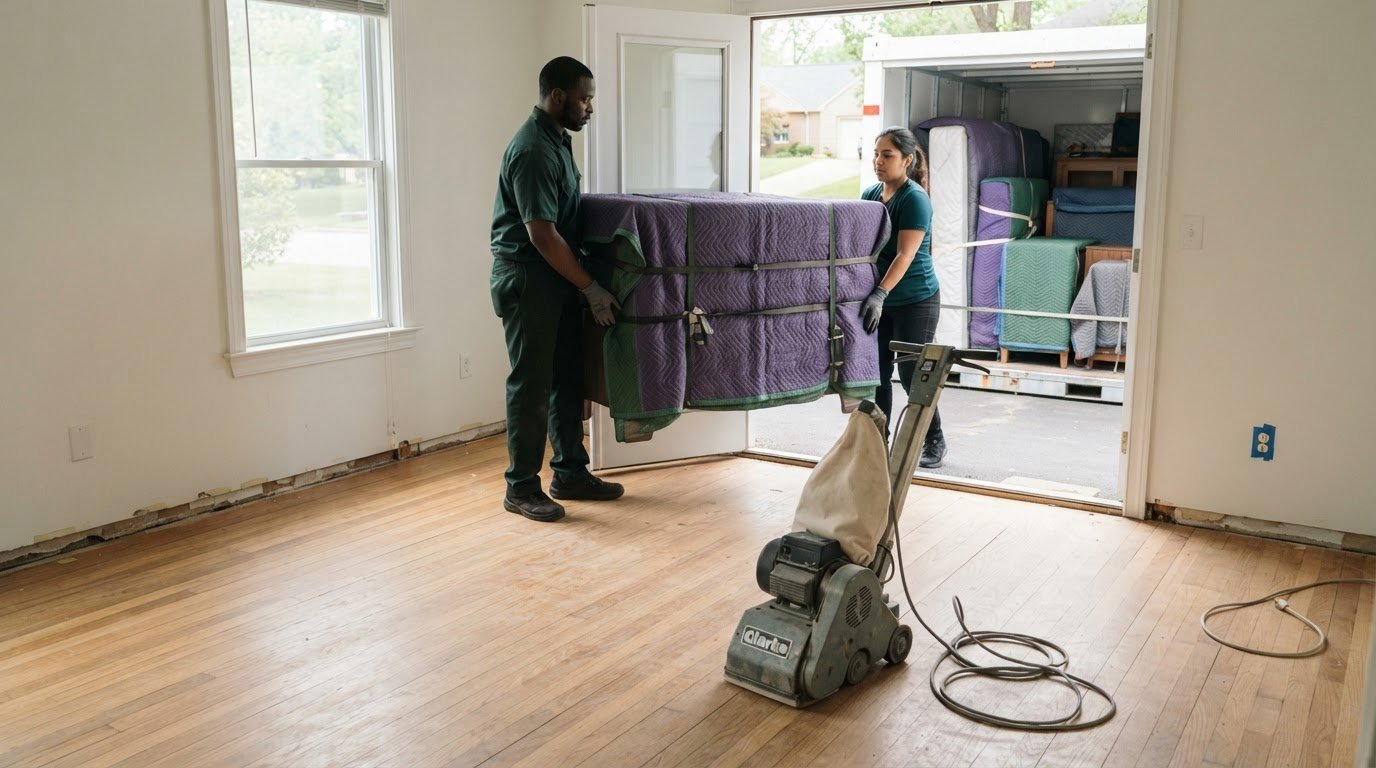
Clear furniture and personal items from the route, and protect nearby walls and flooring. If the move uses a shared elevator or corridor, plan to keep that space orderly. Avoid blocking an exit or leaving the safe unattended in a common area. These practical steps support a smoother move without assuming a particular building policy.
Before setting the move date, gather the property’s written procedures and clearly describe any planned alteration. If the safe will only be carried upstairs and placed without building work, say so. If drilling or another change is planned, treat it as a separate task and follow the property’s stated process.
For help with the physical handling and route planning, arrange heavy-item moving help for the safe’s move upstairs.
Heavy Furniture Moving: Movers Near Me
Heavy Furniture Moving can help when your safe’s route, stairs, or final placement calls for extra moving support. The company provides local moving help and heavy lifting services for demanding household moves. Share the safe’s dimensions, approximate weight, stair layout, and intended upstairs location so the physical demands are clear.
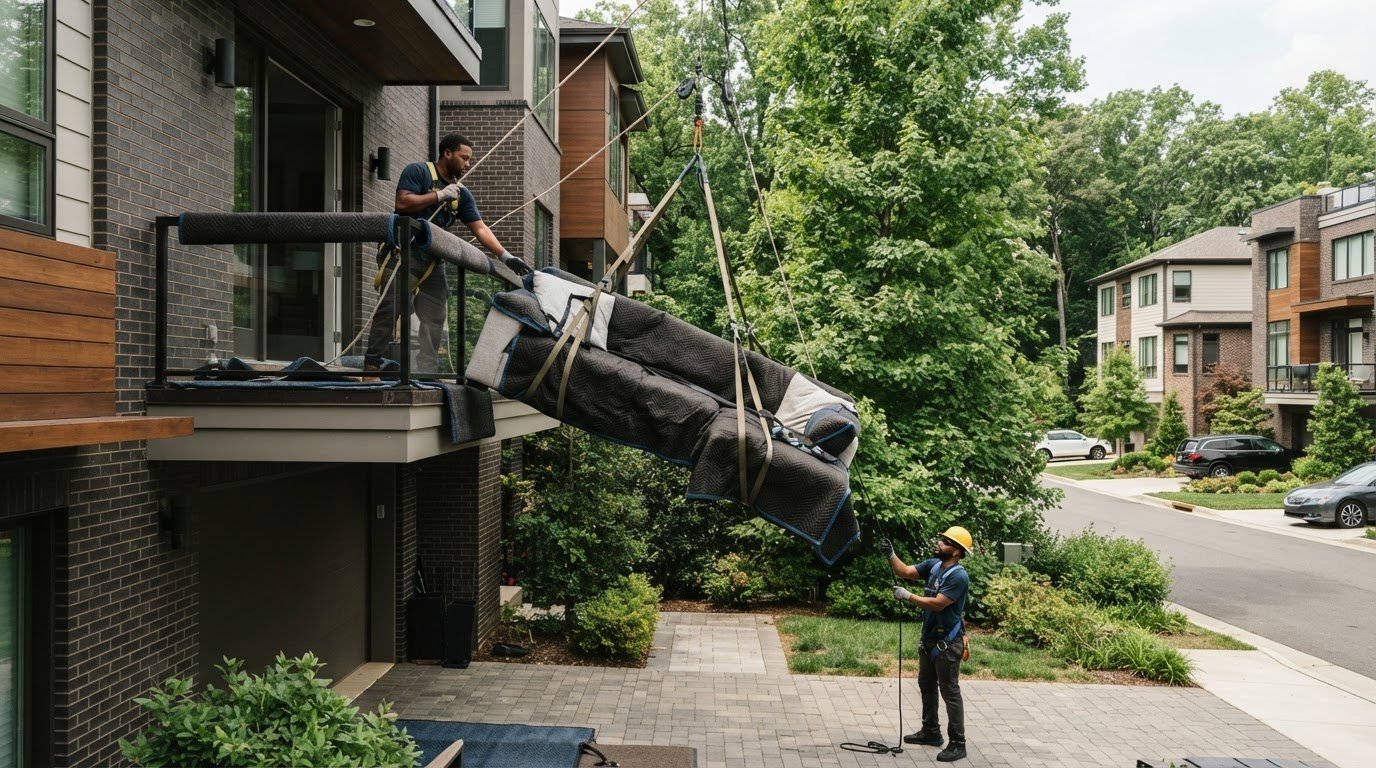
Moving help is a good fit when the main challenge is handling a bulky item through your home, rather than resolving building-rule questions or assessing stair strength. Heavy Furniture Moving also handles exercise equipment and offers sofa hoisting for other large household items.
Contact Heavy Furniture Moving to discuss moving help for your home.
Turn Your Safe-Moving Plan Into a Clear Next Step
Planning how to transport a heavy fireproof document safe upstairs in Clifton is easier when you have the moving details ready. Put the safe’s measurements, intended location, and access arrangements into one concise brief. That gives the conversation a practical starting point and keeps the next steps focused on your home.
Heavy Furniture Moving provides local moving help for household needs, as well as exercise equipment moving and sofa hoisting. If the safe is part of a larger move or you need help with other bulky items, explain what the project involves and which areas of the home are affected.
Make your next move deliberate: bring the route plan and placement details together before arranging help. Contact Heavy Furniture Moving to discuss your household moving needs and take the next step with confidence.
Frequently Asked Questions
How to measure a safe and staircase before moving it upstairs?
Measure the safe at its widest points and compare those measurements with the tightest parts of the route. To plan how to transport a heavy fireproof document safe upstairs in Clifton, measure door openings with the doors fully open, including handles, trim, and railings. Check diagonal clearance at turns, too. A cardboard outline matching the safe’s footprint can help you test the final room layout before moving day.
What equipment is needed to move a heavy safe upstairs safely?
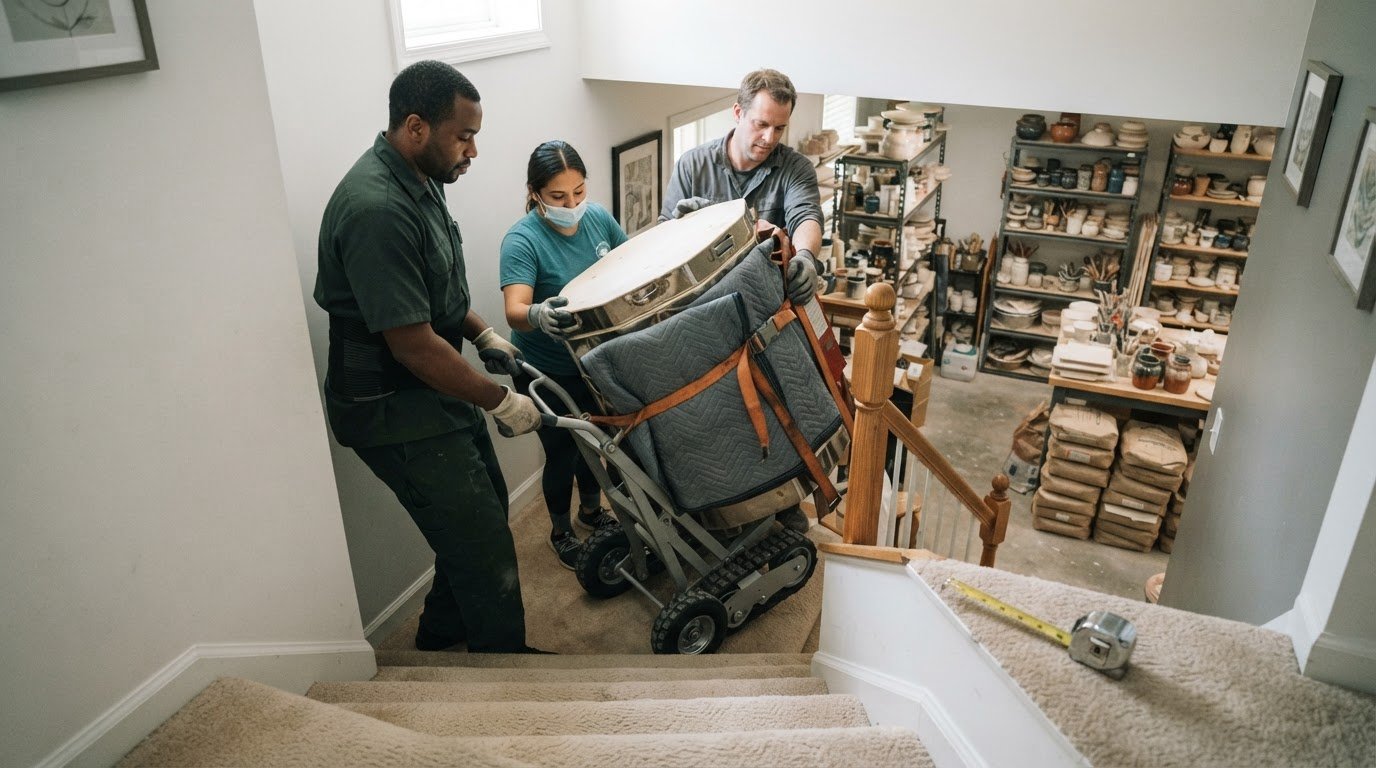
Equipment depends on the safe and route, but a suitable safe dolly, strong moving straps, gloves, and floor protection are common planning needs. The dolly must fit both the safe and the staircase; ordinary furniture wheels aren’t a substitute. Keep the route clear, and don’t improvise with equipment that can’t control the load. A difficult stair turn needs a plan suited to that specific access point.
How to move a fireproof safe upstairs step by step?
First, empty the safe and secure its door according to the manufacturer’s guidance. Clear and protect the route, position suitable moving equipment, and agree on clear commands before lifting. Move in a controlled manner, pausing if the safe shifts or the route becomes obstructed. Once upstairs, place it on the prepared floor and follow the manufacturer’s instructions for its final position and any anchoring.
How much do safe movers charge to move a safe upstairs in Clifton?
The cost depends on the safe’s weight and dimensions, stair layout, access, and final placement. A tight turn or shared entrance can affect the work involved. For a quote, provide the safe’s measurements and photos of the route, including landings and the destination area. Heavy Furniture Moving provides flat-rate pricing for most single heavy items and hourly labor with a two-hour minimum. Share the move details to get pricing for your specific job.
Which safe-moving companies serve Clifton, Virginia?
Heavy Furniture Moving serves Clifton, Virginia, and nearby communities in Northern Virginia, including Fairfax, Woodbridge, Manassas, Manassas Park, Aldie, Ashburn, McLean, Vienna, Reston, Centreville, Chantilly, Dumfries, South Riding, Fairfax Station, Haymarket, and Gainesville. When discussing a local safe move, share the safe’s details, the Clifton address, and the property’s access route so the conversation can focus on the location and practical demands of the job.
Frequently Asked Questions
Measure the safe at its widest points and compare those measurements with the tightest parts of the route. To plan how to transport a heavy fireproof document safe upstairs in Clifton, measure door openings with the doors fully open, including handles, trim, and railings. Check diagonal clearance at turns, too. A cardboard outline matching the safe’s footprint can help you test the final room layout before moving day.
Equipment depends on the safe and route, but a suitable safe dolly, strong moving straps, gloves, and floor protection are common planning needs. The dolly must fit both the safe and the staircase; ordinary furniture wheels aren’t a substitute. Keep the route clear, and don’t improvise with equipment that can’t control the load. A difficult stair turn needs a plan suited to that specific access point.
First, empty the safe and secure its door according to the manufacturer’s guidance. Clear and protect the route, position suitable moving equipment, and agree on clear commands before lifting. Move in a controlled manner, pausing if the safe shifts or the route becomes obstructed. Once upstairs, place it on the prepared floor and follow the manufacturer’s instructions for its final position and any anchoring.
The cost depends on the safe’s weight and dimensions, stair layout, access, and final placement. A tight turn or shared entrance can affect the work involved. For a quote, provide the safe’s measurements and photos of the route, including landings and the destination area. Heavy Furniture Moving provides flat-rate pricing for most single heavy items and hourly labor with a two-hour minimum. Share the move details to get pricing for your specific job.
Heavy Furniture Moving serves Clifton, Virginia, and nearby communities in Northern Virginia, including Fairfax, Woodbridge, Manassas, Manassas Park, Aldie, Ashburn, McLean, Vienna, Reston, Centreville, Chantilly, Dumfries, South Riding, Fairfax Station, Haymarket, and Gainesville. When discussing a local safe move, share the safe’s details, the Clifton address, and the property’s access route so the conversation can focus on the location and practical demands of the job.