How to Move a Heavy Exercise Bike Upstairs in Reston Without Scuffs
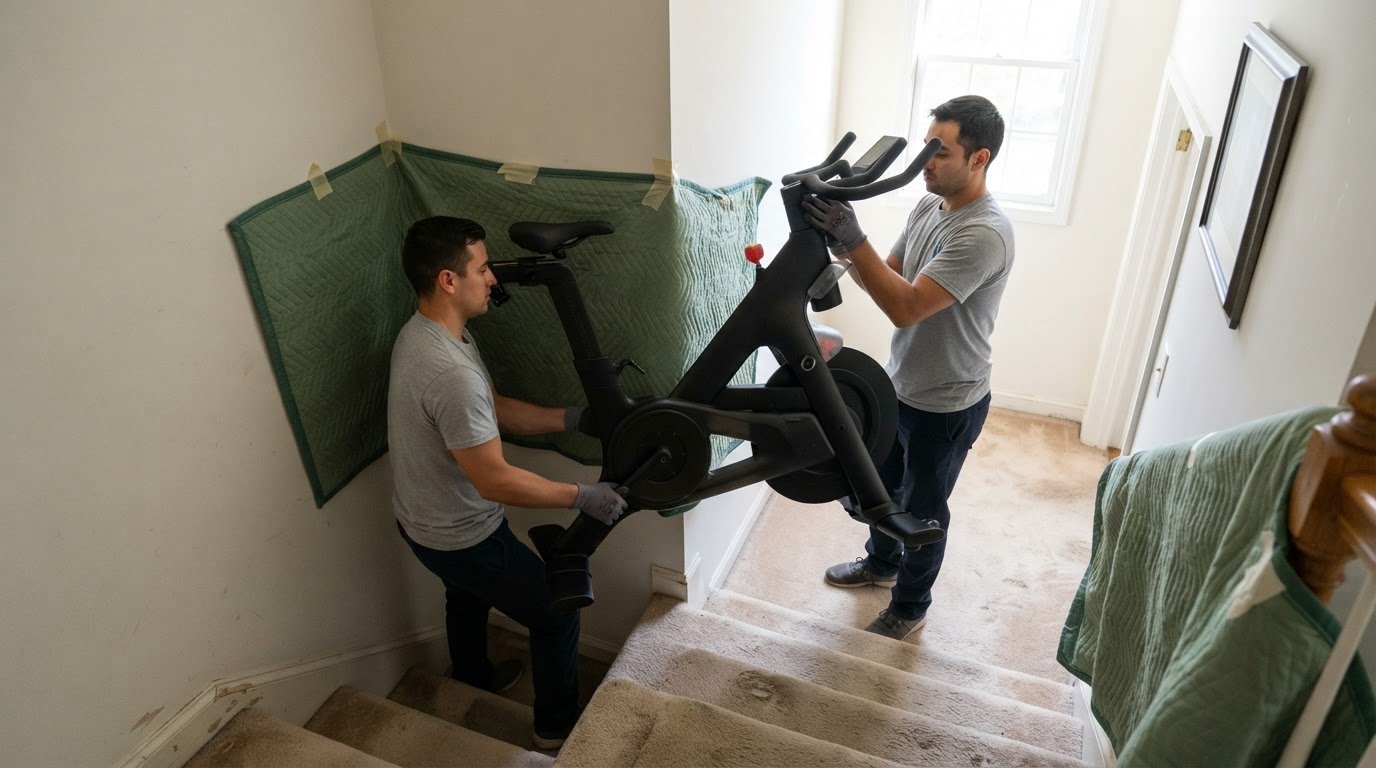
The tight turn at the top of the stairs can be harder than the lift itself.
It’s understandable to weigh a DIY carry against hiring help, especially when the stairs are narrow or the bike is awkward to grip. This guide explains how to safely move a heavy exercise bike upstairs without drywall scuffs in Reston, what preparation and extra hands can contribute, and when professional movers may be the more practical choice. You’ll also learn how movers protect the bike and nearby walls, so you can make a clear plan before moving day.
Key Takeaways
- Securing the flywheel and loose components helps keep the bike stable and protects parts during the upstairs carry.
- Good clearance planning accounts for stair turns, doorways, and nearby walls before movers lift the bike.
- A narrow staircase, awkward grip, or heavy bike can make professional help a more practical choice than a DIY move.
- Clear communication and coordinated roles help the moving crew guide the bike through tight spaces.
- Movers identify sturdy lifting points and account for weight distribution to carry the bike with better control.
How professionals secure an exercise bike’s flywheel and moving parts before an upstairs move
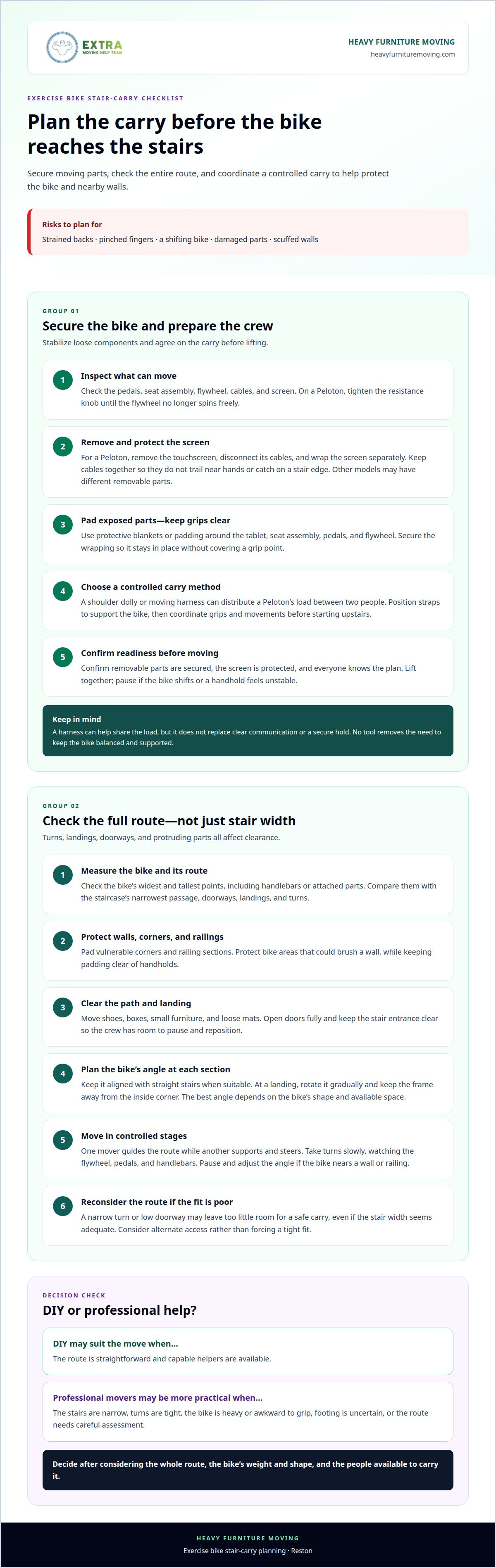
Professionals secure loose components first, then plan a controlled stair carry with a suitable harness. The main risks include strained backs, pinched fingers, a shifting bike, damaged parts, and scuffed walls.
- Inspect the bike and identify parts that can move. Movers check the pedals, seat assembly, flywheel, cables, and screen before handling the equipment. On a Peloton bike, they tighten the resistance knob until the flywheel no longer spins freely. This reduces unwanted movement during lifting and helps keep the bike under control on the stairs.
- Disconnect and protect the screen. Before moving a Peloton, movers remove its touchscreen, disconnect its cables, and wrap the screen separately. They keep cables together so nothing trails near a mover’s hands or catches on a stair edge. Other bike models may have different removable parts, so the crew handles each unit according to its design.
- Wrap exposed components. Protective blankets or padding around the tablet, seat assembly, pedals, and flywheel help prevent scratches. Movers secure the wrapping so it stays in place without covering a grip point. Padding around a pedal, for example, can protect nearby surfaces, while loose material near a handhold could interfere with a steady carry.
- Choose a carry method that keeps the load controlled. A shoulder dolly or moving harness distributes a Peloton bike’s load between two people. Movers position the straps to support the bike, then coordinate their grips and movements before starting upstairs. A harness can help share the load, but it doesn’t replace clear communication or a secure hold.
- Use moving equipment for protection and control. Movers may use padded blankets, protective wrapping, and a shoulder harness alongside a secure grip. Blankets help shield the bike from bumps, while padding can protect nearby surfaces if the frame passes close to a wall. No tool eliminates the need to keep the bike balanced and supported.
- Move only after the bike and crew are ready. The movers confirm that removable parts are secured, the screen is protected, and everyone knows how the carry will proceed. They lift together and pause if the bike shifts or a handhold feels unstable. On a staircase, a controlled pause is safer than forcing the next step with an awkward grip.
How professional movers allow clearance around an exercise bike while carrying it upstairs
Movers compare the bike’s dimensions with the full stair route, including turns, landings, doorways, and railings. Planning how to safely move a heavy exercise bike upstairs without drywall scuffs in Reston starts with identifying those tight spots before the carry begins.
-
How Professional Movers Measure the Bike and Staircase
Measure the bike at its widest and tallest points, including handlebars or other attached parts that affect its shape. Then measure the staircase’s narrowest passage, doorways, landings, and turns. A bike that fits on a straight stair may still be difficult to angle around a landing, so plan its orientation before lifting.
-
How Professional Movers Protect Walls, Corners, and Railings
Cover vulnerable corners and railing sections with suitable padding before the lift. Movers also pad bike areas that could brush a wall, while keeping material clear of handholds. Padding reduces direct contact, but the crew still needs room to steer without pressing the bike into drywall.
- Clear the route before bringing the bike to the stairs. Movers look for shoes, boxes, small furniture, and loose mats along the path. A clear landing gives the crew room to pause and reposition the bike. Open doors fully and keep the stair entrance clear to avoid abrupt turns around stored items.
- Choose the bike’s orientation for each section. On a straight stair, movers may keep the bike aligned with the steps. At a landing, they may rotate it gradually, keeping the frame away from the inside corner. The best angle depends on the bike’s shape and available space, not just the stair width.
- Move in controlled stages and watch nearby surfaces. One mover guides the route while another supports and steers the bike. They take each turn slowly, watching the flywheel, pedals, and handlebars because these may extend beyond the frame. If the bike nears a wall or railing, the crew pauses and adjusts its angle.
- Plan another route if measurements show a poor fit. A narrow turn or low doorway can leave too little room for a safe carry, even when the stair width seems adequate. For homeowners considering how to safely move a heavy exercise bike upstairs without drywall scuffs in Reston, assessing alternate access can be part of the plan. For stair-and-furniture planning, professional moving help can be a practical next step.
Choosing between professional movers and DIY
Choose based on the stair route, the bike’s weight, and the people available to carry it. A straightforward path and capable helpers may suit a DIY move; tight turns or uncertain footing favor a professional crew.
For an in-home move, keep the carry plan separate from packing-material disposal. Cardboard, plastic wrap, and padding are different materials, so follow the collection instructions for your Reston address rather than assuming one disposal rule covers them all.
- Assess the route before deciding. Look at the full path, including the doorway, stair turns, landings, and the spot where the bike will sit upstairs. A clear, straight route presents a different challenge from a narrow staircase with a sharp turn. If the bike cannot pass without awkward tilting, professional movers can assess the route and handle the carry.
- Account for the bike’s weight and shape. Together, weight and shape can make an upstairs carry harder to control than the bike’s footprint suggests. Consider the model, its removable parts, and the location of secure lifting points before choosing between a DIY move and professional help.
- Be realistic about available helpers. A DIY move depends on having enough capable people who can coordinate throughout the stair carry. One person may need to guide the route while another supports the bike, but a tight landing can make those roles harder. If helpers can’t communicate clearly or maintain control, extra hands alone aren’t a complete plan.
- Compare the equipment and preparation involved. Professionals may use moving blankets, protective wrapping, and a shoulder harness suited to the carry. A DIY plan also needs a way to protect exposed parts and nearby surfaces. If the necessary equipment, setup, or handling experience isn’t available, professional movers can take on the physical work.
- Weigh property and injury risks. An awkward lift can strain a mover or cause the bike to shift, while contact with a wall can leave a scuff. A hand slipping near a pedal or frame can also cause a pinch. Consider those risks alongside the bike’s value and the condition of the staircase, not just the distance between floors.
- Choose DIY only when the whole move feels manageable. A familiar bike, open stairway, secure grip points, and coordinated helpers make for a more workable DIY move. If any part depends on forcing the bike around a corner or catching it after a shift, stop and choose professional movers instead.
- Use professional movers when the route or load adds difficulty. A heavy bike, narrow turns, limited helpers, or concerns about protecting drywall all strengthen the case for experienced handling. Share the model, stair layout, and access details when arranging the move so the crew can plan around the actual equipment and route.
When executing the plan, heavy furniture moving specialists often rely on tools like a shoulder dolly, which distributes a Peloton bike’s load evenly between two people and makes a planned carry much easier to coordinate. However, equipment alone does not remove the need to check the route, secure the bike properly, and decide whether everyone involved can safely manage the stairs.
How professional movers provide the right crew to carry an exercise bike upstairs
Movers plan the crew around the bike, staircase, and access points. They assign clear roles before lifting, so each person knows when to support, guide, or pause.
- Review the bike and route before assigning roles. Movers consider the frame shape, attached parts, staircase turns, landings, and available handholds. A straight stair run calls for different guidance than a tight turn beside a railing. The route helps determine how the crew can support the bike while steering through each section.
- Choose a lead mover to coordinate the carry. One person gives clear instructions for lifting, moving, and pausing. That lead watches the next stair or landing and calls for adjustments before the bike reaches an obstacle. A planned stop before a narrow turn, for example, gives the crew time to reset its grip.
- Assign support and guidance roles. Movers decide who supports the bike and who monitors clearance near walls, rails, and doorframes. The person guiding the route can point out a protruding pedal or tight corner while the supporting mover maintains control. Defined roles reduce conflicting movements during a stair turn.
- Match equipment to the crew’s handling plan. A shoulder dolly or moving harness can help distribute a bike’s load between two people. Movers position the straps and coordinate their movements before lifting. They may also use padded blankets to protect the frame and nearby surfaces, keeping material clear of secure handholds.
- Agree on simple movement cues. Before starting, the crew uses clear calls such as “lift,” “pause,” and “step.” The lead gives each cue so movers don’t change direction unexpectedly. At a landing, a pause lets the crew check its footing, confirm the bike remains balanced, and plan the next turn.
- Keep the pace controlled on every stair section. Movers avoid rushing from one step to the next, especially where the staircase narrows. They move only when everyone is ready and keep the bike steady between steps. If a grip slips or the bike shifts, the crew stops and regains control before continuing.
- Reassess when the route changes. A doorway, sharp turn, or unexpected obstruction can require a different position or carrying angle. The lead pauses the crew, checks the clearance, and makes any needed adjustments before movement resumes. This keeps the team coordinated instead of forcing the bike past a wall or railing.
How much does a typical exercise bike weigh, and how do professional movers identify its safest lifting points?
Movers inspect the frame and choose solid support points before lifting, avoiding parts that can bend or shift.
- Identify the bike model and its weight distribution. Movers first note the make, model, and attached components. A Peloton’s 135-pound weight is concentrated toward its front, so the flywheel end affects balance during a carry. Knowing where that weight sits helps the crew plan how to support the bike without letting its front dip or swing.
- Locate solid structural lifting points. On a Peloton bike, movers grip the solid steel stabilization bars. They avoid the plastic shrouds and crank arms, which aren’t designated lifting points. A secure grip on the steel bars gives the crew firmer control while moving the bike between floors.
- Inspect the grip points before taking the load. Movers check that hands can reach the stabilization bars and that protective wrapping hasn’t covered them. They also look for loose cables or attached parts that could catch during a lift. If a handhold is blocked, the crew adjusts the setup before raising the bike.
- Balance the bike between movers. Because the flywheel end carries more weight, the crew accounts for the bike’s front-heavy feel when positioning hands and coordinating the lift. Each mover confirms their grip before moving. This helps prevent one person from unexpectedly taking more of the load as the bike tilts or changes direction.
- Keep the frame steady through turns. A bike may need to change angle at a stair landing, but the movers keep their grip on structural bars during the adjustment. They move in small, coordinated steps instead of swinging the heavier front end. That control helps avoid wall contact and keeps pressure off pedals and plastic parts.
- Pause if the hold or balance changes. A shifting bike, slipping grip, or blocked handhold is a reason to stop and reset. Movers set a controlled pace, communicate before changing position, and resume only when both have a secure hold. On stairs, stopping early is better than trying to recover from a sudden tilt.
- Arrange help for a heavy upstairs carry. If the bike’s weight, front-heavy balance, or stair layout makes the lift difficult to manage, get professional help with your exercise bike move. Share the model and stair access details so the moving plan can account for the actual equipment and route.
Heavy Furniture Moving: Exercise Equipment Moving
Heavy Furniture Moving helps with upstairs exercise bike moves through its Exercise Equipment Moving service. Turn to professional help when the bike is heavy, the staircase has tight turns, or protecting walls feels difficult to manage alone.
Share the bike model, its current location, the upstairs destination, and any narrow doorways or landings. These details help the moving team understand the route and plan the carry around the bike’s shape and access. If you also need help moving furniture within your home, Heavy Furniture Moving’s in-home furniture movers can handle that related task.
Choose professional support when you want experienced movers to manage the heavy lifting and stair navigation. Contact Heavy Furniture Moving to discuss your exercise bike move.
Set Up Your Move With Confidence
Before moving day, decide where the bike should go and what matters most in the handoff. You might want it placed near an outlet, away from a busy walkway, or where it’s easy to access. A clear destination gives the crew a useful finish point, not just a staircase to climb.
A plan for how to safely move a heavy exercise bike upstairs without drywall scuffs in Reston should fit your home and priorities. Share the destination and access details when arranging help. That conversation helps turn a stressful carry into a well-defined task, with a clear starting point and intended result.
If you’d rather leave the heavy lifting to a moving team, contact Heavy Furniture Moving to discuss your exercise bike move. Take the next step when you’re ready, and make room for your bike upstairs with greater peace of mind.
Frequently Asked Questions
How many professional movers are needed to carry a heavy exercise bike upstairs safely?
The crew size depends on the bike, stair route, and available lifting points. A shoulder dolly can distribute a Peloton bike’s load between two people, but that doesn’t make every stairway or bike a two-person carry. Heavy Furniture Moving covers most jobs with two movers; larger items may require three or four. For an exercise bike, the crew plan should account for its model and the home’s access.
What straps, moving blankets, stair-climbing equipment, or other supplies do professional movers use to move an exercise bike upstairs?
Moving supplies can include shoulder harnesses, blankets, shrink film, ratchet straps, masonite floor protection, and door-jamb covers. These help secure the load and protect the route. The right combination depends on the bike and home. For example, floor protection can help when movers need to set down or reposition equipment. Don’t assume a powered stair-climbing device is part of the setup; equipment needs vary by job.
How can you find insured local movers in Reston for a single-item move, and what should you ask them?
For a single-item move in Reston, look for a mover that handles exercise equipment and ask for written proof of insurance. Ask what the coverage applies to during carrying, including stairs, and how a damage claim is handled. Also share the bike model, its location, and details about tight turns or landings. Heavy Furniture Moving offers exercise equipment moving in Reston, but no insurance status is stated here.
Frequently Asked Questions
The crew size depends on the bike, stair route, and available lifting points. A shoulder dolly can distribute a Peloton bike’s load between two people, but that doesn’t make every stairway or bike a two-person carry. Heavy Furniture Moving covers most jobs with two movers; larger items may require three or four. For an exercise bike, the crew plan should account for its model and the home’s access.
Moving supplies can include shoulder harnesses, blankets, shrink film, ratchet straps, masonite floor protection, and door-jamb covers. These help secure the load and protect the route. The right combination depends on the bike and home. For example, floor protection can help when movers need to set down or reposition equipment. Don’t assume a powered stair-climbing device is part of the setup; equipment needs vary by job.
For a single-item move in Reston, look for a mover that handles exercise equipment and ask for written proof of insurance. Ask what the coverage applies to during carrying, including stairs, and how a damage claim is handled. Also share the bike model, its location, and details about tight turns or landings. Heavy Furniture Moving offers exercise equipment moving in Reston, but no insurance status is stated here.